

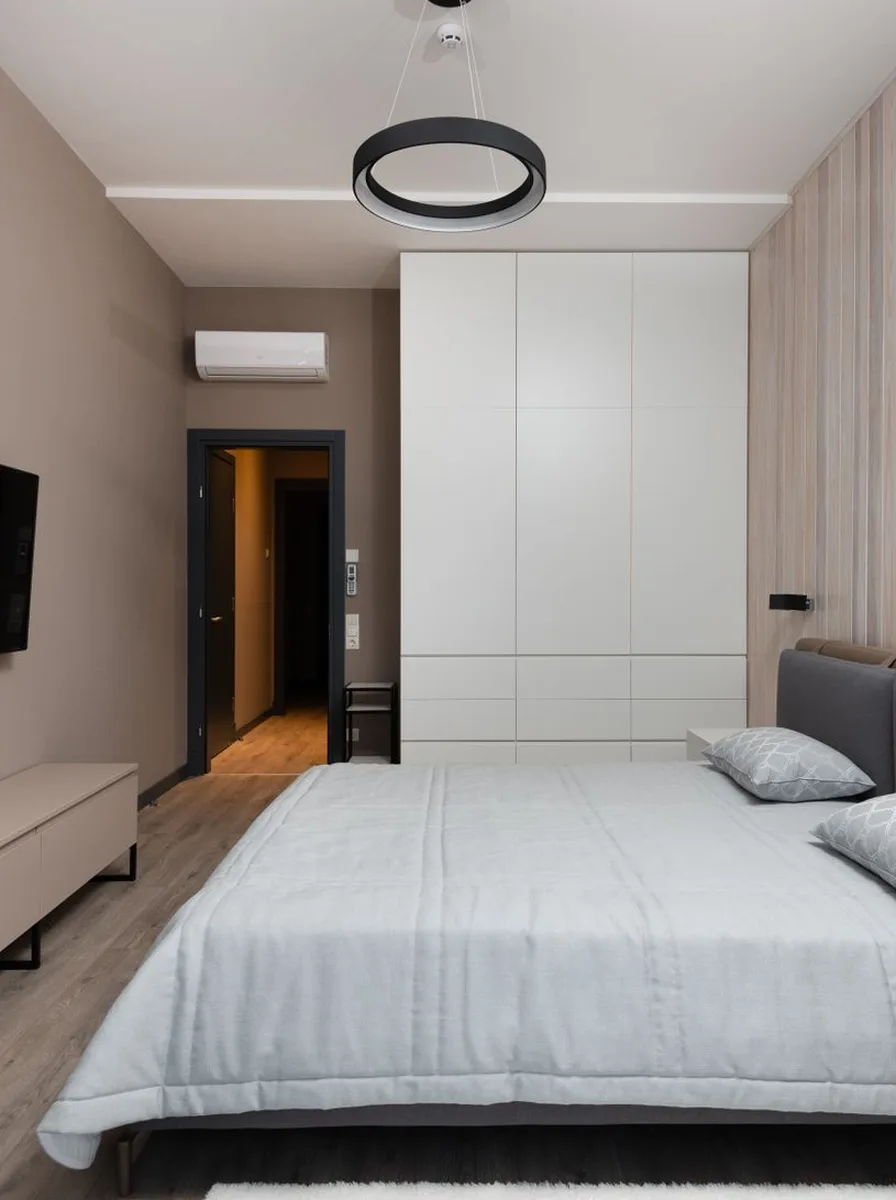
A minimalist bedroom is the ultimate restful space: few colours, clean lines, and nothing you don’t need. But minimalism isn’t about empty white boxes — it’s about choosing two or three colours and letting them do all the work. Done well, it feels calm, spacious, and surprisingly warm.
Many people fear minimalism will feel cold or unfinished. The opposite is true when the palette is right. A limited set of warm, harmonious colours makes a room feel more intentional, not less — every item earns its place, and the calm that results is the whole point.
This guide shows you how to build a simple colour palette for a minimalist bedroom, where to place each colour, and how to keep it interesting without adding clutter.
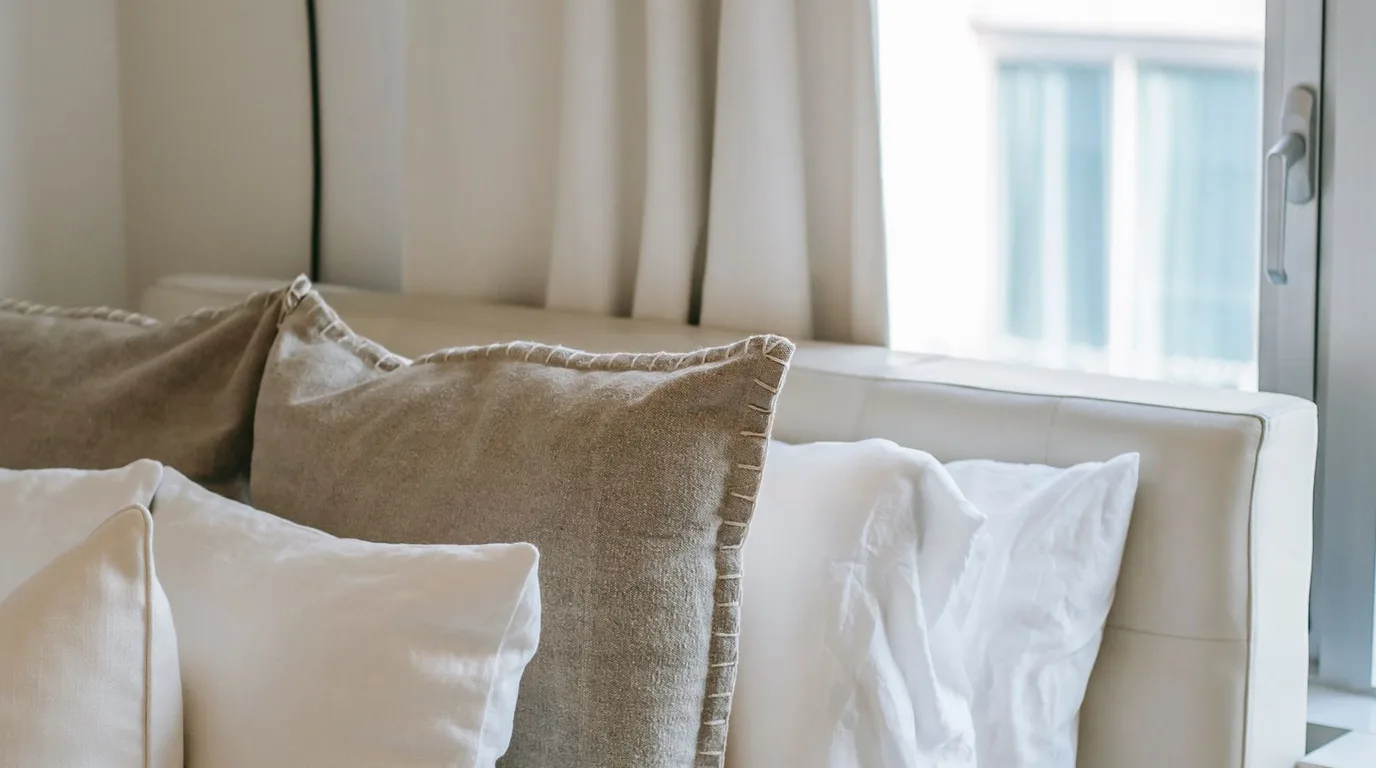
Limit the Palette to Two or Three Colours
The first rule of minimalist colour is restraint. Pick a dominant neutral (white, warm white, or light grey), one secondary tone (beige, soft grey, or pale wood), and optionally one whisper of accent. That’s the entire palette — everything in the room should fit inside it, no exceptions.
This discipline is what makes minimalism work visually. With only two or three colours, the eye isn’t busy comparing and contrasting — it relaxes. And practically, shopping becomes easy: if it isn’t in the palette, it doesn’t come home.
Building a minimal palette:
● Write your two or three colours down and check every new item against them.
● Let white or off-white dominate — around 70% of what you see.
● The secondary tone adds warmth: beige textiles, light wood furniture.
● If you add an accent, keep it muted — sage, clay, or dusty blue, never bright.
● Revisit the palette yearly; minimalism is maintained, not installed once.
Keep the TV Wall Simple
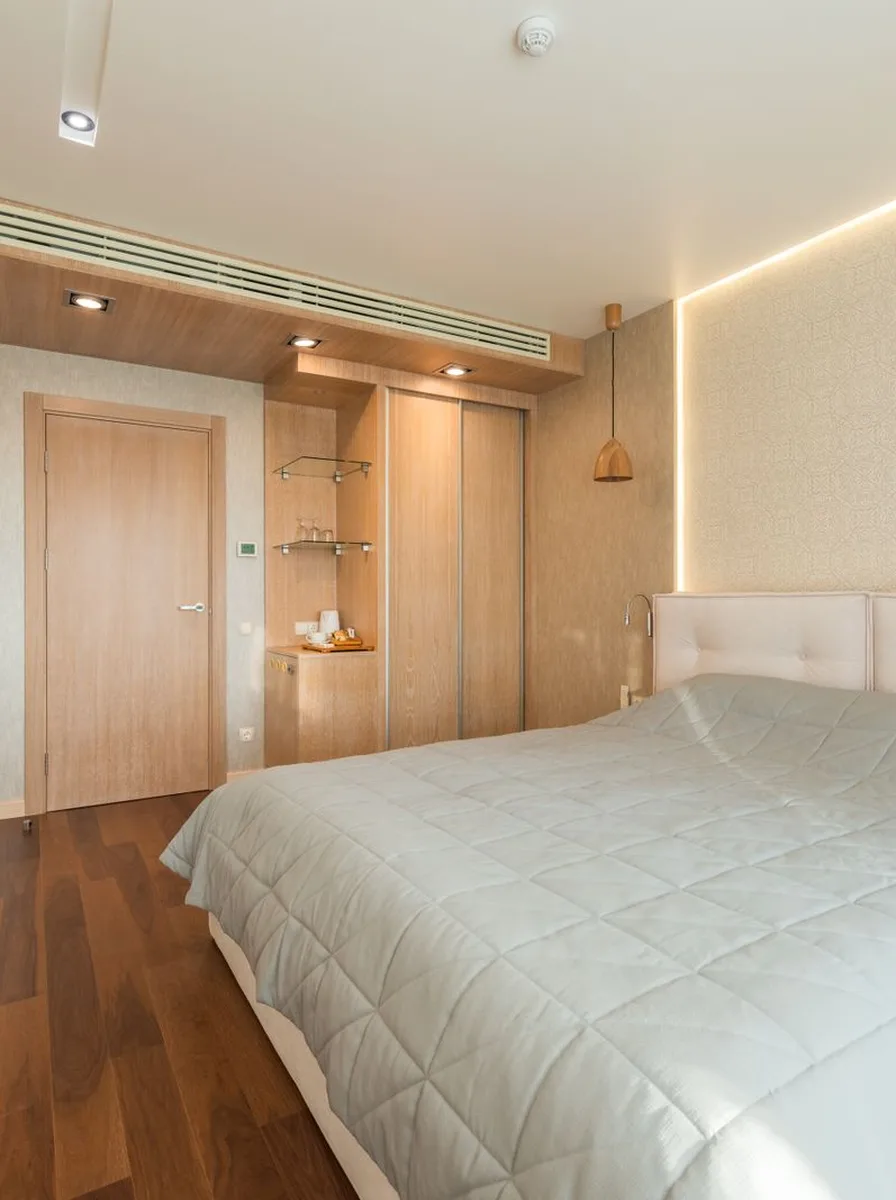
A TV is the enemy of minimalism unless you tame it. Mount it on the wall, keep the wall colour calm and plain, and hide every cable. A floating shelf in a matching tone underneath holds only the essentials — the TV becomes part of the architecture instead of a black hole in the room.
The problem with TVs isn’t the screen, it’s the clutter around it: cables, boxes, remotes, and mismatched stands. Remove all of that and a TV is just a quiet dark rectangle — perfectly compatible with a simple palette and clean lines.
Minimal TV wall tips:
● Paint the TV wall the same colour as the other walls — no accent colours here.
● Use trunking or in-wall routing so not a single cable shows.
● Choose a low, simple media unit or a single floating shelf.
● When the TV is off, it should read as a simple dark rectangle, not a focal point.
● Store remotes and boxes inside closed drawers, never on display.
Use Clean Soft Grey
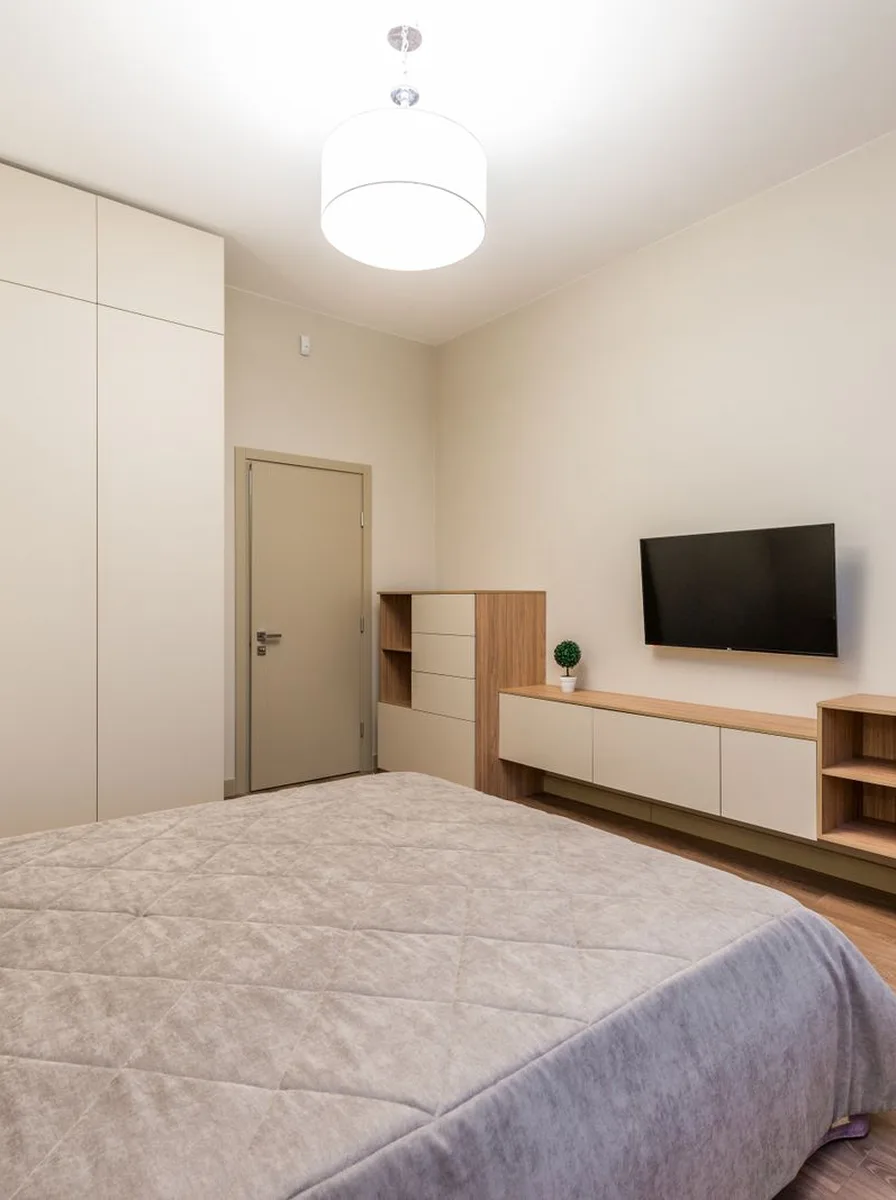
Soft grey is the minimalist’s best friend. It’s calmer than white, more interesting than beige, and it hides the small imperfections that pure white shows. Use it on bedding, a rug, or upholstered pieces while the walls stay white — the layering adds depth without adding colour.
Grey earns its place because it does the quiet work of a palette. White alone can feel stark; grey softens the edges and adds just enough tone for the room to feel finished. It’s the difference between a room that looks empty and a room that looks calm.
Clean grey in a minimal room:
● Choose light, warm greys — they stay soft where blue-greys turn cold.
● Grey bedding with white sheets is the classic minimalist bed.
● One grey rug anchors the room without breaking the palette.
● Keep grey matte; sheen and shine have no place in minimalism.
● Layer two close greys for depth that still reads as one colour.
Add One Soft Accent
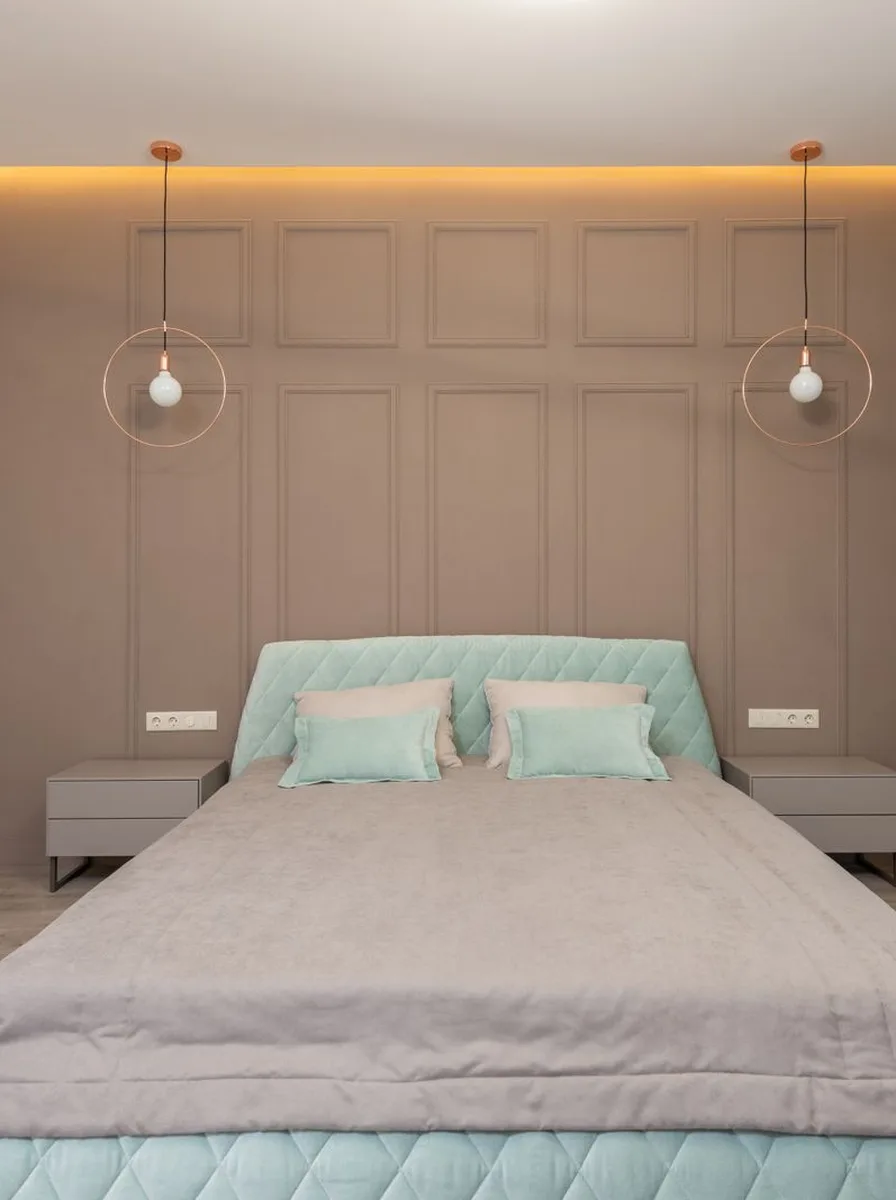
Even minimalists need a little life. One soft accent — muted teal, sage, or clay — on the bedding or a single cushion stops the room feeling sterile. The rule is one accent, used twice at most, in a dusty muted tone that sits quietly with the neutrals instead of shouting over them.
The accent is like a single piece of jewellery with a plain outfit: it doesn’t complicate the look, it completes it. Without it, some minimal rooms feel like they’re waiting for something. With it, they feel finished.
One accent, done right:
● Pick the accent after the neutrals are settled, not before.
● Use it on something changeable — bedding or cushions, never walls.
● Muted and dusty beats bright every time in a minimal scheme.
● If in doubt, skip the accent — a pure neutral room is still complete.
● Repeat the accent exactly twice — a cushion and a throw, for example.
Keep the Desk Corner Minimal
If your bedroom doubles as a workspace, the desk corner must obey the same palette or it will shatter the calm. A simple desk in white or light wood, one chair, and closed storage for everything else. What you leave out matters more than what you include.
Work corners fail minimalism in predictable ways: the office chair is black, the cables multiply, papers stack up. Solve each one — a neutral chair, hidden cables, a single drawer for papers — and the corner disappears into the room instead of disrupting it.
Minimal desk corner rules:
● Match the desk to the wall colour so it visually disappears.
● Hide everything in drawers or a single closed cabinet — open shelves collect clutter.
● One task lamp in a neutral finish is the only accessory needed.
● End each day by clearing the desk completely — the ritual keeps the room minimal.
● Choose a chair in your palette; a black office chair ruins the calm instantly.