
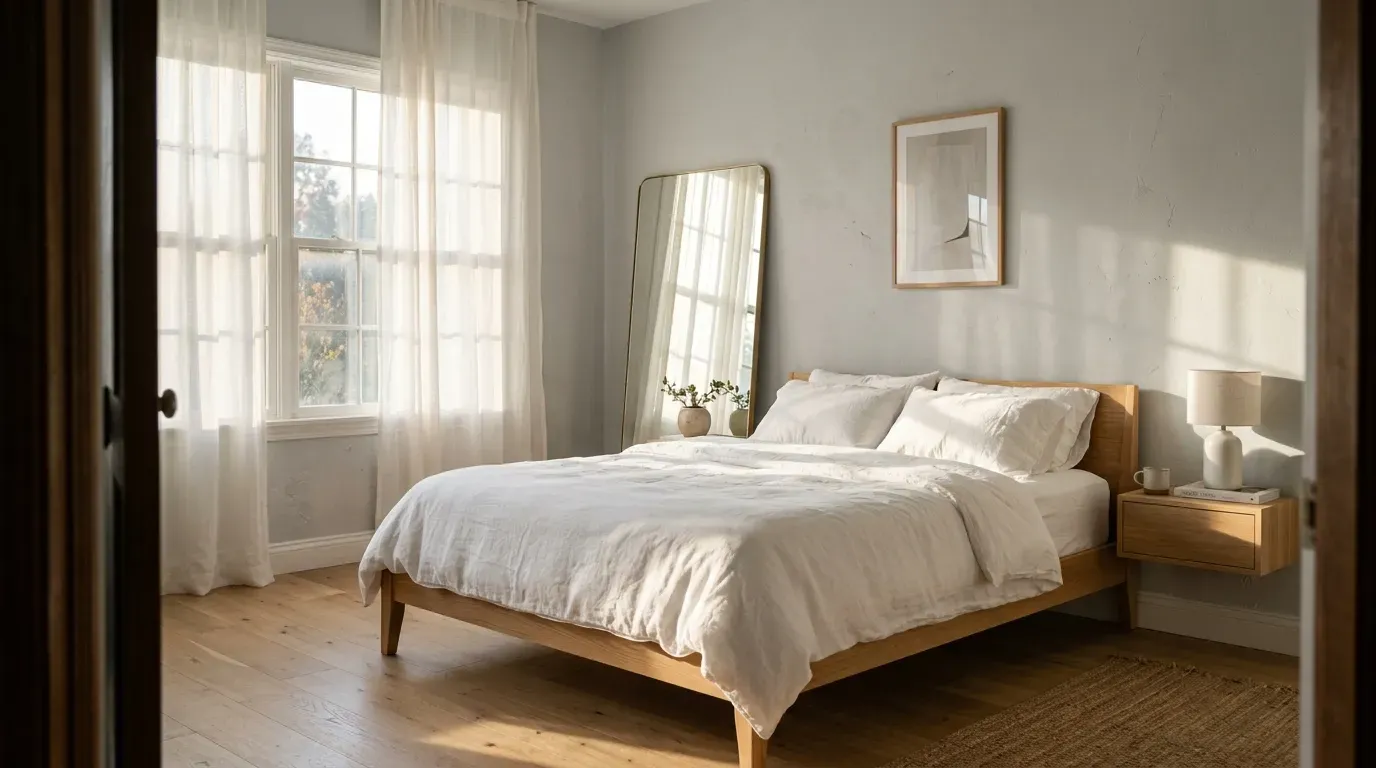
Your bedroom should feel like a retreat — not a storage unit you sleep in. If your room feels cramped, cluttered, or just plain uninspiring, the fix rarely requires a renovation or a big budget. Most of the time, it comes down to smarter choices: the right colors, the right furniture placement, and a few tricks that make your eyes read “spacious” even when square footage disagrees. Whether you’re working with a studio apartment, a guest room, or just a bedroom that never seems big enough, these 25 simple ideas will help you reclaim every inch — and actually enjoy the space you already have.
1. Paint the Walls a Light, Neutral Color
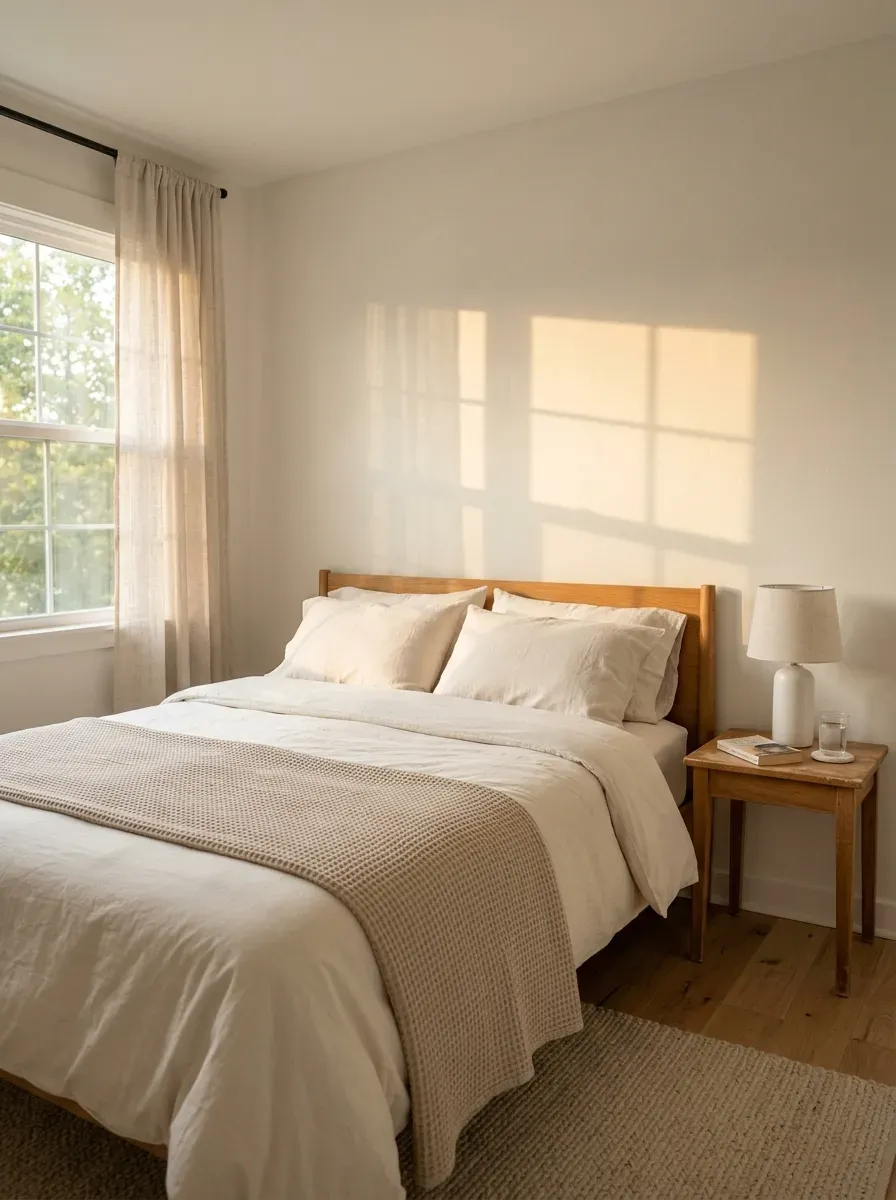
Light colors are one of the easiest ways to make a small bedroom feel bigger.
Dark walls absorb light and make a room feel closed in. Light walls bounce light around and trick the eye into seeing more space.
Soft white, warm ivory, pale greige, or light sage all work beautifully. You don’t have to go stark white — even a warm cream makes a huge difference.
The paint itself is affordable. A gallon covers most small bedrooms and costs under $40. Pick a flat or eggshell finish for walls. It hides imperfections and looks cleaner than gloss.
One weekend, one roller, and your room already feels like a different place.
Pro tip: paint the ceiling the same color as the walls, or just a shade lighter. This removes the visual “cap” on the room and makes it feel taller. Most people forget about the ceiling — don’t be one of them.
If you rent and can’t paint, peel-and-stick removable wallpaper in light tones gives a similar effect without the commitment.
2. Use a Bed Frame with Exposed Legs
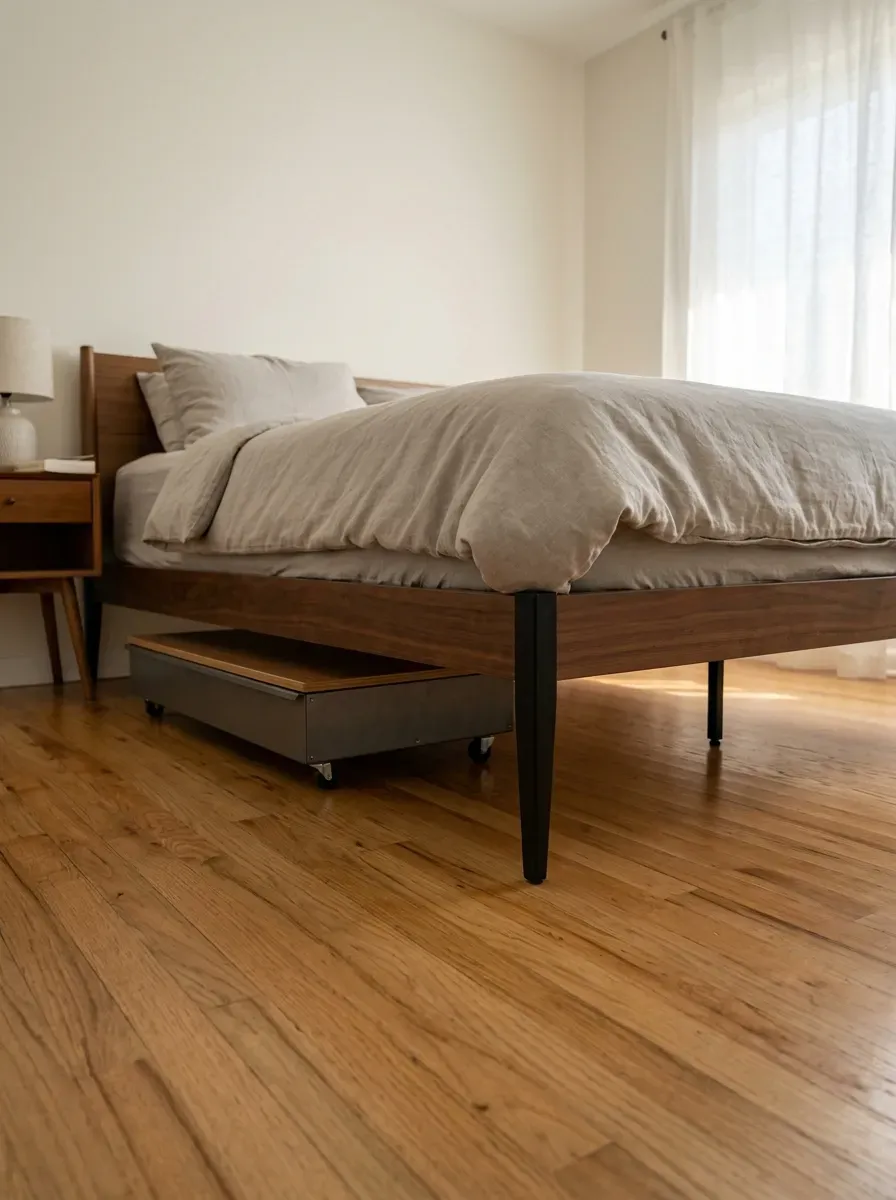
Furniture that floats off the floor visually opens up a room.
When your bed sits directly on the ground, it creates a solid visual block. Your eye reads the room as divided — the floor just stops at the bed frame. But when you can see floor underneath the bed, your brain reads the room as continuous. It feels larger.
Look for bed frames with legs that are at least 6 to 8 inches tall. Mid-century modern styles, platform beds on tapered legs, and simple metal frames all do this well. IKEA’s NEIDEN, SLATTUM, and TARVA frames are budget-friendly examples that typically run $100–$200.
Bonus: that open space under your bed is prime storage territory. Flat storage bins, rolling drawers, or vacuum-sealed bags can tuck away off-season clothes, extra blankets, or shoes — completely out of sight.
You’re solving two problems at once: a room that looks bigger and a storage problem that’s been bugging you for months.
3. Hang Curtains High and Wide
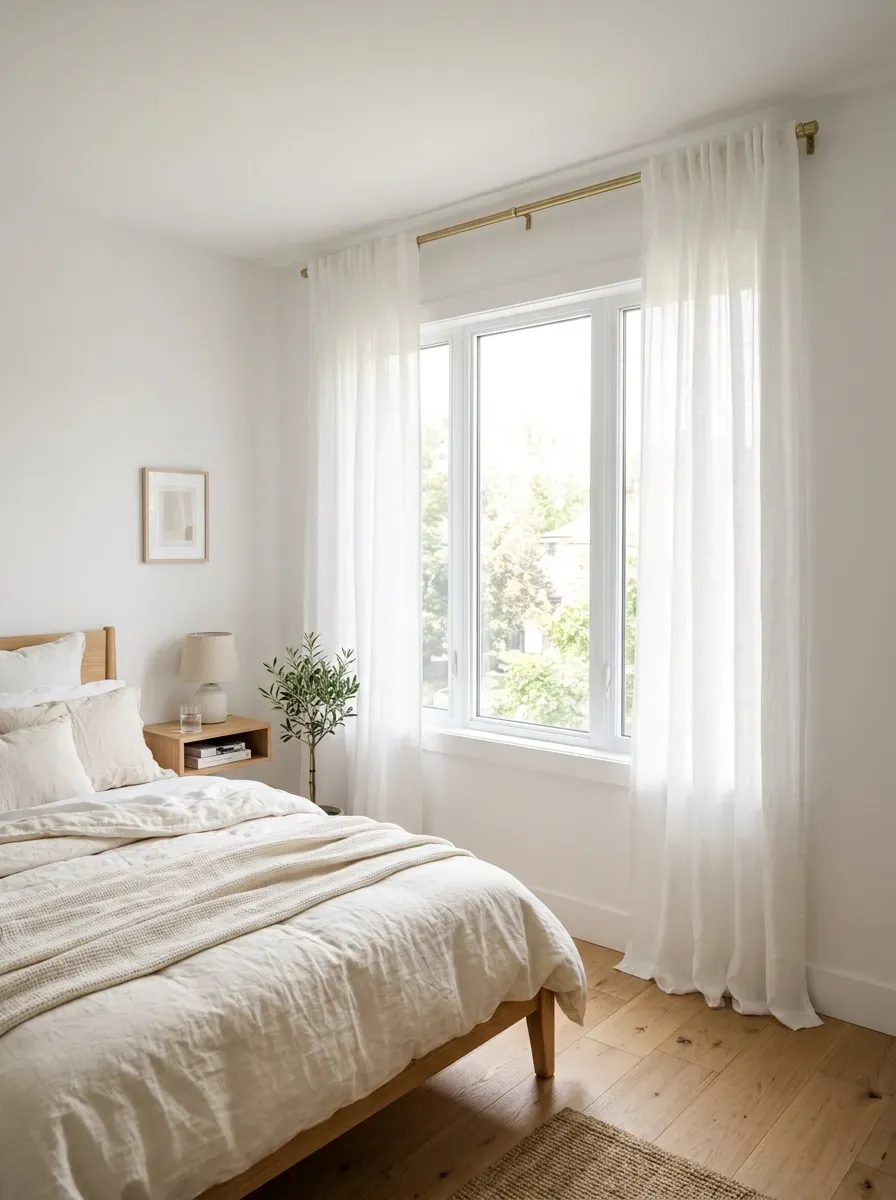
This is one of the most impactful tricks in interior design — and almost nobody knows about it.
Most people hang curtains just above the window frame. That’s the wrong move. It makes your ceilings look lower and your windows look smaller.
Hang the rod as close to the ceiling as possible. Then let the curtains fall all the way to the floor. And hang the rod several inches wider than the window on each side.
Here’s what happens: your eye follows the curtains from ceiling to floor. It reads the room as tall. The wide rod makes the window look bigger. More light gets in. The space opens up dramatically.
This costs almost nothing extra. Standard curtain rods are cheap — under $20 at most home stores. Sheer white or linen-colored curtains diffuse light beautifully and don’t darken a small room.
Even heavy blackout curtains look better when hung this way. You still get the height effect. Just make sure they’re wide enough to stack off the window when open so you’re letting in maximum light during the day.
4. Add a Large Mirror (or Two)
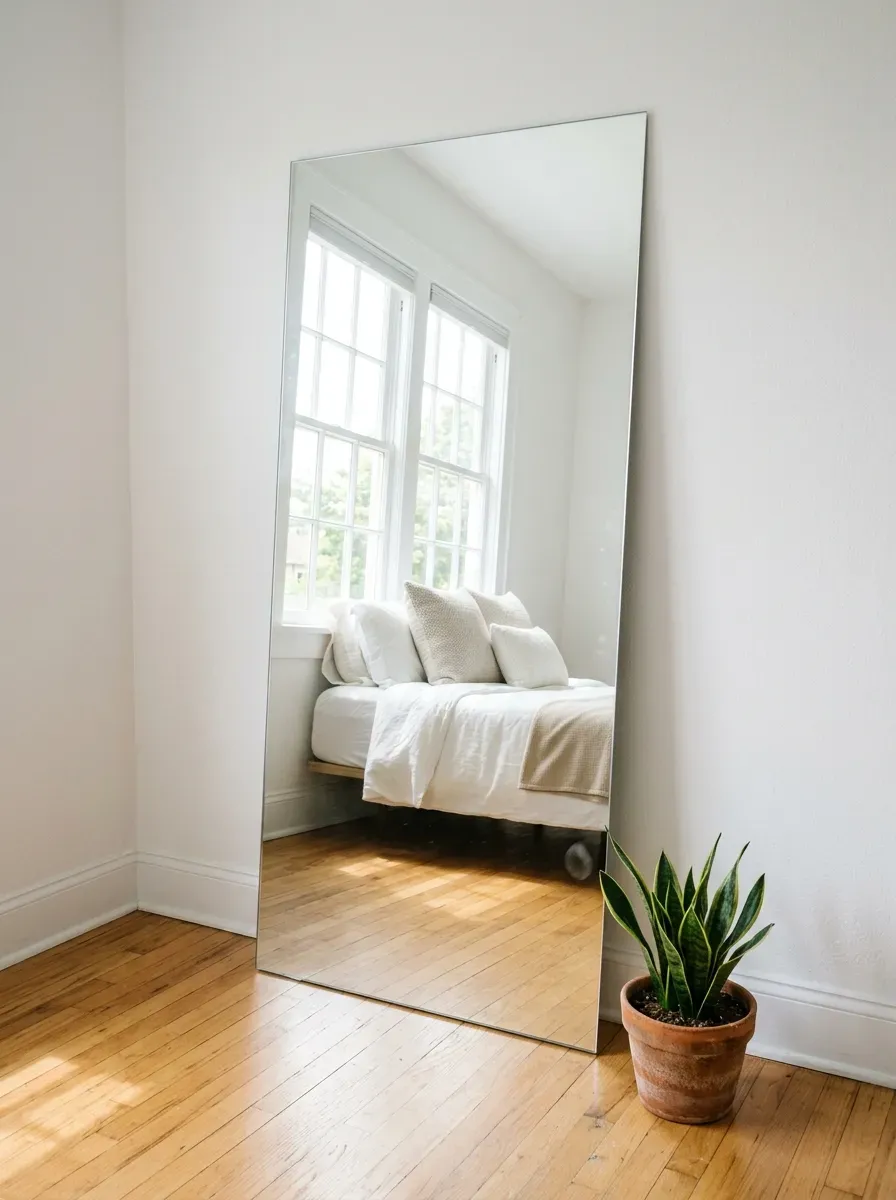
Mirrors are one of the oldest tricks in the book — because they work.
A large mirror creates the illusion of depth. Your brain sees the reflection and reads it as actual space. One good mirror can make a small bedroom feel almost twice the size.
The bigger, the better. A mirror that runs from near the floor to close to the ceiling is ideal. You can lean a large floor mirror against the wall for zero installation — no drilling, no damage to walls, perfect for renters.
Position it across from a window if possible. It doubles the natural light in the room, which also makes space feel bigger.
Budget-friendly options: IKEA’s HOVET and NISSEDAL mirrors are popular, well-priced, and large. You can also check Facebook Marketplace or thrift stores — mirrors show up constantly and are often underpriced.
One large mirror beats a cluster of small ones for the space-expanding effect. Small decorative mirrors look nice, but they don’t create the same depth illusion.
If you have a closet with sliding doors, replacing them with mirrored versions is an upgrade that does double duty.
5. Declutter with the “One Surface” Rule
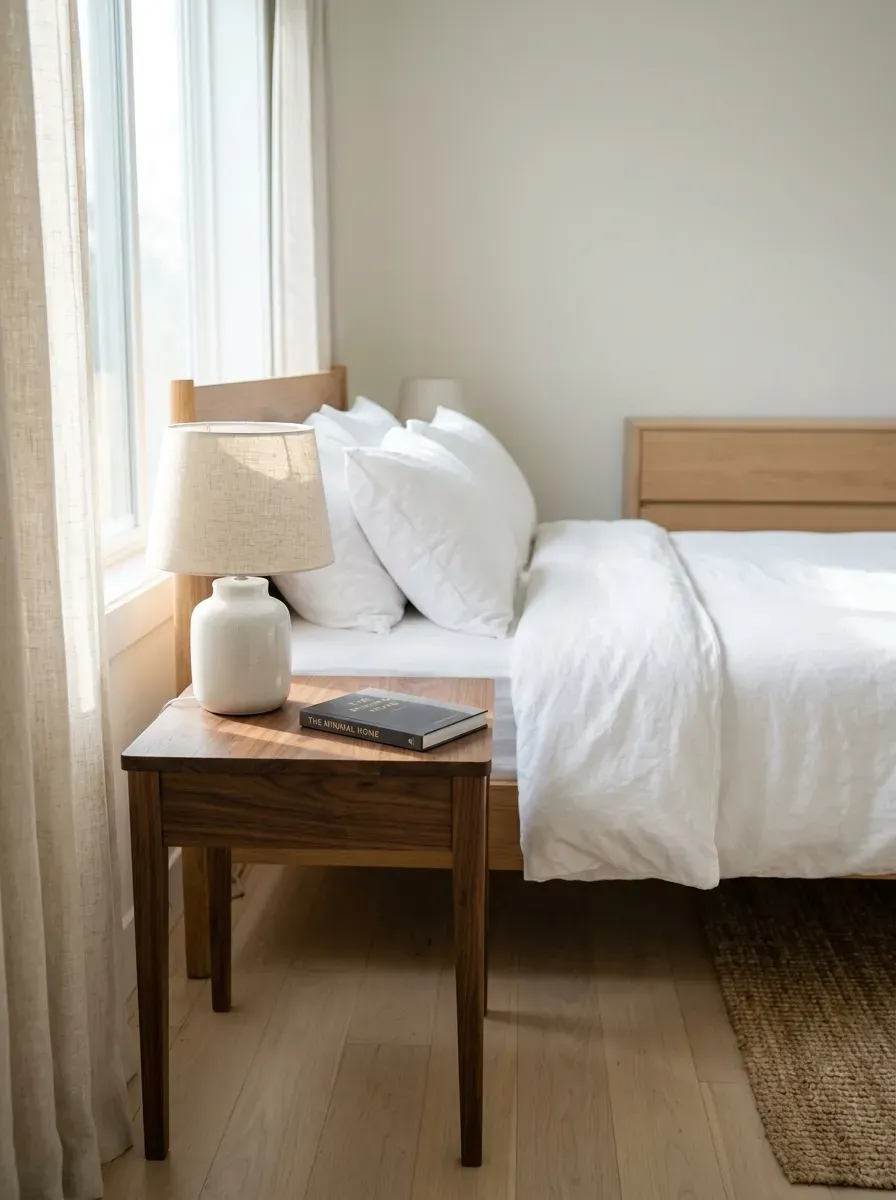
Clutter makes rooms feel smaller. Full stop.
Even a large room feels cramped when every surface is covered. The reverse is also true — even a small room breathes when surfaces are clear.
The “one surface” rule is simple: every flat surface in your bedroom gets one intentional object on it. One lamp on the nightstand. One small plant on the dresser. That’s it.
This doesn’t mean you have to live like a monk. It means everything that used to live on those surfaces needs a home elsewhere — a drawer, a basket, a shelf with closed storage, or donated out of the room entirely.
Start with your nightstand. Clear it completely. Now put back only what you actually use every single night. Most people find that one item or two is genuinely all they need.
Then move to the dresser. Flat surfaces accumulate things passively — you set something down once and it stays forever. Break that habit.
The result feels like a different room. Clean surfaces make walls look farther apart, ceilings look higher, and the whole space feels more intentional.
6. Choose Multi-Function Furniture
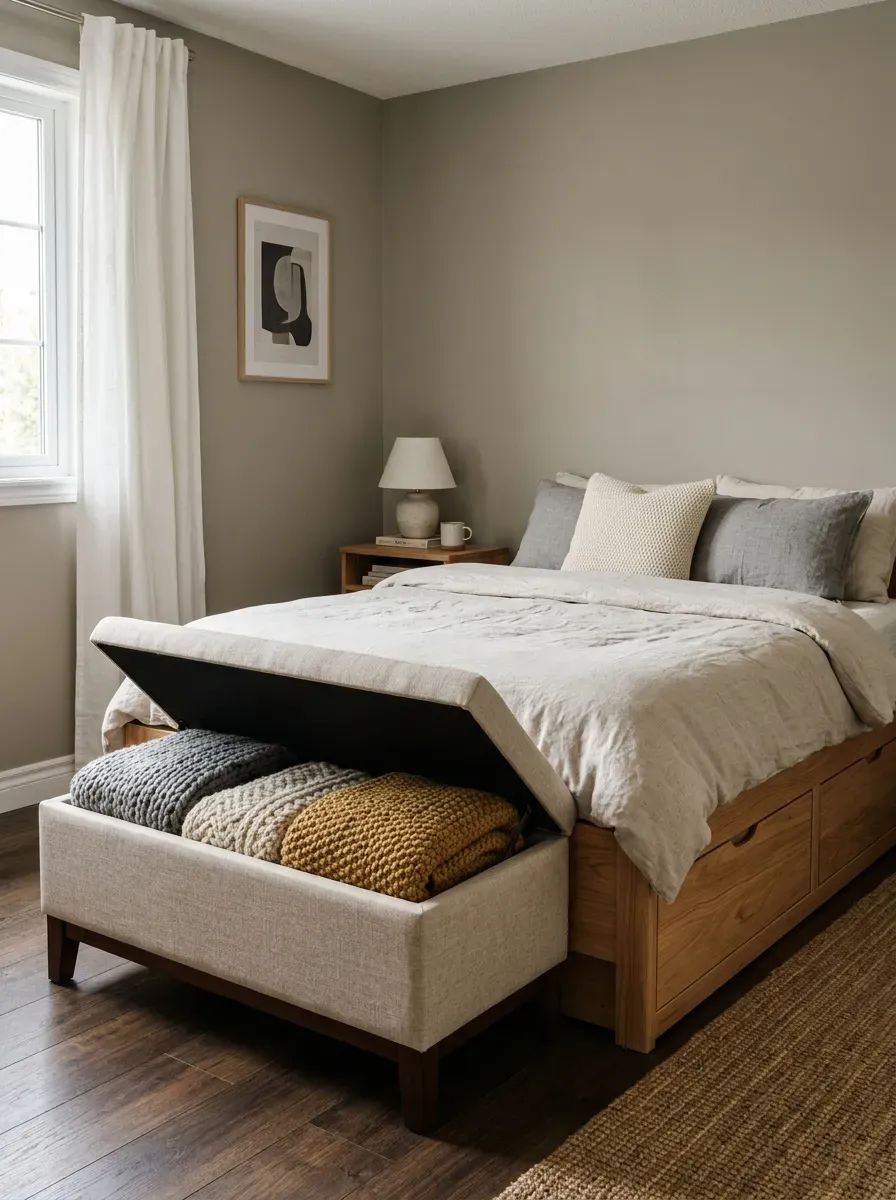
In a small bedroom, every piece of furniture should earn its space.
If something only does one job, ask whether a different piece could do two jobs in the same footprint.
An ottoman at the foot of the bed gives you seating and hidden storage. A bed frame with built-in drawers eliminates the need for a separate dresser. A wall-mounted fold-down desk folds flat when not in use. A nightstand with drawers beats a bare side table every time.
This isn’t about cramming more furniture in. It’s about getting more function out of fewer pieces.
The fewer separate pieces you have, the more floor space is visible — and visible floor space is what makes a room feel bigger.
Shop secondhand for multi-function pieces. Thrift stores, Facebook Marketplace, and estate sales often have good storage ottomans, storage beds, and benches at a fraction of retail price.
IKEA is also a go-to here. Their KALLAX, BRIMNES, and MALM lines are designed specifically with hidden storage in mind and work well in compact spaces.
7. Keep the Color Palette Simple
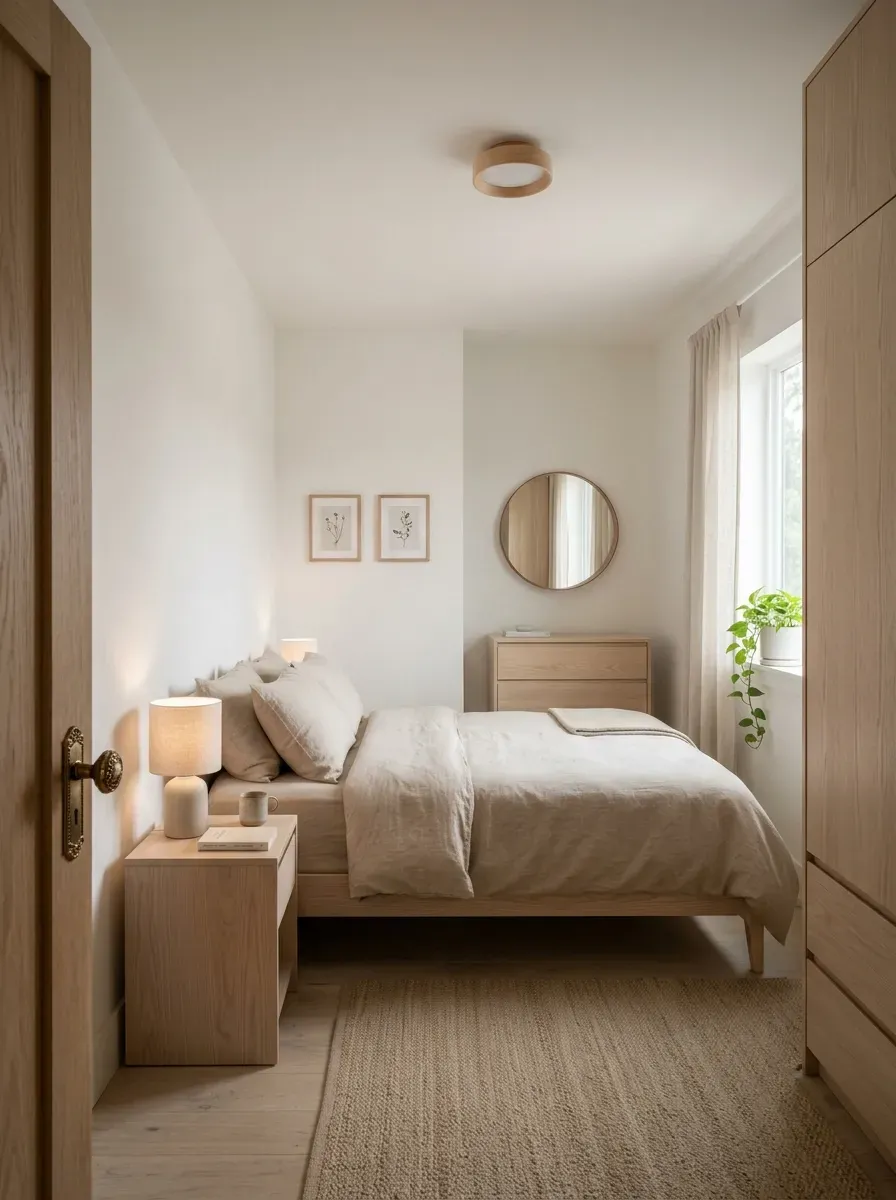
Too many colors compete for attention and make a room feel chaotic — which reads as cramped.
A simple, cohesive palette does the opposite. When your walls, bedding, furniture, and accents share a tight color family, the room feels unified and calm. Calm reads as spacious.
Stick to two or three colors max. A simple formula that works every time: one neutral base (walls + large furniture), one soft accent (bedding or rug), and one natural element (wood tones or a green plant).
You don’t have to buy all new things. Just pull things out of your room that don’t match your chosen palette. Store them or donate them. What’s left will immediately look more intentional.
Throw pillows are one of the biggest offenders. A pile of mismatched pillows in six colors creates visual noise. Swap them for two or three in the same tone family and the whole room quiets down.
If you love pattern, pick one patterned piece and keep everything else solid. One printed throw, one textured cushion. After that, solids only.
8. Mount Your Lighting on the Wall

Table lamps take up nightstand space. Wall sconces give you the same light — for free counter space.
In a small bedroom, every inch of surface matters. Switching from table lamps to wall-mounted sconces instantly clears your nightstands, which makes the room feel less crowded.
Swing-arm wall sconces are the most practical option. You can angle them for reading or swing them out of the way. They’re also inexpensive — you can find plug-in versions for $20–$50 each that require zero electrical work. Just plug them into the wall outlet and route the cord behind the headboard or along the baseboard.
This single change makes a bedroom look more intentional and hotel-like. It’s one of those small shifts that makes people say “something looks different in here” without knowing exactly what.
If you already have recessed ceiling lighting, that’s even better — you may not need bedside lighting at all. A dimmer switch (about $15–$20 and easy to install) lets you control the mood without adding any furniture or clutter.
9. Use Under-Bed Storage Strategically
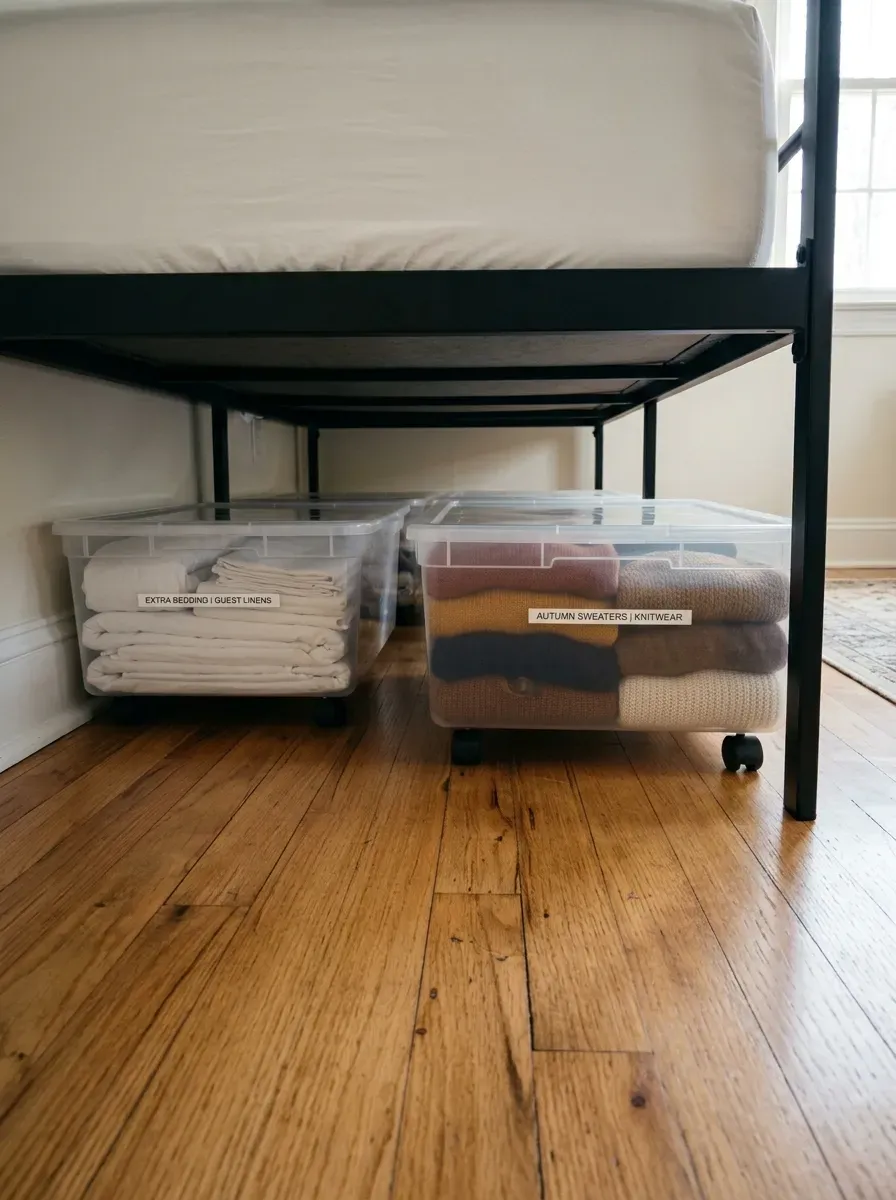
The space under your bed is some of the most underused real estate in your home.
A standard queen bed has roughly 20 to 30 square feet of storage space underneath — often left completely empty or used as an accidental clutter zone.
Flat, rolling storage bins are the easiest solution. They slide in and out without lifting. Clear bins let you see what’s inside. Labeled bins keep things organized.
What goes under there? Off-season clothing is the obvious one. Summer clothes in winter, winter clothes in summer. Extra blankets and pillows. Shoes you don’t wear daily. Gift wrap. Board games.
Anything you need occasionally but not every day is a candidate.
If your bed sits low to the ground and doesn’t have clearance, bed risers are a cheap fix. They lift your bed frame 3 to 7 inches and cost about $15–$25 for a set. Most standard bed frames work with them.
Getting clutter out of your closet and dresser and into hidden under-bed storage frees up the visible parts of your room — which is what makes the space feel larger.
10. Go Vertical with Shelving

When floor space is limited, go up.
Tall, vertical shelving draws the eye upward and makes ceilings feel higher. It also moves storage off the floor and onto the wall — which frees up the floor and makes the room feel more open.
Floor-to-ceiling shelving is the gold standard. It looks intentional, it’s extremely functional, and it makes even a small room feel like it has serious storage figured out.
IKEA’s BILLY bookcase is a classic for a reason. Inexpensive, customizable, and easy to stack or add extensions to reach the ceiling. A pair of them flanking a window or along a blank wall is both practical and visually striking.
Keep upper shelves lighter — decorative items, books, or seasonal things you rarely need. Keep lower, easily reachable shelves for daily-use items.
Avoid filling shelves to capacity. Leave some visual breathing room. A shelf that’s 70–80% full looks organized. A shelf crammed to the edges looks messy, no matter how neat individual items are.
If you rent, freestanding shelf units require zero installation. No drills, no damage, no landlord conversations.
11. Replace a Bulky Dresser with Built-In Closet Organizers

Dressers take up significant floor space. If you have a closet, you may not need one.
Most closets are dramatically underused. A single hanging rod and a shelf is the default — and it wastes most of the available space. A good closet organization system can hold everything a dresser holds, plus more, all without touching your bedroom floor.
Systems like IKEA PAX or The Container Store’s Elfa are the most popular options. They’re modular, customizable, and work in almost any closet size. PAX starts at around $150–$300 for a basic wardrobe; Elfa is more expensive but is frequently on sale.
Budget version: tension rods, hanging organizers, over-door shoe pockets, and stackable bins from Amazon can transform a standard closet for under $50. It’s not as sleek, but it’s effective.
The payoff is significant. Once your clothes are off the floor and out of a dresser, you can remove the dresser from your bedroom entirely. That reclaimed floor space makes the room feel dramatically larger — often more than any other single change.
12. Keep Your Bed Linens Simple
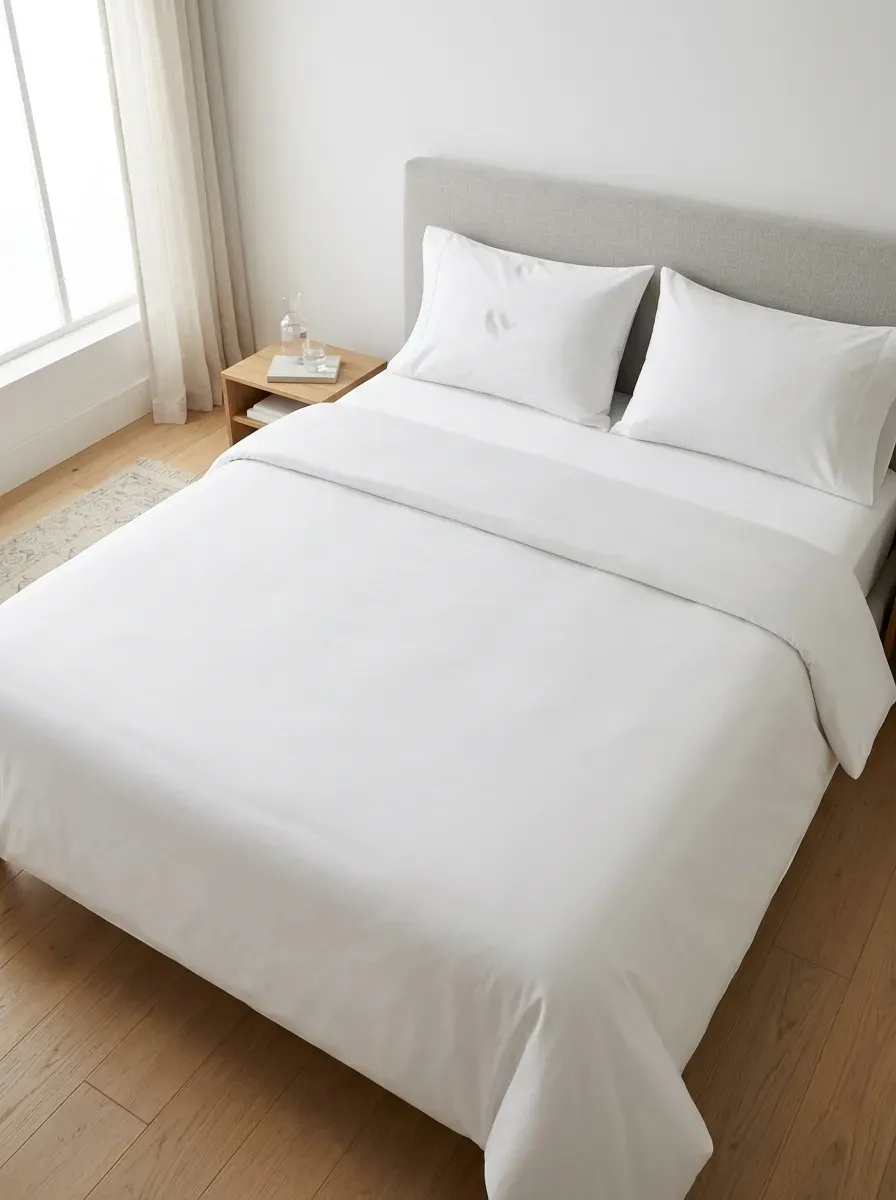
A visually busy bed makes the whole room feel chaotic.
Lots of throw pillows, heavily patterned comforters, and multiple contrasting textures all fight for attention. The bed is usually the largest object in the room — so what happens visually on the bed sets the tone for the whole space.
Simple, solid-color bedding in a light, neutral tone makes the room feel calmer and more spacious. White, ivory, soft gray, warm sand — any of these work.
You don’t need to spend a lot. Target, Amazon Basics, and IKEA all sell solid white or neutral duvet covers for under $30. A basic, clean bed often looks more expensive than a cluttered one.
Limit decorative pillows. Two sleeping pillows plus two or four decorative pillows is usually plenty. More than that looks fussy and takes time to manage every day.
A single textured throw blanket draped casually at the foot of the bed adds warmth without clutter. It’s one deliberate design touch rather than a pile of mismatched accessories.
Make the bed every morning. A made bed is the single fastest thing you can do to make a bedroom look bigger and more put-together.
13. Try a Floating Nightstand or Wall-Mounted Shelf
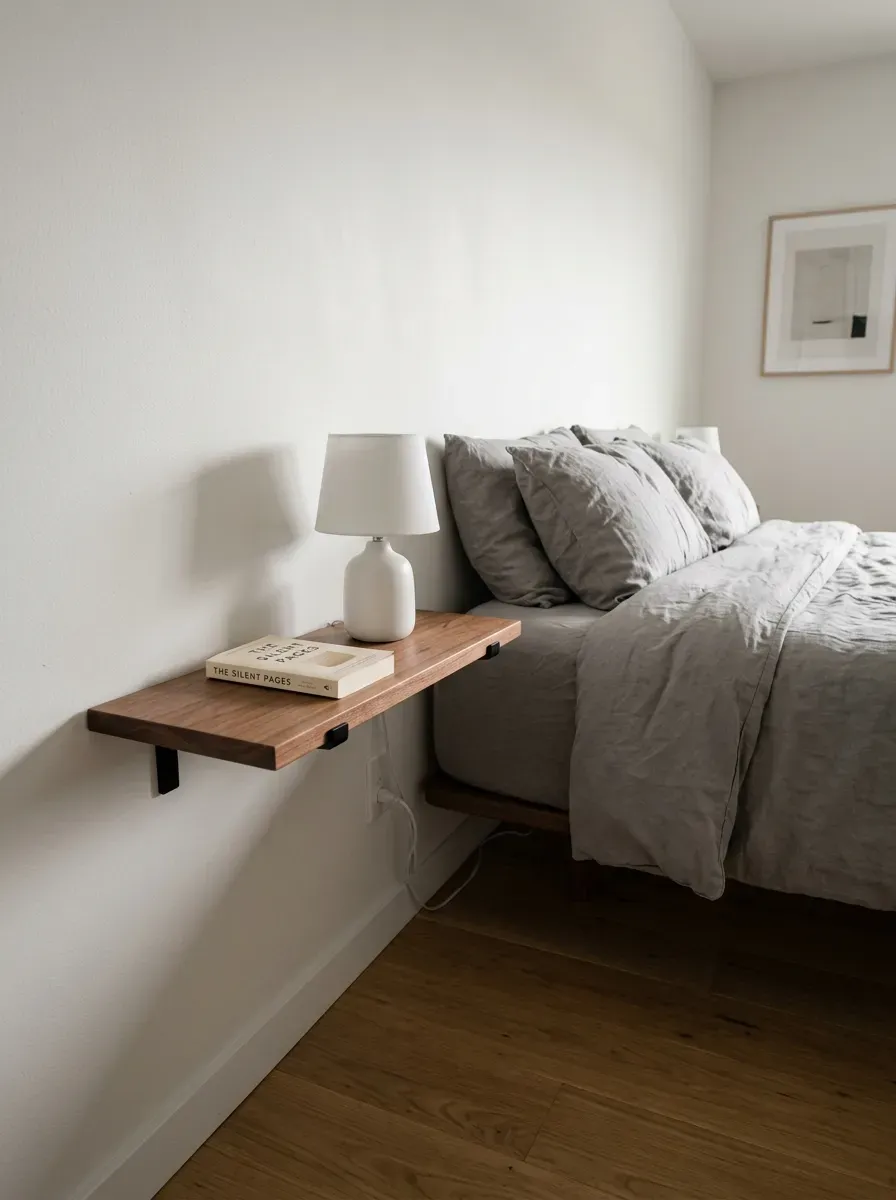
Traditional nightstands sit on the floor and eat up visual space. Floating ones don’t.
A wall-mounted shelf used as a nightstand takes up zero floor space. Your eye can see the floor run all the way to the wall, which reads as more open space. It also looks intentional and modern.
Simple floating shelf brackets and a wood board are all you need. A 10-inch-deep floating shelf is functional for a lamp, phone, glasses, and a book. Total cost is often under $20–$30 in materials.
Pre-built floating nightstands are also widely available. IKEA’s LACK shelf is a popular, cheap option that works well in this context. Other versions with a small drawer add functionality for under $50.
The only catch: you’ll need to drill into the wall. If you rent, check your lease or ask your landlord. Most leases allow small holes for shelving, and they’re easy to patch when you move out.
If drilling isn’t possible, over-mattress clamping nightstands are a clever alternative. They attach to the side of the mattress or bed frame with no wall involvement and still keep the floor clear.
14. Use a Rug to Define the Space
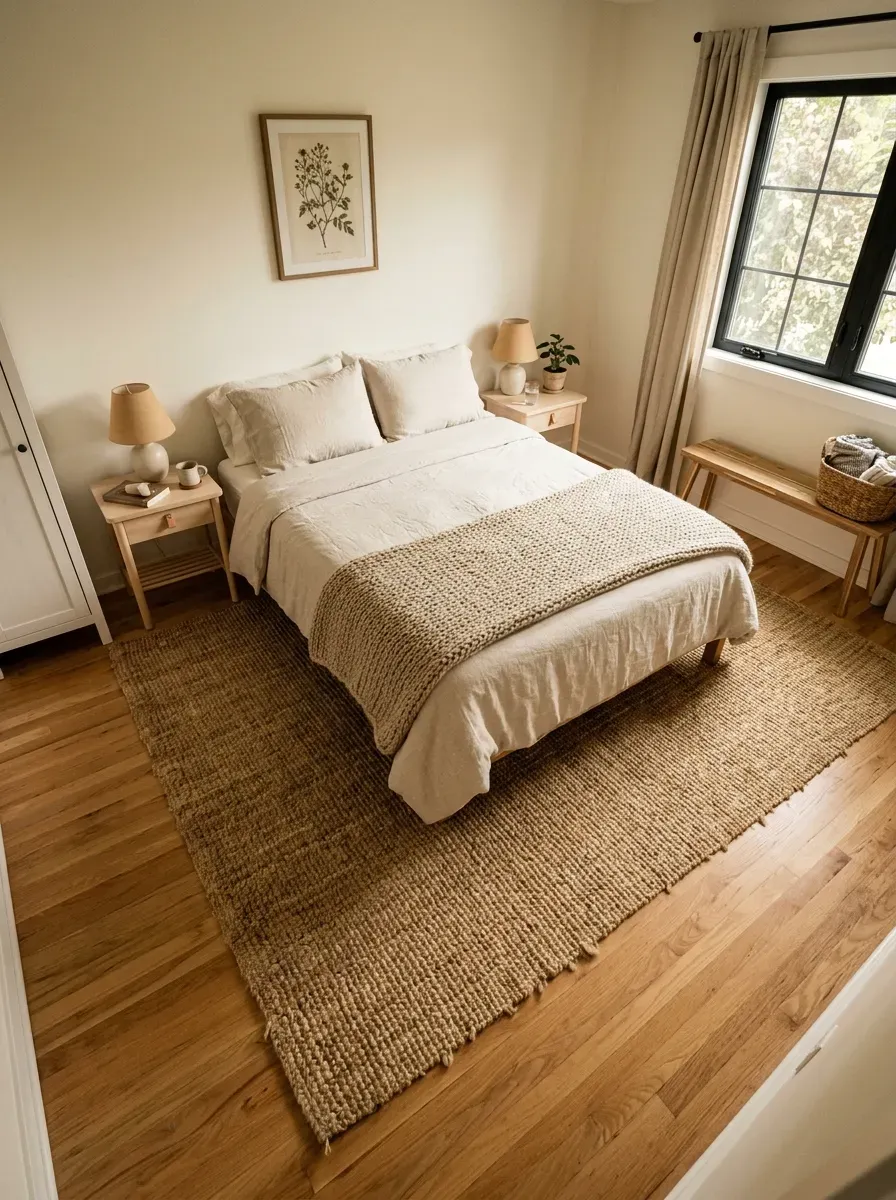
The right rug makes a bedroom feel finished and spacious. The wrong size rug makes it feel oddly proportioned.
A common mistake is going too small. A tiny rug floating in the middle of the room creates visual fragmentation — your eye reads it as a disconnected island rather than an anchoring element.
Size up. The rug should extend at least 18–24 inches beyond the sides and foot of the bed. When you step out of bed in the morning, your feet should land on the rug. That’s the correct sizing.
For a queen bed, a 8×10 rug usually works. For a king, go 9×12.
Light-colored rugs — cream, ivory, natural jute, pale gray — make a room feel more open than dark rugs. Jute and sisal rugs in particular have a warm, airy quality and are often very affordable.
You don’t have to spend a lot. Wayfair, Rugs USA, and Amazon regularly have large area rugs on sale. A 8×10 jute rug can be found for $100–$200.
One large rug beats multiple small rugs in a small bedroom. Multiple small rugs chop the floor into sections and shrink the visual space.
15. Paint or Wallpaper Just One Accent Wall
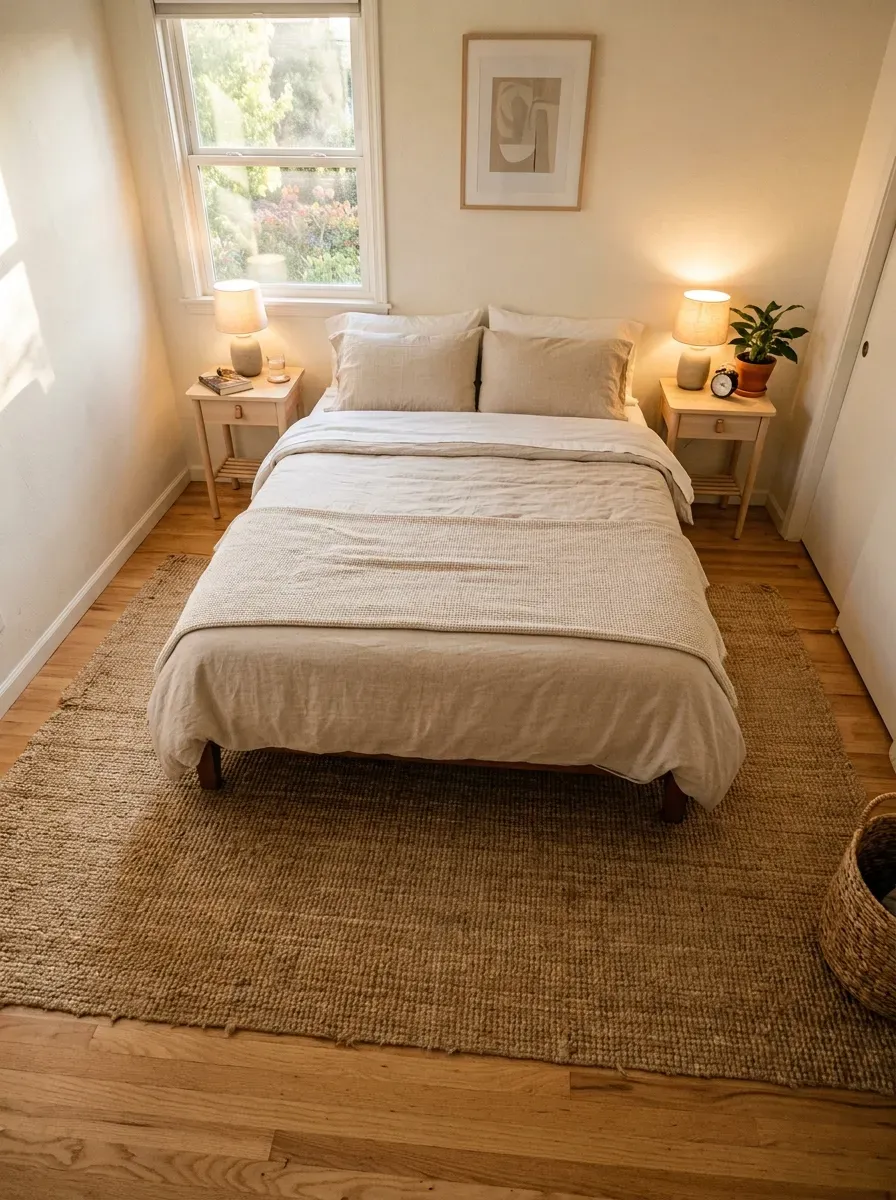
One accent wall adds personality without overwhelming a small space.
If painting all four walls a color feels like too much, one wall gives you the effect with less commitment. Done right, it also creates a sense of depth — your eye reads the contrast and perceives more visual dimension.
The wall behind your bed (the headboard wall) is the natural choice. It frames the bed like a backdrop and anchors the room.
You can go deeper on the accent wall than you would on all four walls. Sage green, dusty blue, warm terracotta, charcoal — colors that might feel heavy on all sides work beautifully as a single focal point.
Budget: one quart of paint is often enough for a single wall and costs $10–$20. It’s a very low-risk experiment.
Removable peel-and-stick wallpaper is another option that requires no paint and no commitment. Patterns like subtle botanicals, simple stripes, or textured looks all work well. Many brands offer samples so you can test before committing to a full wall.
Either way, one strong wall creates a sense of intention — and intention makes a room feel designed rather than default.
16. Add Plants — But Keep It Minimal

Plants make a room feel alive and cared for. But too many plants can tip into clutter.
The goal is a natural touch, not a greenhouse. One or two plants are almost always better than a collection in a small space.
Snake plants, pothos, and ZZ plants are the easiest options. They tolerate low light and irregular watering — meaning they’re genuinely hard to kill. Perfect for bedrooms where you might forget to water for a couple weeks.
A single trailing pothos on a high shelf is visually interesting and takes up almost no floor space. A snake plant in the corner adds height and a structural quality. Either one does the job.
Simple white or terracotta pots keep things cohesive. Mismatched colorful pots look busy in a small room.
Cost is low. Small starter plants at nurseries, grocery stores, or even Home Depot typically run $5–$15. A decent ceramic pot is another $5–$20.
The psychological effect of plants in a bedroom is real — most people find them calming. But the visual effect depends on restraint. Two healthy, well-placed plants look intentional. Seven random plants on every surface look like the room absorbed a garden store.
17. Swap Overhead Lighting for Layered Lighting
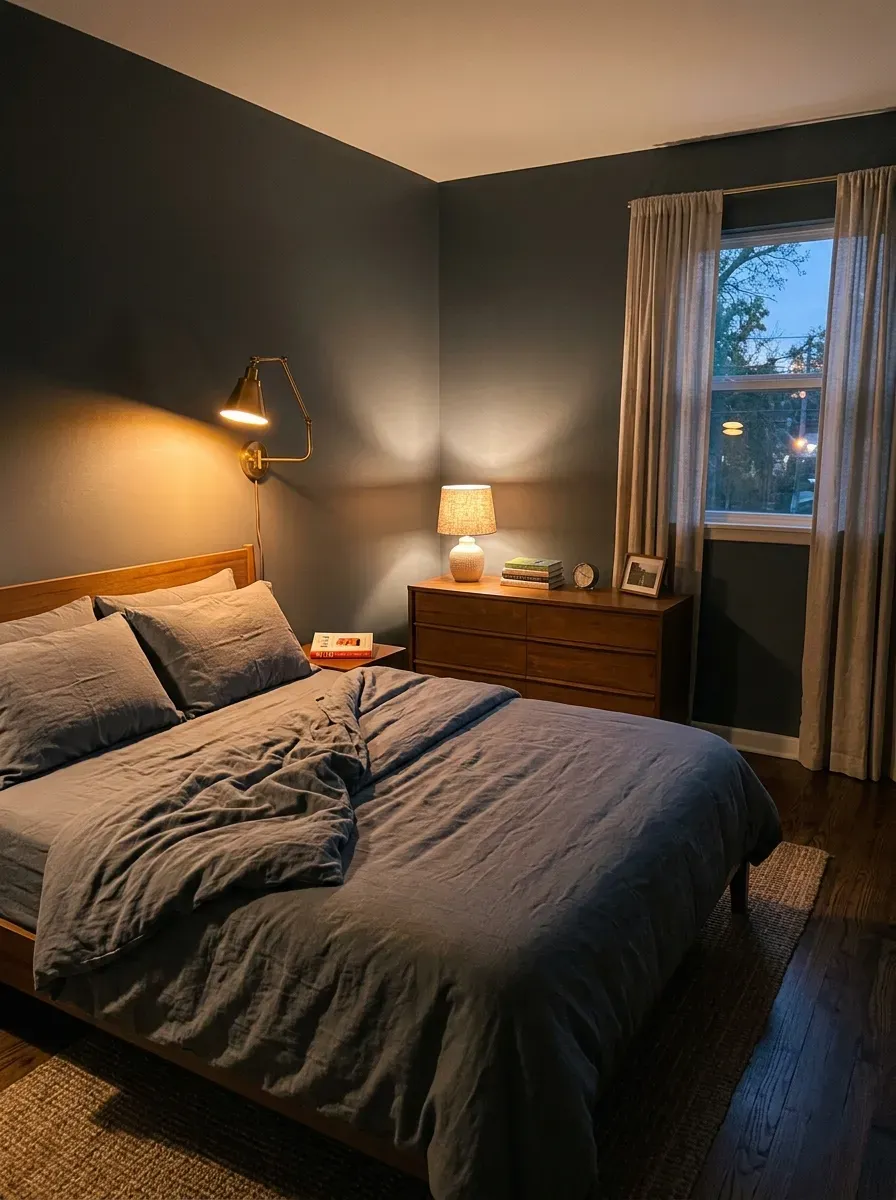
Harsh overhead lighting flattens a room and makes it feel institutional.
Layered lighting — multiple light sources at different heights — makes a room feel warmer, larger, and more intentional. It’s one of the easiest atmospherically-charged upgrades you can make.
The basic layered setup: one ambient light source (overhead or ceiling), one task light (reading lamp or sconce), and one accent light (small lamp or LED strip). You don’t need all three, but having two immediately improves on a single overhead fixture.
Warm-toned bulbs (2700K–3000K color temperature) make a significant difference. Cool white or daylight bulbs read as clinical. Warm bulbs feel cozy and residential. This is a $5–$10 change per bulb.
Plug-in lamps require no electrical work. A simple floor lamp in a corner, two small table lamps, or plug-in sconces are all zero-installation options.
Smart bulbs with dimming capability (Philips Hue, IKEA TRADFRI, or budget alternatives) let you adjust brightness and warmth from your phone. Great for winding down at night without getting up to flip a switch.
18. Declutter the Closet So the Door Can Stay Open

A tidy open closet makes a bedroom feel bigger.
When a closet is organized and presentable, you can leave the door open. The depth of the closet adds visual space to the room — your eye reads it as more room, not less. A messy closed closet does the opposite: the room ends at the wall.
This sounds small. It isn’t. An organized open closet functions like a visual extension of the room.
Start with a closet edit. Pull everything out. Donate or remove anything you haven’t worn in a year. Rehang clothes sorted by type and color — this alone makes a closet look dramatically more organized.
Then add a few simple tools: velvet slim hangers replace bulky plastic ones and double your hanging capacity. A shelf riser or two adds a second level for folded items. An over-door shoe organizer gets shoes off the floor.
Total cost for this upgrade is often under $30 if you buy slim hangers in bulk and use what you already have for bins.
The payoff is a closet you’re proud to leave open — and a bedroom that feels like it has an extra few feet of space it didn’t have before.
19. Use Furniture That Matches the Wall Color

When furniture blends into the wall, it visually disappears.
A dark dresser against a light wall creates high contrast. Your eye sees it and logs it as a visual interruption. A white or light dresser against a white wall is barely noticeable — the room looks less cluttered even though the furniture is still there.
This is called tone-on-tone dressing and it’s used constantly in interior design to make rooms feel larger.
You don’t have to buy new furniture. Paint your existing dresser or bookshelf to match your wall color. Furniture paint is inexpensive (often $20–$30 per quart) and adheres to wood with minimal prep. A single afternoon project can make a big piece of furniture effectively disappear.
This works especially well with white or near-white walls paired with white or pale painted furniture. It also works with darker palettes — a dark gray room with charcoal-painted furniture reads as cohesive rather than cramped.
The technique works in reverse too: if you want a piece of furniture to stand out as a focal point, contrast is fine. But for pieces you want to minimize visually — storage furniture, bookshelves, wardrobes — matching the wall wins.
20. Create a Dedicated Reading Nook
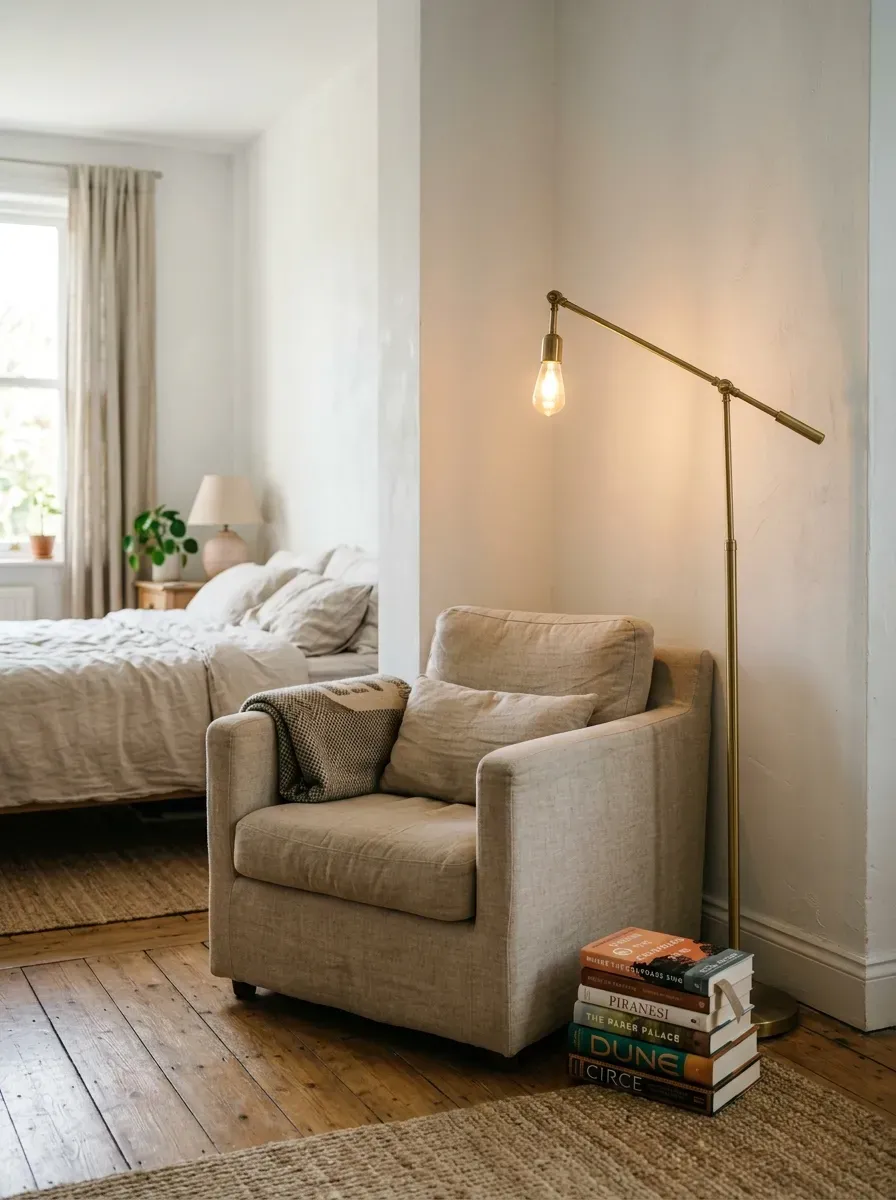
Defined zones make small rooms feel purposeful rather than cramped.
A small bedroom that’s just “the place where the bed is” feels like a leftover space. A small bedroom with a dedicated reading corner feels like a thoughtful, layered room — even if both rooms are exactly the same size.
A single armchair, a floor lamp, and a small stack of books is all you need. If space is tight, the chair doesn’t have to be large. A small accent chair, a papasan, or even a floor cushion with a wall-mounted light above it works.
The key is that the space is deliberate. It has a purpose. That intentionality changes how you feel in the room.
Look for armchairs at thrift stores, estate sales, or Facebook Marketplace. A good chair in a usable condition regularly appears for $20–$60. Reupholstering or draping a throw over a chair in less-than-perfect condition is a quick fix.
Even if you never use the reading nook, it changes the atmosphere of the room. The possibility of sitting there, of the room being for something beyond just sleeping, makes the space feel richer.
21. Keep the Floor as Clear as Possible

Visible floor space is the single biggest visual signal of a spacious room.
The more floor you can see, the bigger the room feels. Objects on the floor do the opposite — they fragment the space and make it feel cluttered, regardless of how organized everything else is.
The goal is as little on the floor as possible. That means the laundry basket goes in the closet or behind the door. Shoes go in a rack inside the closet or an organizer. Bags hang on hooks. The floor is not a storage surface.
This isn’t about being perfect. It’s about making a habit.
One trick: hang wall hooks behind the door for bags, robes, scarves, and anything else that tends to land on the floor or a chair. A row of hooks costs about $10–$20 and eliminates the need for a valet stand or the “chair” that holds things indefinitely.
A laundry hamper with a lid is cleaner visually than an open basket. Tuck it in a corner or inside the closet. Out of sight, off the floor.
The single most impactful thing you can do to make a bedroom feel bigger tonight is to spend 15 minutes clearing everything off the floor. It costs nothing and the difference is immediate.
22. Invest in a Headboard (or Make One)

A headboard gives your bed — and your room — a sense of height and intention.
Without a headboard, a bed floats against the wall with nothing anchoring it visually. With one, the bed has weight and presence. It frames the sleeping area and creates a focal point that makes the room feel designed.
Tall headboards (ones that go 2/3 or more up the wall) are especially effective in small rooms. They draw the eye upward, making ceilings feel higher.
If budget is tight, DIY options are genuinely easy:
- Hang a large piece of fabric or a macramé wall hanging above the bed as a soft headboard.
- Use a piece of plywood cut to size, wrapped in foam and batting, then covered in fabric — total cost often under $50.
- Mount a floating shelf above the bed for a minimal, modern headboard effect.
- Lean a large vintage door or architectural panel against the wall.
Ready-made upholstered headboards range from $50 to $300+ depending on size and material. Budget versions on Amazon and Wayfair often look much better in person than the price suggests.
23. Use Vertical Striped Wallpaper or Paint

Vertical lines make walls look taller. It’s a simple visual trick that works every time.
Your eye follows lines. Horizontal lines make walls look wider and lower. Vertical lines make walls look taller and the ceiling feel farther away. In a small bedroom where height is limited, this is a powerful tool.
Subtle vertical stripes work better than bold ones in a small room. A tone-on-tone stripe — like two shades of white or off-white — gives the height effect without overwhelming the space.
Options:
- Peel-and-stick removable wallpaper with a thin vertical stripe. Affordable, renter-friendly, and reversible. Brands like Tempaper, Chasing Paper, and NuWallpaper carry options under $50 for a single wall.
- Tape and paint. Use painter’s tape to mask off vertical stripes and paint alternating sections in the same or slightly different tone. Labor-intensive but very inexpensive.
- Beadboard or wainscoting panels add vertical lines through texture rather than color. More permanent, but a significant upgrade.
Even applying this to a single wall — specifically the wall behind the bed — gives the room the height effect where it’s most visible.
24. Edit Your Art and Gallery Wall

Art is the finishing touch. But too much art on the walls reads as clutter.
A gallery wall with 15 framed pieces in different sizes and frames looks chaotic in a small bedroom. It fragments the wall visually and gives the eye nowhere to rest.
Less is more when it comes to bedroom art. One or two larger pieces have more impact than a dozen small ones. Matching frames — all black, all white, or all natural wood — make multiple pieces look cohesive rather than collected randomly.
Placement matters. Art hung too high floats and disconnects from the room. The center of the art should be roughly at eye level — about 57–60 inches from the floor, which is the standard in most galleries.
Above a dresser, a headboard, or beside a window are the natural anchor points.
If you have a gallery wall and it feels busy, consider removing every other piece and seeing how it looks. You may be surprised that fewer pieces create a stronger visual effect.
Budget frames from IKEA, Target, or thrift stores all work well. A simple black or white frame elevates almost any print, including ones you print yourself from free art sites like Unsplash or Wikimedia Commons.
25. Make the Most of Natural Light
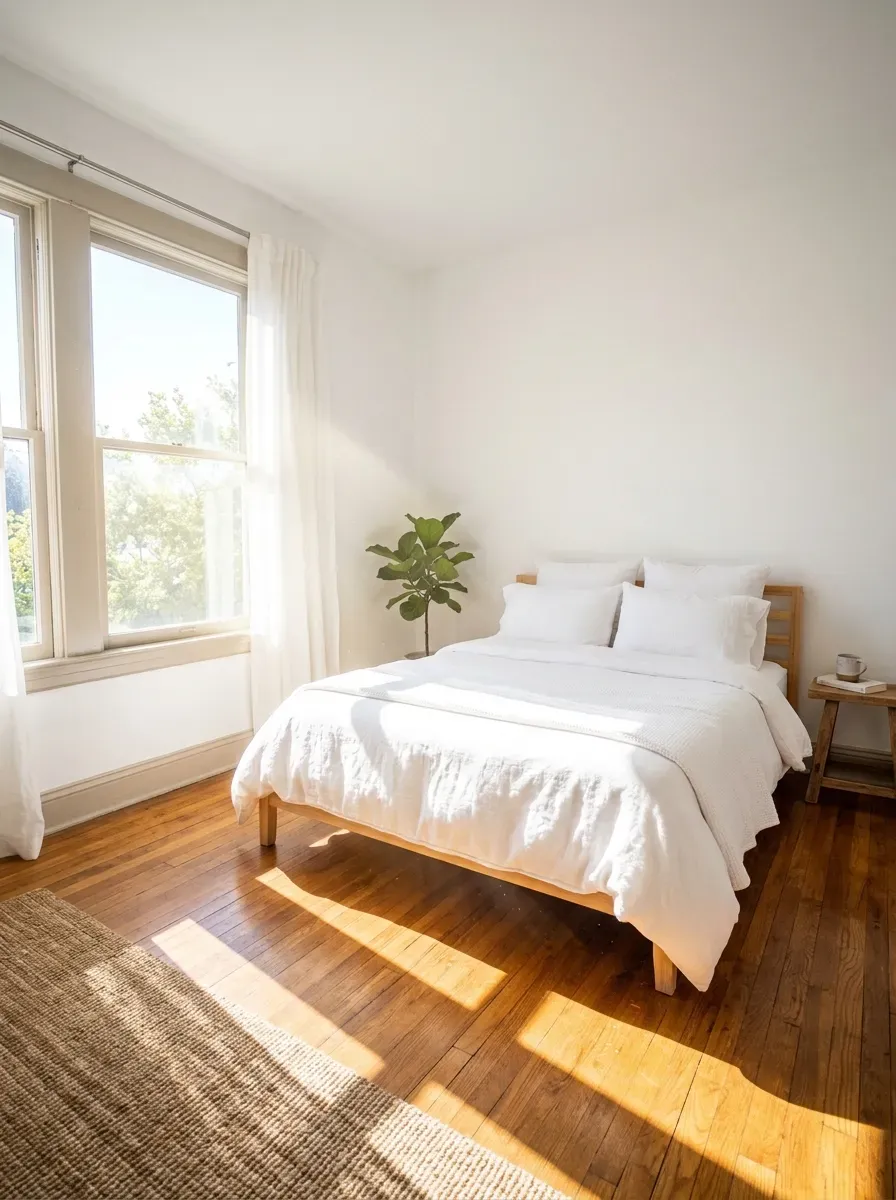
Natural light is the most powerful tool you have for making a small room feel large.
A bright room always feels bigger than a dark one, regardless of actual square footage. Every design decision in a small bedroom should protect and maximize natural light.
Start by removing anything that blocks your windows. Heavy curtains, furniture placed in front of windows, or blinds left closed all day cut your light and shrink the room.
Replace heavy drapes with sheer white panels. They provide privacy while letting light through. They cost $15–$30 per panel and make a dramatic difference.
Keep the area immediately around and in front of windows clear. Don’t push furniture up against windows.
If natural light is limited — north-facing room, small windows, or no windows at all — full-spectrum LED bulbs are the next best thing. They mimic daylight more closely than standard bulbs and make rooms feel brighter and more open.
Clean your windows. Sounds obvious, but dirty windows cut light significantly. A quick wipe-down on both sides can noticeably brighten a room.
Light-colored walls amplify natural light by reflecting it around the room. Dark walls absorb it. This circles back to the first tip on this list — and it’s worth repeating, because light is that important.
Conclusion
Making a small bedroom feel bigger isn’t about spending a lot of money or knocking down walls. It’s about making smarter choices with what you already have — and making a few targeted upgrades that punch above their weight.
Start with the free stuff: clear the floor, clear the surfaces, make the bed, swap in lighter bedding. Then move to the cheap-but-impactful changes: hang curtains high, add a large mirror, switch to warm light bulbs. From there, think about one or two furniture decisions — a bed with storage, floating nightstands, a better closet organization system.
You don’t have to do all 25 things at once. Pick three that feel manageable this weekend and do those first. You’ll likely see enough of a difference that momentum takes over.
The room you have right now has more potential than you think. It just needs a little editing, a little intention, and a few of the right moves in the right places.
