

Nothing is more frustrating than falling in love with a wooden bed online, waiting weeks for delivery, only to watch it clash with your bedroom. The bed is the biggest piece of furniture in the room, so getting its style wrong throws the whole space off.
This guide shows you how to pick a wooden bed that feels like it was always meant for your home — by reading your style, matching tones, and testing the fit before you commit.
Identify Your Home’s Style First
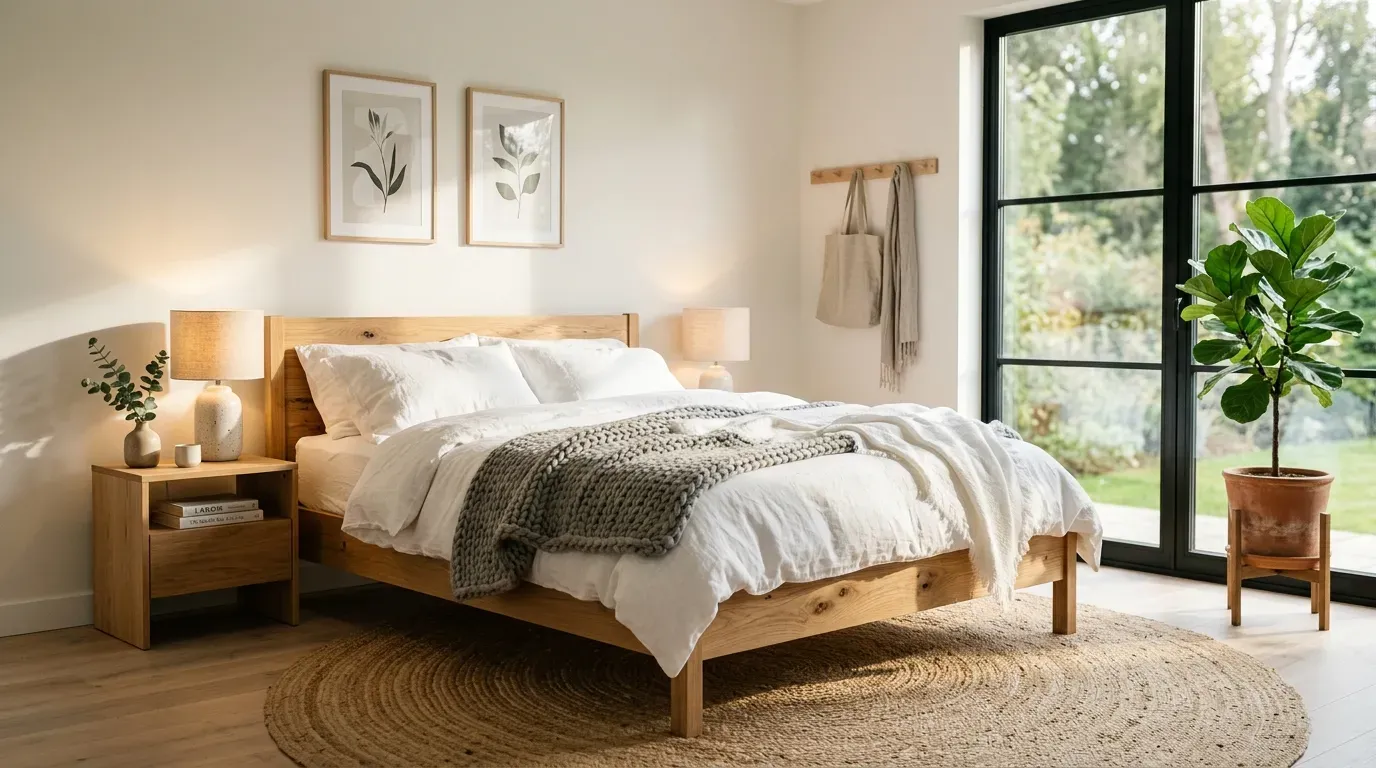
Before browsing a single bed frame, name your home’s style in plain words — farmhouse, modern, mid-century, coastal, traditional, or a comfortable mix. Walk through your house and notice the repeating clues: shiplap walls and distressed finishes say farmhouse, clean lines and tapered legs say mid-century, carved moldings and dark woods say traditional. Once you can name it, every bed choice gets easier.
Find your style in ten minutes:
● Photograph your living room and bedroom, then note which three style words come to mind.
● List what you already love: the paint colors, the flooring, the furniture pieces you would never give up.
● Notice what feels off — a glass-and-chrome table in a rustic room tells you exactly what not to repeat.
● Write one style sentence, like “warm modern farmhouse,” and judge every bed frame against it before you fall for one.
Match Wood Tone to Your Palette
Wood tone is the quiet conversation between your bed and the rest of the room. Light woods like maple and whitewashed oak open up small rooms and suit coastal or Scandinavian homes; medium walnut and cherry add warmth for traditional and transitional rooms; dark espresso grounds large rooms but can crowd small ones. The safest move is echoing a tone that already lives in your room — your floor, a dresser, or even the door frames.
Tone rules that always work:
● Pull one tone from your flooring or biggest furniture piece, and stay within one step lighter or darker.
● Match undertones, not just lightness — warm cherry fights cool gray walls, while ash or white oak plays nicely with them.
● In small rooms go lighter so the space breathes; in large rooms with high ceilings, darker woods anchor everything.
● When in doubt, medium oak is the diplomat — it works in nearly every style.
Pick a Headboard That Speaks the Same Language
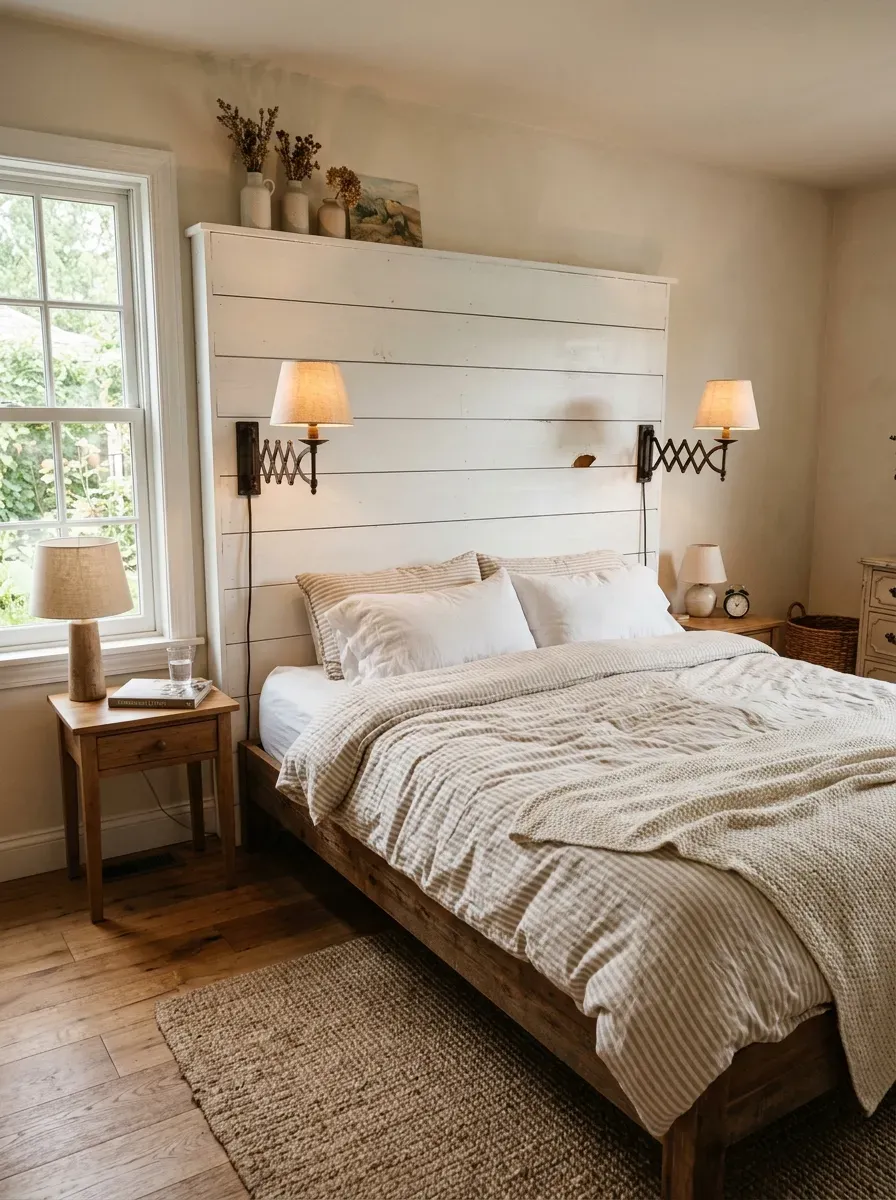
The headboard is the face of the bed and sets the style volume for the whole room. A tall tufted headboard says traditional luxury, a low slatted headboard says Scandinavian or Japanese calm, shiplap panels say farmhouse, and a slim upholstered rectangle says modern minimal. Keep the headboard’s mood within one style step of your room, and scale its height to your ceiling so it feels intentional.
Headboard matching guide:
● Farmhouse or rustic homes: shiplap, reclaimed-look planks, or arched wood panels.
● Modern or minimal homes: a low profile, clean lines, or a slim upholstered panel in a neutral fabric.
● Traditional homes: tall tufted or wingback shapes with rich, dark wood trim for presence.
● Keep headboard height proportional — with eight-foot ceilings, aim for 48 to 54 inches total.
Scale the Bed to the Room’s Personality
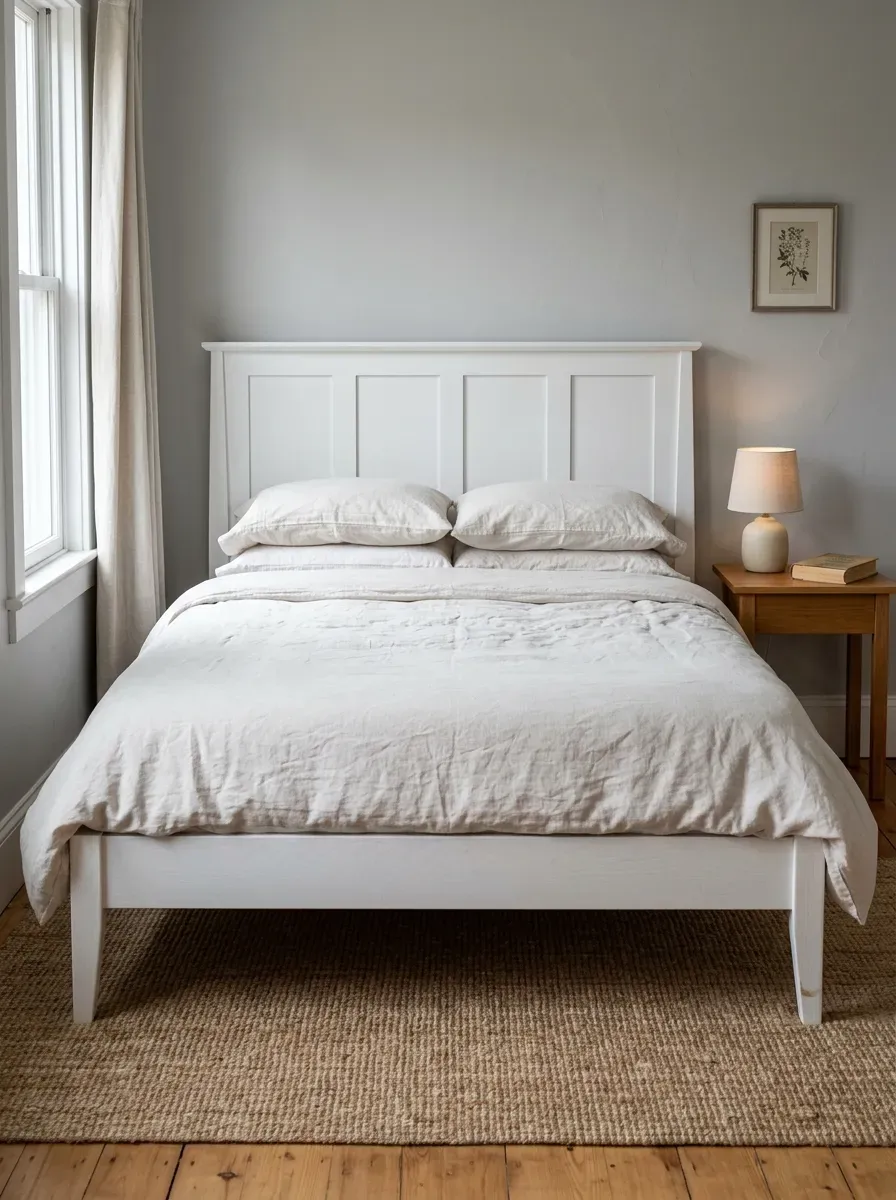
A beautiful bed in the wrong size reads wrong no matter how pretty it is. Leave at least 24 inches of walking space on each side and at the foot of the bed; a four-poster needs ceiling height and breathing room around it, while a low platform suits small rooms by showing more wall. Match the bed’s visual weight to the room — a chunky frame in an airy room feels heavy, and a delicate frame in a grand room feels lost.
Sizing that feels right:
● Measure twice: bed footprint plus 24 to 30 inches of clear space on three sides before ordering.
● Low platform beds make small rooms feel bigger by revealing more wall and floor around them.
● Tall posts, canopies, and sleigh silhouettes need nine-foot ceilings and generous floor space to breathe.
● Match visual weight — airy rooms want slim, open frames, while large rooms can carry chunky statement beds.

Blend, Don’t Clone, Across Rooms
Your bedroom does not need a matching furniture set — identical matching pieces can make a room look like a showroom instead of a home. Blend by repeating one or two elements: the same wood tone on nightstands, the same black metal in lamp and bed hardware, or the same curve language in mirror and headboard. Contrast is welcome too — a rustic wood bed with modern white nightstands is a classic designer mix.
Mixing without clashing:
● Repeat one element — wood tone, metal finish, or shape — and two quiet echoes are enough.
● Vary texture on purpose: a smooth upholstered headboard with rough linen bedding and a woven rug.
● Keep metal finishes to one or two families, like all black or brass plus black, across the whole room.
● If a piece fights the bed, move it to another room instead of forcing a match that will always bug you.
The Two-Piece Test Before You Commit
Before the bed arrives, rehearse the pairing with what you already own. Tape the bed’s footprint on the floor — or set a nightstand where the new bed will stand — and live with it for two days. Check the sightlines from the doorway, the walking paths, and how morning light falls on the spot. It is a free rehearsal that catches mistakes no delivery day can fix.
Try before it ships:
● Tape the footprint on the floor and walk around it for a day to feel the real space.
● Hold wood or fabric samples against your wall color in morning and evening light.
● Photograph the mock-up from the doorway — the camera reveals proportion mistakes your eyes forgive.
● Confirm the delivery path first: measure doorways, stairs, and the elevator before ordering, not after.


David is the home decor enthusiast behind HomeLushly. He shares practical, budget-friendly ideas for bedrooms, living rooms and seasonal decorating — from colour combinations that actually work to small-space styling tricks that make a room feel bigger. Every guide on HomeLushly is built around real photos and hands-on research, to help you make your home feel warm, personal and beautifully put together.