

Some people decorate for Halloween. Others declare war on their visitors’ nerves. If you’re in the second camp, this guide is for you. A truly scary Halloween door doesn’t just look creepy — it triggers that primal fight-or-flight tingle, the delicious shiver that makes Halloween the best holiday of the year.
Real scares come from psychology, not just props. The unknown is scarier than the known. Suggestion beats exposition. A door that hints at horror — a bloody handprint, a whispering speaker, something moving in the dark — frightens far more than one that shows everything at once.
In this guide, you’ll learn how to create a scary Halloween door that gives chills: horror-movie techniques adapted for your entrance, the props that genuinely frighten, and how to pace your scares for maximum impact.
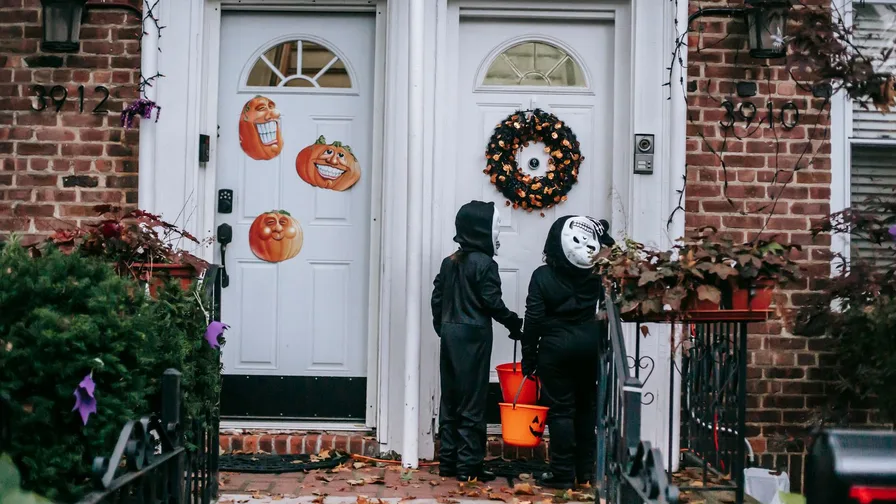
Steal From Horror Movies
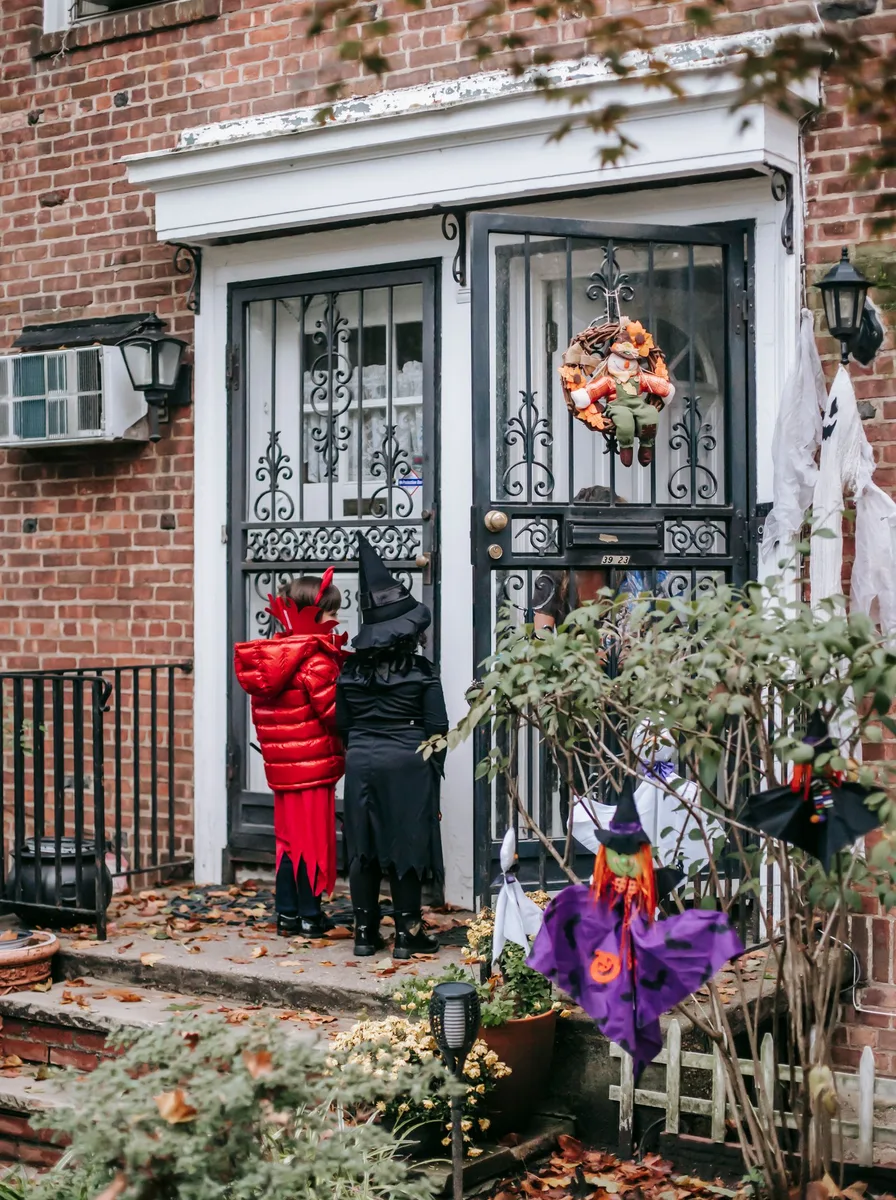
Horror filmmakers are masters of fear, and their techniques translate perfectly to a front door. The number one rule: less is more. A single bloody handprint on the door is scarier than a dozen plastic skeletons. A dark doorway with something barely visible inside beats a fully lit display.
Use the classic horror palette: deep reds, blacks, sickly greens. Add elements that imply violence without showing it — scratches on the door, a broken chain, a child’s toy abandoned on the steps. The viewer’s brain fills in the story, and the story it invents is always worse than anything you could build.
Horror techniques for your door:
● The implication: bloody handprints, scratches, a broken lock — evidence, not monsters.
● The barely-seen: a shape in the dark window, something behind the frosted glass.
● The wrongness: a child’s tricycle tipped over, a single shoe on the steps.
● The sound: faint whispering or breathing from a hidden speaker.
The scariest doors understand that fear is about anticipation, not revelation. Show less than the visitor expects. A dark window with a faint shape. A sound with no visible source. The moment before the scare is always scarier than the scare itself — so make the buildup count.
Choose Props That Truly Frighten
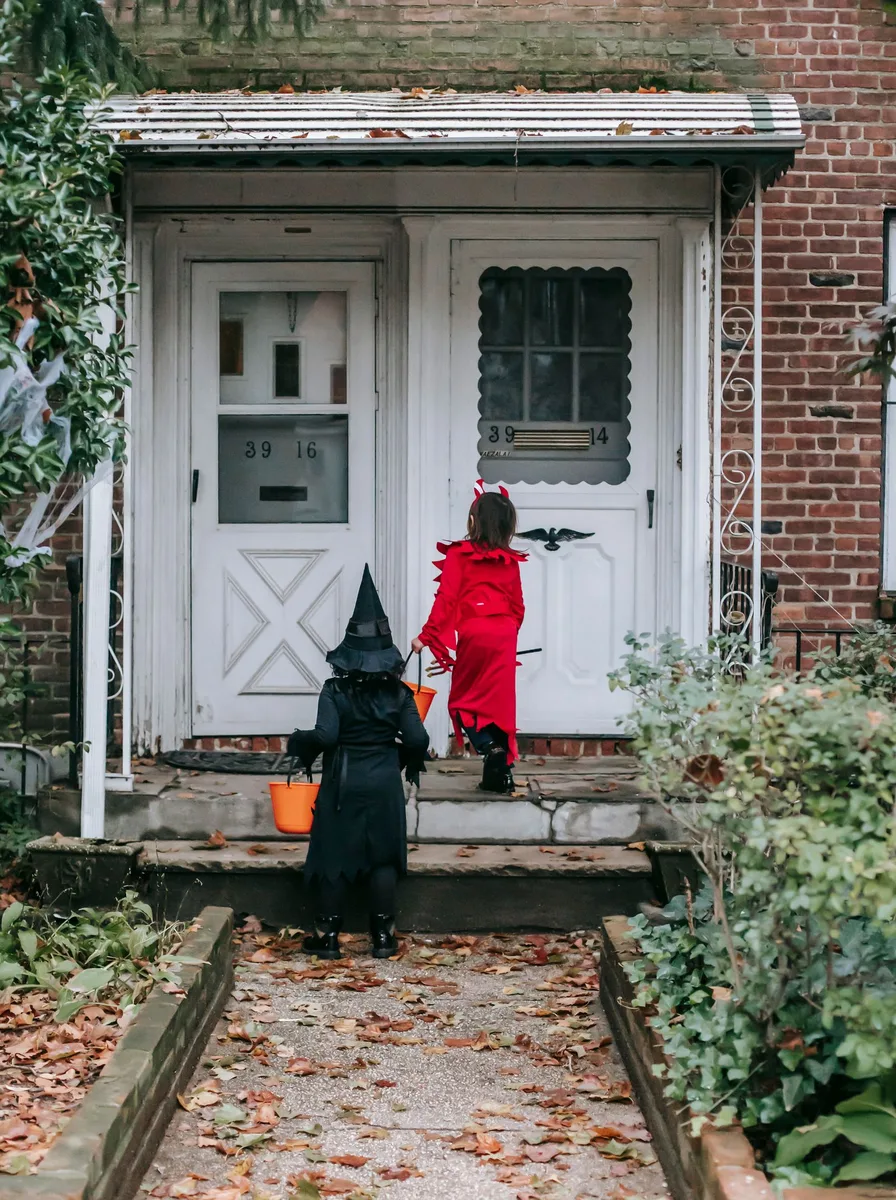
Not all scary props are equal. The ones that work tap into deep fears: clowns (coulrophobia is real), dolls with human-like faces, realistic corpses, things that look almost — but not quite — human. The uncanny valley is your most powerful weapon.
Invest in one or two genuinely good props rather than many cheap ones. A single realistic zombie torso bursting from the ground, a life-size demon with glowing eyes, a possessed doll in the window — quality over quantity, always. Cheap props break the spell; good ones sustain it.
Props with real scare power:
● Uncanny figures: dolls, mannequins, anything almost-human but wrong.
● Clowns: genuinely frightening to a huge percentage of people.
● Realistic gore: well-done fake blood and wounds (tasteful placement matters).
● Glowing eyes in the dark: simple, cheap, and deeply unsettling.
Quality is non-negotiable for real horror. A cheap rubber mask in daylight looks silly; the same mask glimpsed in shadow looks terrifying. Spend your budget on one excellent prop and the lighting to show it off, rather than ten mediocre ones that break the illusion.
Master Darkness and Shadow
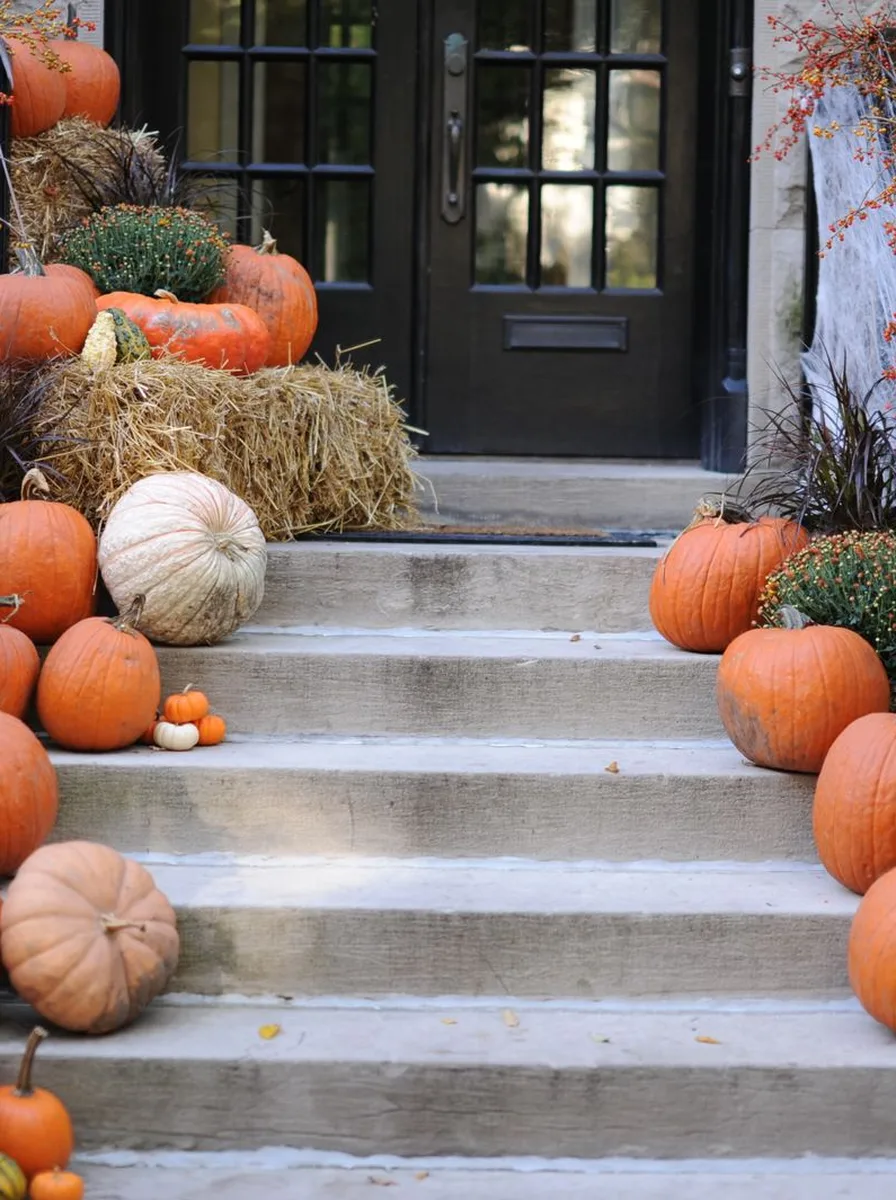
Darkness is the scariest decoration you own, and it’s free. The fear of the dark is hardwired into humans — we evolved to be afraid of what we can’t see. A scary door should be mostly dark, with just enough light to suggest horrors without revealing them.
Kill the porch light or replace it with the dimmest red bulb you can find. Light your props from below or the side to cast long, distorted shadows. Leave the corners pitch black. If visitors can’t quite see what’s in the shadows, their imagination will supply something far worse than your decorations.
Darkness techniques:
● Ditch the porch light — use a single dim red or green bulb instead.
● Side-light props to throw huge distorted shadows on the house.
● Leave the area around the door darker than visitors expect.
● A strobe light (used sparingly) disorients and heightens every scare.
Darkness needs contrast to work. Total blackness is just dark; darkness with a single red glow, a flickering candle, a pair of eyes — that’s horror. Give visitors just enough light to see that they can’t see everything, and their imagination takes over.
Pace Your Scares
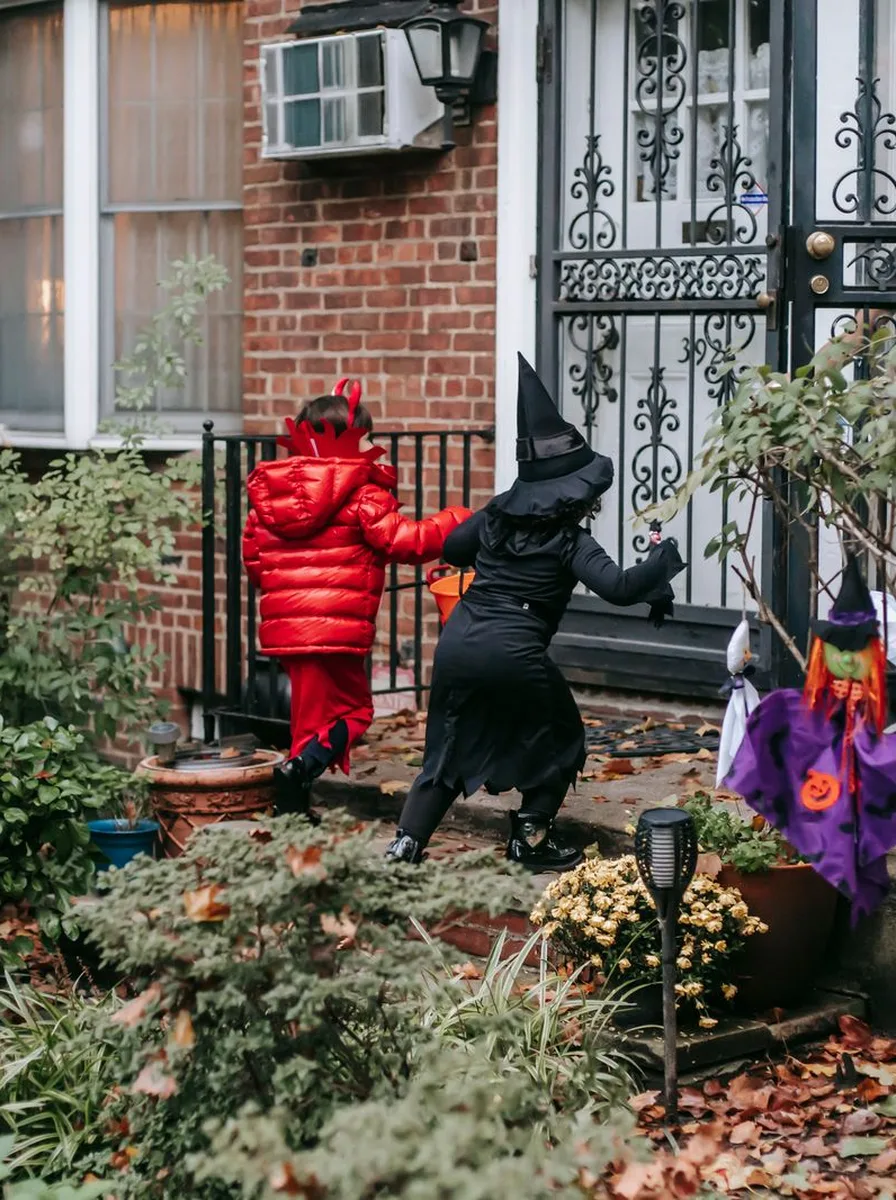
A haunted house throws scares at you constantly; a scary front door should be more surgical. One perfectly timed scare beats ten predictable ones. The approach should build dread — creepy visuals, unsettling sounds — and then, at the moment of maximum tension (reaching for the doorbell), the scare hits.
Motion-activated props are ideal for this. Place the trigger where visitors must pass: the doorbell, the treat bowl, the top step. The scare itself can be simple — a lunging figure, a screaming sound, a blast of air. What makes it terrifying is the buildup, not the payoff.
Scare pacing tips:
● Build dread on approach: creepy visuals first, sounds second.
● Place ONE motion scare at the point of interaction (doorbell/treat bowl).
● Let visitors recover, then hit them with a second, smaller surprise.
● Know your audience — dial it back for houses with young trick-or-treaters.
Respect the scare. A truly frightening door is a responsibility — warn parents of very young children, keep paths well-lit enough for safety, and always have a way to dial it back. The best haunts are the ones everyone survives with a story to tell.

David is the home decor enthusiast behind HomeLushly. He shares practical, budget-friendly ideas for bedrooms, living rooms and seasonal decorating — from colour combinations that actually work to small-space styling tricks that make a room feel bigger. Every guide on HomeLushly is built around real photos and hands-on research, to help you make your home feel warm, personal and beautifully put together.