

Your dream bedroom doesn’t need a renovation — it needs walls that help you rest. The bedroom is the one room where walls should work hardest for your wellbeing: calming you at night, greeting you gently in the morning, and holding everything you need without visual noise. Simple wall ideas, done well, can transform an ordinary bedroom into a personal retreat.
The dream-bedroom formula is surprisingly simple: a soothing colour palette, one beautiful focal wall, art that calms rather than stimulates, and clever details like mirrors and wallpaper that add depth. None of this requires professional help or a big budget.
This guide walks you through designing a dream bedroom using simple wall ideas — from choosing restful colours and styling the headboard wall to hanging relaxing art, placing mirrors for light, and trying removable wallpaper for instant charm.

Choose a Calming Colour Palette
Colour sets the emotional temperature of a bedroom, so choose with rest in mind. Soft, muted tones — warm whites, pale greys, dusty blues, sage greens, gentle blush — lower the visual energy of a room and help your mind unwind. Bold, saturated colours can be beautiful, but they stimulate rather than soothe, which is the opposite of what a dream bedroom needs.
Keep the palette tight: one main wall colour, one or two supporting tones in bedding and curtains, and a single accent. When everything in the room speaks the same quiet colour language, the space feels harmonious and deeply restful. If you crave a little drama, put it on one wall only and keep the rest serene.
Calming colour combinations that work:
● Warm white walls with oatmeal bedding and natural wood — timeless and serene.
● Pale sage walls with cream linens and soft grey throws for a nature-inspired calm.
● Dusty blue walls with white bedding — like sleeping in a soft morning sky.
● Gentle blush walls with ivory and taupe for a warm, romantic retreat.
Make the Headboard Wall the Star

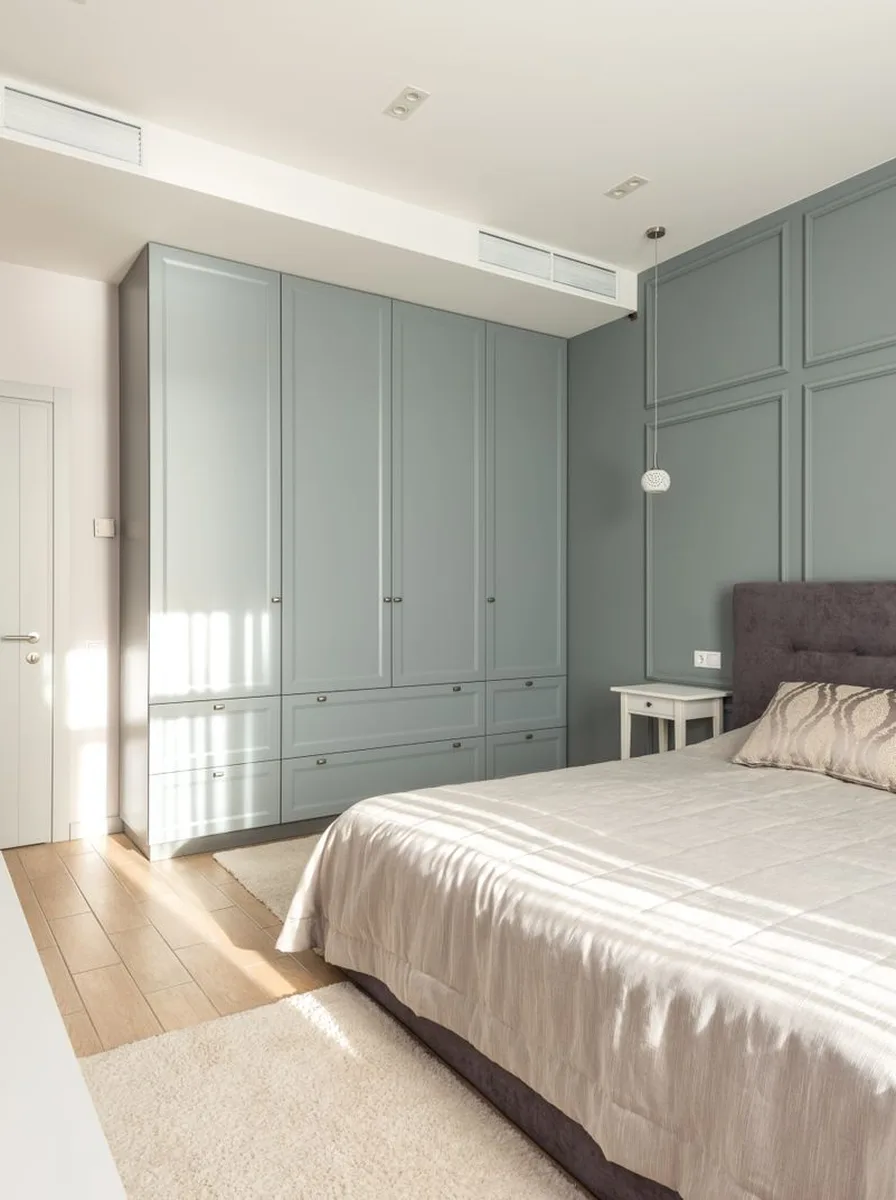
Every dream bedroom has a star: the wall behind the bed. This is the wall you see when you enter and the one that frames your sleep, so give it special treatment. A headboard wall painted in a deeper tone than the other walls, dressed with wallpaper, or detailed with wood panelling instantly makes the bedroom feel designed rather than decorated.
You don’t need built-in panelling to get the effect. A tall, upholstered headboard against a softly coloured wall creates the same sense of occasion. Add a pair of matching sconces or pendants on either side, and the headboard wall becomes a composed, hotel-like vignette that elevates the entire room.
Headboard wall ideas:
● Paint the headboard wall one or two shades deeper than the other walls for gentle contrast.
● Try peel-and-stick wallpaper in a subtle pattern — grasscloth, linen-look, or soft stripes.
● Hang two matching sconces or small pendants to frame the bed symmetrically.
● Lean a large piece of calm art or a mirror above a low headboard for height.
Hang Art That Helps You Relax

Bedroom art should whisper, not shout. Choose pieces with soft colours, gentle subjects, and plenty of breathing room — misty landscapes, abstract washes of colour, botanical prints, or black-and-white photography. Avoid busy, high-contrast, or emotionally intense imagery; your bedroom walls should lower your heart rate, not raise it.
Scale and placement matter as much as subject. One medium-to-large piece above the dresser or on the wall opposite the bed has more calming power than a cluster of small frames competing for attention. Hang art at eye level — the centre of the piece roughly 145cm from the floor — so it feels natural and easy to look at.
Relaxing art guidelines:
● Stick to a soft, muted palette that echoes your bedding and wall colour.
● Choose landscapes, seascapes, botanicals, or gentle abstracts over busy scenes.
● One larger piece calms a room more than many small competing frames.
● Leave generous empty wall space around art — emptiness is restful.
Use Mirrors to Add Light and Space

Mirrors are a dream bedroom’s quiet superpower. They bounce daylight into corners, make small rooms feel twice their size, and add a touch of glamour without any visual noise. A well-placed mirror can transform a dark, boxy bedroom into a bright, airy retreat — no structural changes needed.
Place mirrors where they catch light or a lovely view. Opposite or beside a window is ideal: the mirror becomes a second window, doubling your daylight. A full-length mirror leaning against the wall adds height and is practical for getting dressed. Avoid placing mirrors where they reflect clutter or face the bed directly if that disturbs your sleep.
Mirror placement that works:
● Lean a full-length mirror against the wall in a corner to add height and light.
● Hang a round mirror above the dresser to soften the room’s lines.
● Place a mirror opposite the window to double your natural light.
● Choose slim, simple frames so the mirror feels calm rather than flashy.
Try Removable Wallpaper for Instant Charm
If paint feels too plain and panelling too permanent, removable wallpaper is the dream-bedroom shortcut. Modern peel-and-stick papers come in gorgeous designs — subtle grasscloth textures, delicate botanicals, soft geometrics — and go up in an afternoon with no paste and no commitment. It’s renter-friendly and perfect for experimenting.
Use it strategically rather than everywhere. One wallpapered wall behind the bed, the wall inside an alcove, or even just the wall behind open shelving gives you the pattern payoff without overwhelming the room’s calm. Keep the pattern soft and the colours muted so the room stays restful.
Removable wallpaper tips:
● Start with one feature wall — behind the bed is the classic choice.
● Choose small-scale, low-contrast patterns to keep the room serene.
● Measure carefully and order one extra roll; pattern matching uses more paper.
● Smooth from the centre outward with a soft cloth to avoid bubbles and creases.