

A small bedroom is not a decorating problem — it is a decorating shortcut.
When square footage is limited, colour does the heavy lifting. The right shade on the right wall can bounce daylight into dark corners, blur the edges of the room, and make a box room feel twice its size. Best of all, a tin of paint costs less than almost any other change you can make, which makes the small bedroom the cheapest room in the house to transform completely. Even renters can play: curtains, bedding, a painted wardrobe, or one well-chosen mirror deliver most of the effect with zero commitment to the walls.
The trick is knowing where to put colour and where to hold back.
Light, reflective shades open a room up; a single confident accent wall adds depth without closing in; and clever pairings — white with warm wood, sage with cream, grey with daylight — keep everything feeling calm and generous. Small rooms forgive bold choices too, because you see the whole scheme at a glance, and a colour that might overwhelm a big space can be just the right amount of character in a little one.
This guide gathers 24 smart small bedroom colour ideas that make tiny rooms feel bigger, each shown in a real-style setting with practical tips you can copy this weekend.
From all-white minimalism and sheer curtains to mustard yellow, coral, and a painted wardrobe, you will find a palette for every personality — and every colour here was chosen to stretch your space, not shrink it.
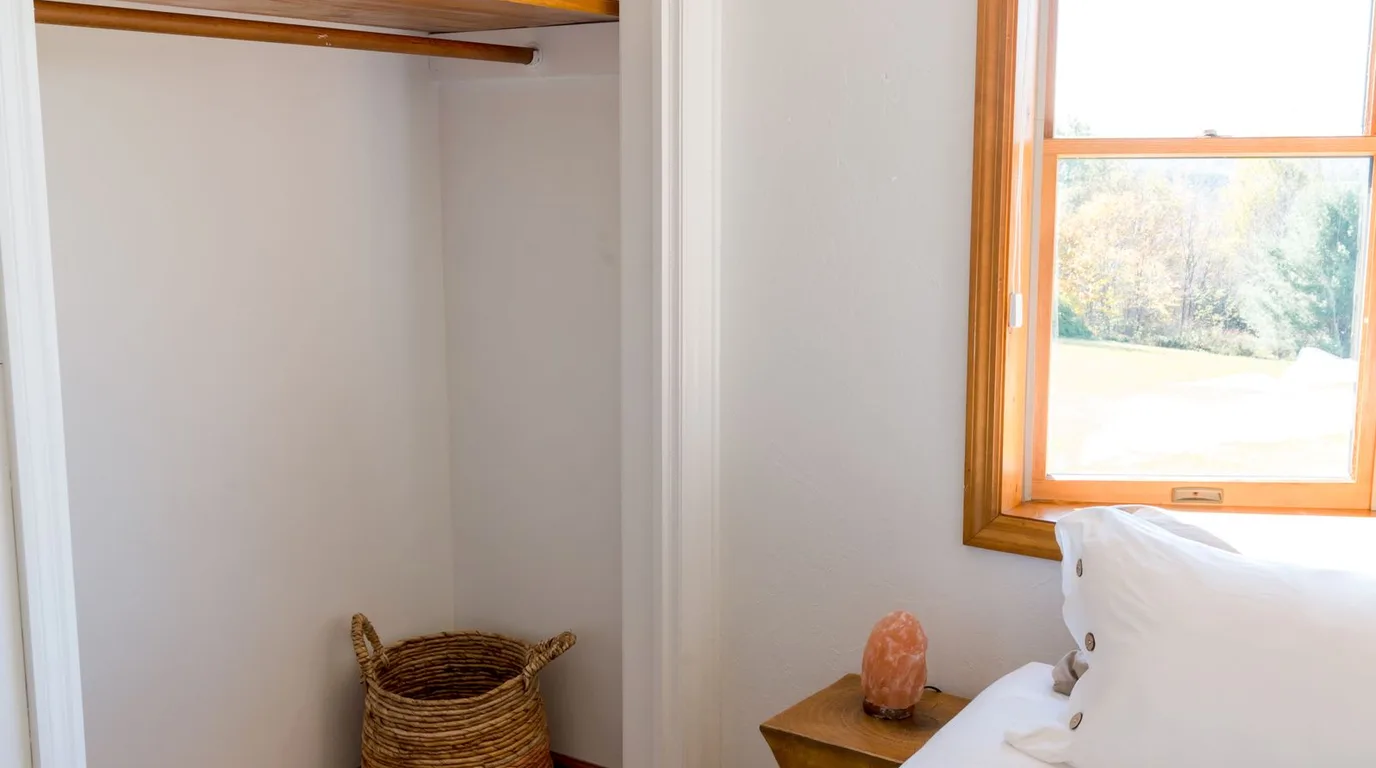
1. Slide Your Bed Under the Window
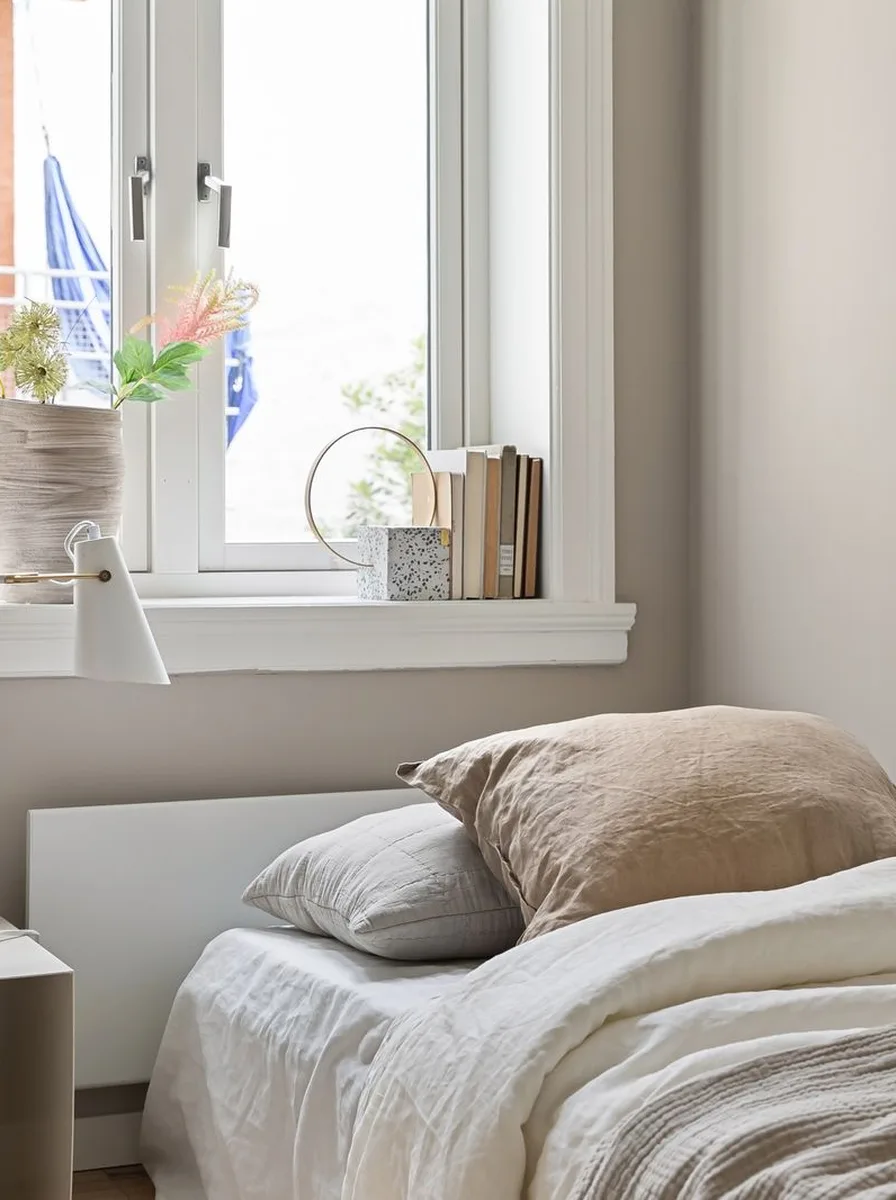
Placing the bed directly beneath the window frees up the longest wall for everything else and floods your pillows with natural light. Keep the walls a soft warm white and layer beige and cream pillows so the bed melts into the brightness rather than blocking it. The window becomes the headboard’s backdrop, which means you don’t need a bulky headboard at all.
Keep curtains light and mounted high and wide so the window reads as large as possible when they’re open. A low-profile bed frame keeps sightlines clear across the room, and a washable cotton throw in a sandy tone ties the bedding to the walls. In rented rooms, this layout needs zero drilling and zero paint — just a rethink of the furniture.
2. Go All-White with a Statement Mirror

White is the classic space-stretcher because it reflects every bit of available light and erases visual boundaries between walls, ceiling, and bedding. The secret to keeping it interesting is texture: crisp cotton, a chunky knit throw, and a woven rug stop an all-white room from feeling sterile. Then add one round mirror above the bed or dresser.
A round mirror softens all the room’s straight lines and bounces light into the darkest corner, effectively doubling your window. Hang it at eye level where it catches the brightest view. Tip: choose a mirror with a slim frame in wood or brass — it becomes the room’s jewellery without adding any visual weight.
3. Paint One Wall a Soft Sky Blue
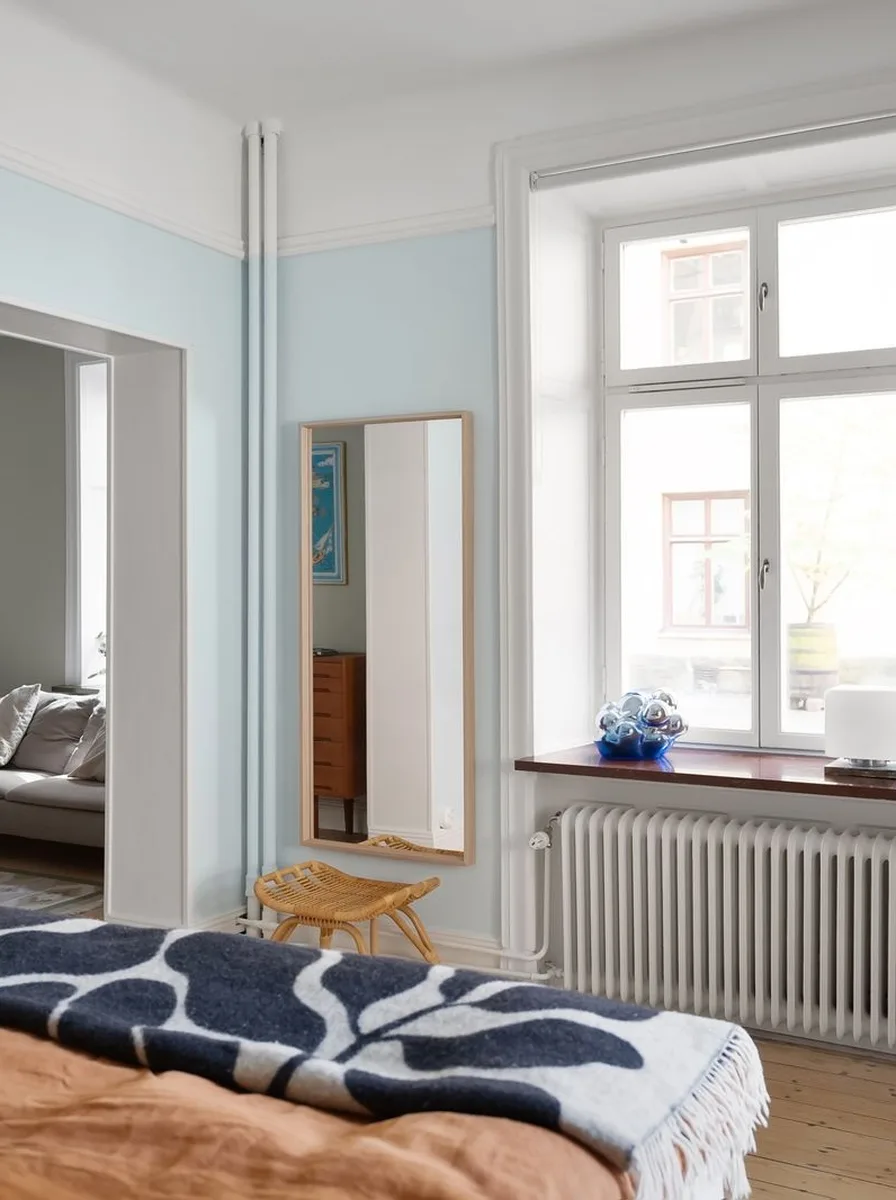
A single pale blue accent wall adds depth without closing the room in, because cool light colours recede from the eye — the wall literally looks further away. Choose a soft, powdery sky blue rather than anything saturated, and paint the wall your bed sits against so the colour frames your bedding instead of competing with it.
Keep the other three walls warm white and the ceiling bright white to maximise the lift. Pale blue loves natural materials: a wooden radiator cover or light oak floor keeps it cosy rather than chilly. If you get bored, one wall is a weekend’s work to repaint — commitment-free decorating at its best.
4. Try a Calming Sage Green Feature Wall
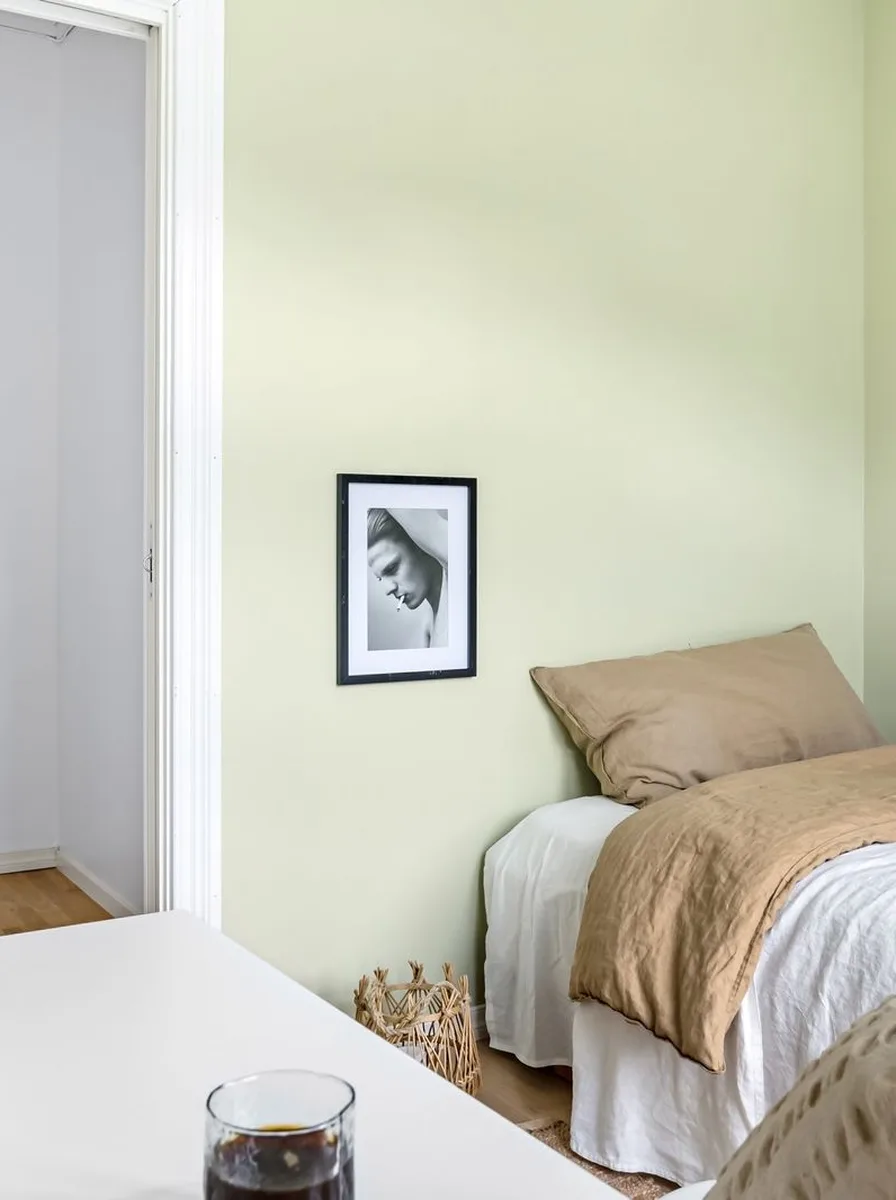
Sage green is the colour of calm, and a small bedroom is exactly where calm matters most. This greyed-out green sits beautifully between warm and cool, so it flatters both north-facing and south-facing rooms. Paint it behind the bed and let a simple bedside table in pale wood sit against it for a soft, nature-inspired vignette.
Sage pairs gorgeously with cream bedding and one deeper green accent — a cushion or a plant — to give the scheme dimension. In tiny rooms, keep the green to one wall only; painted on all four it can feel enclosing. A matt finish looks more sophisticated than silk and hides wall imperfections better.
5. Frame the Window with Green Curtains
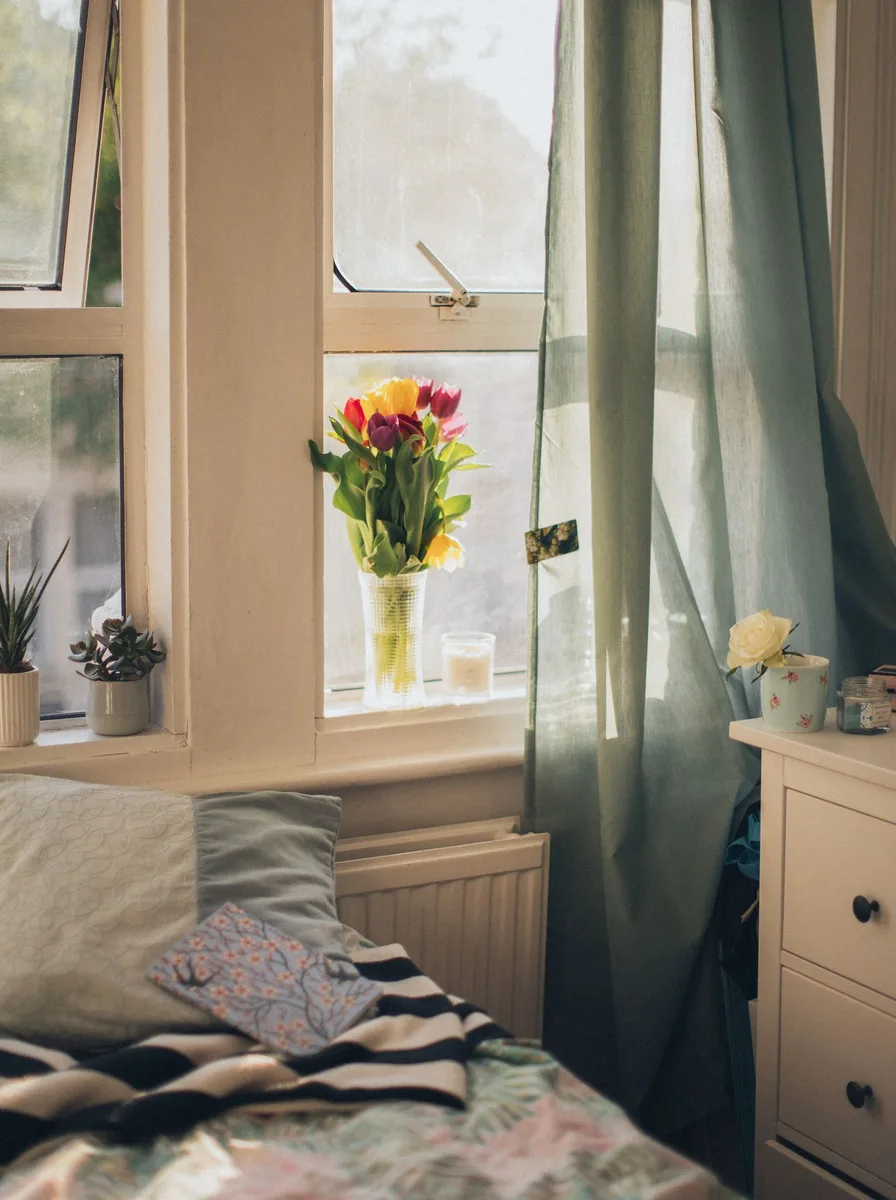
If you can’t — or won’t — paint, curtains are your colour delivery system. Deep green curtains in a small bedroom corner draw the eye to the window, which is the room’s natural focal point, and the rich colour makes the walls around them look brighter by contrast. Hang them from ceiling to floor to stretch the room’s height.
Echo the curtain colour with one living plant or a small vase of fresh flowers nearby and the whole corner feels intentional. Choose a green with grey undertones rather than a bright bottle green; it reads as sophisticated, not theatrical. Linen or a linen-look fabric keeps the drape relaxed and unfussy.
6. Add a Pop of Burnt Orange
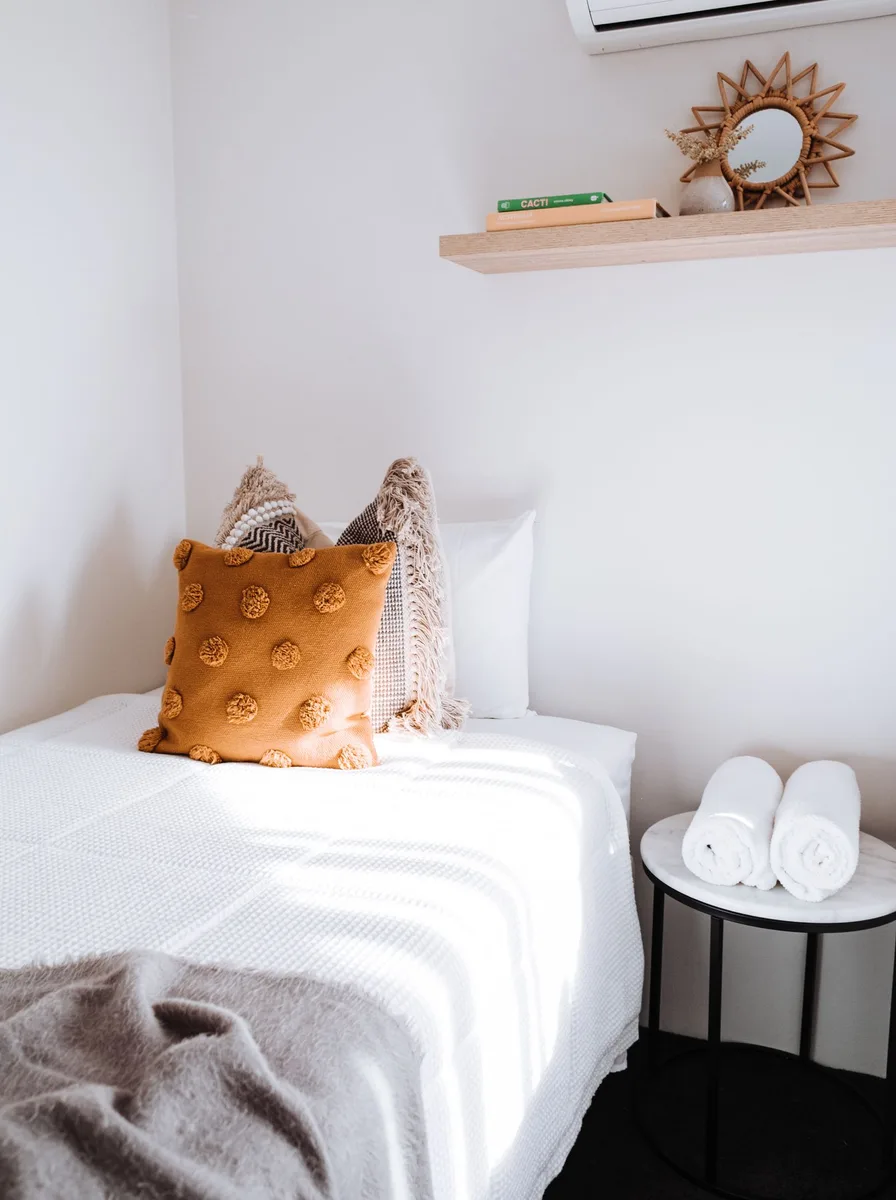
A mostly white bedroom is the perfect canvas for one warm, confident accent — and burnt orange is ideal. A single cushion in terracotta or rust adds energy and warmth without touching a paintbrush, and because it’s confined to soft furnishings you can swap it seasonally. The wall shelf above keeps the colour story going with small warm-toned objects.
The rule is restraint: one orange cushion, maybe a small throw, and nothing else in that colour family. Too much and the room shrinks; just a touch and it glows. Orange loves crisp white and pale wood, so this is also one of the cheapest refreshes on this list — a cushion and a shelf styling session, done.
7. Let in Light with Sheer White Curtains
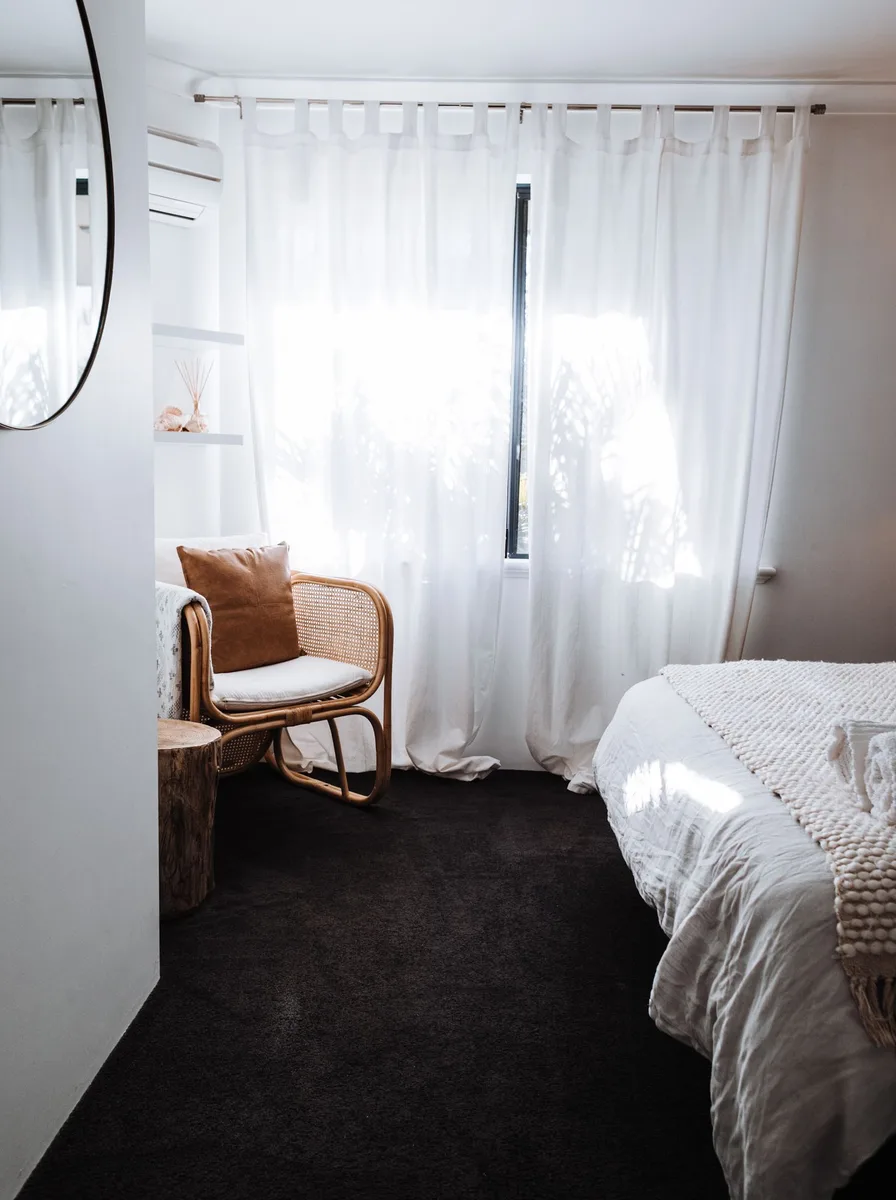
Heavy curtains eat light and visual space; sheers give it back. Floor-length sheer white curtains filter daylight into a soft glow that makes walls look further apart, and because you can see through them, the window’s depth becomes part of the room. An armchair tucked beside them gets the best seat in the house — a reading spot bathed in diffused light.
Choose a voile or lightweight linen with a little texture so the panels don’t look flimsy. Mount the rod close to the ceiling and extend it well beyond the window frame so the sheers stack clear of the glass. For privacy at night, layer a simple roller blind behind them — invisible by day, practical after dark.
8. Warm Up with Wood and Wall Art
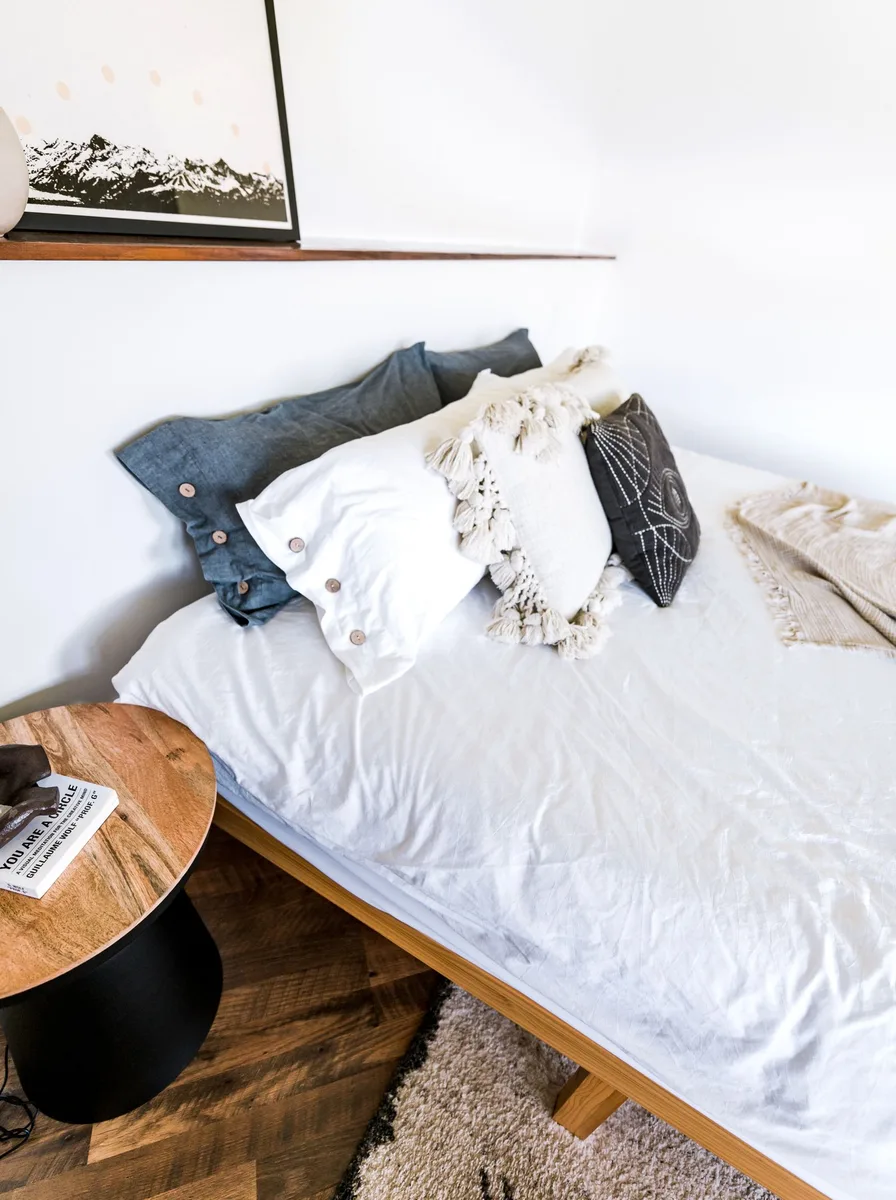
Colour isn’t only paint — warm wood tones count as colour too. A wooden side table beside the bed introduces honey and amber hues that stop a pale room feeling flat, and because wood is a natural material it adds warmth without visual noise. Pair it with one piece of wall art that picks up a similar tone and the room gains a designed, layered feel.
Keep the art small and framed simply; oversized frames overwhelm little walls. One medium piece above the bed or table is plenty. If your walls are white and your bedding neutral, the wood and art become the room’s entire colour palette — proof that “neutral” doesn’t have to mean boring.
9. Double Space with a Standing Mirror
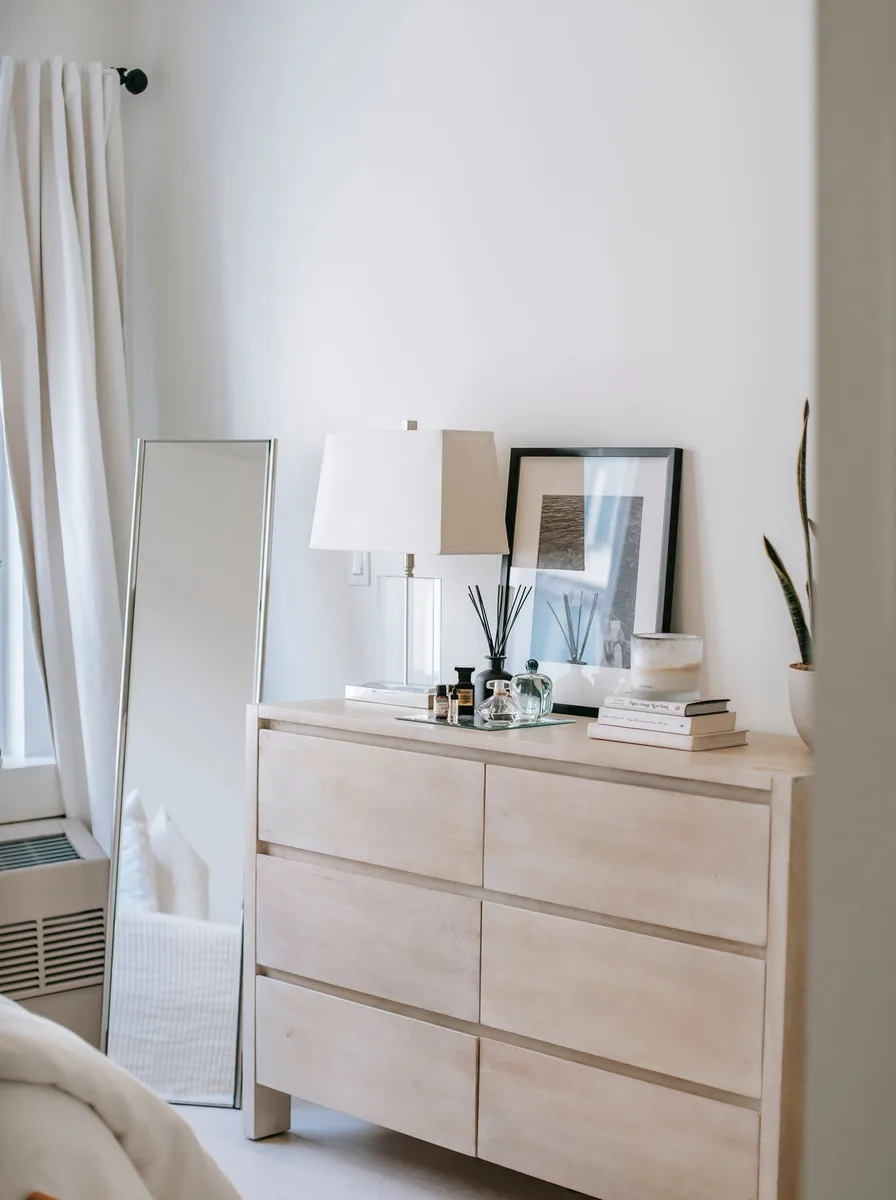
A full-length standing mirror is the oldest small-room trick in the book because it works: it reflects light, repeats the room’s brightest colours, and creates the illusion of a second space beyond the glass. Lean one in the corner opposite the window, next to a white dresser, and watch the room’s brightness double.
A slim, arched, or round-topped mirror reads as decor rather than just utility. Keep the frame pale — white, light wood, or thin brass — so it blends with the walls instead of cutting a dark line across them. Bonus: it makes getting dressed easier too, which is genuinely useful when the wardrobe is across a tiny room.
10. Layer Soft Greys Around a Big Window
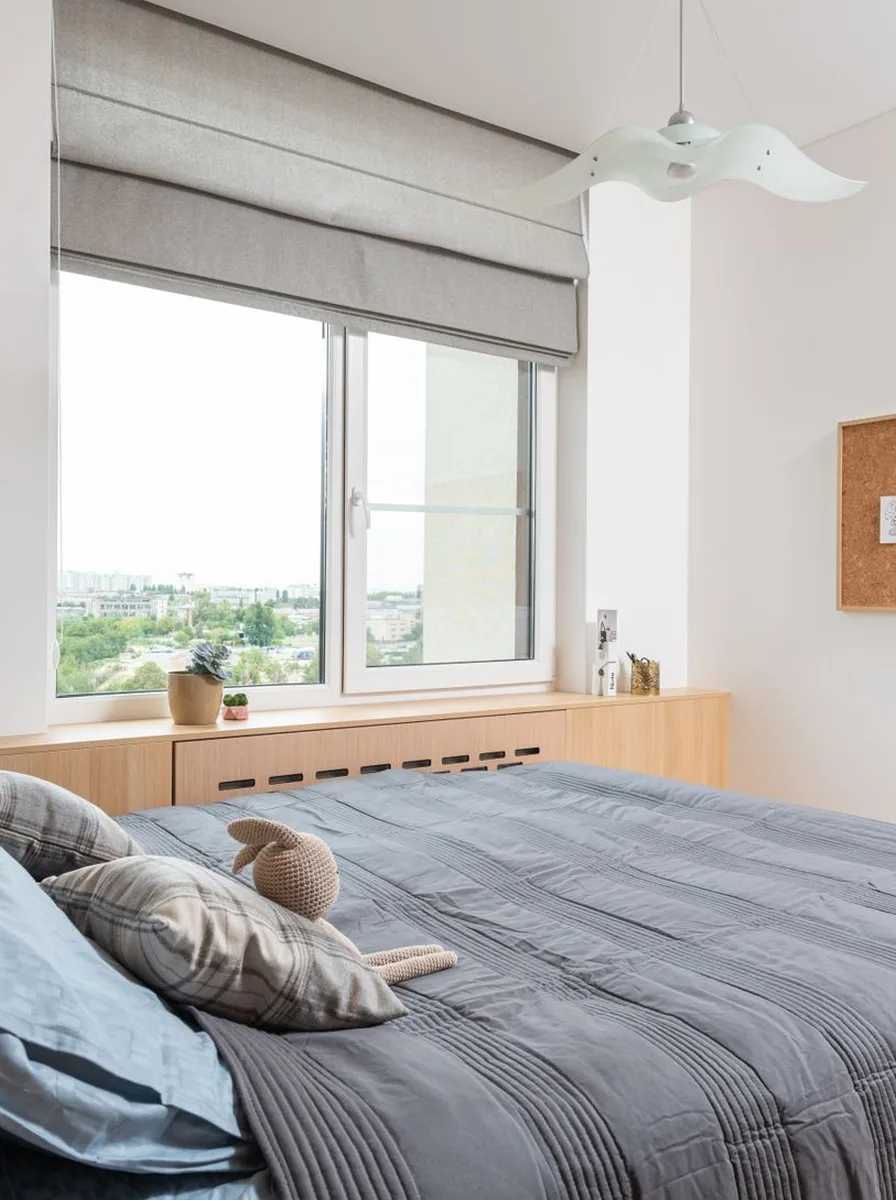
If your small bedroom has a generous window, let grey do the supporting work. Soft dove and silver-grey bedding against white walls feels calm and tailored, and grey has a clever quality: it takes on the tone of the light around it, so near a big window it reads as airy rather than flat. Layer two or three grey tones for depth.
Avoid charcoal in a small room — it absorbs the light you’re trying to keep. Stick to the pale end of the grey scale and warm it with one natural texture, like a jute rug or oak frame. Grey bedding also hides creases better than white, which is a practical win for real life.
11. Work a Blue Wall into a Bed-Desk Combo
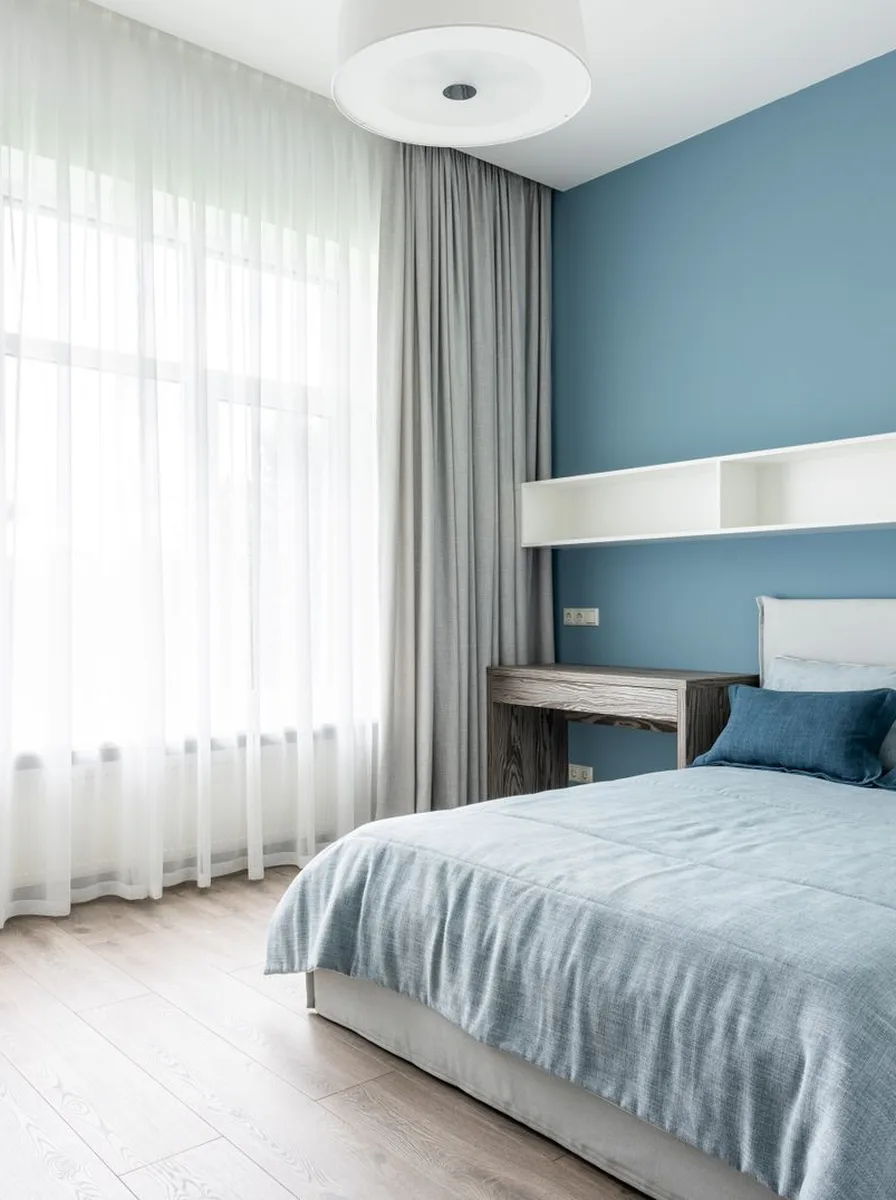
Many small bedrooms double as home offices, and a blue accent wall can unify the two jobs beautifully. Paint the wall behind both bed and desk in a dusty mid-blue; the colour zones the room without a single partition, and blue is famously focus-friendly for work hours and restful after them. Keep desk and bedding in whites and pale woods so the blue stays the star.
A mid-blue is bolder than the pale sky version, so balance it with plenty of white — white desk, white bedding, white ceiling. Add task lighting with a warm bulb so the desk corner doesn’t feel cave-like in the evening. One wall, two functions, zero extra floor space used.
12. Hang Striped Curtains for Height
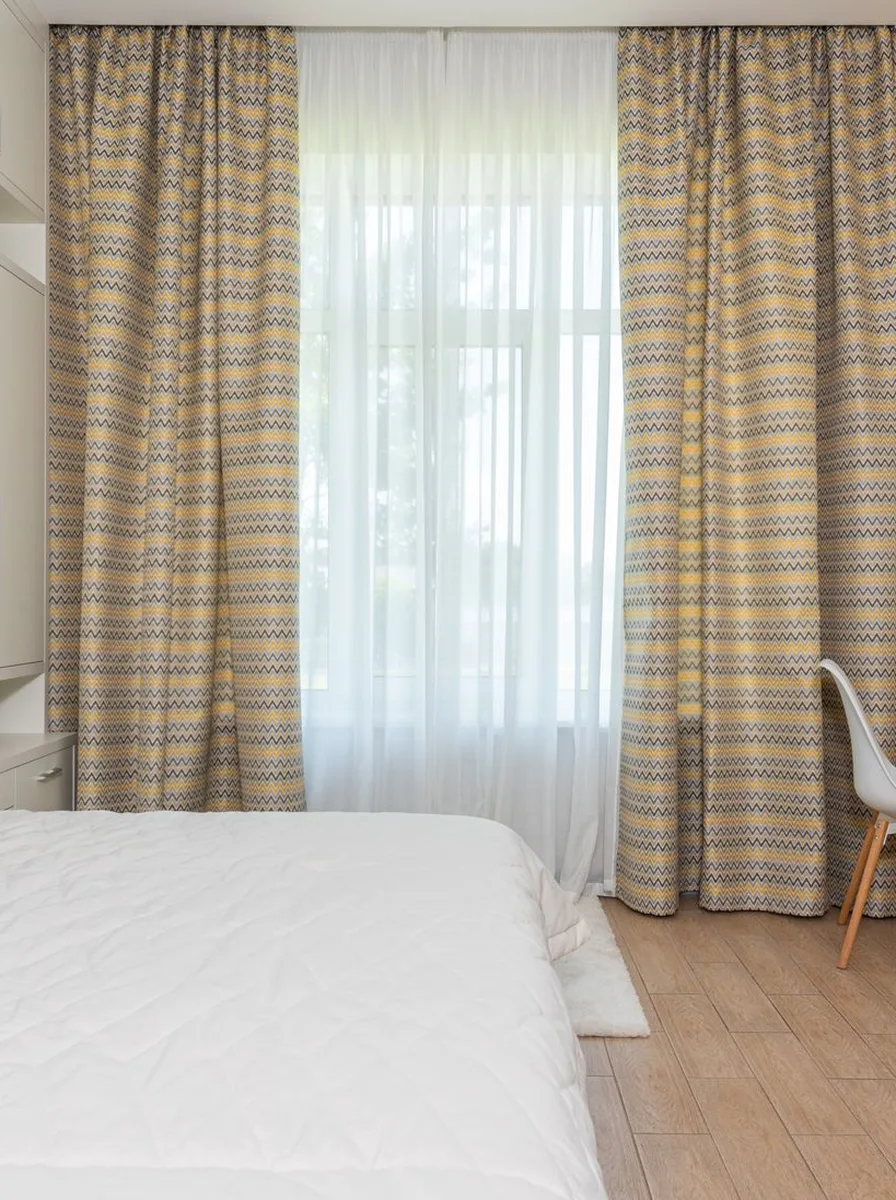
Vertical stripes are an optical illusion you can hang: they draw the eye upward and make ceilings feel higher, which makes the whole room feel bigger. In a small white bedroom, curtains with a fine stripe in grey, blue, or sage add pattern and colour in exactly the right dose — noticeable, but not busy.
Keep the stripe narrow and the background white so the curtains stay light, and let them fall all the way to the floor for maximum height trickery. Because the pattern is on the window, your bedding and walls can stay simple. It’s the easiest pattern to live with in a small space.
13. Energise a Study Corner with Coral
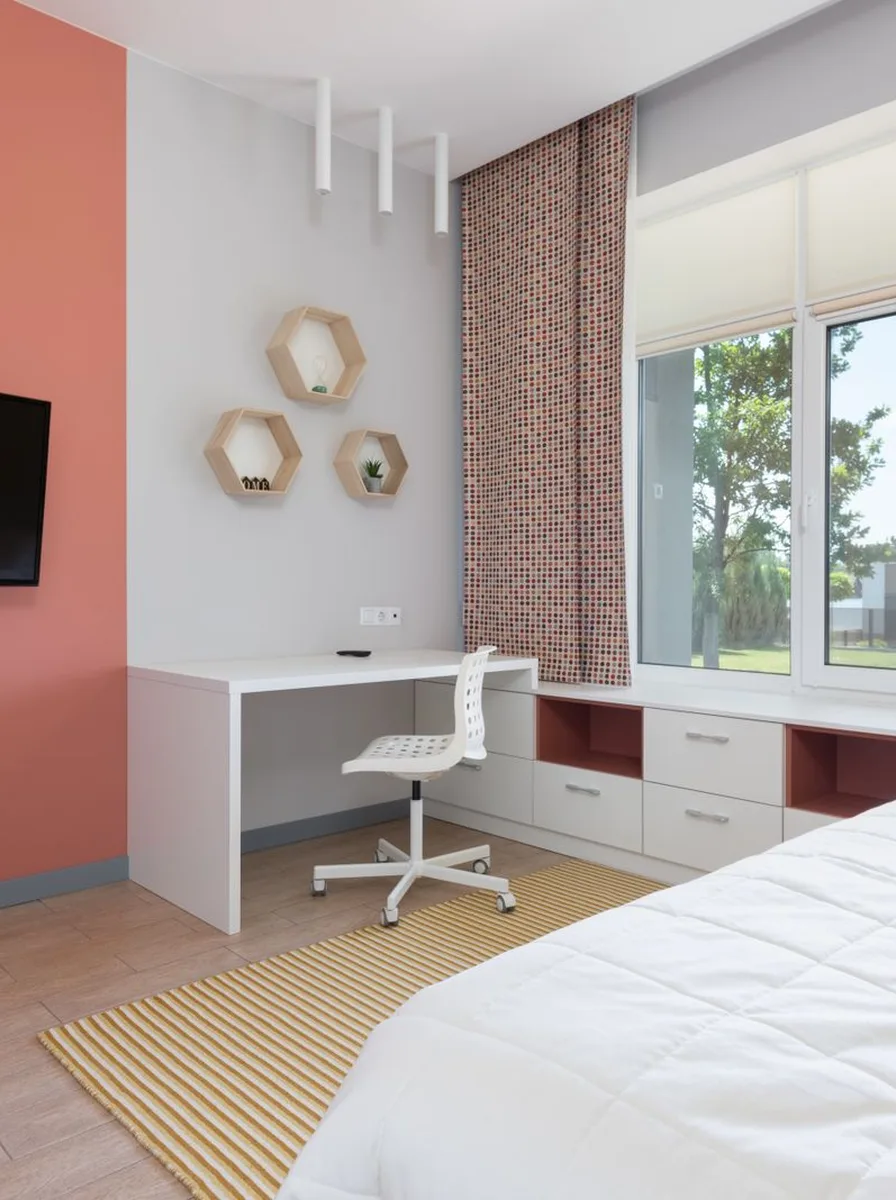
Coral is the extrovert of this list — warm, cheerful, and full of energy — which makes it perfect for a study corner that needs to feel motivating rather than sleepy. Paint just the wall behind the desk in a soft coral; it creates a defined work zone and gives video calls a flattering backdrop, while the sleeping area stays calm.
Coral’s warmth means the rest of the room should stay cool and pale: white bedding, light wood desk, maybe a touch of sage. Keep the coral to one wall — painted on all four it would be a lot to fall asleep in. Sample it first; corals shift dramatically between daylight and lamplight.
14. Swap the Lamp for a Pendant Light
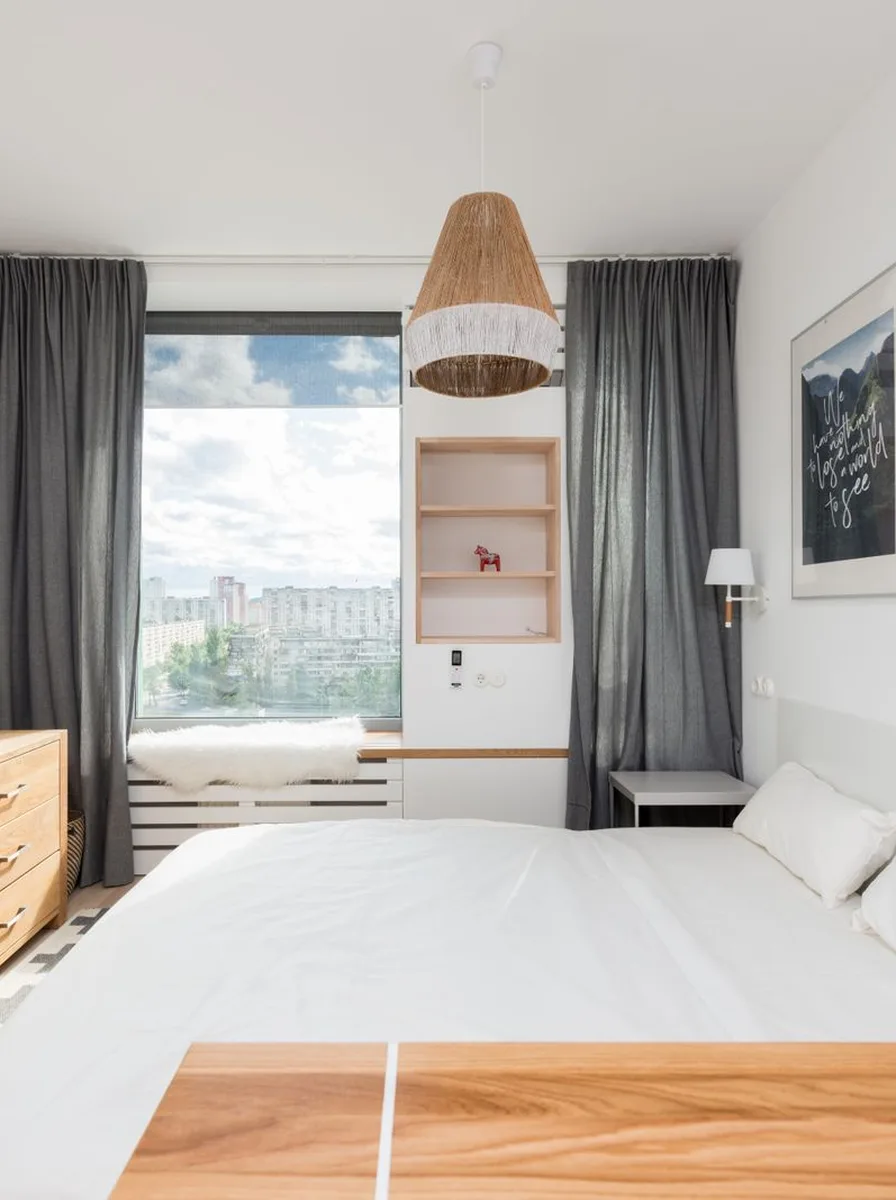
Table lamps eat precious surface space in a small bedroom; a pendant light gives it back. Hanging a pendant beside the bed frees the entire nightstand for books and water, and the light itself becomes a colour moment — a shade in soft white, rattan, or a muted colour draws the eye up and adds height.
Hang the pendant so its base sits roughly at headboard height for reading light, and choose a warm bulb (around 2700K) so the room glows rather than glares. If the view beyond is a city skyline, keep window treatments minimal — the view is free art, and a pendant in front of it doubles the drama.
15. Green Up a Beige Desk Nook
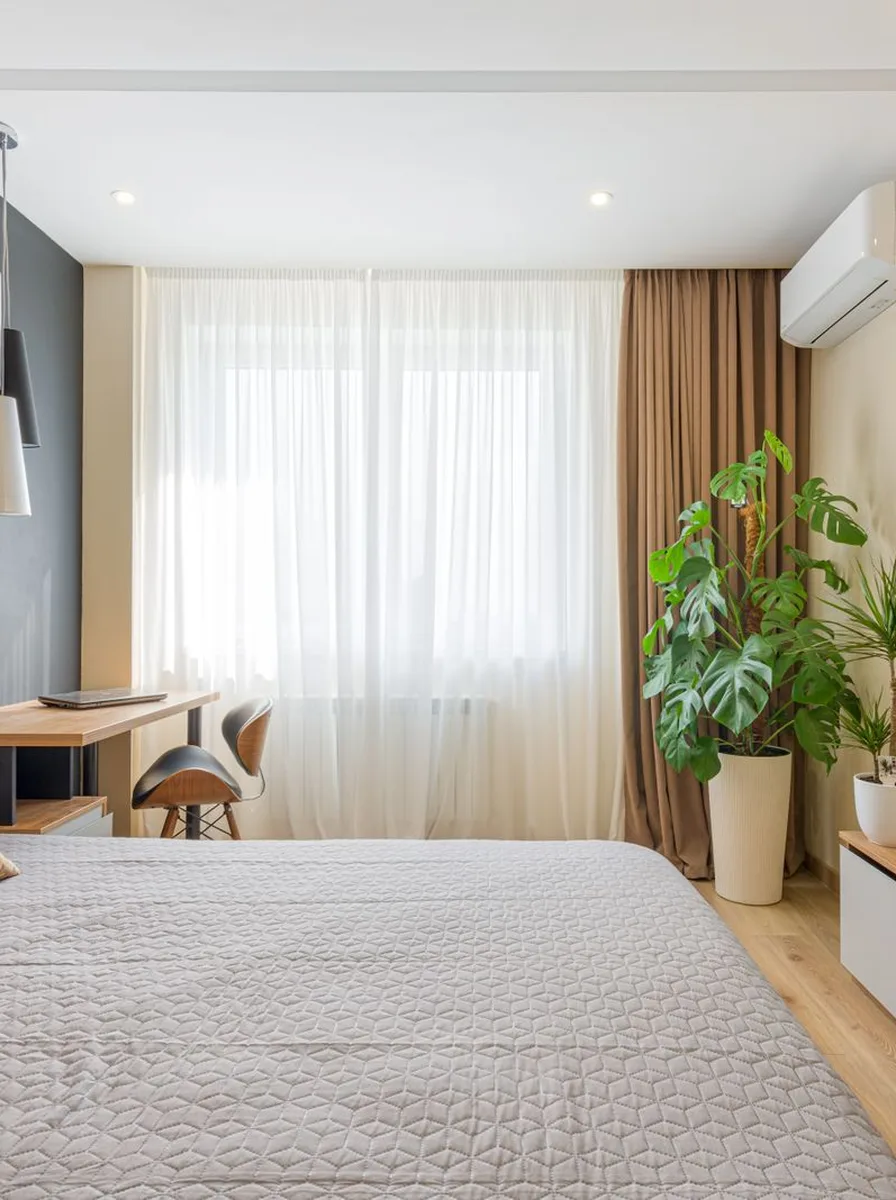
Beige gets a bad reputation, but in a small bedroom it’s a workhorse: warm, light-reflective, and endlessly forgiving. The trick is to stop it feeling flat by adding living green. A leafy plant beside a desk and beige bedding turns a plain neutral scheme into something fresh and alive — green is technically a colour, and plants are the cheapest way to add it.
Choose a plant that thrives on a desk — a pothos, spider plant, or small monstera — and put it in a pot that echoes your bedding tone. Beige bedding in a washed linen looks far more expensive than it is. Keep the desk surface mostly clear; in small rooms, visible surface equals visible space.
16. Choose Geometric Bedding with a Purpose
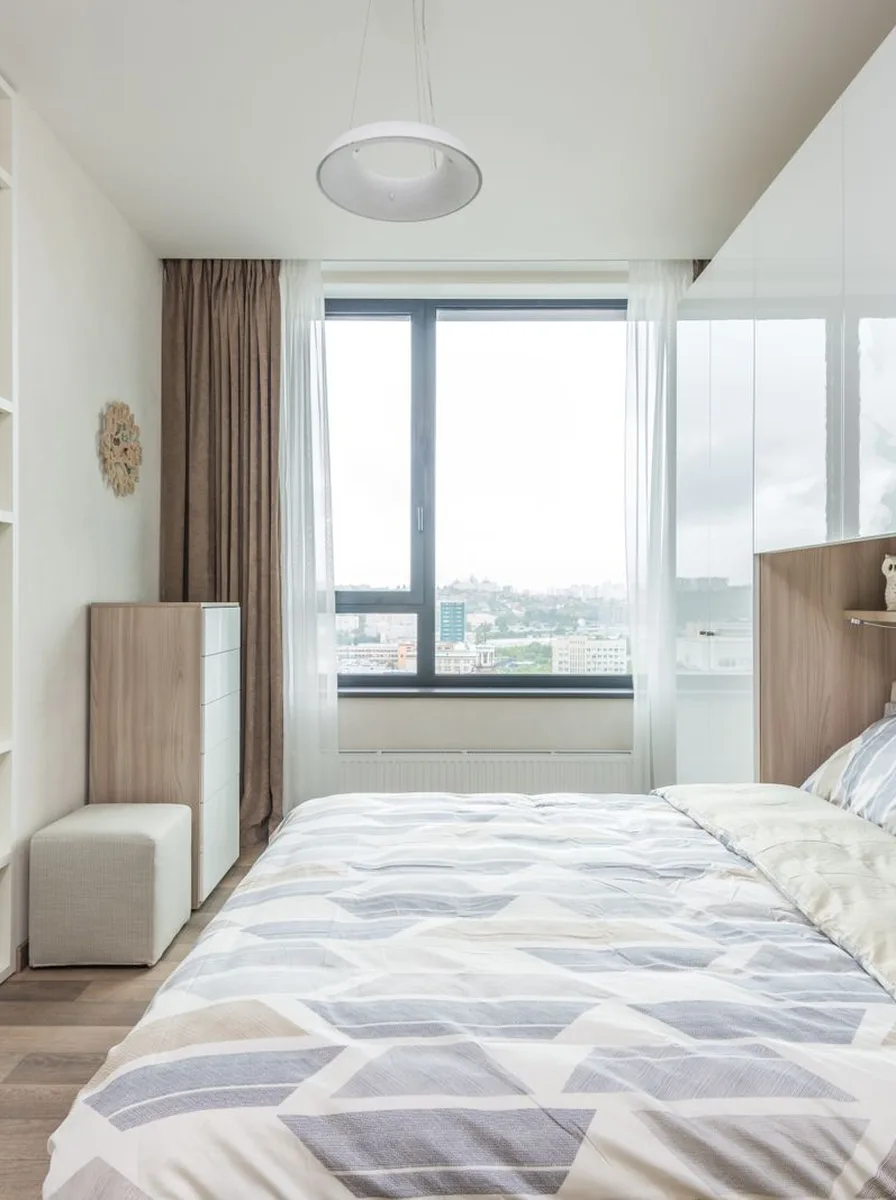
Patterned bedding in a small bedroom works when the pattern is doing a job. A geometric print with plenty of white space adds energy without heaviness, and the clean lines echo the window’s architecture for a cohesive look. Keep the geometry small-scale — large motifs overwhelm little beds — and pick a print with no more than three colours.
Let the bedding be the room’s one pattern, then keep everything else solid: plain curtains, plain rug, plain walls. Near a large window the daylight keeps even a busy print feeling fresh. Wash tip: geometric prints hide wrinkles beautifully, so your bed looks tidy with half the effort.
17. Pair Mustard Curtains with a Pink Throw
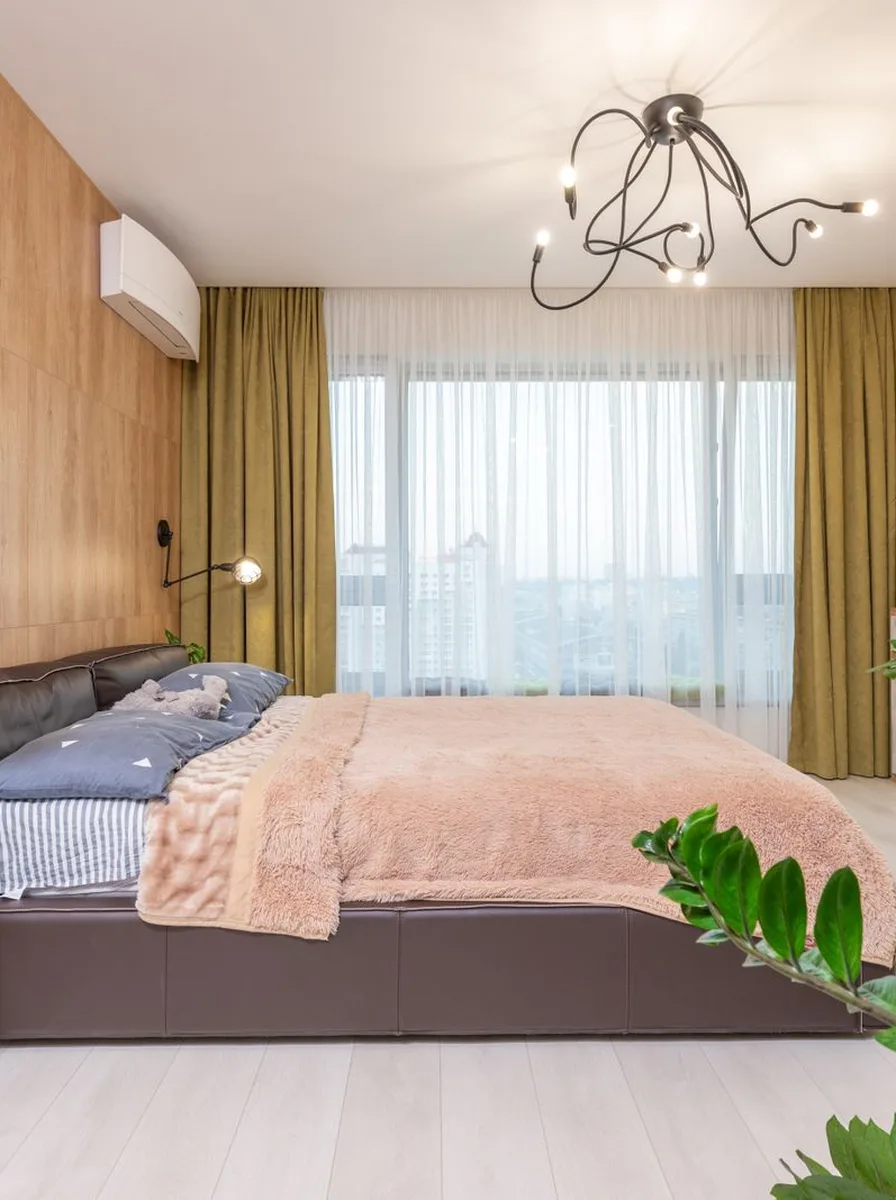
Mustard yellow is sunshine you can hang. In a small bedroom it brings warmth and optimism, especially on grey mornings, and it glows beautifully in lamplight. Pairing it with a soft pink throw might sound daring, but warm yellow and dusty pink are natural companions — think autumn leaves — and together they make a small room feel joyful rather than just small.
Keep walls white or cream so these two confident colours have room to breathe, and don’t add a third accent — two is the sweet spot. Mustard curtains in a heavier fabric also insulate the window nicely. This is a scheme with real personality, and it costs little more than fabric and a throw.
18. Paint the Wardrobe, Not the Walls
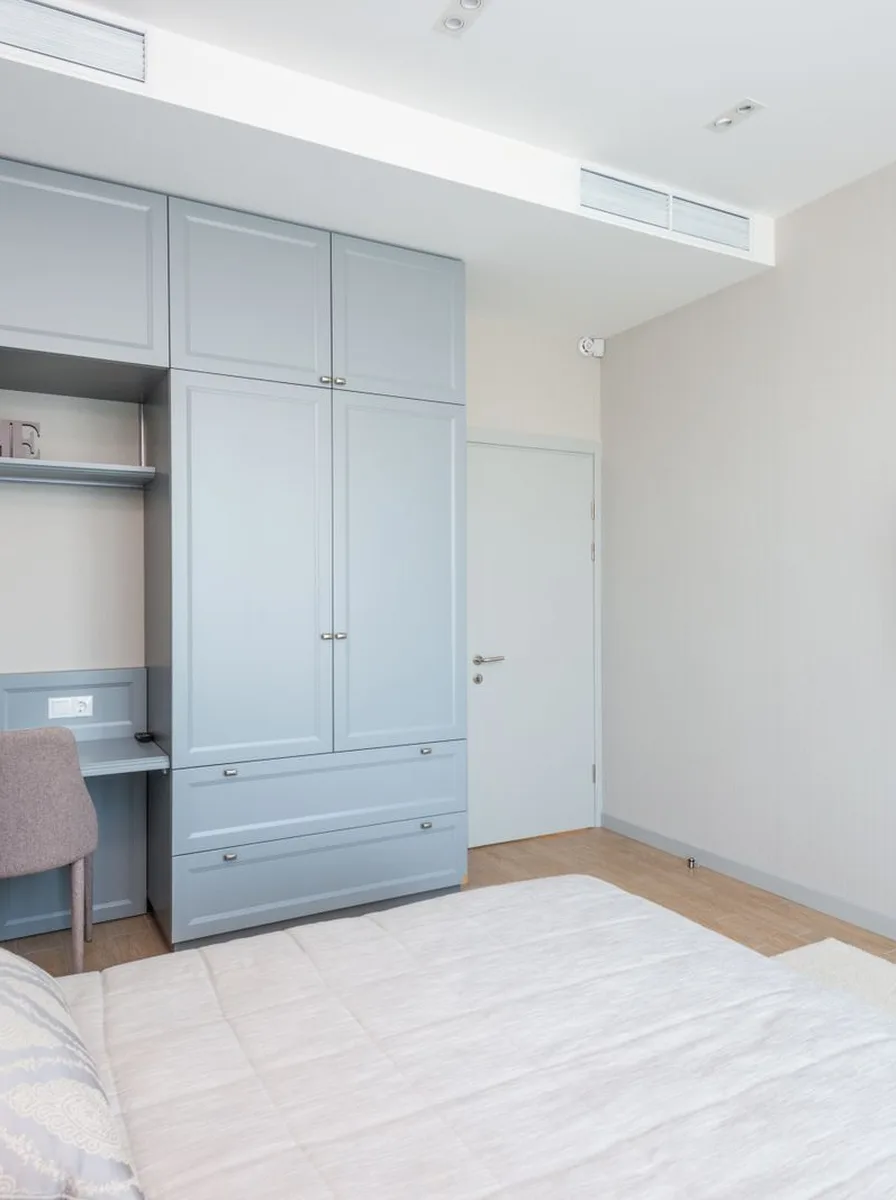
Here’s a renter-friendly compromise: instead of painting walls, paint the furniture. A wardrobe in soft light blue becomes the room’s colour statement while the walls stay safely white, and because it’s one piece of furniture the colour feels intentional rather than risky. Light blue keeps the big block of wardrobe feeling airy instead of looming.
Prep matters — clean, lightly sand, and use a furniture-specific paint or a good primer so the finish survives daily door-slamming. Echo the blue in one small accessory, like a cushion or a picture frame, so it feels woven into the scheme. If you move, the colour moves with you.
19. Use a Daybed in a Narrow Room
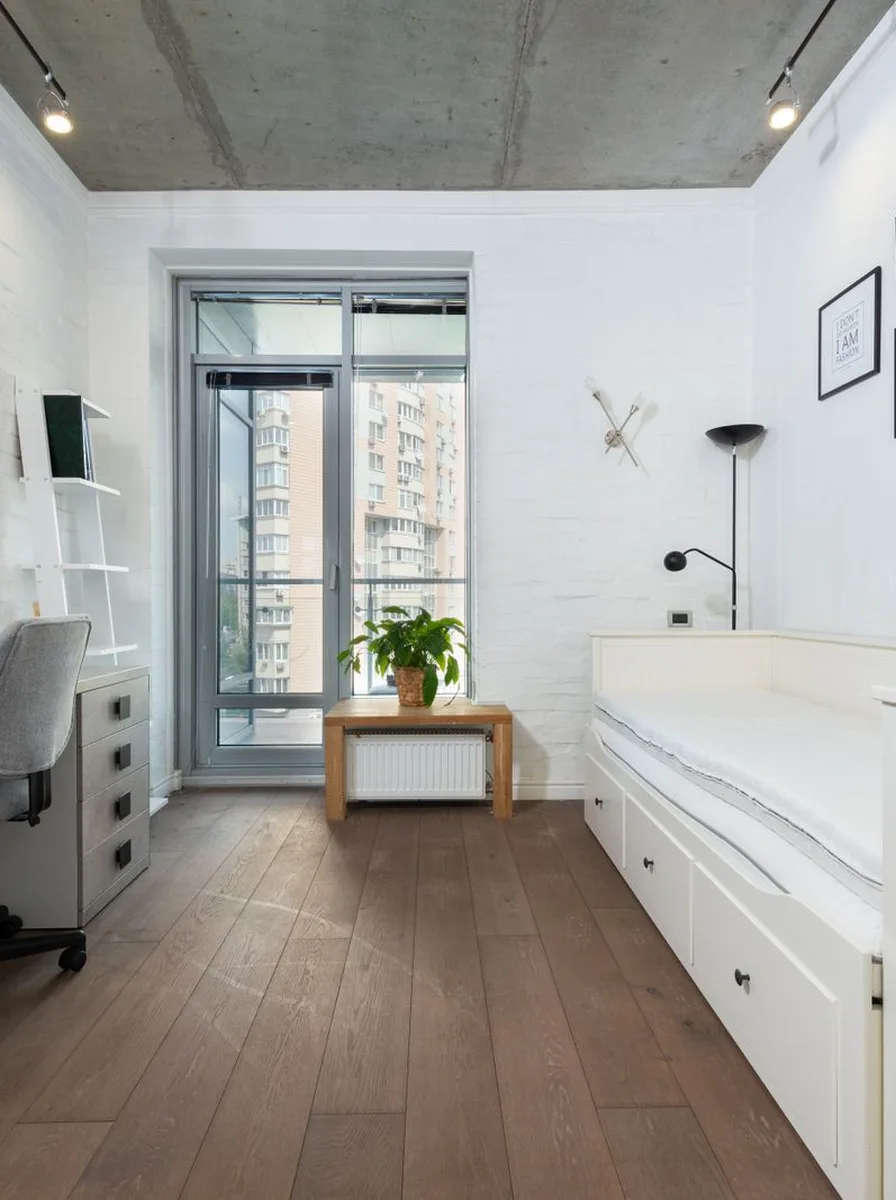
In a long, narrow bedroom, a daybed pushed against the longest wall is a revelation. It sleeps one comfortably, seats several by day, and leaves the floor clear for a desk — the room becomes a studio rather than just a corridor with a bed. Style it with a tailored cover in a pale colour so it reads as a sofa, not a bed pretending.
A row of cushions along the wall in two or three coordinating tones gives it a proper sofa feel. Keep the palette light — white, beige, one soft accent — so the narrow room doesn’t feel like a tunnel. This layout is gold for teenagers’ rooms, guest rooms, and home offices that host overnighters.
20. Keep Patterned Bedding Light and Airy
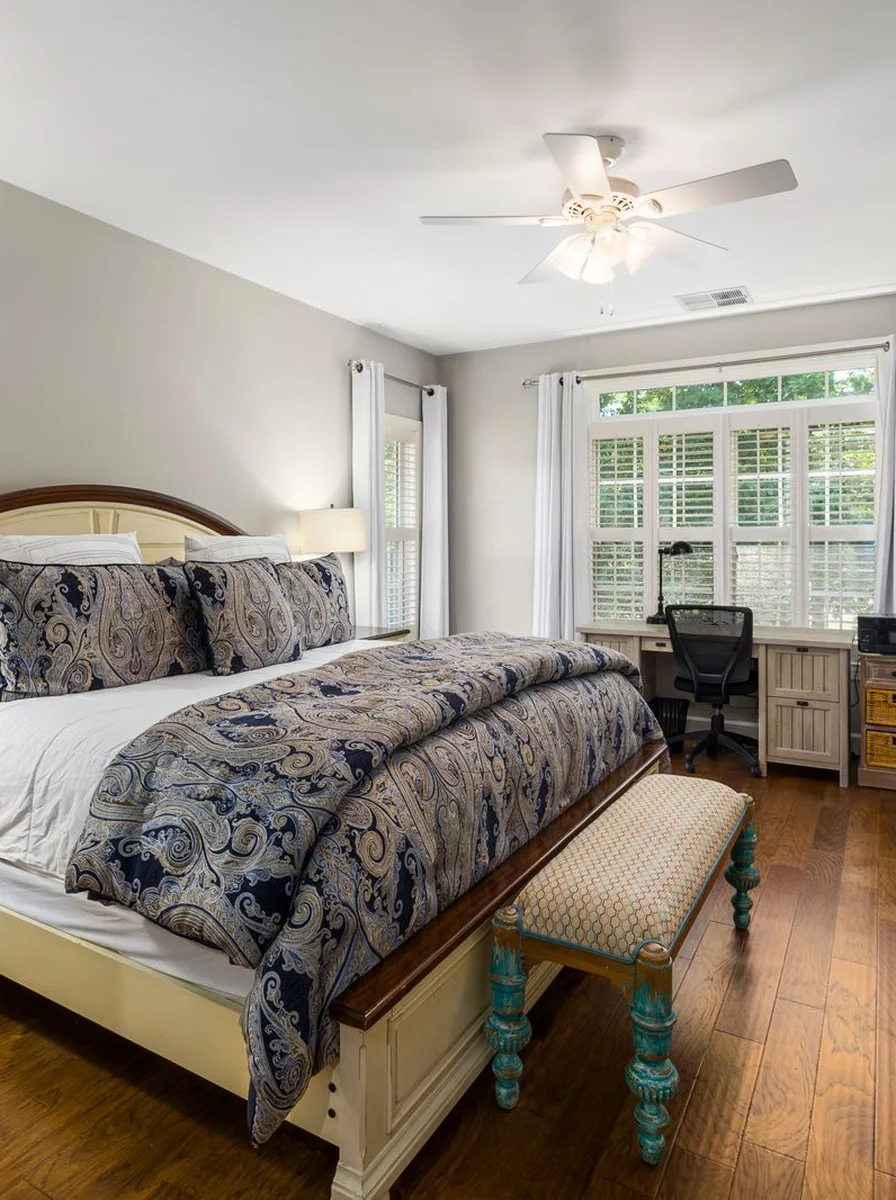
Patterned bedding isn’t off-limits in small rooms — it just needs to be light. Choose prints on a white or cream ground with fine, delicate motifs rather than big bold blocks of colour; the white background does the space-stretching while the pattern adds charm. A ceiling fan above keeps air moving, which matters when a small room holds a lot of fabric.
Match one colour from the pattern in a single accessory — a cushion, a small vase — and leave the rest plain. This restraint is what keeps pattern feeling airy instead of cluttered. Botanical and ditsy prints are the safest bets; they read as classic rather than busy.
21. Keep It Crisp: All-White Minimalism
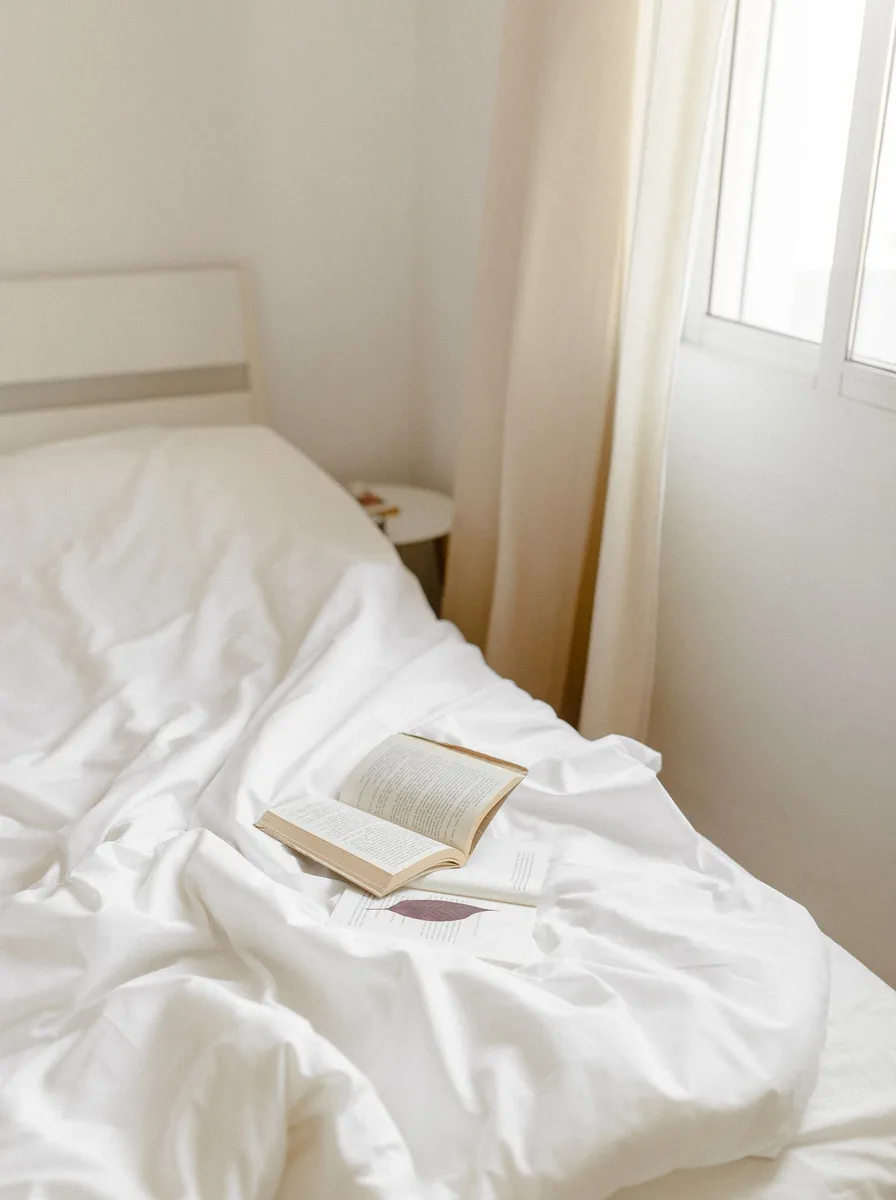
Sometimes the bravest colour choice is no colour at all. An all-white bedroom with nothing but a book on the bed is the ultimate space-stretcher: no visual interruptions, no boundaries, just light. It works because white reflects maximum daylight and lets the room’s architecture — the window, the ceiling height — do all the talking.
The discipline is in the editing: clear surfaces, hidden storage, and bedding in one shade of white. A single open book or a small stack of novels is all the styling you need — it says this room is for rest. Keep whites consistent in tone (all warm or all cool) or the scheme can look accidentally mismatched.
22. Create a Window-Side Reading Chair
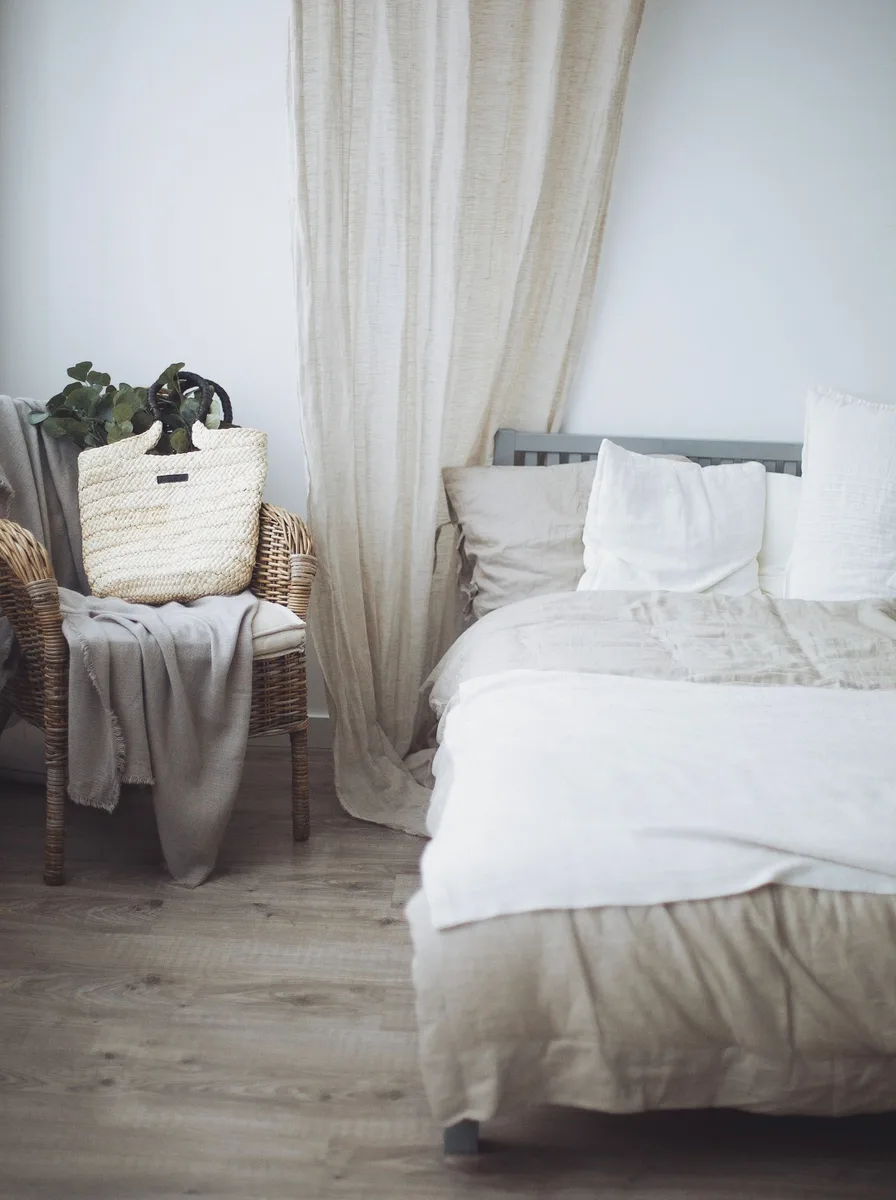
One small armchair by the window can make a tiny bedroom feel like it has two rooms: a sleeping zone and a sitting zone. Choose the chair in a colour that complements your walls — a soft grey, warm beige, or muted green — and it becomes a deliberate colour accent rather than just extra furniture. Daylight does the rest, making the corner feel open and inviting.
Pick a chair with visible legs rather than a skirted base; seeing floor underneath keeps the room feeling airy. A small cushion in a contrasting tone ties the chair to the bedding. Even in the smallest bedroom, stealing sixty centimetres for a chair pays back in how much bigger the room feels to live in.
23. Embrace Bare Minimalism
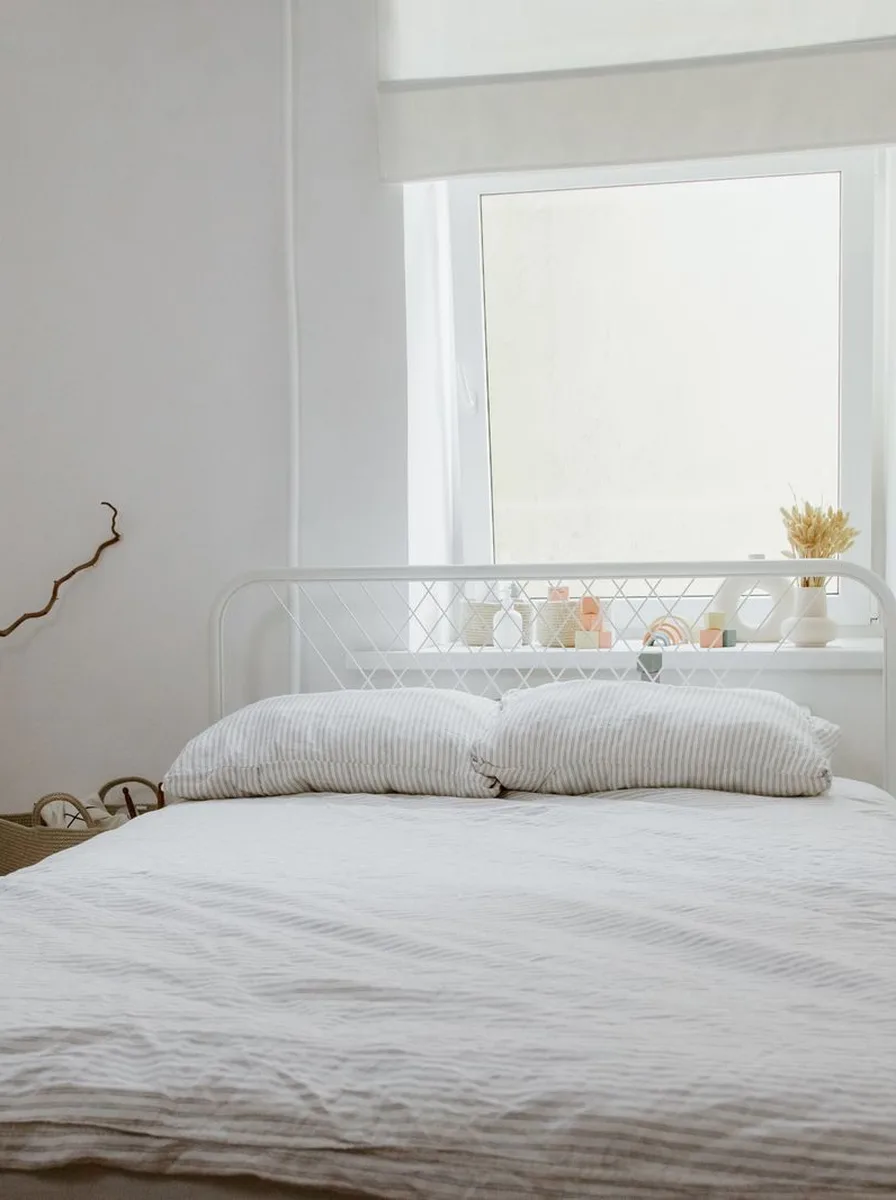
Minimalism and small bedrooms are natural partners: fewer objects mean fewer visual stops, so the eye travels further and the room feels larger. A pared-back white bedroom with just the essentials — bed, one light, one surface — feels calm in a way that busy rooms never can. The colour palette is simply white, warmed by whatever daylight comes in.
This look demands good storage, because everything left out breaks the spell. Use under-bed boxes and a single closed wardrobe rather than open shelving. The payoff is a room that feels twice its size and takes ten minutes to tidy — minimalism is as much a maintenance strategy as a style.
24. Finish with One Natural Accent
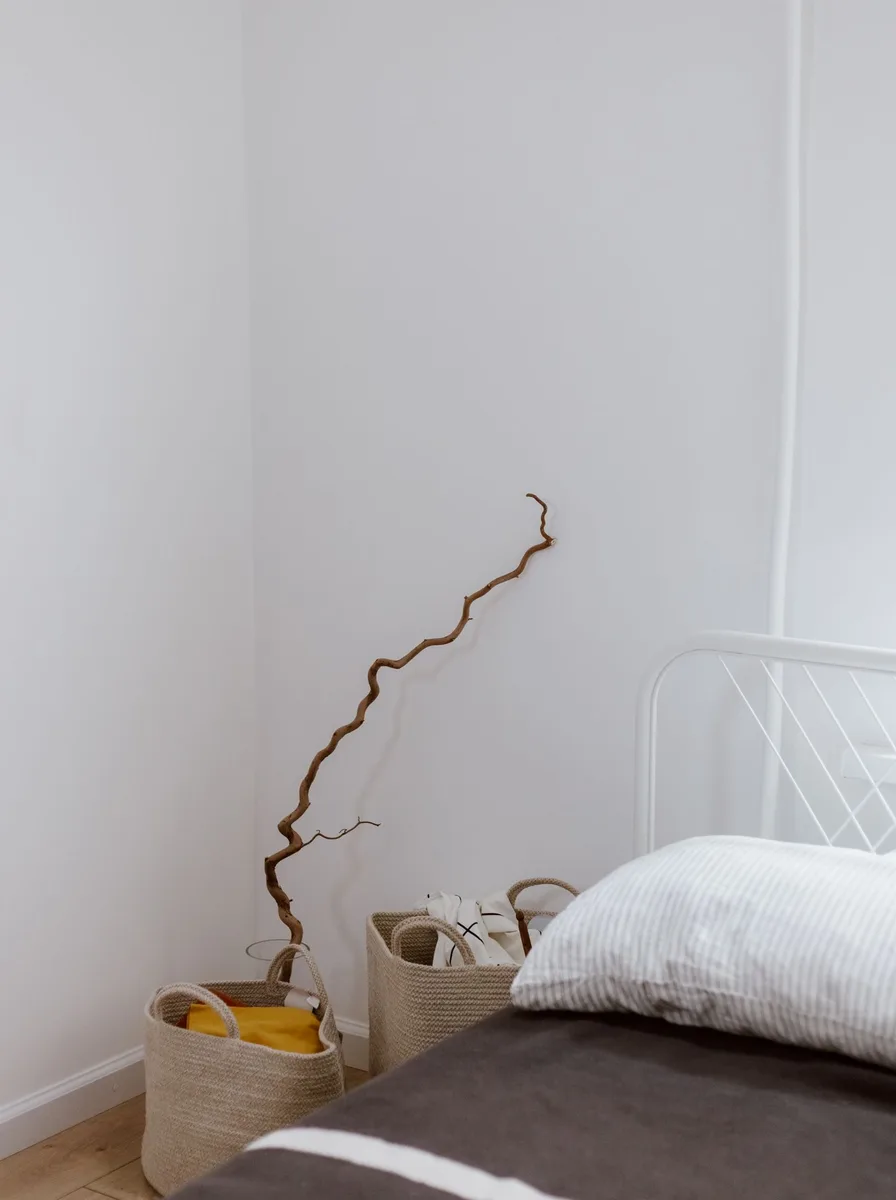
In the calmest minimalist bedroom, a single natural object — a sculptural branch in a simple vase — provides all the colour and texture the room needs. The organic browns and greys of bare wood sit beautifully against white walls, and the branch’s height draws the eye upward, adding a sense of vertical space that paint alone can’t give.
This is the cheapest styling trick on this list: a fallen branch, a tall vase, done. Keep everything else in the room quiet so the branch holds its moment. It proves the golden rule of small-room colour — restraint makes every choice count, and one perfect accent beats ten competing ones.

David is the home decor enthusiast behind HomeLushly. He shares practical, budget-friendly ideas for bedrooms, living rooms and seasonal decorating — from colour combinations that actually work to small-space styling tricks that make a room feel bigger. Every guide on HomeLushly is built around real photos and hands-on research, to help you make your home feel warm, personal and beautifully put together.