

Your office chair is the hardest-working piece of furniture you own — and the one most people choose last. It anchors the room visually, sets the tone for your whole setup, and, since you spend hours in it, shapes how your workspace feels every single day. Get the chair right and the rest of the room seems to fall into place around it.
The trick is thinking of your chair as both a tool and a design object. The right pick supports your body through long days while also doing visual work: adding colour, texture, and personality to a room that can otherwise feel purely functional. A workspace should energise you, not just accommodate you.
These 27 office chair ideas cover the full spectrum — statement styles, clever space-savers, material choices, and styling tricks — each shown with a photo and practical advice. Whether you are refreshing a corner desk or designing a whole home office, you will find an idea that transforms how your workspace looks and feels.

1. Anchor the Room with a Statement Chair

Every great room has a hero piece, and in a home office that piece should be your chair. A chair with real presence — a sculptural silhouette, a rich colour, an interesting material — pulls the whole workspace together and makes the room feel designed rather than assembled. Since it is also the largest object you actually use, it earns its starring role.
Choose one bold quality — shape, colour, or texture — and keep everything else quiet so the chair can shine. A deep green velvet chair against a neutral desk, for example, transforms a bland corner instantly. Tip: photograph your setup before and after; the difference one confident chair makes is the fastest proof that styling works.
2. Go Full Mesh for a Light, Modern Look

Mesh chairs read as light and contemporary — visually, they almost disappear, which makes them perfect for small or dark workspaces. The see-through back keeps sightlines open across the room, so a compact office feels bigger, and the technical, engineered look pairs beautifully with glass desks, metal shelving, and minimalist styling.
Style a mesh chair with a monochrome palette — black, white, grey — and one warm accent like a wooden desk or a plant to stop it feeling cold. Mesh suits modern apartments and Scandinavian-inspired offices especially well. Tip: a mesh chair photographs brilliantly for video calls, giving your background a crisp, professional edge.
3. Add a Leather Executive Chair for Instant Authority

Nothing says serious workspace like a proper leather executive chair. The high back, the rich material, the solid presence — it lends weight to video calls and makes a home office feel like a real office. Leather also ages gracefully, developing a patina that fabric chairs cannot match, so the chair looks better in year three than on day one.
Balance leather’s formality with softer surroundings: a warm rug, a plant, artwork on the wall. Cognac and tan leathers feel friendlier than black; black reads as boardroom. Tip: condition the leather twice a year with a proper balm — five minutes of care keeps it supple and crack-free for a decade.
4. Try a Velvet Chair for Soft Luxury

Velvet brings a softness to workspaces that can otherwise feel all edges and screens. A velvet office chair in emerald, sapphire, or blush turns the desk into a place you actually want to sit, and the fabric catches light beautifully, adding depth and richness to the room. It is proof that ergonomic and elegant can share a sentence.
Velvet loves jewel tones and pairs gorgeously with brass desk accessories and warm lighting. Keep it away from direct sun to prevent fading, and choose a performance velvet if you will sit in it daily. Tip: a quick steam refreshes crushed pile — hold a steamer a few inches away and watch the fabric bounce back.
5. Warm Things Up with Wooden Legs

Metal bases are practical, but wooden legs bring warmth that transforms a workspace from office-like to home-like. A chair with turned oak or walnut legs bridges the gap between work furniture and home furniture, which matters when your office is also your living room. The natural grain adds texture that no powder-coated steel can match.
Echo the wood tone in your desk, shelving, or frames to make the chair feel part of a scheme rather than a lone piece. Mid-century-style chairs with tapered wooden legs suit compact desks beautifully. Tip: felt pads under wooden legs protect floors and make the chair glide quietly — a small detail with a big daily payoff.
6. Pick a Bold Colour That Pops
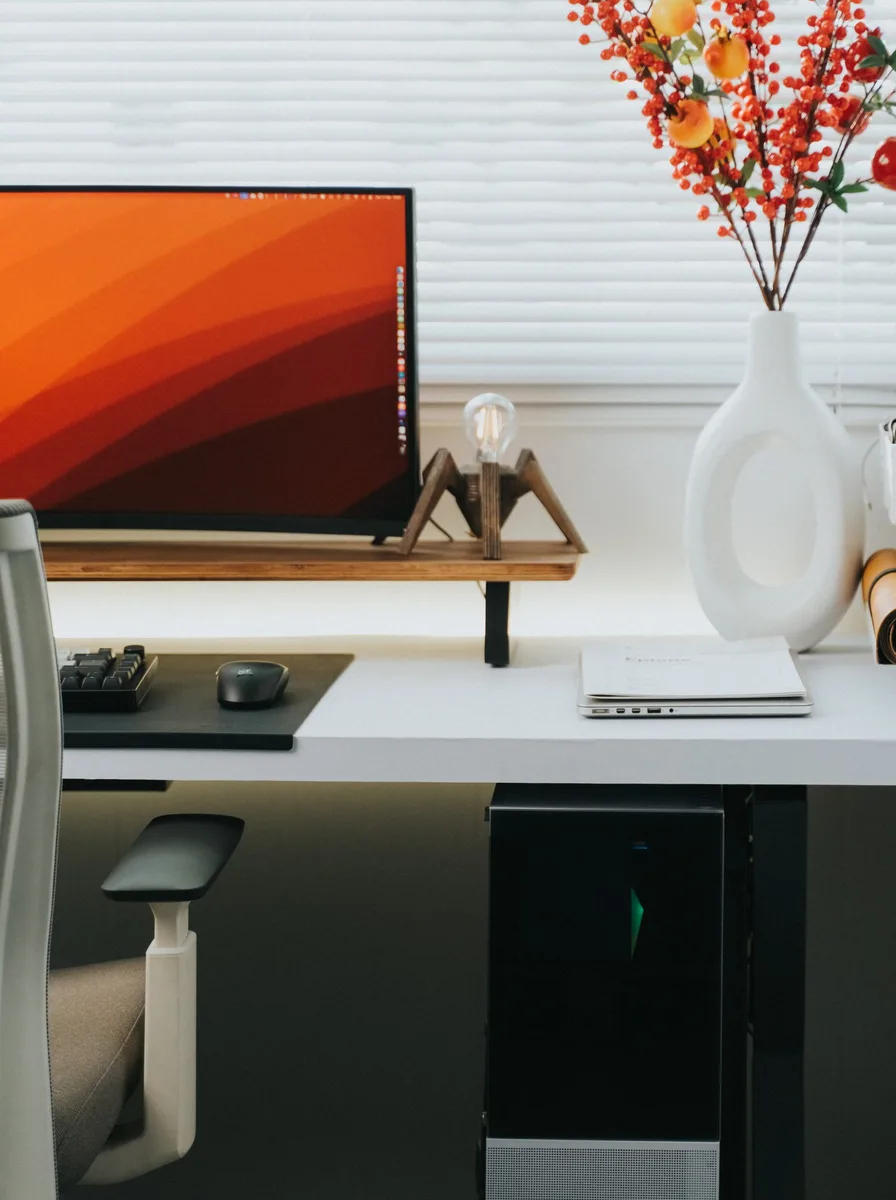
A neutral workspace is a blank canvas, and a bold chair is the fastest brushstroke. Mustard yellow, teal, terracotta, or cobalt — one confident colour on your chair injects energy into the whole room and makes video-call backgrounds instantly more interesting. Colour also affects mood: warm tones energise, cool tones calm, so pick the feeling you want your workdays to have.
Let the chair be the room’s single colour hero: keep walls, desk, and storage neutral and echo the chair’s hue in one small accessory, like a notebook or a plant pot. Tip: if commitment scares you, start with a chair cover or cushion in the bold shade — you can test-drive the colour before buying the chair.
7. Pair a Drafting Chair with a Standing Desk

Standing desks changed how we work, but standing all day is its own problem — enter the drafting chair. Taller than a standard chair, with a footring for support, it lets you perch at standing-desk height, taking weight off your feet while keeping you at the right level for your elevated worktop. It is the missing piece that makes sit-stand setups actually comfortable.
Set the footring so your feet rest flat and your knees sit just below your hips, mirroring standard chair geometry at height. Alternate between standing, perching, and sitting through the day. Tip: a drafting chair with a good footring also works brilliantly at kitchen counters and high craft tables — one chair, several jobs.
8. Try a Kneeling Chair for Posture Variety

Kneeling chairs look unusual, but they do something clever: they tilt your pelvis forward into a more open hip angle, which encourages the spine’s natural curve without any lumbar hardware. Used in rotation with a regular chair, a kneeling chair breaks up the monotony of sitting and gives your back a genuinely different position to rest in.
Start with short stints — twenty to thirty minutes — while your shins and knees adapt, and keep a standard chair nearby for the rest of the day. Kneeling chairs suit focused tasks like writing and drawing. Tip: wear softer trousers on kneeling-chair days; the shin pads are kinder to casual fabrics than to tailored ones.
9. Add a Balance Ball Chair for Active Sitting

A balance ball chair swaps the seat pan for an exercise ball on a wheeled base, turning sitting into gentle core work. The unstable surface keeps your stabiliser muscles lightly engaged all day, which fights the stiffness of static sitting. It is also genuinely fun — meetings feel less dreary when you are subtly bouncing.
Use it for a few hours a day rather than all day; your core will tell you when it has had enough. Keep your regular chair for long focused stretches. Tip: choose a model with a lockable base and an adjustable-height ball — the cheap fixed ones wobble in ways that distract rather than engage.
10. Choose Armless Chairs for Tight Corners
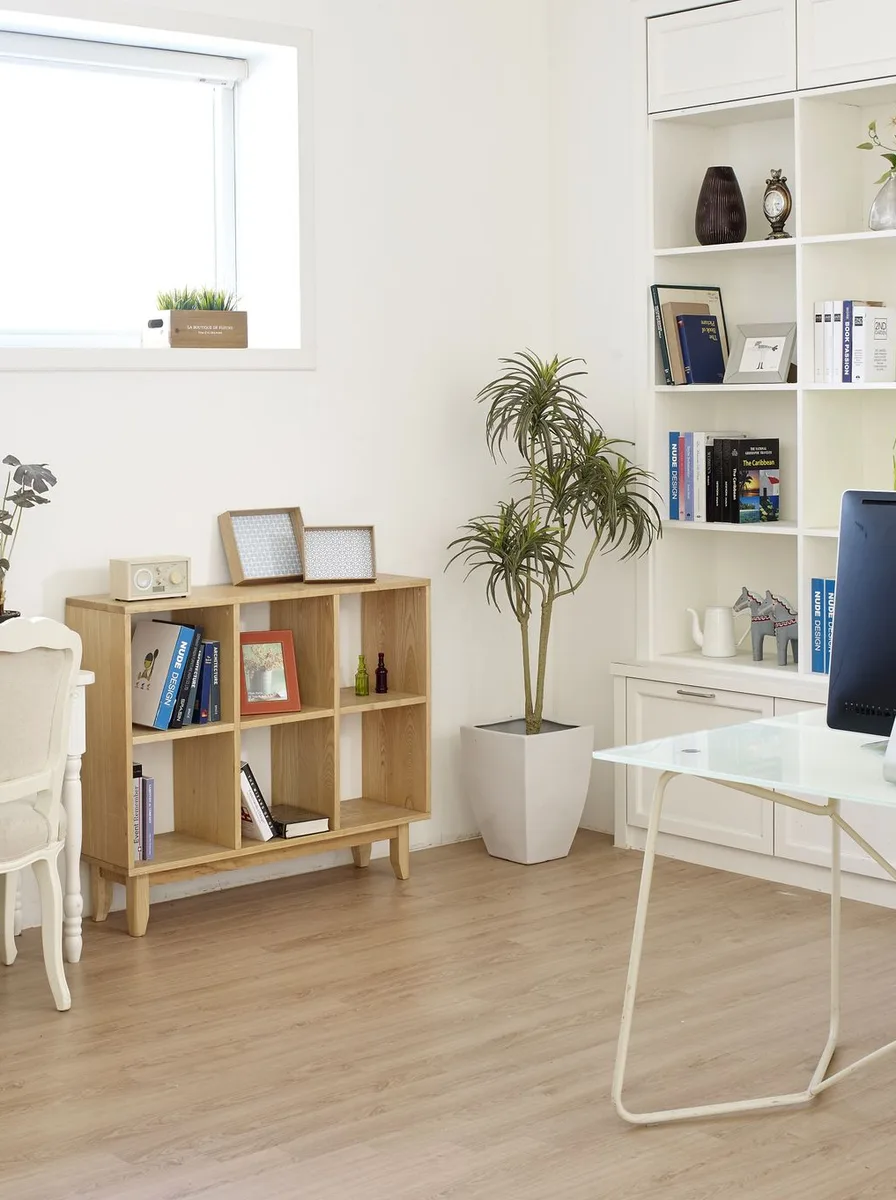
In a truly tight workspace, armrests are the first thing to go — and the room thanks you for it. Armless chairs tuck completely under the desk, reclaiming precious floor space and making a cramped corner feel open. They also suit dining-table desks and multipurpose rooms where the office chair needs to disappear after hours.
Without armrests, pay extra attention to desk height so your shoulders stay relaxed. Armless designs come in every style from sleek modern to upholstered traditional, so you lose nothing on looks. Tip: if you miss arm support, a chair with flip-up armrests gives you both worlds — support when you want it, tuck-away when you don’t.
11. Match Your Chair to Your Rug
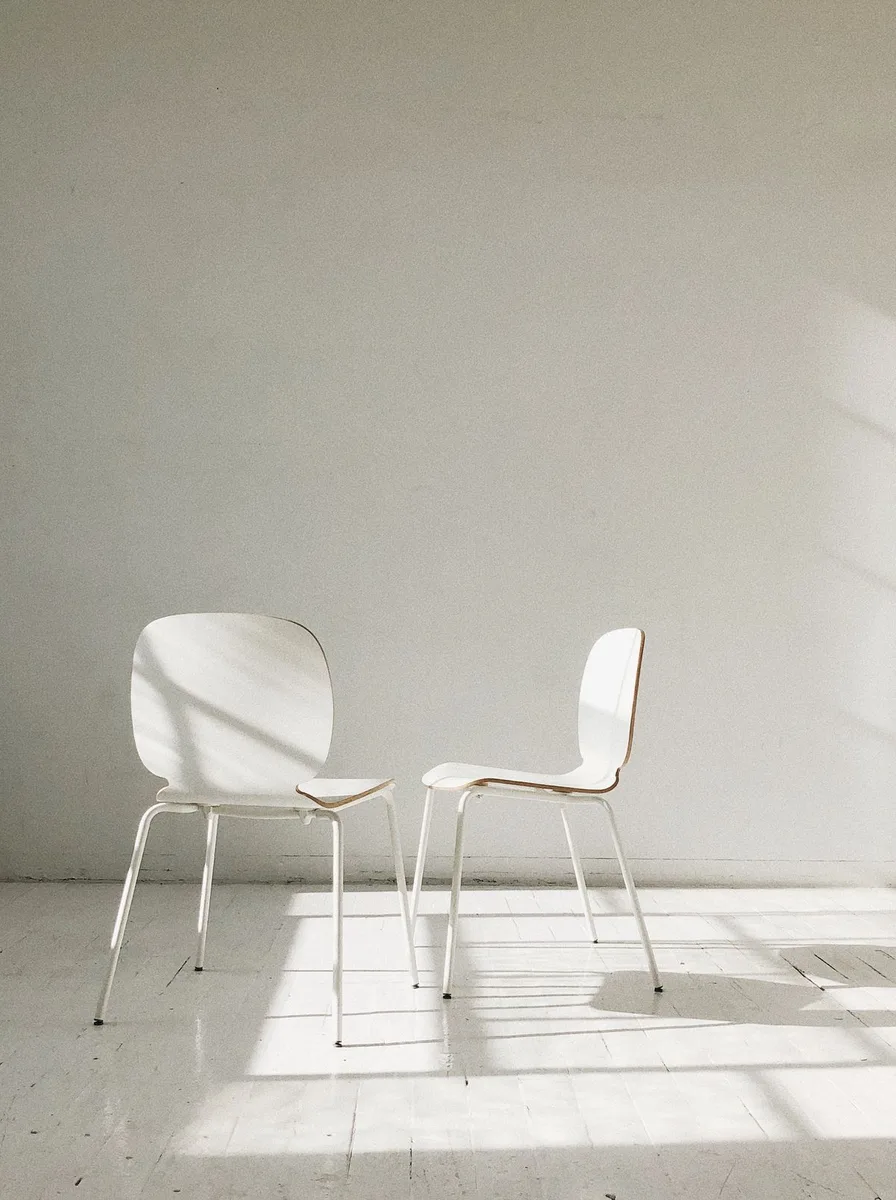
Designers match the sofa to the rug in living rooms; the same trick works in offices. Pulling one colour from your rug into your chair’s upholstery ties the workspace together and makes the room feel intentional rather than accidental. The chair stops being office equipment and becomes part of the decor.
You do not need an exact match — a chair in the rug’s secondary colour often looks more sophisticated than a perfect twin. A grey rug with rust accents, for example, pairs beautifully with a rust chair. Tip: photograph the rug and take the photo chair-shopping; matching from memory is how clashing happens.
12. Bring In Boucle for Cosy Texture

Boucle — that nubby, looped fabric — is having a moment, and it brings instant cosiness to workspaces. A boucle office chair softens the hard edges of monitors and desks, adds tactile warmth you can feel every time you sit down, and looks effortlessly high-end. In a home office, that softness makes the room feel like part of the home, not an outpost of the office.
Cream and oatmeal boucle are classics, but do not overlook charcoal or sage for a moodier take. Boucle pairs beautifully with light woods and curved furniture. Tip: keep a lint roller in the desk drawer — boucle’s texture attracts pet hair and dust, and a thirty-second roll keeps it looking fresh.
13. Use a Swivel Chair to Zone an Open Plan
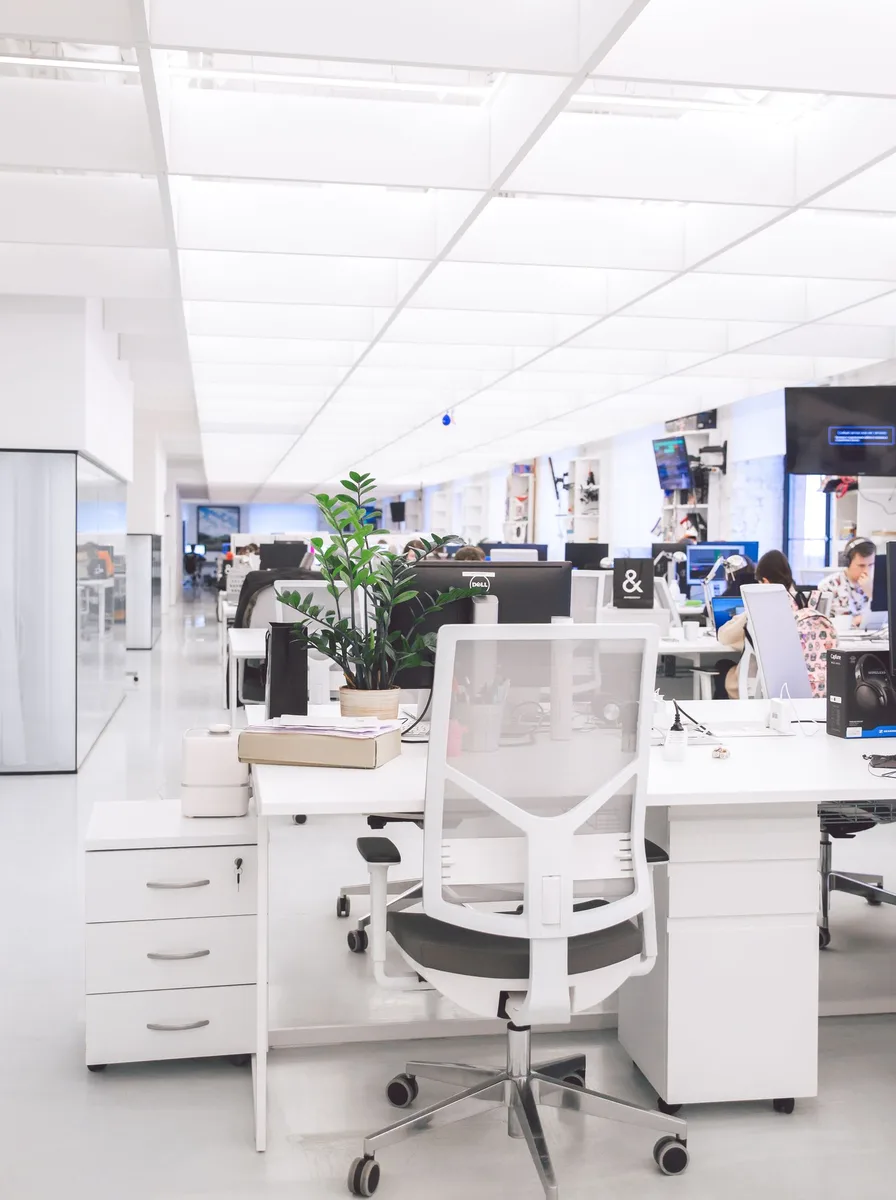
In an open-plan room, a swivel chair does subtle architectural work: spin toward the desk and you are in work mode; spin toward the room and you are available. That rotation creates a psychological zone without walls or screens, giving a home office corner a sense of place within a larger living space. Movement becomes the boundary.
A chair with a smooth, quiet swivel is essential — a stiff or squeaky one breaks the spell. Position the desk so the chair’s work orientation faces away from household distractions. Tip: a rug under the chair marks the zone visually, reinforcing the boundary the swivel creates.
14. Soften Boxy Rooms with Rounded Forms
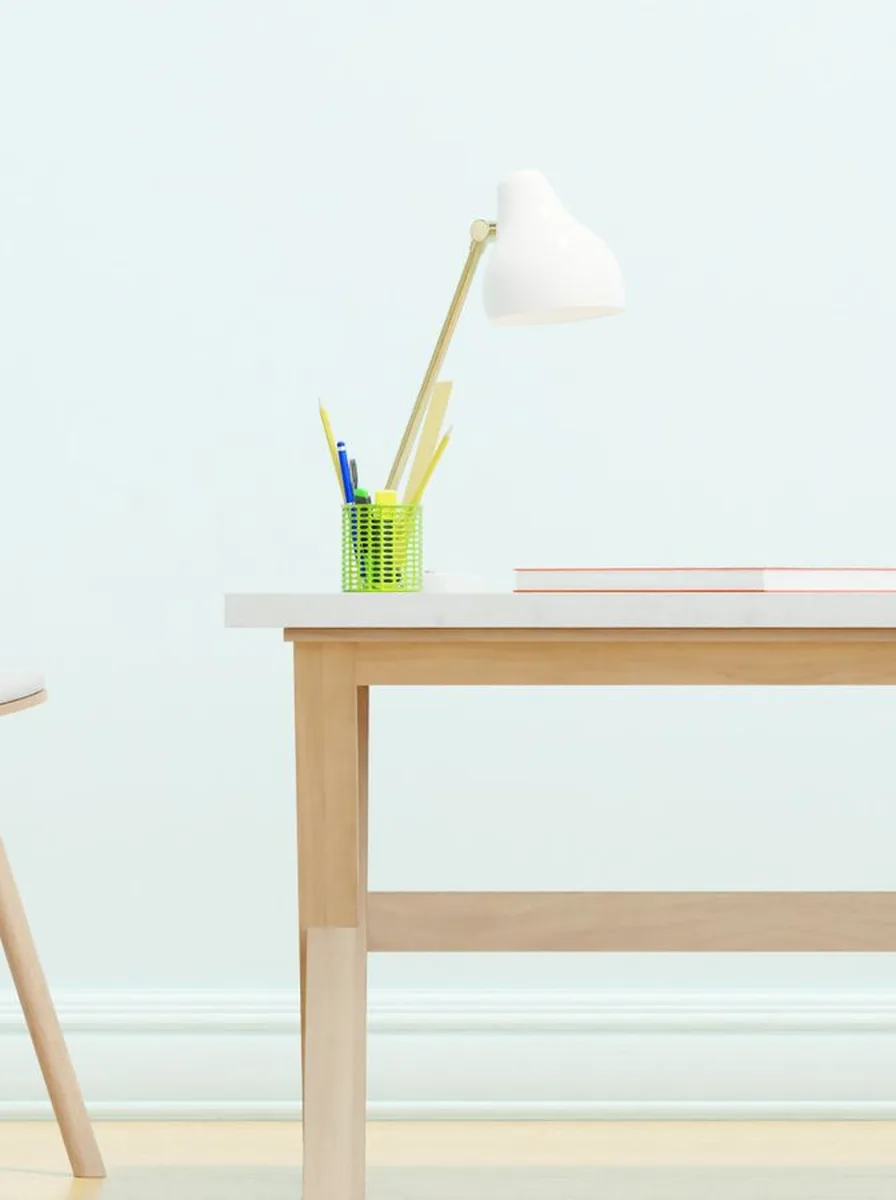
Home offices are full of rectangles — desks, monitors, shelves, windows — and a round-backed chair is the perfect counterpoint. Curved silhouettes soften the room’s geometry, making the space feel friendlier and less corporate. A barrel-back or tub-style office chair brings living-room comfort language into the workspace.
Balance is key: one or two rounded pieces calm a boxy room, but too many curves can feel unfocused. Let the chair’s curve echo in a round mirror or a circular rug. Tip: rounded chairs photograph beautifully and look inviting on video calls — a small win for anyone who lives on camera.
15. Let a High-Back Chair Double as a Room Divider
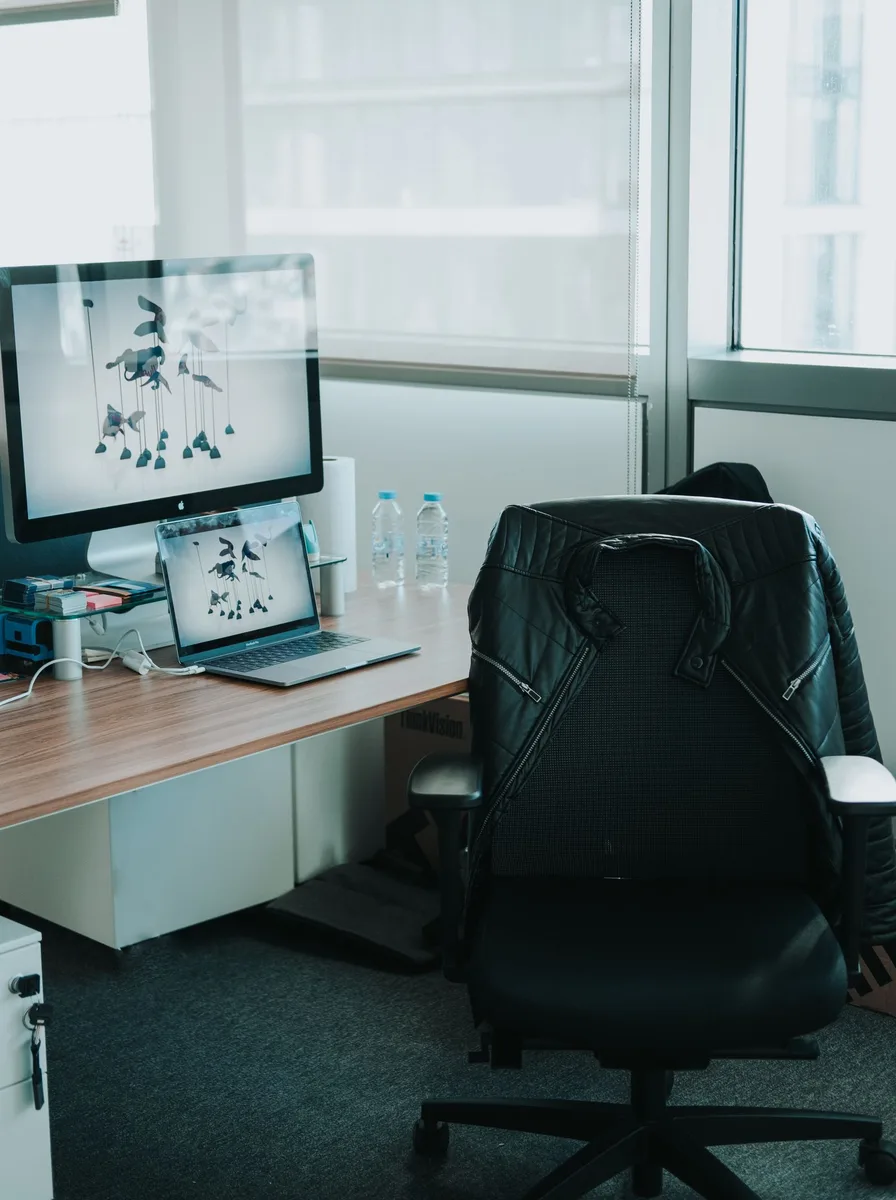
A tall, high-back chair does more than support your spine — from behind, it reads as a sculptural screen. In a studio or open-plan space, positioning a high-back chair with its back to the room creates a visual divider between office and home without a single partition. It is zoning you can sit in.
Choose a chair with an attractive back — interesting upholstery, stitching, or a bold colour — since you will see it from the living area all day. This trick works best when the desk faces the wall and the chair faces the room. Tip: it also gives video calls a clean, intentional backdrop: just you, framed by the chair.
16. Drape a Throw Over the Chair Back
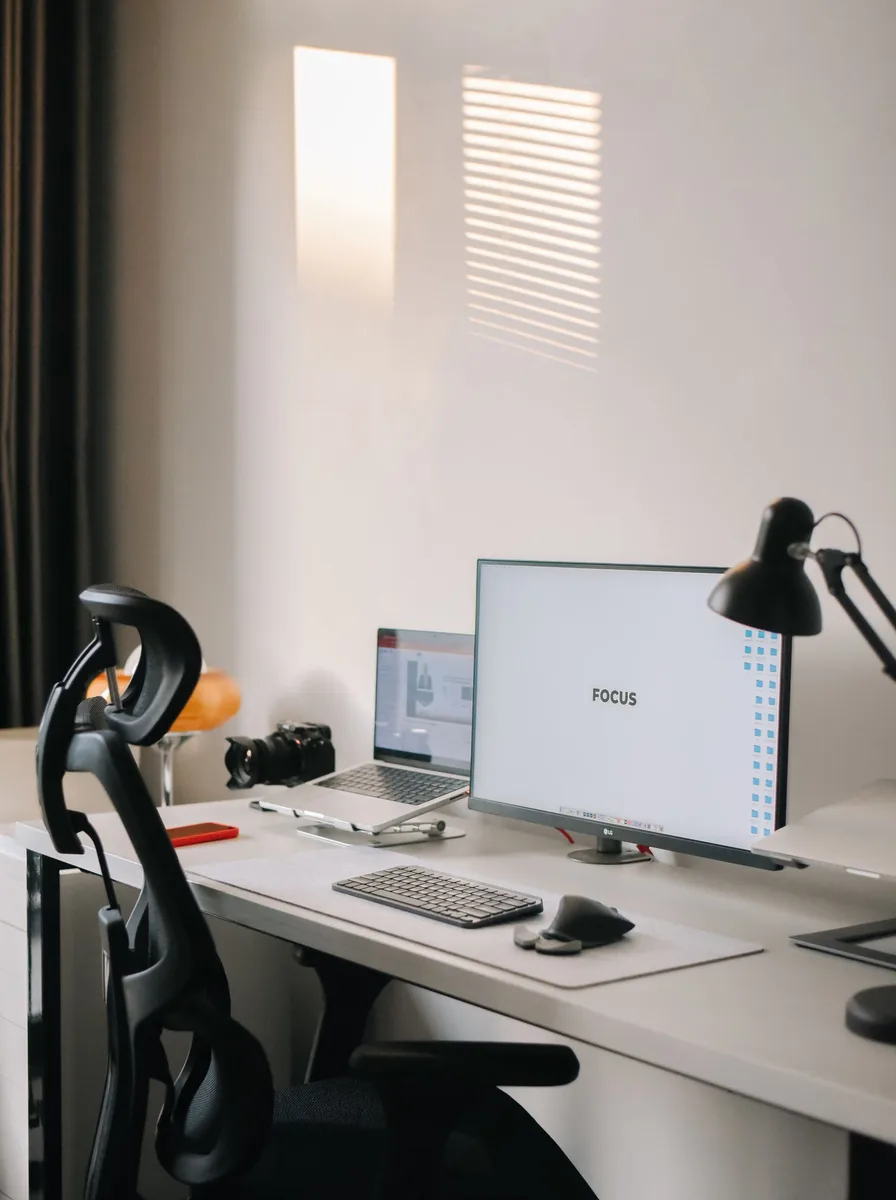
The fastest, cheapest workspace transformation on this list: a throw blanket over your chair’s backrest. It adds colour, texture, and softness in seconds, hides a tired or mismatched chair, and gives you a warmth layer for chilly afternoons. It is styling and practicality in one drape.
Choose a throw that picks up another colour in the room — the rug, the art, a cushion — and let it hang slightly off-centre for a relaxed look. Chunky knits read cosy; light linens read breezy. Tip: keep the throw clear of the wheels and tilt mechanism; tuck it neatly so it never interferes with the chair’s movement.
17. Choose Brass or Gold Accents for Polish
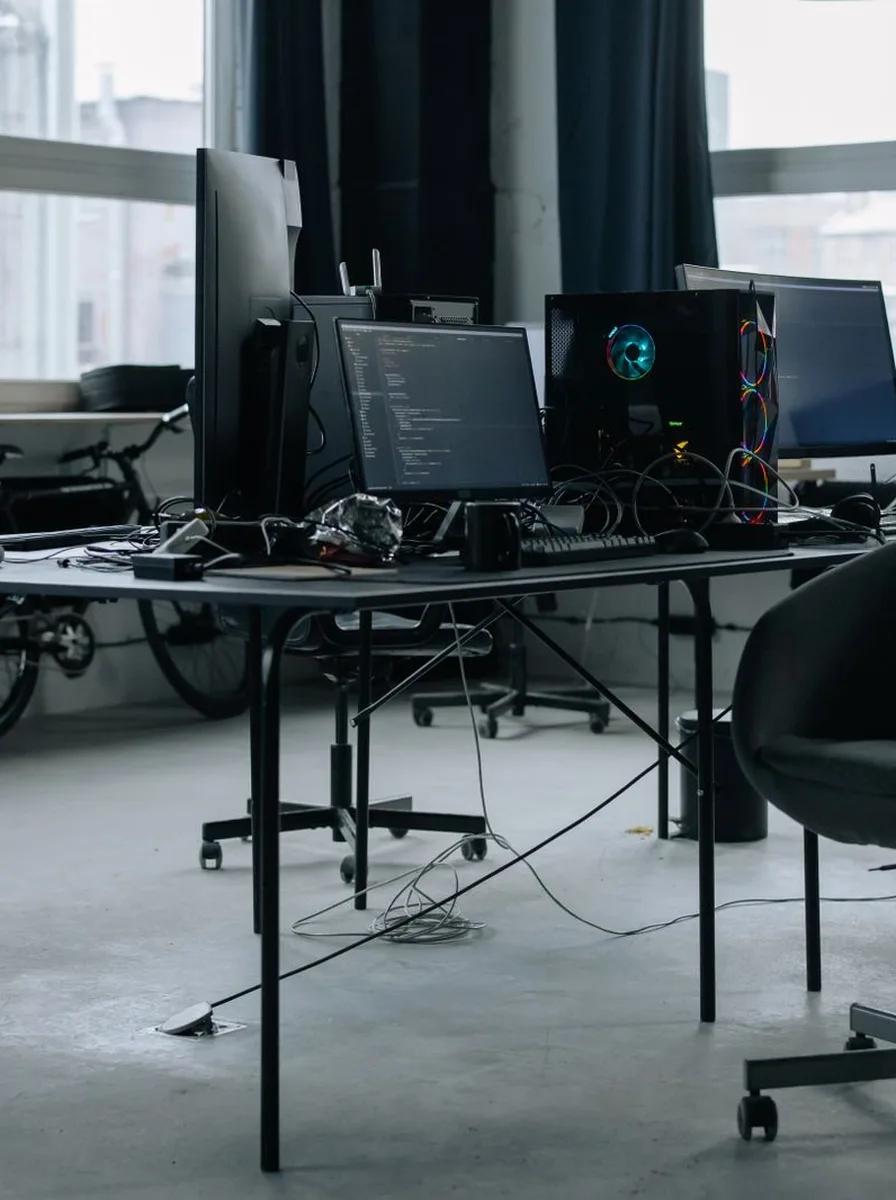
Hardware matters: a chair with brass or gold-toned accents — base, armrest supports, casters — instantly reads as more considered than standard chrome or black. Warm metallics catch the light and add a jewellery-like finish to the workspace, elevating even a simple chair design. It is a small detail with an outsized visual return.
Echo the metal in one or two other pieces — a desk lamp, picture frames, drawer handles — so it feels deliberate rather than random. Brushed finishes hide fingerprints better than polished ones. Tip: if your dream chair does not come in brass, metallic spray paint on a detachable base is a weekend project with a big payoff.
18. Fit a Compact Chair into a Closet Office

The closet office — a desk tucked into a wardrobe alcove or under-stair nook — is the ultimate small-space workspace, and it demands a compact chair. Look for a slim profile, a small footprint, and ideally a design that tucks fully under the desk so the office can vanish behind closed doors at the end of the day.
Armless or low-arm designs work best in tight alcoves where every centimetre counts. Light colours keep the nook feeling open rather than cave-like. Tip: a chair with a handle cutout in the backrest is easier to pull in and out of tight spaces — a detail worth seeking out for closet setups.
19. Double Your Office Chair as Guest Seating

In a small home, every piece of furniture should earn its keep twice — and a good-looking office chair can absolutely serve as guest seating. Choose a design comfortable enough for long workdays but attractive enough for the living room, and when visitors come, wheel it over. One less chair to store, one more seat at the table.
Upholstered designs in home-friendly fabrics transition best; overly office-like mesh can look out of place among sofas. Keep the casters clean so they do not mark living-room floors. Tip: this dual role justifies spending a little more — cost-per-use plummets when one chair does two jobs.
20. Try a Transparent Chair for Visual Lightness

Acrylic and clear polycarbonate chairs are the magicians of small workspaces: they provide real seating while visually disappearing. In a tight or dark corner, a transparent chair keeps the room feeling open because your eye travels straight through it. It is a bold, modern look that makes the desk area feel twice its size.
Transparent chairs suit minimalist and contemporary schemes; pair with a glass or light-wood desk to complete the airy effect. They are easy to wipe clean but show every scratch, so they are best in low-traffic setups. Tip: add a small cushion in a colour you love — it floats beautifully on a clear seat and adds comfort.
21. Match Chair Materials to Your Desk

Cohesion is the difference between a workspace that looks collected and one that looks assembled from leftovers. Matching — or thoughtfully echoing — your chair’s materials with your desk’s creates instant harmony: warm wood chair legs with a wooden desktop, black metal chair base with black desk legs, leather seat with a leather desk pad.
Exact matching is not required; complementary is often better. A walnut chair with an oak desk works because both speak the language of natural wood. Tip: photograph desk and chair together in the shop’s lighting before buying — materials that match under showroom lights can clash in your home’s daylight.
22. Add a Glow with Under-Chair Lighting

Here is an unexpected transformer: a strip of LED lighting under your chair or desk that casts a soft glow on the floor. It turns an ordinary workspace into something atmospheric after dark, reduces the harsh contrast between a bright screen and a dark room, and makes the whole setup feel intentional and high-tech.
Choose warm white (around 2700K) for cosiness or a subtle colour for personality; USB-powered strips are easiest. Stick the strip to the underside of the desk or the chair’s base for a floating effect. Tip: bias lighting like this genuinely reduces eye strain during evening work — it is not just pretty, it is practical.
23. Use a Footring Chair at Counter Height

Kitchen islands and counter-height desks make great standing workstations, but perching comfortably at that height needs the right chair. A tall chair with a footring gives you a proper place to rest your feet — without it, your legs dangle and your posture collapses. The footring is the difference between perching happily and fidgeting miserably.
Set the ring so your thighs sit roughly parallel to the floor and your feet rest flat on the ring. This setup is ideal for multipurpose spaces where the desk is also the breakfast bar. Tip: look for chairs where the footring adjusts independently of seat height — bodies differ, and one fixed ring height rarely suits everyone.
24. Set Up Two Chairs for a Shared Workspace
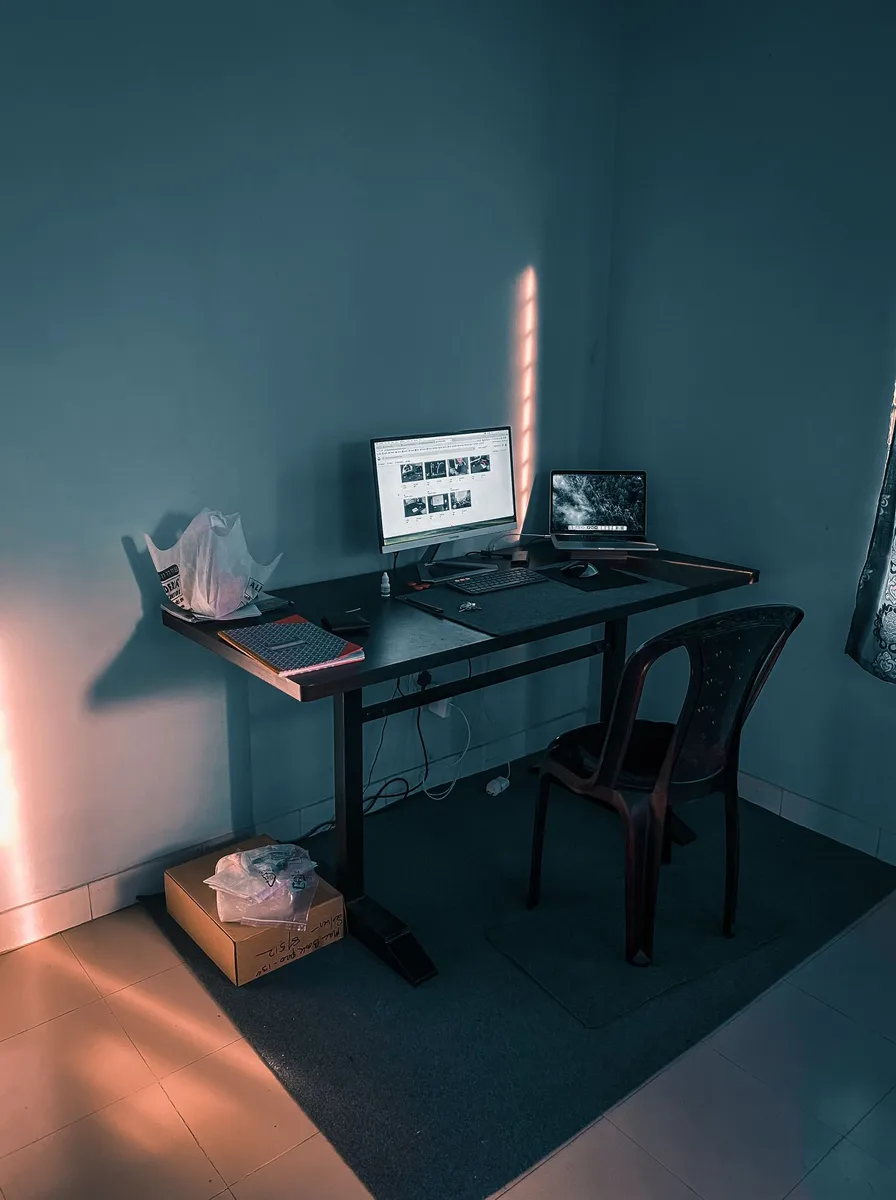
When two people share a home office — partners, parent and teen, co-working housemates — matching chairs create visual order out of potential chaos. Two identical chairs signal that the space belongs to both of you equally, and the symmetry looks calm and deliberate even when the desks are buried in work.
If identical feels too uniform, choose the same chair in two different colours for personality within harmony. Make sure each chair suits its sitter — shared does not have to mean one-size-fits-all. Tip: mark each person’s settings with tape on the gas cylinder so the daily swap between sitters takes seconds.
25. Play with Patterned Upholstery
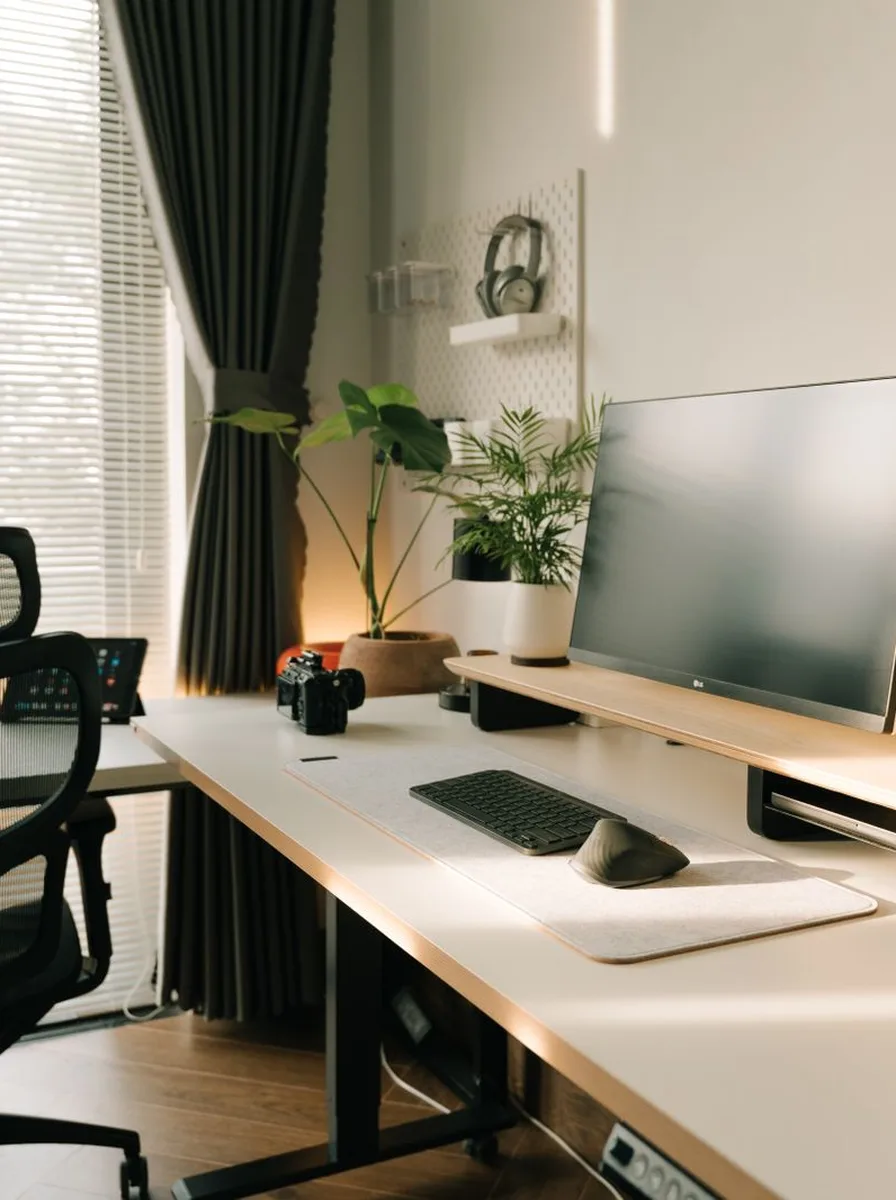
Solid colours are safe, but patterned upholstery — stripes, geometrics, subtle florals — gives your chair real personality. A patterned chair becomes the room’s artwork, adding visual interest that plain walls and desks cannot provide. In a neutral workspace, it is the single most impactful pattern you can introduce.
Keep patterns small-scale on a chair; large motifs can overwhelm at seating distance. Let the chair hold the room’s only bold pattern and keep everything else solid. Tip: patterned chairs hide everyday wear and minor stains far better than plain fabric — a practical bonus for well-used workspaces.
26. Style a Plant Beside Your Chair
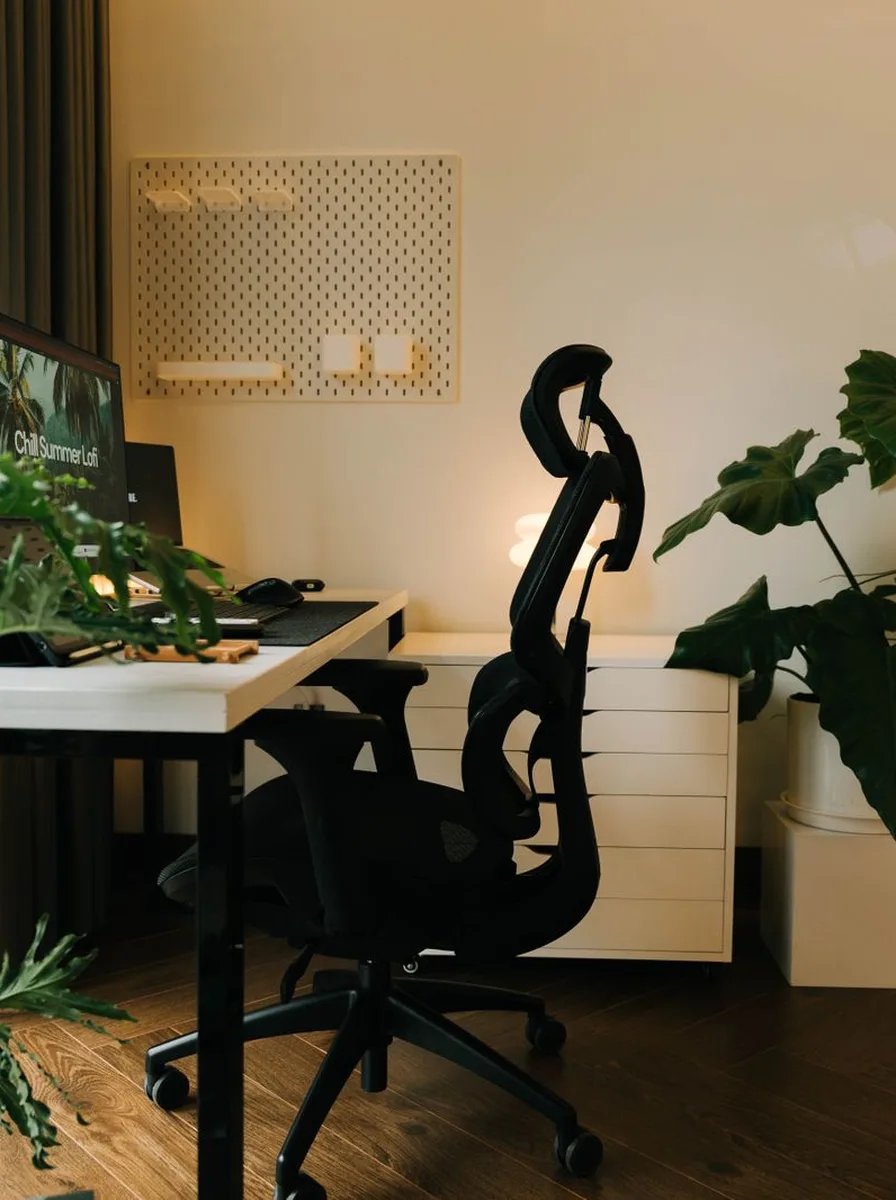
A plant next to your chair does triple duty: it softens the workspace visually, improves the air and the mood, and gives your eyes a natural focal point to rest on during screen breaks. The contrast of organic green against office equipment is instantly calming — it is the cheapest wellness upgrade a workspace can get.
Choose something forgiving — a pothos, snake plant, or ZZ plant — and put it in a pot that echoes your chair or desk. Position it where it will not snag the chair’s wheels. Tip: looking at greenery for twenty seconds every twenty minutes genuinely rests tired eyes; the plant earns its place as a focus tool, not just decor.
27. Ground It All with the Right Chair Mat
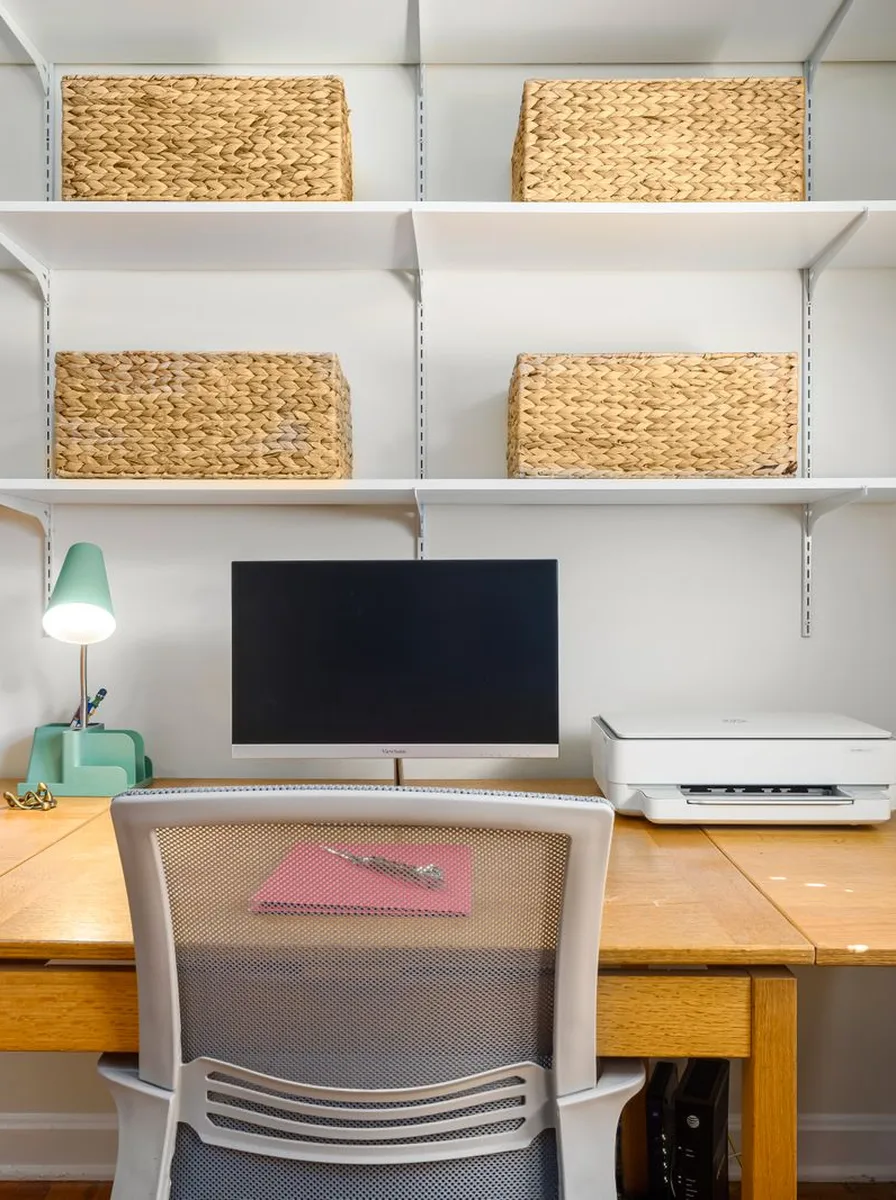
The chair mat is the unsung hero of workspace design: it protects floors, lets the chair glide effortlessly, and — chosen well — ties the whole setup together. A mat that is too small looks apologetic; one that extends generously under desk and chair defines the workspace as a distinct zone within the room.
Clear polycarbonate mats disappear on hard floors; low-pile carpet mats with a lip protect carpeted offices. For style points, consider a mat in a colour or pattern that complements your chair. Tip: measure your full roll-around range before buying — most people underestimate how far their chair travels and end up with a mat that is comically small.