


Animal print wallpaper is one of the boldest moves you can make in home décor — and it works. Whether you want a dramatic bedroom focal point, a playful powder room, or a living room that stops guests in their tracks, there’s an animal print pattern for every space and style. The good news? You don’t need a designer budget or a full renovation. Today’s peel-and-stick options, budget wallpaper brands, and creative placement tricks make it easier than ever to bring wild pattern into your home. This guide walks you through 25 real, doable ideas — from subtle cheetah accents to full-room zebra statements — with honest tips on cost, effort, and exactly how to pull each look off.
1. Leopard Print Accent Wall in the Living Room
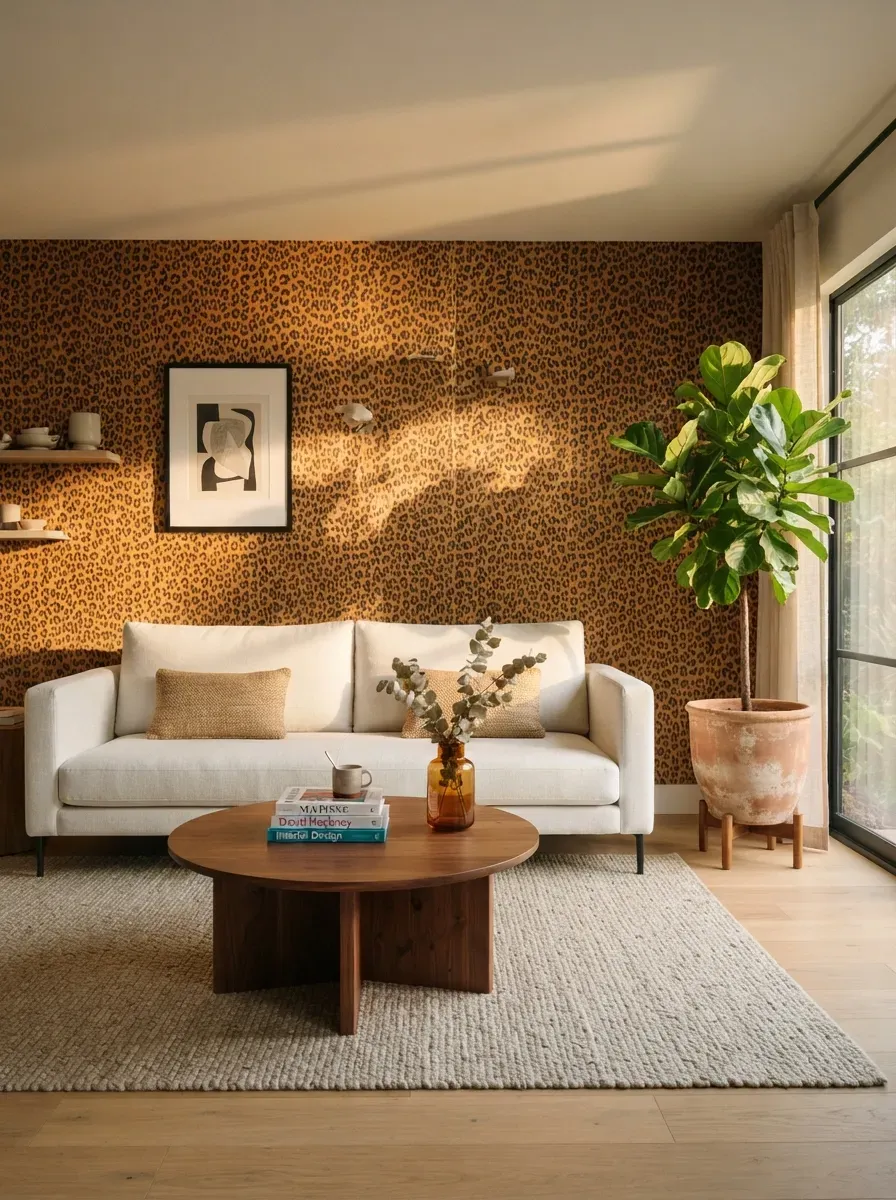
An accent wall is the easiest way to introduce leopard print without going overboard.
Pick the wall behind your sofa or TV. That’s where the eye naturally goes. Cover just that one wall in a leopard print wallpaper and keep everything else neutral — white, cream, or soft grey.
Why it works: The print becomes art. You don’t need framed pictures or gallery walls when the wall itself is the statement.
Budget tip: Peel-and-stick leopard print wallpaper from brands like RoomMates or Tempaper runs around $30–$60 per roll. A standard accent wall typically needs 2–3 rolls. That’s a major look for under $150.
DIY note: Peel-and-stick is genuinely beginner-friendly. Clean the wall, start from the top, and smooth out bubbles with a credit card as you go. No paste, no mess, no professional needed.
Pair the wall with solid-colored throw pillows in chocolate brown, burnt orange, or deep teal. These colors pull tones directly from the leopard pattern and make the whole room feel intentional — not chaotic.
Avoid busy rugs or patterned curtains in the same room. The print is strong enough on its own. Simple, clean accessories let it breathe.
2. Zebra Print Wallpaper in a Powder Room

Small rooms are perfect for bold patterns — and the powder room is the best place to go all in.
Zebra print on all four walls of a tiny bathroom feels maximalist in the best way. Because the room is small, you’re not overwhelmed. You’re just delighted every time you walk in.
Why it works: Guests always notice it. Powder rooms get brief, frequent visits — so a wild wallpaper makes a lasting impression without needing to live with it 24/7.
Cost breakdown: A small powder room might only need 1–2 rolls of wallpaper. Even premium peel-and-stick options stay under $80 total. That’s one of the most affordable dramatic makeovers in home décor.
Color options: Classic black and white is the obvious choice, but zebra print also comes in navy and white, blush and white, and even metallic gold on black for something truly unexpected.
Keep the rest of the room simple. A white pedestal sink, a plain round mirror, and a single pendant light are all you need. Let the walls do the work.
DIY difficulty: Easy. Powder rooms are small with few obstacles — no windows, no complex corners in most cases. A first-time wallpaper hanger can finish this in an afternoon.
3. Cheetah Print Bedroom Headboard Wall

The headboard wall is the most natural place for a bold print in a bedroom.
Cheetah is slightly softer than leopard — the spots are smaller and more scattered. That makes it a great choice for a bedroom, where you want something striking but still restful.
The look: Apply cheetah print wallpaper to the wall directly behind your bed, floor to ceiling. Keep the other three walls painted in a warm neutral like greige, sand, or soft blush.
Bedding choices: White or cream bedding always works. So does dusty rose or muted terracotta. These tones complement the warm beige-and-black of most cheetah prints without competing.
Budget tip: If you love the look but want to spend even less, consider a cheetah print wallpaper panel rather than full-roll coverage. Some brands sell pre-cut panels that cover a standard queen or king headboard wall for under $50.
Add two matching bedside lamps with warm-toned bulbs. The glow softens the print and makes the bedroom feel cozy rather than intense.
Styling note: Keep furniture simple and low-profile. A platform bed, minimal nightstands, and one or two throw pillows in a solid neutral are all you need. More furniture just competes with the wall.
4. Snake Print Wallpaper for a Glam Home Office
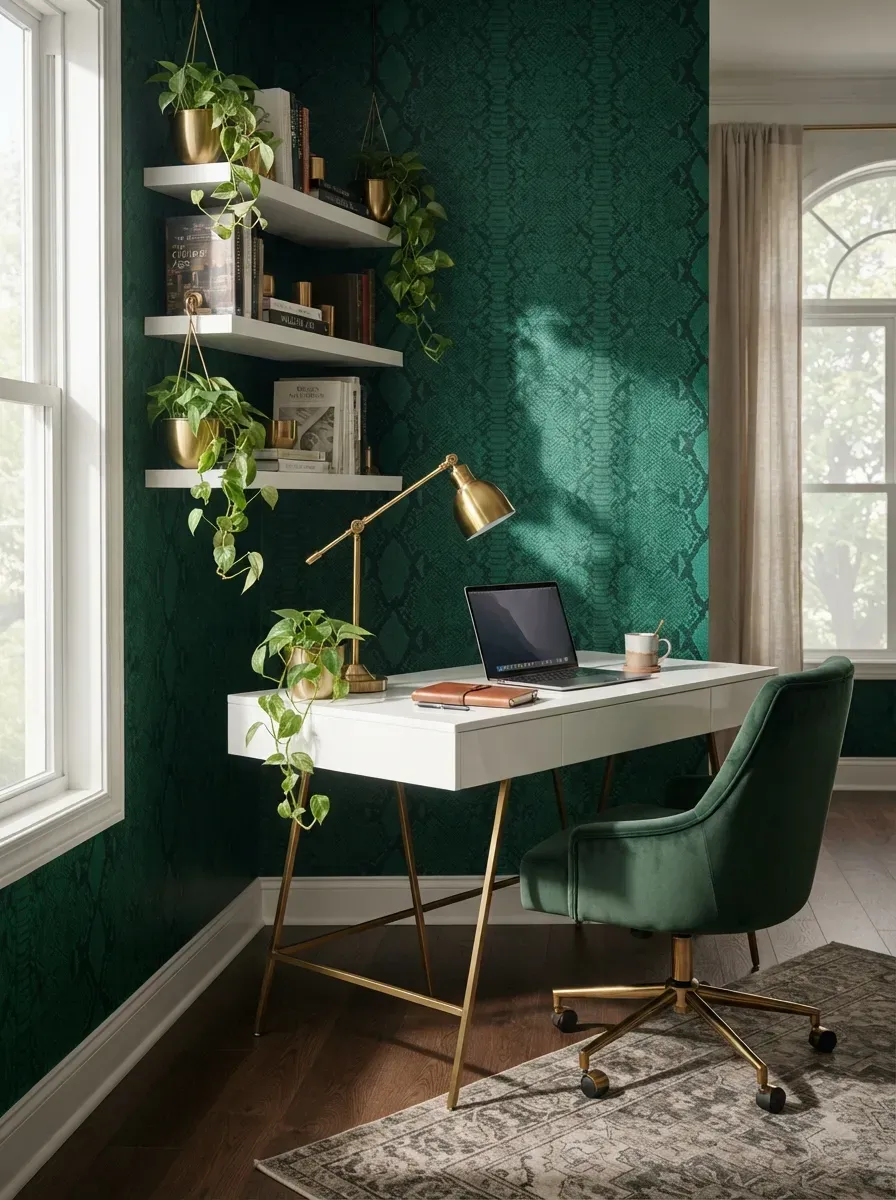
Snake print wallpaper is more refined than it sounds.
The pattern — with its small interlocking scales — reads as textured and sophisticated, especially in deep colors like emerald, burgundy, or black. In a home office, it signals “this person has taste.”
Why a home office works: You spend real time in there. A bold wallpaper makes the space feel designed and curated, which actually makes you want to work in it.
Color picks: Emerald green snake print is a standout choice. It’s rich without being aggressive. Navy snake print works well for a more corporate feel. Blush snake print leans feminine and chic.
Budget tip: Snake print peel-and-stick wallpaper is widely available online for $25–$50 per roll. A standard home office wall needs 2 rolls maximum.
Pair with gold or brass accessories — a desk lamp, pen holder, or picture frames. The metallic tones pick up the sheen in most snake print designs.
Plants add life: A tall leafy plant in the corner softens the space. The green tones echo the wallpaper and make the room feel less stiff.
Keep your desk surface clean and uncluttered. When the wall is this interesting, a clean desk feels intentional, not sparse.
5. Tiger Stripe Wallpaper as a Kids’ Room Feature

Kids love tiger stripes — and honestly, parents do too.
Tiger print wallpaper in a child’s room adds personality without going full “cartoon jungle.” It’s bold enough to feel exciting but grown-up enough that it won’t look dated when your kid hits double digits.
Best application: One accent wall, ideally behind the bed or above a reading nook. You get maximum impact without the room feeling too heavy.
Color versions: Classic orange and black is the most popular. But tiger stripe also comes in softer versions — tan and cream, or even a pastel watercolor style for younger kids.
Budget tip: Many children’s wallpaper brands sell tiger prints in peel-and-stick format specifically designed for rentals and kids’ rooms — easy to apply, easy to remove when tastes change. Expect to spend $40–$70 for an accent wall.
Pair with bedding in solid orange, cream, or forest green. Avoid matching tiger-print sheets — too much of the same pattern becomes noise.
Add a small jungle plant like a pothos or snake plant on a shelf for a nature-themed touch that ties the whole room together.
Safety note: All major peel-and-stick brands use non-toxic, VOC-free adhesives — safe for children’s rooms.
6. Giraffe Print Wallpaper in an Entryway
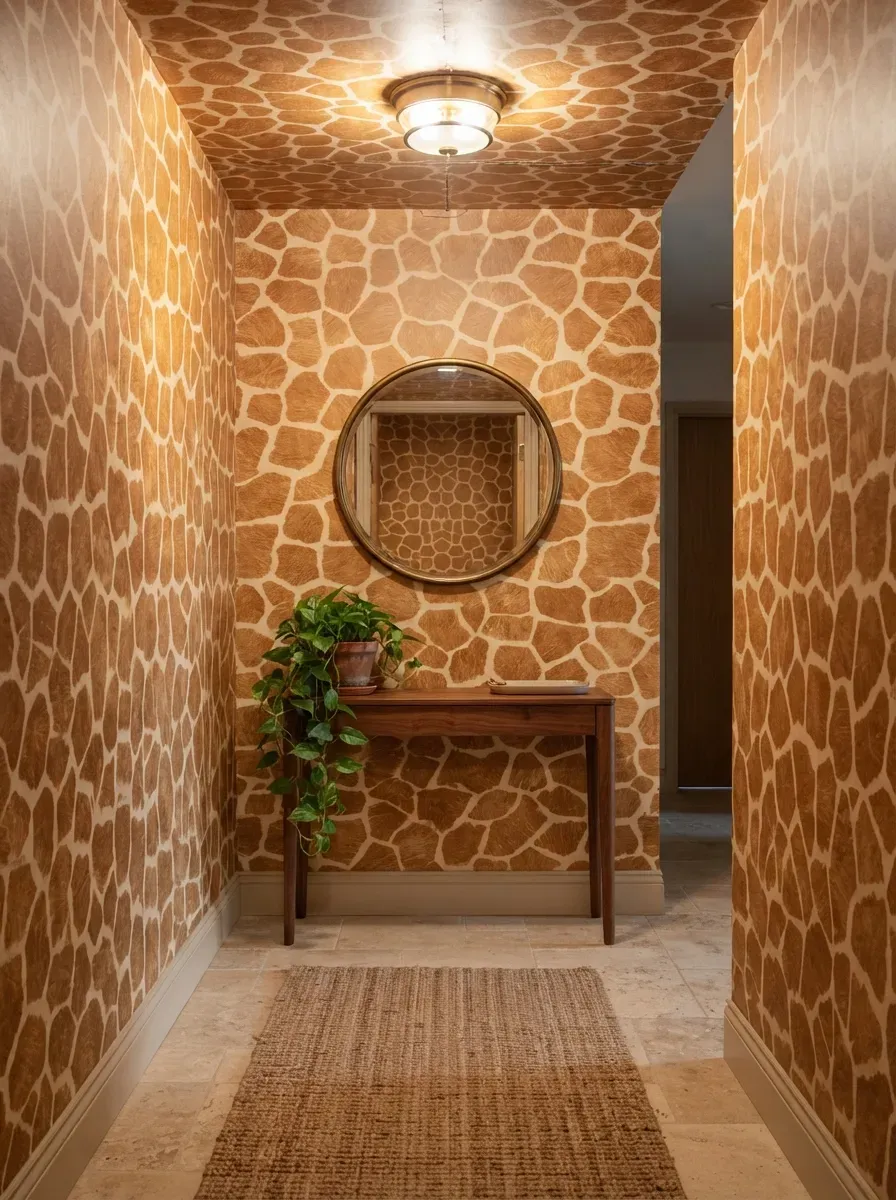
Your entryway is the first thing people see. Make it memorable.
Giraffe print is one of the most underused animal prints in home décor — which means it’s also one of the most distinctive. The large-scale irregular patches in warm honey and brown tones feel both exotic and earthy.
Why an entryway: You pass through quickly. A bold pattern here is thrilling without being exhausting. It sets the tone for the whole home.
Scale consideration: Giraffe print has large pattern repeats. In a narrow entryway, that scale actually works in your favor — it makes the space feel bigger and more open.
Budget tip: Because entryways are typically small, you’ll need fewer rolls. Two rolls of giraffe print peel-and-stick wallpaper can often cover a standard entryway for under $80.
Pair with a slim console table in natural wood — the warm tones echo the giraffe pattern perfectly. Add a round mirror above it to bounce light and open up the space.
A woven jute rug ties in the natural, earthy theme without adding more pattern to compete with the walls.
Lighting matters: A small pendant light or sconce with a warm bulb makes the golden tones in the wallpaper glow. Avoid cool or blue-toned lighting — it dulls the warmth entirely.
7. Cow Print Wallpaper for a Farmhouse Kitchen

Cow print is having a genuine moment — and kitchens are the perfect place for it.
The black-and-white pattern has a playful, farmhouse-meets-modern energy that works especially well in kitchens with white cabinetry and natural wood accents.
Best placement: Apply cow print wallpaper as a backsplash behind open shelves or between upper and lower cabinets. You get the pattern where the eye travels most — without covering every surface.
Why it works in a kitchen: Kitchens are already pattern-rich spaces with tiles, hardware, and textures. Cow print at a small scale (backsplash only) adds personality without overwhelming the room.
Budget tip: Peel-and-stick wallpaper used as a backsplash alternative is both cheap and practical. Most cow print peel-and-stick options cost $20–$40 per roll, and a backsplash area rarely needs more than one roll.
Pair with white shaker cabinets, butcher block countertops, and open shelves. This combination leans into the farmhouse aesthetic that makes cow print feel at home in a kitchen.
Add vintage-style accessories — ceramic crocks, cast iron pans, wicker baskets — to complete the look.
Maintenance note: Peel-and-stick wallpaper in kitchens should be wiped, not scrubbed. Use a damp cloth to clean splashes. Avoid steam-heavy spots directly above the stove.
8. Peacock Feather Wallpaper in a Dining Room
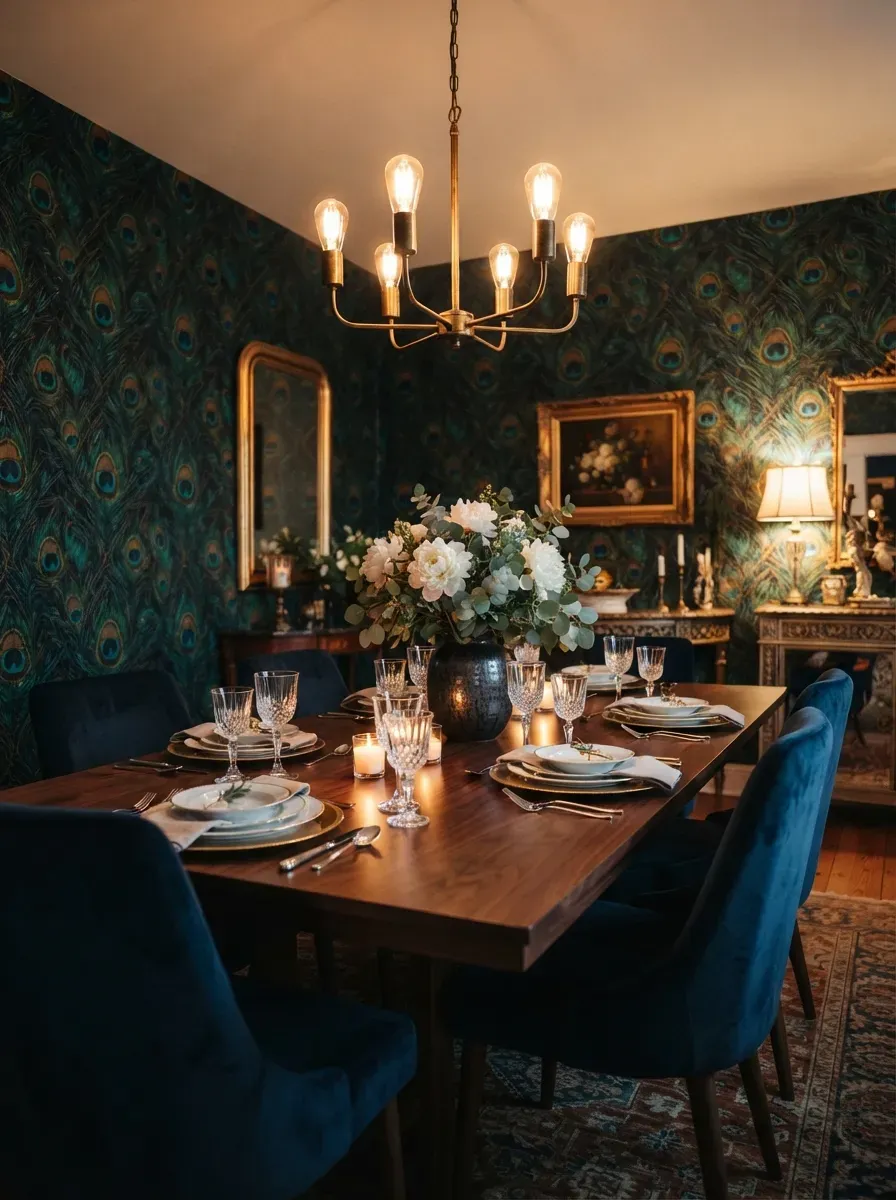
Peacock feather wallpaper sits at the intersection of animal print and art — and dining rooms are where it thrives.
The pattern is dramatic, richly colored, and intimate. It makes dinner feel like an occasion. Guests lean in, look closer, and inevitably comment.
Color palette: The classic peacock palette is teal, emerald, and gold. But you can also find peacock prints in charcoal and copper, or navy and bronze for a more masculine feel.
Why a dining room: You use this room for meals, not daily living. A maximalist wallpaper is appropriate precisely because the room is used intentionally — for gathering, celebrating, enjoying food together.
Budget tip: Peacock print wallpaper tends to run slightly more than basic animal prints because of the color complexity. Look for it on sites like Wayfair or Etsy — you’ll find quality options from $40–$80 per roll. A dining room typically needs 4–6 rolls.
Pair with dark wood furniture to anchor the richness of the print. A velvet chair in midnight blue or deep plum complements the jewel tones beautifully.
Add a statement chandelier. The warmth of candlelight bulbs makes the gold tones in peacock print shimmer in a way that no other lighting achieves.
9. Dalmatian Spot Wallpaper for a Playroom
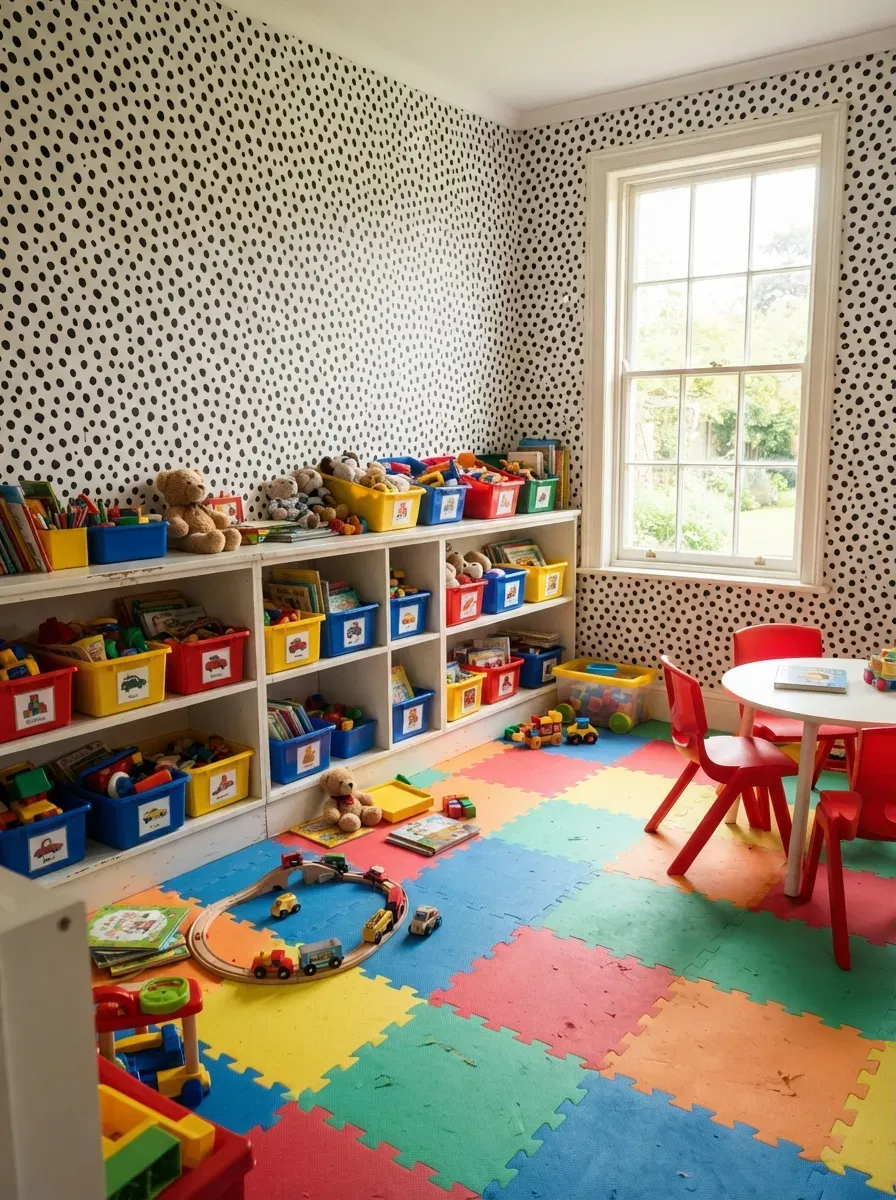
Dalmatian print is the most playful animal print you can put in a home — and a playroom is where it belongs.
The black-and-white spot pattern is joyful, energetic, and completely timeless. Kids love it. It’s also one of the easiest patterns to style around because the neutral base goes with almost any color.
All-four-walls approach: Unlike bolder prints, dalmatian spots work well on all four walls of a small room. The pattern is airy enough that it doesn’t feel suffocating even when fully surrounded by it.
Budget tip: This is one of the most affordable animal prints available in peel-and-stick format. Expect to spend $20–$40 per roll. A small playroom might need 4–6 rolls total — still well under $200.
Add bursts of primary color through accessories — red toy bins, a yellow rug, blue chairs. The black-and-white base makes every color pop.
Longevity: As kids grow up, this wallpaper transitions naturally into a more “cool” teen aesthetic when paired with black furniture and bright accents. You might not need to replace it as soon as you’d expect.
Removal: Peel-and-stick formats are ideal for kids’ spaces. They come down cleanly when it’s time for a change — no damage to walls, no residue.
10. Crocodile Texture Wallpaper in a Home Bar

Crocodile texture wallpaper isn’t spotted or striped — it’s all about surface. The embossed scale pattern gives walls a leather-like depth that works beautifully in darker, moodier spaces.
Home bars are a natural fit. Think whiskey tones, leather stools, and dim lighting.
Why texture over pattern: In a small, enclosed space like a home bar, a textures-only print (no bold spots or stripes) adds visual interest without the intensity of a graphic pattern. It’s sophisticated, not loud.
Color picks: Dark forest green, cognac brown, and charcoal black are the most popular for this look. All three read as masculine and refined.
Budget tip: Crocodile texture wallpaper often costs more than flat-print options because of the embossed manufacturing process. Look for budget options on Amazon or Etsy — you can find good-quality versions for $35–$60 per roll.
Pair with dark wood shelving, leather bar stools, and crystal glassware. The combination feels like a private members’ club — in your own home.
Lighting is everything: Install low, warm pendant lights above the bar. The shadows cast by the texture make the crocodile scales pop in a way that overhead fluorescent lighting completely kills.
11. Ocelot Print Wallpaper for a Bohemian Bedroom

Ocelot print is leopard’s wilder, slightly more abstract cousin — and it’s perfect for boho interiors.
The pattern has an organic, hand-drawn quality that pairs naturally with rattan furniture, macramé, and layered textiles. It’s maximalist but earthy, which is exactly the boho sweet spot.
Color palette: Look for ocelot prints in warm terracotta, rust, ochre, and cream. Avoid harsh black-and-white versions — the softer earth tones are what make this pattern feel boho rather than glam.
Best room: A bedroom with natural material furniture — rattan bed frames, wicker nightstands, linen curtains. The wallpaper fits into the texture-rich boho aesthetic without standing out as a jarring statement piece.
Budget tip: Earth-toned animal prints are sometimes harder to find in big-box stores. Check Etsy for independent designers who sell peel-and-stick versions — often $30–$50 per roll, with unique colorways you won’t find anywhere else.
Layer textiles heavily: linen bedding, a chunky knit throw, a woven rug. Bohemian style is about abundance of texture, and the ocelot wallpaper adds one more layer to that story.
Plants: A hanging plant near the window — pothos or string of pearls — brings in nature and keeps the earthy vibe consistent throughout the room.
12. Python Print Wallpaper in a Fashion-Forward Closet
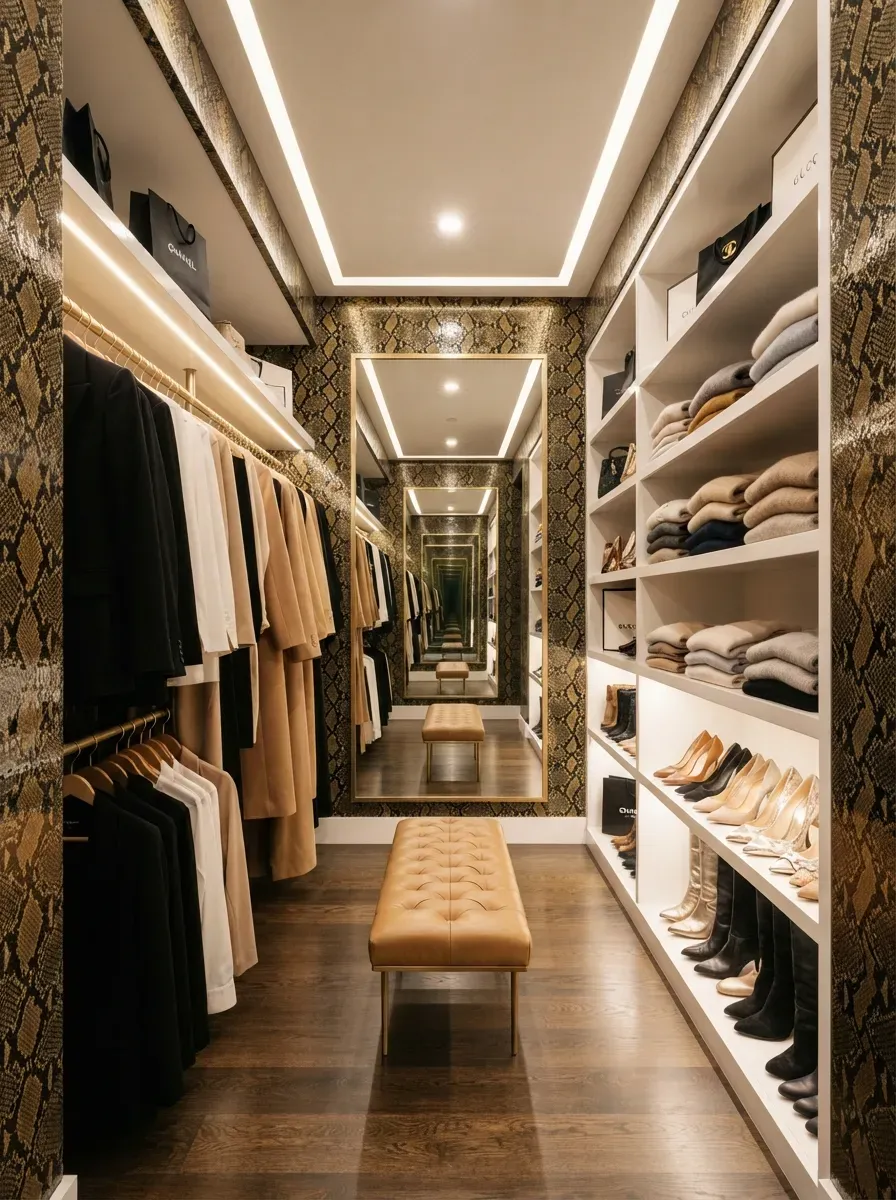
Your closet should feel like a luxury boutique — and python print wallpaper will get you there.
Python skin has a long, elongated scale pattern that reads as glamorous rather than wild. In a small closet space, it adds drama without taking over an entire living area.
Why a closet: It’s a personal space. Nobody else needs to live with the boldness of python print except you — and in a closet, it makes getting dressed feel like a ritual.
Color choices: Black and gold python is the most dramatic option. Blush and cream python is softer and more feminine. Chocolate brown and tan python reads as understated luxury.
Budget tip: A small walk-in closet or reach-in closet might only need 2–3 rolls. At $35–$60 per roll for peel-and-stick options, the total cost can stay under $150 for a full transformation.
Add a full-length mirror with a thin gold or brass frame. The reflection doubles the impact of the wallpaper and makes the closet feel twice as large.
Lighting upgrade: Swap basic closet lighting for recessed LED strips or a small chandelier. The combination of python print and good lighting makes any closet feel like a high-end dressing room.
Organize your clothing in neutral tones — black, white, beige, camel. When the walls are this interesting, visible clothing in bold colors creates visual chaos.
13. Watercolor Animal Print for a Soft Nursery

Traditional animal print can feel too bold for a nursery. Watercolor versions solve this perfectly.
Watercolor animal prints take the same spot or stripe patterns and render them in soft, blurred tones — pale blush, lavender, sage, and cream. The result is gentle enough for a baby’s room while still being genuinely stylish.
Why watercolor: It bridges the gap between playful and serene. Parents want the nursery to feel imaginative, but not so stimulating that it affects sleep. Watercolor prints hit the right balance.
Popular patterns in watercolor: Leopard spots in blush and cream, cheetah in sage and white, and zebra stripes in pale lavender and grey. All work beautifully on a nursery accent wall.
Budget tip: Watercolor animal print peel-and-stick wallpaper is easy to find in the nursery section of most major retailers — including Target and Amazon. Prices run $25–$50 per roll.
Pair with a white wooden crib, light grey glider, and natural wood accents. The clean materials balance the softness of the watercolor pattern.
Future-proofing: As your child grows, watercolor prints hold up surprisingly well — they age into a “whimsical” aesthetic for toddlers and young kids without needing immediate replacement.
Add a soft round rug in cream or blush to ground the space and add one more layer of gentle texture underfoot.
14. Bold Black and White Zebra Print for a Maximalist Living Room

If you’re going maximalist, go all the way.
Full-room zebra print — all four walls — is one of the most dramatic moves in home décor. Done right, it doesn’t look chaotic. It looks intentional, curated, and deeply cool.
The secret to making it work: Strong, solid-colored furniture. An emerald velvet sofa. A cognac leather chair. A round gold coffee table. Against all-zebra walls, these solid pieces anchor the room and give the eye somewhere to rest.
Color on color: Jewel-toned accessories against black-and-white zebra print create a rich, layered effect. Deep teal throw pillows, a burgundy vase, a mustard yellow blanket — all of these work beautifully against the stark contrast of zebra.
Budget tip: Going all-four-walls means more rolls — plan for 8–12 rolls for a standard living room. Peel-and-stick zebra print at $30–$50 per roll brings your total to $240–$600. The lower end of that range is very achievable for this level of impact.
Art on the wall: A gallery of framed art hung directly on the zebra wallpaper looks incredible. The frames interrupt the pattern in a satisfying way and prevent the room from feeling like a themed space rather than a curated home.
Ground the room with a solid-colored rug — not another animal print. The floors need to give visual relief.
15. Faux Fur Animal Print Wallpaper for a Cozy Bedroom
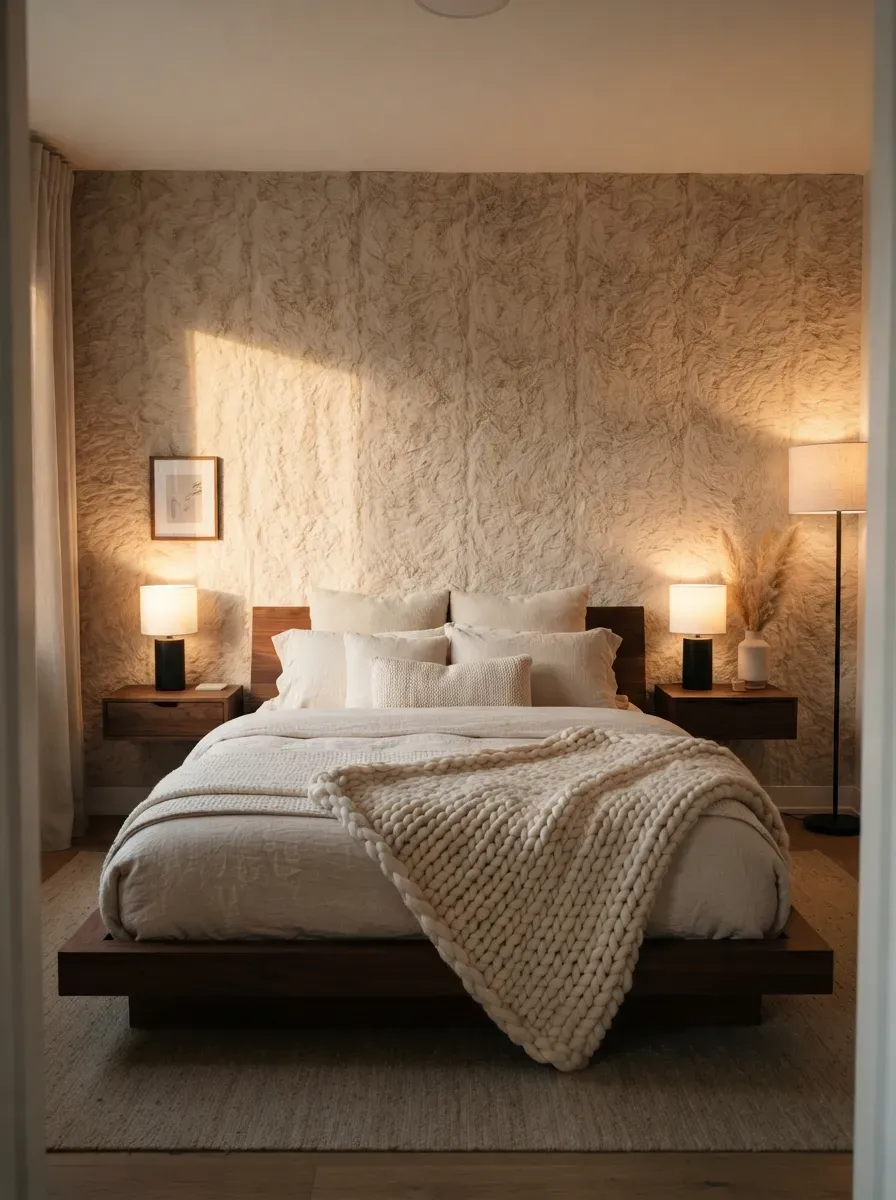
Faux fur textured wallpaper gives a bedroom the softest, most tactile feeling you can achieve on a flat wall.
This isn’t a graphic pattern — it’s a plush surface mimicking the look of fur in creamy, warm, neutral tones. It’s cozy season made permanent.
Why it works: The texture reads as luxurious without being bold. It’s the quietest kind of animal print, which makes it work in master bedrooms where you want calm, not drama.
Material note: Most “faux fur” wallpapers are actually flocked wallpapers — they have a raised velvet-like texture that catches light and shadow in ways flat prints can’t. Look for flocked options specifically when shopping.
Budget tip: Flocked wallpaper costs more than standard peel-and-stick options — typically $60–$100 per roll — but the visual and tactile effect is worth it for a bedroom accent wall. Budget for 2–3 rolls for a headboard wall.
Pair with chunky knit throw blankets, linen bedding, and candlelight-toned lamps. Every element in the room should invite touch — creating a bedroom that feels genuinely cozy from every angle.
Color options: Cream, ivory, warm sand, and pale blush are the most popular for this treatment. All of them read as soft and inviting rather than heavy.
Avoid this wallpaper in humid rooms. The flocked texture can absorb moisture, which affects the adhesive and texture over time.
16. Leopard Print Stair Runner Inspired Wallpaper on a Staircase Wall
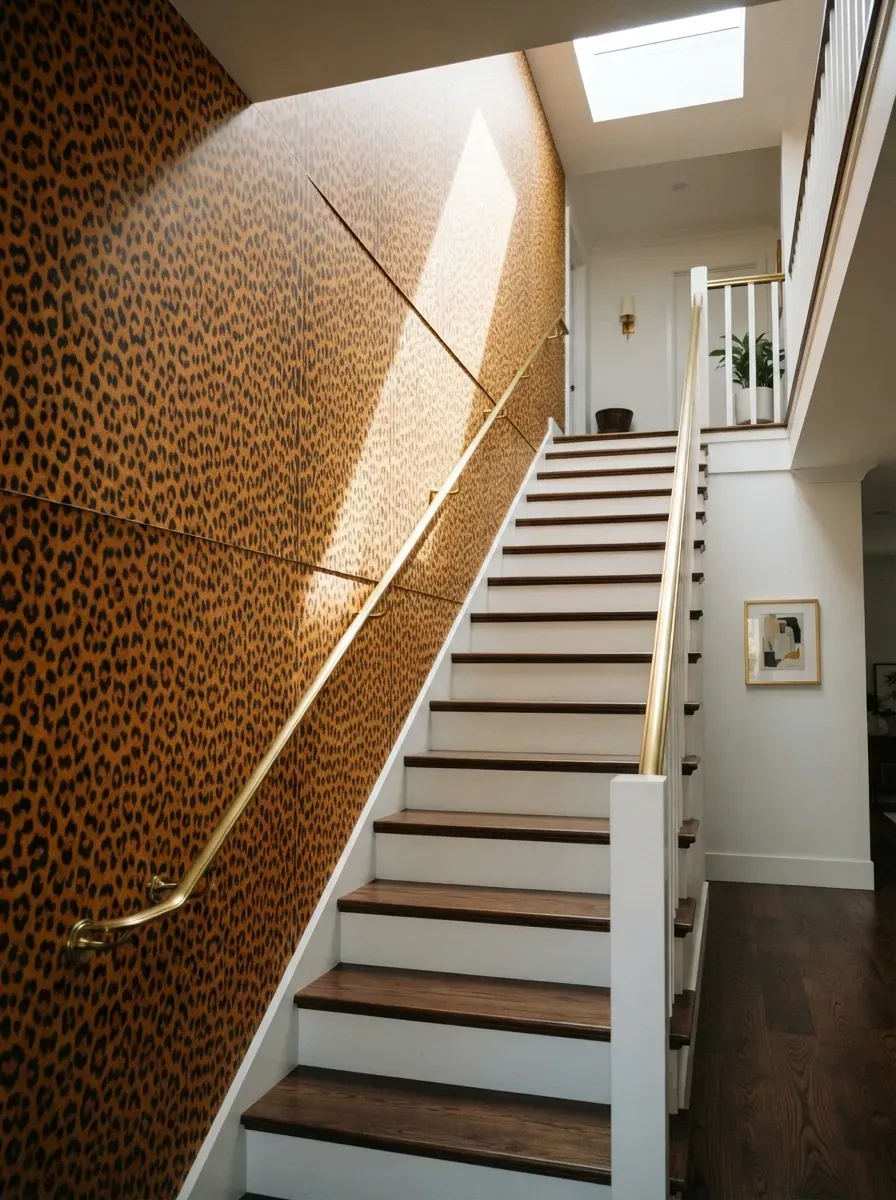
Staircase walls are often the longest, tallest stretches of uninterrupted wall in a home — and they’re almost always ignored.
Leopard print wallpaper along a staircase wall is one of the most impactful decorating decisions you can make. You see it every time you move between floors, and so does every guest.
Why it works here: The vertical height of a staircase wall makes large animal prints look spectacular. The pattern doesn’t need to repeat perfectly — the eye travels upward and takes in the whole sweep of the design.
Installation note: Staircase walls require slightly more care during installation because of the angled ceiling. If you’re using peel-and-stick, take extra time at the top edge where the wall meets the sloped ceiling. A utility knife and a straight edge are your best tools.
Budget tip: A staircase wall in a standard home typically needs 4–6 rolls of wallpaper. At $30–$50 per roll for peel-and-stick leopard print, the total stays under $250.
Keep the stairs themselves simple — white painted risers with dark wood treads, or all-white, or all-dark. The wall is doing the work. The staircase should stay neutral.
Add a brass or gold handrail if you can — the warm metal tone complements leopard print better than chrome or black iron.
17. Snakeskin Print Wallpaper for a Luxe Bathroom
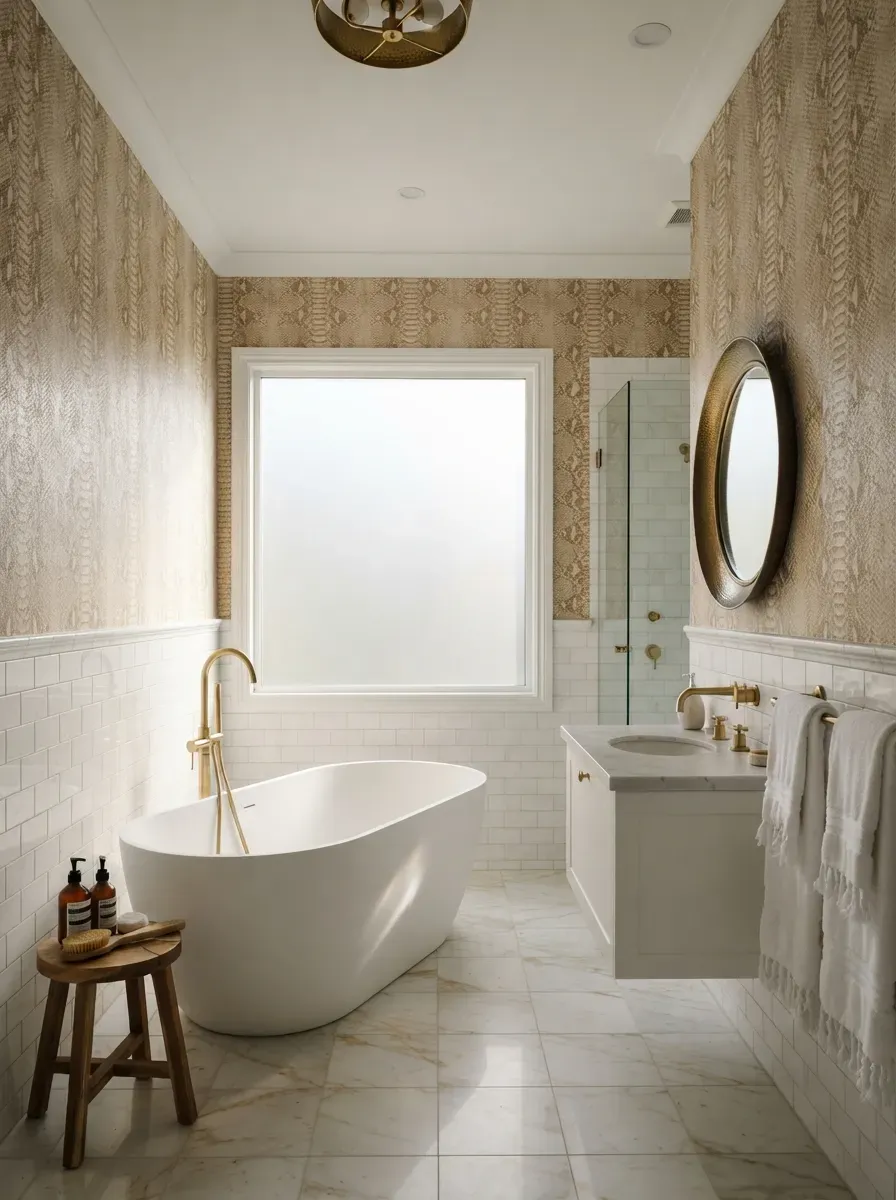
Bathrooms with wallpaper feel like boutique hotels — and snakeskin print takes it to another level.
The trick is placement. Apply the snakeskin print on the upper half of the wall, above white subway tile wainscoting. The tile protects the lower portion from moisture, while the wallpaper adds drama to the upper zone.
Why this layout works: The wainscoting-plus-wallpaper combo is a classic two-tone bathroom approach. Animal print on the upper half brings personality without the moisture risks of covering the whole wall.
Color picks: Champagne and gold snakeskin feels opulent against white tile. Black and silver snakeskin leans more modern. Blush and rose gold is warm and feminine.
Budget tip: You only need wallpaper for the upper portion of the wall, which reduces roll count. A typical bathroom might need just 2 rolls. Peel-and-stick options at $35–$60 per roll keep the total under $120.
Match your fixtures to the wallpaper’s metal tones — gold fixtures with gold-toned snake print, silver with silver-toned versions.
Moisture consideration: Bathrooms have humidity. Use wallpaper specifically rated for bathrooms or damp areas. Many peel-and-stick brands now offer moisture-resistant versions — look for this specifically when shopping.
Add a thick, fluffy white bath mat and matching white towels. Against the richness of snakeskin, the clean white textiles feel deliberately spa-like.
18. Tropical Bird and Leaf Print (Wild Macaw) for a Sunroom

Macaw and tropical bird prints are a step beyond traditional animal print — they bring the entire jungle into a room.
Sunrooms are the perfect home for this wallpaper. With abundant natural light and plants already likely present, the tropical print feels like a natural extension of the outdoor world.
Why a sunroom: The room is already transitional between inside and outside. Bold tropical print on the walls makes that connection feel deliberate and exciting rather than accidental.
Pattern features: The best tropical bird prints combine lush foliage (banana leaves, palm fronds, monstera) with vivid birds (macaws, toucans, flamingos). The layered complexity makes the wall look like a scene, not just a repeat pattern.
Budget tip: Tropical prints are widely available in peel-and-stick format. Sites like Spoonflower let you order custom tropical wallpaper by the yard — ideal for oddly shaped sunrooms. Budget $40–$70 per roll.
Bring in live plants to mirror the print. A large fiddle-leaf fig, a monstera, a bird of paradise — they echo the wallpaper and blur the line between decoration and nature beautifully.
Use white or natural rattan furniture to keep the space feeling light. Dark or heavy furniture would sink the sunny, airy feel that tropical prints create.
19. Herringbone Animal Texture Wallpaper in a Hallway

Herringbone animal texture is a more geometric take on the print trend — and hallways are where it excels.
The pattern combines the visual texture of animal hide (think cowhide or antelope) with the geometric structure of herringbone lines. The result is refined and ordered, with just enough wildness to feel interesting.
Why a hallway: Hallways are transition spaces — you move through them, not linger. A geometric animal texture pattern rewards a glance rather than a prolonged stare, which makes it well-suited to narrow, high-traffic corridors.
Color options: Warm honey and taupe is the most natural-feeling version. Black and charcoal reads more industrial. Ivory and pale sand keeps it light and fresh.
Budget tip: Herringbone animal texture prints are slightly less common than straight leopard or zebra, but a search on Wayfair or Anthropologie Home usually turns up several options. Budget $40–$70 per roll. A hallway typically needs 3–5 rolls.
Keep hallway furniture minimal — a slim console table, a mirror, and one or two framed photos. The wallpaper provides more than enough visual content. Anything more creates clutter.
Flooring: Dark hardwood floors contrast beautifully with warm honey-toned herringbone wallpaper. The contrast between the horizontal lines of the floor and the diagonal lines of the herringbone adds depth to the whole space.
20. Mixed Animal Print Gallery Wall with Framed Prints

Can’t commit to full wallpaper? A gallery wall of framed animal print art gives you the same visual energy — with total flexibility.
This is the smartest low-commitment approach to the animal print trend. Buy framed prints, hang them in a grid or organic cluster, and swap them out whenever you want a change.
How to build it: Start with 6–12 frames in a consistent finish (all black, all gold, or all natural wood). Fill them with printed animal print art — leopard, zebra, snake, cheetah, and giraffe prints in varying scale mix well together.
Where to find prints: Etsy is the best source for downloadable animal print art. You pay for the digital file ($3–$10 typically), print at home or at a local print shop, and frame yourself. Total cost for a full gallery wall: under $100.
Layout tip: Mix portrait and landscape orientations. Mix large anchor pieces with smaller detail prints. Lay the arrangement out on the floor before you commit a single nail to the wall.
Color cohesion: Stick to one color palette across all prints — all earth tones, or all black and white, or all jewel tones. Mixing color palettes across the prints creates chaos rather than curation.
Add one or two floating shelves below the gallery with small ceramic animals, succulents, or books. The three-dimensional objects break the flatness of the framed prints and make the whole wall feel more dynamic.
21. Ombre Leopard Print Wallpaper from Neutral to Bold

Ombre animal print is one of the most creative takes on the trend — and it solves the “too much” problem elegantly.
The print fades from nearly invisible at the top of the wall to full-intensity at the bottom. Or vice versa. The result is dynamic, painterly, and far less overwhelming than a uniform repeat.
Why ombre works: It gives the eye a gradient to follow. The room doesn’t feel covered in pattern — it feels like the pattern is growing out of the floor or dissolving into the ceiling. The effect is more artistic than decorative.
Availability note: True ombre animal print wallpaper is harder to find than standard repeats. Search Spoonflower (custom wallpaper marketplace) or Society6 for designers who specialize in gradient prints. Budget $50–$80 per panel.
DIY alternative: If you can’t find ombre wallpaper, layer two wallpapers — a light neutral at the top, a full leopard print at the bottom — with the seam hidden by a narrow shelf or picture rail. This hack achieves a similar graduated effect for less.
Pair with crisp white bedding and minimal furniture. The ombre effect is already complex — the room around it should be calm.
Color options: Cream to amber leopard is the most popular. Grey to charcoal cheetah works beautifully in contemporary spaces. Blush to deep rose works in feminine bedrooms.
22. Monochrome Cheetah Print Wallpaper in a Reading Nook
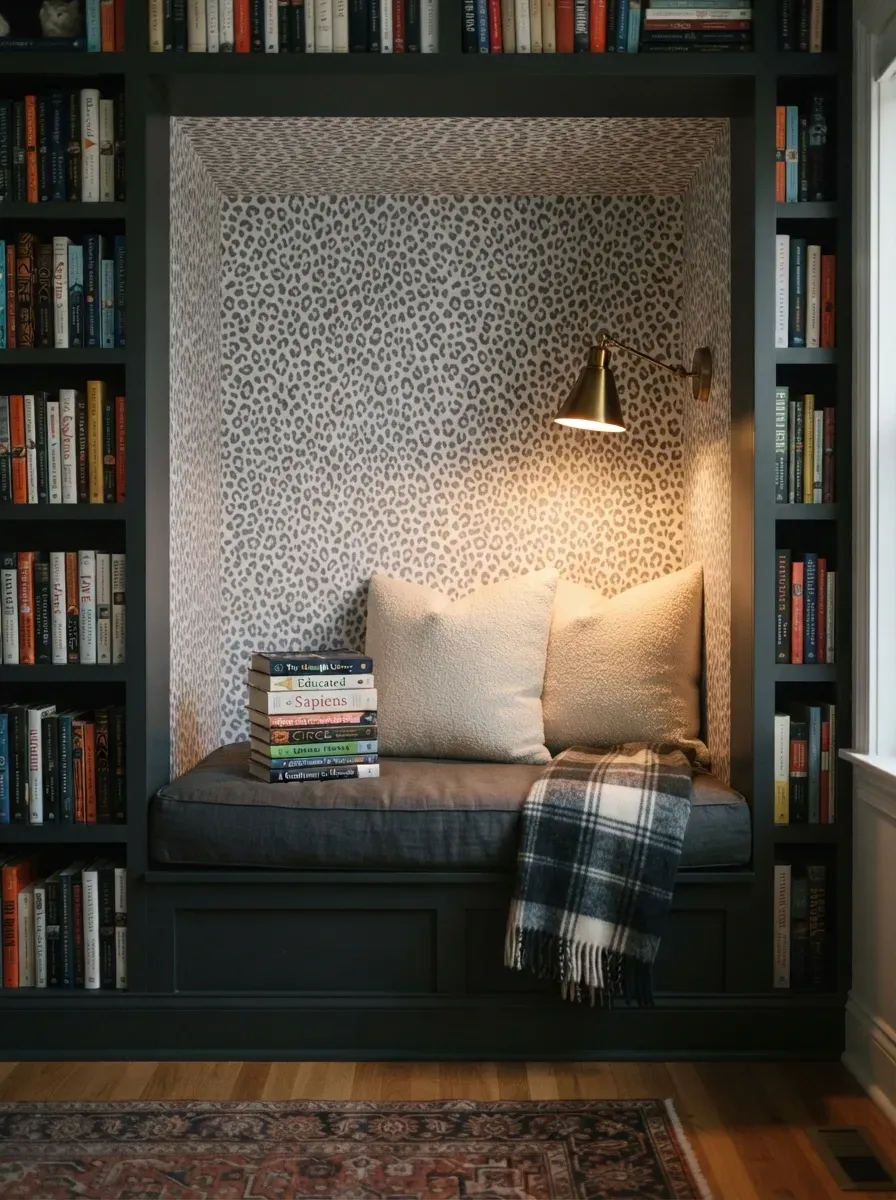
Reading nooks are intimate, enclosed spaces — and monochrome animal print makes them feel like a cocoon.
Cheetah print in grey and white is quieter than the full-color version. It’s pattern without drama — sophisticated, textured, and warm in a muted way.
Why a reading nook: The small, enclosed nature of a reading nook means you’re very close to the walls. A strong pattern feels immersive here in exactly the right way. You feel held by the space.
Built-in vs. freestanding: This treatment works beautifully in built-in alcoves where you can wallpaper the back wall and side walls separately. But it also works in a freestanding reading corner — just one accent wall behind a chair and lamp is enough.
Budget tip: A reading nook’s back wall is tiny — sometimes only 2–3 feet wide. You might need less than one roll of wallpaper. Buy a single roll of peel-and-stick cheetah print ($30–$50) and see how far it goes before ordering more.
Add a cushioned bench seat, a wall sconce at reading height, and bookshelves on either side. The books framing the wallpaper make the whole nook feel curated and intentional.
Pillow picks: Solid charcoal, warm grey, or ivory cushions work best in a monochrome cheetah nook. Avoid patterned pillows — they compete with the wall in a space too small to handle the contest.
23. Koi Fish Scale Wallpaper for an Asian-Inspired Bathroom
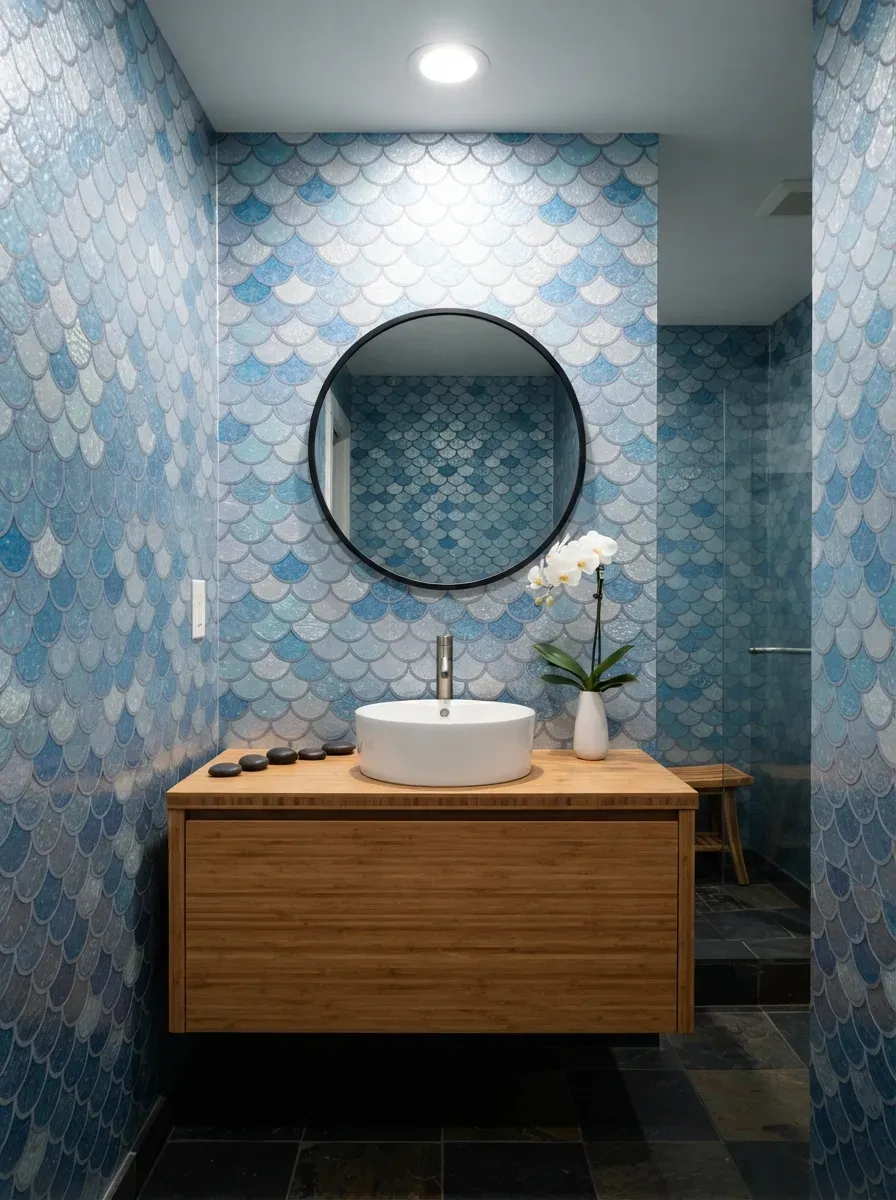
Koi fish scale patterns occupy a unique space between animal print and geometric design — and they’re stunning in bathrooms.
The overlapping semicircle pattern mimics fish scales and has a rich tradition in Japanese art and design. In a bathroom, it brings a spa-like serenity that few other patterns achieve.
Why it works in a bathroom: Water imagery belongs near water. Koi scale patterns feel inherently connected to flow, calm, and cleanliness — all things you want a bathroom to feel.
Color picks: Iridescent blue and silver is the most popular option — it catches light and seems to shift color as you move through the space. Jade green and gold leans more ornate. White and pearl is clean and minimal.
Budget tip: Koi scale peel-and-stick wallpaper is available on Amazon and Etsy for $25–$50 per roll. Most bathrooms need 2–4 rolls depending on size.
Pair with a bamboo vanity, a vessel sink, and river stone accessories to complete the Japanese-inspired aesthetic. A single white orchid on the counter is the finishing touch.
Lighting: Install a warm-toned light above the mirror (not overhead). This prevents the face-flattening effect of overhead bathroom lights and also flatters the iridescent tones in the scale wallpaper.
24. Safari Print Wallpaper Mural for a Bedroom Feature Wall
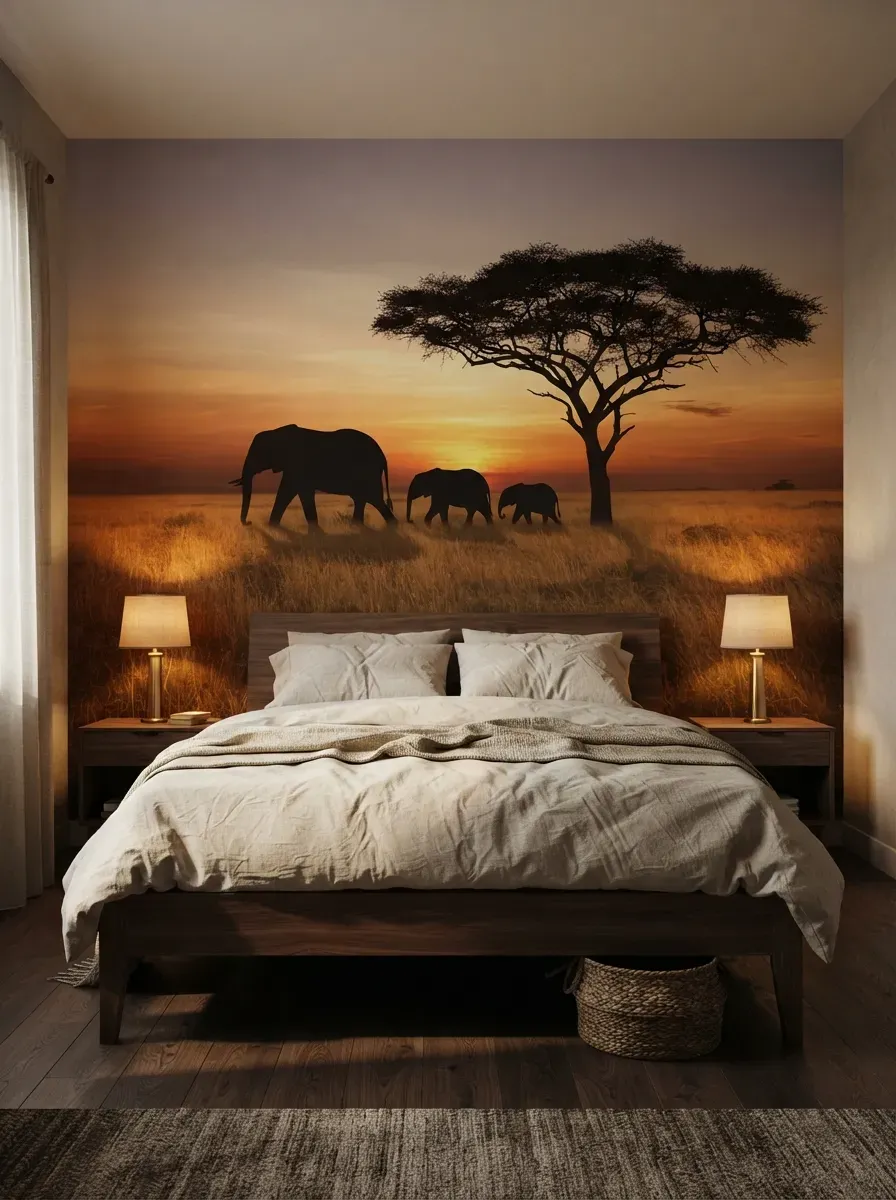
A safari mural isn’t a repeat pattern — it’s a scene. And scenes make rooms feel like worlds.
Safari murals typically feature landscape vistas with wildlife silhouettes: elephants under acacia trees, lions on a ridge at golden hour, zebras crossing a dusty plain. The effect is cinematic and deeply immersive.
Why a mural instead of a repeat print: Murals create a sense of place. You don’t feel like you’re looking at wallpaper — you feel like you’re looking through a window into a landscape. That’s a uniquely powerful effect in a bedroom.
Sizing: Most wallpaper mural companies sell designs in panels that are custom-sized to your exact wall dimensions. You provide the measurements, and the panels arrive pre-cut and numbered for installation.
Budget tip: Custom safari murals from companies like Photowall, Mural Wallpaper, or Rebel Walls typically cost $150–$400 depending on wall size. That’s more than repeat-print wallpaper, but the impact is proportionally greater.
Keep the rest of the bedroom extremely calm — natural linen bedding, simple dark wood furniture, warm lamps. The mural is the room. Everything else supports it quietly.
Color palette: The warm amber, sienna, and dusty gold tones of a sunset safari mural work beautifully with natural materials — linen, jute, rattan, dark walnut.
25. Metallic Leopard Print Wallpaper for a Glam Entryway

Metallic animal print is the most glamorous version of this trend — and an entryway is exactly where that level of drama belongs.
Gold foil leopard spots on a black or deep charcoal background. The effect is like wearing a designer gown to answer the door. It’s over the top in the best possible way.
Why metallic works in an entryway: You pass through this space twice a day and so does everyone who visits. A metallic finish catches the light differently throughout the day — it shimmers under morning sunlight, glows under evening lamps. The changing effect makes the space feel alive.
Where to find it: Metallic wallpaper is available at higher-end retailers — Graham & Brown, Brewster Home Fashions, and Anthropologie Home all carry metallic animal print options. Budget $50–$90 per roll. A small entryway needs 2–3 rolls.
Styling: Go full glam with everything else. A polished marble floor. A tall console table with slim gold legs. A round oversized mirror. White flowers in a tall vase. This is a room that commits to its aesthetic.
Lighting matters most here: Install a dedicated entry chandelier or pendant with warm bulbs. The gold tones in metallic wallpaper only truly come alive under warm, directed light. Cool or daylight bulbs flatten the metallic effect completely.
Maintenance: Metallic wallpaper shows fingerprints and smudges more readily than matte prints. Keep a dry microfiber cloth nearby and wipe down the lower sections of the wall regularly — especially in high-traffic entryways.
Conclusion
Animal print wallpaper isn’t a passing trend — it’s a design tool that has outlasted decades of interior style shifts. From the subtle texture of crocodile-print in a home bar to the dramatic sweep of a safari mural behind a bed, these 25 ideas show that there’s a version of this aesthetic for every home, every budget, and every level of commitment.
The most important thing to remember? You don’t have to go all-in to make an impact. A single accent wall, a powder room, a reading nook, or even a gallery wall of framed prints can bring the energy of animal print into your home without permanently altering your walls. Peel-and-stick formats have genuinely changed the game — they make bold experiments affordable and reversible.
Start with one room, one wall, or one pattern you love. See how it makes you feel when you walk past it every day. Chances are, you’ll want more. Wild looks good on a wall — and now you know exactly how to make it work.
