

Small walls are the trickiest in the house: too bare and the room feels unfinished, too decorated and it feels cramped. Hallway stretches, narrow alcoves, the wall beside a door — these modest spaces need a different approach from grand living-room walls. The good news is that small walls, decorated thoughtfully, can become some of the most charming spots in your home.
The golden rule is proportion. Small walls need decor scaled to their size, breathing room around every piece, and a light touch with colour and pattern. When you respect the wall’s limits, even a tiny stretch of plaster can hold its own.
In this guide, you’ll learn how to decorate small walls without making them look crowded: understanding scale, choosing one larger piece over many small ones, styling vertically, keeping frames light, and letting mirrors do double duty.
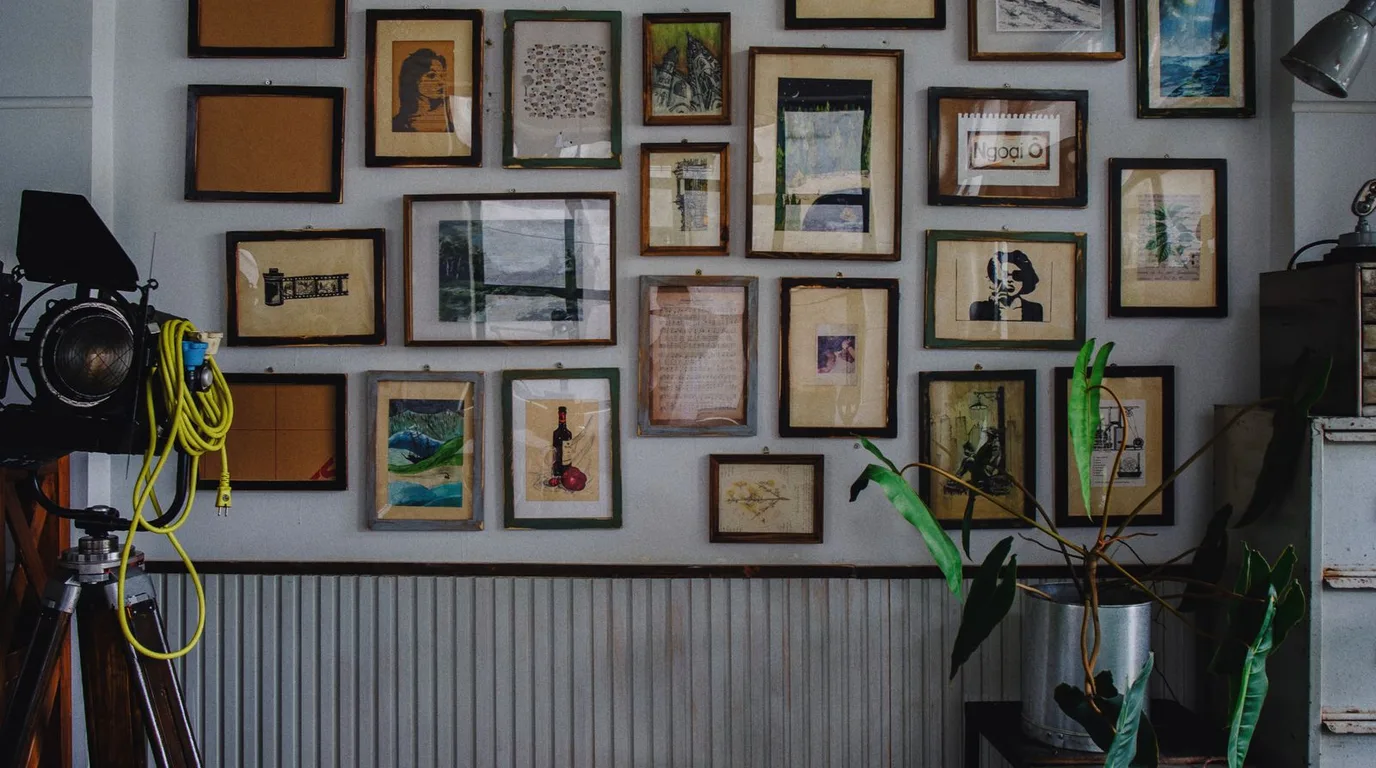
Respect the Scale of the Wall
Every wall has a comfortable capacity for decor, and small walls fill up fast. Before hanging anything, measure the wall and be honest about its size. A good rule: decor should cover roughly 60 to 75 percent of the available wall width — never edge to edge. On a narrow wall, that might mean a single piece 40 to 60cm wide, which is plenty.
Also consider what’s around the wall. A small wall in a busy hallway competes with doors, light switches, and foot traffic, so it needs even more restraint than the same wall in a quiet corner. When in doubt, hang less than you think — you can always add, but an overfilled small wall is hard to unsee.
Scale guidelines:
● Keep decor to about two-thirds of the wall’s width for a balanced look.
● Leave at least 15cm of bare wall between art and doors, ceilings, or corners.
● In busy hallways, choose flatter pieces that don’t protrude into the walkway.
● Step back to the room’s entrance after hanging — that’s the view that matters.
Choose One Larger Piece Over Many Small Ones
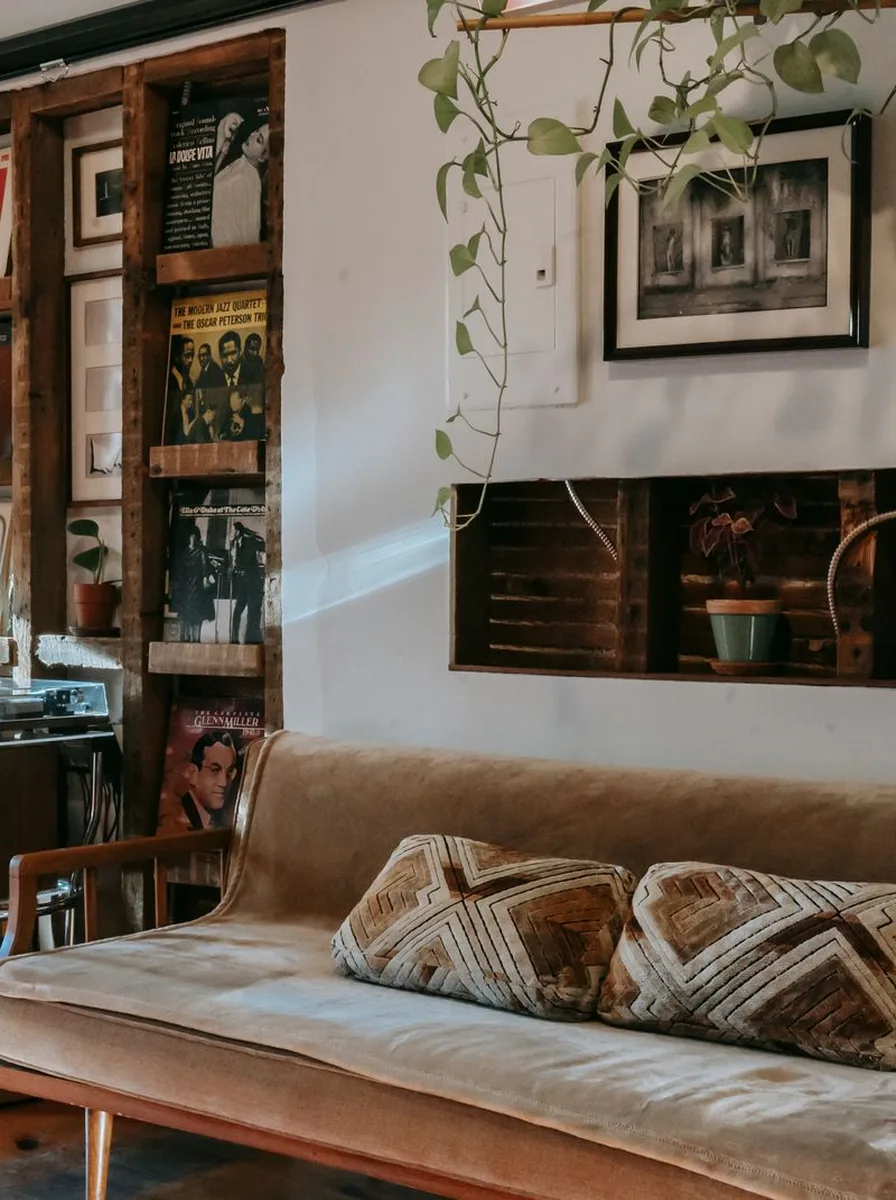
It feels counterintuitive, but one generously sized piece makes a small wall feel bigger, while several small pieces make it feel busier. Multiple small frames chop the wall into fragments; a single confident piece gives the eye one place to rest. This is the most common mistake in small-wall decorating, and the easiest to fix.
The piece doesn’t need to be huge — just substantial relative to the wall. A single landscape print, a textile hanging, or a round mirror that fills most of the wall’s width creates a calm focal point. If you already own small pieces, group them tightly in one frame arrangement rather than scattering them.
One-piece strategy:
● Pick art that’s roughly two-thirds the width of the wall for ideal proportion.
● A single round mirror is perfect for small walls — art, light, and space in one.
● If using small pieces, cluster them as one tight group, not spread out.
● Leave the surrounding wall bare so the single piece can breathe.
Go Vertical to Draw the Eye Up
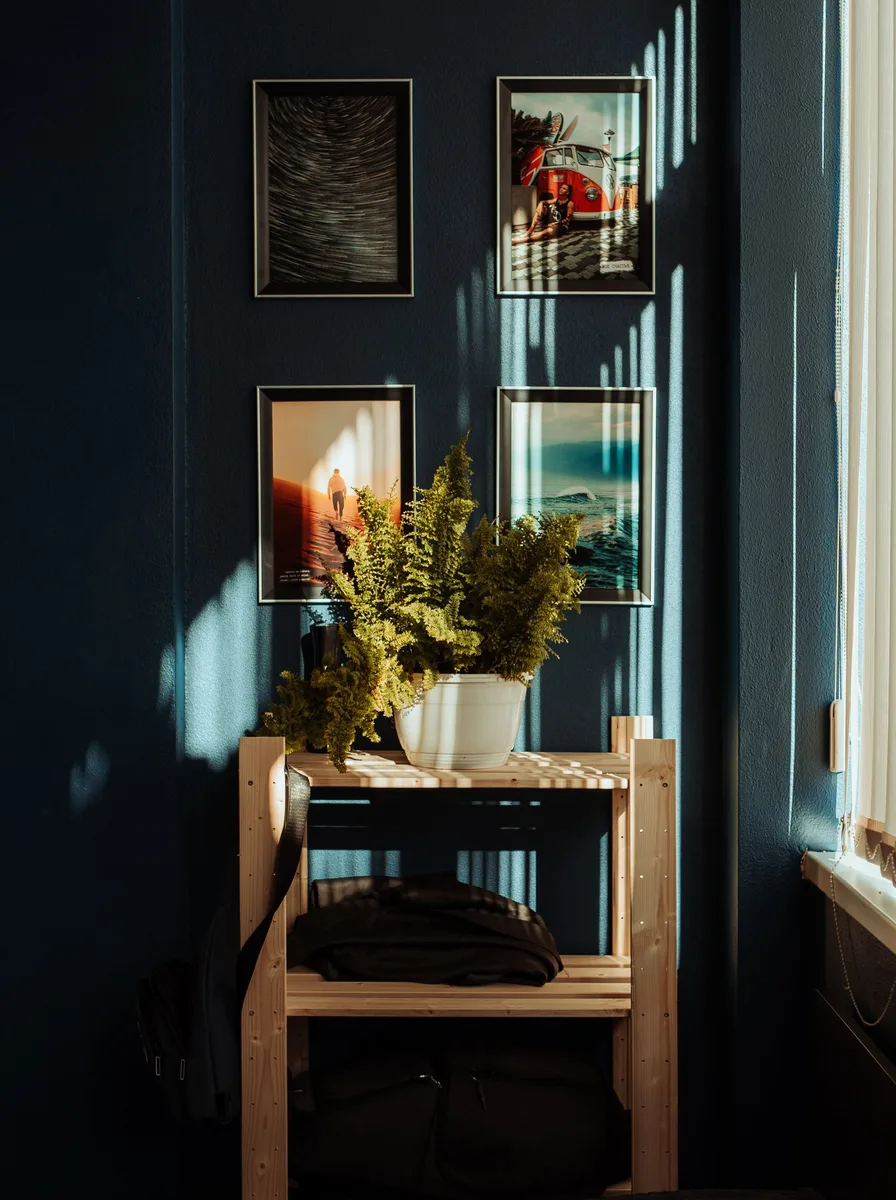
When wall space is tight horizontally, use it vertically. A tall, narrow arrangement — two or three pieces stacked, a vertical textile, a slim floating shelf with a trailing plant — draws the eye upward and makes both the wall and the room feel taller. Vertical styling is the small wall’s secret weapon.
This works especially well in hallways and beside doors, where horizontal space is limited but there’s often unused height. Hang the arrangement so its centre sits at eye level, extending up rather than out. The upward movement gives the whole area a sense of lift and airiness.
Vertical styling ideas:
● Stack two or three same-size frames in a single column for elegant height.
● Hang a long textile or macramé piece to add softness and vertical line.
● Try a slim picture ledge with two or three leaning prints and a small plant.
● Keep the column centred on the wall’s width for a calm, intentional look.
Keep Frames and Colours Light
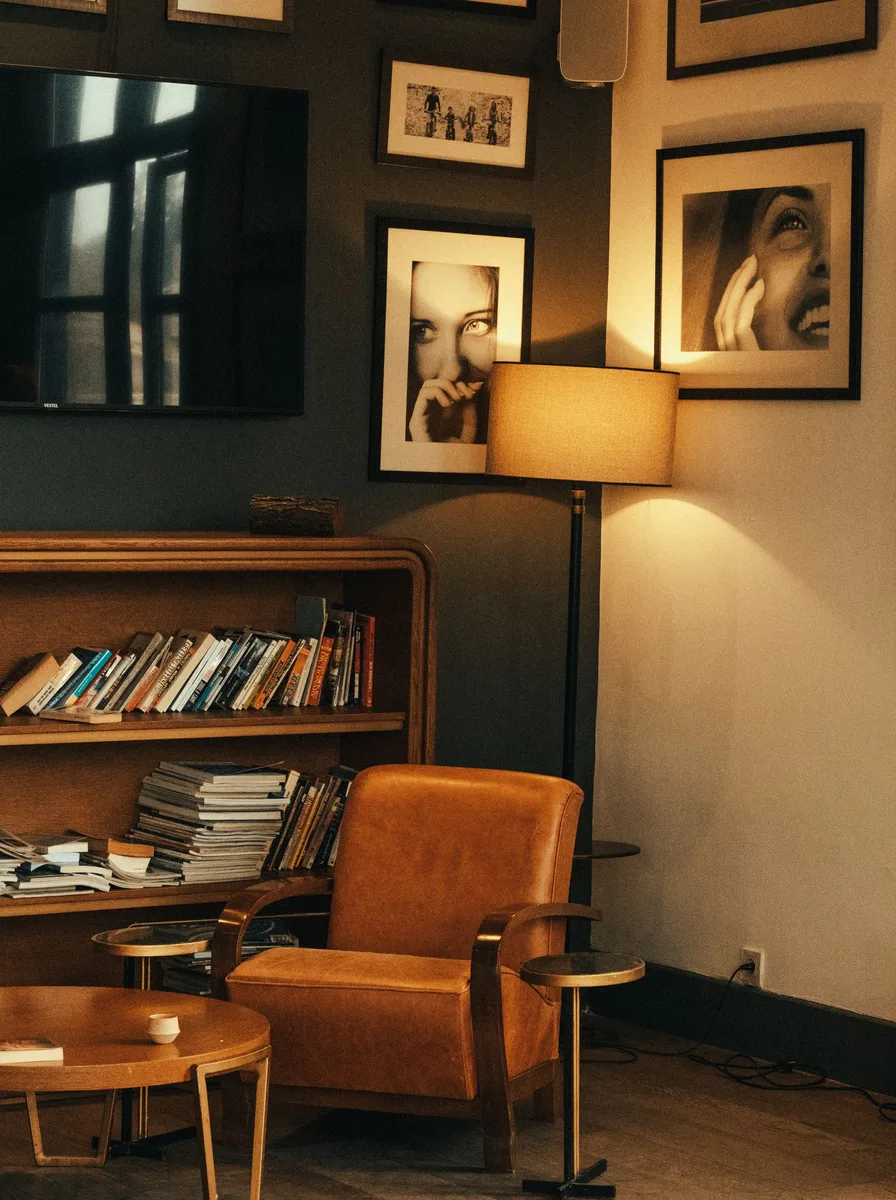
Heavy frames and dark, busy art weigh down a small wall. Light, simple frames — thin white, pale wood, or slim natural oak — keep the wall feeling open, while light-coloured art with plenty of negative space lets the wall breathe. The frame should frame the art, not dominate the wall.
The same goes for colour. On small walls, soft neutrals, pale landscapes, and gentle abstracts keep things airy. If you love bold colour, confine it to the art itself in small doses, and keep the surrounding wall and frame light so the colour feels like an accent, not an invasion.
Light-and-airy choices:
● Choose slim frames in white, pale oak, or light natural wood.
● Favour art with generous white or neutral backgrounds.
● Match the frame colour to the wall for pieces that blend rather than shout.
● Avoid heavy ornate frames on small walls — they overwhelm the space.
Let Mirrors Do Double Duty
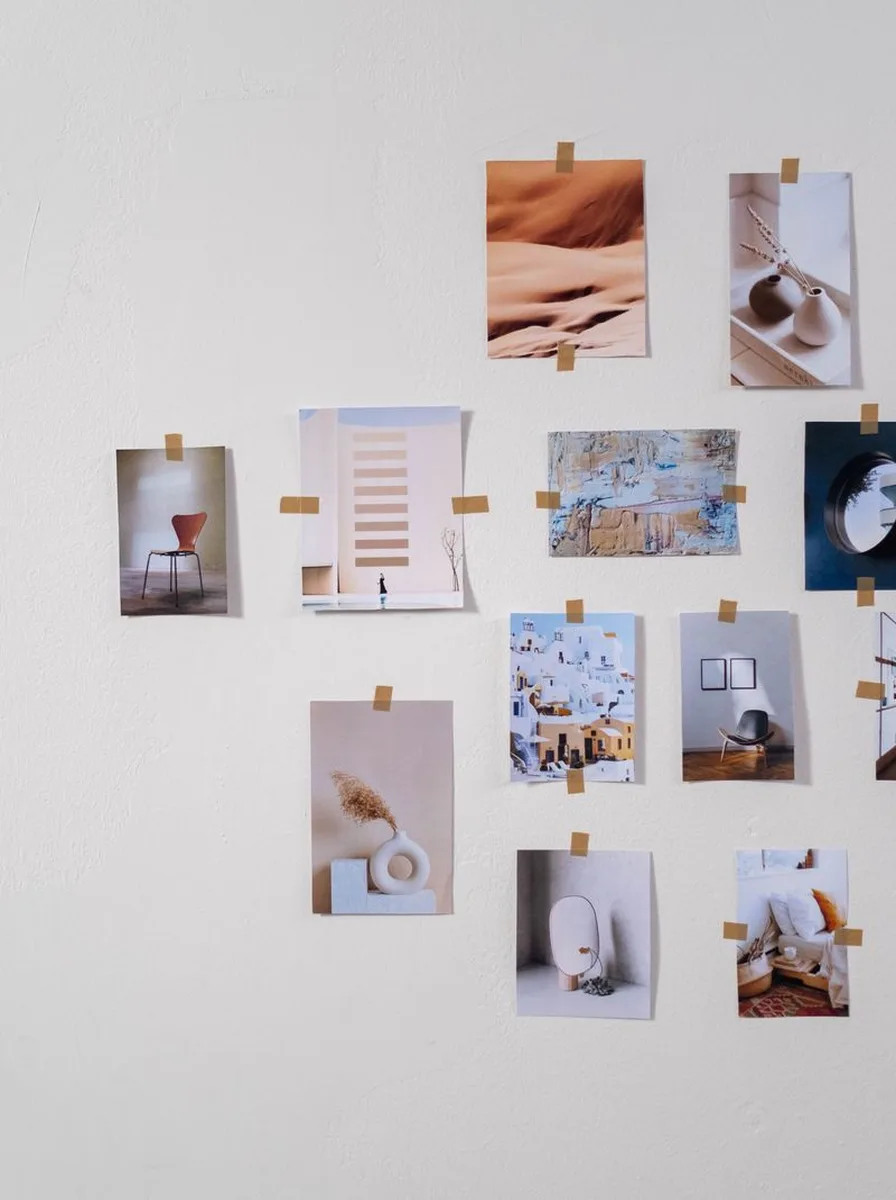
When a wall is too small for art to shine, a mirror is often the better answer. Mirrors decorate and expand simultaneously: they add a beautiful object to the wall while visually doubling the space around it. A small wall with a well-chosen mirror feels intentional and twice as large — the ultimate small-wall trick.
Shape matters on small walls. Round mirrors soften narrow spaces and feel friendly; arched mirrors add elegance and height; a simple rectangular mirror in a slim frame is timeless. Hang the mirror where it reflects light or something lovely — a window, a plant, a pretty corner — never a blank wall or clutter.
Mirror tips for small walls:
● A round mirror is the safest, most flattering choice for a small wall.
● Hang it to reflect a window and you’ll double your natural light.
● Keep the frame slim so the mirror, not the frame, is the feature.
● In dark hallways, a mirror opposite a light source works like a second lamp.