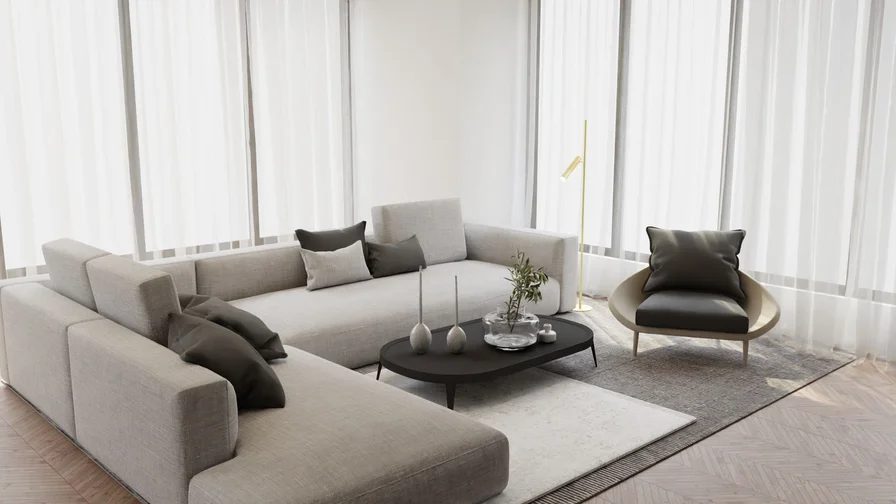
Contemporary style is about the now — clean lines, uncluttered surfaces, and a calm confidence that never tries too hard.
Unlike fussy traditional rooms, a contemporary living room earns its elegance through proportion, texture, and light rather than ornament. The palette stays restrained — whites, warm neutrals, and one or two confident accents — so every piece looks deliberate. It is a style that suits real life too: easy to clean, easy to update, and easy to live in.
The fastest route to instant elegance is editing.
Start with a neutral foundation, add one luxurious texture such as velvet or marble, layer your lighting in threes — overhead, task, and accent — and let a single statement piece carry the room’s personality. Contemporary rooms also love mixed metals and hidden storage, two tricks that add polish without adding clutter. Keep surfaces mostly clear and let the furniture’s clean lines do the talking.
This guide gathers 24 incredible contemporary living room ideas for instant elegance, each shown in a real-style setting with practical tips you can copy this weekend.
From velvet sofas and marble coffee tables to sleek media walls and hotel-luxe corners, you will find ideas for every budget and every size of room.

1. Zone the Space with a Statement Rug

In a contemporary living room, the rug is the floor plan — it defines the conversation zone and anchors the furniture arrangement. Choose a large, low-pile rug in a neutral tone or a subtle abstract pattern, and make sure it is big enough that the sofa’s front legs and the coffee table all sit on it. A rug that is too small makes even expensive furniture look adrift. The right scale instantly makes the room feel designed.
For instant elegance, pick a rug with a soft sheen — a viscose blend or a fine wool — which catches the light and reads as luxurious underfoot. Keep the pattern quiet if your furniture is bold, or let the rug be the pattern if everything else is solid. A rug pad underneath adds comfort, protects floors, and keeps the rug from creeping across the room.
2. Keep Walls Bright White for a Clean Backdrop
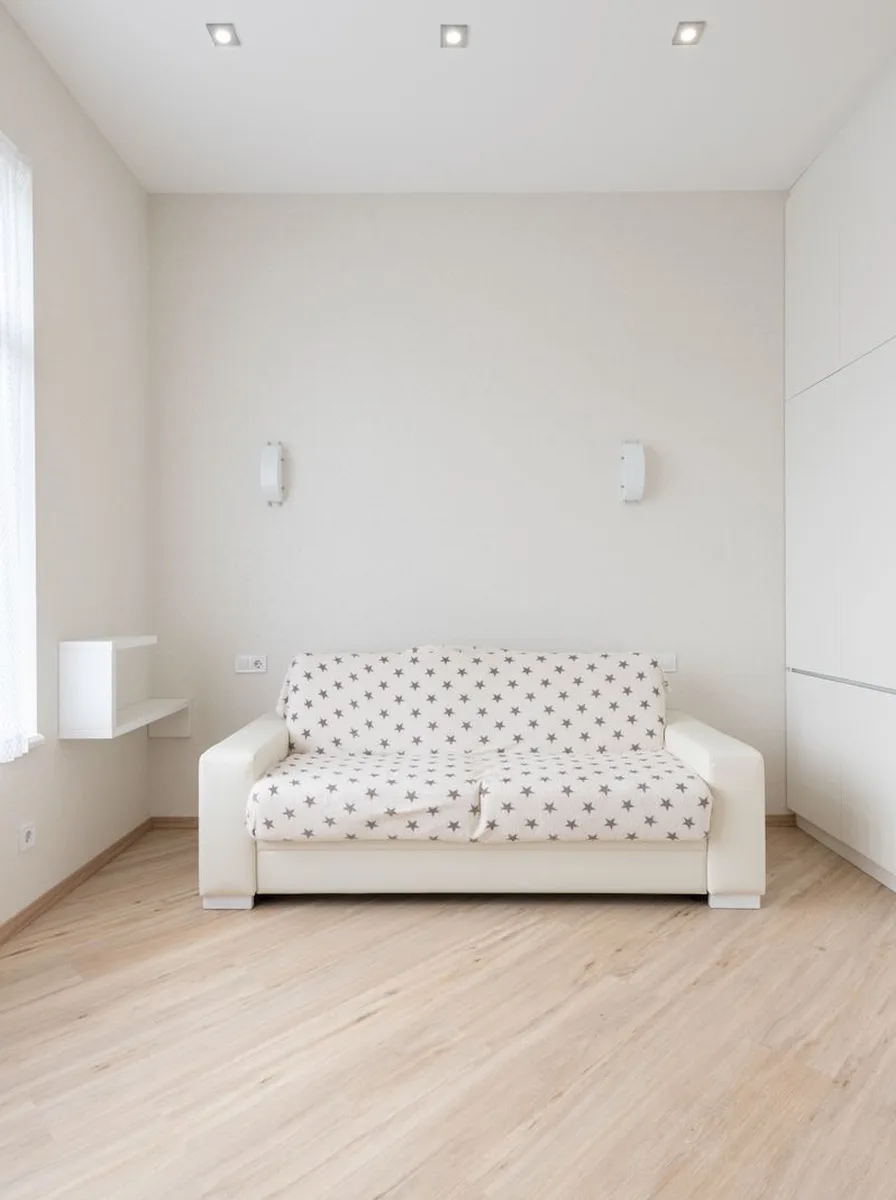
Bright white walls are the contemporary designer’s blank canvas — they maximise light, make the room feel larger, and let furniture silhouettes stand out. Choose a white with a warm undertone so the room glows rather than glares, and use the same shade on the ceiling and trim for a seamless, architectural feel. Against white, every texture — velvet, marble, wood grain — becomes more vivid.
White walls demand good lighting to avoid feeling flat, so layer it: ceiling spots or a pendant, floor and table lamps, plus natural daylight. Keep one wall for a statement — oversized art, a media unit, or textured panelling — so the whiteness has a purpose. Touch-up paint in the exact shade is essential; white shows scuffs, and a quick refresh keeps the backdrop gallery-crisp.
3. Build Warmth with Layered Neutral Tones

Contemporary does not have to mean cold — layering warm neutrals like ivory, sand, camel, and stone creates a room that feels both modern and inviting. The trick is tonal layering: keep the big pieces pale and add slightly deeper neutrals in cushions, throws, and the rug. This monochromatic layering gives the room depth without a single bold colour, and it is almost impossible to get wrong.
Mix textures within the neutral palette to keep it interesting — smooth leather against nubby wool, polished stone beside matte ceramic. Add one warm metallic, like brushed brass or champagne gold, to lift the scheme. If the room starts feeling beige-on-beige, introduce one dark anchor — a charcoal cushion or a black lamp base — to give the neutrals definition.
4. Add Depth with Taupe and Greige Pairings
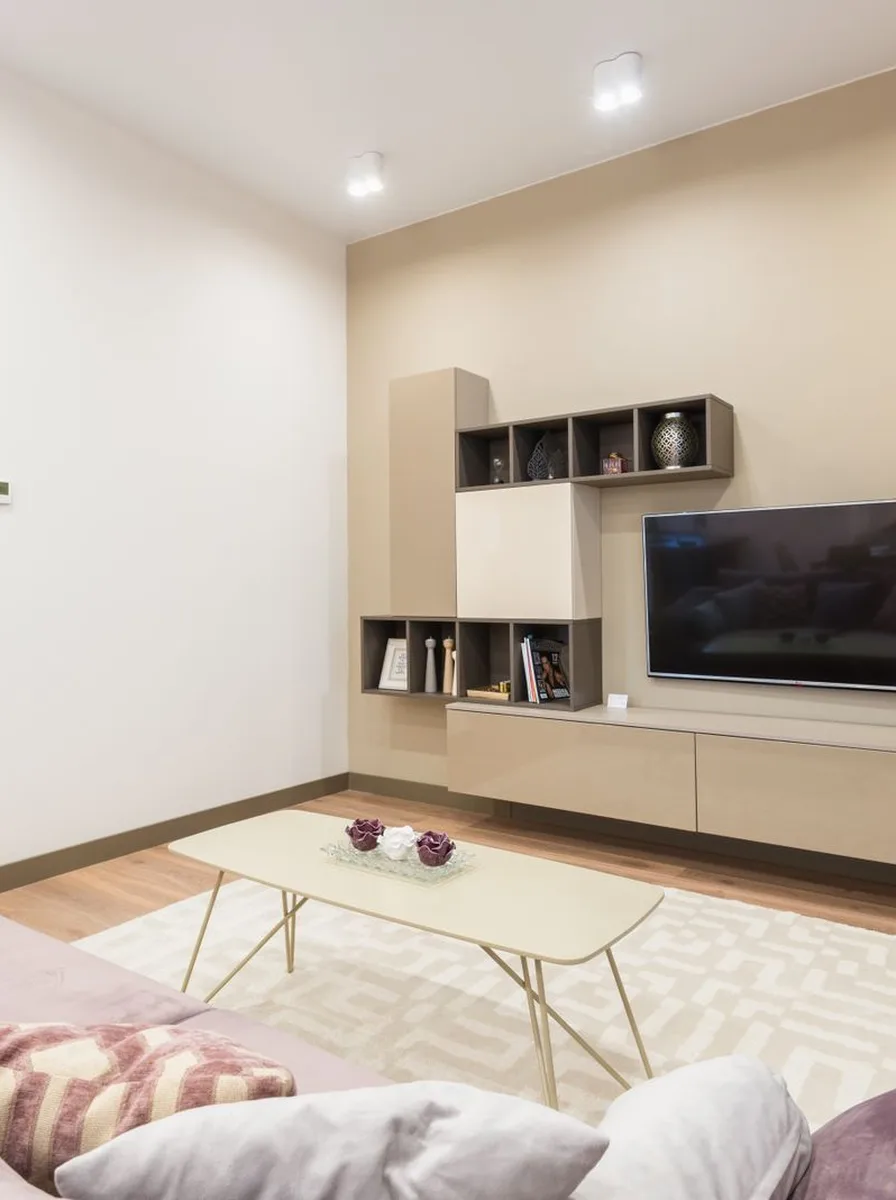
Taupe and greige — the sophisticated middle children of the neutral family — give a contemporary living room depth without drama. These grey-beige hybrids flatter both warm and cool light, which makes them safer than pure grey in north-facing rooms. Use them on the sofa or the walls, then layer lighter ivory and deeper espresso around them for a tonal scheme with real dimension.
Greige works beautifully with natural materials: oak floors, linen curtains, stone accessories. Keep the undertones consistent — if your greige leans warm, keep the whole palette warm — or the room can look muddy. Sample large swatches on the wall and live with them for a few days; neutrals shift dramatically between morning and evening light.
5. Choose Furniture with Clean Contemporary Lines
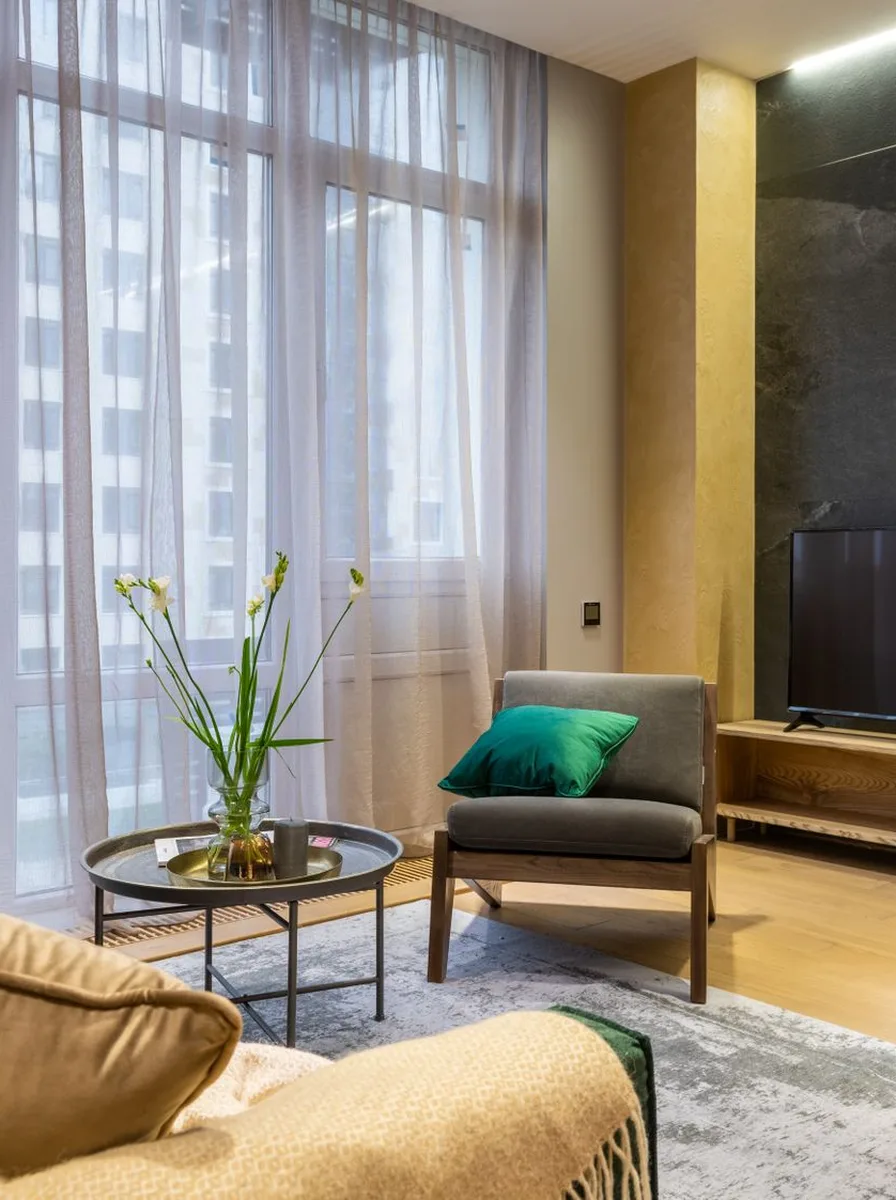
Contemporary elegance starts with silhouette — low-profile sofas with track arms, slim-legged chairs, and tables with simple geometric forms. These clean lines create a sense of calm and order that fussy traditional furniture cannot match. When every piece has a clear, simple shape, the room reads as curated even when it is sparsely furnished. Proportion matters more than decoration here.
Leave breathing room between pieces; contemporary furniture looks best with space around it. Mix one or two curved forms — a round coffee table, an arched floor lamp — among the straight lines to keep the room from feeling rigid. This is a style where less truly is more: three well-chosen pieces beat six average ones every time.
6. Add a Velvet Sofa in a Rich Jewel Tone

A velvet sofa in emerald, sapphire, or deep teal is the contemporary living room’s shortcut to instant elegance. The rich colour provides the room’s single confident accent, while velvet’s light-catching pile adds a luxury that flat fabrics cannot match. Keep everything else neutral — pale walls, a light rug, simple curtains — and let the sofa be the undisputed star of the space.
Jewel tones love metallic accents, so echo the luxury with a brass floor lamp or gold-framed art. Velvet shows wear on seat cushions, so choose a high rub-count fabric and plump the cushions daily to keep them looking tailored. In small rooms, a jewel-tone loveseat delivers the same impact as a full sofa with half the commitment.
7. Layer Velvet Cushions for Soft Contrast
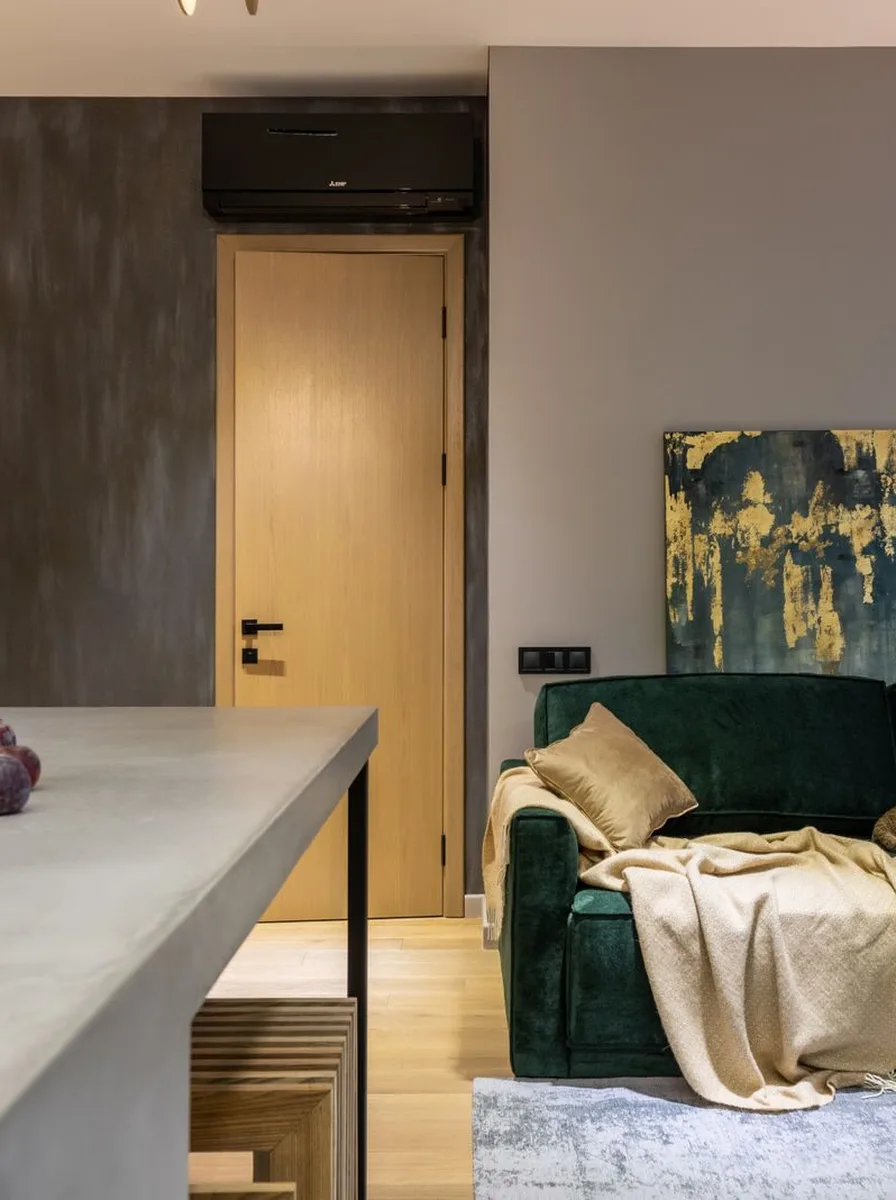
If a full velvet sofa is too much commitment, velvet cushions deliver the same luxe texture in a low-risk dose. On a neutral linen or cotton sofa, two or three velvet cushions in a deep tone — forest green, ink blue, burnt amber — add richness and contrast. The mix of matte upholstery and light-catching velvet is a textural pairing that always looks considered and expensive.
Vary the cushion sizes for a styled look: two larger squares at the back, one smaller lumbar in front. Keep the velvet cushions in the same colour family rather than mixing jewel tones, which can look busy. This is the cheapest elegance upgrade on this list — three cushion covers can transform a plain sofa in minutes, and you can swap them seasonally.
8. Try a Velvet Ottoman as a Coffee Table
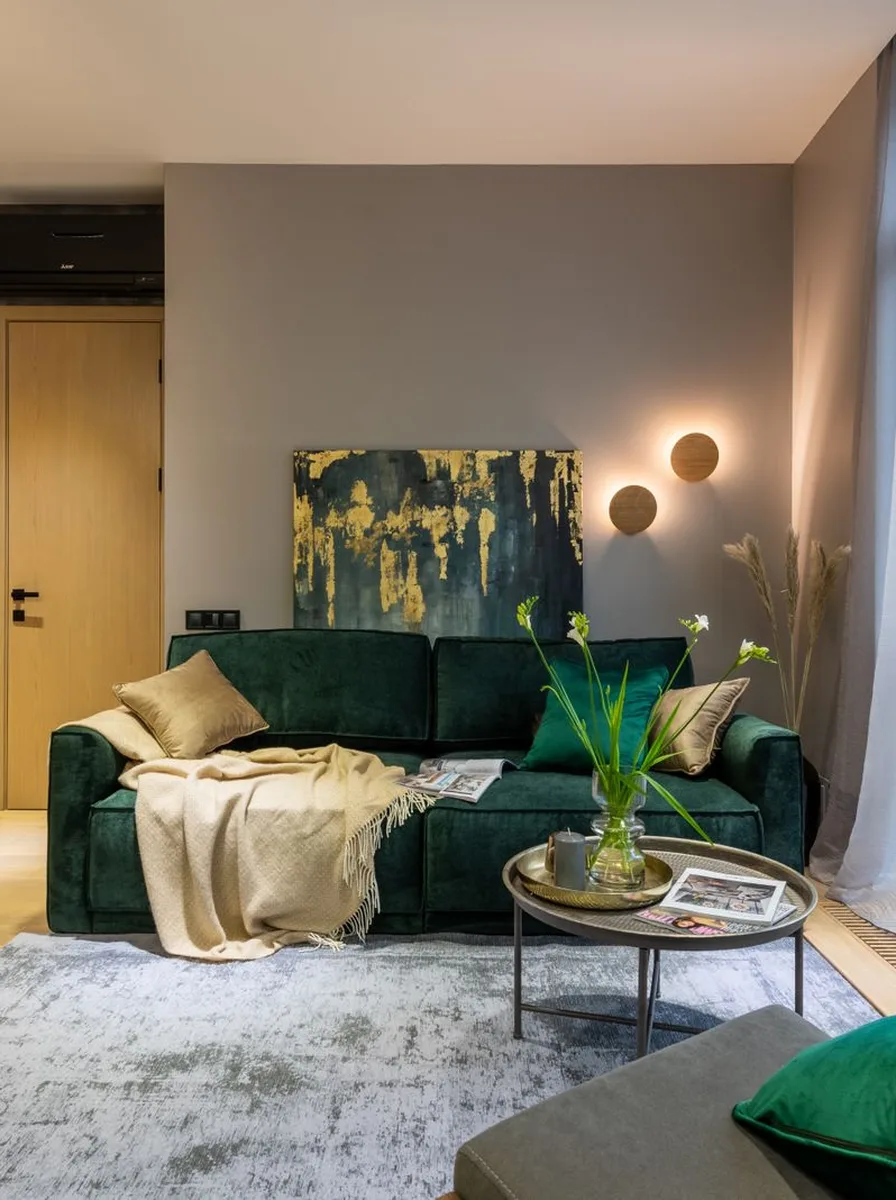
Swapping a hard coffee table for a large velvet ottoman instantly softens a contemporary living room — no sharp corners, plus bonus seating and hidden storage. Choose an ottoman in a rich tone that complements your sofa, and top it with a tray to create a stable surface for drinks and books. It is the hardest-working piece of furniture you can own: footrest, extra seat, storage box, and table in one.
Size the ottoman to about two-thirds the length of your sofa for proper proportion. The tray is essential — without it, the ottoman reads as a pouf rather than a table. Choose a tray in a contrasting material like marble, brass, or lacquered wood to add another layer of texture. In family rooms, the soft edges are a practical win for little knees and shins.
9. Anchor a Reading Corner with a Velvet Chair
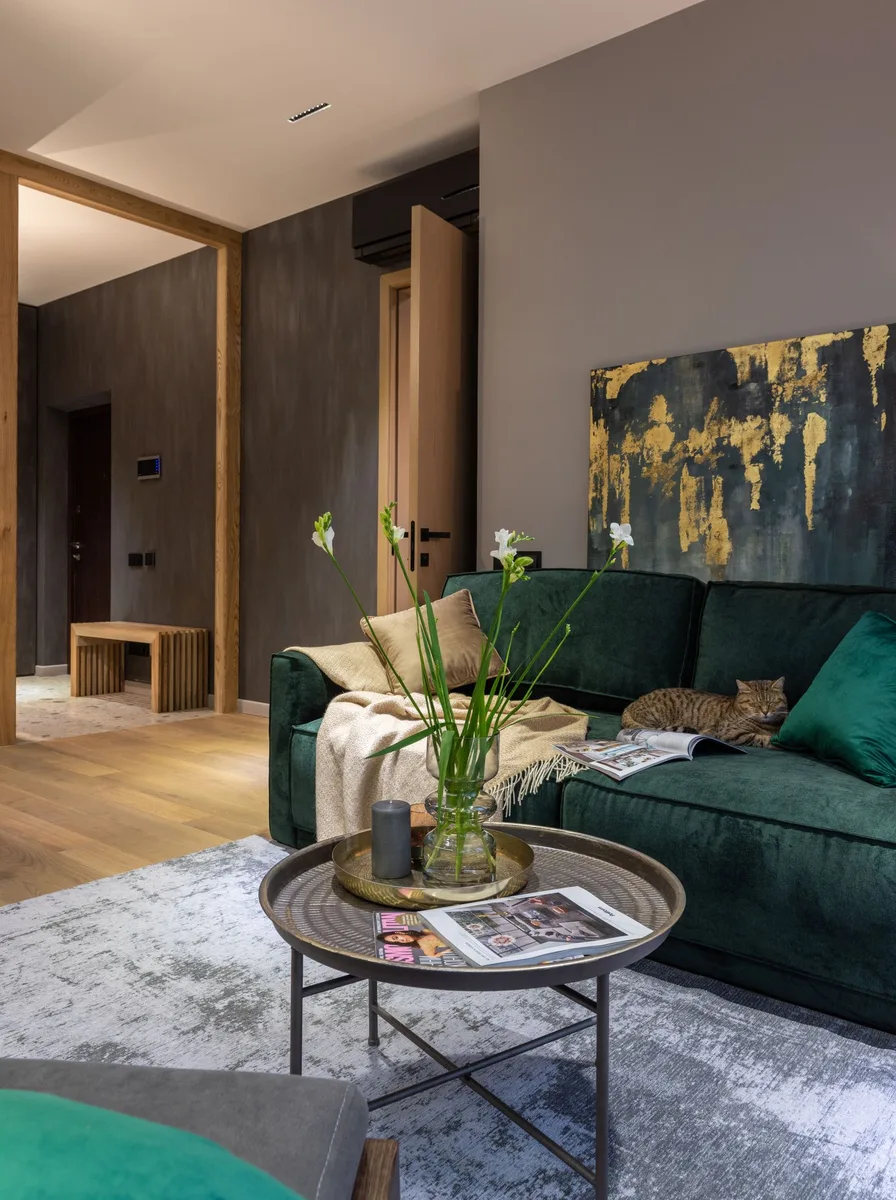
A velvet accent chair tucked into a corner turns dead space into the most inviting seat in the house. Angle it toward the room with a small side table and a floor lamp, and you have a reading corner that feels intentional rather than improvised. The velvet adds a touch of luxury exactly where it will be touched and appreciated daily. Choose a colour that echoes elsewhere — a cushion, the art — so the corner feels connected.
The lamp is what makes the corner work after dark: an arc or pharmacy-style floor lamp with a warm bulb creates a pool of reading light. Add a small lidded basket beside the chair for books and a throw, keeping the corner tidy. Even in a small living room, stealing one square metre for a chair pays back enormously in how liveable the room feels.
10. Mix Metals: Brass, Chrome, and Matte Black

Contemporary rooms shine — literally — when metals are mixed with intention. Pair warm brass with cool chrome and matte black hardware for a layered, collected look that feels far more sophisticated than matchy-matchy sets. The rule is distribution: repeat each metal at least twice around the room — brass in the lamp and the tray, black in the curtain rod and the frames — so every finish feels deliberate.
Keep one metal dominant and the others as accents to avoid a hardware-store jumble. Brushed and matte finishes sit more comfortably together than high-polish ones, which can compete. Start small if you are nervous: swap the lamp, add a metallic tray, and change the curtain rod. Three changes, and the room’s jewellery is suddenly working much harder.
11. Add Sculptural Side Tables

Side tables are the jewellery of a contemporary living room, and sculptural ones — a twisted pedestal, a faceted drum, an asymmetrical blob — add art-gallery energy for relatively little money. Place one beside each end of the sofa or flanking an armchair, and choose an interesting material: travertine, black marble, smoked glass, or brushed metal. They work as functional surfaces and as sculpture simultaneously.
Vary the heights if you use two different tables — the asymmetry feels modern and curated. Keep the styling minimal: one lamp or one small object per table, nothing more. Because sculptural tables are visually busy on their own, let the surrounding upholstery stay simple so the tables hold their moment without competition.
12. Hide Clutter with Floating Storage

Floating consoles and wall-mounted cabinets are a contemporary staple because they hide clutter while keeping the floor visible — and visible floor makes a room feel larger. A sleek floating unit under the TV or along one wall swallows remotes, chargers, games, and all the small chaos of daily life behind handleless doors. The shadow gap beneath adds a sense of lightness that floor-standing furniture cannot match.
Choose push-to-open doors for the cleanest look, and keep the top styling minimal — one plant, one stack of books. Inside, use small boxes or dividers so the hidden storage stays functional rather than becoming a junk drawer. Mount at a height that works for your seating: around 40 to 50 centimetres off the floor for a media console is the sweet spot.
13. Bring Life with Sculptural Indoor Plants

A contemporary room’s clean lines can feel stark without something living in it — enter the sculptural plant. An olive tree, a fiddle-leaf fig, or a tall snake plant adds organic shape, height, and a hit of green that makes neutrals feel intentional rather than bland. One large plant beats five small ones; scale is what makes it feel like design rather than decoration.
The pot matters as much as the plant: choose a simple ceramic, concrete, or woven basket in a tone that matches your palette. Place the plant where it gets the light it needs — most statement plants want bright, indirect light — and commit to a watering routine. Faux plants have improved enormously if your room is dark, but keep them dusted; a dusty fake fools no one.
14. Hang a Modern Chandelier for Instant Elegance

Nothing says instant elegance like a chandelier — and contemporary versions in sculptural metal, glass orbs, or cascading rods feel fresh rather than formal. Hang one as the room’s centerpiece over the coffee table or seating area, sized to about half the width of the furniture below it. The fixture becomes the room’s jewellery, elevating even simple furniture around it.
Always put a chandelier on a dimmer; the ability to drop from bright to moody is what makes it feel luxurious. Choose warm bulbs around 2700K so the light flatters skin and fabric. Keep the rest of the ceiling plain — one statement fixture needs no competition — and let it work against a simple backdrop for maximum drama.
15. Layer Pendant Lights Over the Seating Area
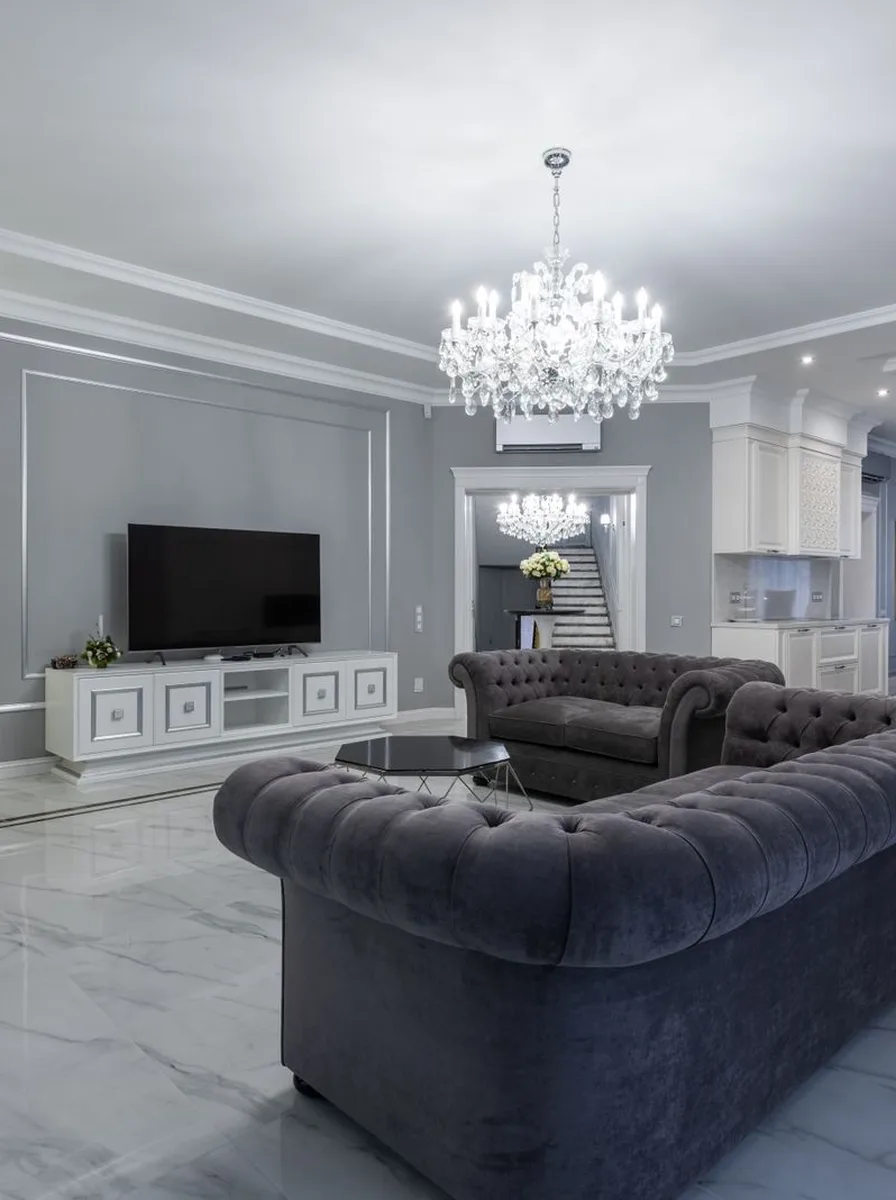
A cluster of two or three pendant lights hung at staggered heights over the seating area adds a designer layer that a single ceiling light cannot achieve. The repetition creates rhythm, the low hang brings light down to human level, and the fixtures themselves become a sculptural installation. Choose pendants in glass, rattan, or matte metal to suit your palette — the shape matters more than the material.
Hang the lowest pendant around 75 centimetres above the coffee table so sightlines stay clear across the room. Wire them to a single dimmer for simplicity. This works especially well in rooms with high ceilings, where one central light leaves the seating area feeling disconnected. In rentals, plug-in pendant kits with ceiling hooks achieve the look without an electrician.
16. Style a Sleek Media Wall with Hidden Storage
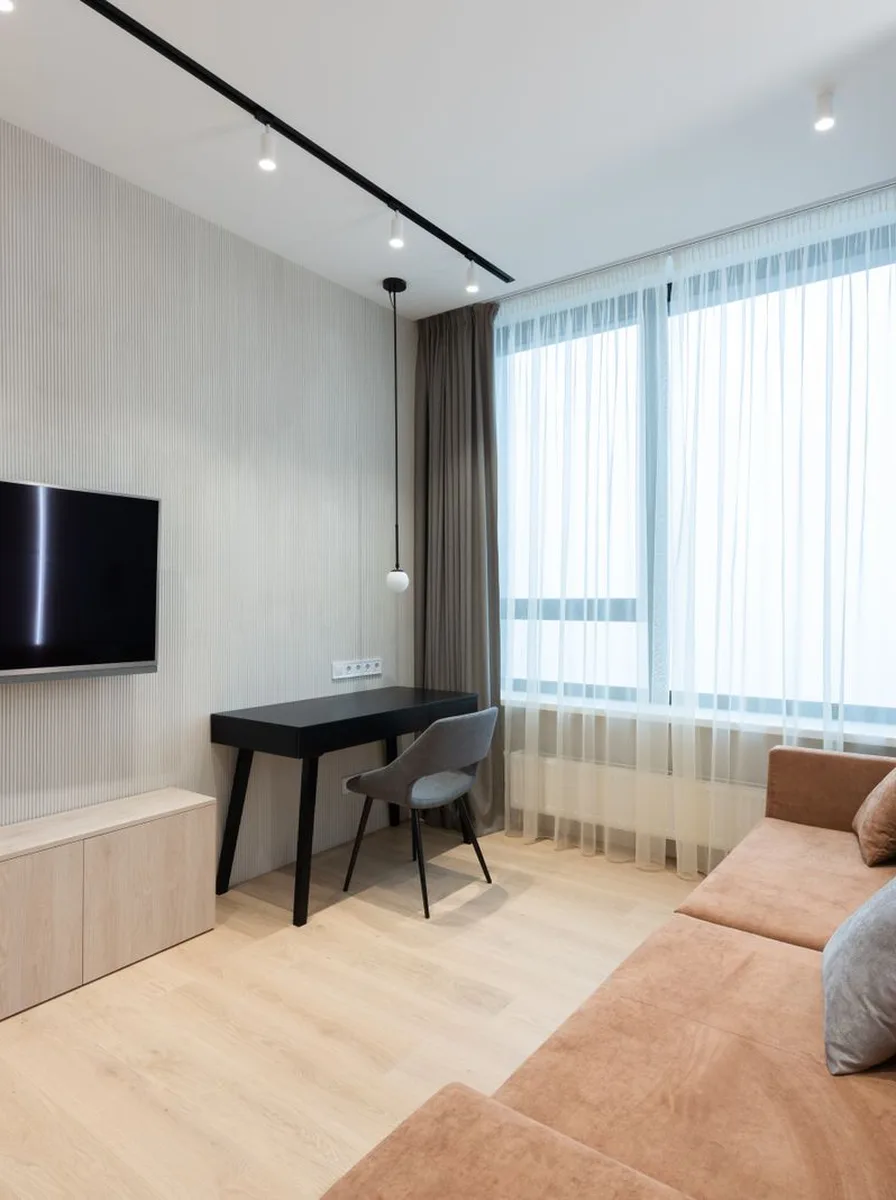
The contemporary answer to the TV dilemma is a media wall that treats the screen as part of the architecture. Build or buy a run of handleless cabinetry with the TV mounted at its centre, flanked by closed storage that swallows consoles, remotes, and clutter. When everything has a door, the wall reads as calm, tailored furniture rather than a tangle of technology.
Run cables inside the wall or through trunking hidden behind the unit — visible wires undo all the sleekness. Add LED strip lighting behind the unit or under floating shelves for a soft evening glow that makes the wall feel expensive. Style the open shelves sparingly: books, one vase, one sculptural object per shelf, and plenty of empty space.
17. Mount the TV on a Textured Feature Wall

A textured feature wall — fluted panelling, limewash paint, microcement, or large-format stone tile — turns the TV wall into the room’s main event. The texture gives the eye somewhere to go when the screen is off, and it makes the television feel integrated rather than imposed. Keep the texture in a neutral tone so it adds depth without competing with the screen for attention.
Fluted wood or MDF panels are the most budget-friendly route and can be installed over a weekend with basic tools. Paint them the same colour as the wall for subtle texture, or go one tone deeper for drama. Mount the TV so its centre sits at seated eye level — roughly 105 to 110 centimetres from the floor — and hide all cables behind the panelling.
18. Add Backlit Shelves Around the TV
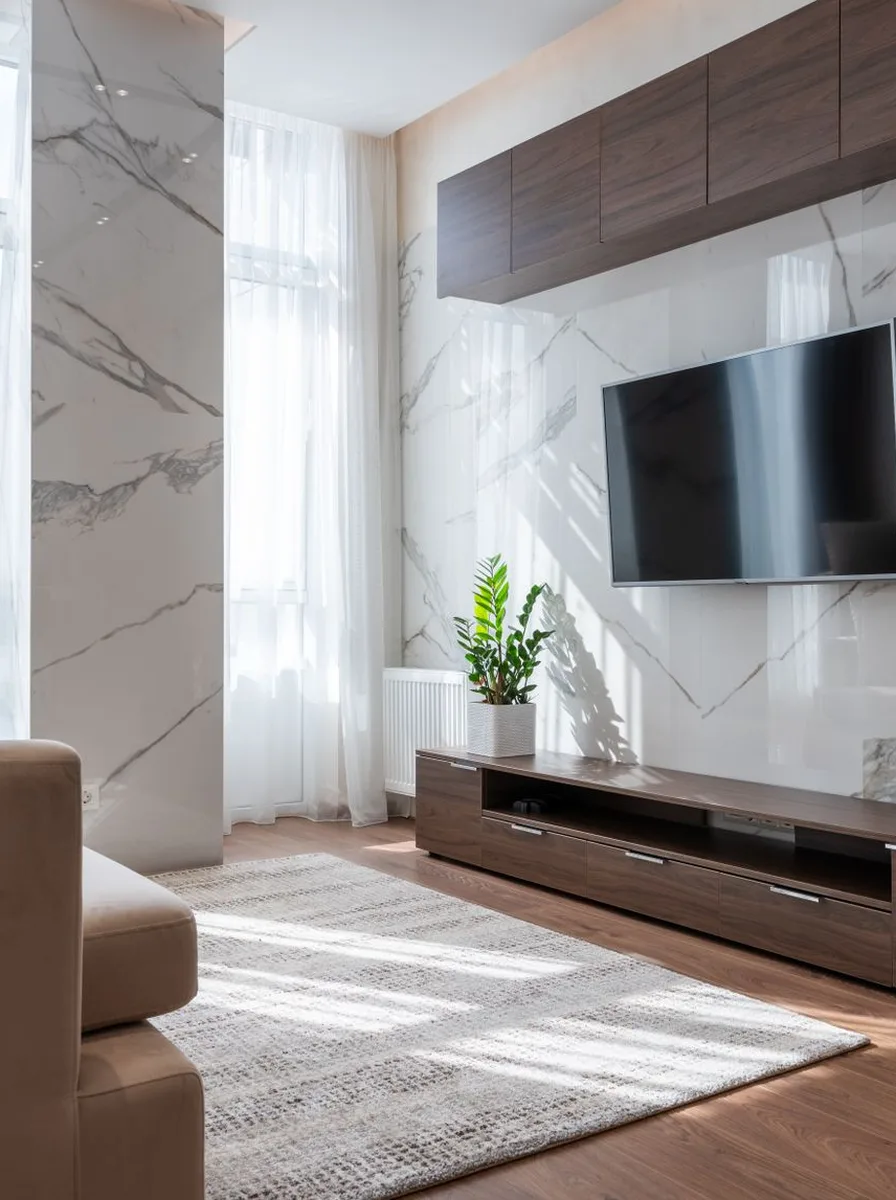
Backlit shelving flanking the TV adds a layer of ambient light that makes the whole media wall feel designed and expensive. The soft glow behind books and objects creates depth, reduces the harsh contrast between a bright screen and a dark room in the evening, and turns your shelves into a display case. Warm-white LED strips tucked under each shelf are all it takes.
Style the lit shelves with restraint — the light itself is the decoration, so a few books, one vase, and one sculptural piece per shelf is plenty. Use dimmable LED strips on a smart plug so you can control them from the sofa. Keep cables and transformers hidden behind the shelving; the magic only works when the light source is invisible.
19. Anchor the Room with a Marble Coffee Table
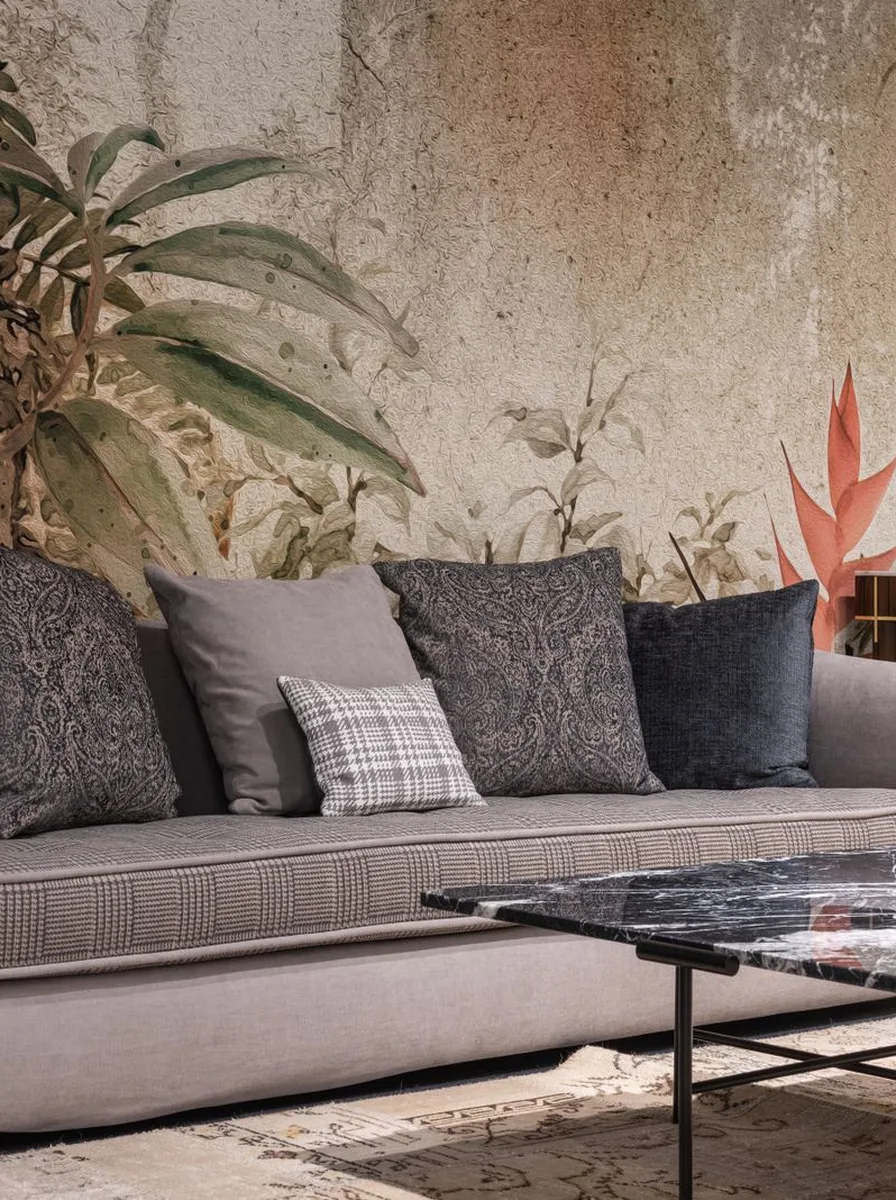
A marble coffee table is the contemporary living room’s anchor — cool, sculptural, and quietly luxurious. The stone’s natural veining means the table is effectively a piece of art, so keep its form simple: a clean slab, a drum, or a sleek pedestal. It grounds the seating arrangement and gives the room a sense of permanence that lighter tables cannot match.
Protect the surface with coasters and a tray, since marble etches and stains — or choose a marble-look porcelain for a worry-free alternative. Style it with restraint: a stack of art books, one sculptural object, a small plant. The veining does the visual work, so the styling can stay minimal. One substantial table always looks more elegant than two small ones.
20. Layer a Patterned Rug Under the Coffee Table

When the furniture is quiet, the rug can speak — a contemporary patterned rug under the coffee table adds art-like energy to the centre of the room. Choose an abstract or large-scale geometric design in your palette’s tones, and keep it big enough to anchor the whole seating group. The pattern becomes the room’s artwork at floor level, which is exactly where contemporary rooms need visual interest.
Let the rug be the room’s one bold pattern, then keep upholstery and curtains solid so nothing competes. Pull one colour from the rug into a cushion or a throw to tie the scheme together. Low-pile or flatweave rugs suit contemporary rooms best — they look tailored, are easy to clean, and let furniture sit level on top.
21. Create a Hotel-Luxe Lounge Corner

Borrow the hotel lobby’s trick: a dedicated lounge corner with two facing armchairs, a small round table, and a floor lamp creates a pocket of luxury within the living room. Upholster the chairs in something sumptuous — velvet, boucle, or leather — and keep the arrangement symmetrical for that composed, five-star feeling. It is a conversation spot, a reading nook, and a style statement in one.
The lamp is essential — a tall arc or a shaded floor lamp makes the corner glow in the evening like a hotel bar. Add a small tray on the table with a carafe or a candle, and keep the chairs’ cushions plump. This corner works beautifully in open-plan rooms, where it creates a distinct zone without walls or partitions.
22. Build a TV Wall with Warm Wood Slats
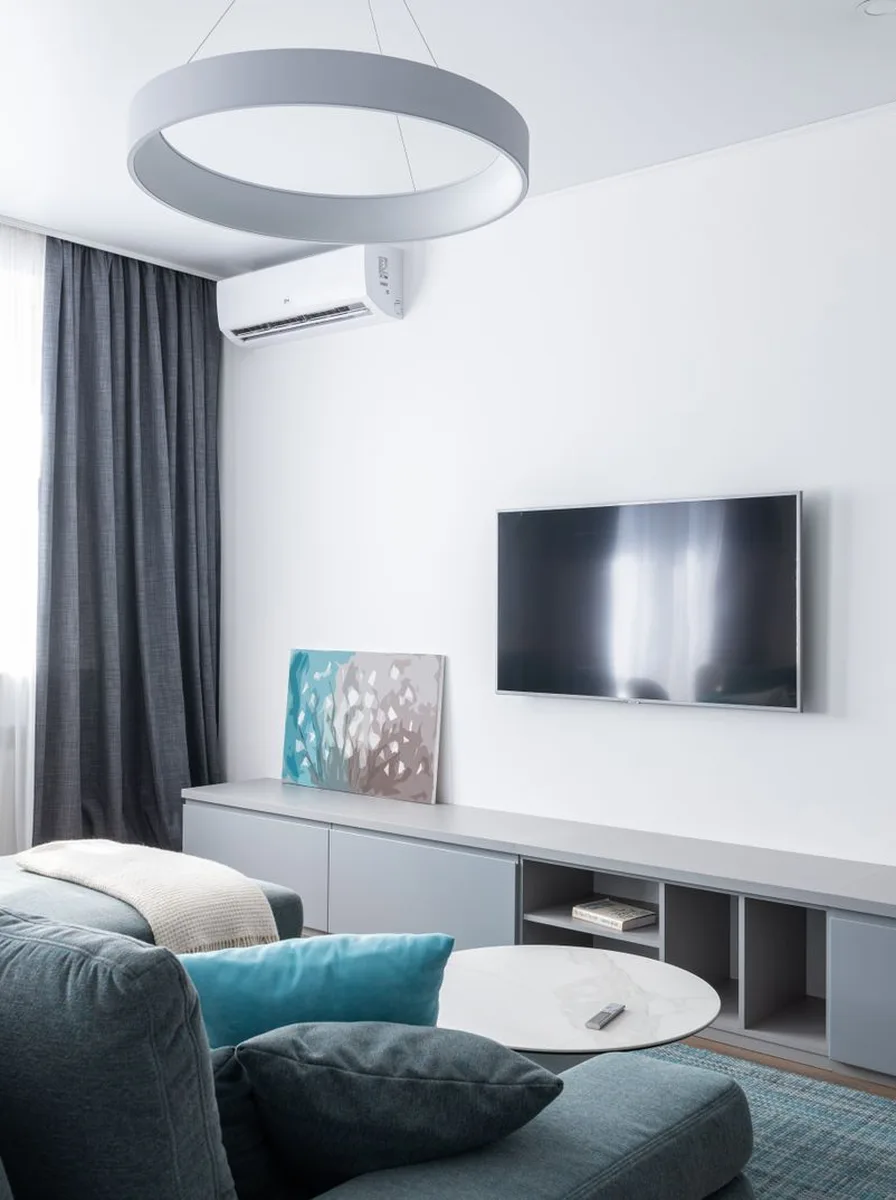
Vertical wood slats behind the TV add warmth, texture, and acoustic softness to a contemporary media wall. The rhythmic lines draw the eye upward, making ceilings feel higher, while the wood’s natural tone keeps the technology zone feeling human rather than electronic. Oak and walnut-look slats both work — oak for airy schemes, walnut for moodier ones.
Acoustic slat panels are widely available as easy-install kits and can go up in a day with adhesive or battens. Run the slats floor to ceiling for maximum impact, and mount the TV on a bracket fixed through to the wall behind. Add LED strip lighting at the top or bottom edge for a floating effect that makes the whole wall glow after dark.
23. Style a Curated Gallery Wall

A curated gallery wall brings personality to a contemporary living room without cluttering it — the key word is curated. Choose five to nine pieces in a consistent frame style, lay the arrangement on the floor first, and keep generous spacing between frames. A mix of abstract prints, photography, and one textural piece like a textile or a mirror keeps it interesting but cohesive.
Stick to a tight colour palette within the art — black frames with black-and-white prints is the safest contemporary choice. Hang the centre of the arrangement at eye level, around 145 centimetres from the floor. Use proper picture-hanging strips or hooks rated for the weight; a gallery wall that drifts crooked within a week ruins the tailored effect.
24. Place a Designer Accent Armchair

One great armchair can carry a whole contemporary living room — a sculptural silhouette in leather, boucle, or a bold colour becomes the room’s signature piece. Angle it into the seating arrangement rather than lining it up with the sofa; the asymmetry feels designed and inviting. This is the piece worth investing in, because a genuinely beautiful chair elevates everything around it.
Choose a chair with presence: interesting legs, a distinctive back, or a luxurious fabric. Keep the surrounding pieces quiet so the chair holds its moment — a simple side table and a floor lamp are all it needs. If budget is tight, hunt vintage markets and reupholster; a classic frame in fresh fabric looks indistinguishable from designer at a fraction of the price.