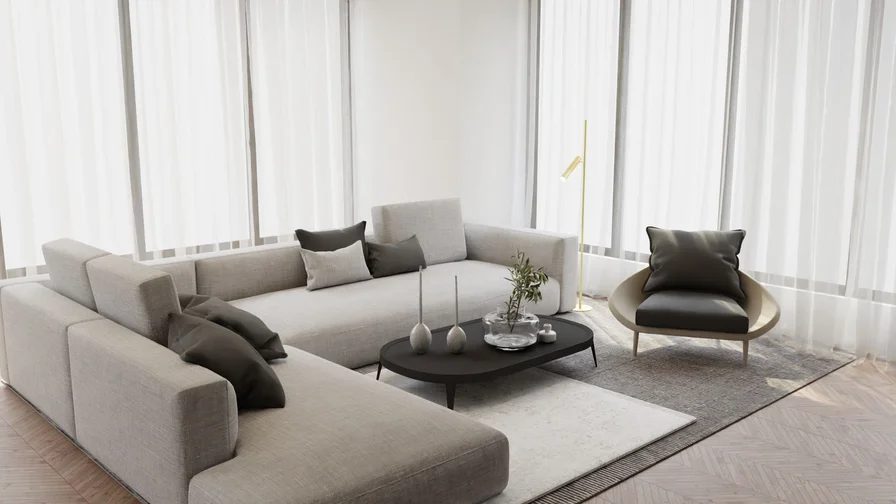
Minimalist luxury isn’t about empty rooms and uncomfortable furniture. It’s the calm, high-end feeling you get in a beautiful hotel suite: every piece earns its place, everything is made well, and there’s space to breathe. The luxury comes from quality and restraint rather than quantity — and restraint is free.
Most living rooms don’t need more things to feel luxurious — they need less, chosen better. A single beautiful sofa beats three mediocre ones; one perfect lamp beats a shelf of small decor. Remove the visual noise and the remaining pieces finally get the attention they deserve.
In this guide, you’ll learn how to create a minimalist luxury living room step by step: editing your room ruthlessly, choosing quality over quantity, hiding storage in plain sight, and letting negative space do the heavy lifting for that calm, high-end look.
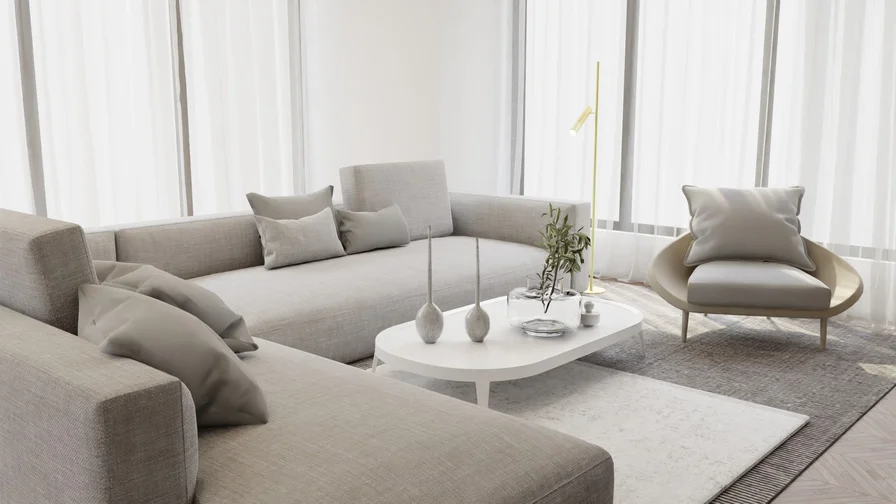
Edit Your Room Ruthlessly
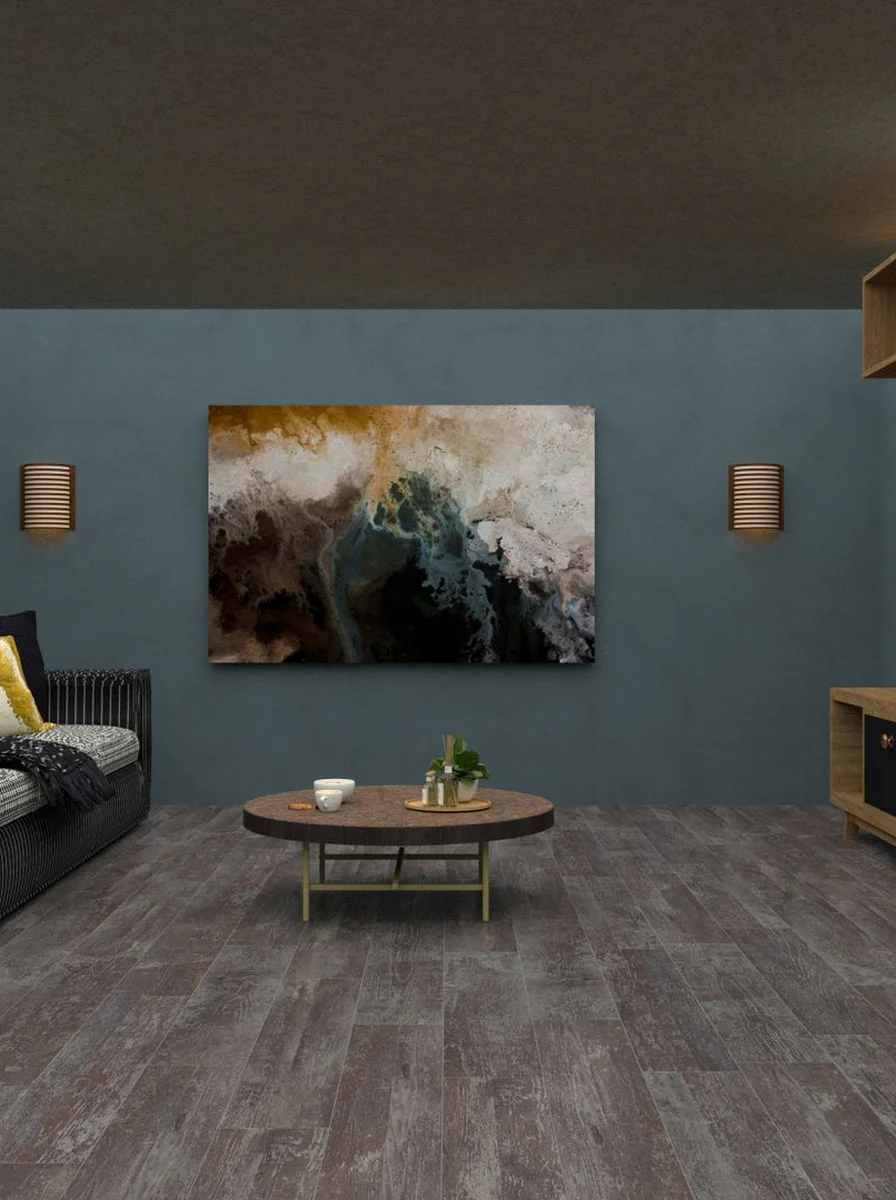
Every minimalist luxury room starts with an edit, not a shopping trip. Take everything portable out of the living room — cushions, throws, decor, books, the lot — and pile it elsewhere. Then bring pieces back one at a time, only if the room is genuinely better with them in it.
Be honest about the “maybe” items: the unloved vase, last year’s magazines, the third throw blanket. If something doesn’t serve a purpose or make you happy, it doesn’t earn floor or shelf space. Minimalism isn’t about owning nothing — it’s about everything earning its place.
Apply the same ruthlessness to the furniture itself. A living room needs seating, a surface, light, and storage — and most rooms hold at least one extra chair, table, or shelf that exists purely out of habit. Remove it for a week. If nobody misses it, it doesn’t come back.
Ruthless editing tips:
● Empty the room completely first, then reintroduce only what the room needs to function and feel good.
● Clear every flat surface, then allow back a maximum of three objects per surface.
● If you haven’t used or loved something in a year, it doesn’t belong in a minimalist room.
● Photograph the room — the camera reveals clutter your eyes have learned to ignore.
Choose Quality Over Quantity
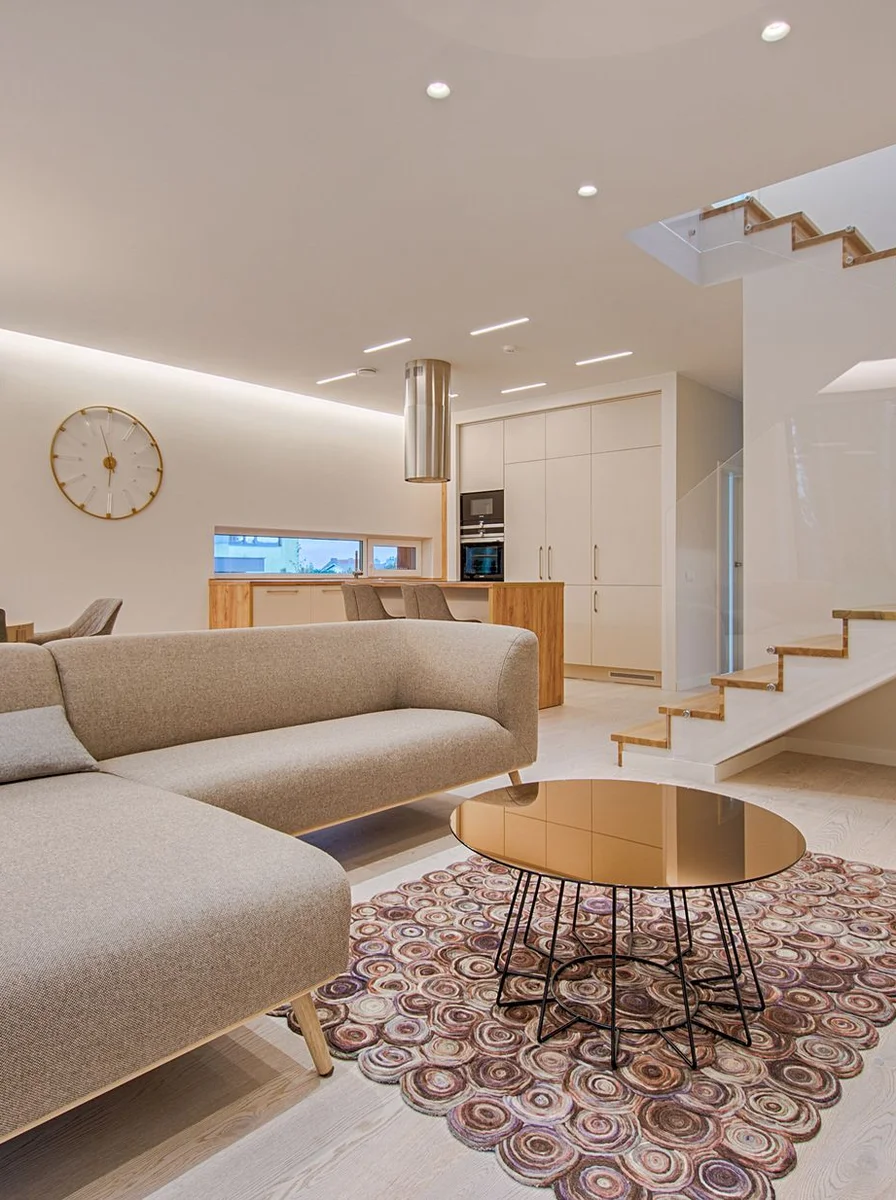
When a room holds fewer pieces, each one gets more attention — so every piece has to be good. This is where minimalist luxury is won or lost. One well-made sofa in beautiful linen will always look more expensive than a matching set of mediocre furniture, because quality reads instantly: in the fabric’s weight, the wood’s finish, the way a drawer closes.
Minimalism rewards slow decorating. Live with the essentials, save for the pieces that matter most — usually the sofa, rug, and lighting — and buy them once, properly. A room that grows slowly around a few excellent pieces always looks more luxurious than one furnished in a single weekend.
Focus your budget on what you touch and see most. Upholstery fabric, rug pile, and lighting quality are noticed every single day; hardly anyone registers what’s inside a closed cabinet. Natural materials — solid oak, wool, linen, stone, leather — age beautifully and make even simple shapes feel luxurious.
Quality-first tips:
● Spend the most on the sofa, rug, and lighting — they’re the room’s hardest-working pieces.
● Choose natural materials like oak, wool, linen, and stone over synthetic lookalikes wherever you can.
● Buy the best you can afford slowly rather than everything cheaply all at once.
● Check construction: solid frames, removable washable covers, and real wood beat veneer and staples.
Hide Storage in Plain Sight
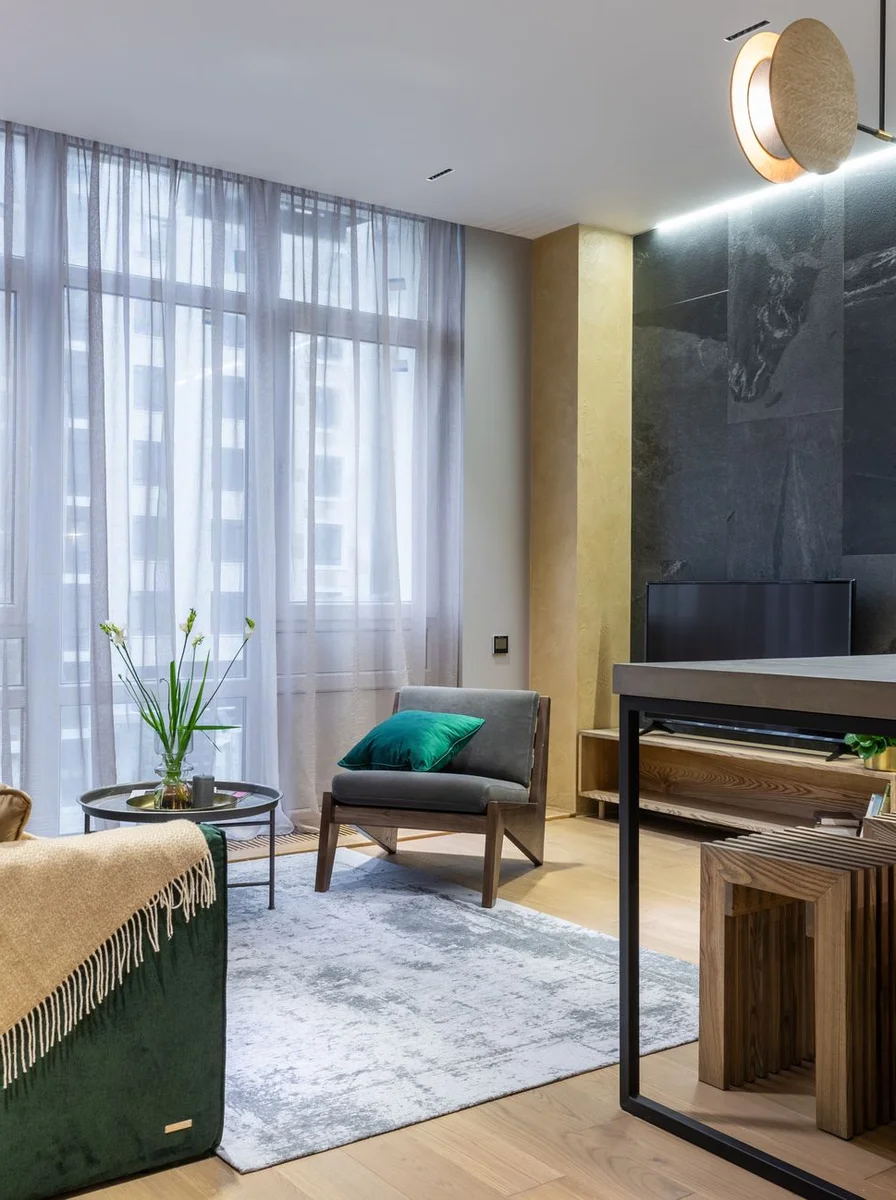
Clutter is the enemy of minimalist luxury, but real life comes with remotes, chargers, blankets, and toys. The solution isn’t owning less stuff — it’s giving everything a closed door to hide behind. If every object has a home that’s out of sight, the room stays serene with almost no daily effort.
Choose furniture that works double duty. A media console with closed doors swallows electronics and their cables. An ottoman with hidden storage holds throws and board games. A beautiful lidded basket beside the sofa corrals the everyday mess in seconds. The rule is simple: open storage displays, closed storage hides.
Cables deserve special attention — they’re visual noise even in small amounts. Run cords through cable channels, use a cord box behind the media console, and charge devices inside a drawer with a hidden power strip. Five minutes of cable management beats a new cushion every time.
Hidden storage tips:
● Favor closed storage — doors, drawers, lids — over open shelves for everyday items.
● Give the room’s daily mess of remotes, chargers, and throws one designated hidden home each.
● Use lidded baskets and storage ottomans for things you need often but don’t want to see.
● Tame cables with channels, cord boxes, and in-drawer charging so the tech disappears.
Let Negative Space Do the Work
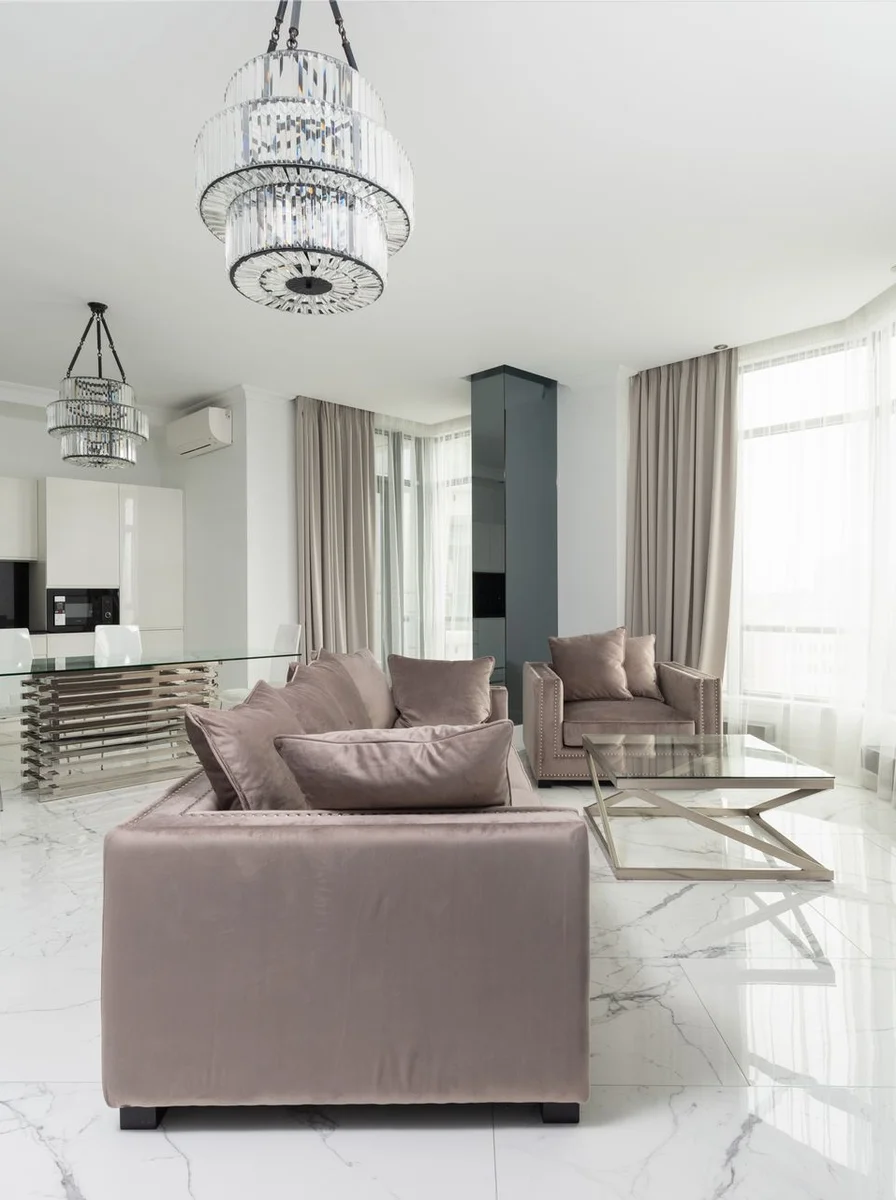
Negative space — the empty area around your furniture — is the most luxurious material in a minimalist room, and it’s free. A sofa with breathing room looks like a considered choice; the same sofa crammed against three other pieces looks like a storage unit.
Resist the urge to fill every wall and corner. One large piece of art with generous empty wall around it has ten times the impact of a gallery wall of small frames. A single sculptural floor lamp in an empty corner looks intentional; a corner stuffed with a plant, a basket, and a side table looks indecisive.
The same applies to surfaces. A coffee table with one beautiful book and a small object looks styled; covered in decor it looks busy. Leave at least a third of every surface deliberately empty — that emptiness is what makes kept objects look gallery-worthy.
Negative space tips:
● Pull furniture a few inches off the walls where you can — floating pieces make space feel generous.
● Hang one large artwork instead of many small ones, and give it plenty of empty wall.
● Leave a third of every tabletop and shelf deliberately empty.
● If a corner feels bare, add one statement piece — not three small fillers.