

Feeling cramped is rarely about actual square footage; it is about what your eyes are told.
A tiny apartment reads as huge when sightlines run long, light bounces freely, and nothing interrupts the eye’s journey from wall to wall. Designers use this visual psychology constantly — and every trick they use, from ceiling-high curtains to a single unifying colour, works in a rental with no renovation at all.
The formula is simple: maximise light, minimise visual clutter, and keep everything flowing in one calm direction.
Pale colours recede, mirrors double the brightest views, low furniture keeps the upper air clear, and a consistent floor erases the boundaries between rooms. Each idea here removes one visual stop — and every stop you remove makes the apartment feel a little bit bigger.
This guide gathers 21 tiny apartment ideas that make a small space feel huge, each with practical steps you can copy this weekend.
From painting walls and trim one colour to hanging one big artwork, choosing glass tables, and lighting every dark corner, you will find a complete toolkit for stretching your space — visually, if not physically.

1. Paint Walls and Trim One Light Colour
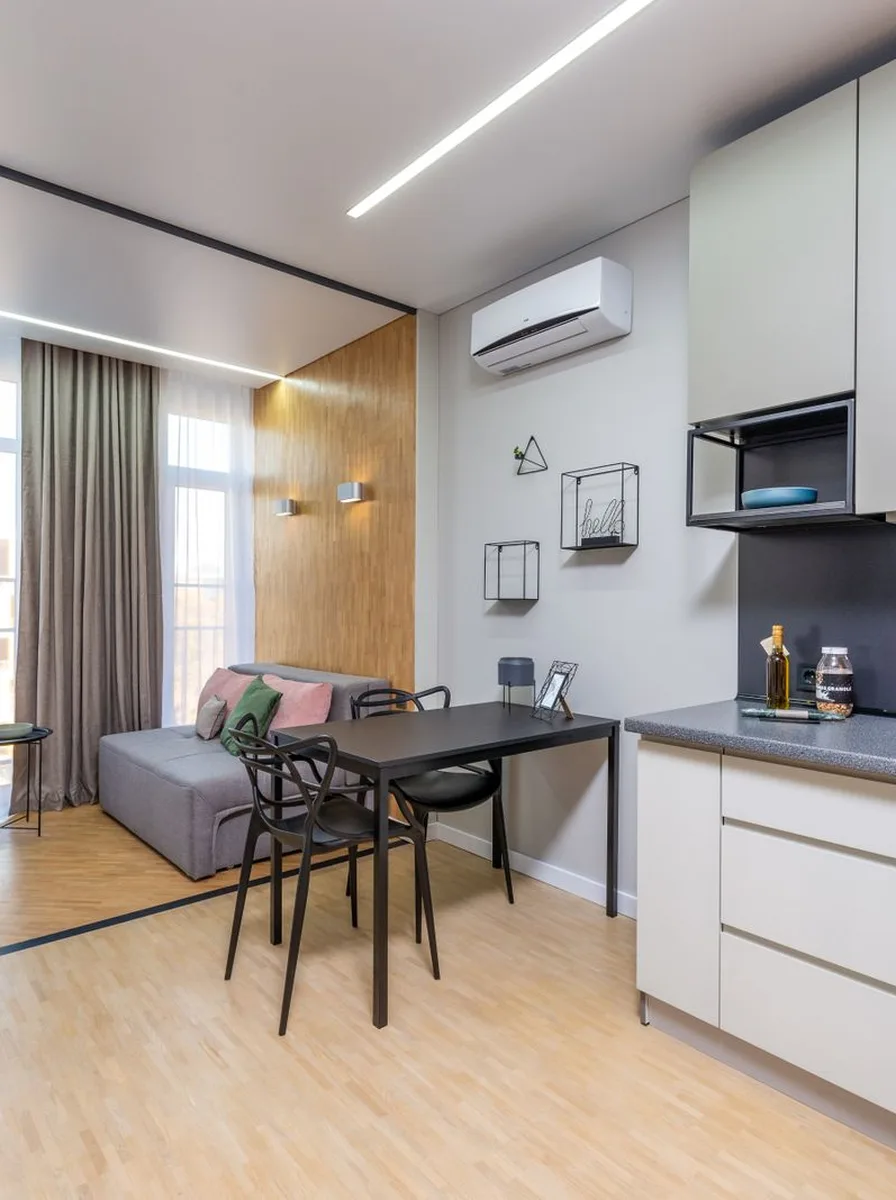
The fastest way to make a tiny apartment feel bigger is to erase its edges. Painting walls, trim, and even the ceiling one continuous light colour removes the visual borders that chop a room into pieces, so the eye glides uninterrupted and the space reads as one generous volume. Designers call it colour drenching; in a small flat it is pure magic.
Choose a warm white, pale greige, or whisper-soft cream — cool stark whites can feel clinical in small spaces. Use the same sheen family throughout, with trim one step glossier for subtle definition. One colour across adjoining rooms makes a whole apartment flow like a single, much larger space.
2. Hang Curtains at Ceiling Height

Curtains hung at the window frame tell the truth about a small window; curtains hung at the ceiling tell a much better story. Mounting the rod just below the ceiling and letting panels fall to the floor stretches the wall vertically, making ceilings feel higher and windows feel grander. The whole room borrows that extra perceived height.
Extend the rod six to eight inches beyond the window on each side so open panels stack on wall, not glass, and the window reads as wide as possible. Choose a fabric close to your wall colour so the curtains melt into the room rather than cutting it. Floor-grazing length is essential — hovering panels break the illusion.
3. Keep the Floor Visible

Every square inch of visible floor is a vote for spaciousness. Furniture raised on legs, wall-mounted consoles, and a ruthless attitude toward floor clutter let the eye travel across the whole room uninterrupted — and a room whose floor you can see reads as dramatically larger than one whose floor is hidden, even at identical square footage.
Aim for at least four inches of clearance under sofas and beds so light passes beneath. Corral cables with cord covers, park shoes in a closed cabinet, and resist the urge to fill corners with stuff. In the tiniest flats, even a clear twelve-inch border of floor around furniture changes the feeling entirely.
4. Choose One Large Rug

Small rugs in a small room are a classic mistake: each one creates a visual island that chops the floor into fragments. One large rug does the opposite, unifying the seating area into a single generous zone and making the floor read as continuous. Bigger rug, bigger-feeling room — it is counterintuitive, and it works every time.
Size up until at least the front legs of every seat sit on the rug; in a tiny living room that usually means 5×8 feet minimum. Keep the pattern subtle and the colour close to the floor tone so the rug expands rather than defines. One rug per open area is the rule — two competing rugs re-chop the space.
5. Pick a Low-Profile Sofa
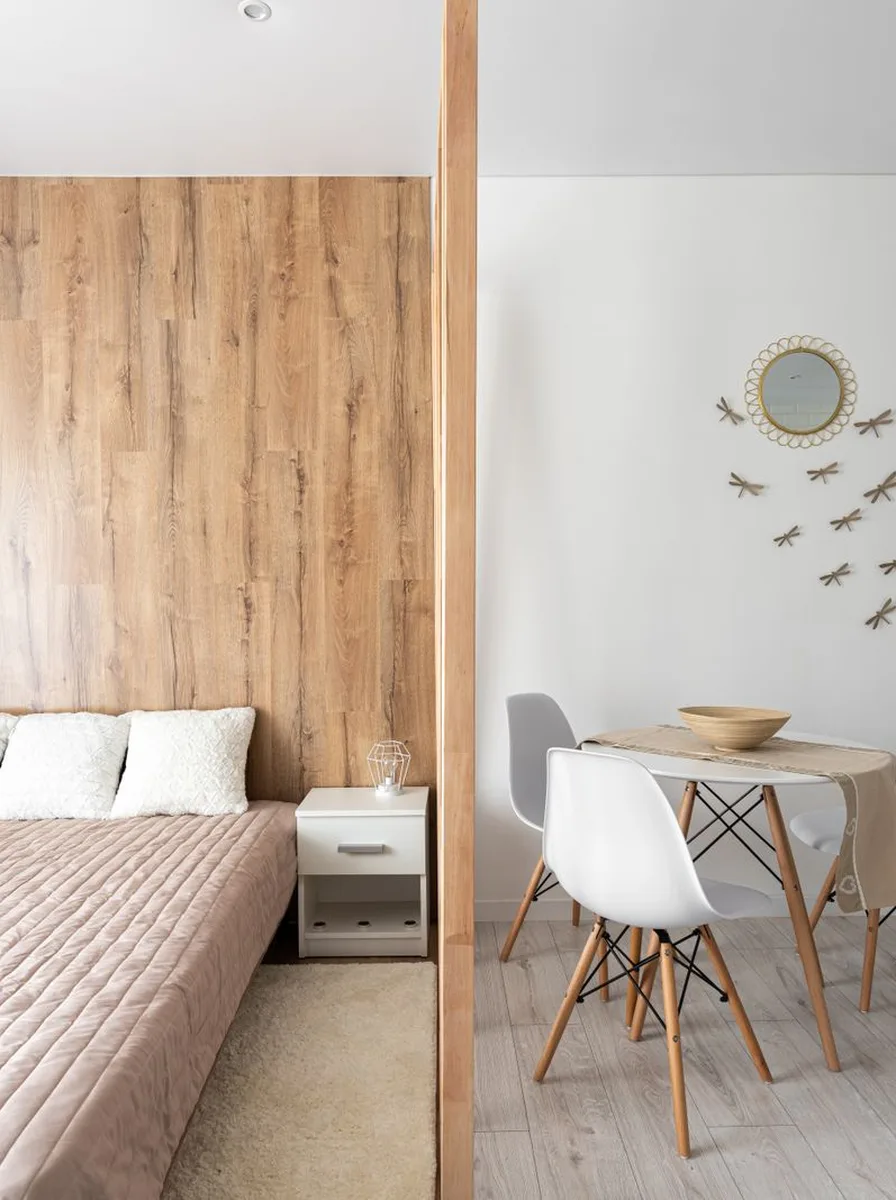
A tall-backed, deep-seated sofa is a wall in disguise — it blocks sightlines and swallows a tiny room’s air. A low-profile sofa with a back under 32 inches keeps the upper half of the room open, so light travels over it and the eye sails across. The room keeps its volume instead of surrendering it to upholstery.
Choose a tight back over loose cushions for a slimmer silhouette, and raised legs over a skirted base to preserve visible floor. A sofa in a pale, wall-adjacent colour virtually disappears; a dark, bulky one becomes the room’s unavoidable subject. In studios, a low back also preserves the view from bed to window.
6. Maximise Daylight with Sheers

Daylight is the most powerful space-expander you own, and heavy curtains tax it heavily. Sheer white or ivory panels filter sunlight into a soft, room-filling glow while keeping the window’s full depth visible — the outdoors becomes part of the room. A bright room always feels bigger than a dim one of the same size.
Layer a simple roller blind behind the sheers for night privacy; by day it vanishes into the window frame. Hang sheers ceiling-high and wide, just like heavier curtains, so the window reads at maximum scale. Wash them twice a year — dingy sheers filter light into gloom instead of glow.
7. Hang a Mirror Opposite the Window
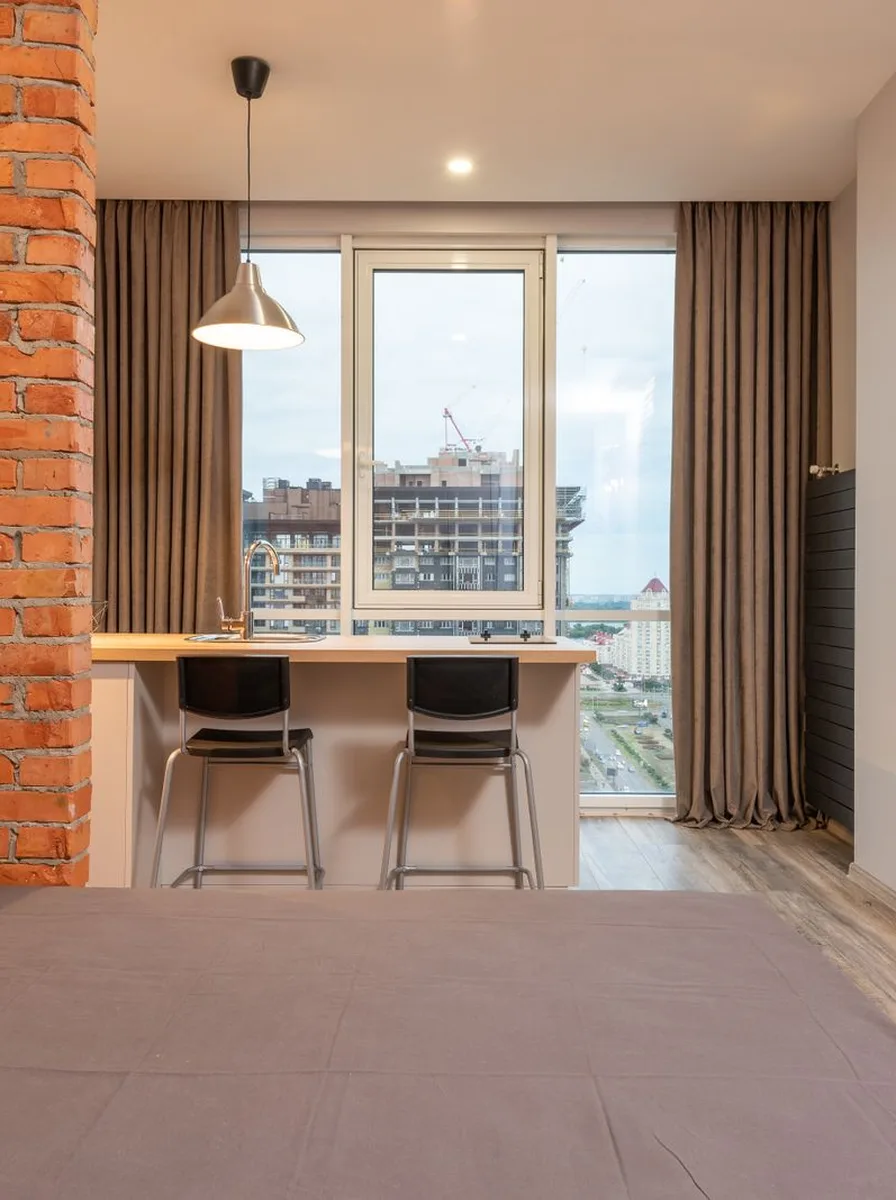
A mirror facing the window does double duty: it throws daylight deep into the room’s darkest corners and reflects the brightest view back at you, creating the illusion of a second window. No other single object changes a tiny apartment’s sense of scale this dramatically — it is the closest thing to adding square footage without construction.
Go large — a full-length leaning mirror or an oversized round mirror multiplies the effect far beyond a small decorative one. Keep the frame slim and pale so the mirror blends into the wall. Position it to reflect the sky or greenery rather than a blank wall; what the mirror shows is what the room gains.
8. Clear Every Surface
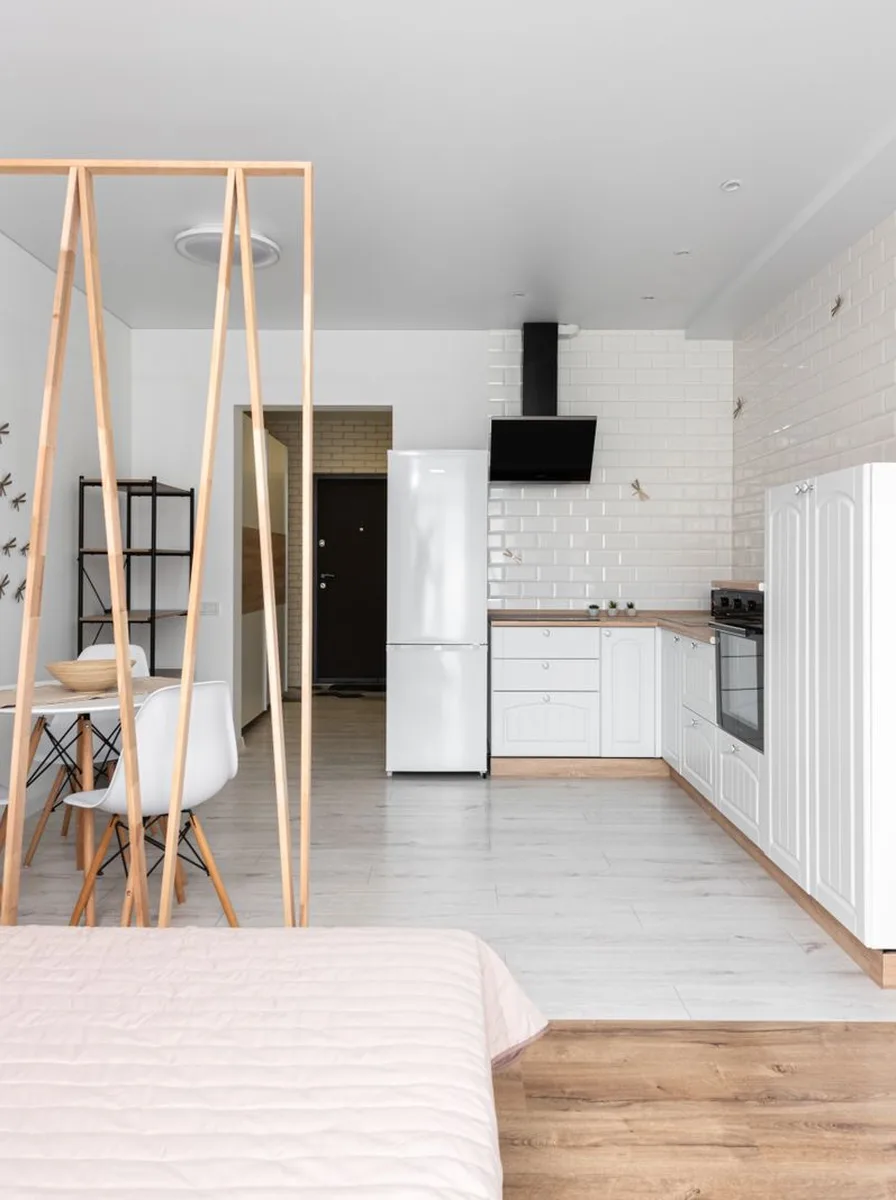
Visual clutter is visual shrinkage: every object on a surface is a full stop for the eye, and a room full of full stops feels small and busy. Cleared surfaces let the eye glide, and gliding eyes report back that a space is calm and generous. This costs nothing and transforms a room faster than any purchase.
Give everything a closed home — drawers, cabinets, baskets with lids — so surfaces can stay nearly bare. Keep the rule of three for styling: three intentional objects per surface, maximum, with breathing room between them. Do a five-minute nightly reset; a tiny apartment only stays feeling huge if the clear surfaces stay clear.
9. Let One Statement Piece Shine

A tiny room full of small, competing objects feels crowded; a tiny room with one confident statement piece feels curated and spacious. One oversized artwork, one sculptural chair, or one dramatic plant gives the eye a single destination instead of a dozen distractions — and a room with a clear focal point always feels more generous.
Choose your statement for scale: it should be the largest thing in the room’s visual hierarchy. Keep everything around it quiet and simple so it holds the stage alone. One bold choice reads as confidence; ten medium choices read as clutter. Edit everything else back to let the star perform.
10. Use Vertical Stripes

Vertical stripes are architecture’s oldest height trick, and they work on walls, curtains, and even rugs. The eye follows the lines upward, which makes ceilings feel higher and the room feel taller — and a taller-feeling room is a bigger-feeling room. In a tiny apartment with standard eight-foot ceilings, this illusion pays real dividends.
Keep stripes subtle: tone-on-tone wallpaper, pinstriped curtains, or a striped runner in two close colours. High contrast stripes can feel busy in a small space; whisper-soft contrast gives the height without the noise. One striped element per room is plenty — the trick works best as an accent, not a theme.
11. Choose a Glass Coffee Table

A solid coffee table is a visual roadblock in the middle of a tiny living room; a glass one is a surface that barely exists. Your eye passes straight through it to the rug and floor beyond, so the room’s full depth stays visible. You keep every bit of function — drinks, books, feet — with almost none of the visual weight.
Tempered glass with softly rounded corners is safest in tight quarters where shins pass close. Keep the styling minimal — one book stack, one small object — because everything on glass is visible from every angle. A quick daily wipe with glass cleaner keeps it invisible; smudges are what betray the trick.
12. Commit to a Monochrome Palette

Every new colour in a tiny apartment is a new boundary for the eye to stop at; a monochrome palette removes those stops entirely. Layers of one colour — warm white with cream and beige, or soft grey with silver and white — flow seamlessly from wall to sofa to bedding, and the room reads as one continuous, calming expanse.
The secret to monochrome is texture, not colour: mix linen, wool, velvet, and wood within the same tonal family so the room stays interesting. Add depth with three to four shades of your chosen colour, from pale to mid-tone. One metallic accent — brass or chrome — gives the eye a single jewel to land on.
13. Keep Walkways Wide and Clear
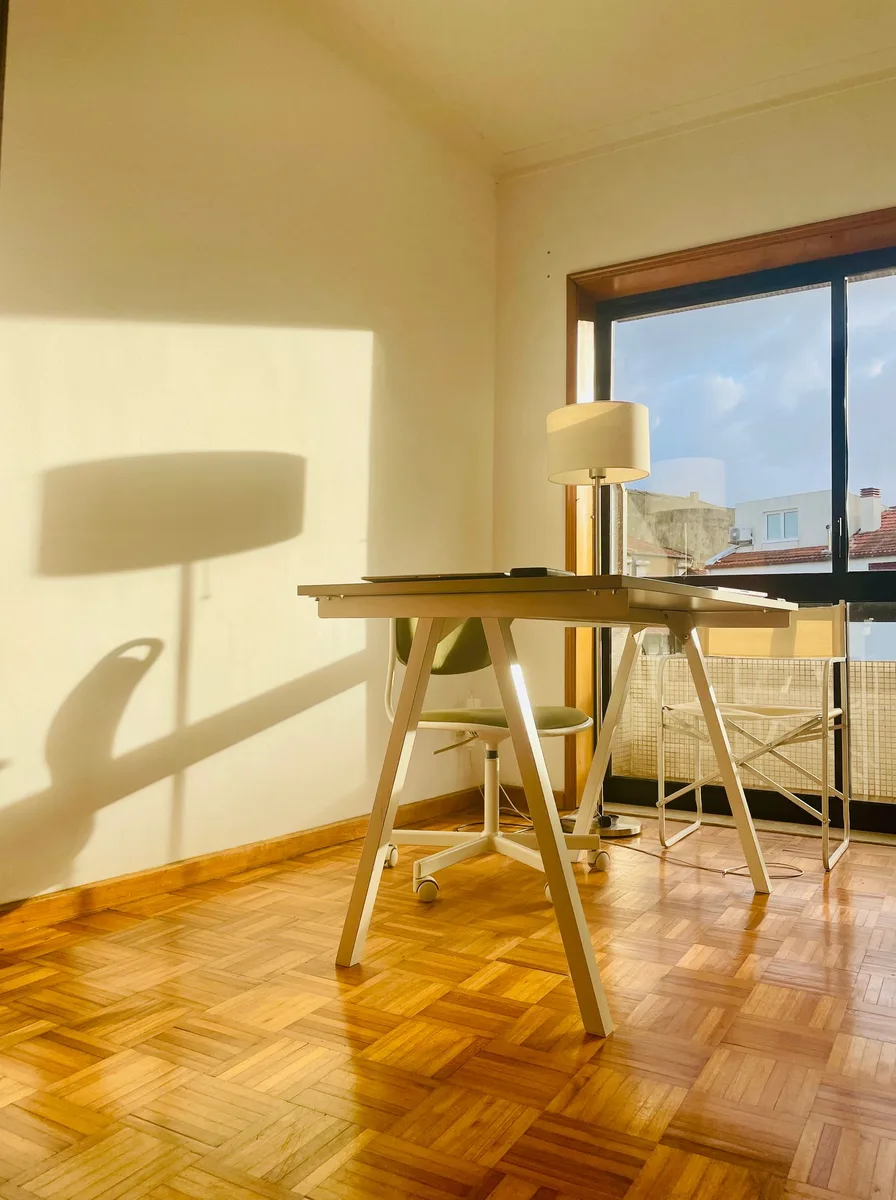
Nothing shrinks a tiny apartment faster than squeezing sideways past furniture. A clear, generous walkway — 30 to 36 inches wherever possible — tells your body the space is ample, and the body believes what it can move through easily. Cramped circulation makes even a well-decorated room feel small.
Map your main paths from door to window to kitchen, then pull furniture back until those routes run clear. If a walkway will not fit, the furniture is too big for the room — swap it for a slimmer profile rather than living with the squeeze. Round tables and rounded corners ease tight turns gracefully.
14. Light Up Every Dark Corner

Dark corners are where rooms end — the eye stops at shadow, and the space beyond it is mentally subtracted from the room’s size. A small lamp, a wall sconce, or even a string of fairy lights in each dim corner pushes the room’s perceived boundary back to the actual wall. Light literally reclaims square footage.
Walk the apartment at night and note every pool of darkness; each one wants a light source. Plug-in sconces and battery-operated picture lights need no electrician. Use warm bulbs throughout — a dark corner lit cold still feels like a corner, but lit warm it feels like part of the room.
15. Match Curtains to the Wall Colour

Contrasting curtains frame the window but also chop the wall into sections; curtains matched to the wall colour dissolve into it. The wall reads as one unbroken plane, the window feels wider, and the whole room gains a seamless, expansive calm. It is the curtain equivalent of the monochrome trick — and just as effective.
Match closely but not obsessively; a shade lighter or darker in the same family works beautifully and adds subtle depth. Keep the fabric simple — linen or a linen-look weave — so texture, not pattern, provides interest. This works best with pale walls; on dark walls, matching curtains create a cocooning rather than expanding effect.
16. Choose Armless, Low-Back Seating
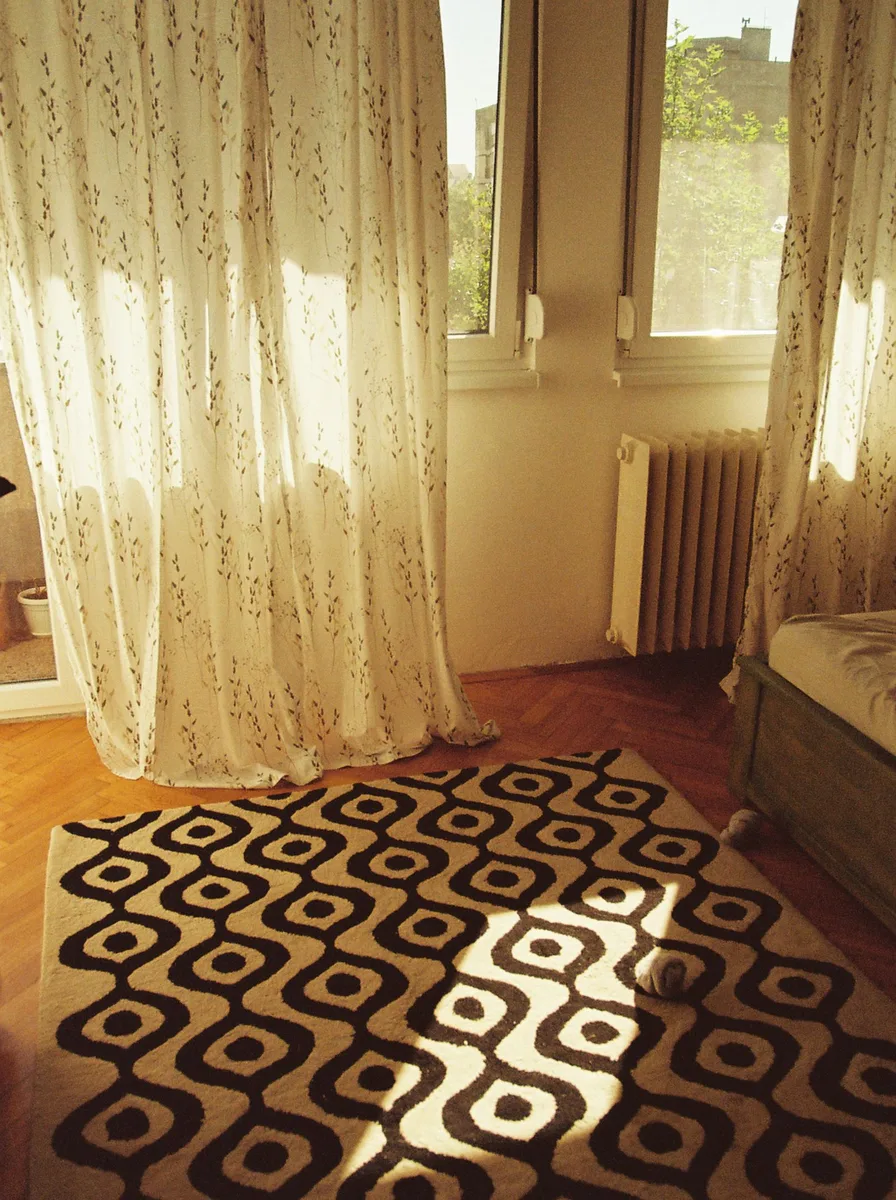
Chair arms and high backs are visual bulk, and in a tiny apartment bulk is the enemy. Armless chairs, slipper chairs, and low-back stools provide full seating with a fraction of the visual mass, so the eye moves past them instead of stopping. Four armless chairs around a table occupy the air of two bulky ones.
At the dining table, armless chairs tuck fully underneath, reclaiming floor space between meals. In the living room, a slipper chair or two angles easily for conversation without the footprint of armchairs. Choose open, leggy designs so floor stays visible beneath — every layer of openness compounds.
17. Run One Flooring Throughout

Every flooring change is a line on the floor that says “new, smaller room starts here.” One continuous flooring — or one consistent rug treatment — across a tiny apartment erases those lines, and the eye reads the whole flat as a single flowing space. Open-plan flats feel twice their size when the floor never interrupts.
Renters can fake continuity with large rugs in one colour family laid wall-to-wall in each zone, keeping tones consistent. If you own, luxury vinyl plank in one light oak tone throughout is the budget-friendly way to unify. Avoid thresholds and transition strips wherever possible; seamless is the whole point.
18. Keep the Ceiling Bright White

The ceiling is the lid on your room, and a bright white lid feels higher than a dim or coloured one. White reflects the most light back down into the room, which lifts the whole space and keeps the upper air feeling open. In a tiny apartment with low ceilings, this single choice can add a perceived foot of height.
Use a flat or matt white to hide imperfections — gloss highlights every flaw. If the walls are coloured, keep the ceiling a clean white anyway; the contrast actually makes walls feel taller by defining the top clearly. Repaint ceilings every few years; yellowing white quietly lowers the room.
19. Frame the View Like Art
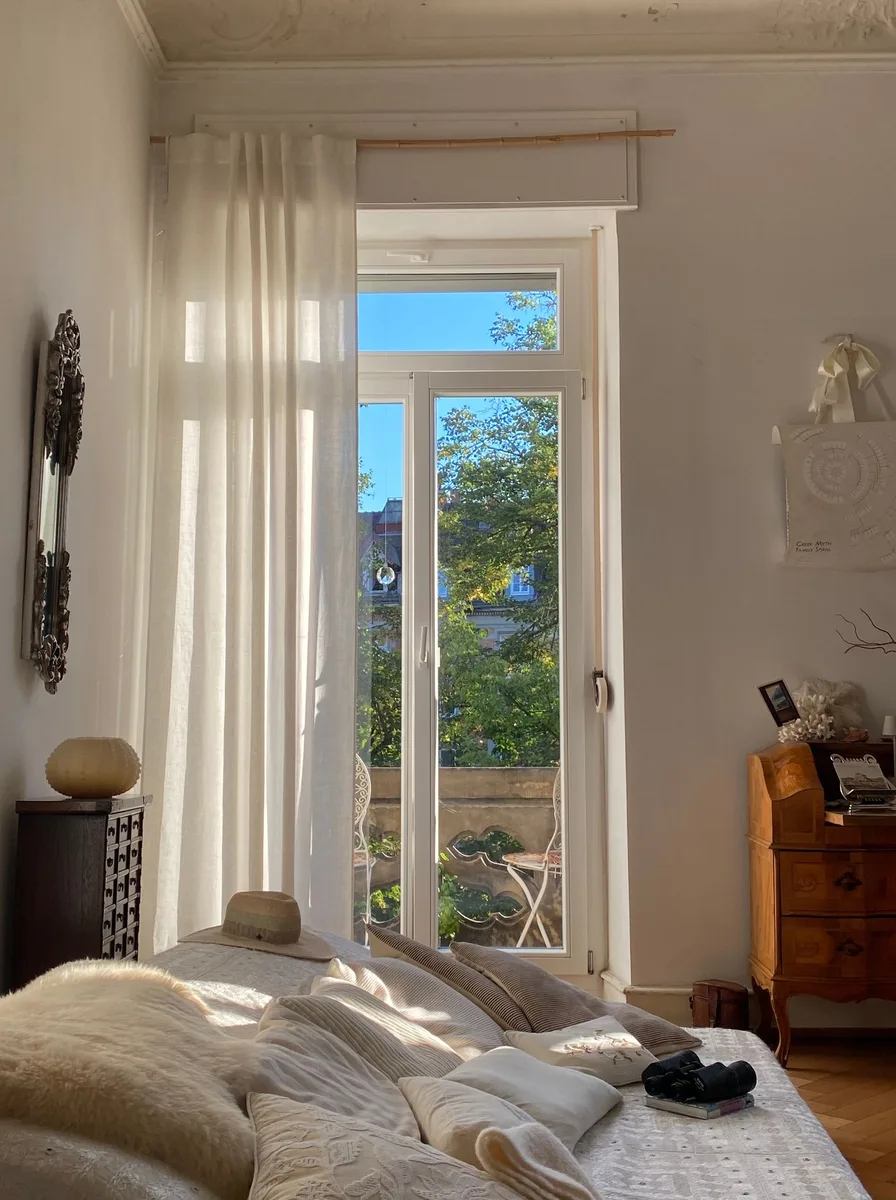
A window with a view is free square footage — the eye travels past the glass to the sky, trees, or skyline, and the room borrows all that depth. Framing the view deliberately, with simple trim-like curtain panels and a clear sill, turns the window into the apartment’s best artwork and its most powerful space-expander.
Keep the sill clear and the glass clean; a smudged window wastes the view. If the outlook is a brick wall, a window box of greenery or a sheer with a subtle pattern gives the eye something pleasant at the boundary. Never block a good view with tall furniture — that borrowed depth is precious.
20. Hang One Big Artwork, Not Many Small Ones

A cluster of small frames creates visual static that chops a wall into busy fragments; one large artwork gives the wall a single, calm statement. The eye rests instead of darting, and a rested eye reports a bigger room. Scale is everything in tiny apartments — go bigger than feels safe on art.
Aim for artwork that covers two-thirds of the wall width above a sofa or bed. A large canvas in pale tones expands; a large dark piece anchors — choose based on the mood you want. If budget is tight, an oversized frame with a simple mat around a small print fakes the scale convincingly.
21. Edit Ruthlessly: Less Is More

The final and most powerful trick is subtraction. Every object you remove hands its visual space back to the room, and in a tiny apartment ten removed objects can transform the feeling more than any purchase. Spaciousness is not something you buy; it is something you uncover by taking away.
Do a quarterly edit: box anything you have not used or loved in a year, live without it for a month, then donate the box unopened if you never missed it. Keep surfaces, floors, and walls breathing — the goal is a room where every remaining object earns its place. Less stuff, more space: it never fails.