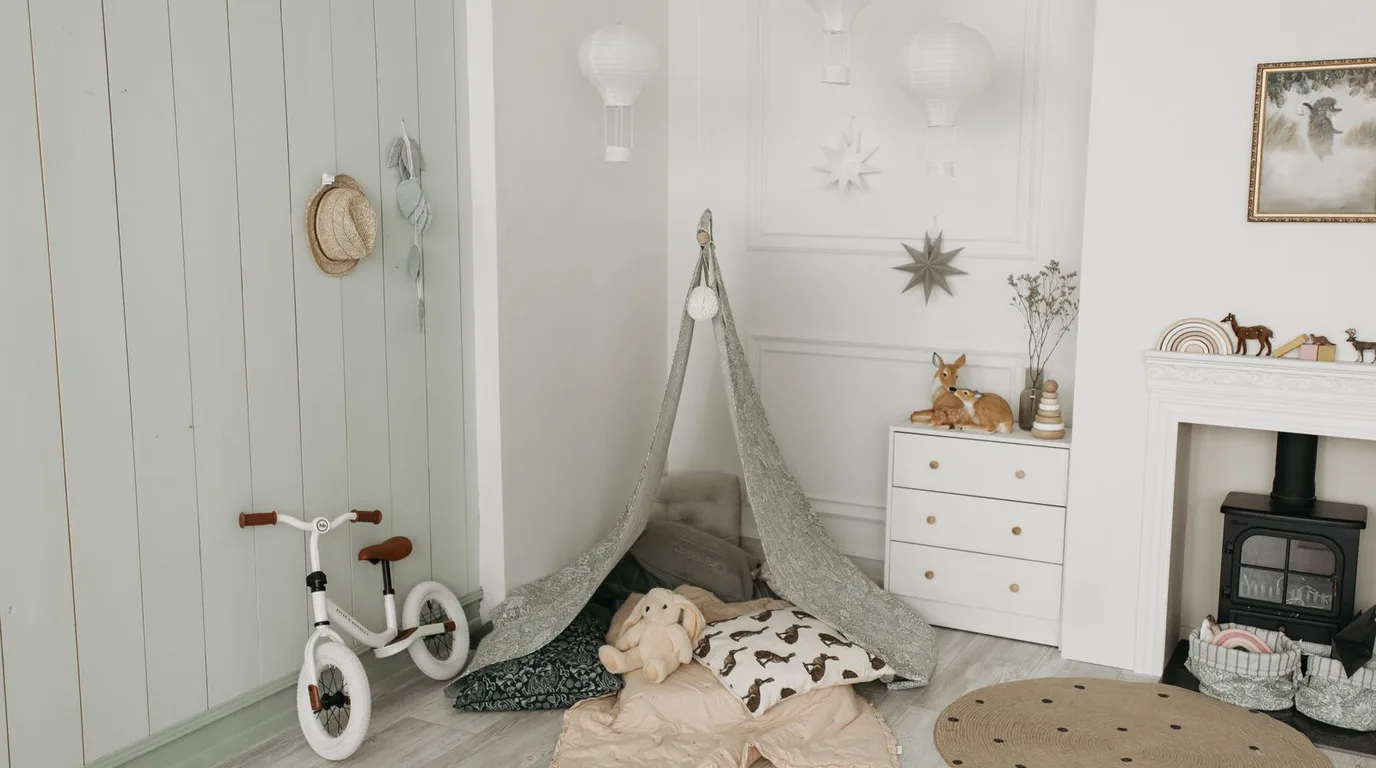
Walls are the largest surface in any nursery, which makes them your biggest design opportunity. While furniture comes and goes, the walls set the room’s character — and creative wall design can turn an ordinary box room into a space that feels truly special.
Creative doesn’t have to mean complicated or expensive. In fact, the most memorable nursery walls often use the simplest ideas executed well — a single confident gesture beats a dozen fussy details. Some of the most striking nursery walls use simple techniques: a mural decal, painted panelling, a thoughtful gallery arrangement, or texture that catches the light. The key is choosing one strong wall concept and letting it shine.
In this guide, you’ll discover creative baby room wall design ideas — murals and large-scale art, panelling and moulding, gallery walls, textured finishes, and colour techniques that give nursery walls real wow factor.
Go Big With a Mural or Large-Scale Art
Nothing transforms a nursery wall like a mural. A full-wall forest, mountain, or sky scene turns the room into a storybook — and modern peel-and-stick murals make it achievable in an afternoon with no painting skills. They’re the single highest-impact wall treatment available.
If a full mural feels like too much, one oversized art piece delivers similar drama: a huge canvas print, an extra-large framed illustration, or a textile wall hanging. Scale is the secret — small art gets lost on nursery walls, while one big piece commands the room. When choosing size, bigger than you think is usually right.
Large-scale ideas:
● A peel-and-stick mural: forest, mountains, hot-air balloons, or underwater scenes.
● One oversized canvas (at least 90cm wide) above the crib.
● A large macramé or woven wall hanging for soft texture at scale.
● Keep other walls quiet — one hero wall is enough. Let it be the wall you see from the doorway.
● Order a sample swatch first — colours shift dramatically at full scale.
Add Architecture With Panelling and Moulding
Panelling adds instant architecture to flat, boring walls. Board-and-batten — vertical battens over flat panels — is the nursery favourite: simple to install with basic tools, paintable any colour, and it makes even a rental-looking room feel custom and considered.
Paint it the same colour as the wall for subtle texture, or go bold with a contrasting tone — sage panelling on white walls, for example. Wainscoting on the lower third of the wall with wallpaper or paint above is another classic combination.
Panelling options:
● Board-and-batten: the most DIY-friendly, highest-impact choice.
● Picture-frame moulding: elegant rectangles that suit traditional nurseries.
● Beadboard for cottage or farmhouse-style baby rooms.
● Paint panelling and walls the same colour for a seamless, high-end look.
● Pre-primed MDF battens from DIY stores keep the project simple.
Curate a Gallery Wall With Intention

A well-curated gallery wall is wall decor at its most personal. The trick is curation: choose a clear theme (animals, botanicals, abstract shapes), a limited palette (3 colours max), and consistent framing. Restraint turns a random collection into a designed display.
Mix frame sizes but keep one visual thread — all white frames, all natural wood, or all black. Include a mix of art types: prints, a small textile piece, a wooden initial, maybe a tiny shelf with a plant. Negative space between frames matters as much as the frames themselves.
Gallery wall rules:
● One theme + one frame finish = instant cohesion.
● Start with the largest piece slightly off-centre, then build around it.
● Keep 5–8cm between frames for a calm, gallery-like feel.
● Leave room to add pieces — gallery walls should evolve with your child.
● Photograph the final layout — it helps when rehanging after repainting.
Play With Texture and Finish
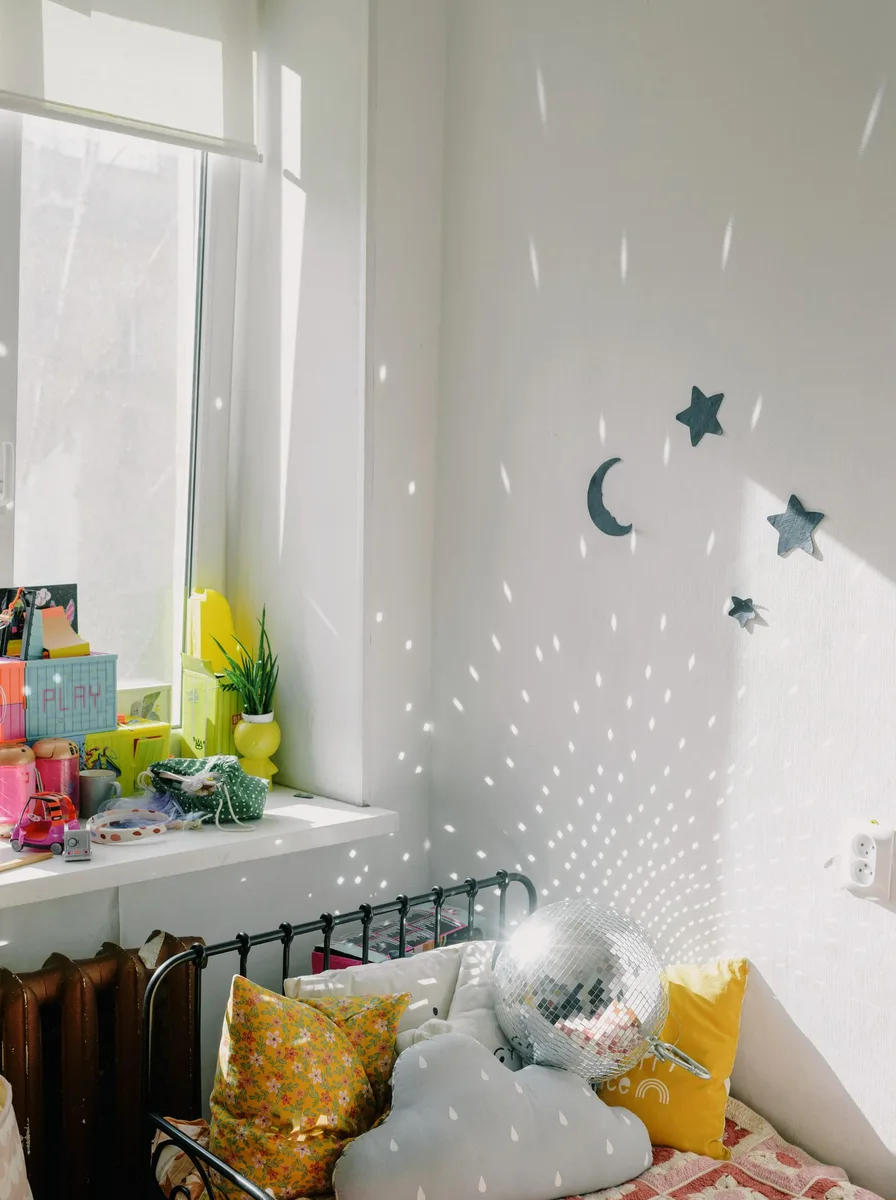
Here’s a designer trick many parents miss. Not all wall interest is visual — texture adds a sensory richness that flat paint can’t match. Limewash paint creates soft, cloudy movement on walls that feels organic and high-end. Grasscloth wallpaper brings natural fibre texture. Even a simple plaster effect adds depth that changes with the light.
Textured walls are especially good in nurseries because they’re interesting without being stimulating — no bright patterns to distract from sleep, just subtle richness. Keep the colour soft and let the texture do the talking.
Textured finishes to try:
● Limewash paint: soft, mottled, effortlessly elegant.
● Grasscloth or natural-fibre wallpaper on one wall.
● A subtle plaster or stucco effect for old-world charm.
● Always choose low-VOC products and finish well before baby’s arrival.
● Test texture samples on hidden wall areas before committing.
Use Colour Creatively, Not Loudly
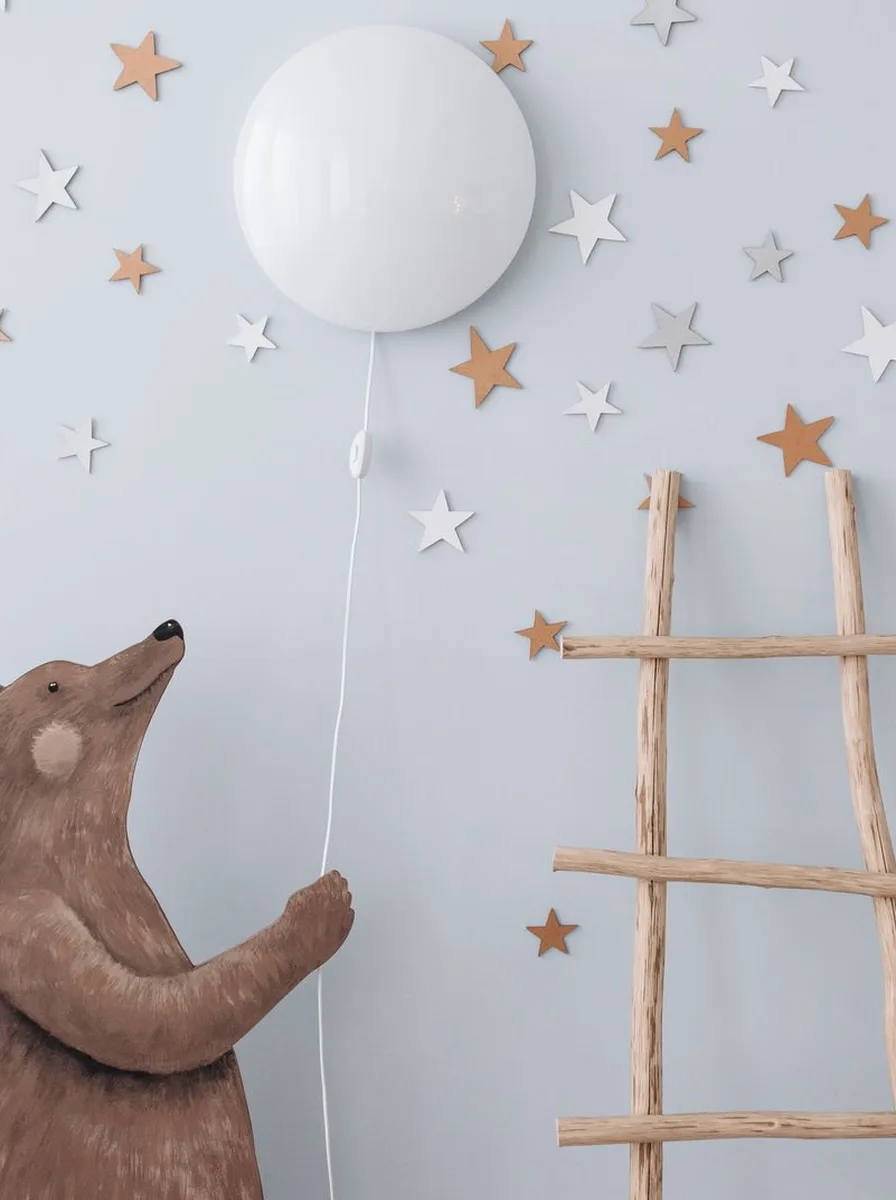
Creative colour doesn’t mean bright colour. Some of the most striking nursery walls use muted tones in clever ways: a two-tone wall with a crisp dividing line, colour-blocking behind the crib, an ombre effect fading from colour to white, or the ceiling painted a soft tint while walls stay neutral.
These techniques add design interest while keeping the palette sleep-friendly. They also photograph beautifully and feel custom. For renters, painter’s tape colour-blocking peels off cleanly when it’s time to move. And because walls are the first thing you see, that designed feeling greets you every single time you walk in.
Creative colour techniques:
● Two-tone walls: bold below, white above (or vice versa).
● A colour-blocked rectangle or arch framing the crib zone.
● A softly tinted ceiling — blush, sage, or sky — for a dreamy canopy effect.
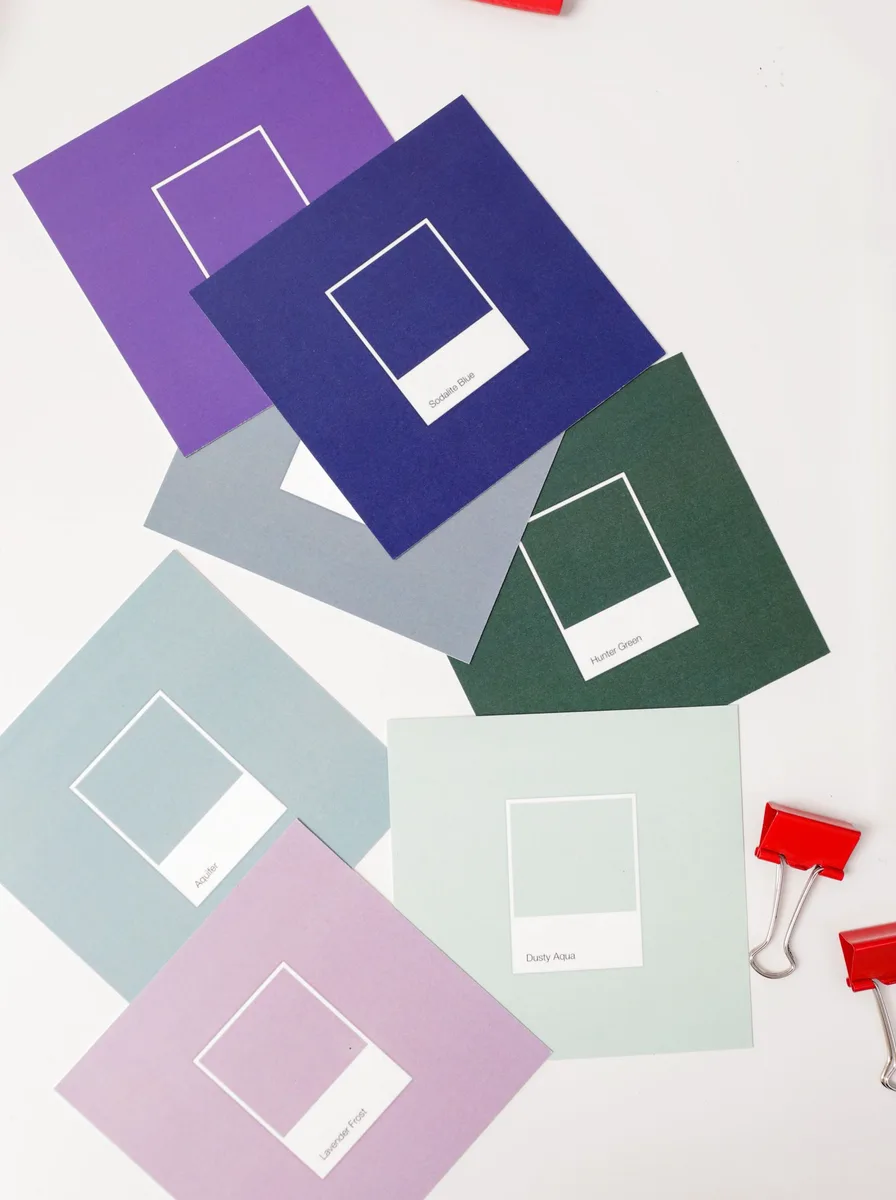
● Keep saturation low; muted tones stay restful while still being interesting.
● Painter’s tape and a laser level keep colour-block edges razor sharp.