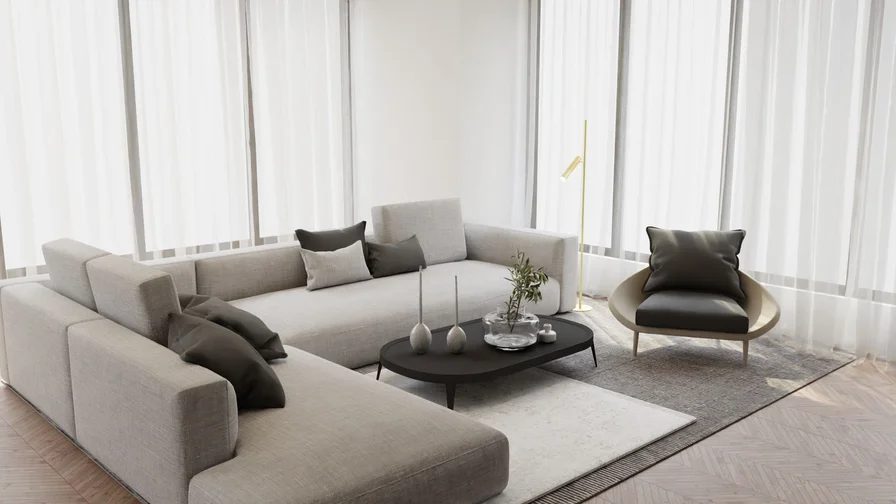
An elegant living room is less about spending big and more about making deliberate choices.
Balance, restraint, and quality materials do most of the work: a symmetrical layout, one rich texture, and lighting that flatters everything it touches. When those pieces click into place, even a modest room takes on a calm, collected glow that feels unmistakably refined.
The best part is that elegance is a formula you can copy.
Designers return to the same moves again and again — anchoring the seating on a generous rug, styling a mantel in mirrored pairs, letting marble or velvet carry the luxury so everything else can stay quiet. Once you know the moves, you can layer them into your own room at whatever pace your budget allows.
This guide gathers 22 gorgeous elegant living room designs, each paired with practical tips you can copy this weekend.
From minimalist bases and warm neutral palettes to statement fireplaces, marble details, and velvet upholstery, you will find a transformation path for every room size, every budget, and every version of elegant you love.

1. Start with a Soothing Minimalist Base
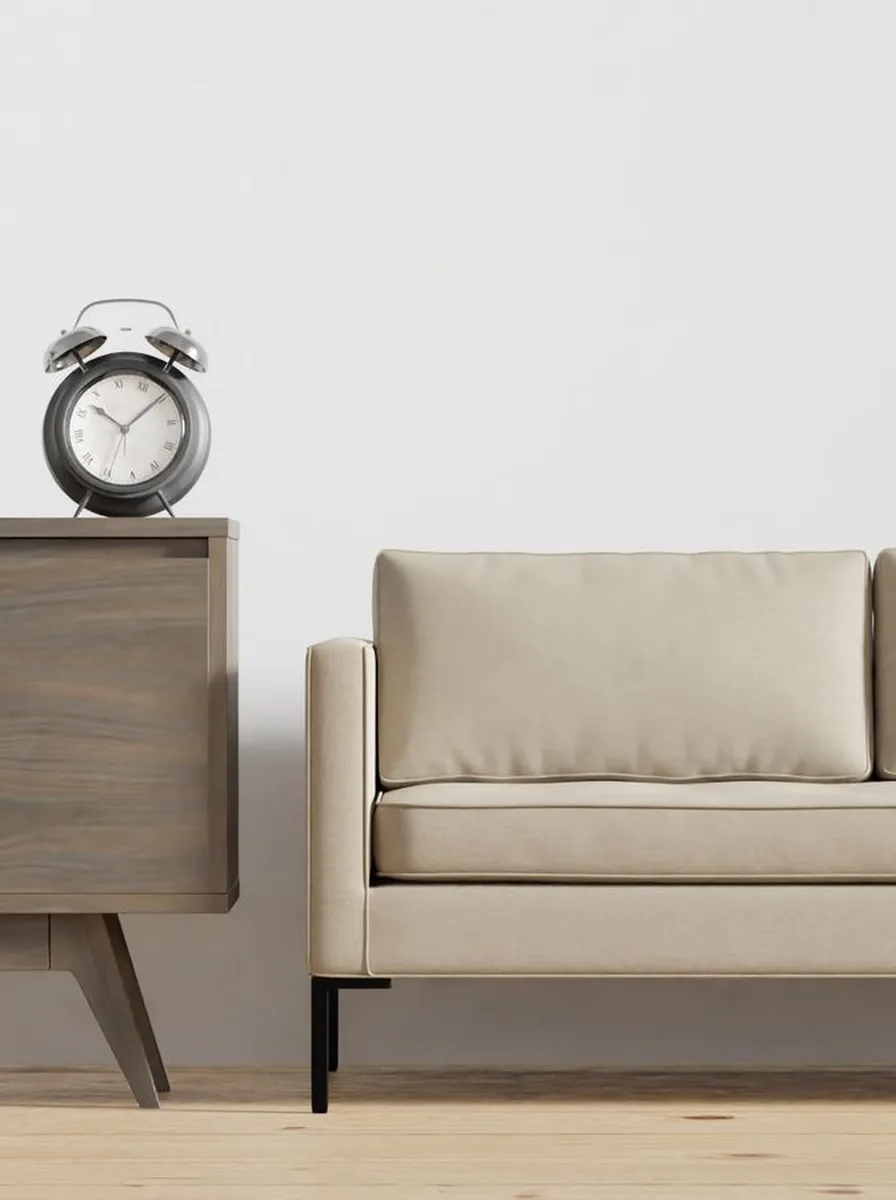
Elegance starts with subtraction, not addition. Before buying anything, remove everything you don’t love and assess what remains — most rooms already hold one or two pieces worth keeping, like a solid sofa or a decent rug. Then rebuild with a restrained palette of warm whites, soft grays, and one mid-tone for contrast, so every object that stays earns its place visually.
Give each piece breathing room rather than pushing everything against the walls; negative space is what makes a room feel calm and expensive. Store the overflow out of sight for two weeks before deciding what to bring back. Copy this rule: if an item doesn’t add comfort, beauty, or function, it leaves the room for good.
2. Embrace Clean Lines and Open Space
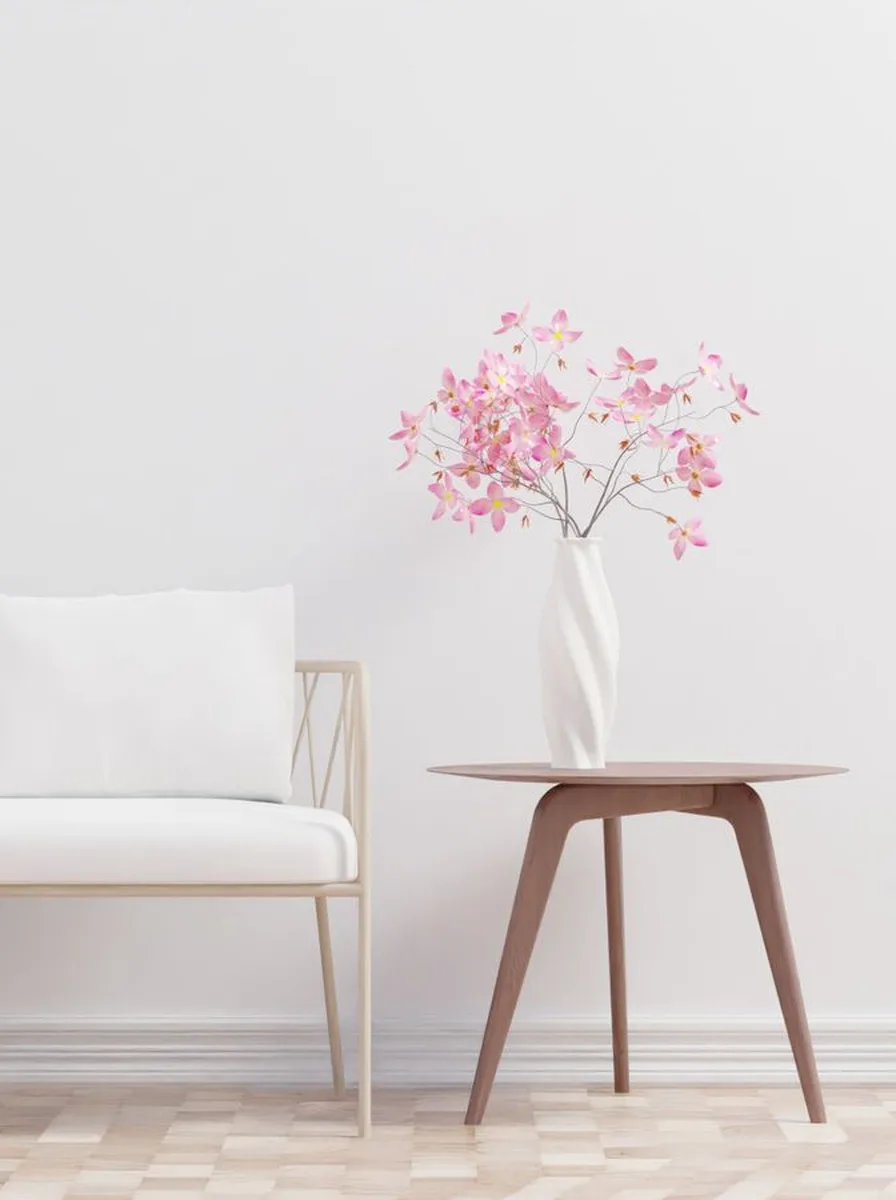
Rooms with straight, simple silhouettes read as elegant because nothing fights for attention. Choose a sofa with slim arms and visible legs, a low coffee table in a single material, and skip fussy extras like fringed throws and ornate frames. When the shapes are quiet, the room’s proportions and natural light become the decoration.
Keep traffic paths wide and pull furniture slightly away from walls so the layout feels airy rather than stuffed. One large-scale item — a wide sofa or a tall bookcase — beats five small ones every time. If a surface collects clutter, it needs a proper home: add a lidded basket or a drawer so open tops stay clean.
3. Build a Warm Neutral Foundation

Neutrals are the easiest path to elegance because they never clash and they flatter every season. Start with walls in warm white or pale greige, then layer in beige, camel, and soft taupe through the sofa, rug, and curtains. Warm neutrals feel richer and more welcoming than cool grays, especially in rooms with limited natural light.
Keep undertones consistent — if your sofa is warm beige, choose curtains and rugs that lean warm too, or the mix can look muddy. Sample paint on three walls and check it morning, noon, and night before committing. Once the foundation is set, one dark accent like espresso wood or bronze keeps the palette from feeling washed out.
4. Layer Creams, Beiges, and Soft Taupes

A single neutral looks flat; three layered neutrals look designed. Combine a cream sofa, a beige linen throw, and taupe cushions in varying textures — boucle, wool, and washed cotton — so the eye reads depth even though the palette stays calm. The trick is contrast in texture rather than color, which keeps the room serene but never boring.
Work in threes: three neutrals, three textures, three cushion sizes for a styled-but-effortless sofa. Add one natural fiber, like a jute rug or a woven basket, to keep the layering from feeling too polished. Washable slipcovers in cream make this look practical too — elegance that survives real life is the only kind worth having.
5. Add a Sculptural Floor Lamp

One beautiful floor lamp can do the work of an entire lighting plan: it adds height, creates a warm pool of light for reading, and acts as a piece of sculpture when switched off. Look for an arc lamp that reaches over the seating, a tripod in brass, or a slim torchiere — anything with a silhouette interesting enough to stand alone.
Place it in a corner that feels dark after sunset, roughly beside or behind your main chair. Use a warm bulb around 2700K and a fabric or opal glass shade that diffuses light softly. The copyable move: plug it into a simple timer or smart plug so the room glows welcomingly the moment evening arrives.
6. Make the Fireplace Your Focal Point

Every elegant living room needs one confident focal point, and a fireplace is the natural choice. Arrange your seating to face it — or at least acknowledge it — so the room has a clear visual anchor. If your fireplace is dated, a coat of paint on the surround and a simple new mantel shelf can transform it in a single weekend for very little money.
Style the mantel with restraint: one large mirror or artwork leaned against the wall, flanked by two matching objects like candlesticks or vases. Keep the hearth clear except for a neat log basket or a pair of andirons. Even an unused fireplace looks elegant when its surround is styled deliberately rather than left bare.
7. Introduce Marble for Timeless Glamour
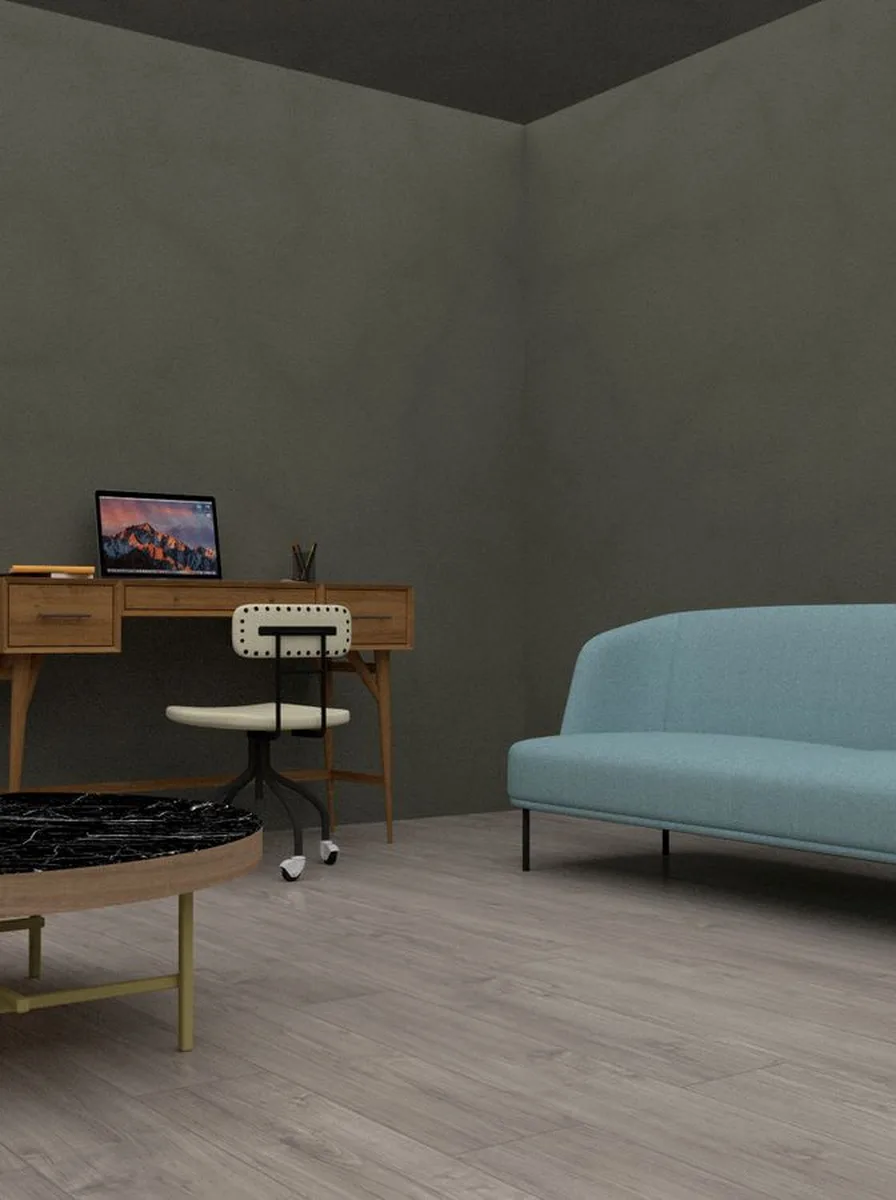
Few materials say elegant as instantly as marble. Its natural veining adds pattern without noise, and it pairs with everything from velvet to linen to warm wood. You don’t need marble floors or walls — a single coffee table, a pair of side tables, or even marble-look trays and coasters deliver the glamour at a fraction of the cost.
Keep marble pieces to one or two per room so they stay special; more than that and the effect dilutes. White Carrara-style veining suits classic rooms, while darker marbles with gold veining lean modern-luxe. Seal real marble once a year and wipe spills quickly, or choose a convincing faux-marble top for a worry-free version of the same look.
8. Blend the TV Seamlessly Into the Wall

Nothing breaks elegance faster than a black rectangle dominating the room, so treat the TV as a design problem to solve. Mount it flush on the wall at eye level when seated, hide every cable with a paintable cord cover, and surround it with built-in shelving or a gallery arrangement so it reads as one element of a composed wall rather than an afterthought.
Paint the wall behind the TV a deep, saturated color — charcoal, forest, or navy — and the screen nearly disappears when switched off. Frame-style models that display art when idle are the ultimate camouflage. Keep the console beneath it low and styled with just two or three objects so the whole wall feels intentional.
9. Try a Soft Monochrome Scheme
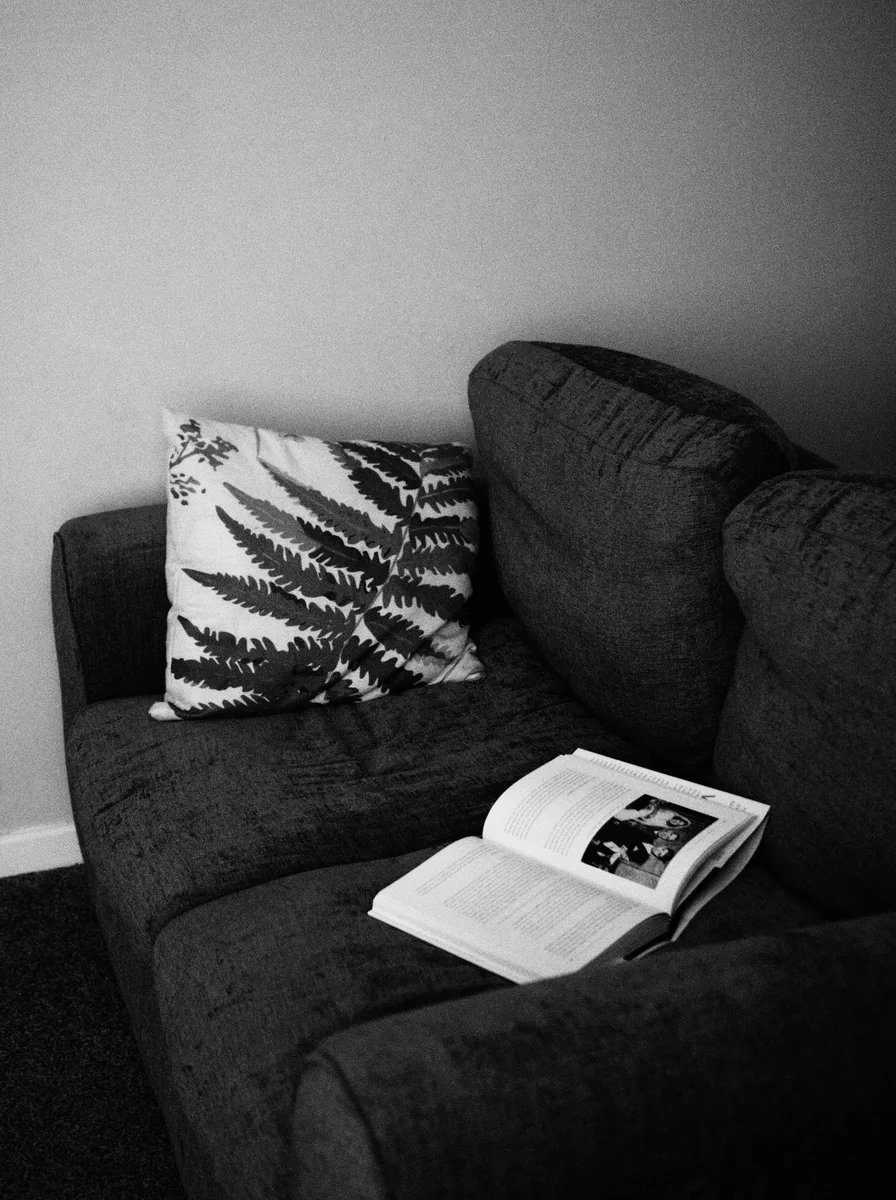
A monochrome scheme built on one color family — soft grays, warm taupes, or pale blues — looks effortlessly elegant because harmony is built in. Choose three to five tones from light to dark within the family and distribute them: lightest on walls, mid-tones on upholstery, darkest in small accents like a throw or a vase. Nothing clashes, and everything feels calm.
The secret is texture, since color variation is minimal. Mix matte and sheen — velvet cushions against a linen sofa, a wool rug under a silk-look curtain — so the eye finds interest. Break the scheme exactly once with a metallic: brushed brass or nickel in the lamp, frame, or hardware adds the sparkle monochrome needs.
10. Frame the TV with Elegant Shelving
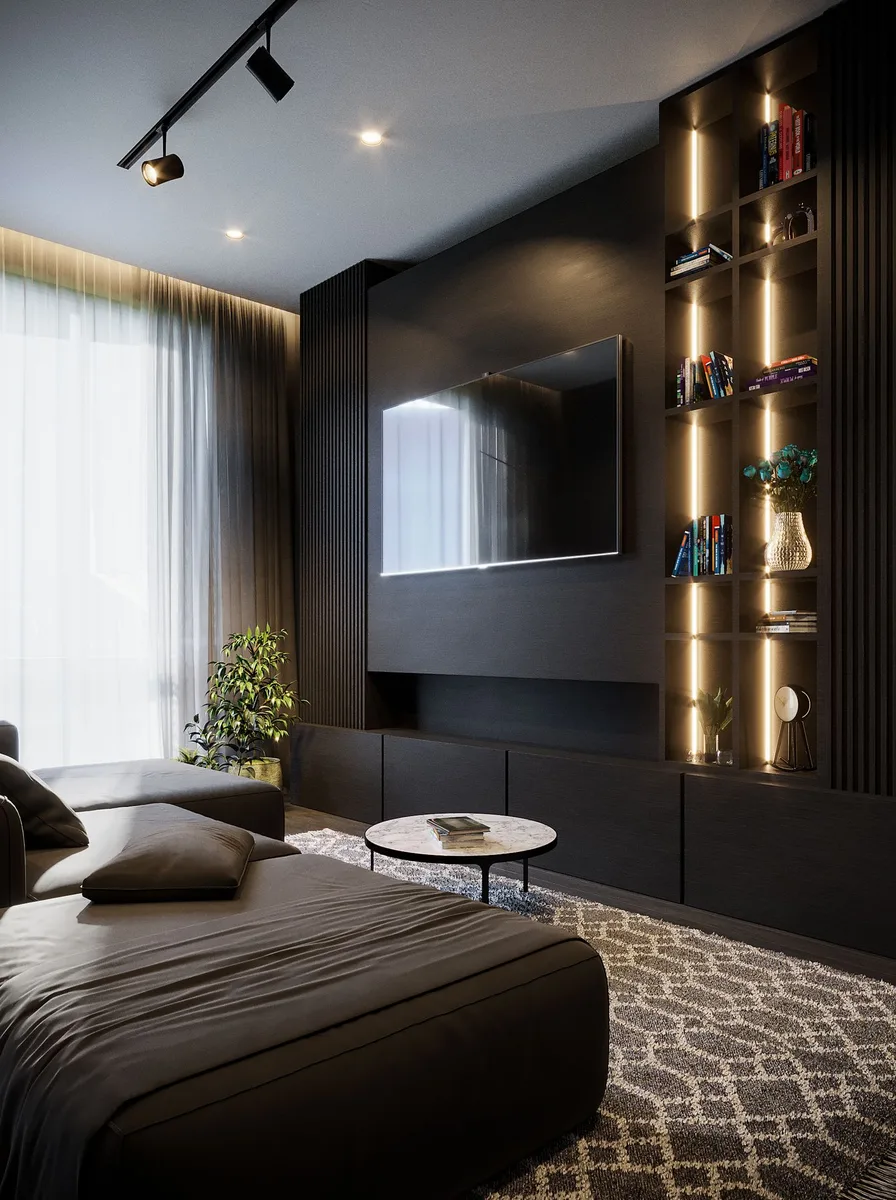
When the TV sits inside symmetrical shelving, it stops being an eyesore and becomes part of the architecture. Flanking bookcases or floating shelves in a painted finish draw the eye to the styling rather than the screen, and they give you display space for the objects that make the room feel personal and finished.
Style the shelves with the rule of odds: group objects in threes and fives, vary heights, and leave about a third of each shelf empty so it breathes. Stack books horizontally in some sections and stand them vertically in others. Paint the shelving the same color as the wall behind it for a seamless, built-in look on a flat-pack budget.
11. Choose a Marble Coffee Table as the Centerpiece
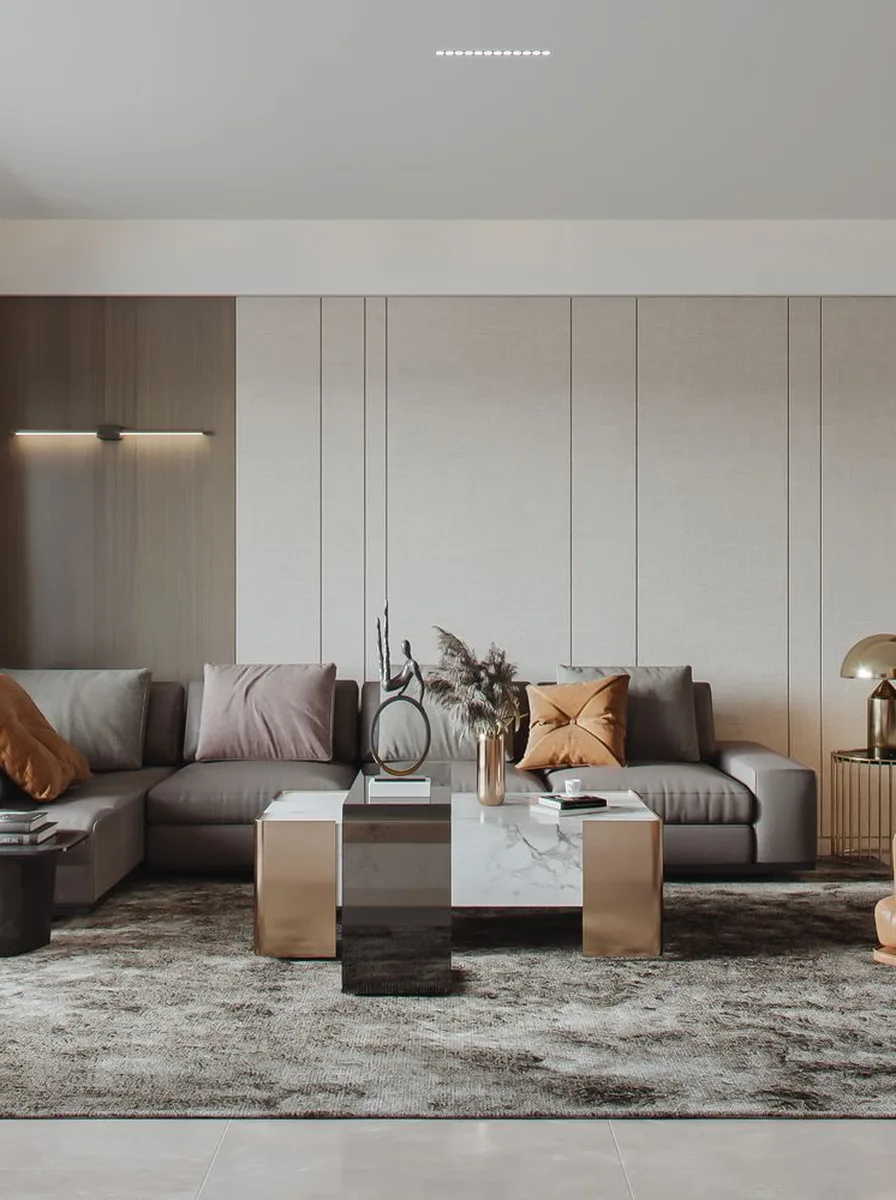
A marble coffee table anchors the seating area with quiet authority — it is the one piece guests notice and remember. Choose a round or oval top if your room is small, since soft shapes improve flow, and keep the base slim in brass, black metal, or turned wood so the stone stays the star. The veining becomes the room’s artwork.
Style the surface with a strict edit: one stack of two or three beautiful books, one small sculptural object, and one living thing like a small orchid or a bowl of moss. Resist the urge to fill every inch. Coasters are non-negotiable on real marble, and a felt-bottomed tray corrals remotes without cluttering the stone.
12. Borrow the Calm of a Boutique Hotel

Boutique hotels feel elegant because everything is symmetrical, uncluttered, and finished — and you can copy that formula exactly. Arrange seating in mirrored pairs: two sofas facing each other, two matching chairs, two identical lamps. Symmetry reads as calm and expensive to the human eye, which is why hotels use it relentlessly.
Finish the look with hotel-grade details: crisp tailored cushion covers instead of slouchy ones, a single fresh flower or eucalyptus stem in a simple vase, and nothing on surfaces that doesn’t belong there. Hide remotes, chargers, and everyday clutter in a lidded ottoman. The room should look ready for a photograph at any moment.
13. Style the Fireplace Mantel with Symmetry
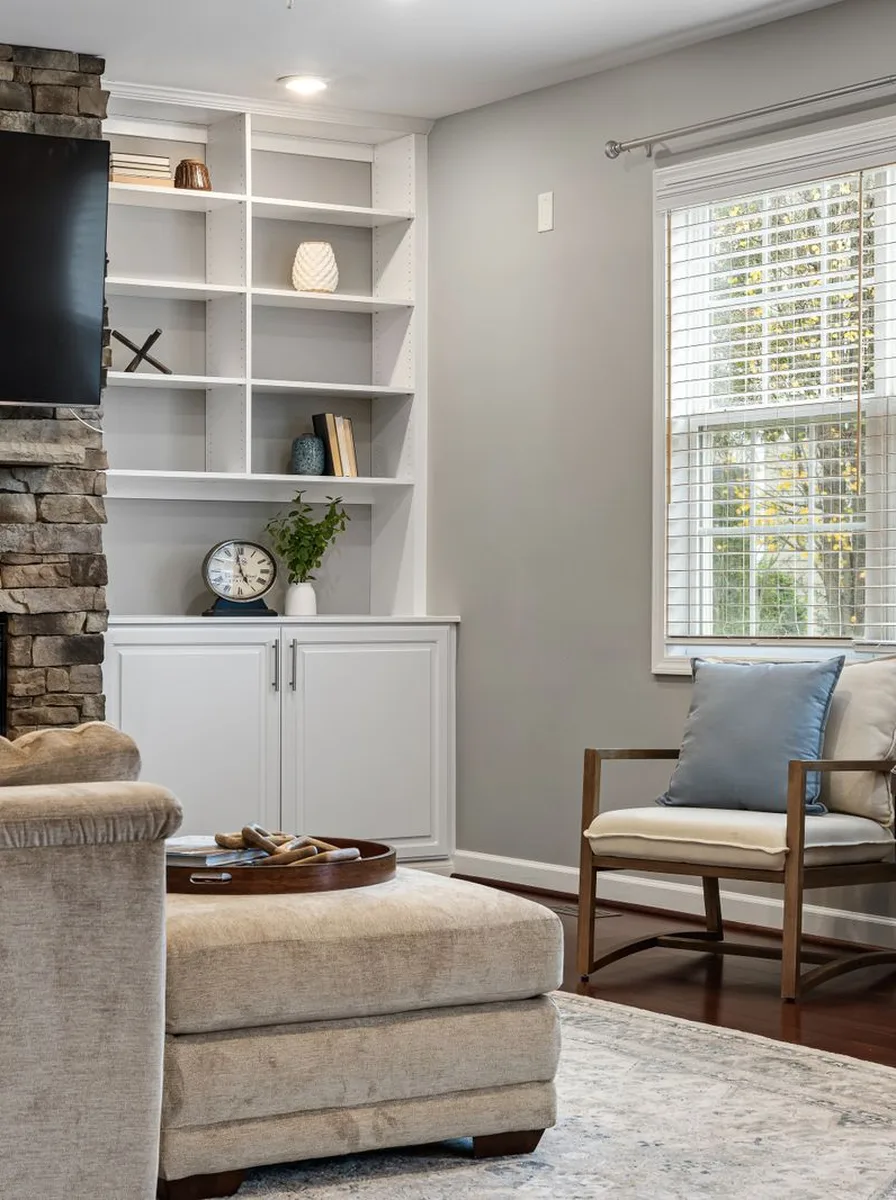
A symmetrically styled mantel is the fastest elegance upgrade for any fireplace. Lean one large mirror or framed print in the center, then flank it with matching pairs — two candlesticks, two small topiaries, two brass vases. The mirror doubles the room’s light and makes the whole arrangement feel twice as generous.
Vary heights within each pair so the silhouette stays interesting: tall candlesticks beside a low bowl, for example. Keep the palette to two materials — say, brass and glass, or wood and ceramic — so it reads as curated rather than collected. Refresh the mantel seasonally by swapping just the centerpiece and the greenery.
14. Sink into a Velvet Accent Sofa

Velvet is elegance in fabric form: it catches light, deepens color, and feels luxurious to the touch. A single velvet accent sofa or loveseat in emerald, sapphire, blush, or classic navy gives the room its moment of richness while the rest of the scheme stays quiet. The sheen alone makes the whole room feel more expensive.
Choose a performance velvet if the sofa will see daily use — it resists stains and crushes less than traditional cotton velvet. Keep surrounding textures matte, like a wool rug and linen curtains, so the velvet stands out. A quick weekly brush with a soft clothes brush keeps the pile looking plush and even.
15. Flank the Fireplace with Matching Armchairs
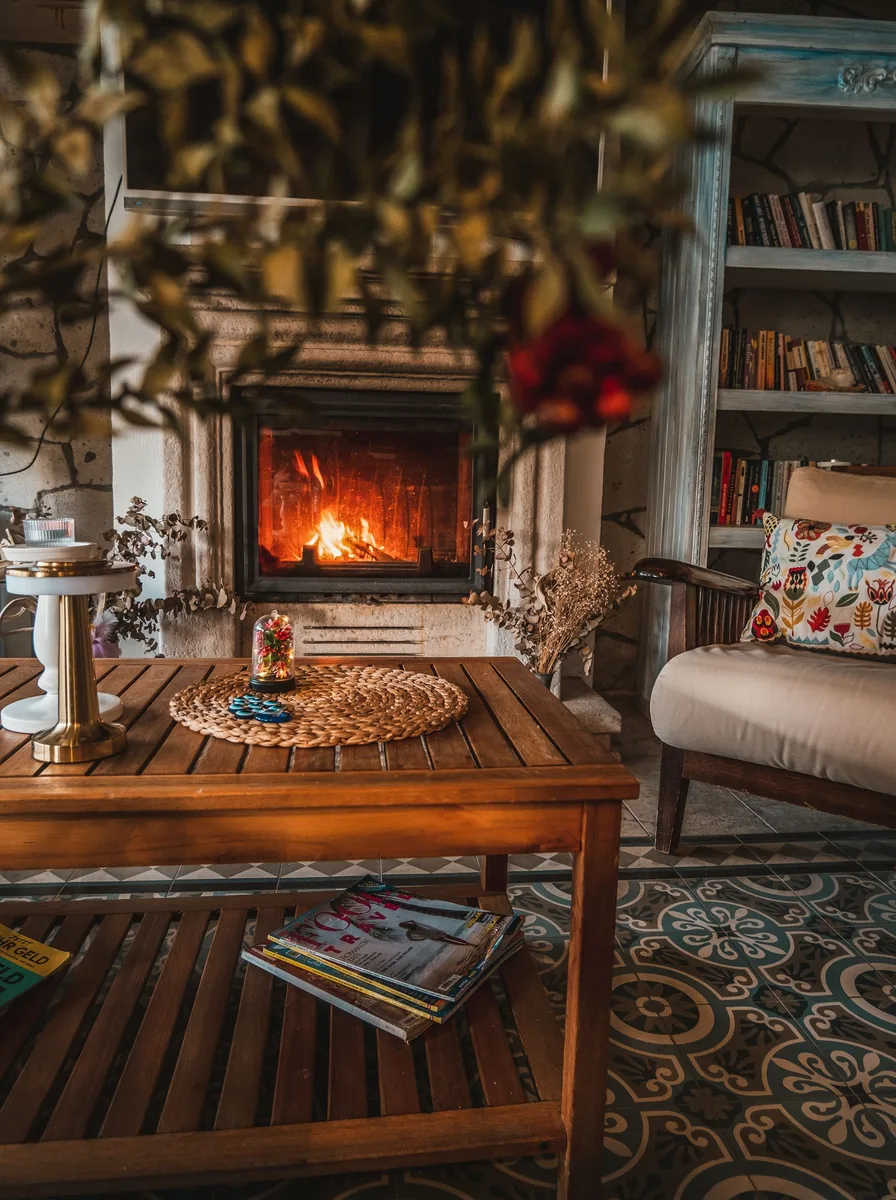
Two matching armchairs angled toward the fireplace create the classic conversation grouping that defines elegant living rooms. The symmetry pleases the eye, and pulling the chairs slightly away from the wall makes the arrangement feel intentional rather than pushed aside. Choose chairs with a slim profile so the grouping doesn’t crowd the hearth.
Upholster the pair in a fabric that contrasts gently with the sofa — patterned against solid, or textured against smooth — so they read as a deliberate set. Add one small side table between them with a lamp, and the nook becomes the room’s best seat. This layout also works beautifully without a fireplace: substitute a window or artwork as the anchor.
16. Soften a Classic Fireplace with Modern Decor

A traditional fireplace surround doesn’t demand traditional styling — pairing it with modern decor creates the tension that makes rooms feel current rather than dated. Keep the mantel styling minimal: one abstract print, a single sculptural vase, and clean-lined candlesticks. The contrast between old architecture and new objects is what gives the room its edge.
Echo the modern notes elsewhere so the mix feels deliberate: a geometric rug, a streamlined coffee table, or contemporary art on an adjacent wall. Keep the color palette tight — two or three colors total — so the old-meets-new contrast stays sophisticated instead of chaotic. Paint the firebox interior black for a crisp, updated frame around the flames.
17. Mix Classic Shapes with Contemporary Touches

Purely classic rooms can feel stuffy and purely modern ones can feel cold, but the blend is timeless. Start with classic bones — a rolled-arm sofa, a traditional rug pattern, paneled walls — then add contemporary counterpoints: a sculptural lamp, abstract art, a glass coffee table. The mix keeps the room feeling fresh without losing its elegance.
Use a 70-30 ratio as your guide: roughly seventy percent classic, thirty percent contemporary, so the room reads as elegant with an edge rather than confused. Tie the two halves together with a shared color or material, like brass appearing in both the classic mirror frame and the modern lamp base. Repeat the contemporary note at least twice so it looks intentional.
18. Add a Touch of Everyday Luxury

Everyday luxury is about small sensory upgrades rather than big spending: a cashmere-blend throw you actually use, a scented candle in a beautiful vessel, fresh flowers every week. These are the details that make a room feel rich to live in, not just to look at — elegance you can feel with your hands and nose.
Pick one ritual and make it permanent: Sunday flowers, a styled drink tray, or a stack of beautiful coffee-table books that invite browsing. Upgrade the most-touched items first — the throw, the cushions, the rug underfoot — since that’s where luxury registers. Keep it to a few special pieces; scattered luxury reads as clutter.
19. Ground the Room with a Plush Area Rug
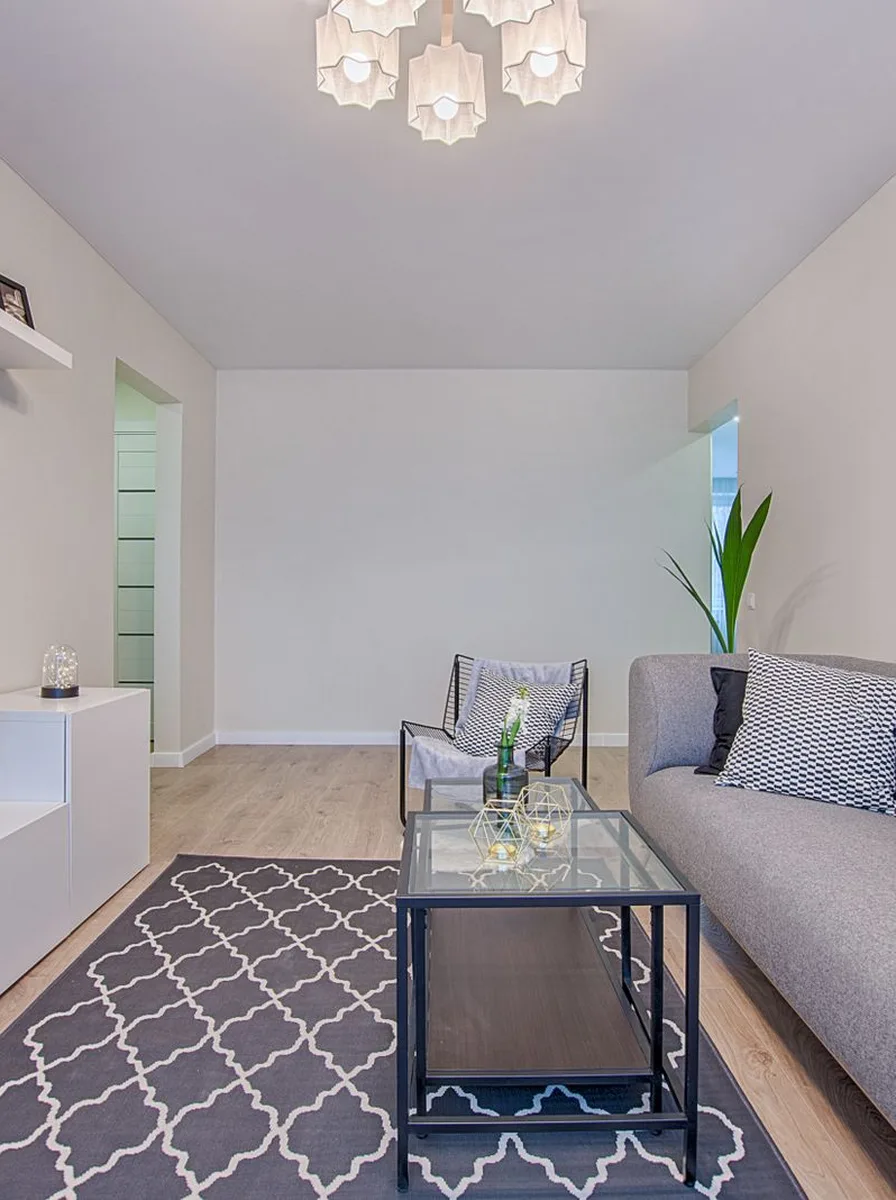
A rug that is large enough to sit all front legs of the seating on it instantly makes a room feel designed and generous. In elegant rooms, choose a plush pile or a classic pattern in muted tones — nothing too busy — so the rug grounds the furniture without shouting. The right rug can visually double the size of your seating area.
Measure before you buy: the rug should extend at least six to eight inches beyond the sofa on each side. Layer a smaller patterned rug over a larger natural-fiber one for depth on a budget. Vacuum with the beater bar off on plush rugs, and rotate the rug twice a year so wear and sunlight stay even.
20. Keep Surfaces Clutter-Free

Elegance is mostly editing. Walk through your living room with a basket and remove everything that doesn’t serve comfort or beauty — the dead remotes, the impulse buys, the pile of old magazines. You’ll be amazed how expensive the room suddenly looks when every surface holds only two or three considered objects.
Give every everyday item a hidden home: remotes in a lidded box, throws folded in an ottoman, chargers in a drawer with a cable hole. Adopt the one-in-one-out rule for decor so surfaces never creep back to cluttered. A five-minute evening reset — fluff cushions, fold the throw, clear the coffee table — keeps the calm permanent.
21. Brighten with an All-White Refresh

An all-white living room is the ultimate elegance reset: it maximizes light, makes small rooms feel larger, and gives every object in it a gallery-like importance. Layer warm whites rather than stark blue-whites — ivory, cream, and alabaster — so the room glows instead of glaring, and vary textures to keep it from feeling flat.
Add one dark anchor, like a walnut tray or black picture frames, so the whites have something to play against. Washable white slipcovers make this look livable, and a great rug protects the floor reality. Keep window treatments sheer and white to flood the room with soft, diffused daylight.
22. Layer Warm Light with Table Lamps

Overhead lighting alone makes rooms feel flat and institutional; table lamps create the layered, flattering glow that defines elegant evenings. Place matching or coordinating lamps on side tables, consoles, and even bookshelves so light comes from multiple heights. Three sources of warm light per seating area is the designer’s minimum.
Use warm bulbs between 2700K and 3000K and shades that diffuse rather than spotlight — linen, silk, or opal glass. Put the lamps on dimmers or smart plugs so you can drop the brightness after dinner. The copyable secret: turn the big overhead light off entirely in the evening and let the lamps do all the work.