
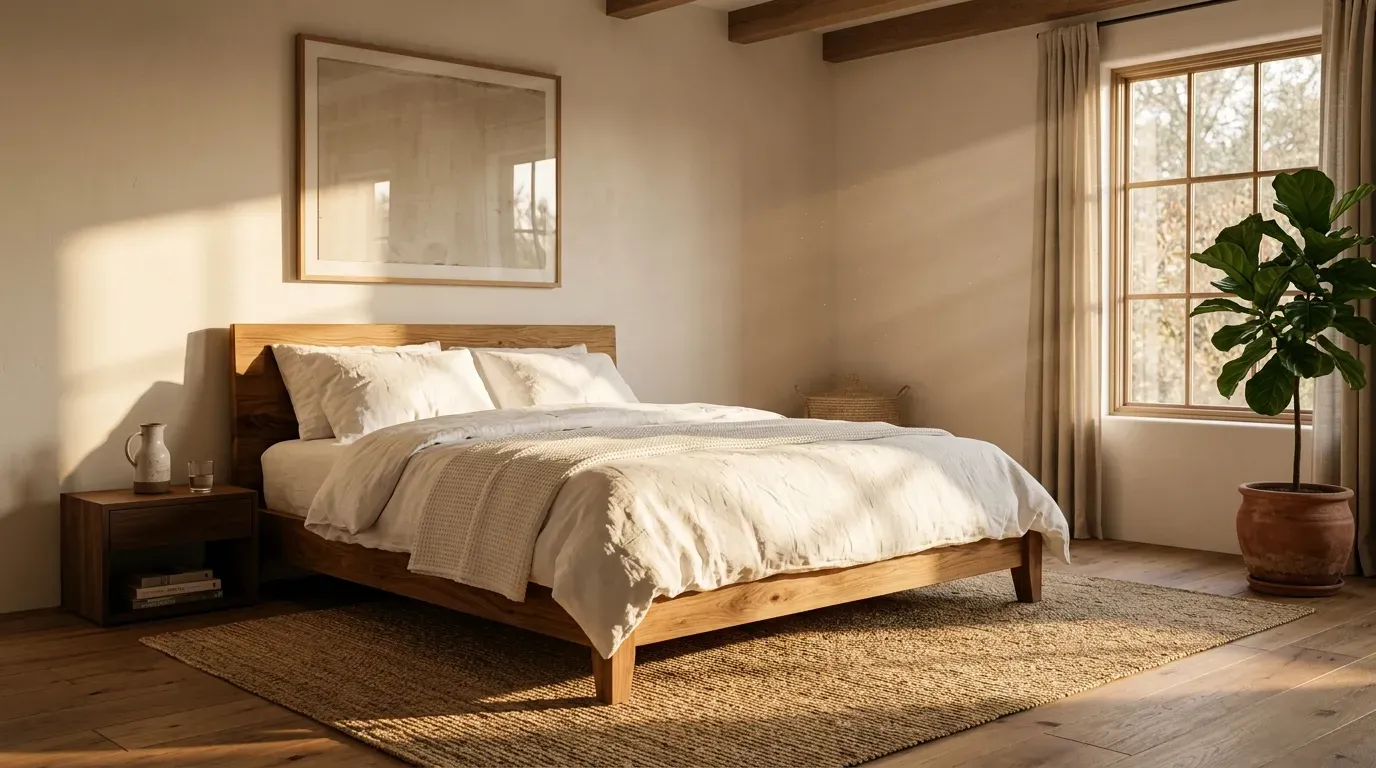
A wooden bed does something no metal frame or upholstered base can fully replicate. It brings warmth, texture, and a sense of permanence to a room. Whether you live in a studio apartment or a sprawling farmhouse, wood works. It pairs with almost any color palette, ages beautifully, and—when chosen carefully—can last for decades. From raw reclaimed timber to sleek walnut platforms, the options are wider than most people realize. This guide walks through 25 specific wooden bed ideas that are practical, affordable, and genuinely stylish. Each one is designed to help you make a real decision, not just dream about what could be.
1. Reclaimed Wood Platform Bed
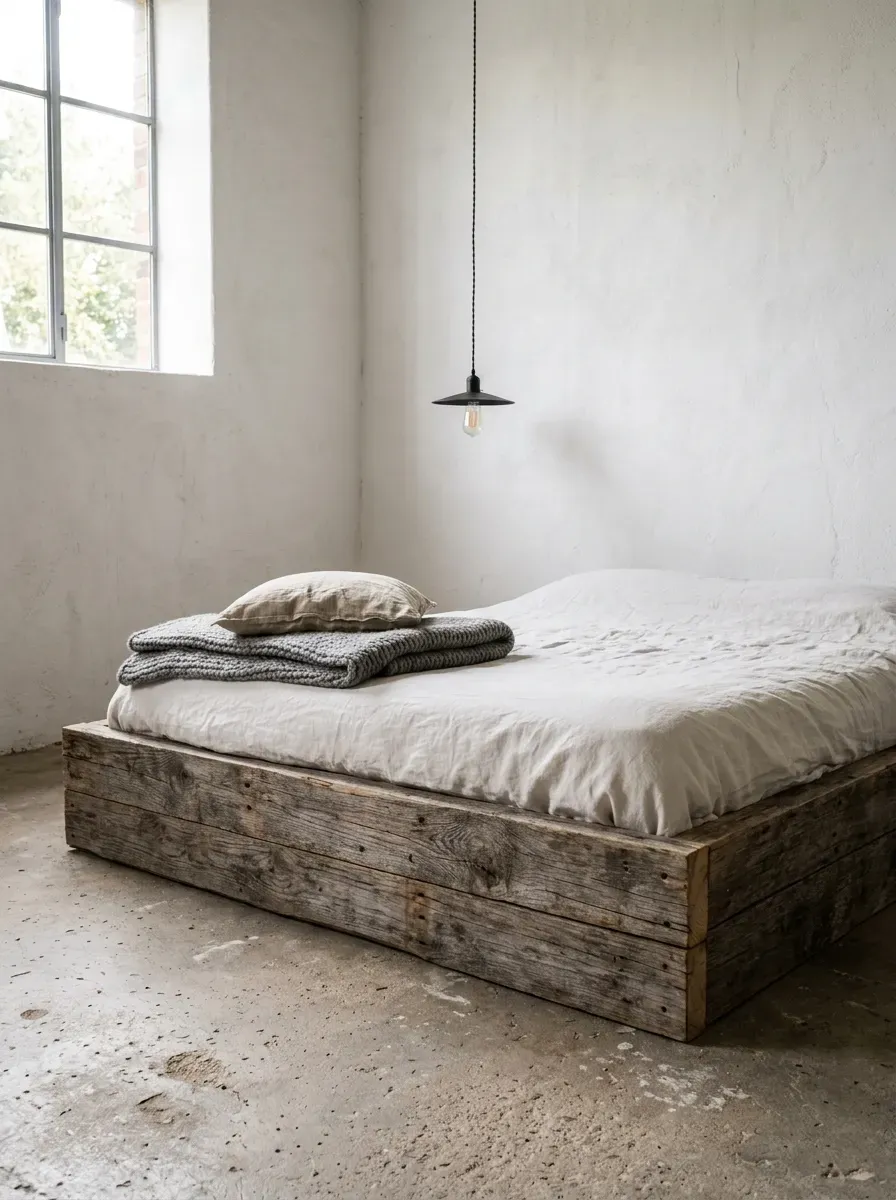
Reclaimed wood has character that new lumber simply cannot fake. Every plank tells a story through its knots, nail holes, and uneven grain.
A reclaimed platform bed sits low to the ground, which makes a room feel more open and spacious. The wood itself becomes the focal point. You do not need an elaborate headboard or fancy bedding to make it work.
Where to source it: Check architectural salvage yards, Facebook Marketplace, or Craigslist. Old barn wood, factory flooring, and shipping pallets are all fair game.
DIY angle: A basic platform frame uses a simple grid of 2×6 planks supported by short 4×4 legs. Sand lightly—you want to keep texture, not remove it. Finish with a clear matte wax to protect the wood without masking its age.
Budget tip: A full queen-sized reclaimed wood platform bed can cost as little as $150–$300 in materials if you source the wood yourself. Pre-built versions from small makers on Etsy run $600–$1,200, which is still a fraction of retail furniture prices.
This style works especially well with white walls, concrete floors, and minimal decor. It pairs beautifully with linen bedding in neutral tones. If you want a bedroom that feels grounded and real, this is a strong starting point.
2. Shaker-Style Wooden Bed Frame
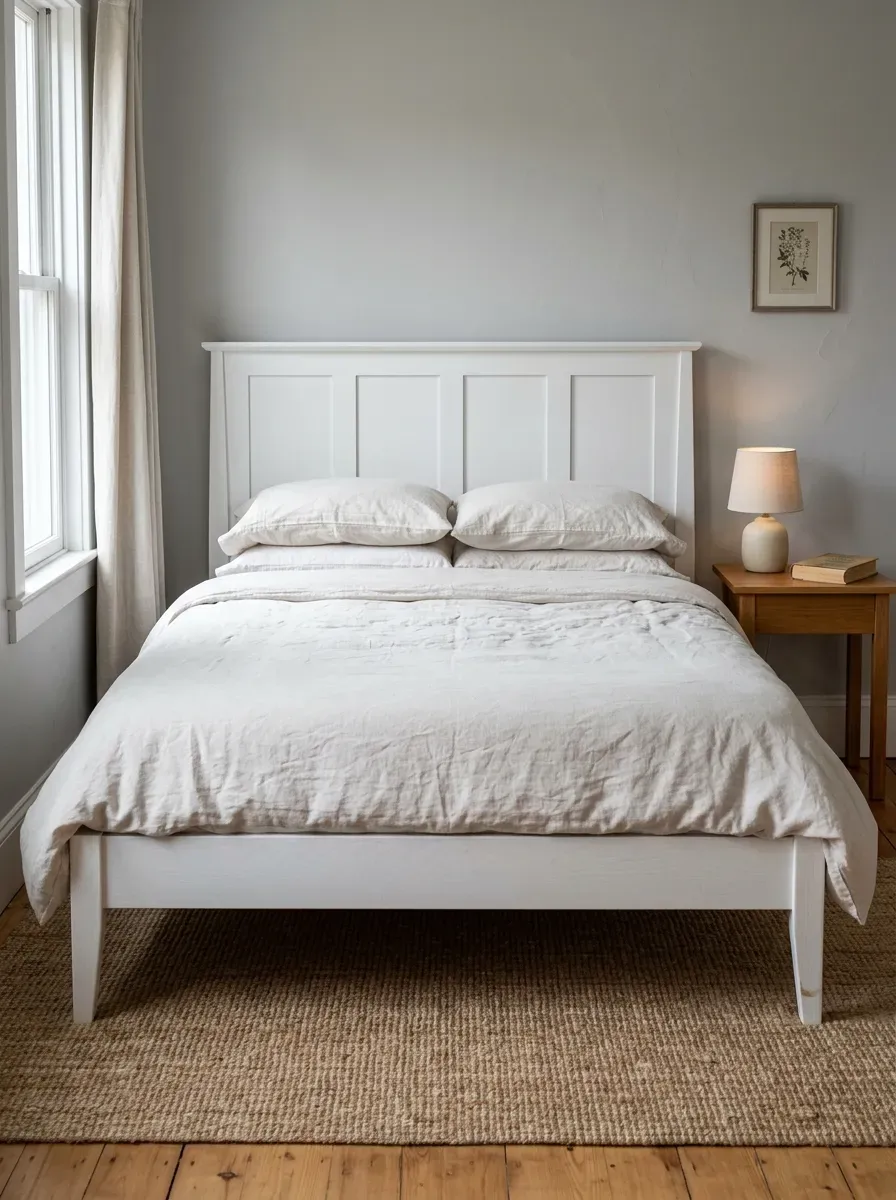
The Shaker style has been around for centuries—and it keeps showing up because it genuinely works.
The design is clean without being cold. A flat-panel headboard, straight lines, and tapered legs give the bed structure without clutter. It does not fight with anything else in the room. You can change your bedding, wall color, or rug a dozen times and the frame will still fit.
Wood options: Maple, cherry, and oak are the most common Shaker choices. Maple is the most affordable. Cherry develops a rich amber tone over time. Oak is tough, widely available, and easy to stain.
Paint or stain? Both work. A white or soft grey paint gives a clean modern feel. A medium walnut stain leans more traditional. Either way, sand thoroughly before finishing.
DIY tip: Shaker bed frames are one of the most beginner-friendly woodworking projects. The joinery is simple—mortise and tenon or pocket screws work fine. Free plans are available on sites like Ana White or Woodsmith.
Budget range: Materials for a DIY queen Shaker frame cost around $200–$350 at a home improvement store. Finished versions from furniture brands like IKEA or Pottery Barn start around $400.
This bed works in almost any home, any style, any room size.
3. Four-Poster Wooden Bed
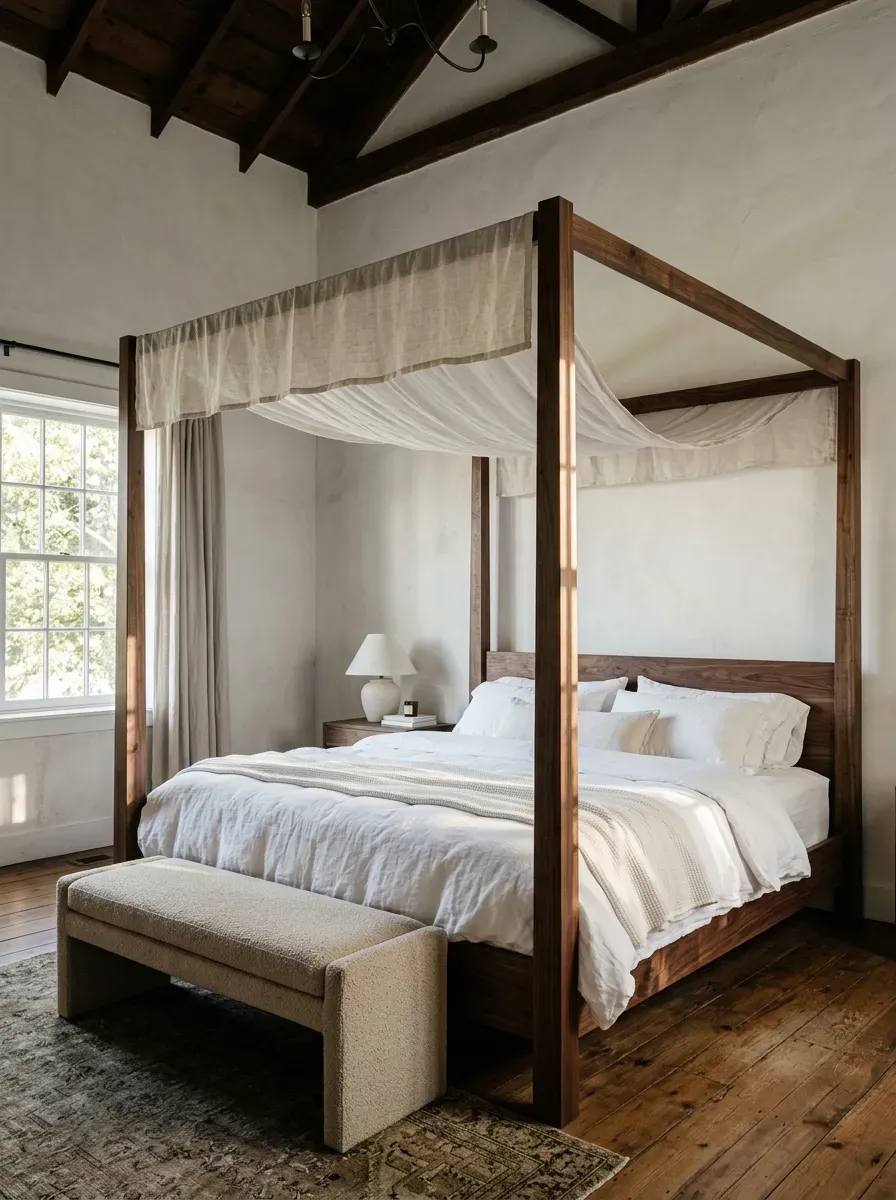
Four-poster beds feel dramatic, but they do not have to be heavy or fussy.
The key is choosing the right post profile. Thick, turned spindle posts read as traditional and ornate. Straight square posts feel contemporary and much more approachable. The difference in style is significant.
Why it works: The vertical lines draw the eye upward, making low-ceilinged rooms feel taller. In rooms with high ceilings, the posts fill the space well and stop a large room from feeling empty.
Canopy or no canopy? You do not need one. Many four-poster beds look better without fabric—just the bare posts. If you want softness, drape lightweight linen or muslin loosely between the posts. It does not need to be stitched or structured.
DIY option: Simple square posts can be cut from 4×4 lumber and attached to a standard bed frame with hardware brackets. Finish with a dark stain to add visual weight at the top of the room.
Affordable alternatives: IKEA’s NORNÄS and similar styles from Wayfair offer four-poster frames under $500 in solid pine or acacia.
This bed works best in rooms with at least 9-foot ceilings and enough floor space to let the frame breathe on all sides.
4. Solid Oak Storage Bed
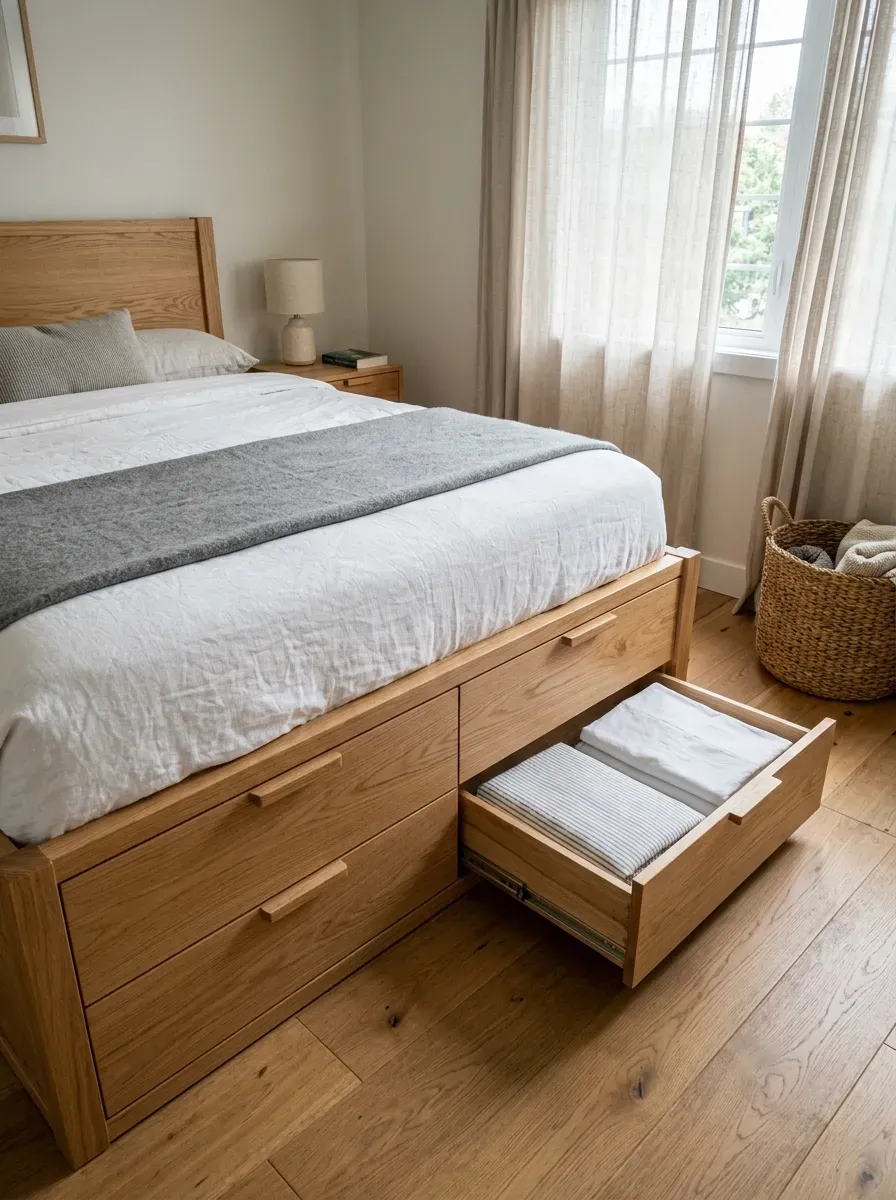
Storage beds are practical. But most of them look cheap. A solid oak version changes that.
The weight and grain of oak gives the storage base a presence that hollow MDF frames never achieve. The drawers feel solid. The frame does not wobble. And unlike cheap alternatives, oak storage beds survive moves, kids, and years of use.
How much storage does it add? A queen storage bed typically offers four large drawers—two on each side—or two oversized drawers that pull from the foot of the bed. This replaces at least one full dresser.
Best for: Small bedrooms, apartments, or anyone who wants to keep under-bed space usable without using open bins or boxes.
DIY note: Building a storage bed is a more advanced project. If you are not comfortable with drawer joinery, consider buying a storage base and attaching your own headboard. IKEA’s BRIMNES or SONGESAND bases pair well with custom DIY headboards.
Budget tip: Solid oak storage beds retail from $800–$2,000. Veneer versions that look similar start around $400. For a DIY build with real oak, budget $400–$700 in materials and plan for a full weekend of work.
5. Japandi-Style Low Wooden Bed
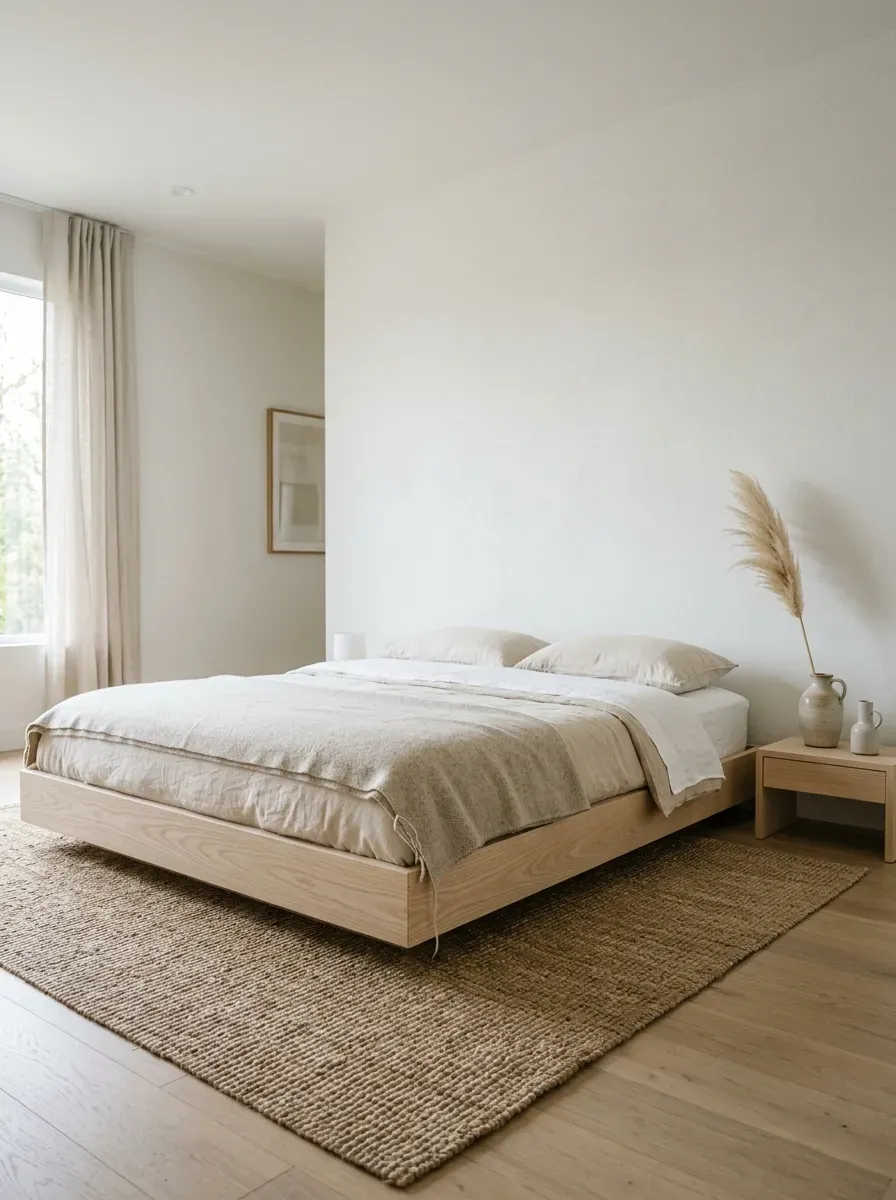
Japandi is the mix of Japanese minimalism and Scandinavian simplicity. The result is calm, clean, and genuinely restful.
A low wooden bed is central to this look. The bed sits close to the floor—sometimes just 6 to 10 inches off the ground. There is no headboard, or at most a very thin one. The focus is on negative space, natural materials, and nothing unnecessary.
Wood to use: Light ash, white oak, or natural pine all work. Avoid dark stains. The goal is warmth without heaviness.
Styling it: Keep bedding in muted tones—cream, oatmeal, sage, warm grey. One textured throw. One or two simple pillows. No decorative cushion pile.
DIY version: Build a simple platform from 2×6 planks and 2×4 supports, keeping the total height under 12 inches. Smooth edges well. No need for legs—the platform rests directly on the floor or on small rubber feet to allow airflow underneath.
Budget: Materials for a queen Japandi platform run $100–$180. Pre-built versions from brands like Article or Muji start around $500–$700.
If your bedroom feels cluttered or chaotic, going low is one of the fastest ways to create a sense of order.
6. Barnwood Headboard with Simple Metal Frame
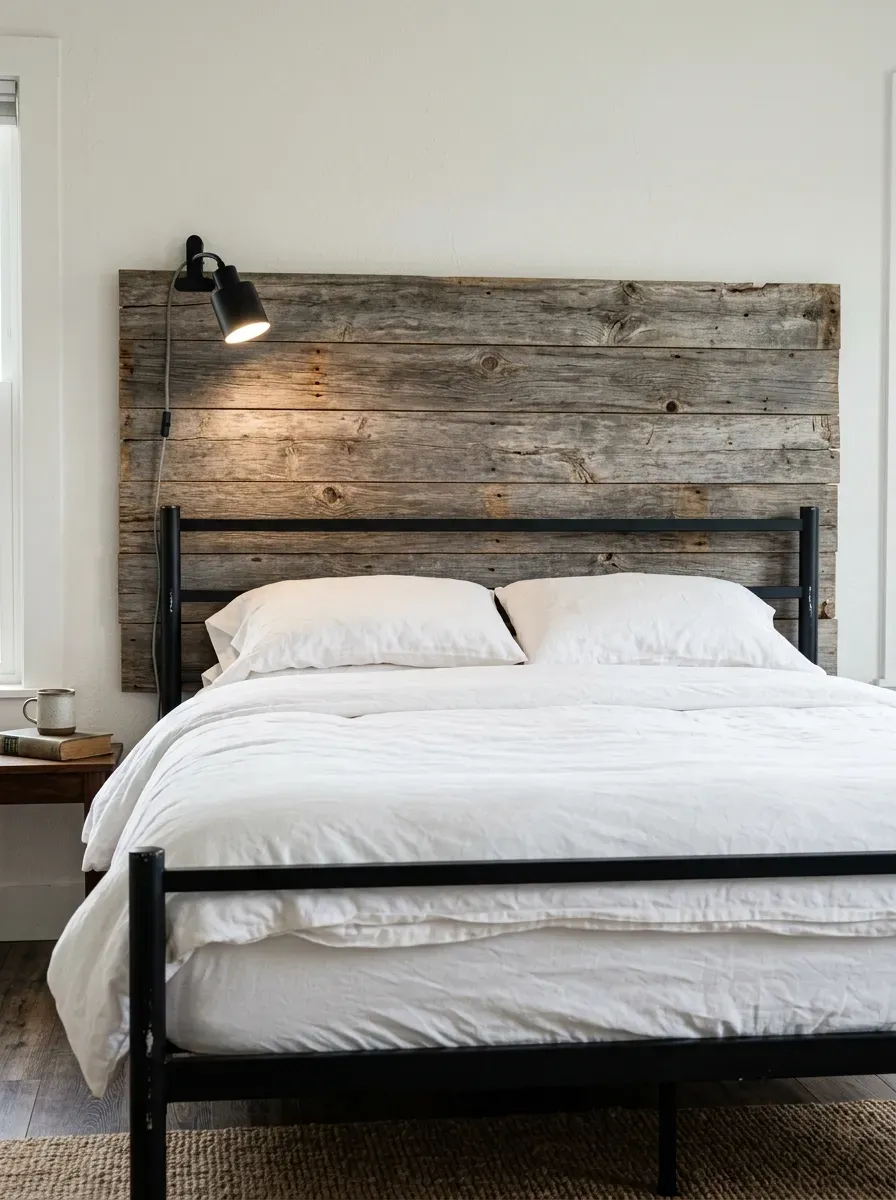
Not every wooden bed idea requires a full wooden frame. Sometimes the headboard does all the heavy lifting.
A thick barnwood headboard mounted above a simple metal base gives you the warmth of wood without the cost of a full wooden frame. The contrast between rough wood and a clean black metal frame is a strong visual pairing.
How to build one: Cut weathered planks to the same width. Sand lightly for splinter removal—keep the rough texture. Mount horizontally to a plywood backing using wood glue and screws. Attach a French cleat to the back and mount it directly to the wall above your bed.
Where to find the wood: Salvage yards, old fences, pallets. Ask local contractors or farmers—they often give old barn material away for free or very cheap.
Sizing: For a queen bed, the headboard should be at least 62 inches wide and anywhere from 24 to 48 inches tall depending on your ceiling height. Taller headboards make small rooms feel grander.
Budget: Materials typically run $40–$120. A basic metal bed frame costs $60–$120. Total investment: under $250 for a look that would retail for $800+.
This combination works well in industrial, farmhouse, or transitional bedrooms.
7. Canopy Bed with Natural Branch Frame
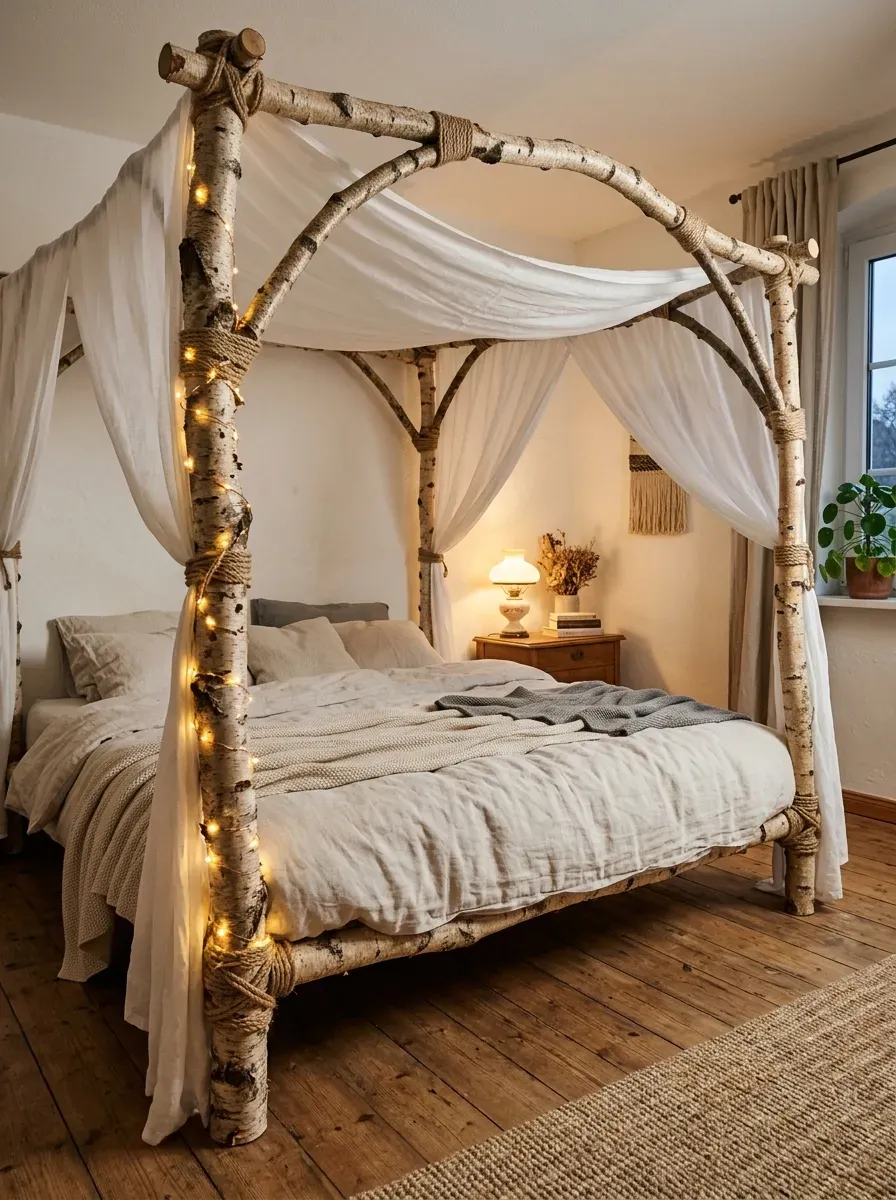
This is the most unconventional entry on this list—and one of the most memorable.
Using real tree branches as bed posts sounds difficult. It is not. You need four strong branches roughly 7 feet tall and 3–4 inches in diameter. Birch, maple, or any hardwood with a curve or character works well.
The structure: Drill through the base of each branch and bolt it to a corner of a standard wooden bed frame. Connect the tops with a horizontal branch or dowel on each side. Drape sheer fabric from the top. Done.
Safety note: Let cut branches dry for at least a few weeks before use. Green wood shrinks and can crack. Store them upright in a dry space.
Where to find branches: After storms, parks often have fallen limbs. Arborists frequently give away trimmings. You can also order kiln-dried birch poles from craft suppliers.
Cost: Under $100 if you source branches for free. Add $20–$40 for fabric. This entire project can be done in a Saturday afternoon.
This style suits bohemian, cottagecore, and nature-inspired bedrooms. It is especially striking in children’s rooms or a guest bedroom where you want a wow moment.
8. Whitewashed Pine Bed Frame
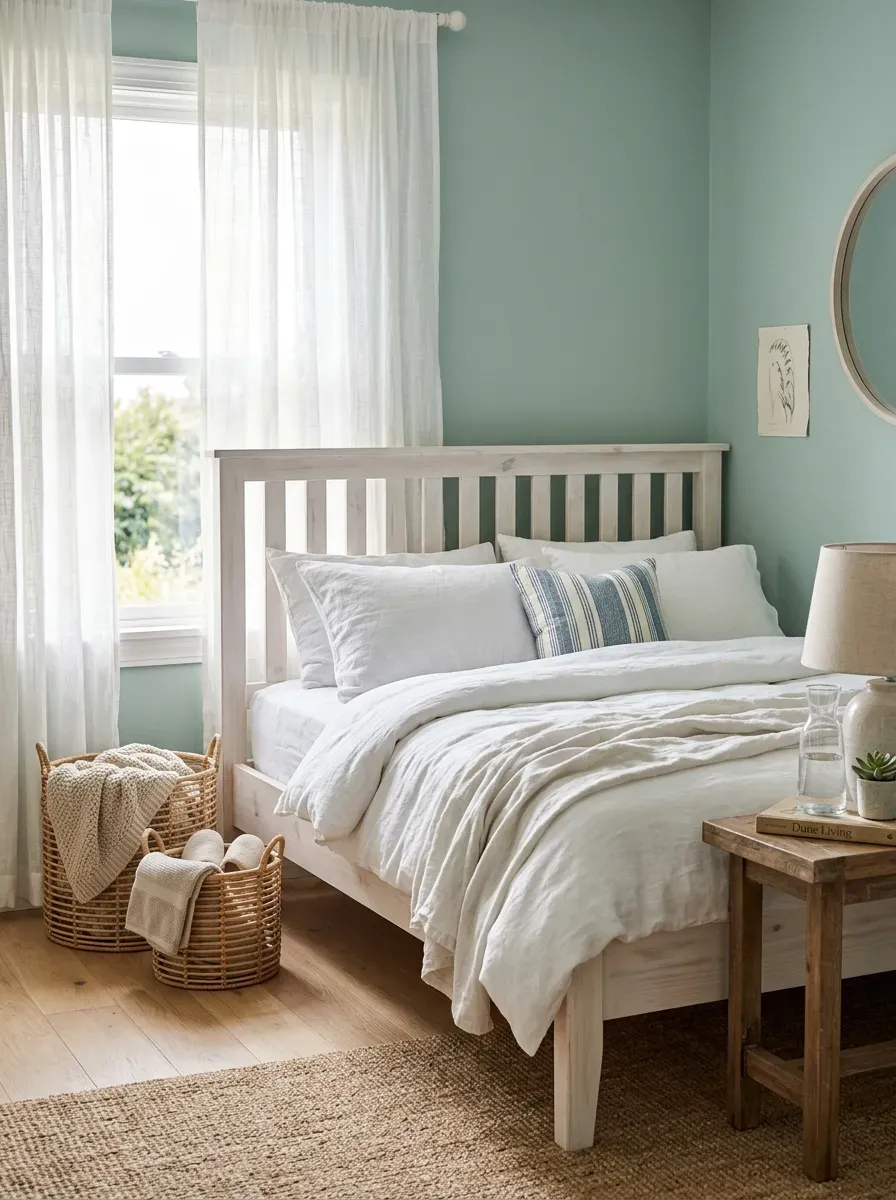
Whitewashing pine is one of the most effective budget moves in bedroom design.
Pine is inexpensive and widely available. But raw pine can look orange or yellow—especially as it ages. A whitewash finish cools it down, brightens it, and gives it a beachy, airy feel without hiding the natural grain.
How to whitewash: Mix one part white latex paint with one part water. Brush it on and immediately wipe back with a cloth. The more you wipe, the more grain shows through. Let it dry and repeat for a denser effect. Seal with a matte polyurethane.
Style fits: Coastal, Scandinavian, farmhouse, and bohemian rooms all work well with whitewashed pine. It is especially good in north-facing rooms that feel darker—the white tone reflects light effectively.
DIY tip: Build or buy an unfinished pine frame and whitewash it yourself. You save on both the frame and the finish. Ana White’s website has several simple pine bed frame plans that cost $150–$250 in materials.
Pre-built option: IKEA’s HEMNES in white stain is a close approximation, available for around $400–$500.
This finish is forgiving of small dings and scratches. Over time, wear actually adds to the look rather than detracting from it.
9. Dark Walnut Bed with Floating Nightstands
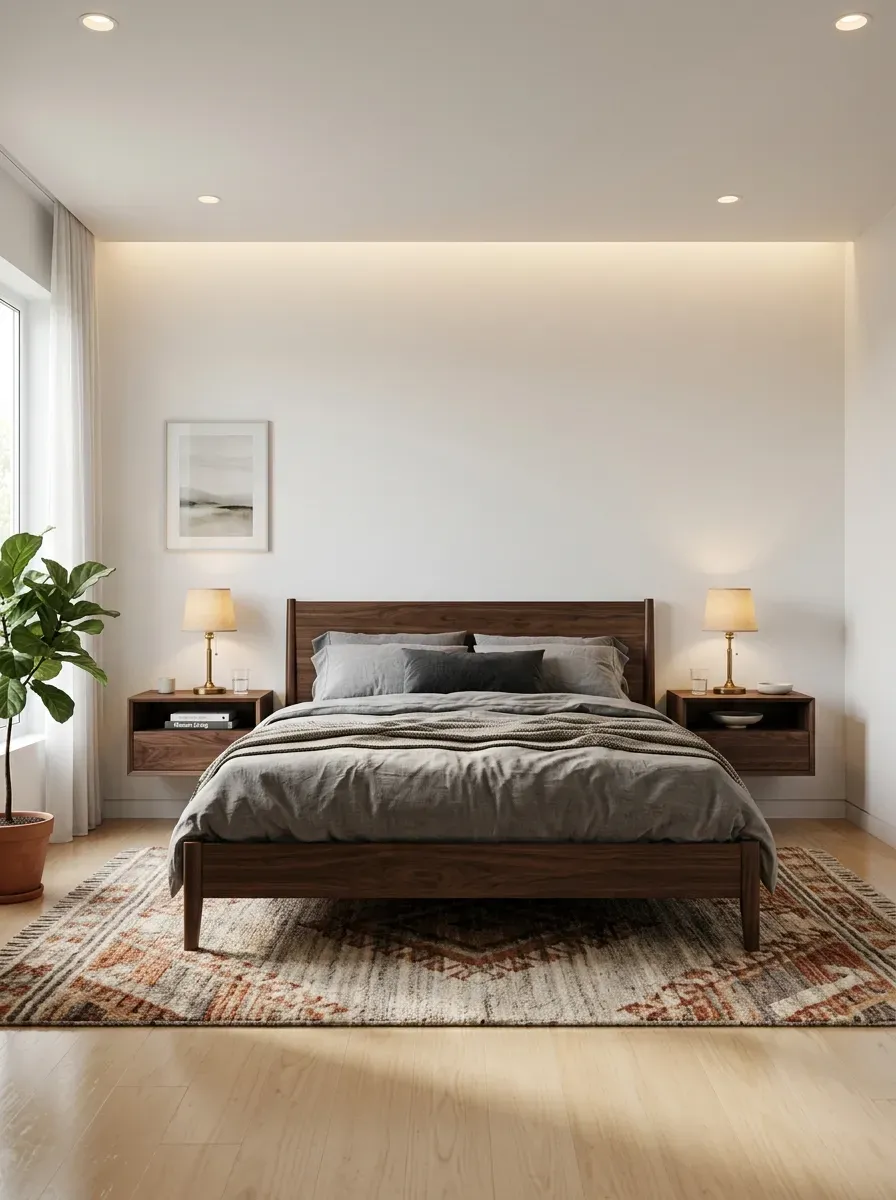
Dark walnut is the one wood finish that makes a bedroom feel immediately grown-up and considered.
The deep brown tones—sometimes with purple or grey undertones—read as sophisticated without feeling formal. It is warmer than ebony and richer than generic brown stain.
Wall-mounted nightstands: Floating nightstands attached directly to the wall are a smart pairing. They free up floor space, make the room easier to clean, and create a hotel-like cleanliness that feels luxurious without being expensive.
How to install them: Buy or build small shelves from walnut veneer plywood. Mount with heavy-duty wall brackets into studs. Add a small drawer unit if you need storage. The total cost per nightstand runs $40–$120.
Bedding to match: Dark walnut needs light bedding to balance it. Go for white, cream, or a soft grey. Avoid dark bedding—the bed frame and sheets will compete and the room will feel heavy.
Where to buy a walnut frame: West Elm, Article, and Room & Board all carry solid or walnut-veneer frames. Prices range from $700–$2,000. For a more affordable option, look for walnut-stained frames in ash or poplar at Wayfair—they achieve a very similar look for $400–$600.
10. Murphy Bed with Integrated Wooden Cabinetry
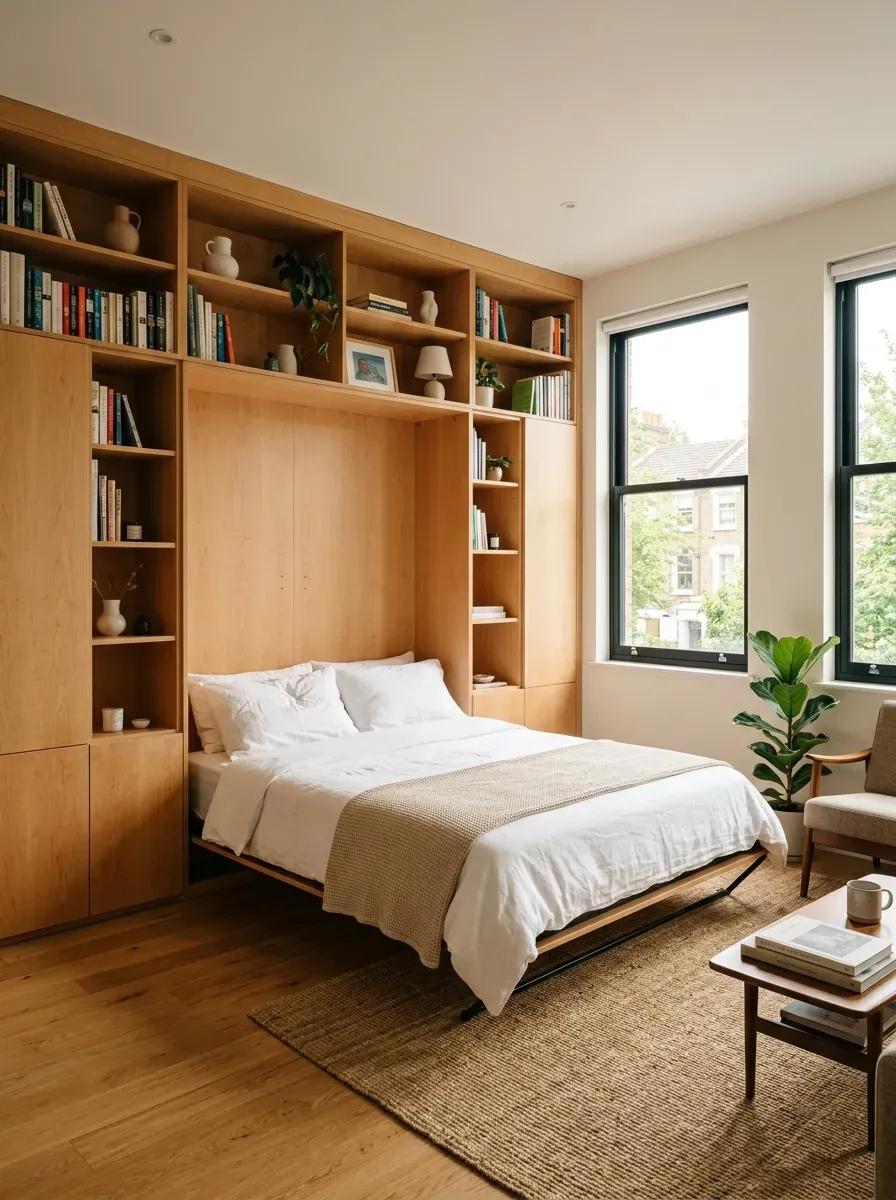
Murphy beds have a reputation for looking awkward. When they are surrounded by built-in wooden cabinetry, they do not.
A Murphy bed integrated into a floor-to-ceiling wood cabinet system looks intentional. When the bed folds up, the room looks like a living room with custom built-ins. When it folds down, it looks like a proper bedroom.
Why wood cabinetry matters: Melamine or laminate Murphy systems look cheap. Wood—even painted wood—gives weight and permanence to the unit. It looks like it belongs to the architecture.
DIY or buy? Murphy bed hardware kits are available from companies like Rockler or Murphy Bed Depot for $300–$500. You build the surrounding cabinetry yourself using plywood or MDF. Total project cost: $600–$1,200. Pre-built systems from California Closets or IKEA (KUNGSBACKA range) start around $2,000.
Best for: Studio apartments, home offices that double as guest rooms, small secondary bedrooms.
Tip: Build the cabinet in sections so it can fit through doorways. And always attach the unit to wall studs—this system is heavy.
This is one of the most space-efficient investments you can make in a small home.
11. Pallet Bed Frame
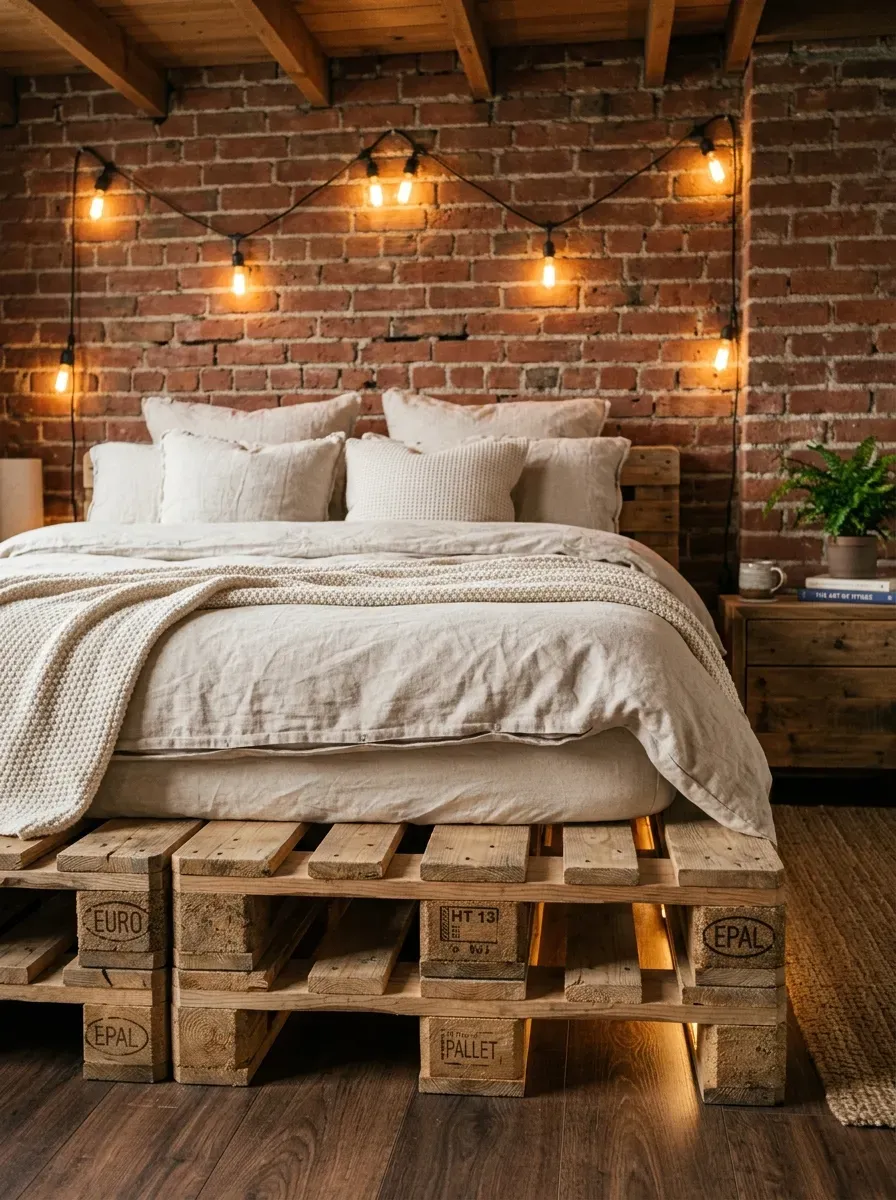
Pallet beds became popular because they genuinely solve a real problem: how do you furnish a bedroom on a very small budget?
A basic pallet bed frame can be built for $0–$50 in materials. Pallets are often free from local businesses, garden centers, or warehouses. Sand them down to remove splinters, stack two high for a standard mattress height, and you are done.
Safety first: Use only heat-treated pallets marked “HT.” Avoid pallets marked “MB” (methyl bromide treatment—a pesticide you do not want near your mattress).
Finishing options: You can paint them, stain them, or leave them raw after sanding. A grey stain gives a weathered look. A white paint can make them feel more finished. A clear polyurethane over bare wood shows the grain and keeps it easy to clean.
Leveling: Pallets are rarely perfectly flat. Use a rubber mallet and shims to level the stack before placing the mattress.
Upgrade tip: Add low-voltage LED strip lighting under the pallets. Run the strip along the bottom edge of the frame so it glows on the floor beneath the bed. This costs about $20 and looks like something from a design magazine.
This is an ideal first bedroom furniture project for renters, students, or anyone starting fresh.
12. Pencil Post Bed in Cherry Wood
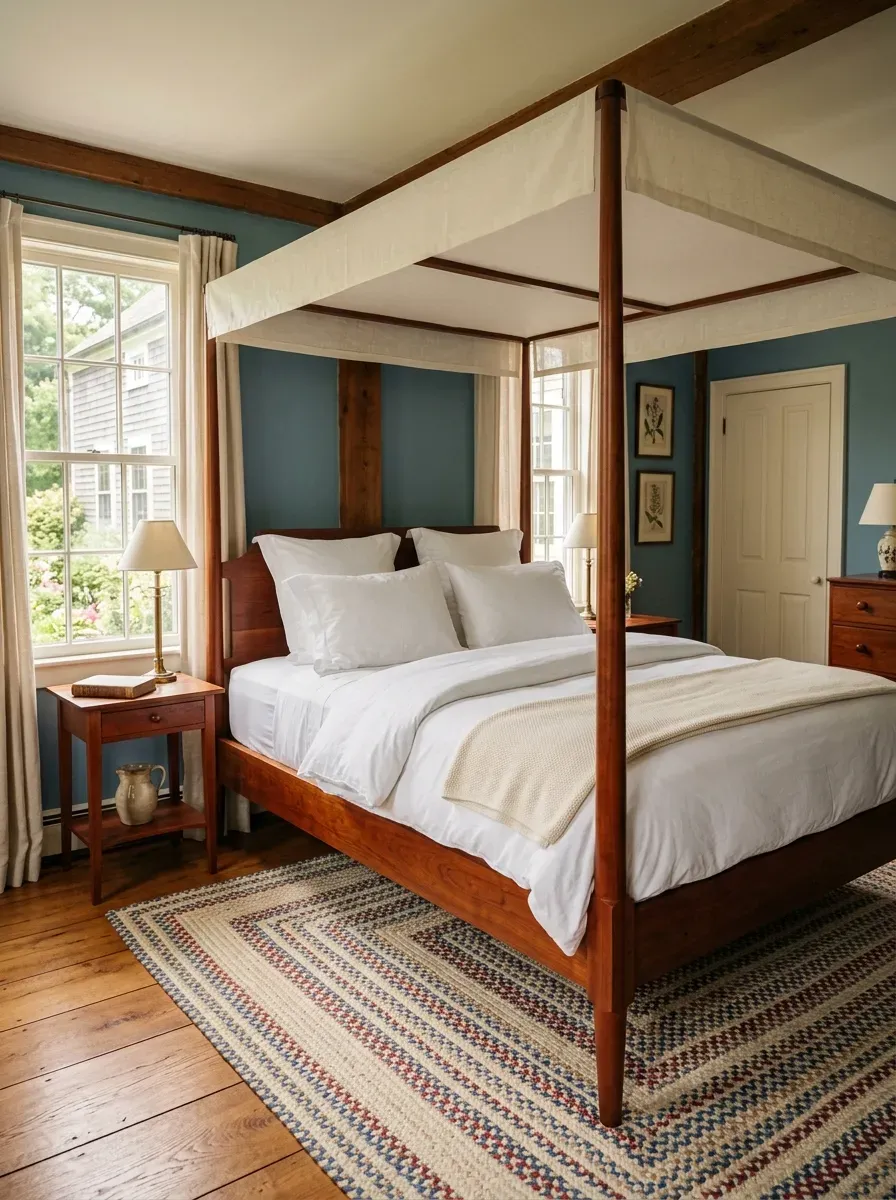
The pencil post is one of the most refined wooden bed styles ever made—and it is far less complicated than it looks.
The posts are round and tapered, narrowing toward the top. They are much slimmer than standard four-poster beds, which gives the frame a lightness that works surprisingly well in smaller rooms.
Why cherry? Cherry darkens beautifully with age. A piece made today will be significantly richer in color in five years. It is not a cheap wood, but it does get better over time rather than worse—making it a genuine long-term investment.
Style fit: This style is most at home in traditional, colonial, or New England-inspired interiors. But a slim pencil post bed in a contemporary room can also work as a contrast element—history meeting the present.
Where to find one: Custom furniture makers, antique stores, and estate sales. Thomas Moser, Stickley, and similar American craftspeople make exceptional pencil post beds. Antique versions on Chairish or 1stDibs often cost less than new.
Price range: Antique pencil post beds in good condition: $300–$800. New custom versions: $2,000–$5,000+.
This is one of those beds that looks better with a simpler room around it—let the frame be the statement.
13. Scandinavian Platform Bed in Birch
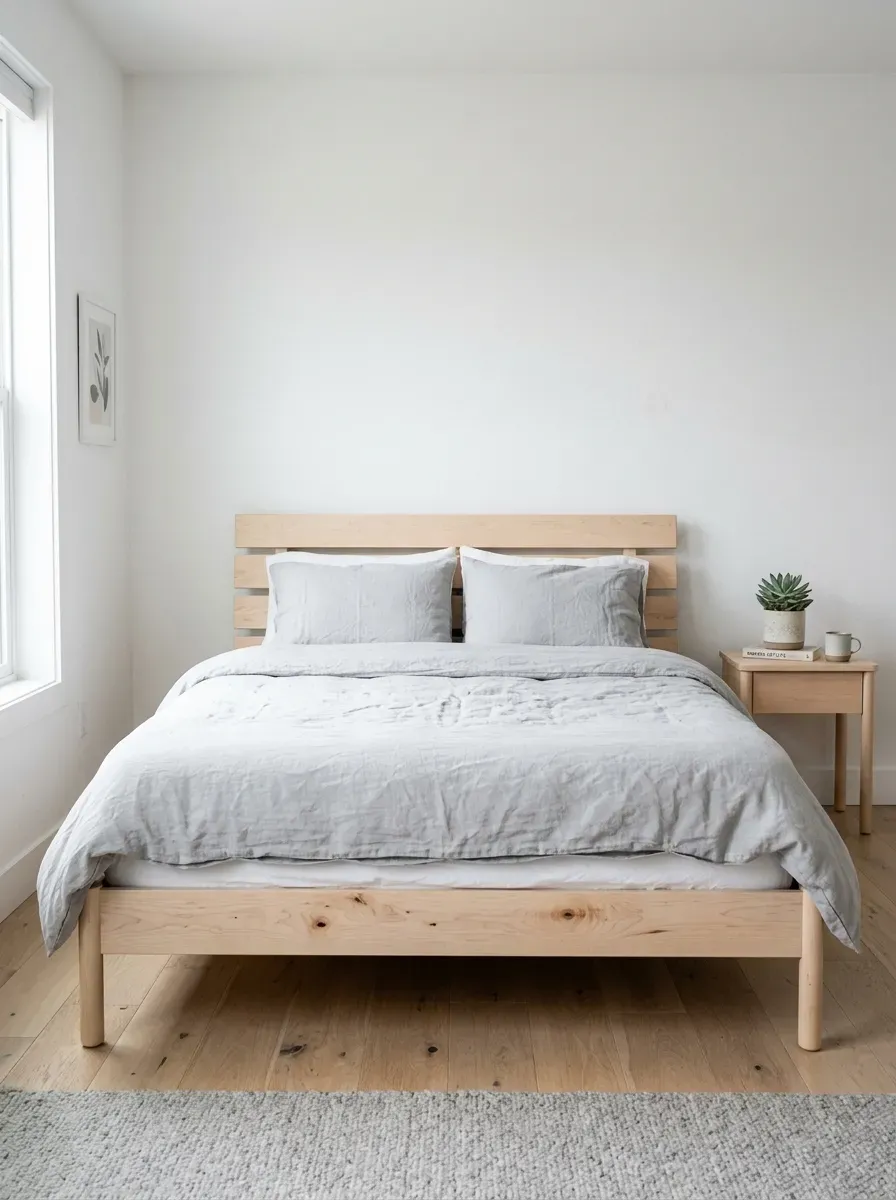
Scandinavian design starts with honest materials and ends with nothing unnecessary. A birch platform bed fits that description exactly.
Birch is pale, clean-grained, and affordable. It does not try to be anything other than what it is. In a Scandinavian-style bedroom, that honesty is the entire point.
Key features of the style: Low profile. Simple slatted headboard or no headboard at all. Slightly rounded edges. Short cylindrical or tapered legs. No ornamentation.
What it works with: White walls. Grey linen. Simple cotton bedding. One or two plants. Natural light. Nothing more.
DIY option: This is one of the most buildable styles on this list. Cut a platform frame from 3/4-inch birch plywood. Add short turned legs from any hardware store or woodworking supplier. Sand everything to 220 grit and finish with a natural-tone Danish oil. Total cost: $200–$350 for a queen.
Pre-built: IKEA’s MANDAL, LEIRVIK, or HEMNES lines hit very close to this aesthetic and start well under $300. They are not solid wood, but the look is accurate and the price is hard to argue with.
This bed creates a bedroom that is very easy to live in—and very easy to keep tidy.
14. Live Edge Wooden Headboard
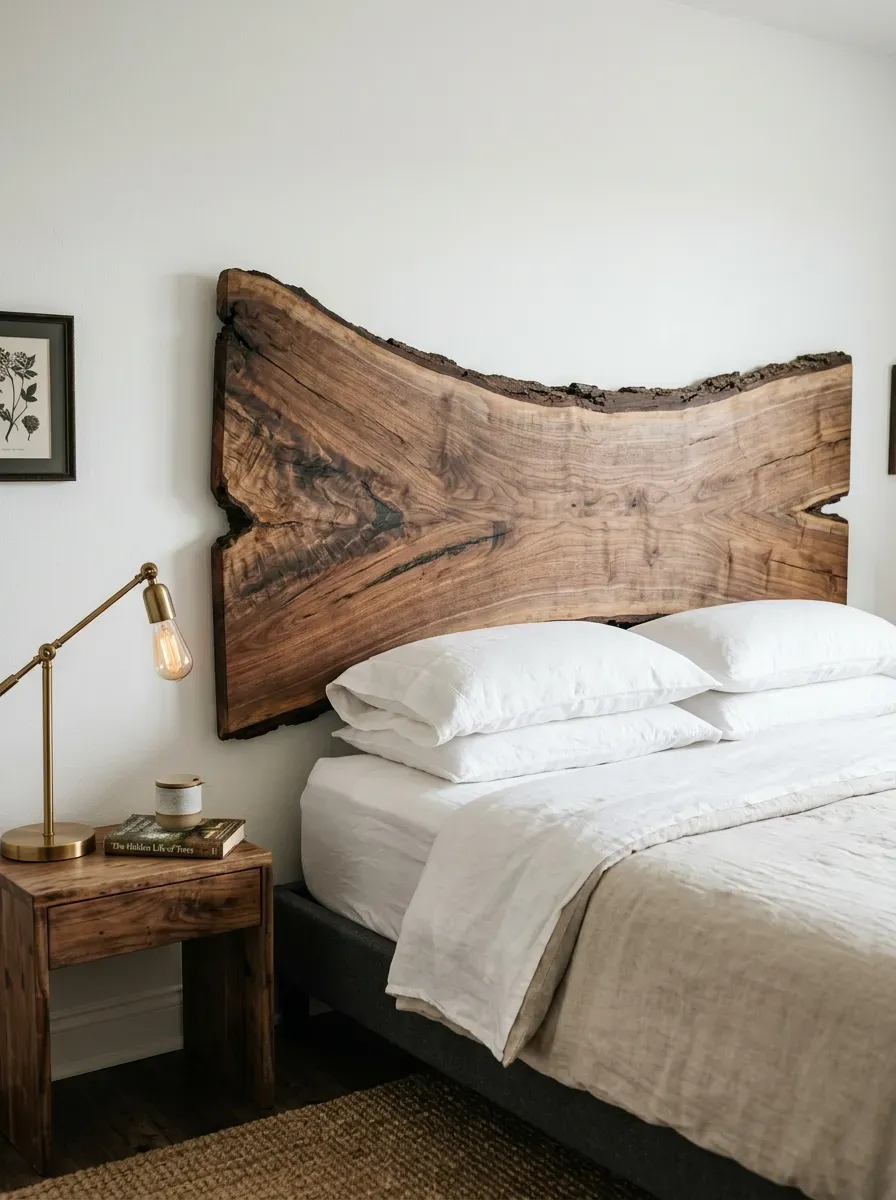
A live edge slab is one of the most dramatic things you can put in a bedroom—and it does not require building a full frame.
The headboard is where all the visual energy goes in this idea. A single live edge walnut or maple slab, mounted flat to the wall, is a piece of art and functional furniture at the same time. The irregular, natural bark edge of the wood is kept intact. Each slab is genuinely unique.
How to mount it: Thick slabs (2–3 inches) can be wall-mounted with heavy-duty picture rail hardware or French cleats attached to the back. For lighter slabs (1–1.5 inches), standard mirror-mount hardware works.
Where to buy slabs: Local sawmills often sell live edge slabs at much lower prices than retail furniture stores. Woodworkers Shoppe, Woodcraft, and local lumber yards are good sources. Unfinished slabs give you control over the finish.
Finishing: Sand to 180 grit, then 220. Apply a food-safe hardwax oil or waterlox finish for a natural, low-sheen look. Avoid high-gloss polyurethane—it makes the wood look plastic.
Cost: A mid-sized walnut slab (6 feet wide, 2 feet tall) runs $200–$600 depending on source. Total project cost with hardware: $300–$700.
The rest of the room should be simple. This headboard does not share attention well.
15. Kids’ Wooden Bunk Bed with Slide
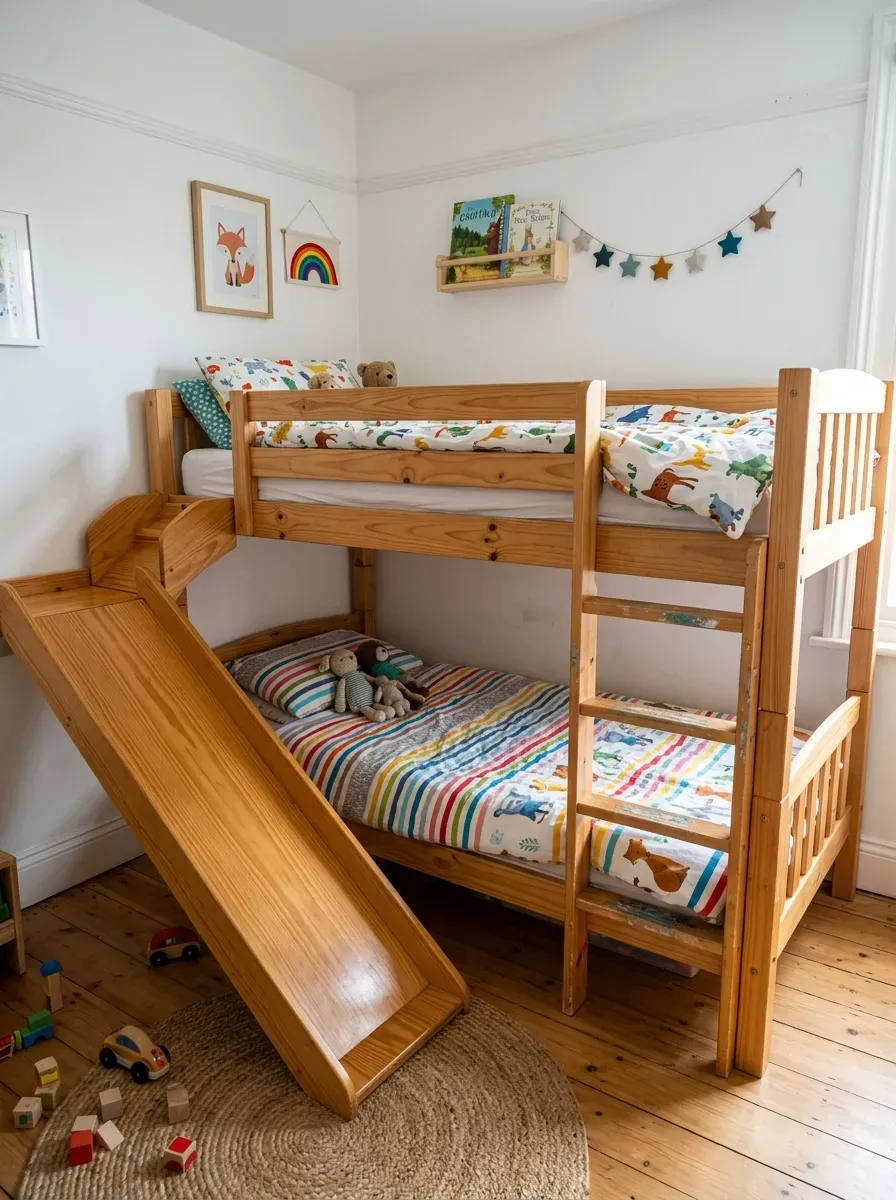
Bunk beds for kids do not have to be flimsy or garish. A solid pine frame with a built-in slide is one of those things children never stop loving.
Pine is the right choice for a kids’ bunk. It is affordable, takes paint well, and if it gets scratched, nicked, or drawn on, those marks can be sanded and repainted without losing the structure.
The slide: A simple curved wooden slide can be attached to the side of the top bunk. The incline should be gentle—a 30 to 35 degree angle. Use smooth hardwood for the slide surface and apply a beeswax finish so kids actually slide rather than bump down slowly.
Safety requirements: Top bunk guardrails on all sides. The opening for ladder access should be no wider than 15 inches. Slat gaps should be no more than 3.5 inches. Follow CPSC guidelines for bunk bed safety—they are easy to find and worth following closely.
DIY vs. buy: Solid pine bunk beds with slides are available from manufacturers like Max & Lily, Maxtrix, and similar companies for $600–$1,500. A DIY build using Ana White plans runs $300–$500 in materials.
Kids remember this bed. Adults who grew up with one still talk about it.
16. Bed Frame with Built-In Bookshelf Headboard
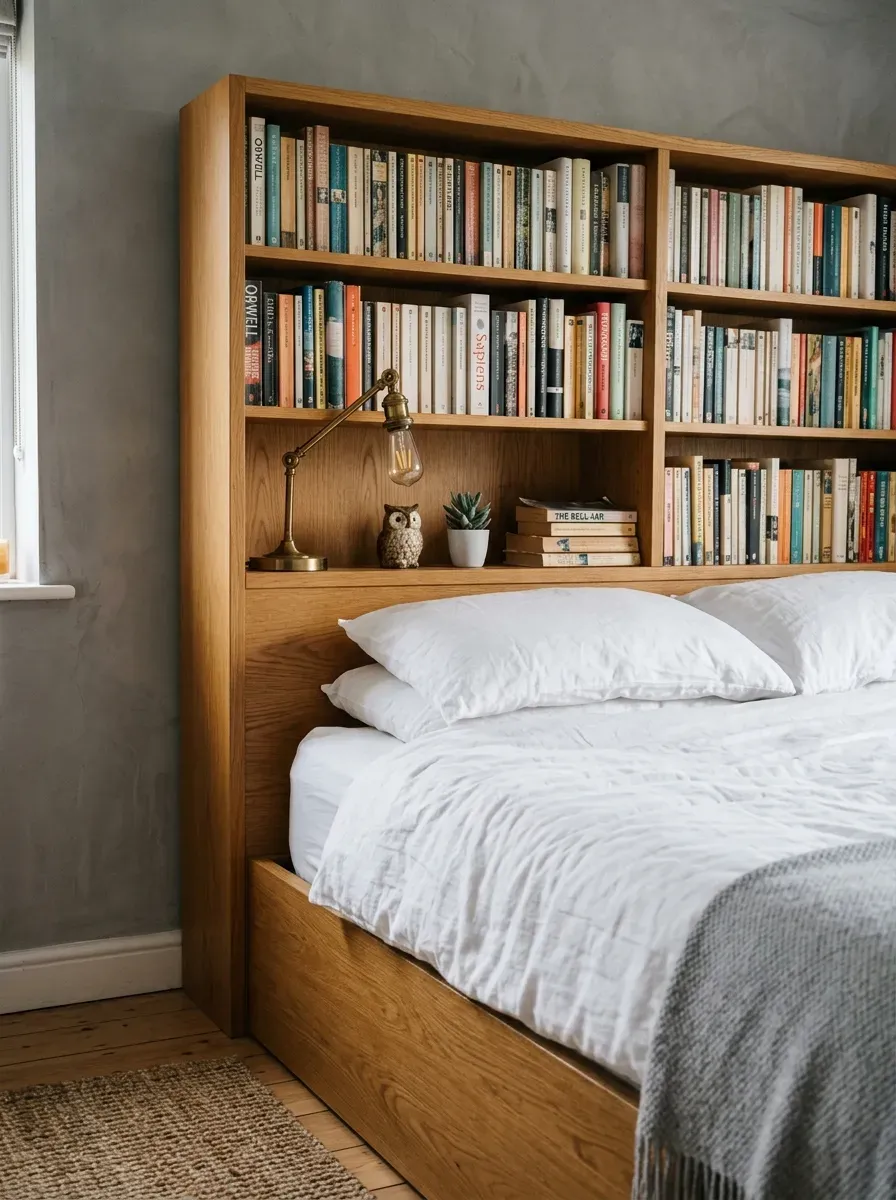
If you have books and a small bedroom, this design solves two problems at once.
A headboard that doubles as a built-in bookshelf puts your nightstand books, reading light, phone charger, and a few objects right where you need them—without requiring any extra furniture in the room.
Structure: The bookshelf headboard is essentially a freestanding shelving unit positioned behind the bed and anchored to the wall for stability. It does not need to attach to the bed frame itself. Depth of 10–12 inches is enough for most books.
DIY build: Use 3/4-inch plywood for shelves and back panel. Add a solid wood face frame in oak or maple for a finished look. The full unit can be built in a weekend for $150–$350 in materials.
What to keep on the shelves: Books, a small reading lamp, a glass of water, a phone charger. Keep it functional. This is not a display shelf—it is a working part of your sleeping space.
Pre-built options: IKEA BRIMNES headboard has two cabinets with doors. The IKEA Kallax bookcase is often repurposed as a headboard when positioned behind a bed.
Tip: Add a thin LED strip to the underside of one of the middle shelves for task lighting that does not require a full bedside lamp.
17. Tatami-Style Wooden Bed Base
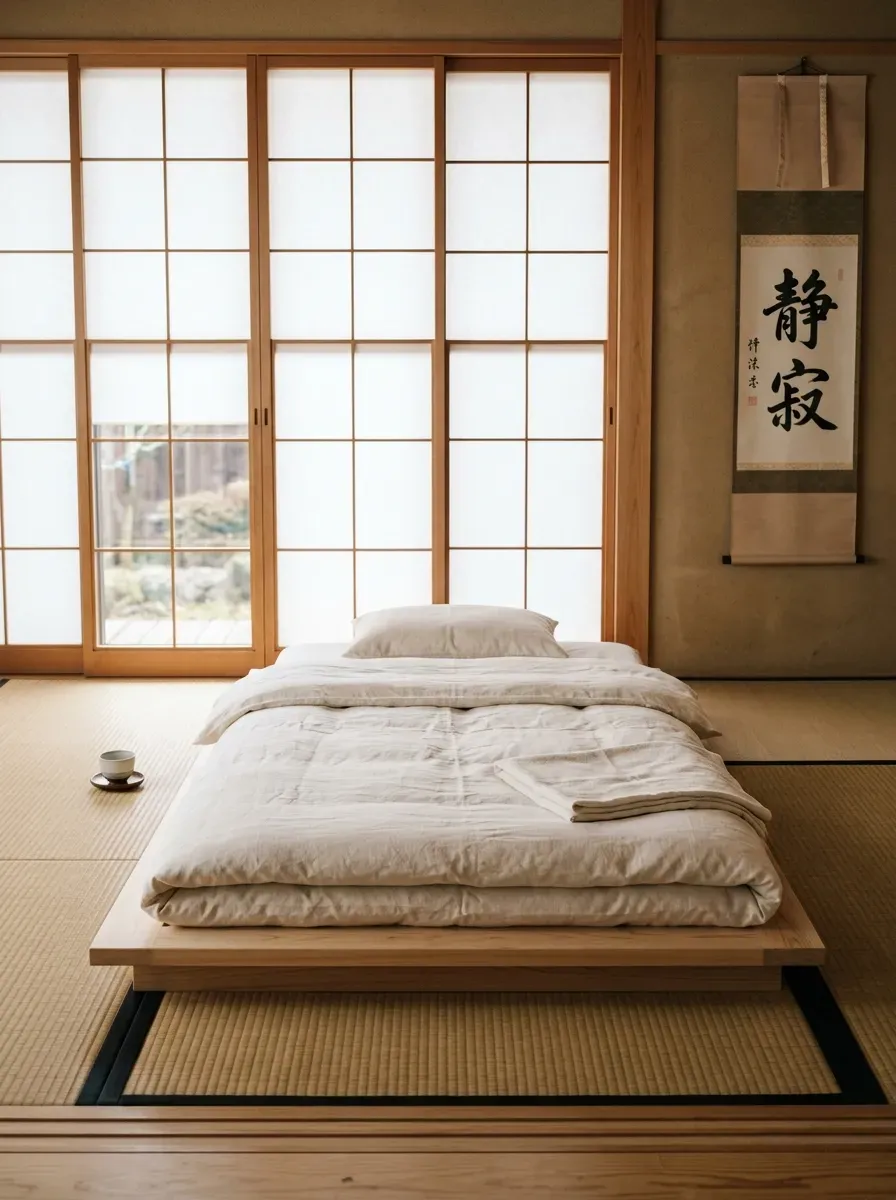
The tatami bed base is one of the most intentional sleeping setups you can create. It is designed around the idea that less structure around the sleeping surface leads to better rest.
Traditional tatami beds in Japan are thick woven mats resting on a low wooden platform—sometimes directly on the floor. The modern version replaces tatami with a low wooden slatted base that allows airflow under the mattress and sits very close to the floor.
Wood choice: Hinoki cypress is the traditional material. It is aromatic, naturally resistant to moisture, and deeply pleasant to sleep near. White oak, cedar, or pine are affordable alternatives with similar properties.
Mattress: A firm futon mattress or a firm memory foam mattress around 6–8 inches thick works best. Very soft mattresses sink too much on a low platform.
DIY: Build a simple rectangular slatted base from cedar 2x4s with 1.5-inch gaps between slats. Keep total height under 6 inches. Finish with raw cedar oil.
Who this works for: Light sleepers who prefer a firm surface, anyone drawn to minimal design, or people who want a genuinely different and considered sleeping environment.
The room around this bed should be as quiet and spare as the bed itself.
18. Rustic Log Bed Frame
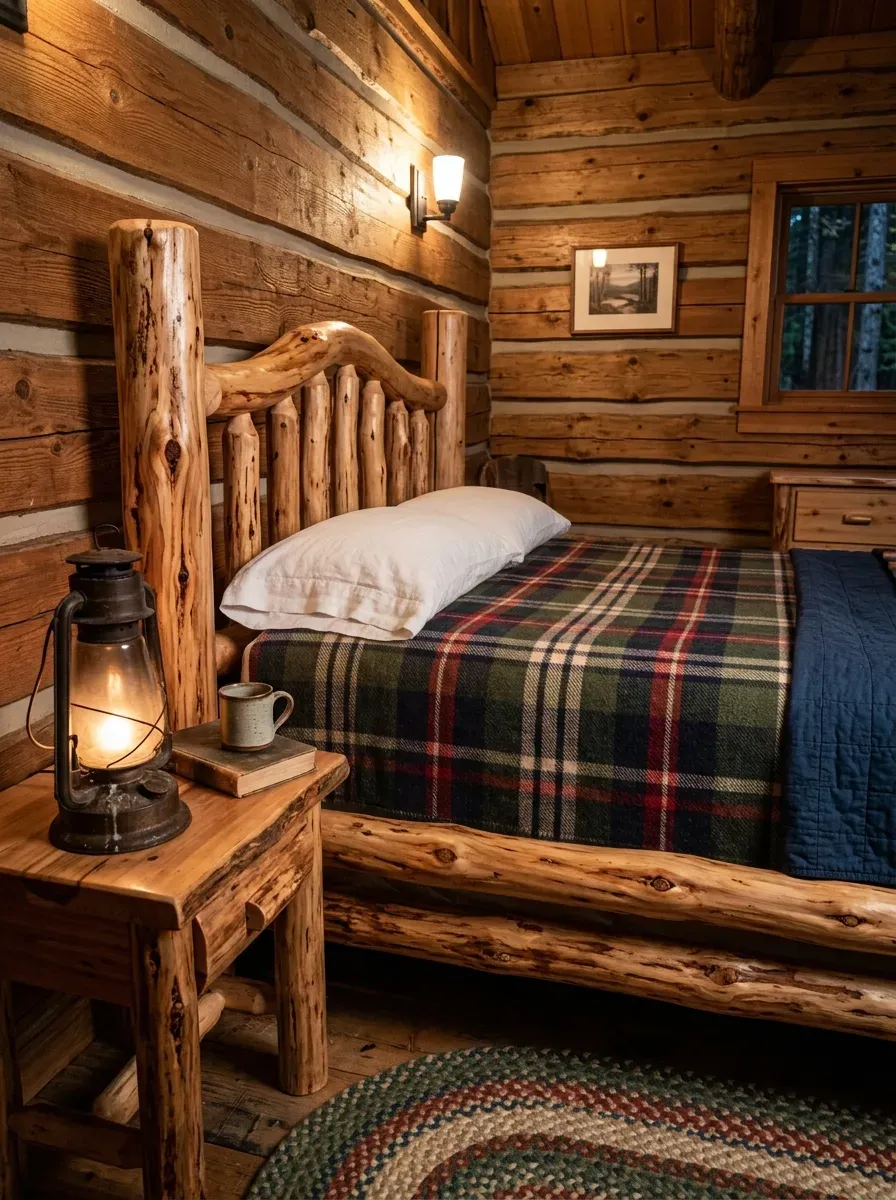
Log beds are the most literal expression of bringing the outside in. The posts are actual logs—usually cedar, pine, or birch—peeled and smoothed but otherwise left as nature made them.
They belong in mountain cabins, but they also work remarkably well in urban apartments when paired with the right elements. The key is keeping everything else in the room clean so the logs do not feel overwhelming.
Types: Peeled log beds preserve the round shape of the log. Half-log beds cut the log in half lengthwise, giving you a flat back face for headboards and rails. Rustic log beds keep some bark intact; polished log beds are fully smooth.
Weight: Real log beds are very heavy. Factor this in if you plan to move them or live in a walk-up apartment. Full queen log beds can weigh 150–250 pounds assembled.
Where to buy: Vermont Furniture Designs, Aspen Log Furniture, and similar Etsy makers offer solid log frames. Prices range from $500–$2,500 depending on wood species and size.
Styling: Plaid wool blankets. Leather pillows. Simple cotton or flannel sheets. Avoid anything too refined or modern—the bed needs an honest, unpretentious room around it.
19. Wooden Bed with Upholstered Panel Headboard
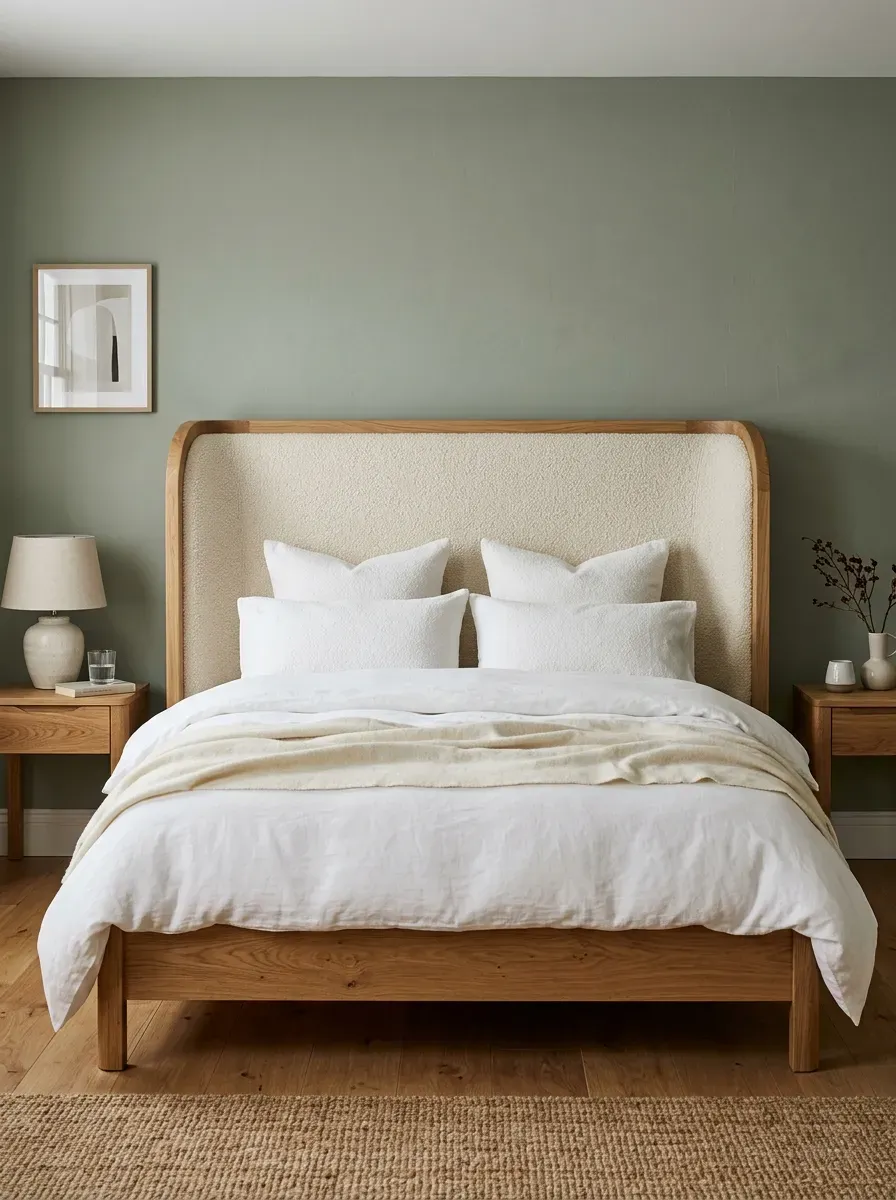
The combination of warm wood and soft upholstery is one of the most effective design pairings in bedroom furniture.
The wood frame gives the bed structure and natural warmth. The upholstered panel adds softness, visual height, and a place to comfortably lean while reading in bed. Together, they hit a middle ground between raw natural and polished luxury.
How it works structurally: The wooden bed frame carries the mattress and slat system. The upholstered headboard panel mounts to the wall independently—or attaches to the frame at the head. This means you can update the headboard without replacing the frame.
DIY headboard: Cut a plywood panel in your preferred shape. Apply 2-inch foam batting. Stretch fabric over and staple to the back. Mount with a French cleat. Cost: $80–$200 depending on fabric.
Fabric choices: Boucle is very popular right now. Linen is timeless. Velvet reads rich and warm. Performance fabric works if you have children or pets.
Frame materials: Solid oak, walnut, or even painted ash all pair well. The frame should have visible wood somewhere—legs, rails, or slats—so the wood element is not lost entirely.
This design can look like a $3,000 purchase even when the total cost was under $700.
20. Farmhouse Wooden Bed with Shiplap Headboard
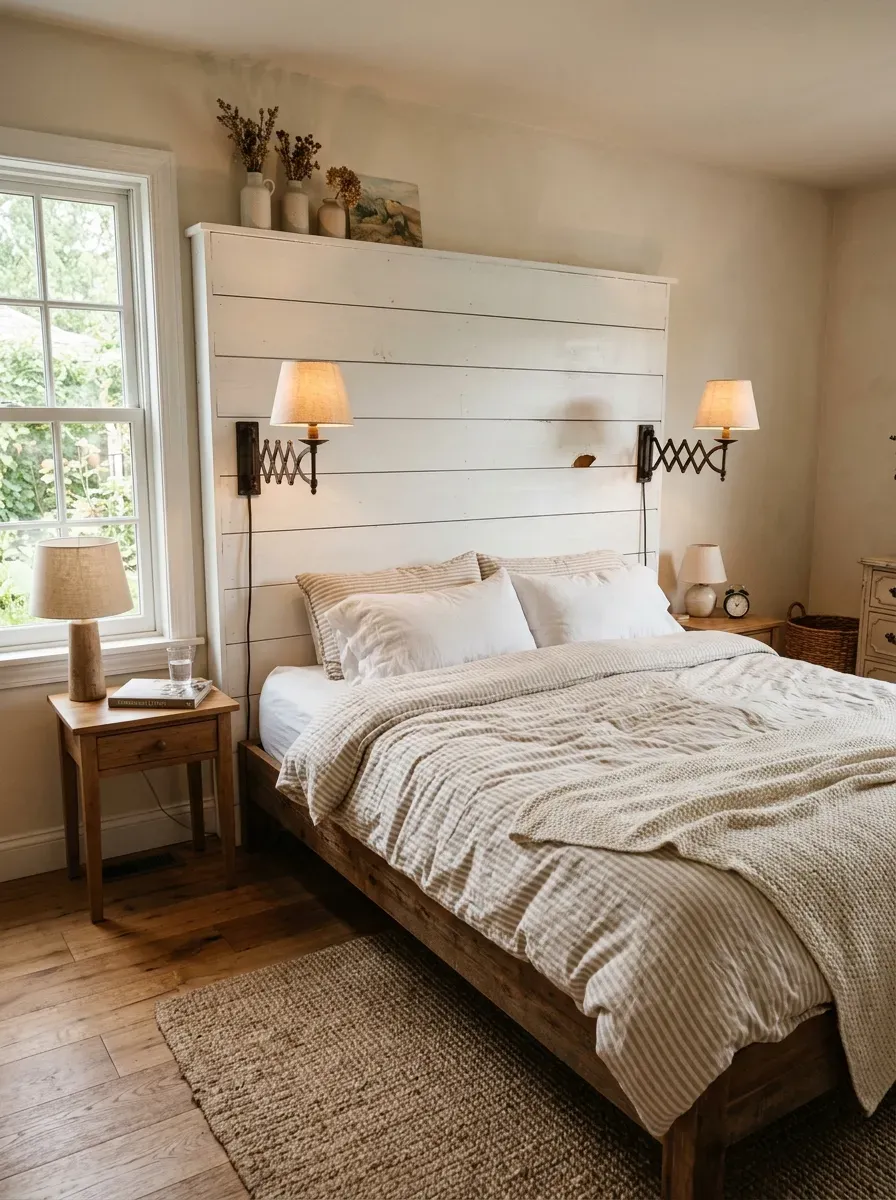
Shiplap is the horizontal plank siding originally used on the outside of barns and houses. Inside a bedroom, it makes one of the most immediately recognizable farmhouse statements there is.
A shiplap headboard is built from horizontal planks with a small gap between each one. Painted white or in a soft grey, the shadow lines between the planks create depth and texture that is subtle but present.
DIY: Cut 1×4 or 1×6 boards to match your headboard width. Mount them horizontally to a plywood backing, leaving a 1/4-inch gap between each row. Use a penny as a consistent spacer. Paint in a flat white latex. Mount with a French cleat.
Add a shelf: A thin shelf across the top of the headboard—made from the same wood, painted the same color—adds function without complexity. Use it for a small lamp, framed photo, or a plant.
Total cost: $80–$200 in materials for a queen-sized headboard.
Styling: Works best with neutral bedding—white, cream, or soft stripes. Add texture through a chunky knit throw and natural fiber pillows. Avoid anything too sleek or modern; the shiplap needs warmth around it to feel right.
21. Wooden Daybed with Trundle
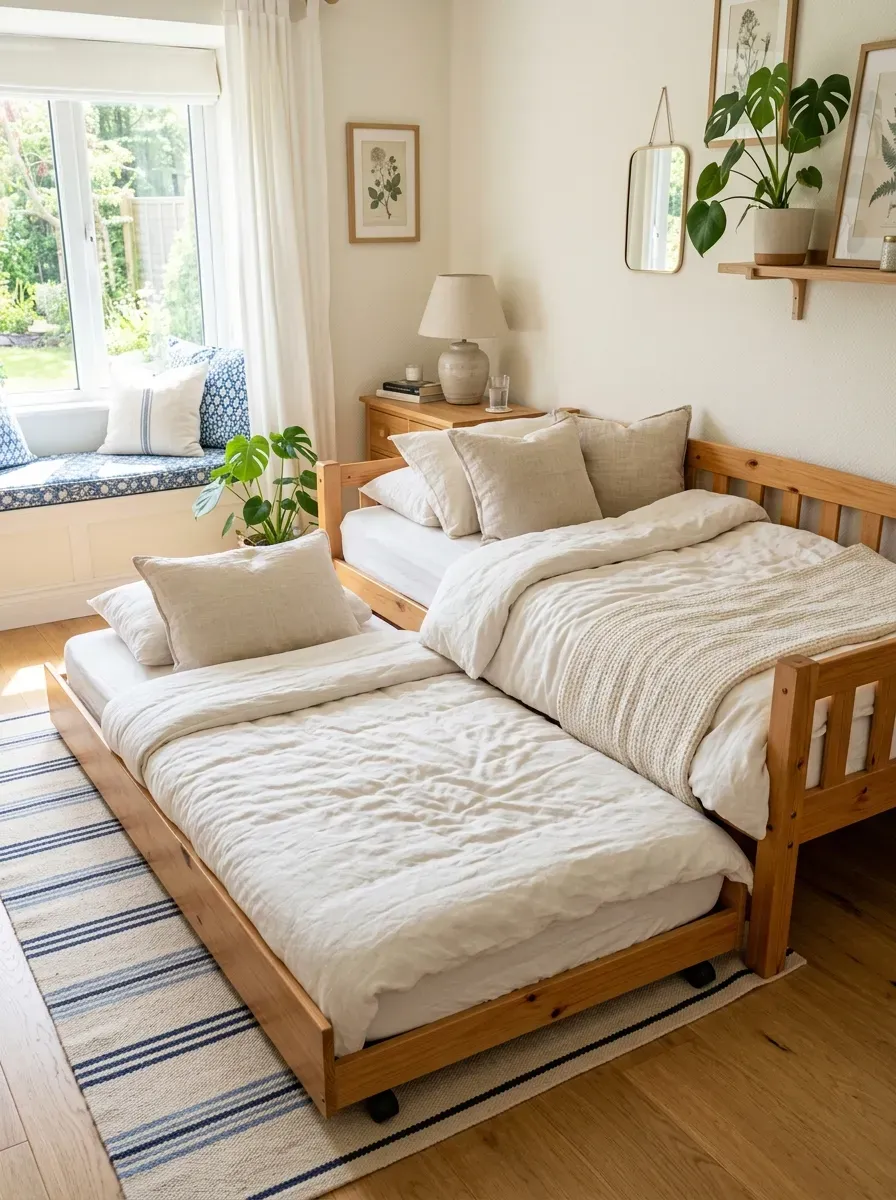
A daybed with a trundle hidden underneath is one of the smartest multi-use furniture choices for a small home.
During the day, it functions as a sofa. At night, or when guests arrive, the trundle slides out to create a second sleeping surface. A wooden daybed does this with far more style than a metal alternative.
Best rooms for this: Guest rooms that double as home offices or reading rooms. Children’s rooms where sleepovers are common. Small apartments where the bedroom also serves as a sitting room.
Frame construction: The daybed frame is a three-sided box—two short ends and a long back rail—open on the fourth side for sitting. The trundle rolls out on caster wheels from a recessed slot below the mattress platform.
Wood options: Pine is the most common and most affordable. Oak or maple are more durable. All can be painted or stained.
DIY option: This is a moderate-difficulty build. A full plan and cut list is available through Ana White for around $250–$400 in materials.
Retail options: Pottery Barn Teen, IKEA (HEMNES daybed), and Wayfair all carry solid wood daybeds with trundles between $400–$900.
The daybed with trundle earns its place in a small home many times over.
22. Teak Outdoor-Style Indoor Bed
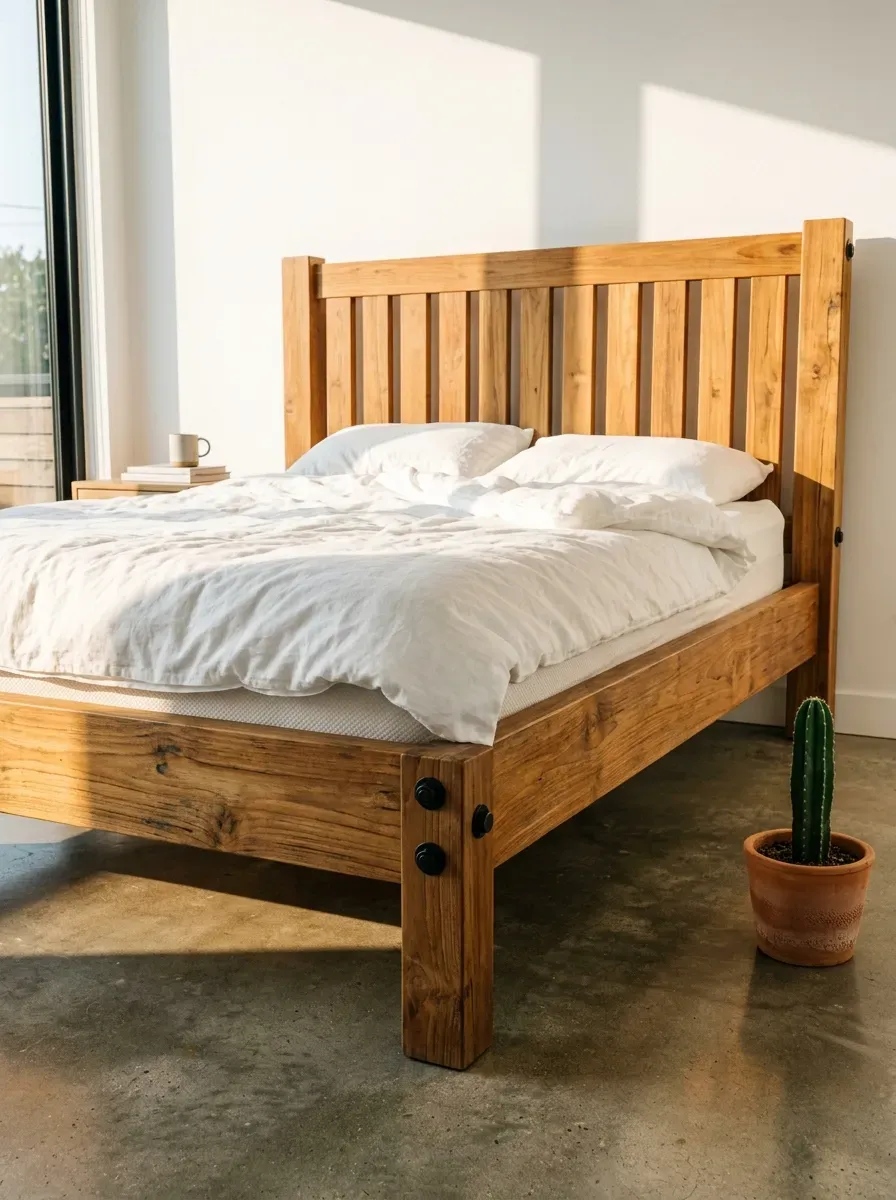
Teak is famous in outdoor furniture because it resists moisture, insects, and decades of weathering. Inside a bedroom, it brings that same robustness—plus a warm golden-honey tone that is unlike any other wood.
Why teak indoors? It ages extremely well. Unlike softer woods that dent, teak develops a patina over time that makes it look even better as it ages. It requires virtually no maintenance—just an occasional wipe-down.
Design style: Teak beds tend toward a clean, architectural look. Thick bolted joints. Slatted headboards. Simple rectangular profiles. This works well in minimalist and industrial bedrooms.
Sourcing teak: Look for responsibly sourced teak—certified by the FSC (Forest Stewardship Council). Plantation teak is environmentally preferable to old-growth teak. Indonesian and Vietnamese manufacturers produce excellent quality plantation teak furniture.
Price: Teak is one of the more expensive wood options. A solid teak queen bed frame runs $900–$2,500 from reputable makers. For a budget alternative, teak-finish acacia is sold at about 40% of the price and is visually very similar.
Styling: Teak works best with white bedding, concrete, metal, and ceramic. It does not need anything elaborate around it.
23. Painted Wooden Bed in Bold Color
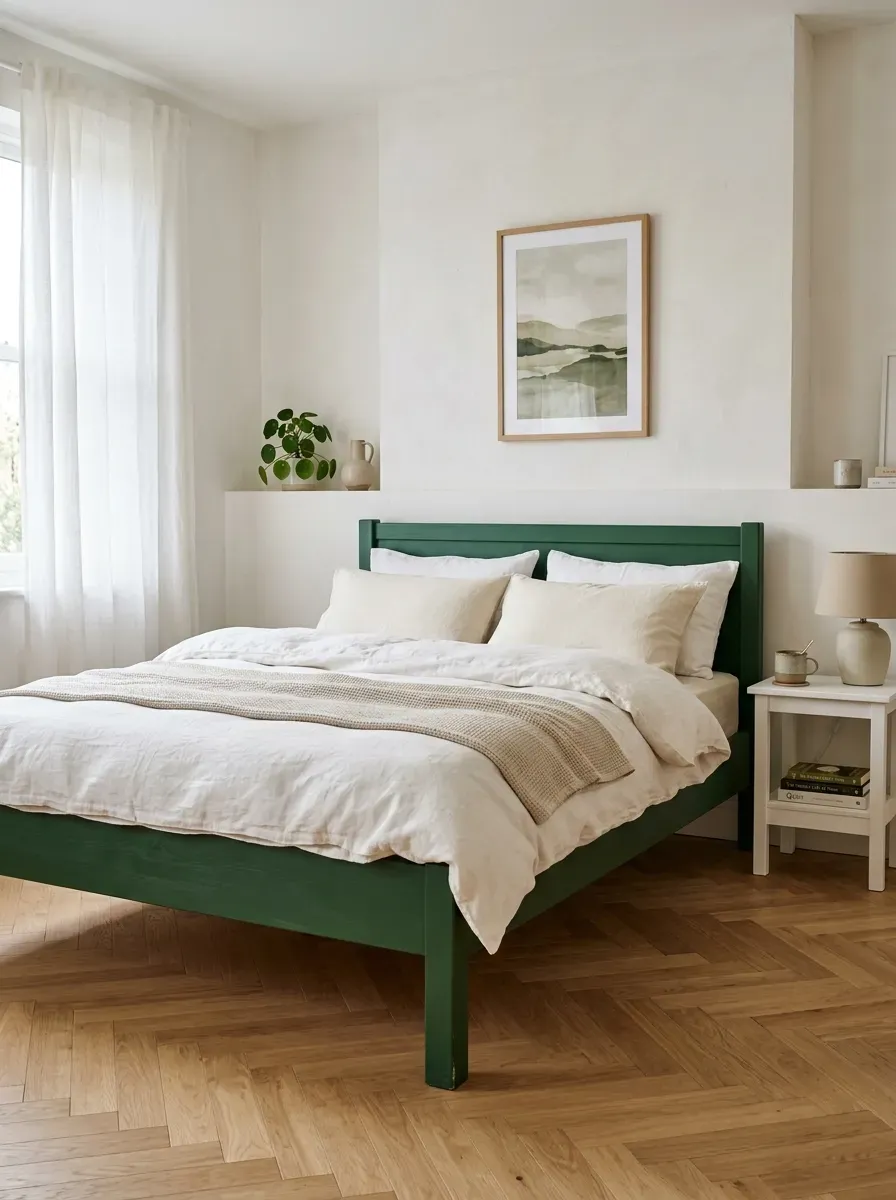
Most wooden beds are finished in natural or stained tones. Painting one in a bold color is one of the easiest ways to make it feel genuinely distinctive.
A deep forest green, terracotta, navy, or burnt sage can completely change the personality of the same basic frame. And because wood takes paint well, this is a very accessible update to make.
Best paint for furniture: Use a hard-wearing latex satin or semi-gloss in a furniture-grade formulation. Brands like Benjamin Moore Advance, Behr Alkyd, or Rust-Oleum Cabinet paint are all built for this. Prep is the most important step—sand, prime, sand again before your final coats.
Color ideas: Forest green on walnut tone legs is a strong combination. Terracotta pairs well with natural linen and rattan. Navy works beautifully against white walls with brass hardware.
What to paint: You can paint just the headboard and leave the legs natural. Or paint the entire frame. Painting just the inside-facing surfaces of the frame is a subtle option that adds color without full commitment.
Cost of a paint update: $30–$80 in supplies to repaint a full bed frame. This is one of the highest-impact, lowest-cost changes you can make to a bedroom.
24. Wooden Trundle Bed for Small Bedrooms
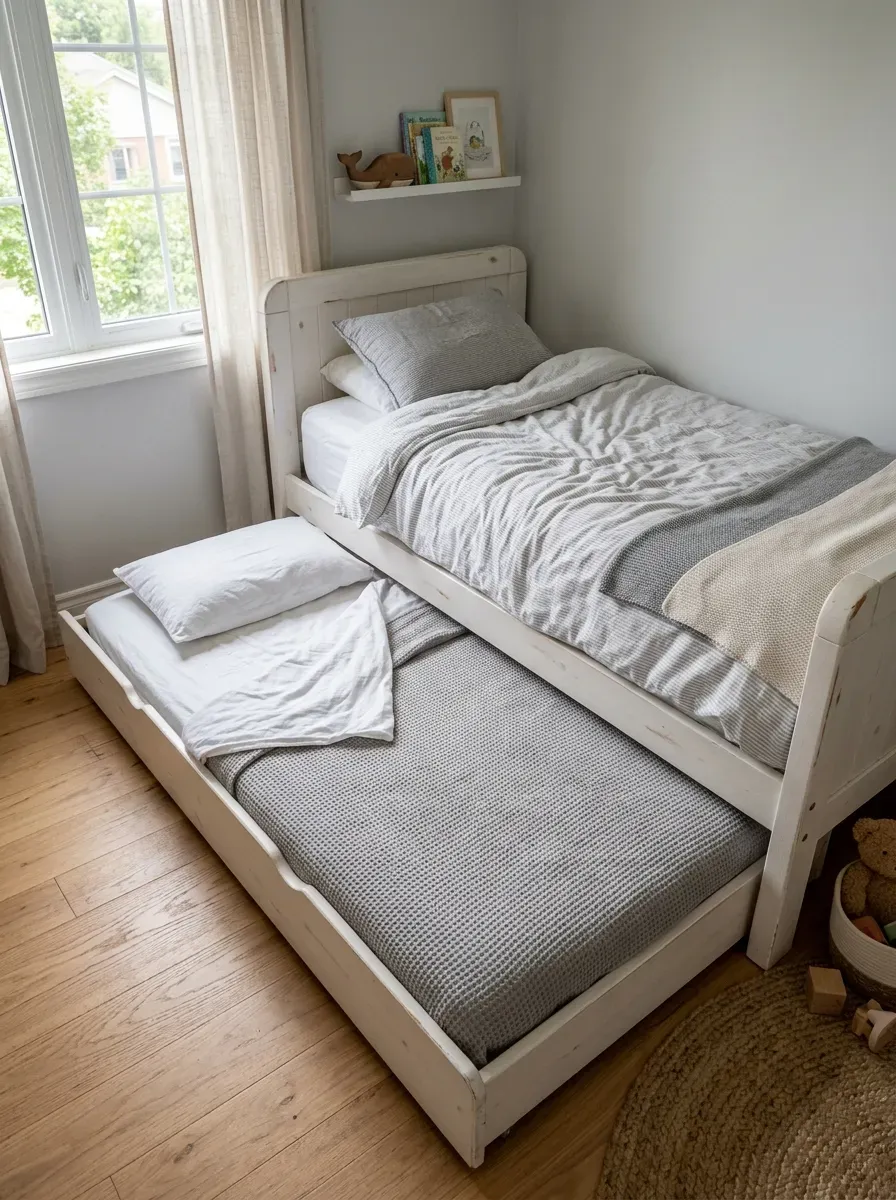
A trundle bed is specifically designed for the limitation of small spaces—and a wooden frame makes it feel like real furniture rather than an emergency solution.
The trundle slides underneath the main bed and pulls out to a full sleeping surface when needed. In the morning, it rolls back under and disappears. Two beds in the footprint of one.
Best application: Children’s rooms with limited floor area. Spare rooms that need occasional guest capacity. Teen bedrooms where friends frequently sleep over.
Key measurement: Measure the space under your current bed before assuming a trundle will fit. The trundle mattress is typically 8–10 inches thick on its frame. You need at least 12–14 inches of clearance under the main bed.
DIY option: Building a trundle frame is one of the more satisfying woodworking projects—it is essentially a box on casters. Pine, poplar, or MDF all work. The main challenge is getting the casters right—use locking casters so the trundle does not roll during the night.
Pre-built options: IKEA UTÅKER is a stacking pine trundle bed for around $150. It works as two separate beds or stacked. Solid wood versions from other brands start around $350.
25. Wooden Floating Bed Frame
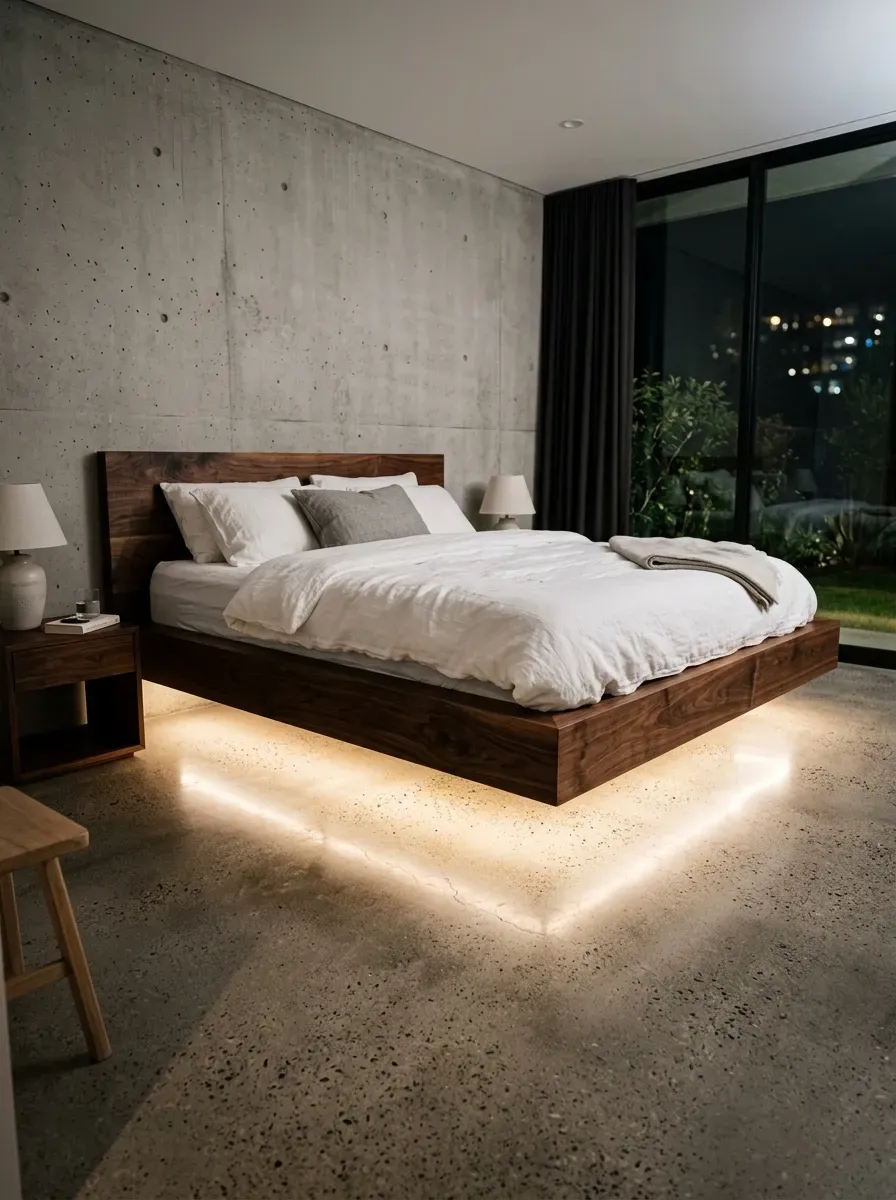
A floating bed creates one of the most striking visual effects in any bedroom—the platform appears to hover above the floor with no visible legs.
The “floating” effect is achieved by recessing the legs or support structure so they are not visible from the sides. In some designs, the base is a solid recessed plinth. In others, the platform is cantilevered from a wall-mounted support. LED strip lighting underneath the frame accentuates the floating illusion dramatically.
LED underlighting: Strip LEDs mounted to the underside perimeter of the bed frame and aimed down at the floor create a soft glow that defines the gap between the frame and the floor. Warm white strips (2700K–3000K) are the most flattering. Cost: $20–$50 for the full perimeter of a queen frame.
Structure: The bed platform needs robust internal support since the legs are hidden or minimal. 3/4-inch plywood framing with a solid wood face is the standard approach. The recessed foot must be placed further in from the edge—usually 6–8 inches—to create the visual clearance.
DIY difficulty: Moderate to advanced. The joinery is not complex, but getting the angles right so the frame looks level from all sides requires careful planning.
Pre-built: Article, CB2, and West Elm carry floating-style platform beds. Prices start around $700 for queen.
The floating bed works best on hard flooring where the gap is clearly visible. On carpet, the effect is significantly reduced.
Conclusion
Wood is the one material that improves almost any bedroom it enters. It adds warmth when a room feels cold, texture when surfaces feel flat, and permanence when everything else feels temporary.
The 25 ideas in this guide cover a wide range of budgets, styles, and skill levels. Some—like a pallet frame or a shiplap headboard—cost under $200 and can be done in a weekend. Others—like a live edge slab headboard or a teak platform—are deliberate investments that will outlast most other things in your home.
The most important step is to pick one direction and commit to it. A reclaimed plank bed in a spare white room. A floating walnut frame with LED underlighting. A whitewashed pine daybed in a bright guest space.
Each of these ideas works when it is executed with intention. Choose the one that fits how you actually live, what your room genuinely needs, and what you can realistically afford. Then do it properly. A bedroom that took real thought and real effort is one you will want to spend time in every day.

David is the home decor enthusiast behind HomeLushly. He shares practical, budget-friendly ideas for bedrooms, living rooms and seasonal decorating — from colour combinations that actually work to small-space styling tricks that make a room feel bigger. Every guide on HomeLushly is built around real photos and hands-on research, to help you make your home feel warm, personal and beautifully put together.
