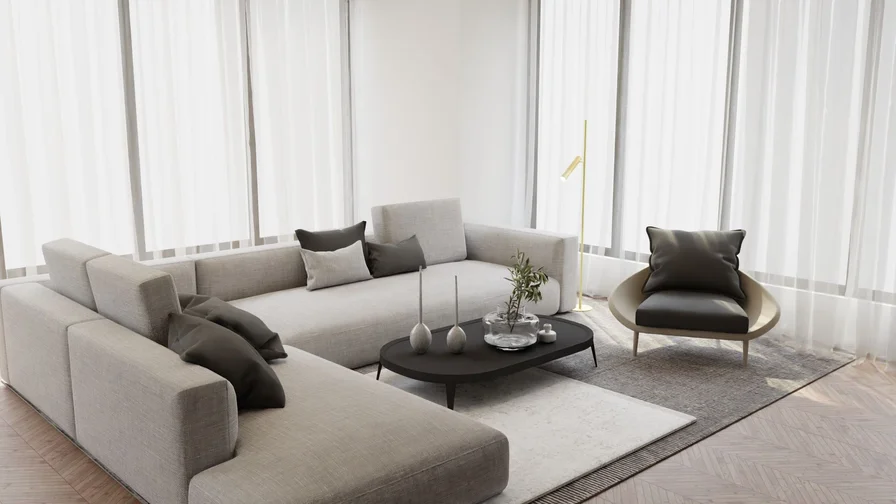
A white living room is the ultimate fresh start.
White reflects every scrap of daylight, makes small rooms feel twice their size, and gives you a blank canvas that works with literally any accent you will ever love. But a great white room is never just white paint and white furniture — it is layers of ivory, cream, and chalk, mixed with texture, warmed with wood, and lit like a gallery. That layering is what separates a crisp, elegant white room from a cold, clinical one.
The rules of white are simple but non-negotiable.
First, mix your whites deliberately: warm whites on walls in north-facing rooms, cooler whites where the sun blazes. Second, texture is everything — boucle, linen, wool, rattan, and marble keep white from feeling flat. Third, every white room needs contrast: black frames, green plants, natural wood, or brass details give the eye somewhere to land. And fourth, lighting must be warm — cool bulbs turn white walls blue-gray and kill the glow.
This guide gathers 26 elegant white living room ideas that brighten every space, each with practical tips you can copy in your own home.
From cloud-like sofas and veined marble tables to lush plant corners, sculptural lamps, and clever rug layering, you will find a bright white scheme for every style — and proof that white is the hardest-working color in decorating.
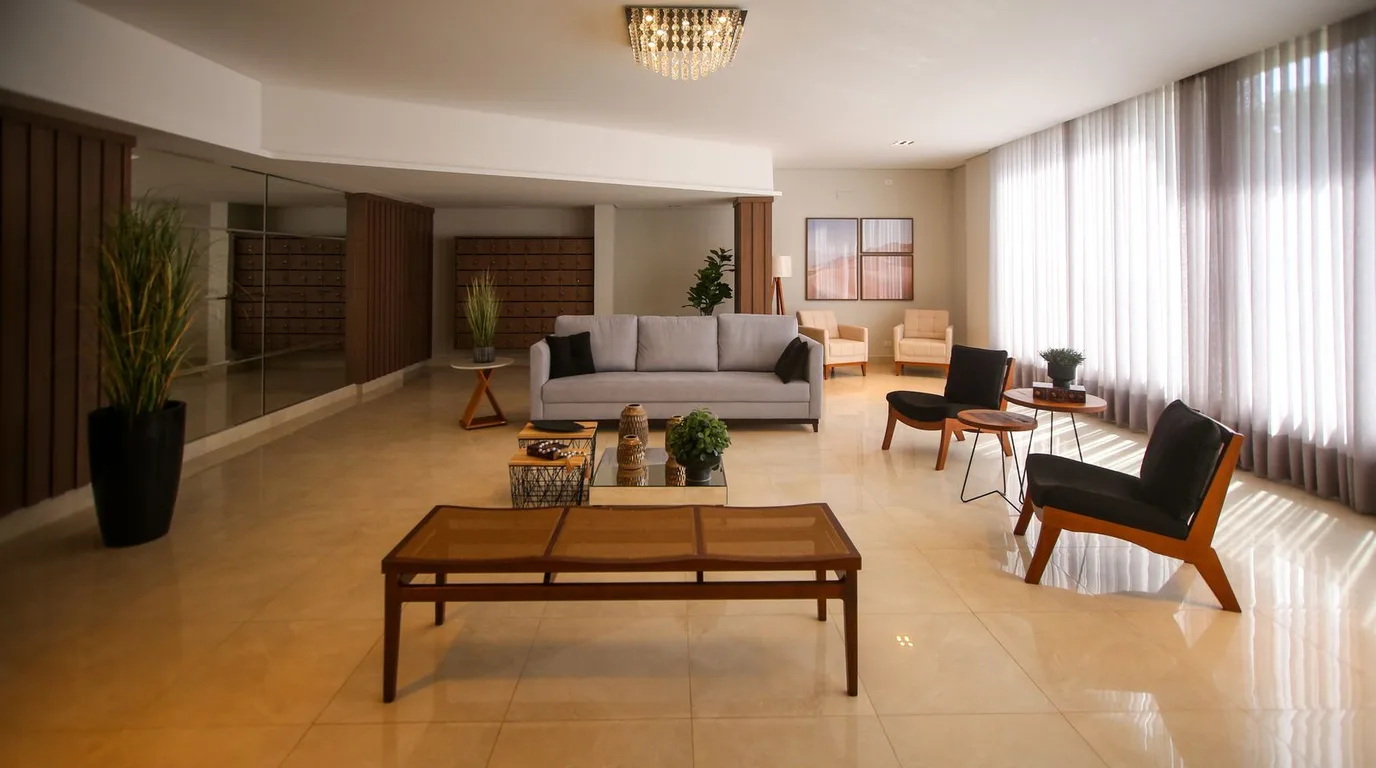
1. Let Indoor Plants Pop Against White
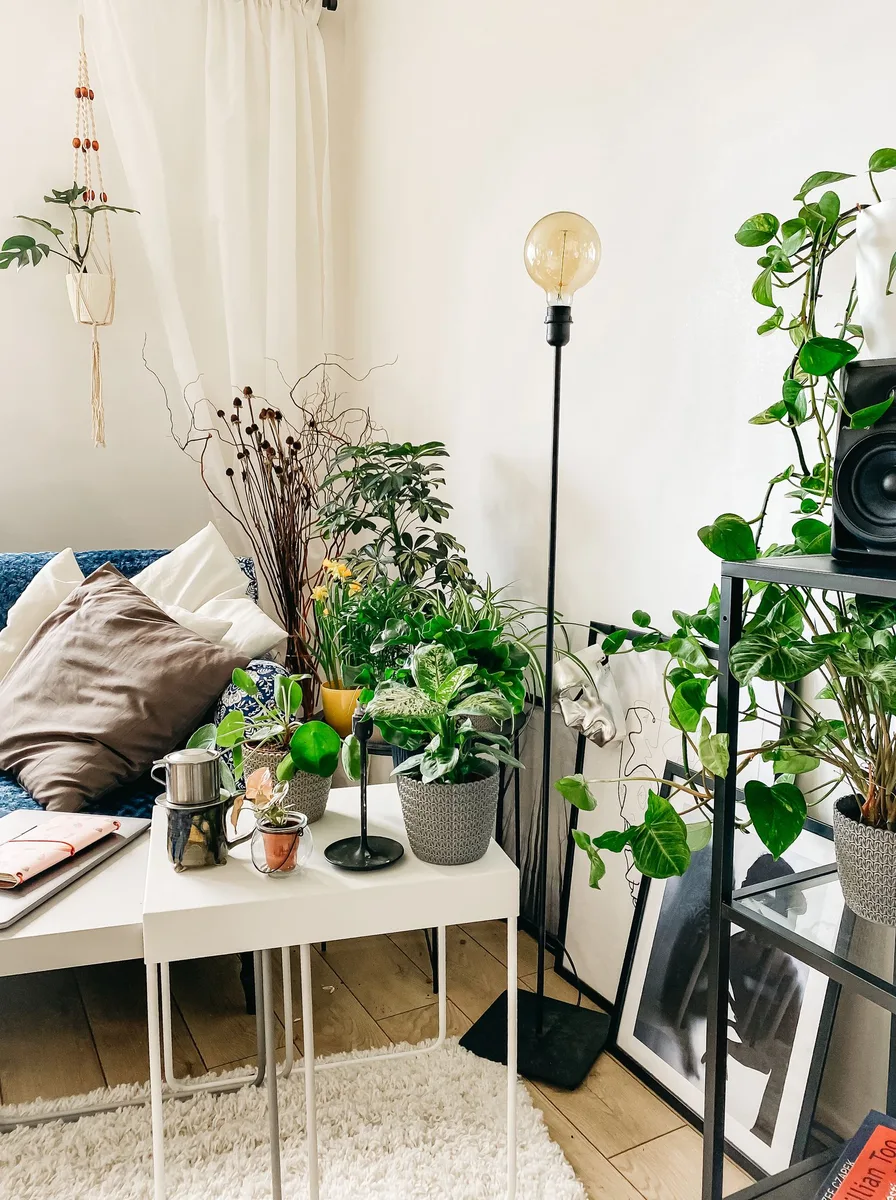
Green against white is decorating’s most reliable contrast: every leaf looks more vivid, every white surface looks crisper. Start with one statement plant — a fiddle-leaf fig, a bird of paradise, or an olive tree — placed where daylight hits it, and watch it become the room’s living sculpture. In an all-white scheme, plants do the job that color does elsewhere: they give the eye movement, life, and a focal point.
Choose white or stone pots so the plants read as part of the scheme rather than clutter. One large plant beats five small ones in a white room — scale matters when the backdrop is minimal. If you lack a green thumb, a high-quality faux tree in a beautiful planter fools the eye and needs only occasional dusting; in bright white light, even experts look twice.
2. Choose a Cloud-Like White Sofa
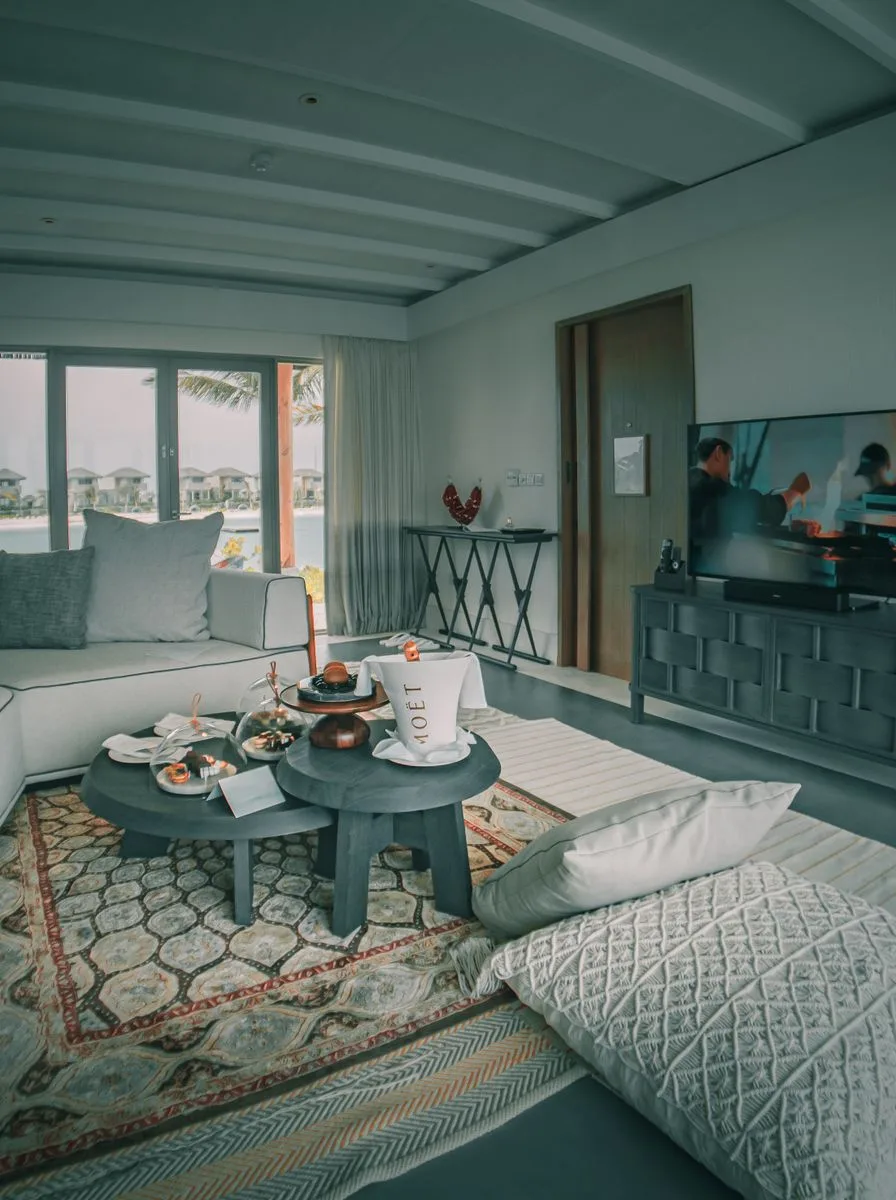
The cloud sofa — deep seats, low back, feather-wrapped cushions — was made for white rooms. Its soft, sink-in silhouette keeps an all-white scheme feeling relaxed rather than formal, and the generous proportions invite the lounging that a bright, sunny room deserves. In white, the cloud sofa reads as pure comfort: no sharp lines, no visual noise, just an invitation to sit.
White demands practicality, so choose performance fabric with built-in stain resistance and removable, washable covers — non-negotiable with a pale sofa. Feather cushions need regular plumping to keep their cloud shape; synthetic-down alternatives hold form longer with less fuss. Keep the sofa’s base simple (no skirt) so the floor shows beneath and the room stays airy.
3. Hang Oversized White-Framed Art
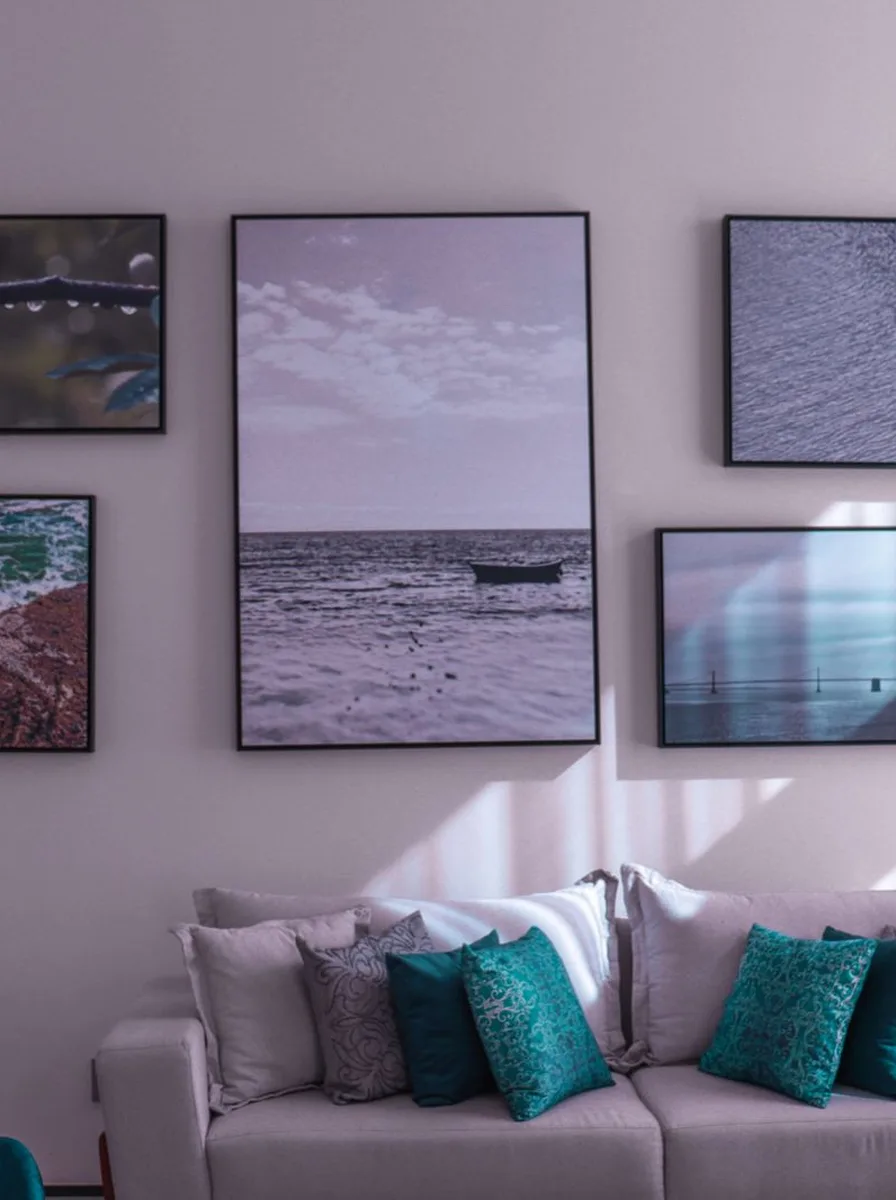
In a white room, white-framed art is the sophisticated choice: the frames melt into the walls while the artwork itself provides the interest. Go oversized — one large abstract or photographic print above the sofa — because scale is what gives a quiet palette its confidence. The art becomes a window into another world while the room around it stays serene.
Choose art with soft tonal variation (misty landscapes, abstract washes, architectural photography) rather than high-contrast pieces, which can jar against the calm. Size the piece to about two-thirds the sofa’s width and hang the center at eye level. A wide white mat inside the frame adds gallery polish and lets the artwork breathe.
4. Build a Green Corner in a White Room
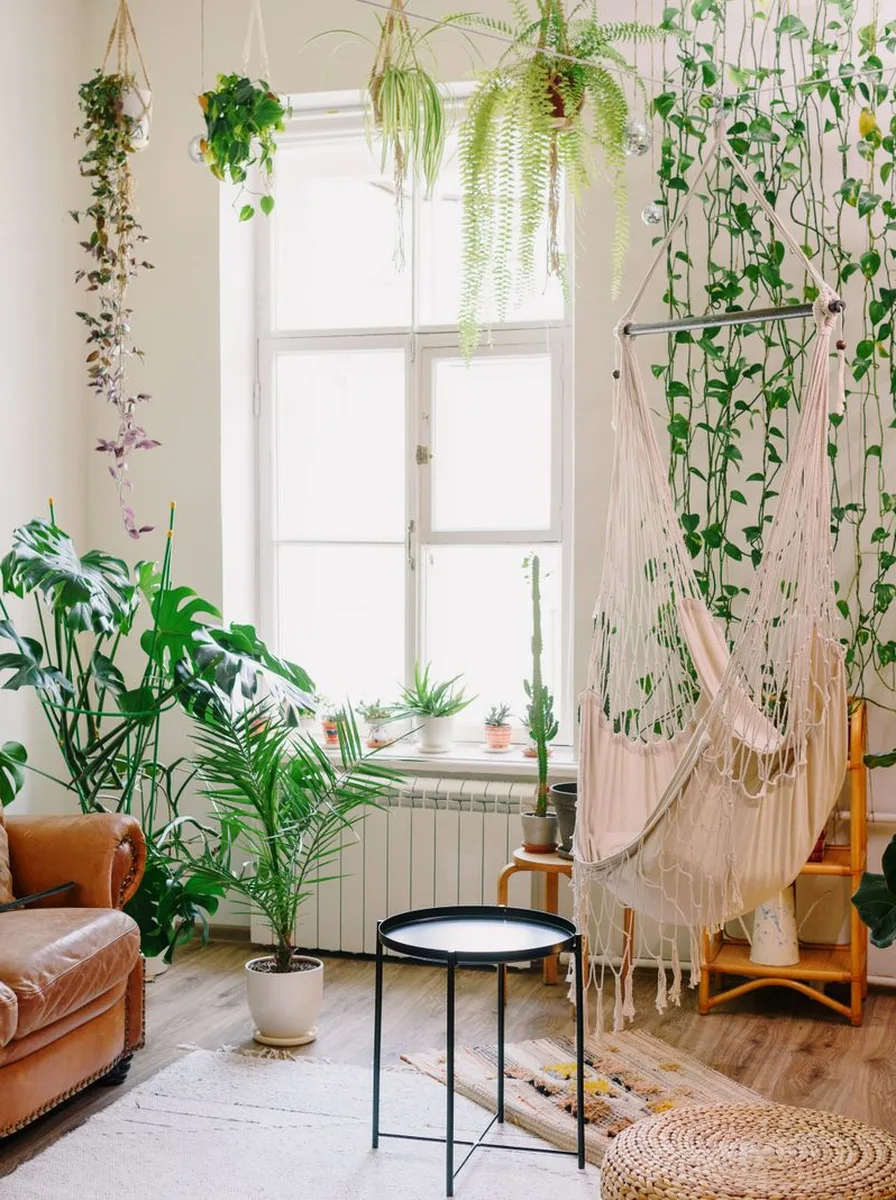
Dedicate one corner to greenery and it becomes the white room’s beating heart. Cluster plants at three heights — a tall tree behind, mid-size plants in the middle, a trailing pothos on a stand in front — and the corner reads as a lush installation against the white walls. The layered greens add the depth and shadow that white rooms need to avoid feeling flat.
Keep all pots in one material family (white ceramic, woven seagrass, or terracotta) for a curated look. Position the cluster near a window so the plants thrive and their shadows dance on the white wall — free, ever-changing art. Water on a schedule and wipe leaves monthly; in a white room, dusty leaves show.
5. Style a Plant Shelf Above the Sofa
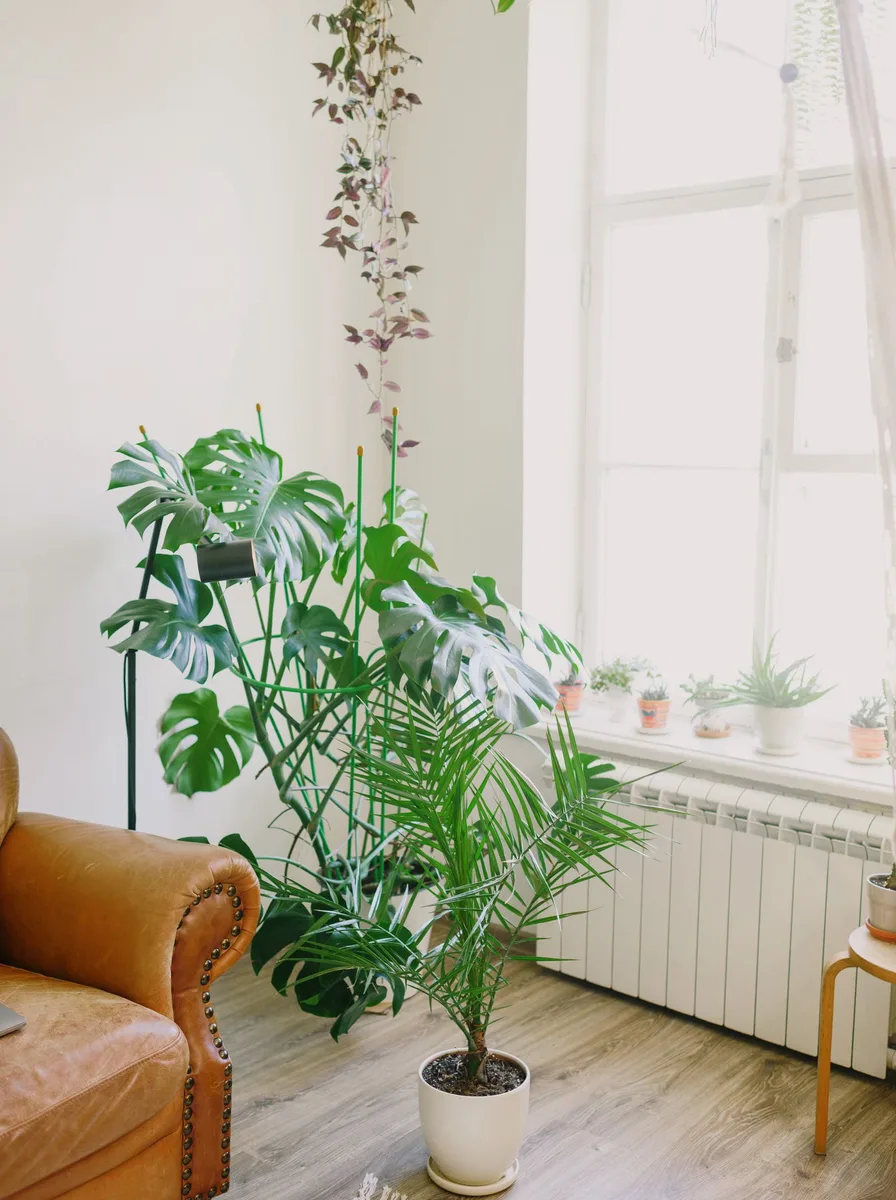
A floating shelf above the sofa, styled with trailing plants and small white ceramics, turns dead wall space into a living display. The greenery softens the hard line of the shelf, the trailing vines add movement, and the whole arrangement brings the white wall to life without a single nail-heavy gallery wall. It is renter-friendly, affordable, and endlessly restylable.
Mount the shelf 12 to 18 inches above the sofa back and keep styling to the rule of three: plants, ceramics, and one stack of books. Choose trailing plants (pothos, philodendron, string of pearls) that will cascade over the edge — the drape is the whole effect. Use a sturdy bracket rated for the weight; wet soil is heavier than it looks.
6. Keep Lines Classic and Bright
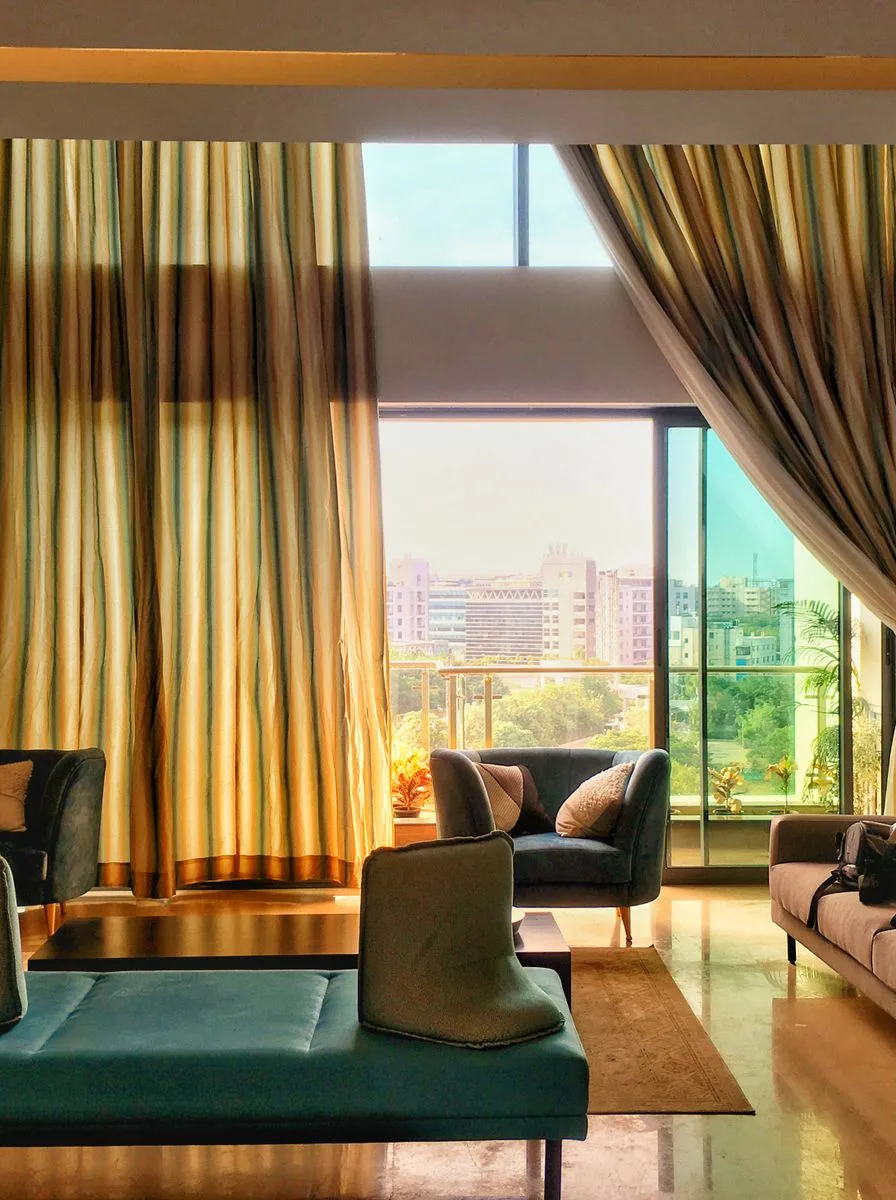
Classic silhouettes — a rolled-arm sofa, a tailored armchair, a simple wooden coffee table — in fresh white never date. This is the bright room for people who want timeless rather than trendy: familiar shapes, honest materials, and a palette of white, cream, and natural wood that will look right in any decade. The elegance comes from proportion and quality, not novelty.
Invest in the pieces you touch daily: a well-made sofa frame, a solid wood table. Keep patterns classic too — ticking stripe, subtle check, or plain — in white and natural tones. Classic white rooms age gracefully because there is nothing fashionable to fall out of fashion; refresh with new cushions every few years and the room feels new again.
7. Brighten a Reading Nook with Greenery
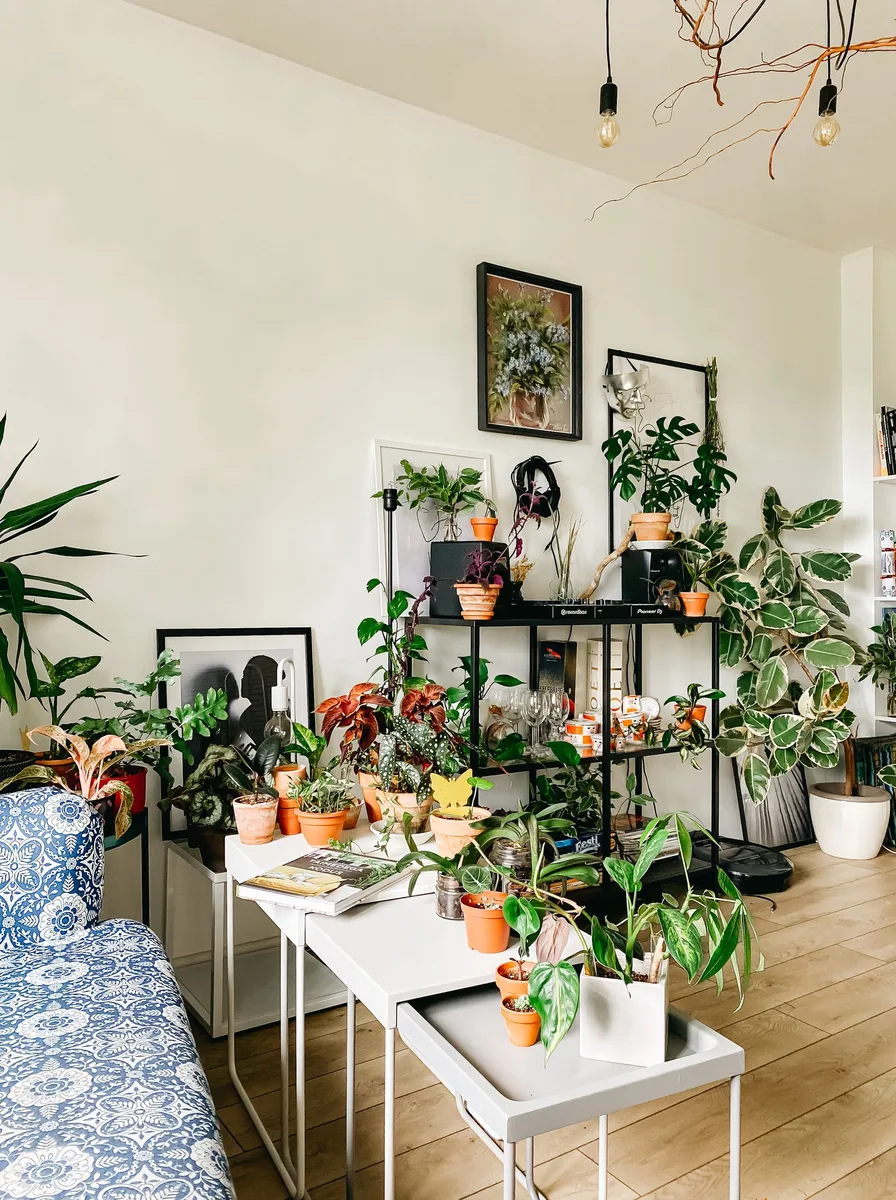
Carve a reading nook out of your white living room with one comfortable armchair, a small side table, and a plant for company. The white backdrop makes the nook feel sunlit even on dull days, and the greenery gives your eyes a restful focal point between pages. Position it by the window for natural reading light and the gentle distraction of the outdoors.
Choose an armchair in a warm white or cream boucle so the nook feels enveloping rather than stark. Add a floor lamp with a warm bulb for evening reading — overhead light creates shadows on the page. A small plant on the side table (a fern or a pilea) completes the nook; keep it compact so books and tea still fit.
8. Pair White Upholstery with a Marble Table
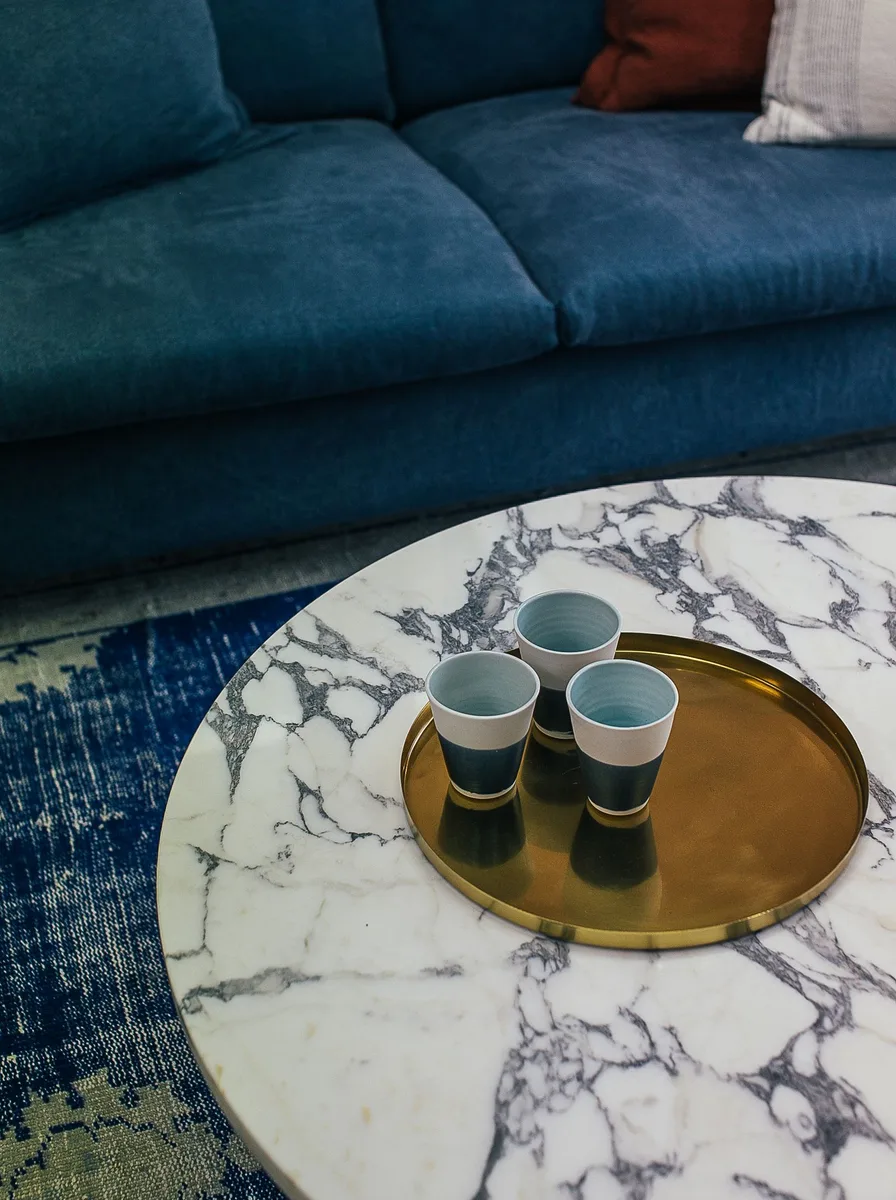
White upholstery plus a marble coffee table is the bright room’s power couple: soft meets hard, warm meets cool, matte meets veined. The marble’s natural pattern gives the eye something to explore in an otherwise calm palette, and its cool surface balances all the soft textiles. Choose a honed finish for a contemporary matte look that hides fingerprints better than polished.
Keep the marble top mostly clear — a low bowl, one book stack, a small tray — so the veining shows. Use coasters religiously; marble etches with citrus and wine. If solid marble is beyond budget, marble-look porcelain or a marble-effect laminate delivers the same bright, veined calm. Pair with brass or black metal legs to add a contrasting detail.
9. Soften White Floors with a Plush Rug
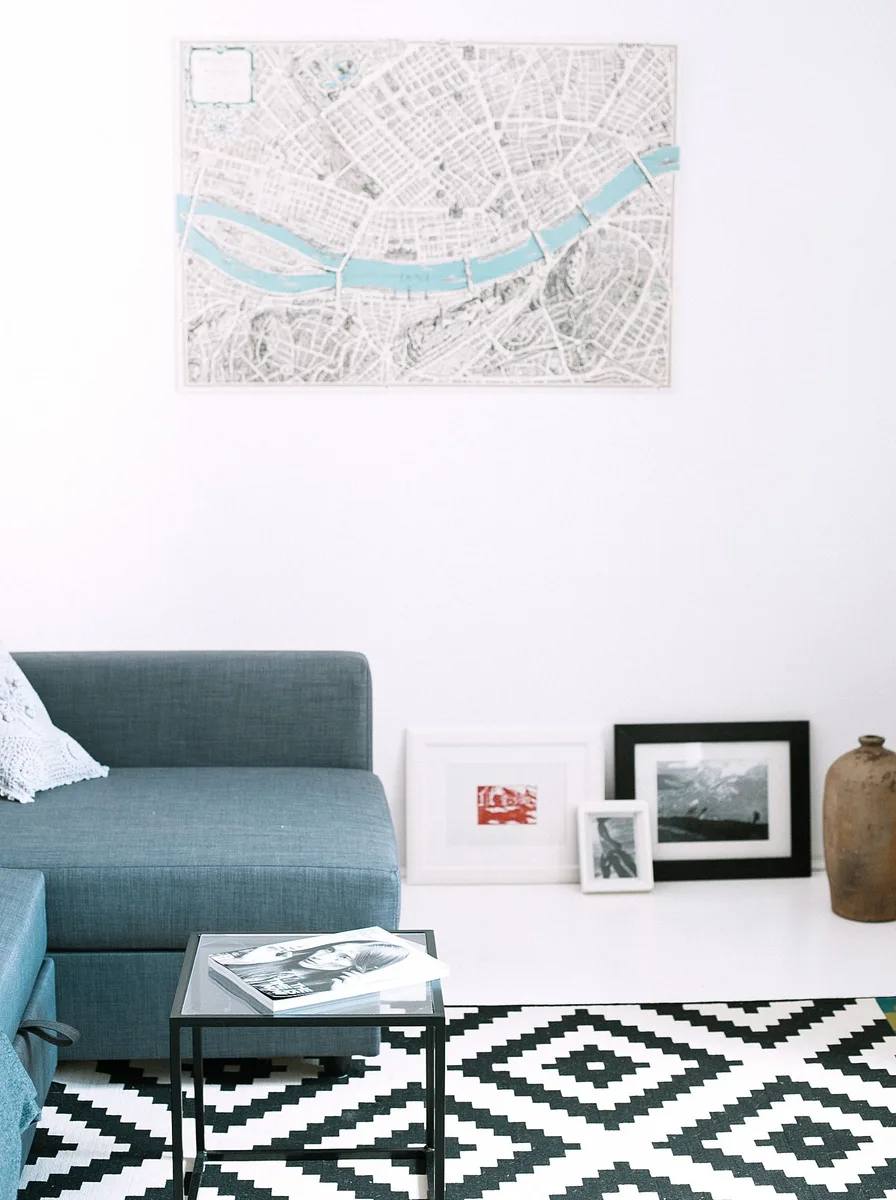
White or pale floors can feel hard underfoot and under-eye; a plush rug fixes both. A deep-pile rug in ivory or cream adds the softness a bright room needs, muffles sound (white rooms with hard floors echo), and defines the seating zone. The texture contrast — shaggy rug against smooth floor — is what keeps an all-white scheme from feeling flat.
Go large: the rug should extend well beyond the seating group, with all front legs on it. In white, choose rugs with subtle tone variation rather than stark solid white, which shows every mark. A quality rug pad adds extra cushioning and prevents slipping. Shake out or vacuum weekly — white rugs reward maintenance with lasting brightness.
10. Warm White with Natural Wood Tones
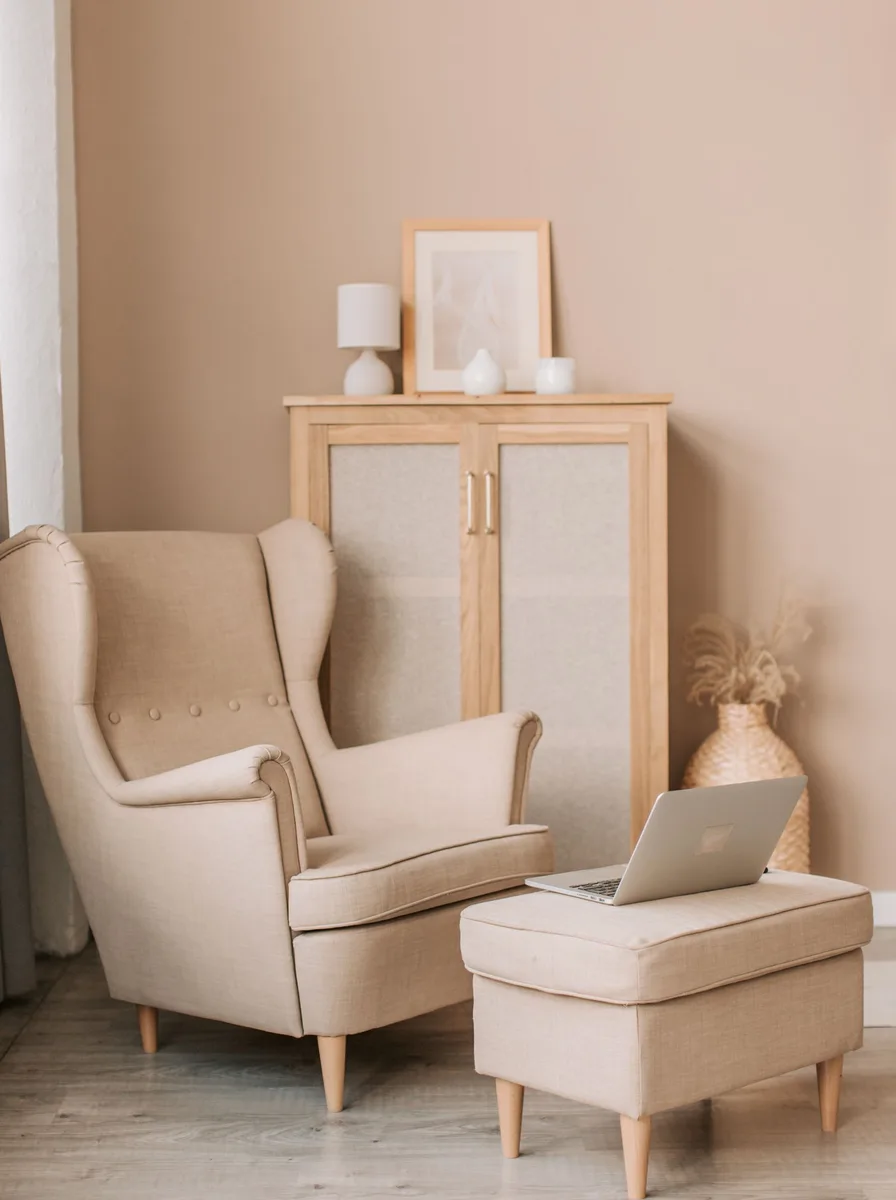
The fastest way to stop a white room feeling cold is wood: oak floors, a walnut side table, rattan baskets, or a teak bench all add honeyed warmth that white walls amplify. Wood is technically a color — those ambers and tans — and in a white room it functions as the accent. Even small doses (a tray, a frame, a stool) shift the temperature noticeably.
Stick to one or two wood tones so the room stays calm; pale oak plus one mid-tone walnut is a classic pairing. Let the wood’s grain be the pattern — no need for printed textiles when you have beautiful timber. In north-facing white rooms, lean toward warmer, redder woods; in sunny south-facing rooms, paler ashes keep things fresh.
11. Add Graphic Black-and-White Accents
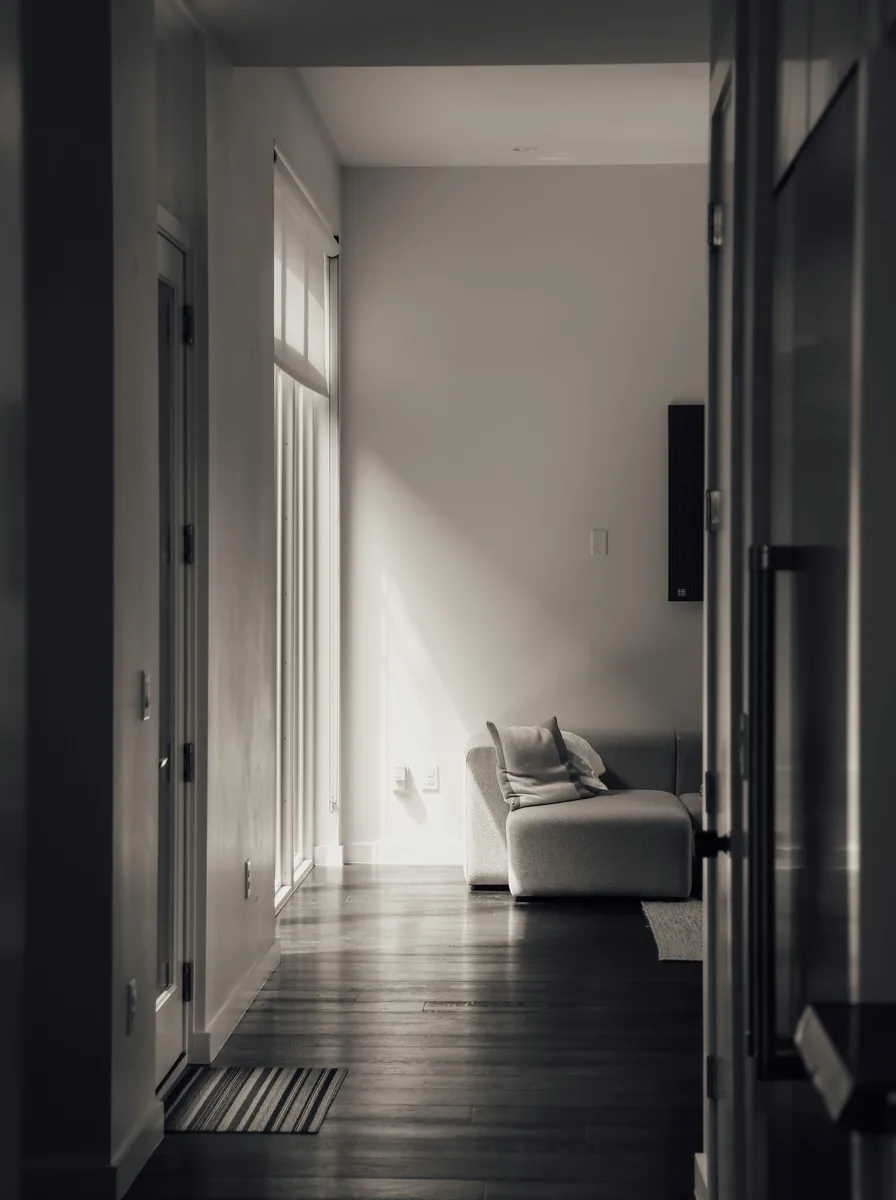
A white room needs at least one strong contrast to avoid floating into vagueness, and black-and-white accents are the crispest choice. Think black picture frames, a monochrome cushion, slim black lamp bases, or a graphic throw — small doses of black outline the white, the way ink defines a sketch. The result is sharper, more tailored, and more memorable.
Distribute the black in at least three spots so it reads as a scheme, not an accident: frames on the wall, a lamp base, a cushion’s piping. Keep it to about five percent of the room — this is punctuation, not a paragraph. Matte black feels softer and more current than glossy; it also hides dust better in bright light.
12. Keep It Elegant with Tailored White Slipcovers
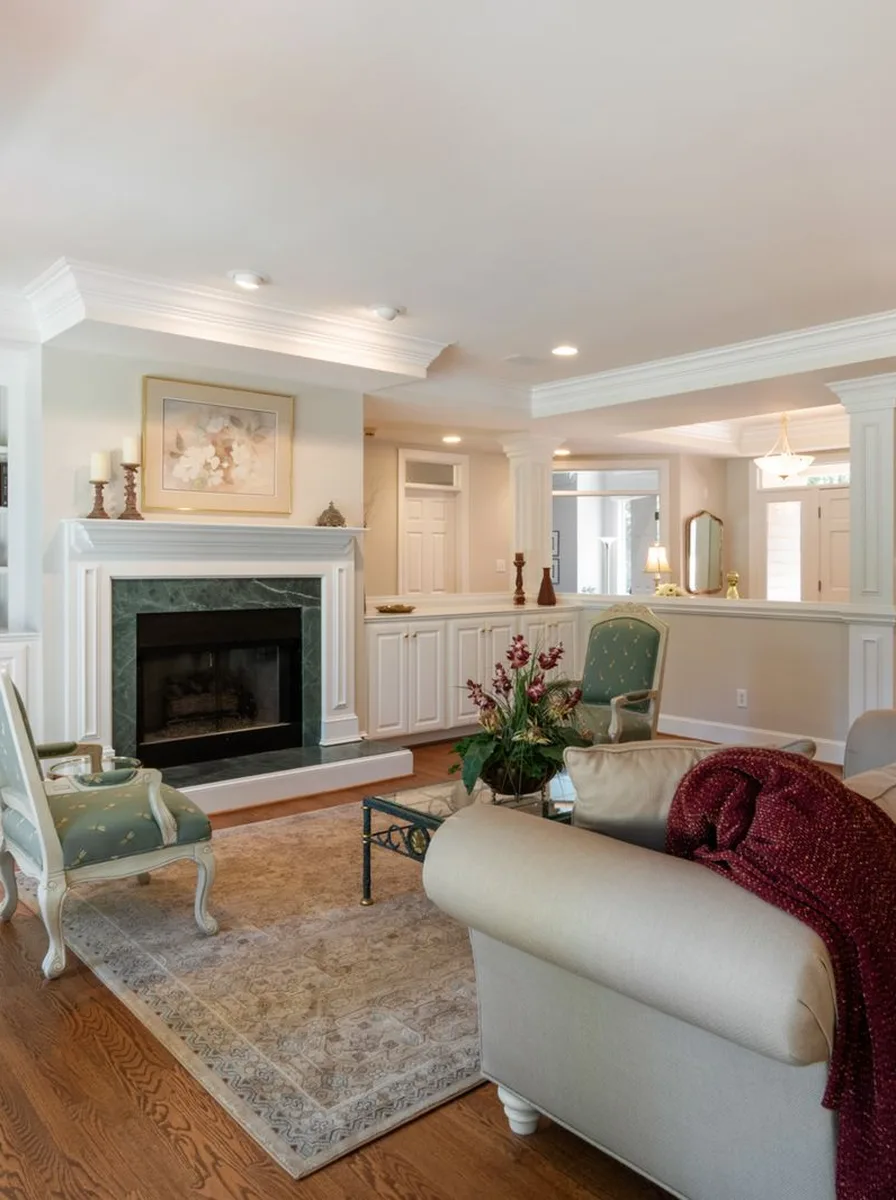
Tailored white slipcovers are the bright room’s hardest-working trick: they give any sofa a crisp, coastal-elegant look, and they come off for washing — which, in a white room, is not a luxury but a necessity. Choose a close, tailored fit in a cotton-linen blend; the clean lines keep the room sophisticated, and the washable fabric keeps it livable with kids, pets, and red wine.
Buy two sets if the sofa gets daily use so one can always be in the wash. Wash in cold water and line-dry to avoid shrinkage, then steam for that crisp tailored finish. Slipcovers also let you shift the white’s temperature seasonally — a warm ivory for winter, a crisp optic white for summer — for the price of fabric alone.
13. Blend Cream and White for Softness

Pure optic white everywhere can feel stark; blending in cream softens the scheme into something livable. Try white walls with a cream sofa, ivory curtains, and a vanilla-toned rug — the subtle warm shifts read as depth, and the room glows rather than glares. This is the white scheme for people who find all-white intimidating: still bright, but with a cashmere-soft edge.
Keep the creams warm (butter, vanilla, champagne) rather than gray-cream, which can look dirty against true white. Put the brightest white on the walls and the warmest cream on upholstery, so the room brightens upward. Test swatches together in your actual light — cream shifts more than you’d expect between morning and evening.
14. Mix Black Frames with White Walls
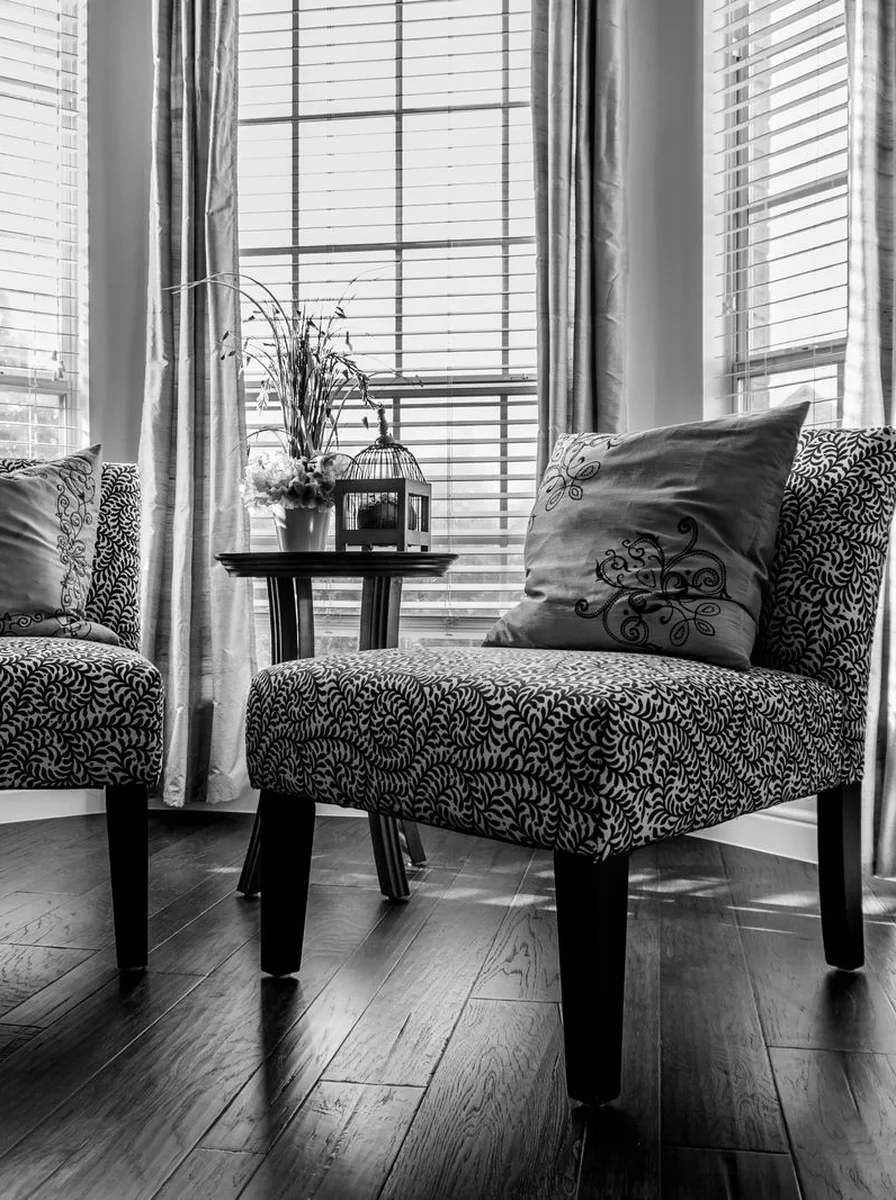
Black frames on white walls are the gallery look at home: crisp, confident, and endlessly adaptable. A set of black-framed prints — photography, line art, typography — gives a white wall instant structure, and the high contrast makes even simple art look intentional. The frames become part of the room’s architecture, outlining the space like a drawing.
Use identical slim frames for cohesion, and keep two inches between them in a grid or salon hang. Inside the frames, white mats create breathing room and tie the art to the walls. This is the easiest way to add personality to a white room without adding color — swap the prints seasonally and the whole wall refreshes.
15. Light a Sculptural Table Lamp
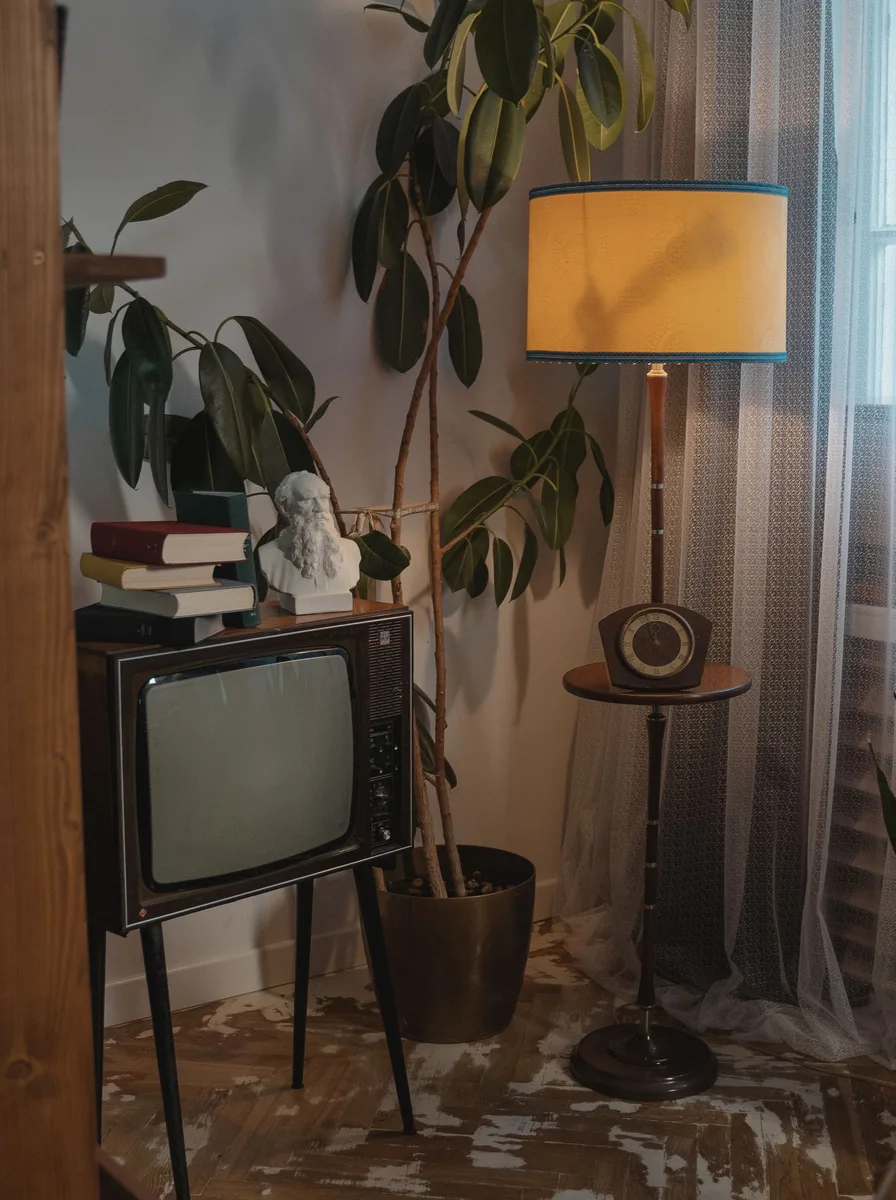
In a white room, a sculptural table lamp is functional art: by day its form adds interest to a quiet palette, by night its warm glow turns white walls golden. Choose a lamp with a distinctive silhouette — a ceramic gourd, a stacked stone base, an asymmetrical shade — in white, cream, or a warm natural material so it harmonizes while it stands out.
Place it where its shape shows: on a console against the wall, not buried behind the sofa. Use a warm bulb (2700K) and a linen shade for the softest diffusion. One sculptural lamp per room is enough — more and they compete. In a white scheme, the lamp’s shadow play on the wall is half the effect, so give it some clear wall to perform against.
16. Double Your Lighting with Matching Lamps
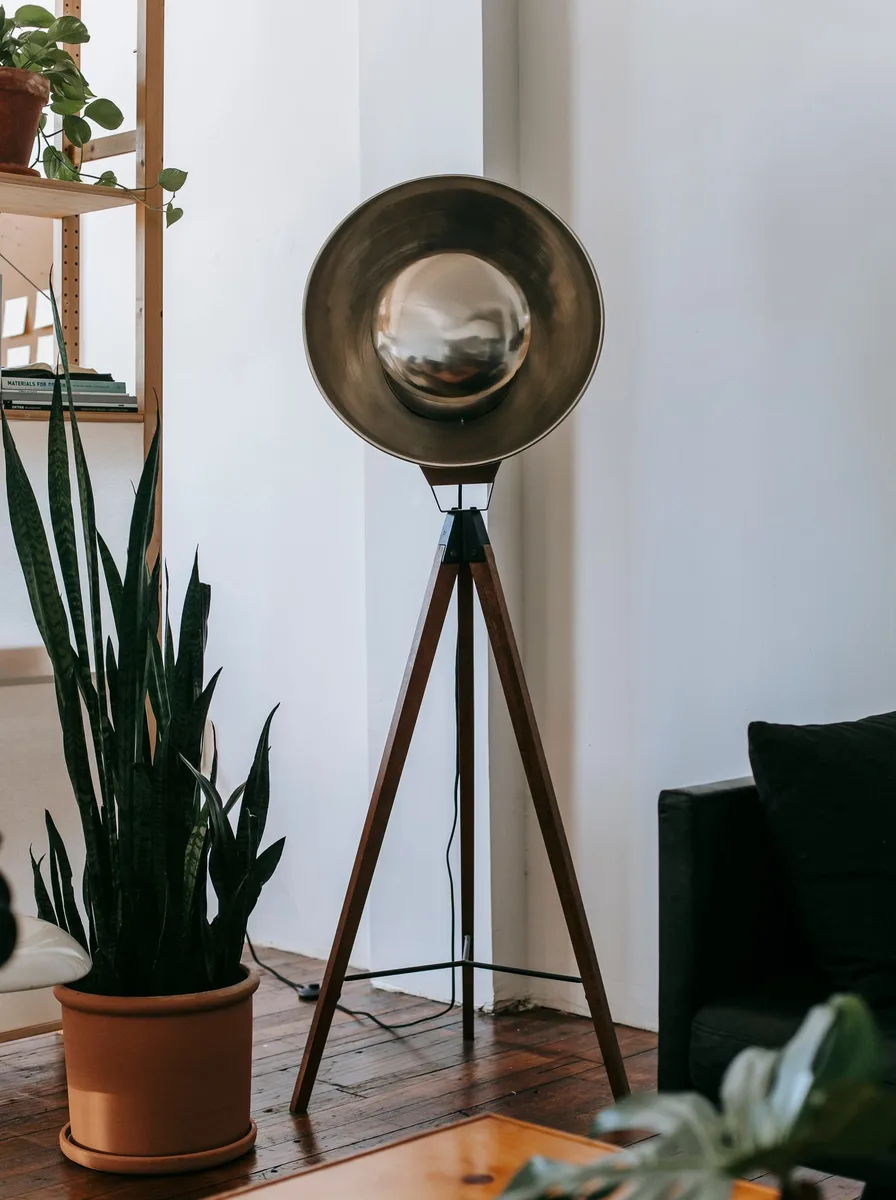
Symmetry is calming, and a pair of matching table lamps — one on each side table, or flanking a console — doubles both the light and the style impact. In a white room, matching lamps create rhythm: two warm pools of light that frame the seating area and make the space feel intentionally designed. Mismatched lamps can work, but matching ones never miss.
Keep the pair identical in size and finish; the symmetry is the point. White ceramic or linen-shaded lamps disappear into the palette by day and glow beautifully at night. Wire both to the same switch or smart plug so one tap sets the mood. This is the quickest evening transformation a white room can get.
17. Frame the Fireplace with Trailing Plants
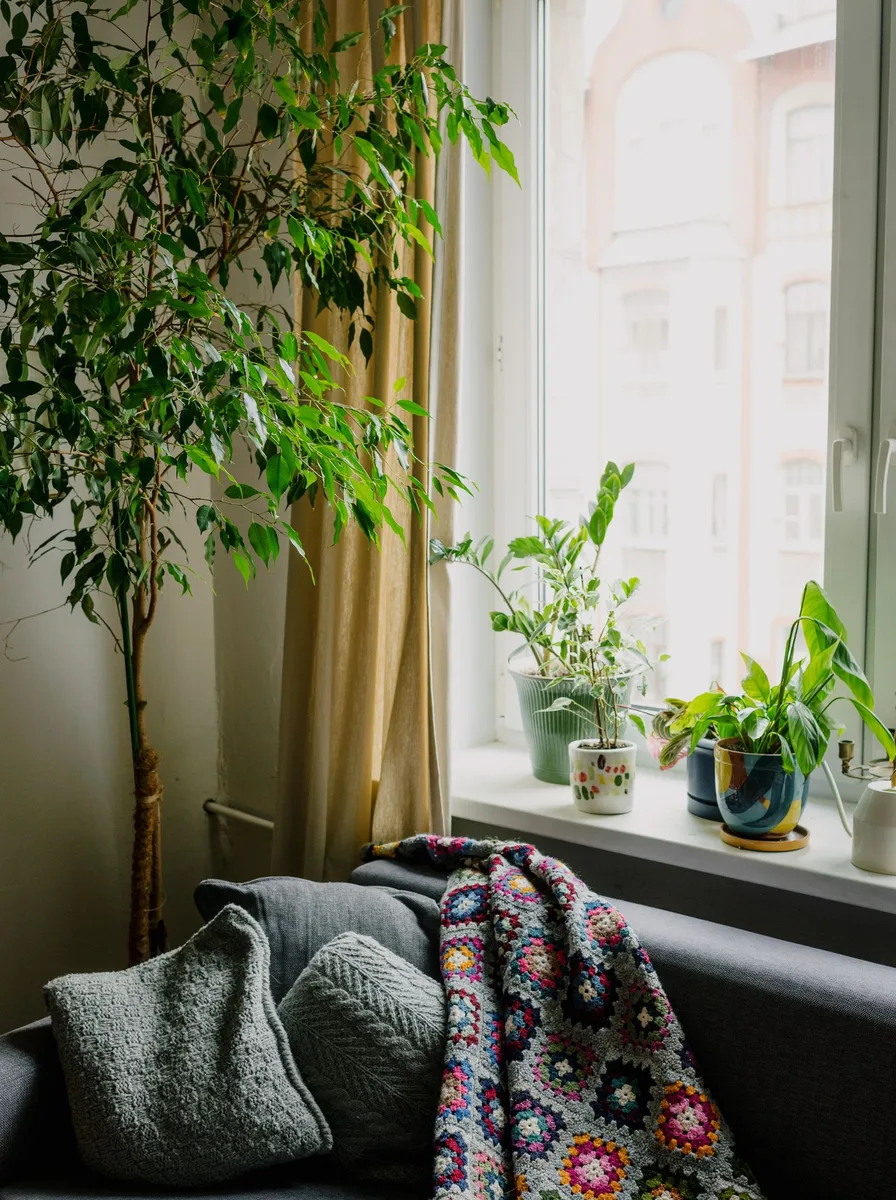
A white fireplace mantel is the perfect stage for trailing plants: pothos, philodendron, or string of pearls cascading over the edge soften the mantel’s hard lines and add living movement to the room’s focal point. Against white plaster or tile, the green practically glows. It is a styling move that costs almost nothing and looks like a magazine shoot.
Use two or three plants in simple white or stone pots for a lush but tidy look — one lonely vine looks sparse. Let the trails hang at different lengths for a natural cascade, and trim occasionally to keep them full rather than leggy. Keep plants clear of the firebox if you burn real fires; faux trailing plants are a safe, zero-maintenance alternative.
18. Style a Jungle Corner in White
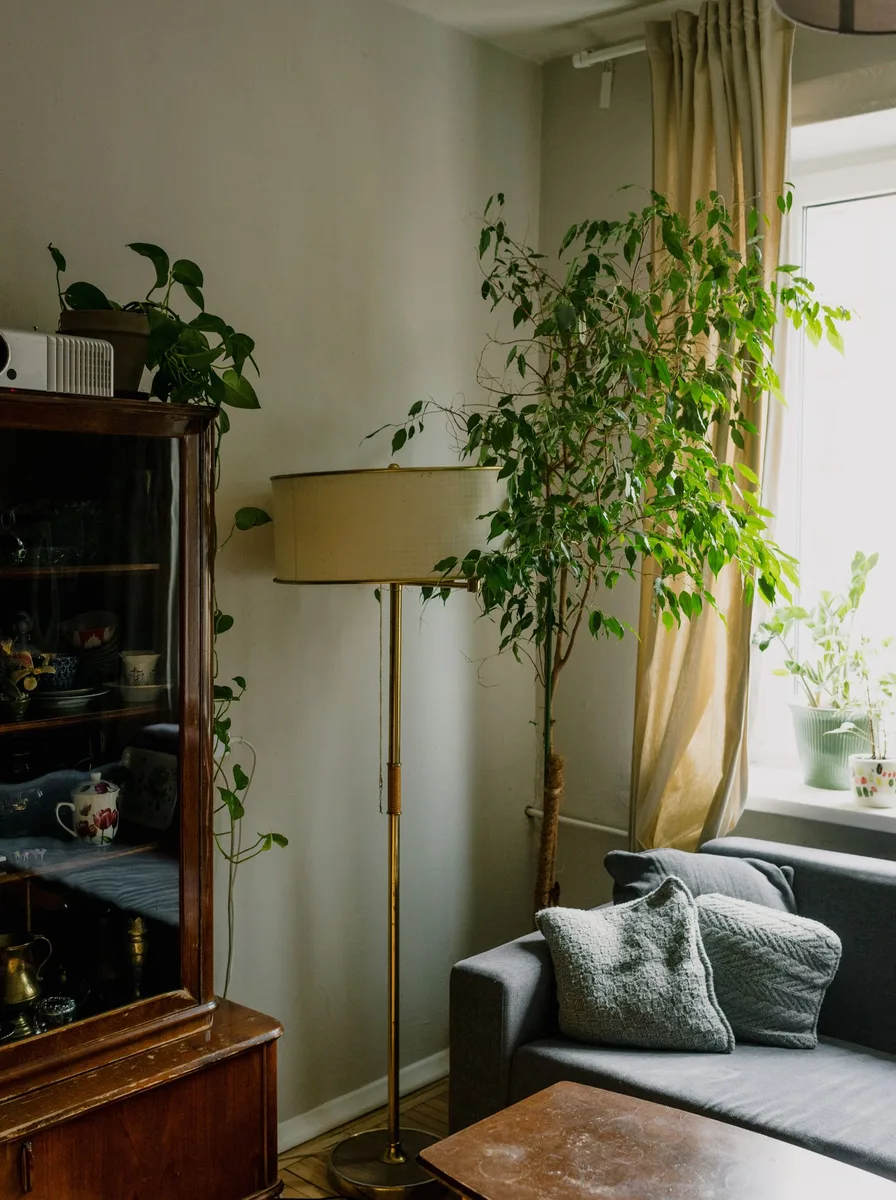
Go bolder than a single plant: a full jungle corner — tall bird of paradise, bushy monstera, trailing vines, all clustered together — turns one corner of a white room into a tropical installation. The density of green against the white wall is dramatic in the best way, and the layered leaves create the shadows and depth that keep white rooms interesting. It is maximalism, but only in one corner.
Vary leaf size and shape for a wild, collected feel — big dramatic leaves mixed with fine ferny ones. Keep pots simple and consistent (all white or all terracotta) so the plants, not the containers, are the show. This corner needs good light to thrive; if yours is dim, invest in one quality grow light disguised as a floor lamp.
19. Define Zones with a White Area Rug
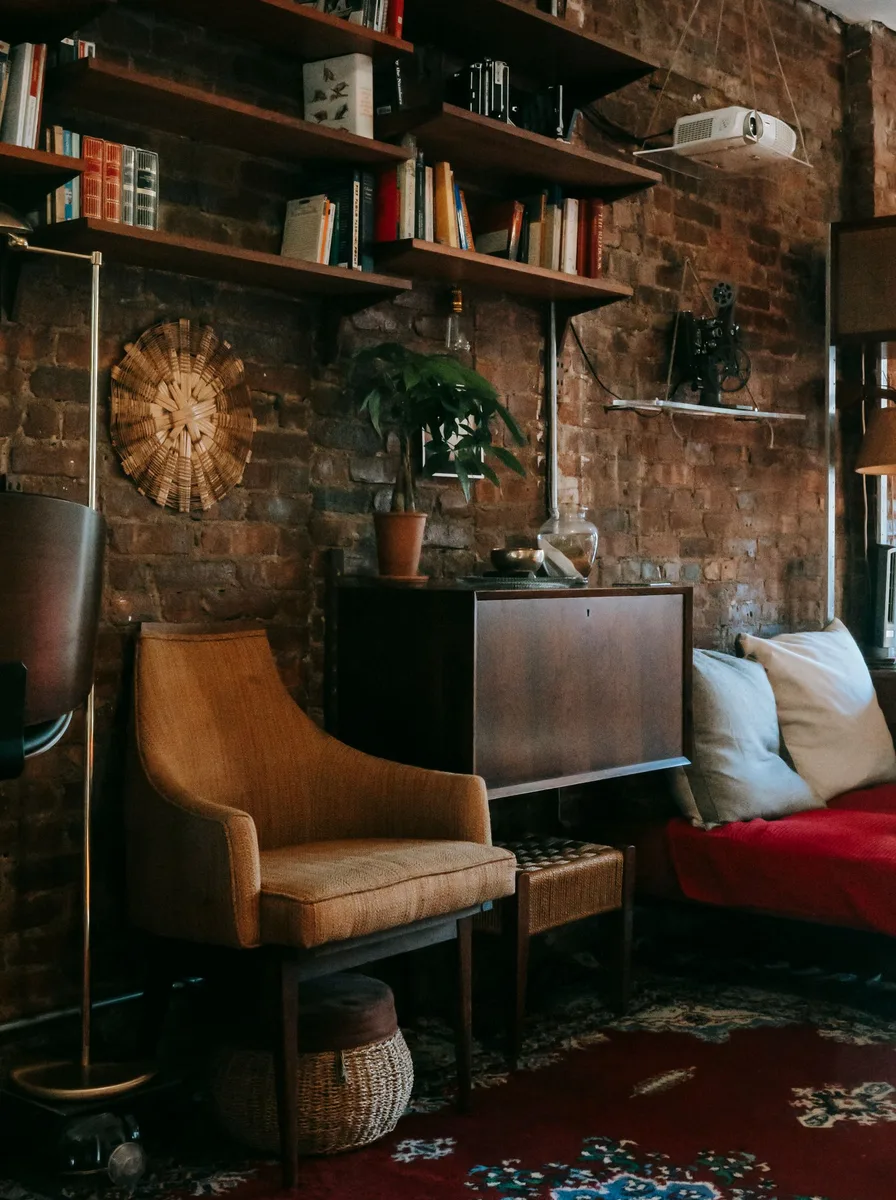
In open-plan spaces, a white area rug draws the living room’s boundaries without walls or color blocks. The rug’s edge tells the eye where the seating zone starts and ends, and in a white-on-white scheme the definition comes from texture — a nubby wool or a patterned flatweave reading as a subtle shift against the floor. It is zoning you feel more than see.
Choose a rug with a distinct texture or a tone-on-tone pattern so the zone reads clearly; a perfectly flat white rug on a white floor can disappear entirely. Make it large enough to hold all the seating’s front legs. In high-traffic open plans, a washable rug is worth its weight — white zones stay bright only with easy cleaning.
20. Float a White Sectional in an Open Plan
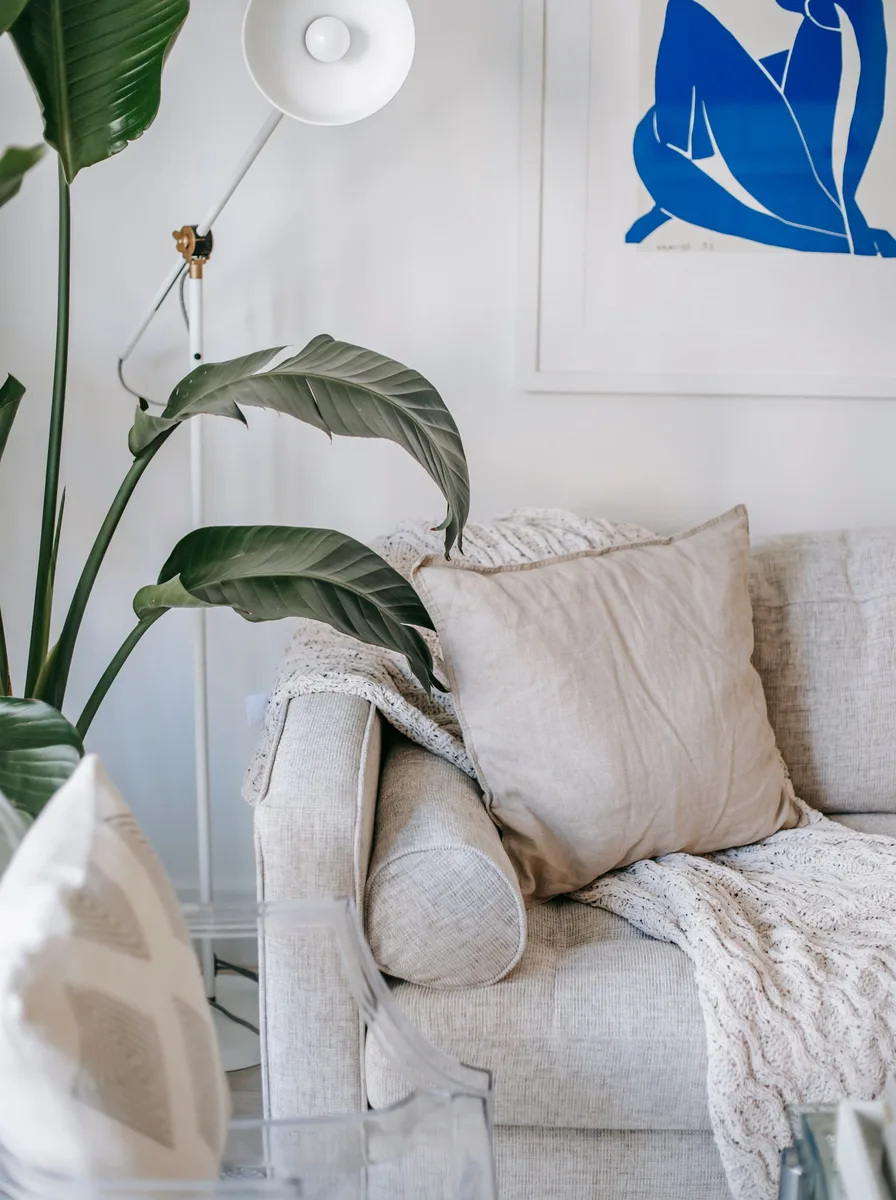
Pull your white sectional off the wall and float it in the room — the back of the sofa becomes a room divider that defines the living zone while keeping sightlines open. In a white scheme this works beautifully because the pale upholstery doesn’t create a visual wall; light and views flow right over it. The floating layout also makes the room feel larger, since you can walk all the way around.
Finish the sofa’s back: a console table with lamps and books behind it turns the exposed back into a styled surface. Anchor the float with a large rug underneath so the arrangement feels grounded, not adrift. This layout suits open-plan living best, where the sectional’s back faces the dining or kitchen zone.
21. Go Bold with a Sculptural White Sofa
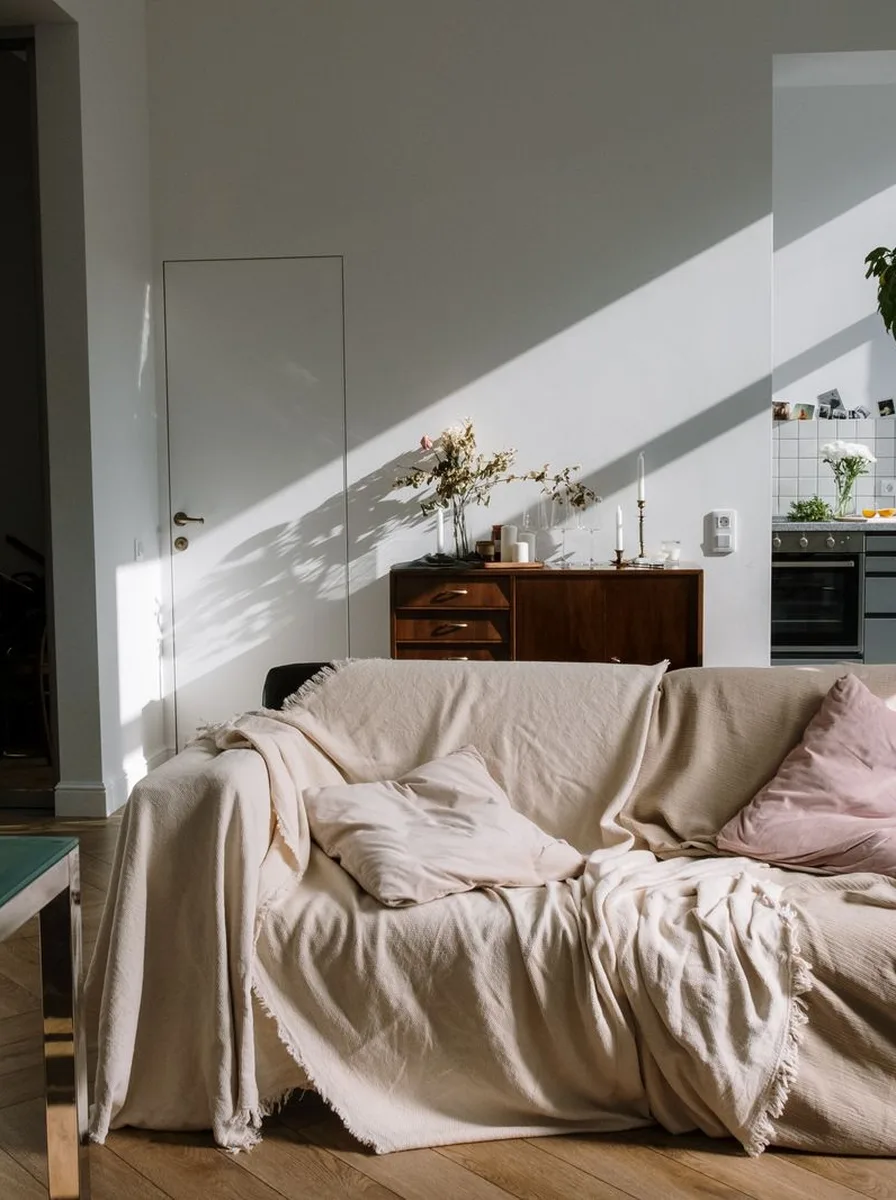
White doesn’t have to mean safe — a sculptural sofa with dramatic curves, an asymmetric back, or a bold geometric form turns the white room into a gallery. In a monochrome palette the silhouette becomes the entire design statement, the way a bold color would elsewhere. One sculptural piece is enough; let it be the room’s exclamation point.
Keep everything around it quiet — simple rug, minimal art, plain curtains — so the sofa holds the stage alone. Sculptural sofas photograph spectacularly but must still sit comfortably; test the seat depth and back angle before committing. In white boucle or a smooth performance weave, the form reads crisply and stays practical.
22. Brighten Dark Corners with Leafy Plants

Every room has a dark corner where light goes to die — and a leafy plant is its rescue. In a white room, a tall plant in a gloomy corner does double duty: the green brings life to the dead spot, and the white wall behind it bounces what light there is back into the leaves. Choose shade-tolerant varieties like ZZ plants, snake plants, or peace lilies that thrive away from windows.
Raise the plant on a stand so its foliage starts at eye level, where it has the most impact. A white or light pot keeps the corner feeling bright rather than heavy. If the corner is truly lightless, a realistic faux plant is the honest answer — in a white room with good styling around it, no one will know, and the corner stays bright year-round.
23. Choose a Veined Marble Console

A console table in veined white marble brings natural pattern to a calm white scheme — the stone’s gray and gold veining is artwork that never needs framing. Place it behind the sofa, in an entry-adjacent wall, or under a mirror, and style it minimally so the stone shows: one lamp, one sculptural object, one small stack of books. The veining gives the eye somewhere to wander.
Look for slabs with bold, interesting veining rather than faint wisps — in a white room, the marble is allowed to be the pattern. Seal the surface annually if you set drinks or vases on it. Pair marble consoles with warm wood or brass nearby; the stone’s coolness needs a warm counterpoint to feel inviting rather than chilly.
24. Style a Marble Side Table Duo
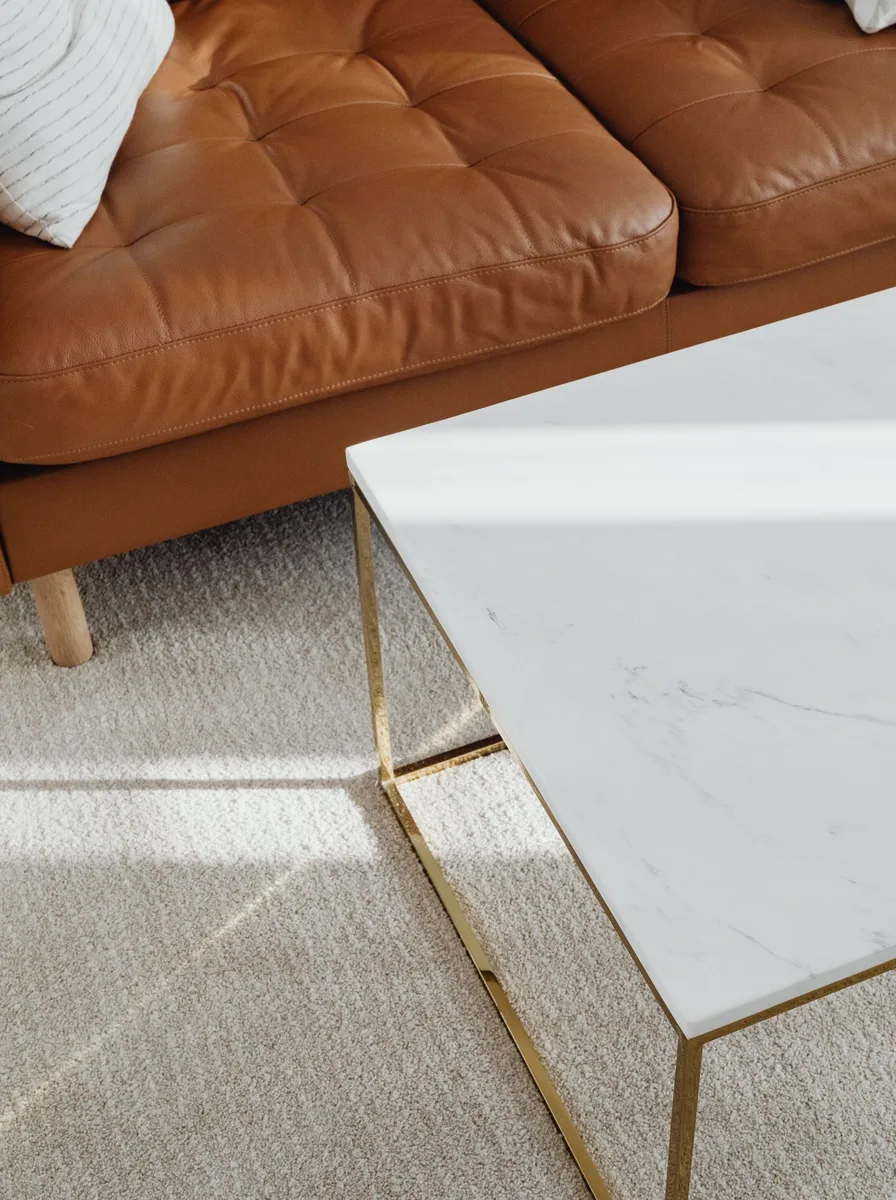
Two small marble side tables — flanking the sofa or clustered beside an armchair — repeat the stone’s cool elegance at a human scale. The duo creates symmetry, doubles your surface space for lamps and drinks, and lets the marble veining appear in two places for a collected feel. In a white room, matching stone tables read as intentional and tailored.
Vary the heights slightly or keep them identical for formality; either works. Style one with a lamp and the other with a plant or books so they aren’t twins doing the same job. Small marble tables are also the most affordable way into real stone — offcuts and small fabrications cost far less than a full coffee table.
25. Ground a Bright Room with a Textured Rug
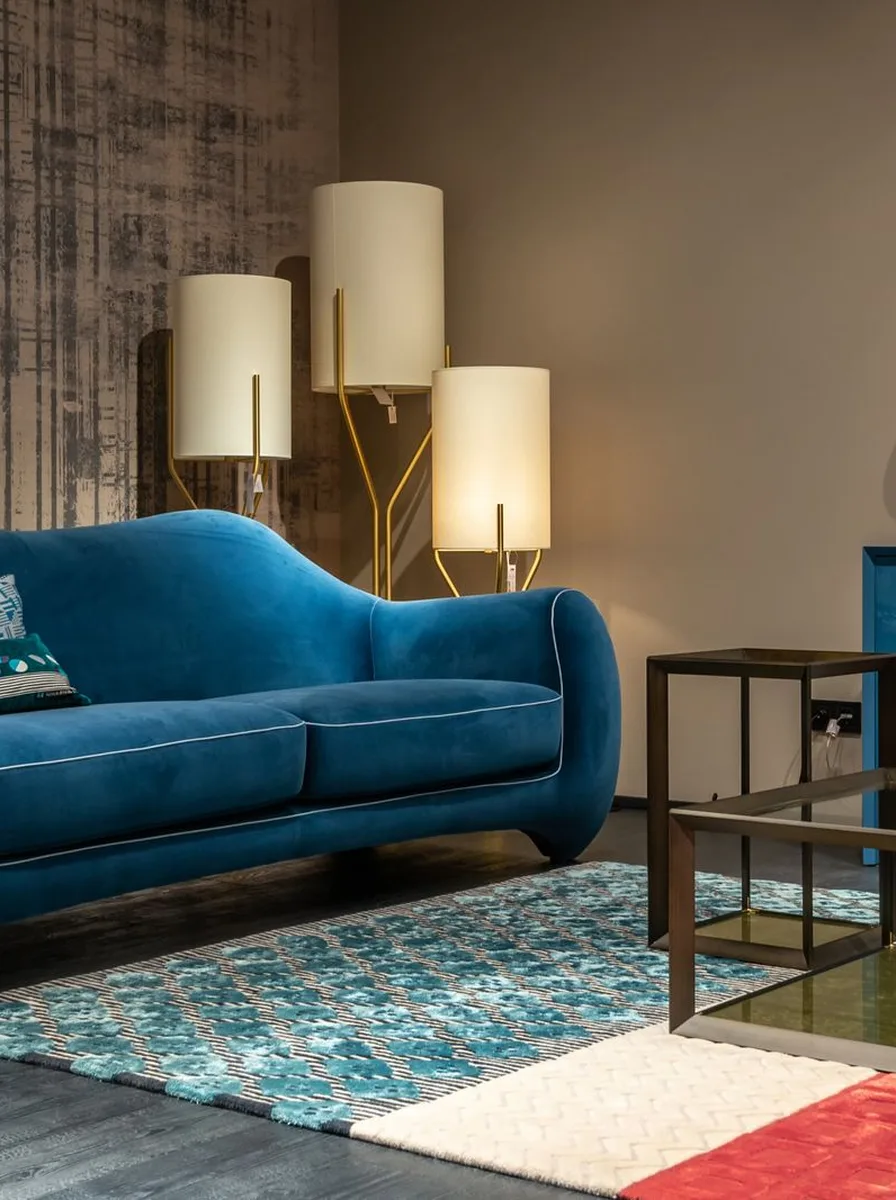
The brightest rooms need grounding, and a textured rug is the anchor: a high-low wool weave, a chunky jute, or a ribbed cotton rug in ivory adds the tactile weight that stops an all-white space feeling floaty. Texture here does the job color does in other rooms — it gives the floor presence and the seating group a foundation. Bare bright floors reflect light beautifully but can feel unfinished; the rug completes the picture.
Choose texture you can feel underfoot — this rug is about comfort as much as looks. A looped or ribbed weave hides footprints and wear far better than a flat solid white. Layer a smaller soft rug on top near the sofa for extra coziness if you like. In white rooms, natural-fiber textures (wool, jute, cotton) always look richer than synthetics.
26. Finish with a Marble-Topped Coffee Table
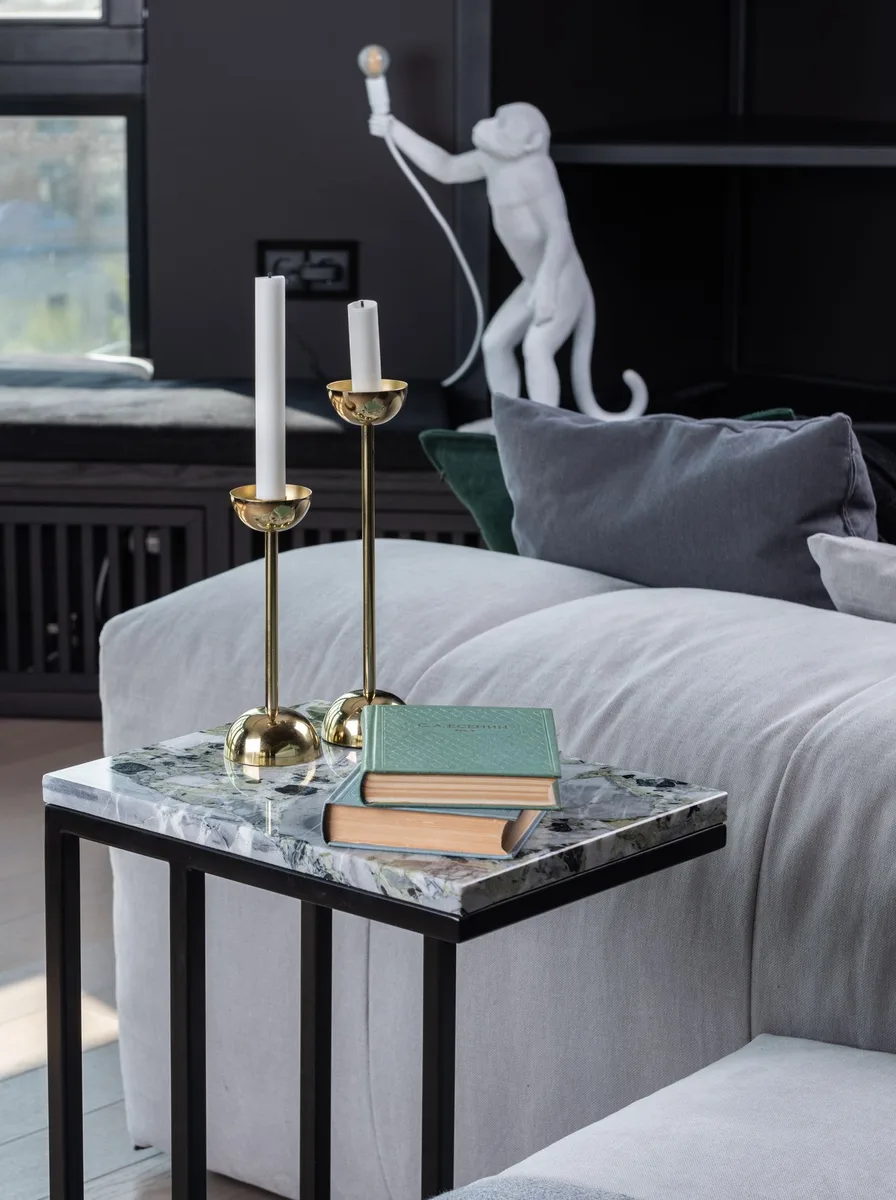
End your white scheme where every living room ends: the coffee table. A marble-topped version — round, oval, or soft-edged rectangle — brings the room’s coolest, most luxurious material right to the center of the conversation zone. The stone’s veining becomes the tabletop’s decoration, so styling stays minimal: a low tray, one beautiful book, a small green plant for contrast.
Round and oval tops suit white rooms best — no sharp corners in a soft palette, and easier circulation around the seating. Keep the base light (white lacquer, pale wood, or slim brass) so the table doesn’t look heavy. Coasters for every drink, always: marble remembers every ring. With the stone at the center and white glowing around it, the room is complete.

David is the home decor enthusiast behind HomeLushly. He shares practical, budget-friendly ideas for bedrooms, living rooms and seasonal decorating — from colour combinations that actually work to small-space styling tricks that make a room feel bigger. Every guide on HomeLushly is built around real photos and hands-on research, to help you make your home feel warm, personal and beautifully put together.