

A wooden platform bed is the perfect starting point for a minimalist bedroom — its clean lines and honest material do half the styling work for you. The low, simple silhouette brings a sense of calm, and the natural grain gives the room warmth without a single extra decoration. But styling it still takes intention: too much bedding, clutter, or decor can turn “minimal” into “messy” fast.
This guide shares six simple rules for styling a wooden platform bed the minimalist way — from bedding colors to nightstands to the final edit. Everything here is budget-friendly and easy to do in a single weekend.
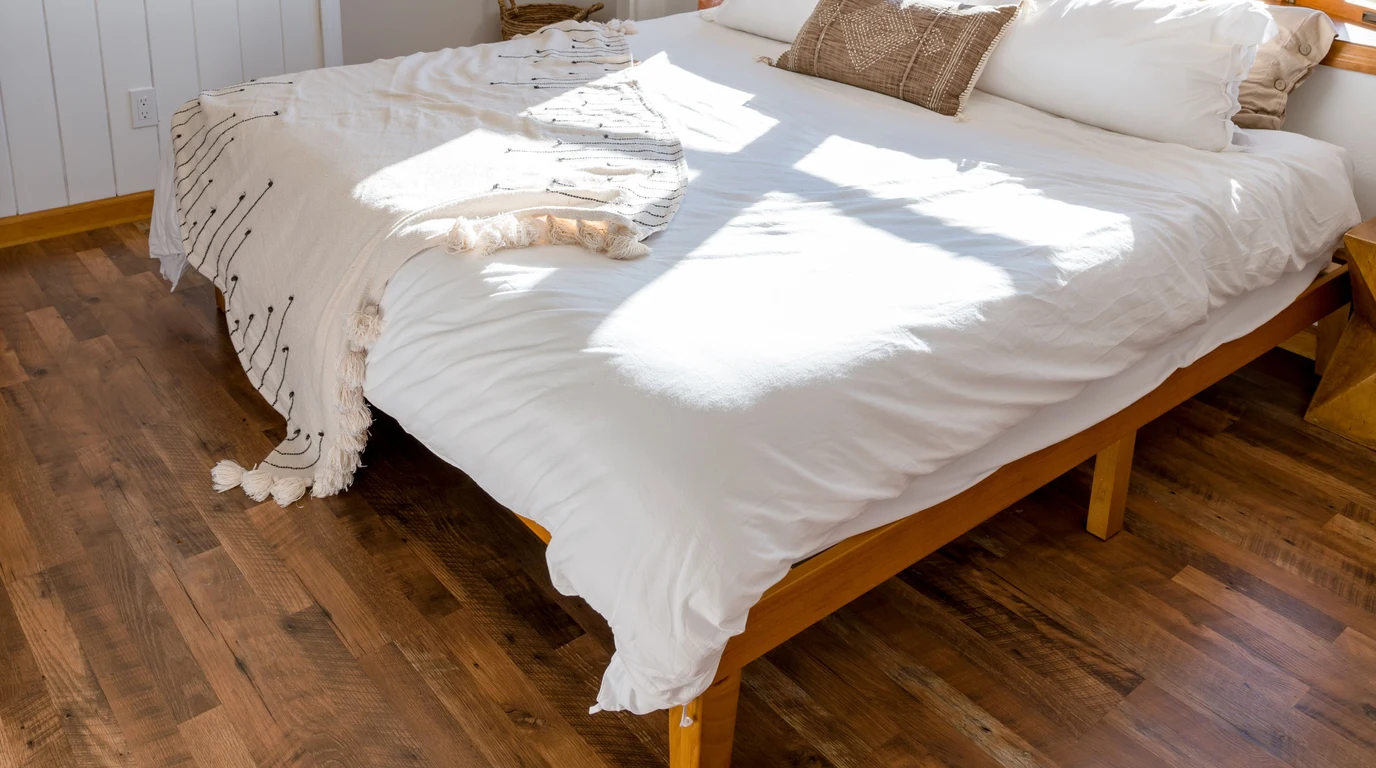
Start With an Empty-ish Room
Minimalism starts before the styling — it starts with what’s around the bed. A platform bed looks its best when the room has breathing space, so clear at least one surface in the room completely and move anything that doesn’t belong in a bedroom out entirely. You don’t need a totally empty room; you need a room where every item earns its place.
Quick reset steps:
● Clear both sides of the bed and keep the floor around it open — no piles of laundry or books.
● Move exercise equipment, office clutter, and storage boxes to another room if you can.
● Keep the walls near the bed mostly bare; one piece of art is plenty.
● Dust and wipe the bed frame first — a clean, glowing wood surface is the whole aesthetic.
The Two-Color Bedding Rule
The fastest way to style a platform bed minimally is to limit your bedding to two colors: one main color and one quiet accent. All-white or all-neutral bedding against warm wood is the classic minimalist look, and it works because the contrast between soft fabric and natural grain becomes the decoration. Add a third or fourth color and the calm disappears.
How to pick your two colors:
● Main color: white, cream, light grey, or soft beige — something restful that won’t fight the wood.
● Accent color: a muted tone like sage, dusty blue, or warm terracotta, used only on one throw or pillow.
● Keep patterns small or skip them entirely — texture adds more interest than prints here.
● Wash and iron your bedding regularly; crisp, fresh fabric is half of the minimalist look.
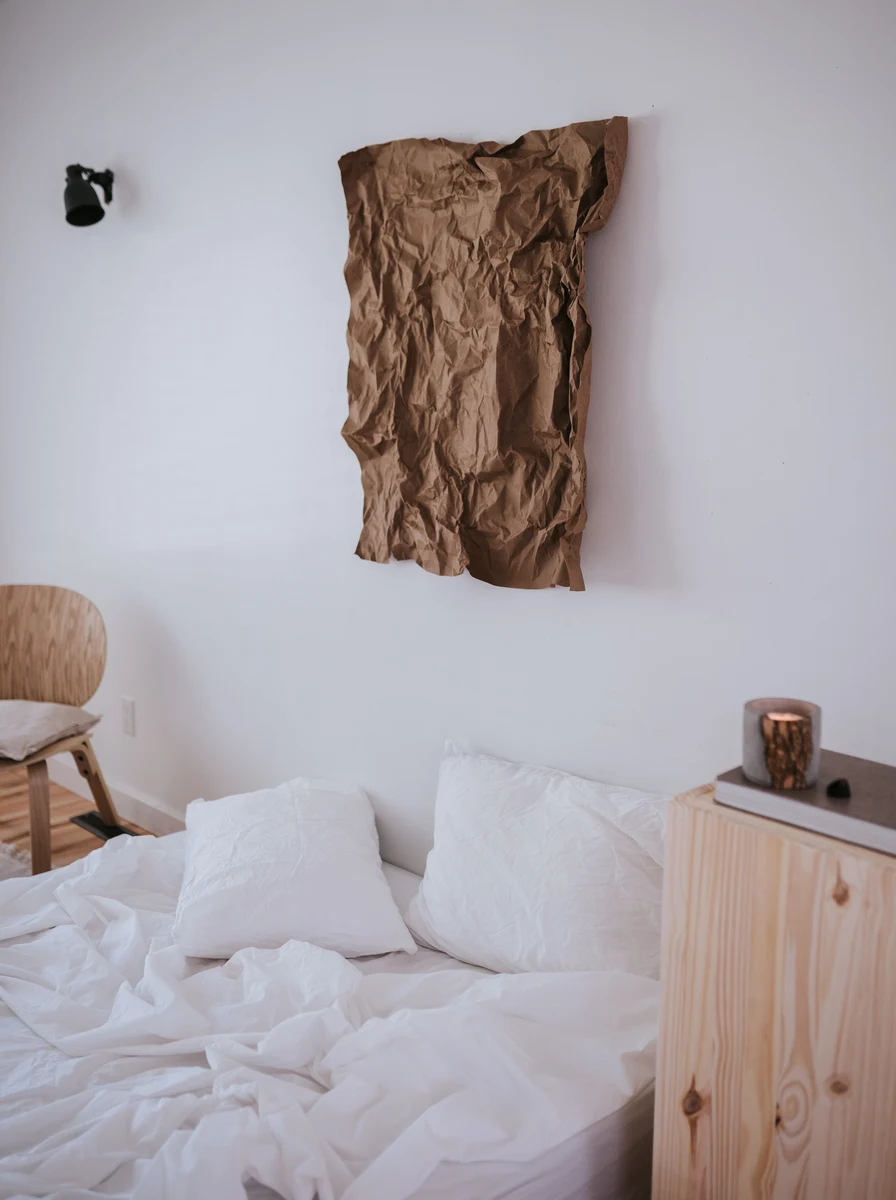
One Texture Is Enough (Two at Most)
Texture is what keeps minimalist bedding from looking flat, but a little goes a long way. Pick one rich texture — a chunky knit throw, a washed linen duvet, or a soft waffle blanket — and let it be the star. Adding a second texture is fine if the two harmonize, but three or more starts to look busy instead of calm.
Textures that play well with wood:
● Linen and cotton: breathable, relaxed, and naturally rumpled in a good way.
● One knit or wool throw folded at the foot of the bed for warmth and softness.
● Skip shiny satin or busy quilts — they fight the matte, honest feel of real wood.
● Let the wood grain itself count as one of your textures; it doesn’t need competition.
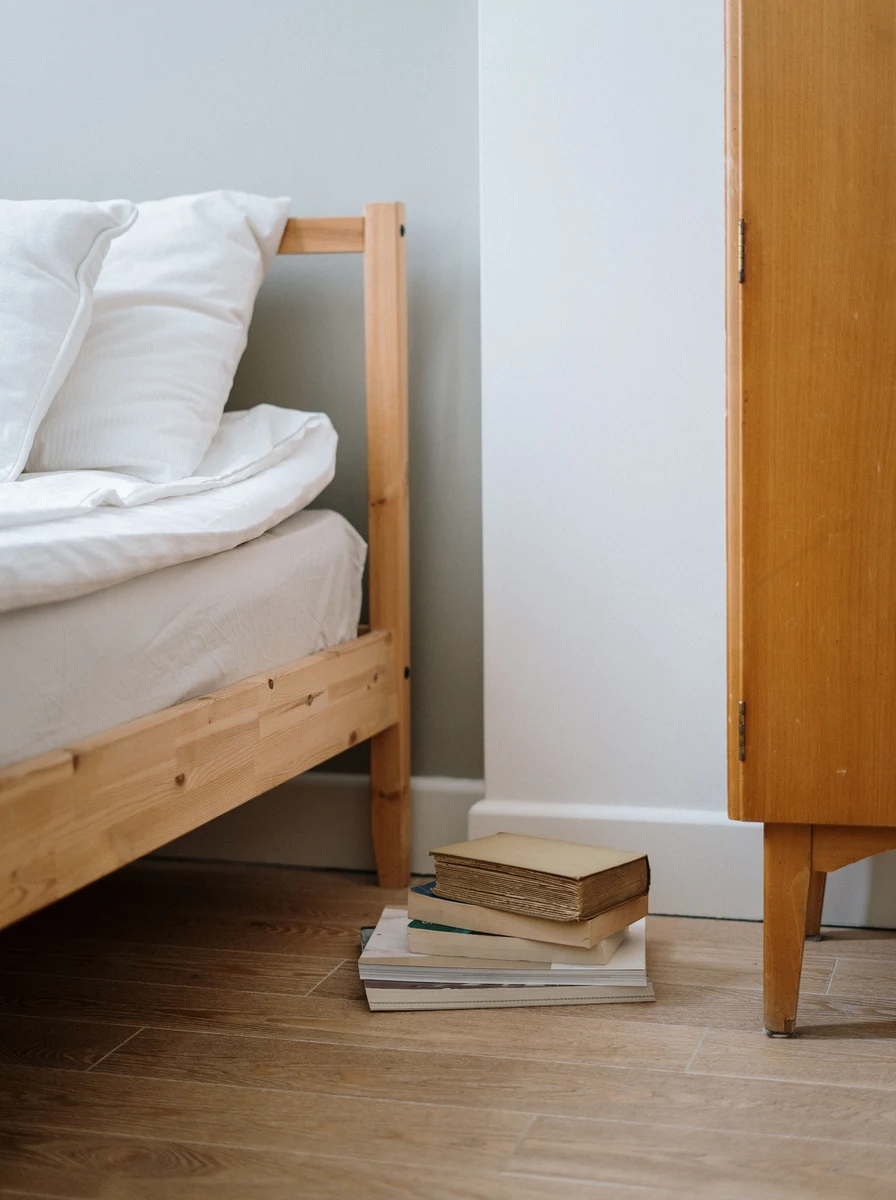
Nightstands: Less and Lower
Beside a low platform bed, a tall, bulky nightstand looks top-heavy and crowds the room. Minimalist styling calls for small, low surfaces — just enough room for a lamp, a book, and a glass of water. A floating shelf or a slim wooden stool often works better than a traditional nightstand, and both cost less too.
Smart bedside choices:
● Wall-mounted floating shelves free up floor space and sit at the perfect low height.
● A simple wooden stool or cube keeps the look light and can move around the room.
● If you need drawers, pick a low two-drawer piece in a wood tone that matches the bed.
● Keep each surface to three items max: a lamp, a book, and one small personal thing.
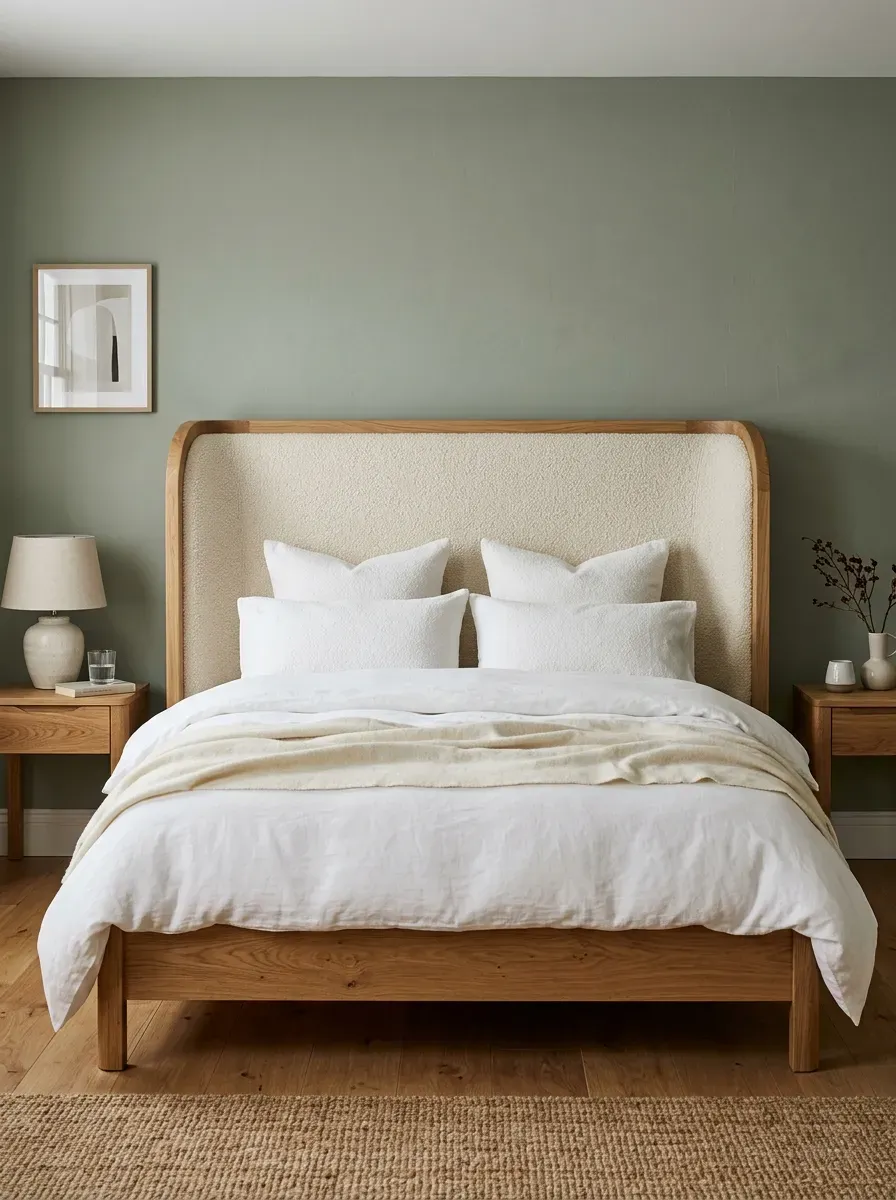
Let the Wood Be the Decoration
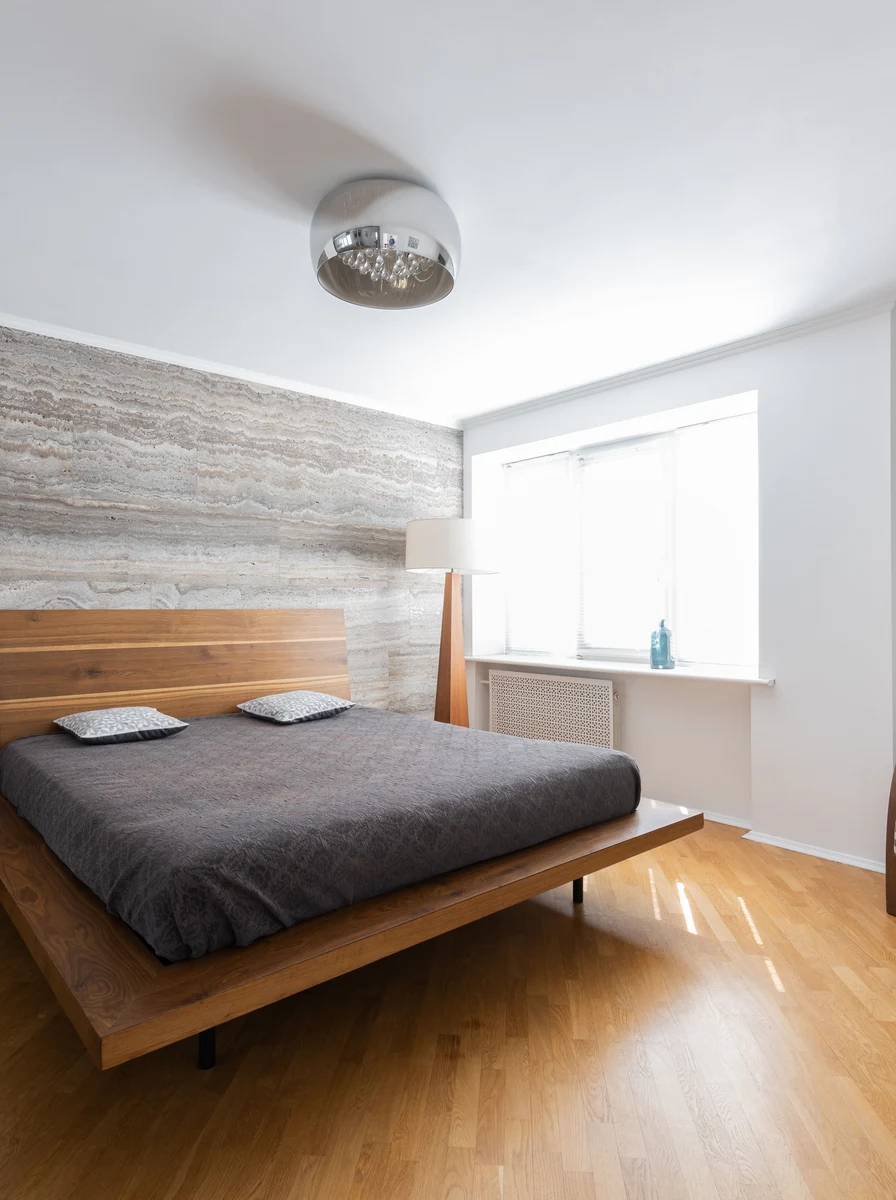
The whole point of a wooden platform bed is that the material is the style. Instead of hiding the frame under piles of cushions or covering the headboard wall with gallery clutter, step back and let the grain, color, and joinery show. Minimalism isn’t about having nothing to look at — it’s about giving your eye one beautiful thing instead of twenty noisy ones.
Ways to honor the wood:
● Leave the headboard wall bare, or hang a single simple piece of art above it.
● Oil or wax a solid-wood frame once a year to deepen the grain and keep it glowing.
● Skip the bed skirt — show the frame’s legs and rails; that’s what you paid for.
● Choose bedding that contrasts softly with the wood tone so the frame stands out.
Edit Ruthlessly, Then Edit Again
The final step of minimalist styling is the edit — and then a second edit. Walk around the bed with fresh eyes, or take a photo of the room; photos reveal clutter your eyes have learned to ignore. Remove anything that doesn’t serve comfort or calm. The goal isn’t a showroom; it’s a bed that invites you to rest without visual noise.
Final editing checklist:
● Limit decorative pillows to two or three — you sleep against pillows, not a pillow fort.
● Corral chargers and cables into one tidy spot or a small basket out of sight.
● Remove anything from the bed that you haven’t used in the past week.
● Step back, take a photo, and if your eye catches clutter in the picture, take that thing away.

David is the home decor enthusiast behind HomeLushly. He shares practical, budget-friendly ideas for bedrooms, living rooms and seasonal decorating — from colour combinations that actually work to small-space styling tricks that make a room feel bigger. Every guide on HomeLushly is built around real photos and hands-on research, to help you make your home feel warm, personal and beautifully put together.