

The dining room is where your home shows off a little.
Guests may never see your bedroom, but they will spend a whole evening facing your dining wall — which makes canvas art the highest-impact purchase in the room. One well-chosen canvas sets the mood for everything from relaxed Sunday lunches to candlelit celebrations, and it does it faster than new furniture ever could. Unlike paint or wallpaper, it is also completely commitment-free: one nail, one hook, and you can swap it whenever your taste changes.
Canvas prints have a warmth that framed posters cannot quite match. The fabric texture softens bold colour, the gallery-wrapped edges need no frame at all, and a large canvas fills an empty wall in a way that small pieces never do. Hung over the sideboard, above a console, or stretching across the wall behind the table, canvas art anchors the whole room and gives every other choice — the chairs, the pendant, the tableware — something to play off.
This guide gathers 27 elegant dining room canvas art ideas that impress every guest, each shown in a real-style setting with practical hanging and styling advice.
From quiet minimalism and black-and-white photography to marbled abstracts, Bauhaus geometry, and sculptural relief pieces, you will find a look for every dining room — traditional or modern, bright or moody.

1. Start with One Quiet Minimalist Canvas

A near-blank canvas in white or ivory is the bravest choice on this list, and it works beautifully in a calm dining room. With no image to compete with, the texture of the canvas itself becomes the art — subtle, gallery-like, and endlessly easy to live with. It lets your table, your pendant light, and your guests be the colour in the room.
Hang it so the centre sits roughly 57 inches from the floor, and give it breathing room — at least a foot of empty wall on each side. If the plain look feels too bare, layer a tall vase of dried grasses beside it. This is also the cheapest idea here: a blank stretched canvas costs very little and looks deliberately chic.
2. Go Dramatic with Black-and-White Photography on Canvas
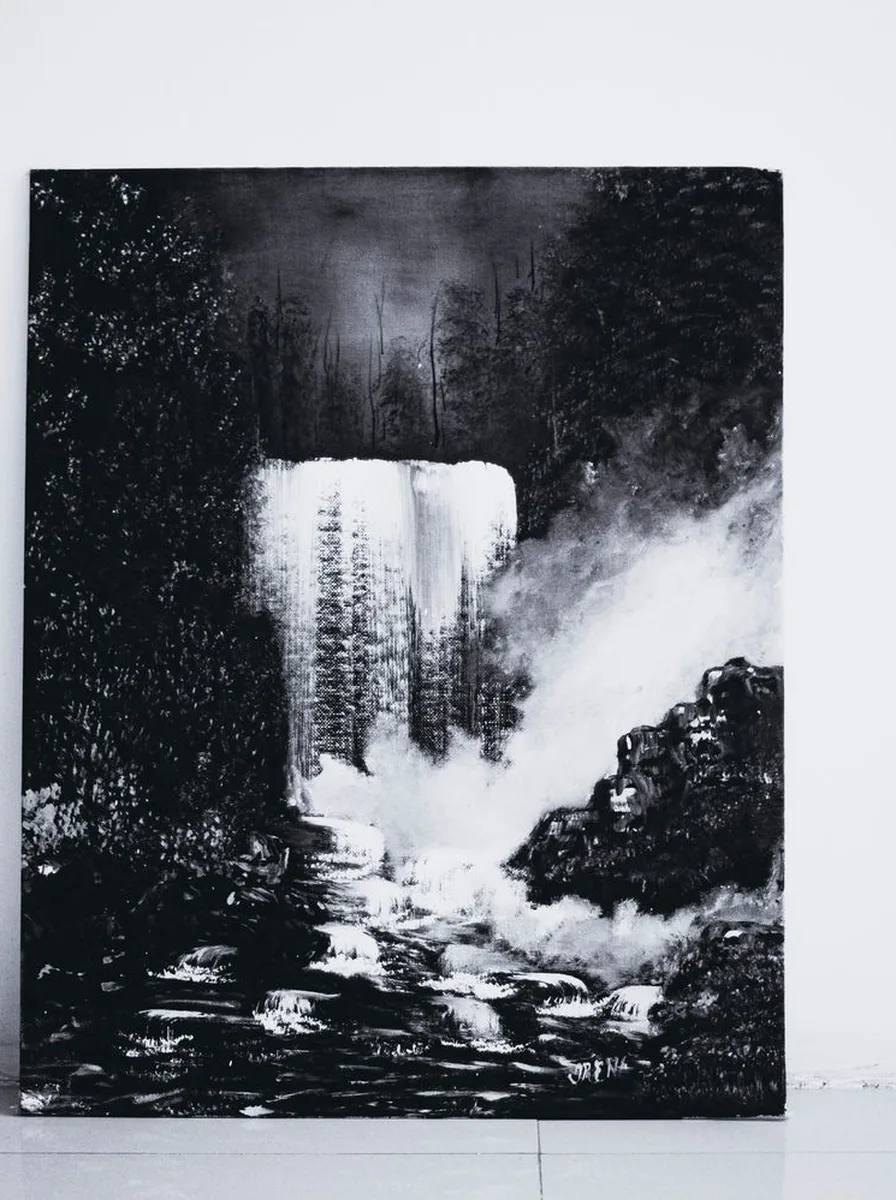
A misty waterfall or forest printed large on canvas brings instant drama to a dining room without adding a single colour to your palette. Black-and-white photography flatters every scheme — it looks just as good against white walls as it does beside dark wood — and the large scale makes an ordinary dining corner feel like a boutique hotel.
Choose a print with strong contrast and one clear focal point; busy all-over scenes lose impact at canvas size. Hang it over the sideboard where lamplight can rake across the texture in the evening. Pair with monochrome tableware and one natural texture, like a linen runner, to complete the look.
3. Layer Raw Canvases on a Console Ledge
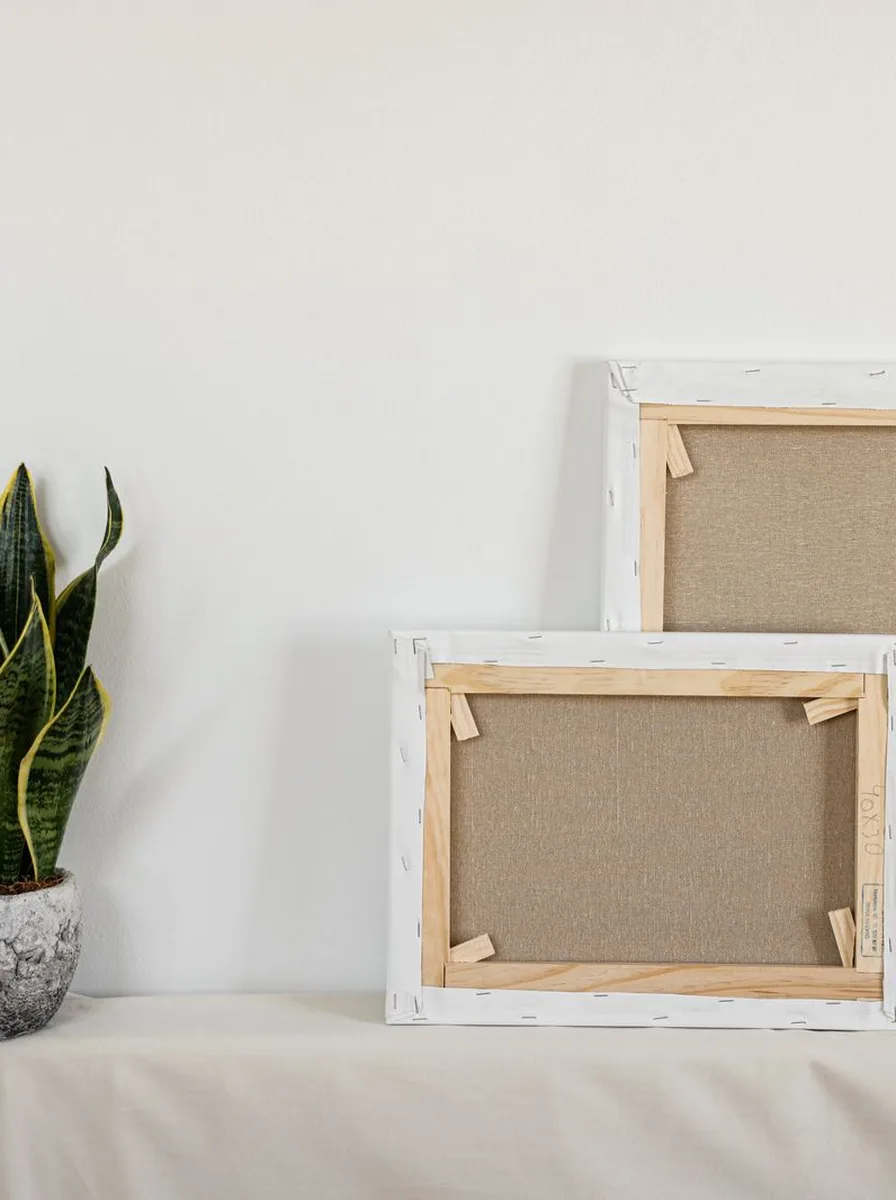
Leaning unframed canvases along a console or sideboard gives your dining room an artist-studio ease that feels collected rather than decorated. Mix sizes — one tall, one small — and let a few show their raw backs or stretcher bars. The unfinished look reads as confident, and it is perfect if you like rearranging things often.
Anchor the grouping with something living, like the snake plant here, so the bare canvas does not feel stark. Keep the palette of the tabletop calm — ceramics, one stack of books — and let the canvases be the quiet stars. This trick costs almost nothing and works brilliantly in rented dining rooms.
4. Lean a Warm Abstract Canvas by the Dining Chairs

Warm abstract canvases in terracotta, rust, and burnt orange make a dining room feel instantly welcoming — exactly the mood you want where people eat. Leaning the canvas against the wall rather than hanging it keeps the look relaxed and casual, as if the art just happened to land there.
This colour family loves natural materials: rattan chairs, a jute rug, an oak table. Choose a canvas roughly as wide as the chair it leans beside so the proportions feel intentional. If you ever tire of it, one lean takes seconds to move — no holes, no fuss.
5. Add One Small Canvas as a Colour Punch

You do not need an enormous canvas to make an impact. One small, confident piece in red and orange against a white wall acts like jewellery for the room — a single colour punch that wakes up an otherwise neutral dining corner. Small canvases are also the easiest way to test a bold colour before committing to it.
The rule with small art is placement: hang it close to furniture, not floating in the middle of a big empty wall. Beside a chair, above a small side table, or in a tight pair — anywhere it has a neighbour. Keep everything else quiet and let the little canvas do all the talking.
6. Choose Fluid Line Art for an Airy Feel

Continuous-line abstracts — one flowing stroke in red and black on a white ground — bring movement and personality without any visual heaviness. They suit bright, airy dining rooms where you want interest on the walls but nothing that competes with the conversation or the food.
Keep the furniture around line art light and simple: white chairs, pale wood, glass. The canvas should be the only graphic element in view, so resist adding patterned cushions or busy tableware nearby. One fluid line, one calm room — an effortlessly elegant pairing.
7. Hang a Vintage Travel Canvas with a Story
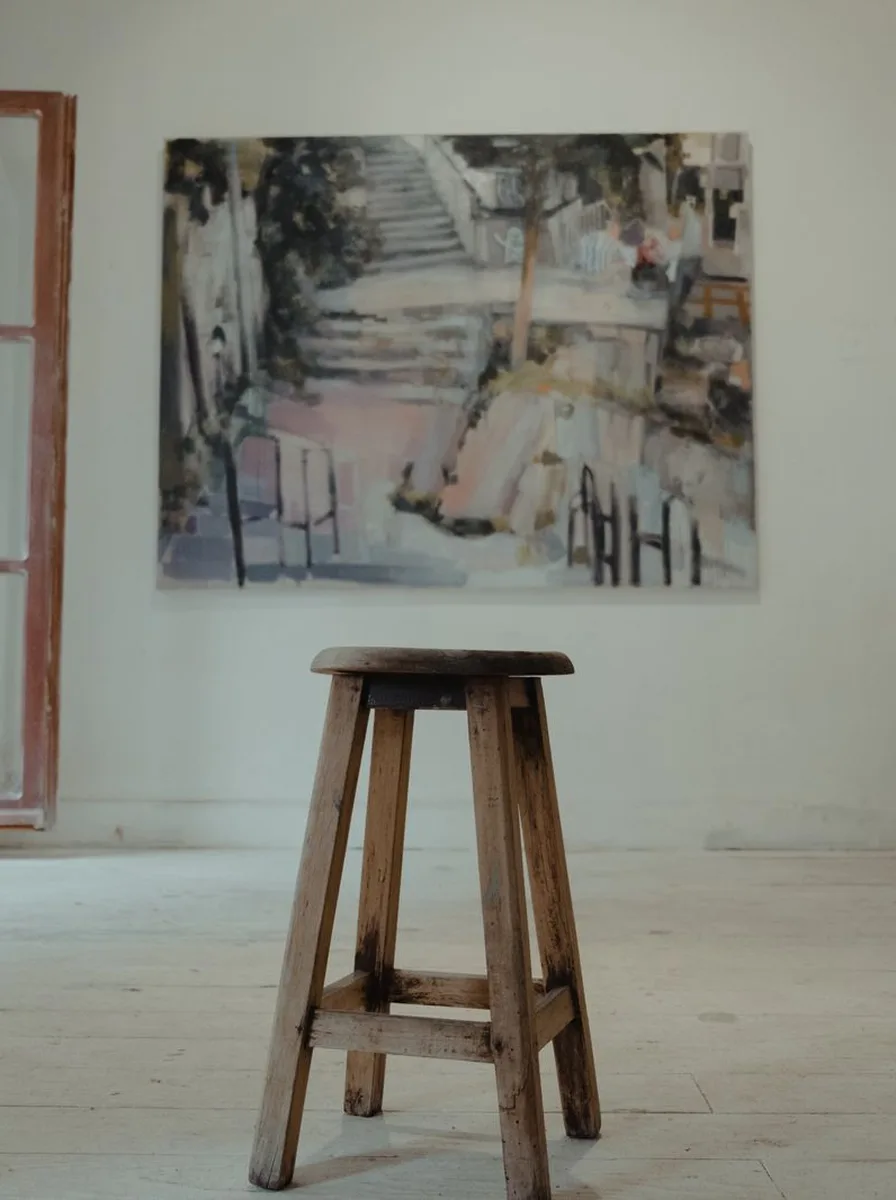
A vintage travel poster printed on canvas is a built-in conversation starter — and dinner parties run on conversation. Pick a place you have actually been, or one on your list, and the art becomes personal rather than generic. The aged colours of old posters also sit beautifully in traditional dining rooms.
Hang it above a console or bar cart where guests naturally gather, and keep the frame simple or go gallery-wrapped for a modern twist on the vintage image. One travel canvas is charming; a small row of three from the same trip is a whole story.
8. Build an Artist’s Corner with a Canvas Cluster
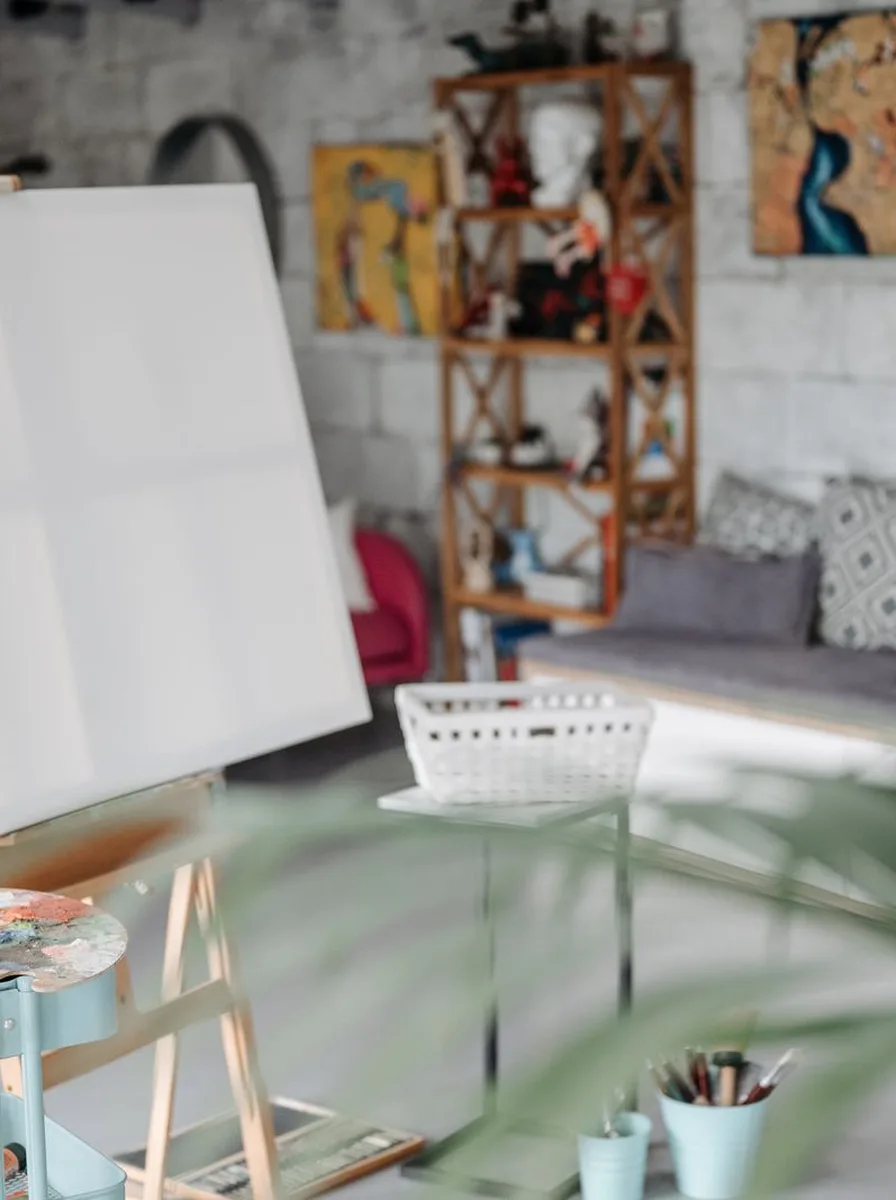
A salon-style cluster of canvases and framed prints turns one dining-room corner into a mini gallery. The eclectic mix — different sizes, different frames, different subjects — feels collected over time rather than bought in one afternoon, which is exactly the kind of character guests notice and remember.
Unify the chaos with one thread: a repeated colour, matching frame tones, or a consistent mat. Lay the arrangement on the floor first, photograph it, then hang. In a dining room, keep the cluster above sideboard height so serving dishes never knock a frame.
9. Add a Palm Sunset Canvas for Relaxed Dinners
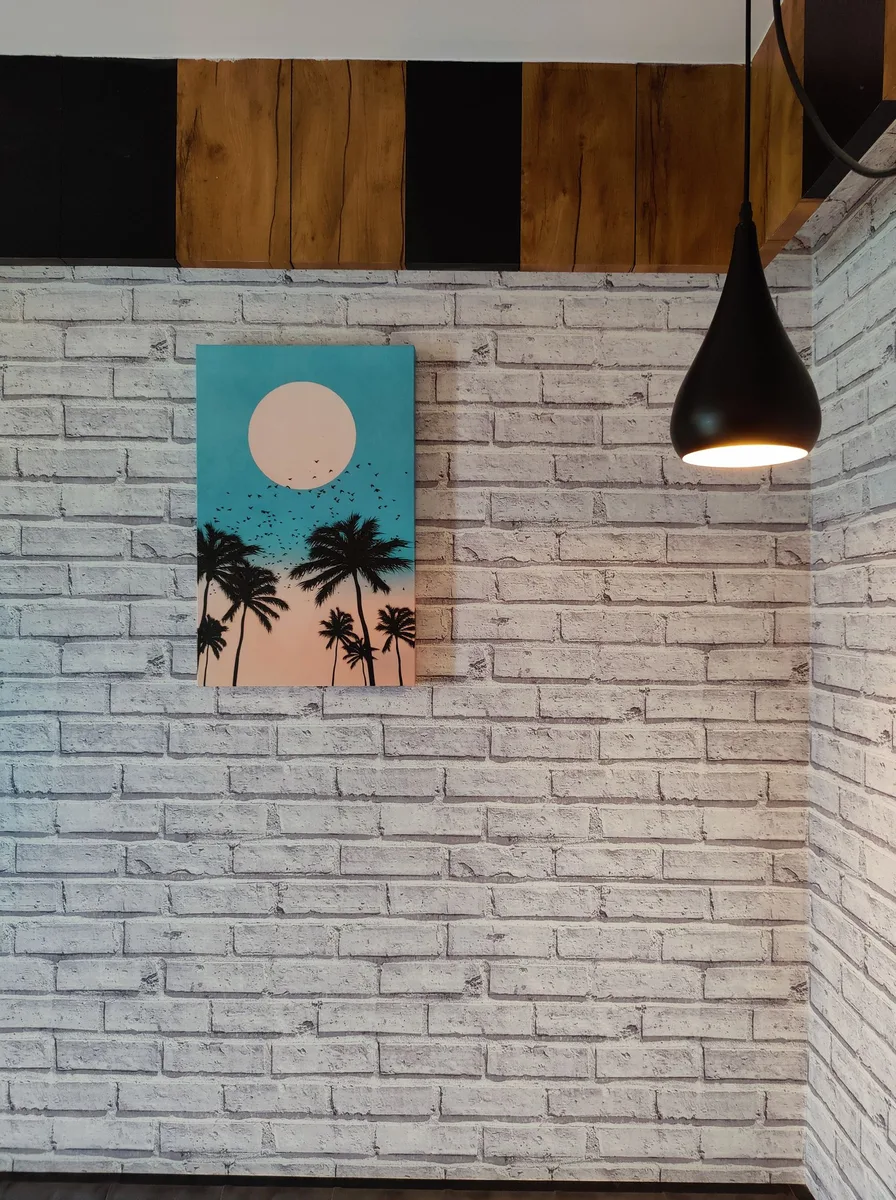
A small palm-and-sunset canvas brings holiday ease to the dining room — turquoise sky, dark palms, warm light. It is the visual equivalent of a long, slow dinner. Against a white brick wall it pops without shouting, and the tropical palette flatters candlelight beautifully.
Pair it with a statement pendant, as here, and let the two share the wall like old friends. Keep the canvas modest in size so it reads as a jewel rather than a billboard, and echo one colour — the turquoise or the amber — in a runner or a set of napkins.
10. Go Bold with a Pop-Art Gallery Wall
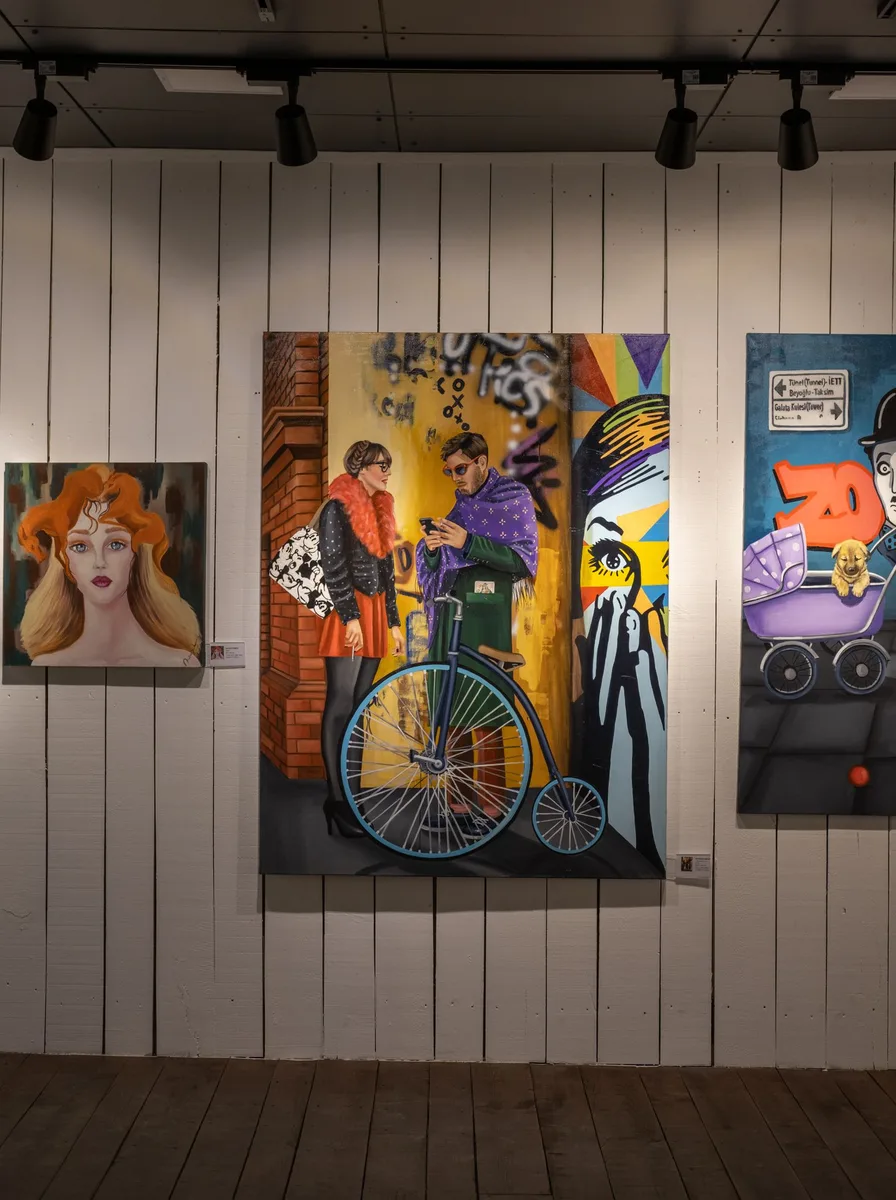
Pop-art canvases — bold portraits, bright colour blocks, graphic shapes — give a dining room the energy of a downtown gallery. This is art for hosts who like their dinner parties lively: the walls themselves become entertainment, and every guest will find a favourite piece.
Track lighting is the secret weapon here; aim one spot per canvas and the whole wall glows like an exhibition. Keep the dining furniture simple and dark so the art stays the star — black chairs, a plain table, and let the walls do all the talking.
11. Pick a Marbled Swirl as Your Colour Anchor

A marbled, poured-acrylic canvas in yellow, blue, and violet does double duty: it is a stunning artwork and a ready-made colour palette for the whole room. Pull two or three of its colours into your chairs, table linen, or a rug, and the dining room suddenly looks professionally designed.
Because marbled art is busy by nature, give it a calm setting — white or pale grey walls, simple furniture. Hang it where daylight hits it; the swirls have real depth and the colour shifts as the light changes through the day.
12. Match Your Canvas to a Moody Wall

Dark, moody dining rooms deserve art that glows against the gloom. An earthy landscape canvas in ochre and umber on a deep teal wall creates a jewel-box effect — the art looks lit from within, and the whole room feels intimate and cocooning, perfect for long winter dinners.
Choose art a tone or two lighter than the wall so it separates cleanly, and add a warm lamp nearby to bring out the painting’s depth. Moody walls forgive bold furniture too, so this is the moment for that striped or velvet piece you have been eyeing.
13. Make One Giant Geometric Canvas the Star

One oversized geometric canvas in punchy orange, blue, red, and turquoise is all a modern dining room needs. Big geometry reads as confident and architectural — it holds its own against a large table and turns the wall into a genuine focal point rather than an afterthought.
Size it right: the canvas should span roughly two-thirds the width of the furniture below it. Keep everything else in the room quiet — plain walls, simple chairs — because this piece is doing all the heavy lifting, and it is more than up to the job.
14. Let a Hot-Pink Abstract Do the Talking

Hot pink is pure dinner-party energy — joyful, a little daring, impossible to ignore. A large pink abstract with slashes of turquoise and orange turns an ordinary dining room into a room with a point of view, and it photographs beautifully for anyone who likes to share their table online.
Balance the boldness with calm surroundings: white walls, a pale table, simple seating. One pink hero per room is the rule — let it have the spotlight and keep every other colour in a supporting role.
15. Try a Dark, Textured Canvas for Candlelit Dinners

If your dining room comes alive after dark, dress it for the evening. A deep navy, near-black abstract with a silky, wave-like texture catches candlelight and lamplight in the most flattering way — the surface seems to move as flames flicker, which is pure magic over a dinner table.
Dark art needs a little help being seen: add a picture light or an adjustable spot above it, and choose a warm bulb so the texture glows rather than disappears. Pair with brass candlesticks and dark wood for a dining room that feels like a private club.
16. Anchor a Bold Sofa with Oversized Line Art

Bold furniture needs bold art to balance it. A large black-and-white sketch-style canvas above a saturated blue velvet sofa creates a perfect tension: the monochrome line work calms the strong colour, while the generous scale keeps the sofa from overwhelming the wall.
Track lighting, as shown here, is ideal for big pieces — two or three spots wash the canvas evenly. In a dining room, translate this idea above a banquette or a bold-coloured sideboard: one oversized monochrome canvas, one confident piece of furniture, nothing else competing.
17. Build a Grid of Small Square Canvases

A tight grid of small square canvases turns a collection of little artworks into one big statement. The strict geometry gives order to eclectic imagery, and against warm wood panelling the whole arrangement feels like a bespoke installation rather than a set of prints.
Keep every canvas the same size and the gaps perfectly even — two inches is the sweet spot — because the precision is what makes a grid sing. This works beautifully on the large, blank wall many dining rooms have behind the table.
18. Pick a Playful Typographic Canvas
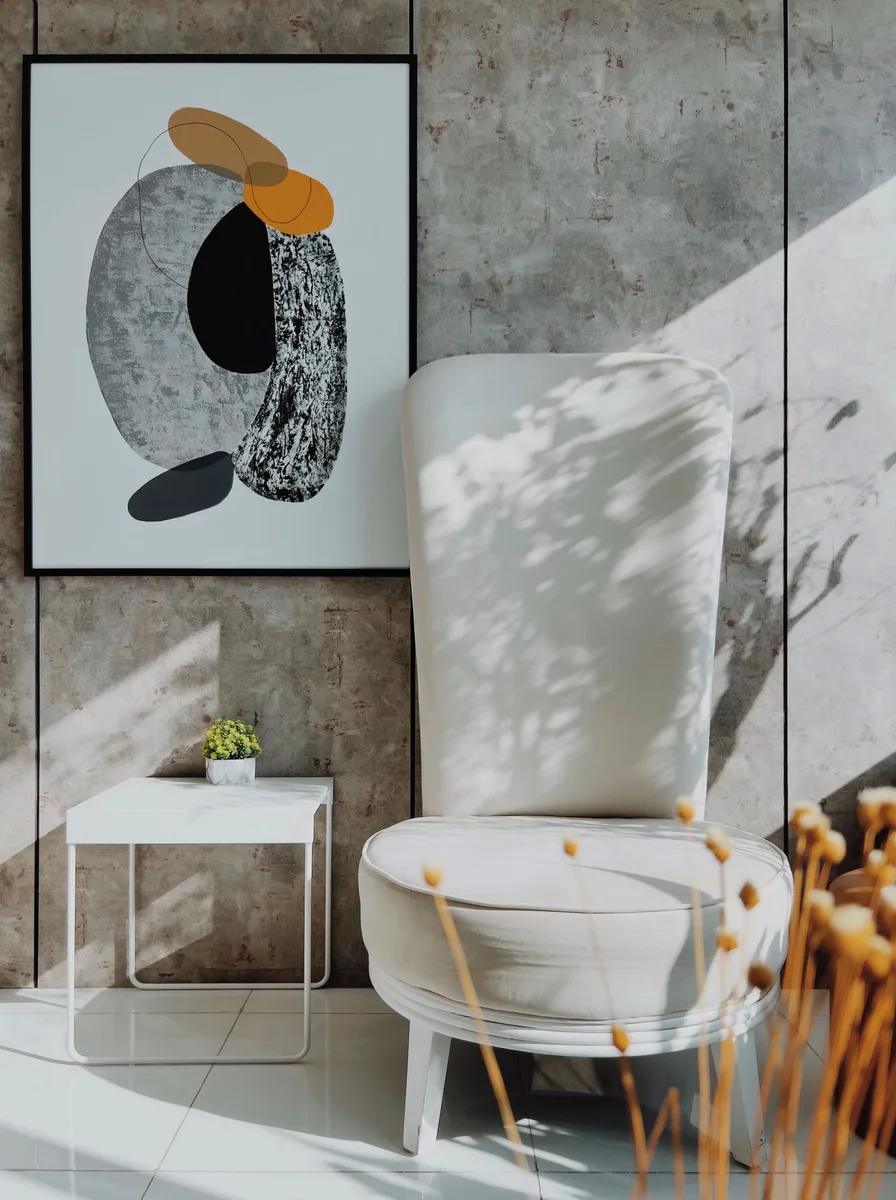
Letters make wonderful art. A single oversized character — an initial, a monogram, an abstracted letterform — is graphic, personal, and endlessly stylish in a modern dining room. Against raw concrete or a plain plaster wall, typography reads as pure design.
Choose your family initial for a personal touch, or a letter whose shape you simply love. Keep the palette restrained — black on white, or one colour on a neutral ground — so the form stays the hero. It is the kind of piece guests ask about.
19. Frame Pattern as Art with a Monochrome Print

Sometimes the pattern is the art. A bold geometric or architectural pattern in black and white gives a dining room graphic punch with zero colour risk — it works with absolutely everything and never dates. Think of it as the little black dress of wall art.
This is a brilliant choice for neutral dining rooms that need interest without a new colour to coordinate. Hang it in a simple slim frame, and feel free to echo the pattern’s geometry in a rug or table runner for a quietly designed feel.
20. Use Sharp Colour Blocks for a Modern Edge

Hard-edge colour blocking — crisp rectangles of magenta, black, beige, and white — is modern art at its most confident. There is no blending, no apology, just pure colour and shape. In a dining room with clean lines and minimal furniture, it looks like it was made for the space.
Let the canvas set the room’s accent colour: pull the magenta into a small detail like napkins or a vase, and keep the rest neutral. Hang it dead centre over the sideboard — symmetry suits the precision of the piece.
21. Go Bauhaus with Primary Colour Shapes

Bauhaus geometry — circles, arches, and bars in red, yellow, and blue — brings a century of design credibility to your walls. It is playful but disciplined, colourful but never chaotic, which makes it surprisingly easy to live with in a dining room.
Echo one primary colour in your dining chairs or a rug to tie the scheme together, and keep the surrounding walls white so the geometry pops. This style flatters mid-century and Scandinavian dining furniture especially well.
22. Soften the Room with Arched Beige Abstracts
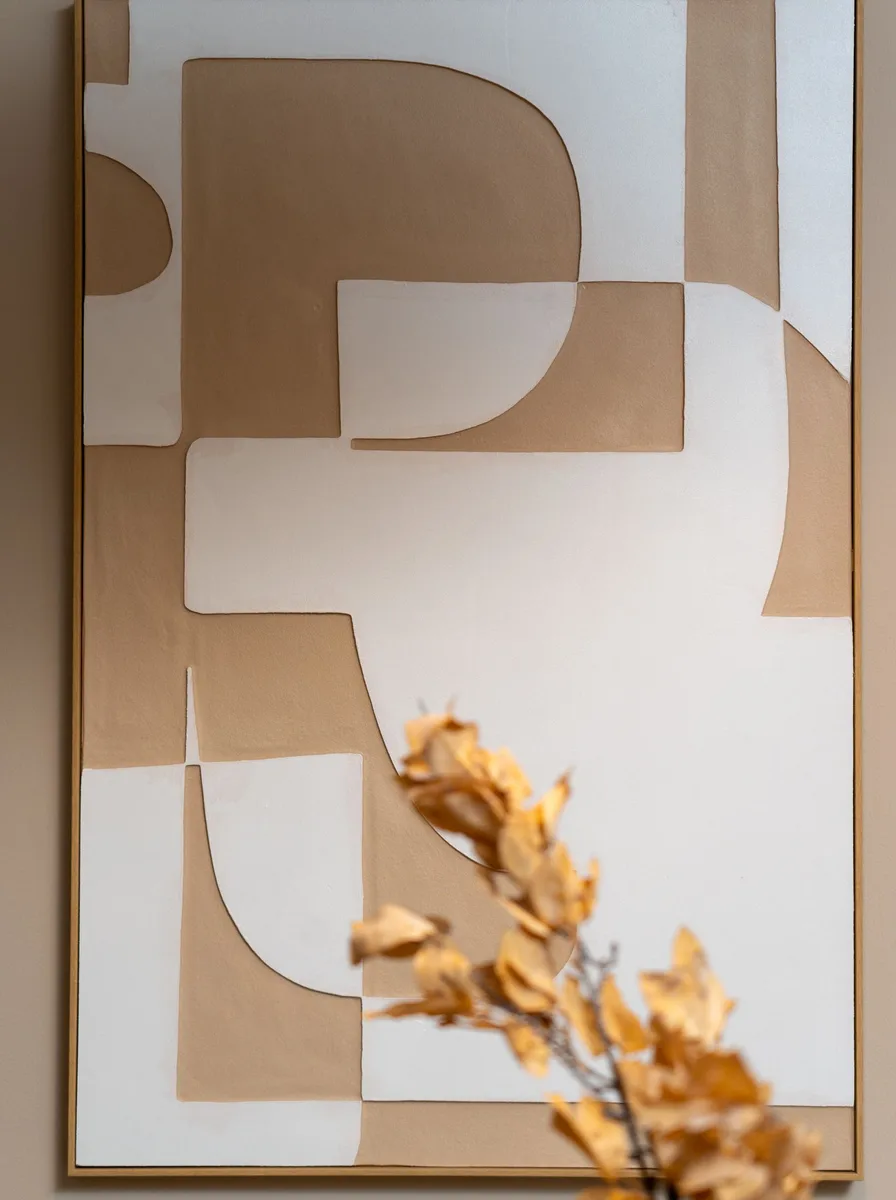
Soft arches in beige, cream, and stone are the gentle giants of abstract art — large, calm, and quietly architectural. They warm up a white dining room without adding any real colour, and their curved shapes soften all the straight lines of tables and chairs.
Style the canvas with dried grasses or pampas in front, as here, for a layered, organic vignette. Oak furniture and linen upholstery complete the look. This is elegance that whispers rather than shouts — ideal for serene, slow dining.
23. Add Dimension with Sculptural Relief Art

Three-dimensional relief art — carved faces, raised plaster shapes, sculptural forms — turns a dining wall into something guests want to touch. The raking shadows change through the day, so the piece never looks the same twice, which is endlessly fascinating over a long meal.
If a stone relief feels too permanent, textured plaster canvases give the same dimensional effect with a nail and a hook. Light relief art from the side or above to maximise the shadows; that is where all the drama lives.
24. Wrap a Corner in a Painted Geometric Mural

Why stop at one wall? A geometric mural in teal and cream that wraps around a corner makes the architecture itself the artwork. It defines the dining zone in an open-plan space and gives the room a custom, designer feel that no single canvas can match.
Renters can fake the effect with a large geometric canvas or a removable wall decal in the same spirit. If you do paint, map the shapes with painter’s tape first and step back often — murals are forgiving, and slight imperfections add to the handmade charm.
25. Keep It Calm with a Sage Abstract
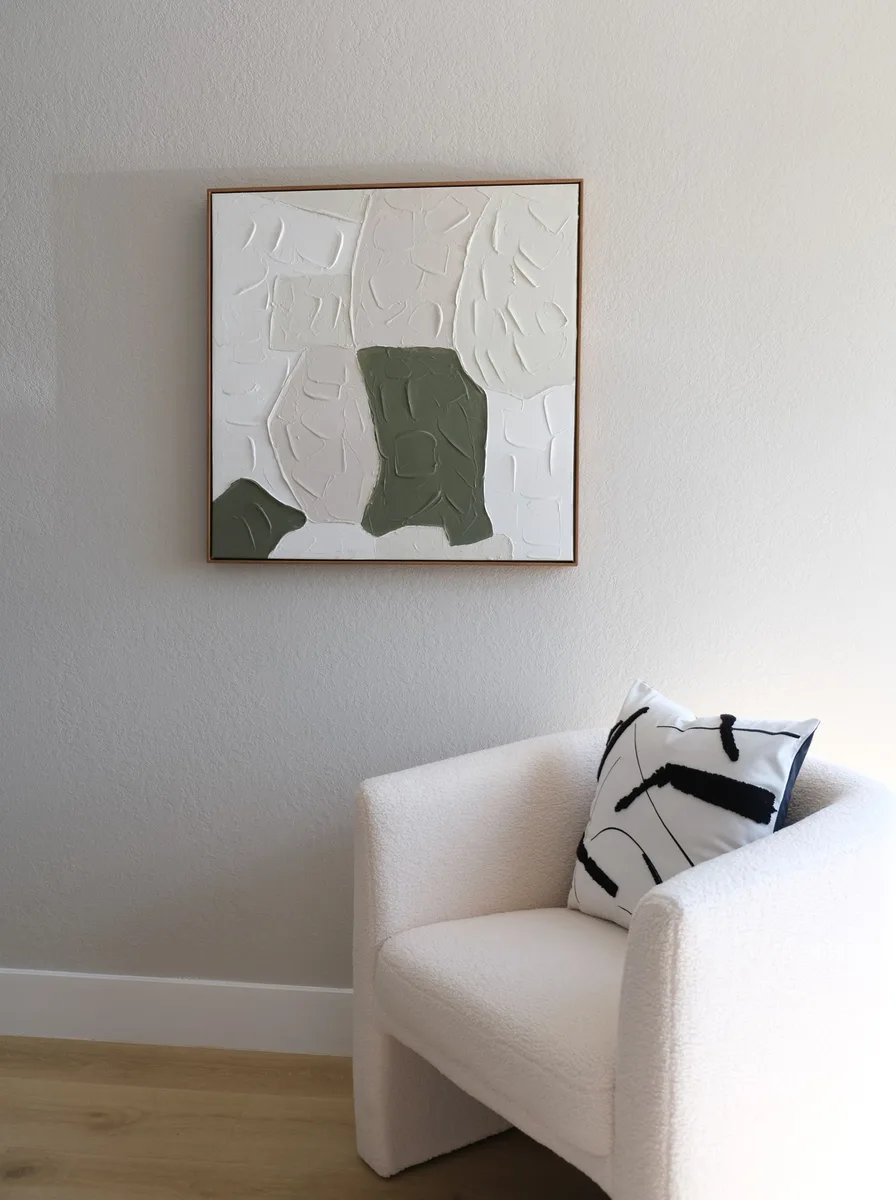
Sage green is the colour of calm conversation, which makes it a natural fit for dining. A small sage abstract on a white wall brings a breath of nature indoors without the maintenance of plants, and it pairs beautifully with cream upholstery and pale wood.
Keep the art modest in scale and let the empty white wall around it do the relaxing — negative space is part of the design. Add one graphic cushion in black and white for a little contrast, and the corner feels complete.
26. Light Your Canvas Like a Gallery

The most elegant canvas in the world falls flat in bad light. A colourful abstract portrait on dark wood panelling comes alive here because it is properly lit — warm display lighting washes the wall and makes the colours glow. Good lighting is the difference between art and decoration.
Add a picture light, an adjustable spot, or even LED strip lighting on a nearby shelf, and keep the bulb warm (around 2700K). Lit art becomes a focal point after dark, which is exactly when your dining room works hardest.
27. Finish with Textured White Plaster Art

Textured white plaster art — raised arches and ridges you can feel — is quiet luxury for the dining room. It catches light and shadow all day long, it matches absolutely everything, and it brings a handmade, artisanal quality that flat prints cannot offer.
Style it with metallics: gold and brass vases, as here, make the white texture glow. One spotlight from above completes the gallery effect. It is the perfect final note — elegant, tactile, and timeless enough to outlive every trend.