

Small art gets lost on dining room walls. Large art changes the room.
One massive piece — an oversized portrait, a sweeping abstract, a wall-sized mural — does the work of ten small prints: it anchors the space, sets the mood for every meal, and gives the dining room the confidence of a designed interior. The most common mistake in dining room decorating isn’t choosing the wrong art; it’s choosing art that’s too small. When in doubt, go bigger than feels comfortable.
Large-scale art follows its own rules.
Scale it to the wall, not the furniture: a statement piece should span roughly two-thirds to three-quarters of the wall’s width to look deliberate. Hang it lower than you think — the centre around 140 centimetres — because oversized pieces viewed from too high feel disconnected. And give it breathing room: one bold piece with clear space around it always beats a big piece crowded by clutter.
This guide brings together 20 massive large dining room wall art ideas, each shown in a real-style setting with practical advice on scale, placement, and styling.
From dramatic oversized portraits and moody abstracts to full-wall murals and sculptural installations, every idea here makes the same promise: one bold move, one transformed dining room.
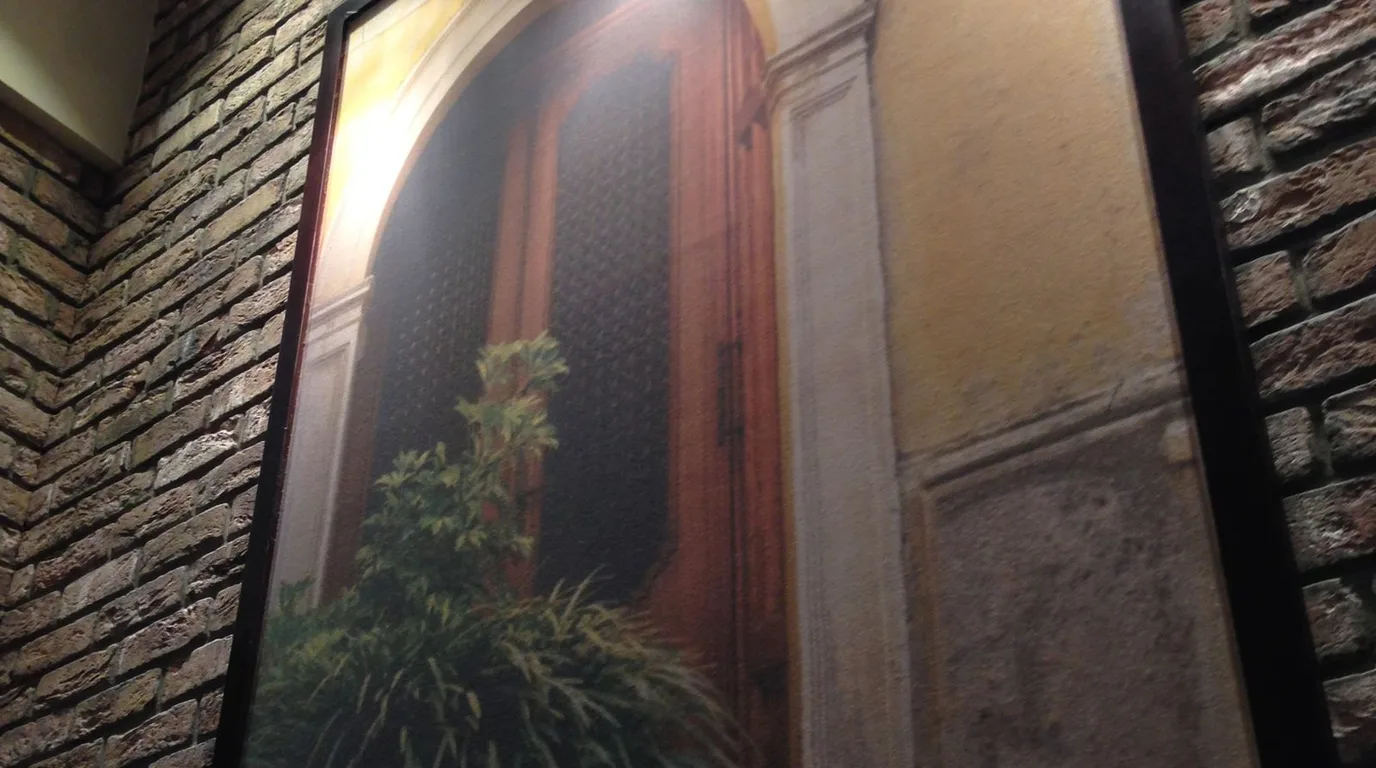
1. Pair a Tall Fashion Print with a Statement Mirror

A tall, elegant fashion print makes a wonderful large-scale anchor — its vertical format suits dining room walls, and its figurative subject gives the room personality. Pair it with a sunburst mirror and the two become a composed vignette: the print brings art, the mirror brings light and reflection, and together they fill a wide wall with confidence. Keep the frames slim and warm — light wood or thin gold.
Hang the print and mirror as a pair, with the mirror slightly higher and to one side, and let a rattan pendant light overlap the composition from above for a layered, designer feel. The trick is treating the wall as one arrangement rather than separate pieces. This pairing suits dining rooms with natural textures — jute, rattan, pale wood — where the look stays relaxed despite the scale.
2. Turn Small Frames into One Oversized Display

You don’t need one giant canvas to make a giant statement — a dense cluster of small frames, hung edge to edge, reads as a single oversized piece from across the room. Pack a doorway niche or a narrow wall with small colourful prints in varied frames, and the collective mass becomes the statement. It’s large-scale impact built from small, affordable pieces.
The key is density: leave only 3 to 5 centimetres between frames so the eye reads the cluster as one textured surface. A shared colour thread — warm reds and ambers, say — keeps the mosaic coherent. Start with a taped boundary on the wall and fill it completely, working from the centre out. The result has the presence of a mural with the flexibility of individual frames.
3. Anchor the Room with One Large Framed Piece
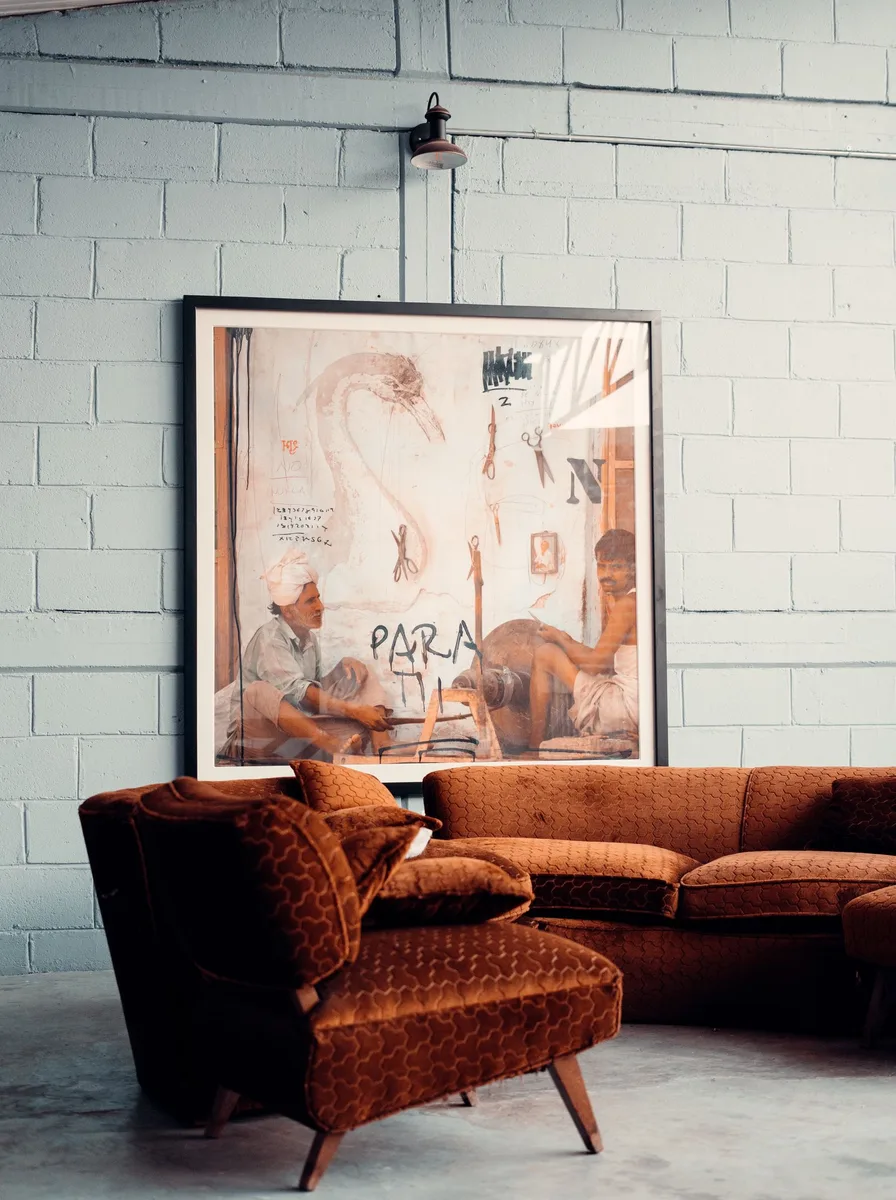
Sometimes the boldest move is also the simplest: one large framed artwork, centred on the main wall, anchoring the entire room. A single generous piece — a landscape, an abstract, a photographic print — gives the dining room a clear focal point and a sense of calm authority. Everything else in the room can then stay quiet, because the art is doing the talking.
Size it generously: the frame should span at least two-thirds of the furniture’s width below it, whether that’s a sideboard or a banquette. A substantial frame — wide moulding, quality finish — matters at this scale; it’s part of the statement. Hang the centre at 140 to 145 centimetres and resist the urge to add anything beside it. One piece, hung with conviction, is a complete design.
4. Go All-Out with a Poster-Covered Statement Wall
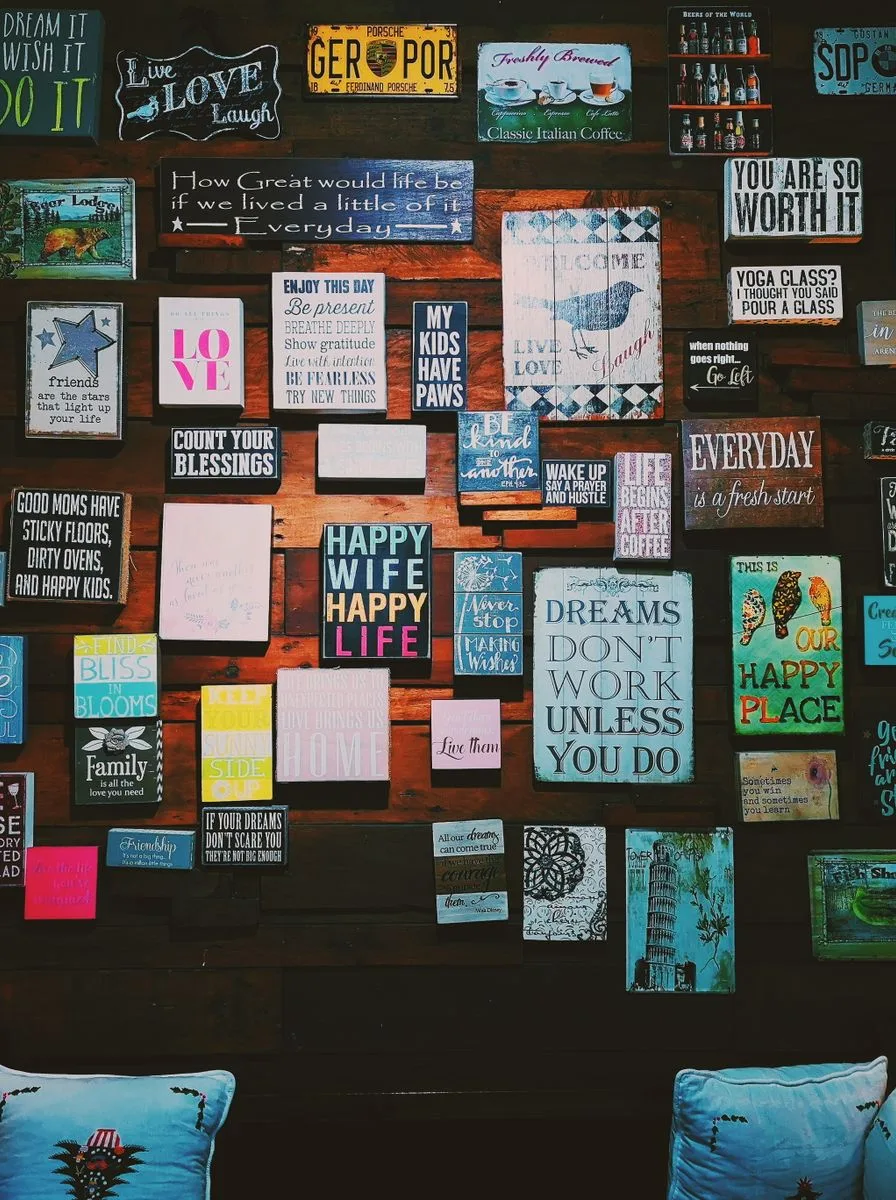
Cover an entire wall in poster-sized prints and the wall itself becomes the artwork. Bold typography, vintage advertisements, graphic quotes — hung in a tight mosaic from edge to edge — create the buzzing energy of a favourite café. The sheer scale of coverage is the statement; no single piece needs to carry the room because the wall does it collectively.
Unify the chaos with consistent framing — all thin black frames, for instance — so the variety lives in the art, not the mounts. Plan the layout on the floor first, photograph it, then transfer it to the wall. Keep the dining furniture simple beneath such a maximalist wall: a plain wooden table and simple chairs let the wall be the event. Dim, warm lighting completes the bar-like atmosphere.
5. Make Typography Your Statement

Big words make big statements. A gallery of large-scale typographic prints — single dramatic words, short quotes, graphic letterforms in black and white — brings gallery-grade confidence to a dining room wall. The monochrome palette keeps it sophisticated, while the scale keeps it from ever feeling timid. Words at this size become architecture.
Choose type with strong graphic shapes — bold serifs, hand-lettered scripts, condensed sans-serifs — and keep every frame identical so the letters do all the varying. Hang the pieces in a loose grid with tight, even gaps, and let one hero word anchor the centre. This is a brilliant choice for modern dining rooms, where the graphic punch complements clean-lined furniture.
6. Let One Piece Own the Whole Wall

The ultimate power move: one artwork, one wall, nothing else. A single horizontal piece floating on a vast pale wall — with a low bench beneath and acres of breathing room — has the quiet confidence of a real gallery. The emptiness around the art is doing as much work as the art itself; it tells the eye exactly where to look and makes the piece feel important.
This approach demands discipline: the wall must be genuinely clear, the art genuinely good, and the scale genuinely generous — at least a metre and a half wide. Choose a piece with enough internal interest to reward solitary attention: a detailed photograph, a complex abstract, a subtle landscape. In a dining room, this minimalism makes every meal feel like a private viewing.
7. Choose a Moody Grey Abstract for Calm

A large grey abstract — layers of charcoal, stone, and silver with gestural brushwork — brings a calm, gallery-like sophistication to a dining room. The restrained palette is endlessly liveable: it never shouts, it complements any furniture, and it looks magnificent in evening light. Grey abstracts are the tailored suit of statement art — quietly powerful.
Hang it above a pale sofa or sideboard so the dark canvas has contrast to push against, and light it with a picture light or an adjustable floor lamp aimed at the surface. The texture of the brushwork is half the appeal, so choose an original or a high-quality textured print rather than a flat reproduction. One moody piece, well lit, is a complete evening mood.
8. Style a Wide Abstract Over the Sideboard

The sideboard wall is the dining room’s natural gallery, and a wide abstract hung above it is the classic statement pairing. Choose a horizontal canvas that spans most of the sideboard’s length — the art and furniture should read as one composed unit. A large grey or neutral abstract keeps the look calm; the width alone provides the drama.
Style the sideboard surface to support, not compete with, the art: a stack of art books, a sculptural object, one low arrangement of stems. Keep the objects’ heights well below the canvas’s bottom edge so the art has clear air beneath it. Hang the canvas’s centre at about 145 centimetres, and the whole wall reads as a single, confident composition.
9. Hang a Striking Oversized Portrait
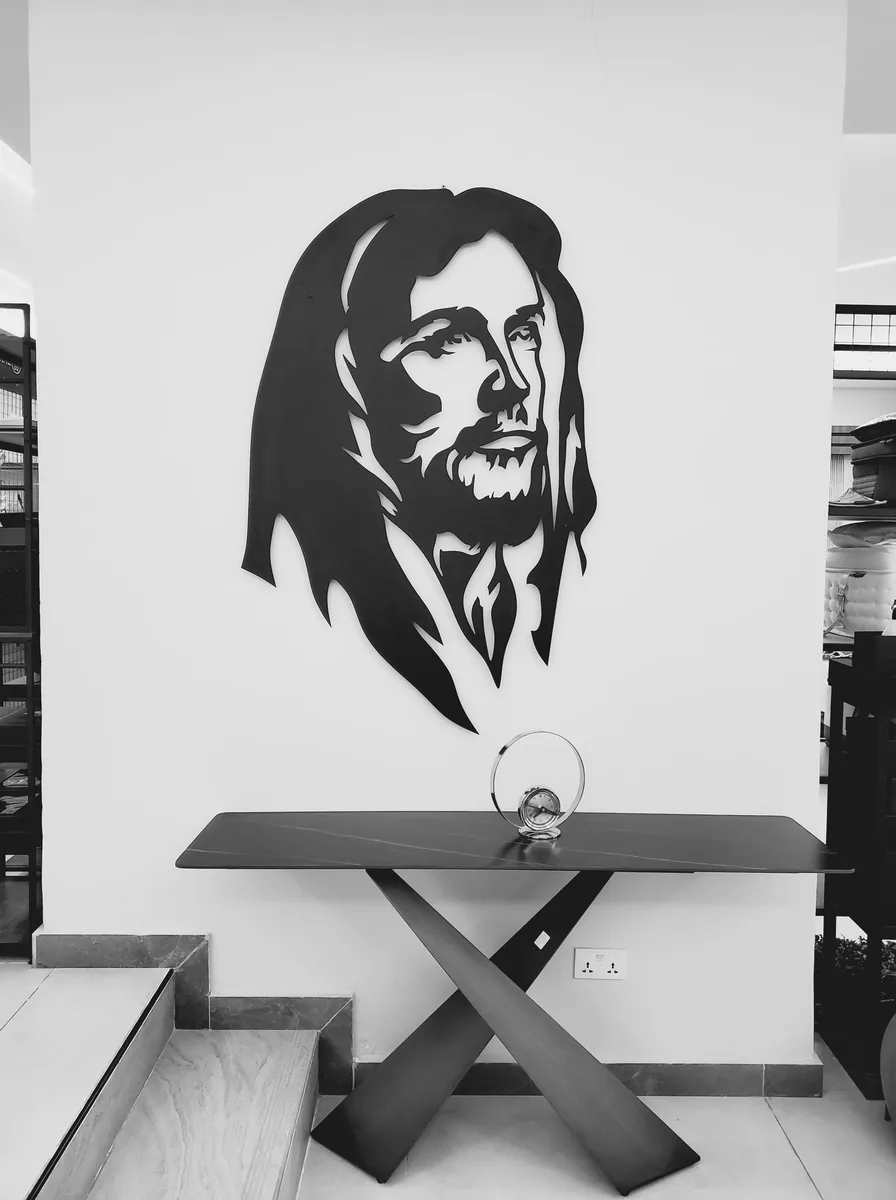
Few things command a dining room like an oversized portrait. A large-scale face — photographic or painted, in dramatic black and white — brings human presence to the wall and guarantees conversation. The scale is what makes it art rather than decoration: a portrait at near-life size or larger stops guests mid-sentence, in the best way.
Hang it above a simple console or sideboard, keeping the furniture low and quiet so the portrait dominates. Black-and-white portraits suit almost any scheme, from minimalist to eclectic, because they read as graphic rather than colourful. Give the piece strong lighting — a picture light or a pair of spots — because a portrait this bold deserves to be seen properly from every seat at the table.
10. Go Massive with a Floral Wall Mural
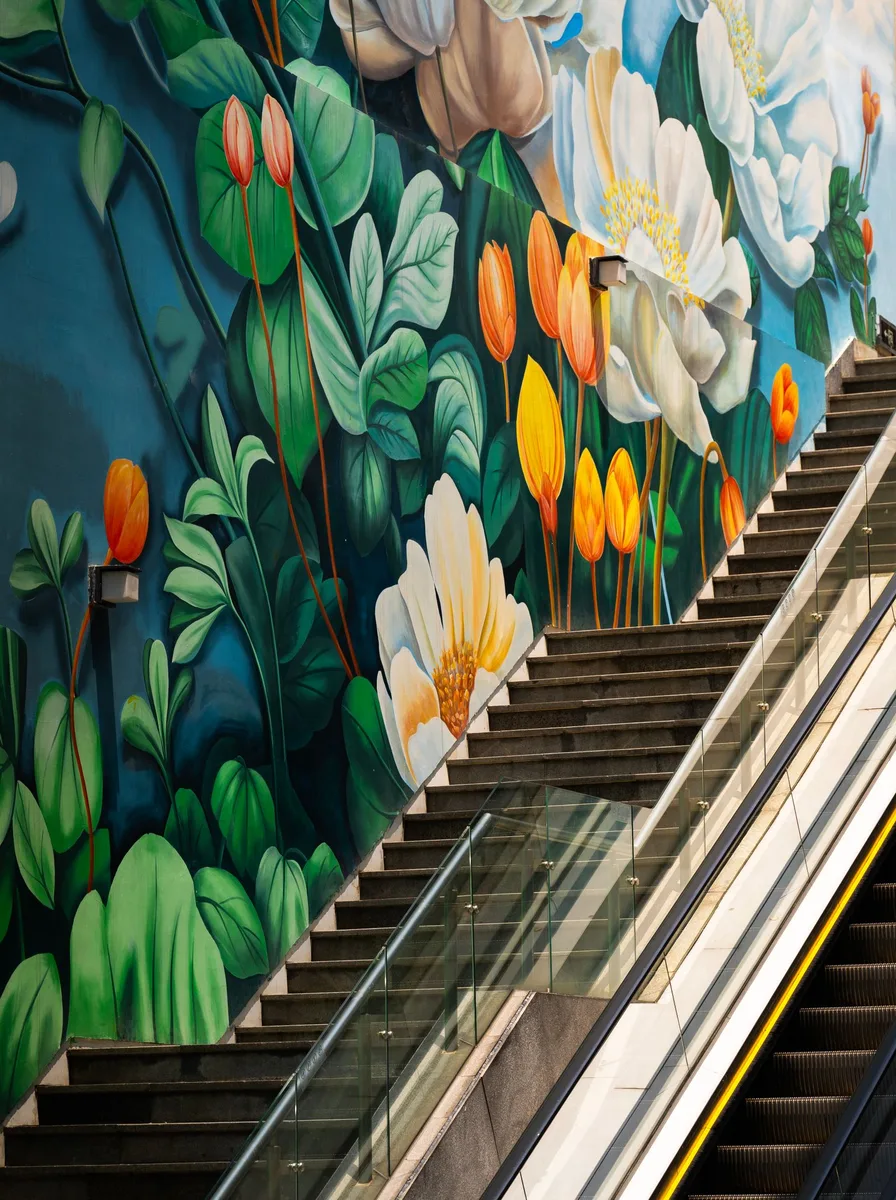
For the truly committed, a floor-to-ceiling floral mural is the largest statement art of all. Oversized blooms in vivid colour turn an entire wall — or a stairway beside the dining room — into a living painting. The scale is immersive: you don’t look at a mural, you’re inside it. Dining beneath giant flowers makes every meal feel like a celebration.
Commission an artist for a hand-painted original, or use a large-format printed mural for a fraction of the cost — modern prints are remarkably convincing. Keep the rest of the room calm so the mural stays the star: plain upholstery, simple tableware, minimal competing pattern. A mural is a permanent commitment, so live with a large sample for a week before you commit.
11. Fill a Timber Wall Edge to Edge

A timber-clad or reclaimed-wood wall is already a statement — so treat it like one giant canvas and fill it edge to edge with framed pictures. The wood’s warm texture becomes the unifying backdrop for dozens of small prints, photographs, and sketches, and the full coverage gives the wall the presence of a single massive artwork. Rustic and abundant beats precious and sparse here.
Mix frame styles freely — the wood behind them forgives everything — but keep the art’s palette warm to harmonise with the timber: sepia, amber, ochre, forest green. Hang pieces close together, filling the wall completely from about a metre off the floor to near the ceiling. The result suits farmhouse, lodge, and rustic dining rooms perfectly: cosy, collected, and completely unpretentious.
12. Line a Hallway Niche with a Colourful Grid

The hallway or alcove beside a dining room is prime statement territory that most people waste. Line a recessed niche with a tight grid of colourful small artworks — a series of bottle studies, a set of travel prints, a collection of mini abstracts — and the niche becomes a jewel box. The confined space makes even modest pieces feel grand, like art in a museum vitrine.
A themed series works best in a niche: twelve variations on one subject, in identical frames, hung in a precise grid. Add a spotlight or two inside the recess to make the colours glow. Because the display is contained, you can go as colourful and bold as you like — the niche frames the exuberance. Guests passing to the table get a gallery moment before they even sit down.
13. Style Greenery Around Your Statement Wall
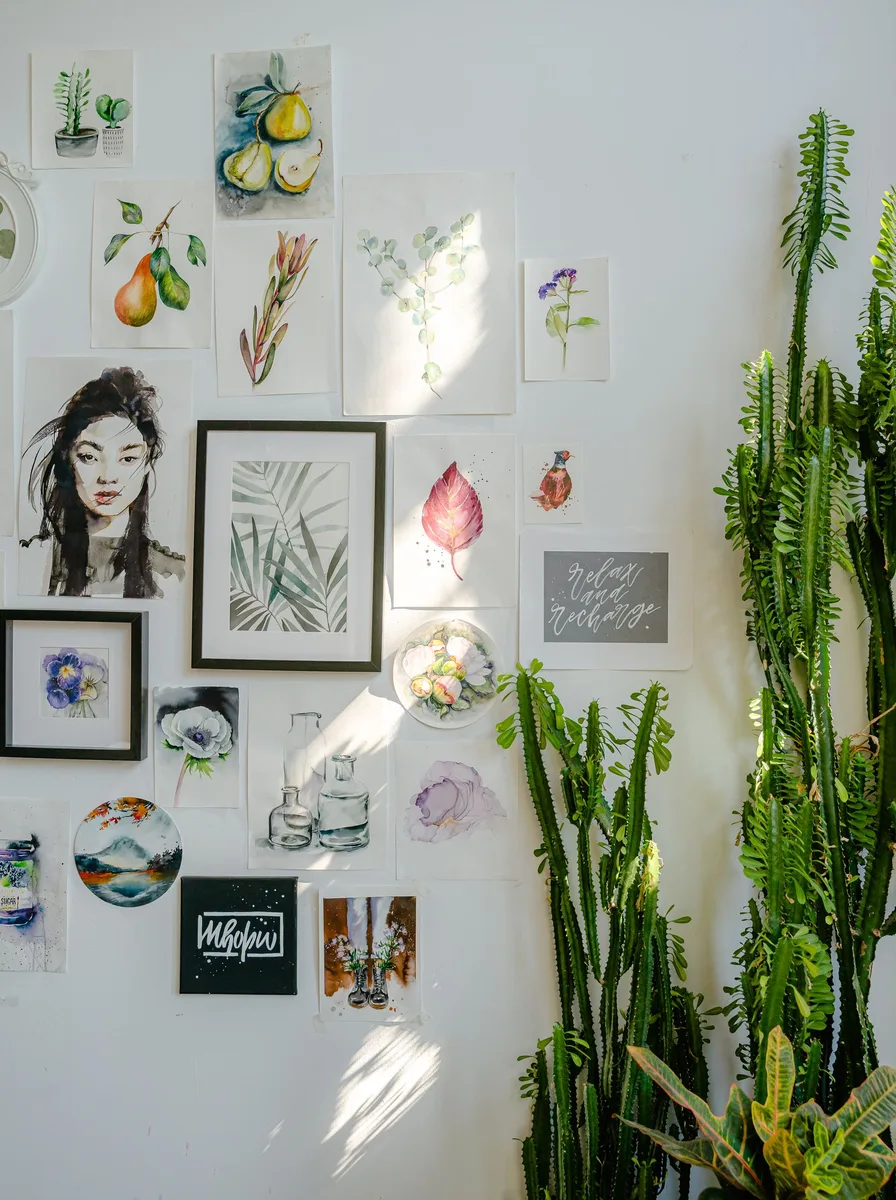
Large art and large plants are natural partners. A tall cactus, a fiddle-leaf fig, or a sculptural olive tree placed beside a statement wall softens the art’s edges, adds living scale, and fills the floor space that big art often leaves awkward. The organic shapes contrast beautifully with the art’s geometry — each makes the other look better.
Position the plant to one side of the artwork, not in front of it, and let its height reach at least halfway up the piece so the two feel related. Sunlight streaming across both — art and leaves — creates the kind of dappled, gallery-calm atmosphere that makes dining rooms feel expensive. Choose a simple pot in stone, terracotta, or black so it doesn’t compete with the art.
14. Hang Oversized Art at the Right Height
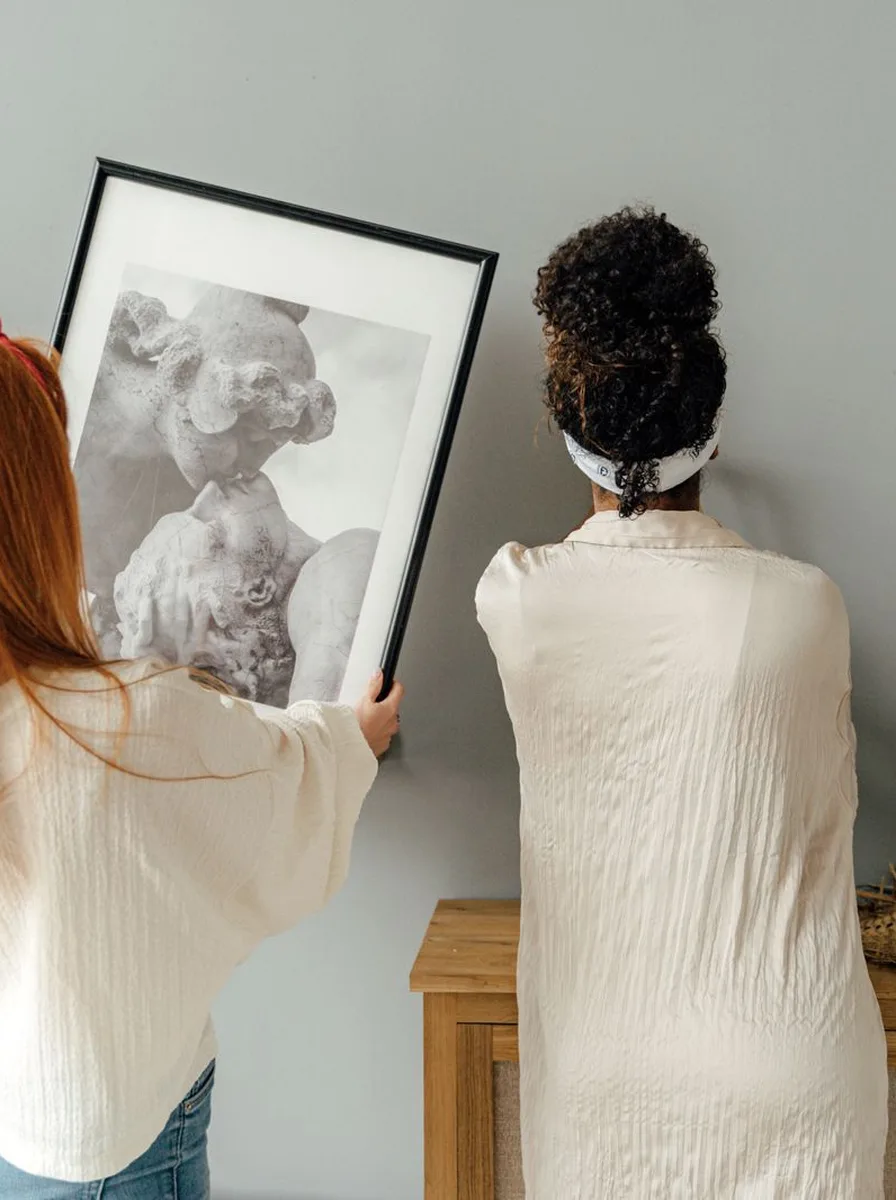
Oversized art hung too high is the most common large-scale mistake — it floats disconnected above the furniture and loses all its power. The fix is simple: hang big pieces lower than instinct suggests, with the centre around 140 centimetres from the floor, so the art connects visually with the table and chairs below. Large art should feel part of the room, not hovering above it.
Get a second pair of hands — oversized frames are heavy and awkward, and one person can’t safely level them. Hold the piece in place and live with it for a day before fixing it permanently; large art changes a room so much that the right height deserves a trial run. Use proper wall fixings rated for the weight, and consider two hooks for very wide pieces to prevent tilting.
15. Go Supersized with Statement Typography
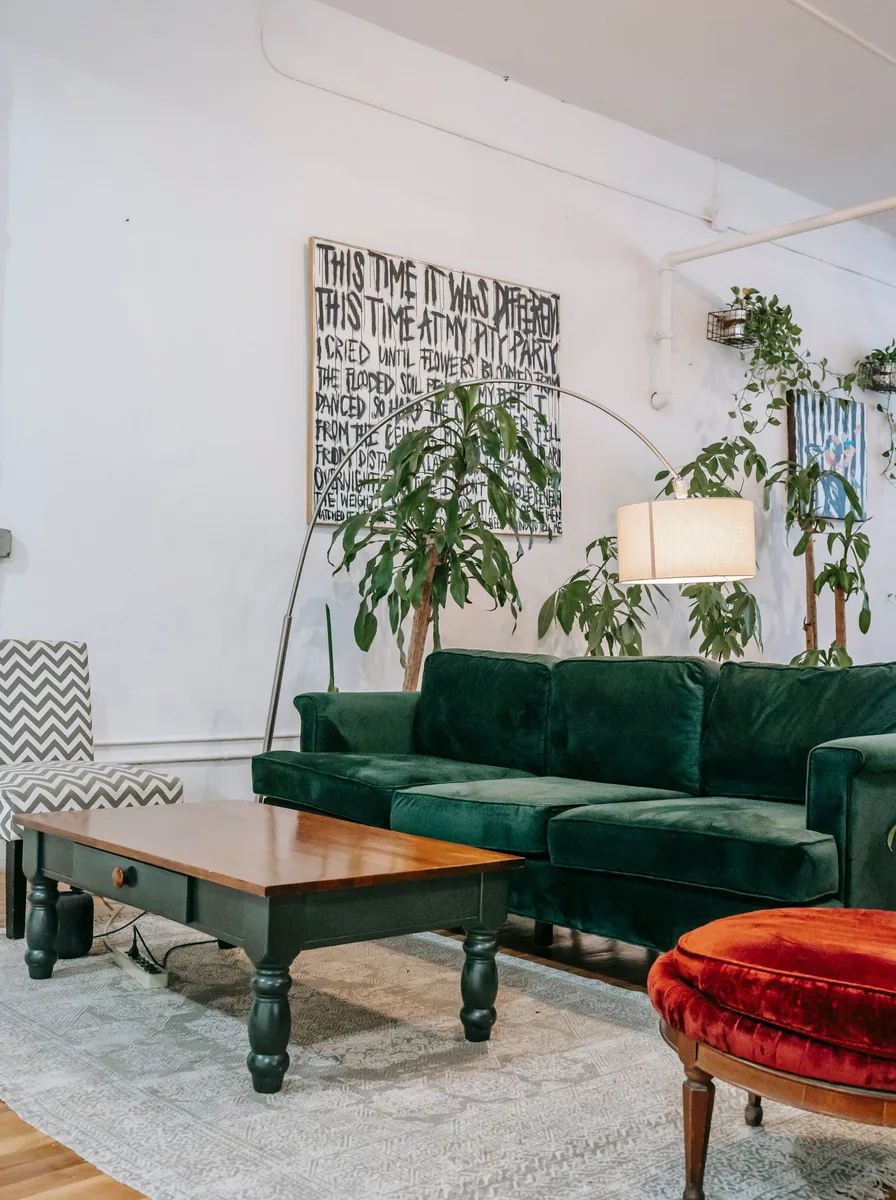
One enormous typographic artwork — a single giant word or a bold graphic phrase — is among the most confident statements a dining room can make. At supersized scale, letters become abstract shapes: powerful, graphic, impossible to ignore. Hung above a rich velvet sofa or banquette, oversized type brings an urban, gallery-like edge that instantly modernises a traditional room.
Choose a word with personal meaning — the family name, a favourite place, a motto — because you’ll be reading it at every meal. Black type on a pale ground is the most versatile, but white type on a deep colour makes a moodier statement. Keep the rest of the wall completely clear; a piece this bold needs no companions, only space.
16. Use Staircase Height for Dramatic Scale
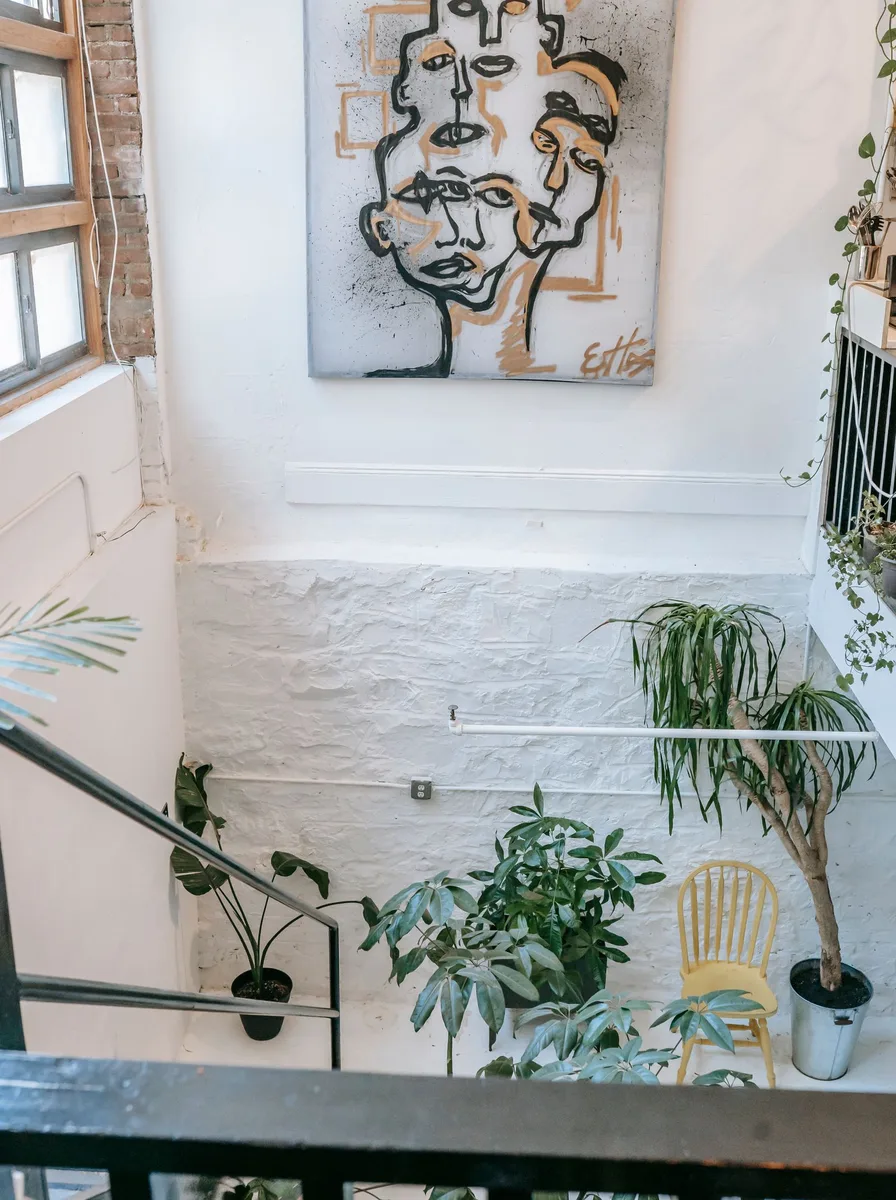
Staircase walls beside open-plan dining areas offer something precious: double-height hanging space. A large abstract hung high on a stair wall — visible from the dining table below — brings museum-scale drama into a domestic setting. The unusual height makes even familiar art feel monumental, and the dining room borrows grandeur from the architecture.
Choose a piece with strong shapes that read from a distance — bold faces, sweeping abstracts, large colour fields — because this art is viewed from metres away, not centimetres. Light it with an adjustable spotlight aimed from the landing or ceiling. If your dining area opens onto the stairs, this one piece can become the visual anchor for the entire open-plan space.
17. End a Hallway with a Bold Portrait
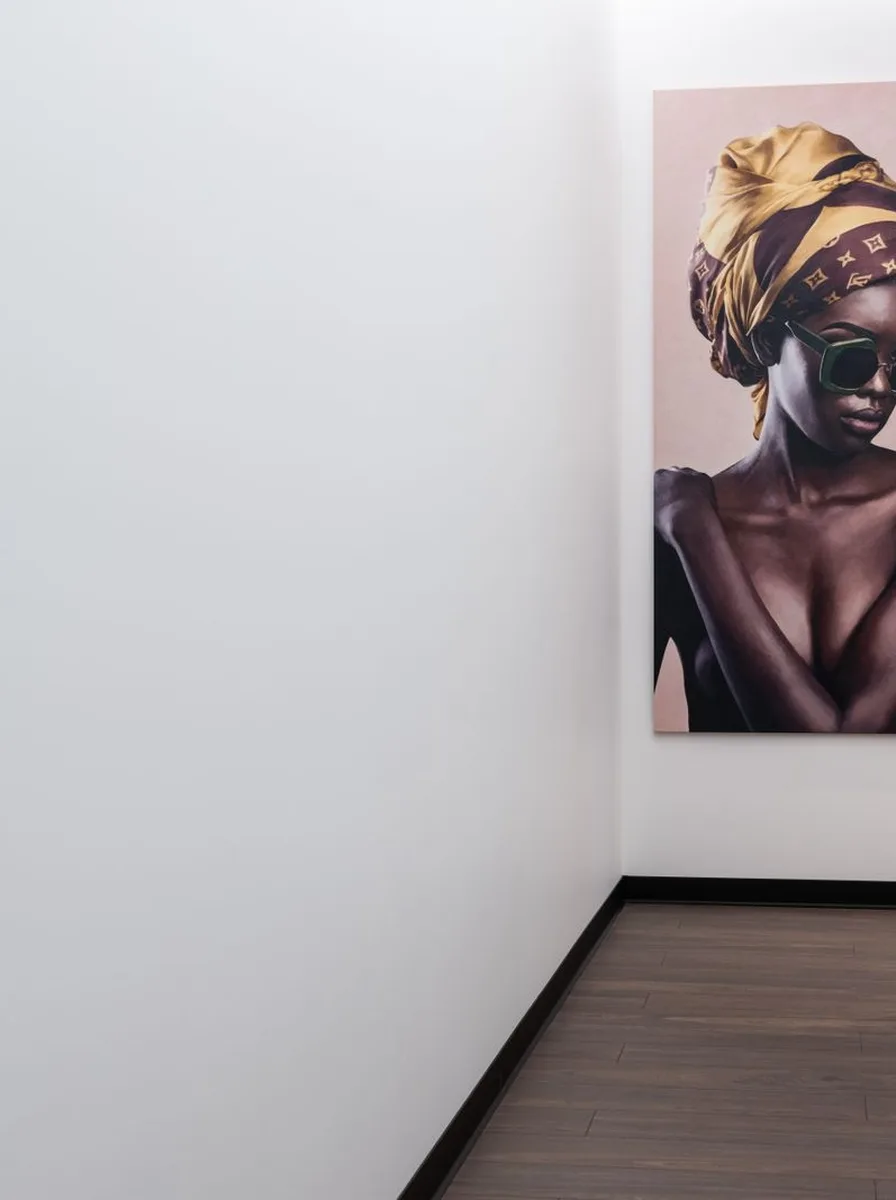
The wall at the end of a hallway is a natural stage — every approach builds anticipation, and a bold portrait waiting there delivers the payoff. A large-scale portrait, lit like a gallery piece, turns the corridor into a processional route and gives the dining room a grand entrance. It’s the oldest trick in stately homes, and it works in ordinary houses too.
Choose a portrait with direct gaze — painted or photographic — because the eye contact is what stops people in their tracks. Light it deliberately with a picture light or a recessed spot; a portrait at the end of a dark hallway needs its own illumination to shine. Keep the hallway walls pale and uncluttered so all attention lands on the finale.
18. Sculpt the Wall with Oversized Wire Circles
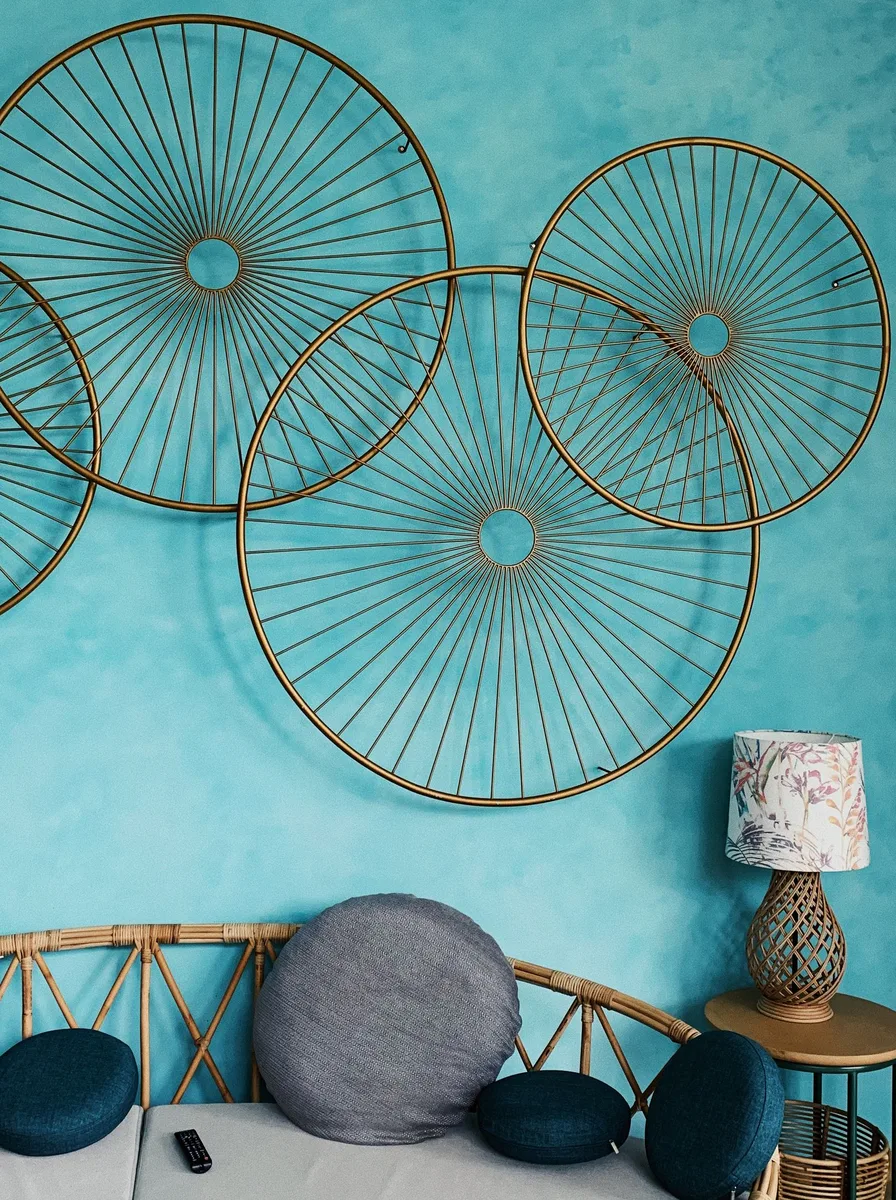
Statement art doesn’t have to be a picture — oversized sculptural pieces, like large wire or rattan circles, bring three-dimensional drama to a dining room wall. Their open forms cast beautiful shadows, add texture without visual weight, and suit rooms where a heavy framed canvas would feel too formal. Against a bold wall colour, they read as modern sculpture.
Hang two or three circles in an overlapping cluster, varying the sizes for a dynamic composition. The shadows they throw are part of the art, so light them with a warm directional spot rather than flat overhead light. Natural materials — rattan, wire, woven grass — keep the look warm and tactile, a lovely contrast to hard dining furniture.
19. Ground Dark Walls with a Large Figurative Piece
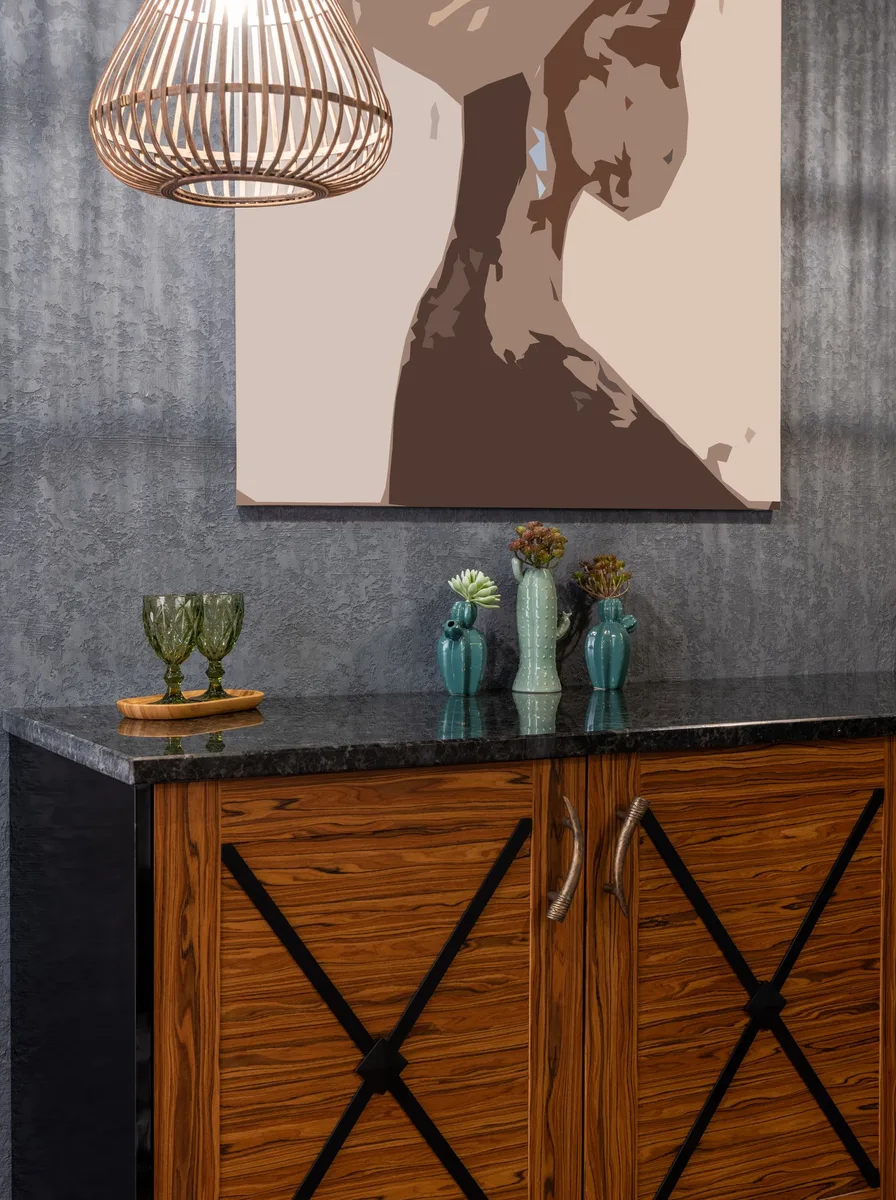
Dark, textured walls — charcoal plaster, deep slate, smoked wood — cry out for one large figurative artwork to ground them. A big canvas with warm, human imagery glows against the darkness like a window into another world, and the contrast gives both the wall and the art more presence than either would have alone. Moody walls plus bold art is a combination that never fails.
Choose figurative work with warm tones — amber skin, ochre backgrounds, candlelit scenes — so the painting radiates against the dark wall. Hang it above a substantial sideboard in wood or black lacquer, and style the surface with brass candlesticks and glassware that catch the light. This is dining-room drama at its most grown-up: intimate, confident, unforgettable.
20. Make a Statement with Woven Wall Baskets
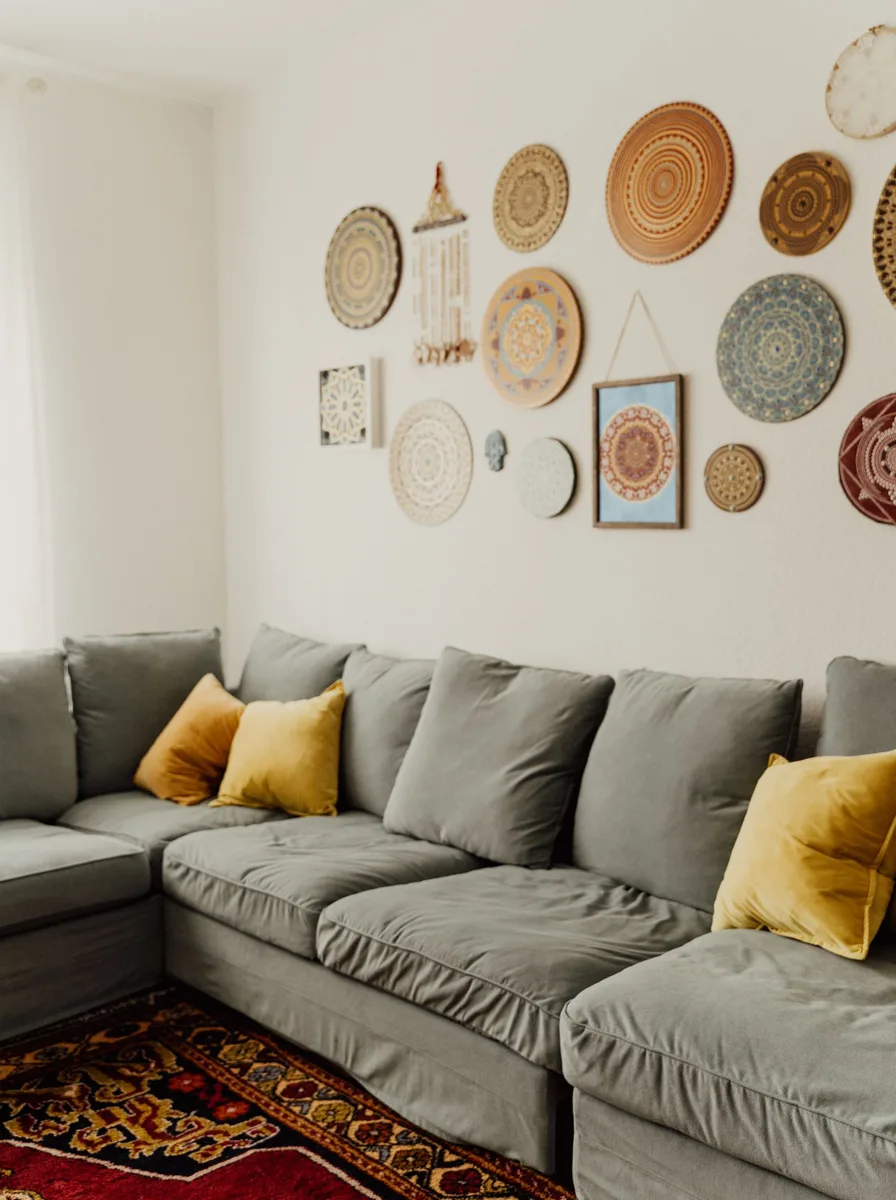
End with a statement that isn’t a picture at all: a large-scale arrangement of woven baskets, plates, and wall hangings. Clustered across a wide wall, natural woven pieces bring texture, warmth, and craft — and at sufficient scale, they hold a wall every bit as confidently as a painting. The handmade quality suits dining rooms beautifully, where food and craft belong together.
Mix sizes and weaves — flat plates, deep bowls, patterned discs — in a loose organic cluster spanning at least a metre and a half wide. A consistent natural palette of straw, jute, and cane keeps the arrangement cohesive. Hang the largest pieces first with sturdy hooks, then fill around them. It’s lightweight, affordable, renter-friendly, and utterly distinctive.