

A king size wooden bed can turn an ordinary bedroom into the room you never want to leave — but only if you choose the right one. Go too big and the room feels cramped; pick a weak frame and it starts creaking within a year. The good news is that getting it right comes down to a few simple decisions you can make before you spend a single dollar. This guide walks you through each one, step by step, with no design degree required.
Here is what you will learn: how to measure your space properly, what makes a king frame genuinely strong, how headboard height and wood tone change the mood of the room, and how to pick a mattress and bedding that feel as good as they look.
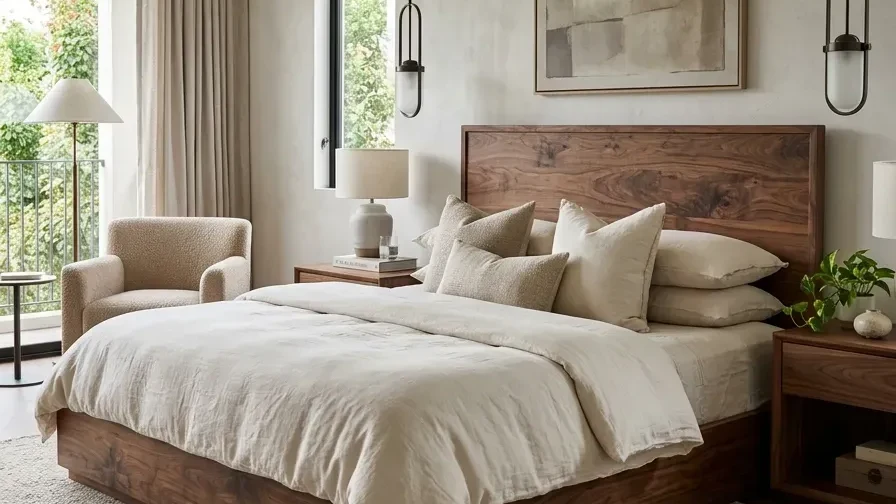
Measure Your Room Before You Fall in Love
A king mattress is about 76 inches wide and 80 inches long, and the wooden frame usually adds 2 to 4 inches on every side. Before you fall for a design online, grab a tape measure and check your wall — you want at least 24 to 30 inches of clear walking space on each side of the bed, plus room to open closet and bedroom doors fully. If the numbers feel tight, mark the bed’s outline on the floor with painter’s tape and live with it for a day before you commit.
Here is how to measure like you mean it:
● Measure wall to wall, then subtract at least 60 inches total for walkways on both sides of the bed.
● Walk the delivery path yourself — king frames are wide and do not always fit up stairs or around tight corners.
● Note where your outlets and light switches sit so the headboard does not cover them.
● If you are replacing an old bed, compare exact dimensions, not just the label size — two “kings” can differ by inches.

Frame Strength Matters More at King Size
A king bed carries two sleepers, a heavy mattress, and all that extra width, so its frame works harder than any smaller bed you have owned. Look for solid hardwood like oak, walnut, or rubberwood rather than thin particleboard that sags in the middle within a year. The center support is the make-or-break part: a good king frame has a strong center beam with at least one support leg reaching the floor. Shake the frame in the showroom if you can, or read reviews and watch for the words wobble, creak, and sag.
Your strength checklist before you buy:
● A center beam with legs touching the floor — non-negotiable at king size.
● Slats spaced no more than 3 inches apart so the mattress does not dip between them.
● Solid wood or metal-to-wood joinery at the corners, not just screws driven into soft wood.
● A weight rating that covers both sleepers plus the mattress, with room to spare.
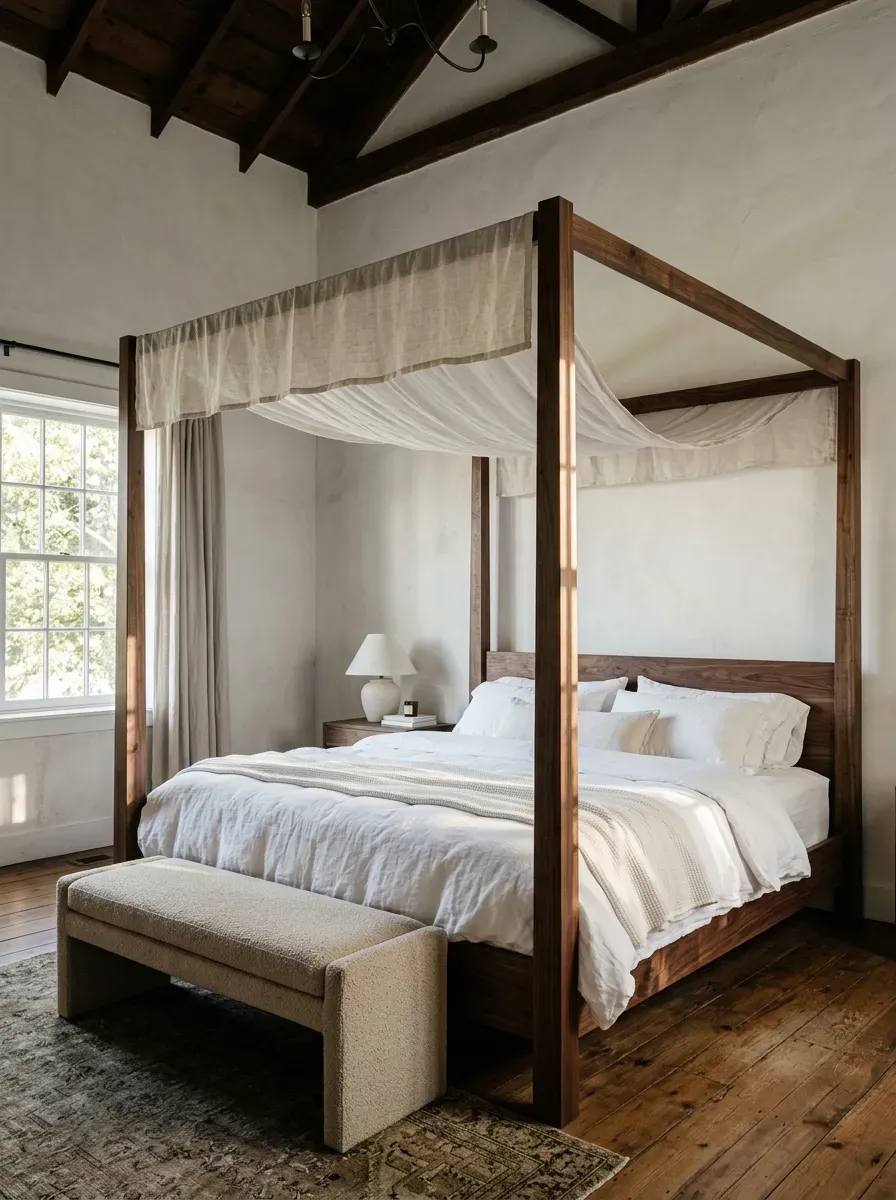
Headboard Height Sets the Mood
The headboard is the biggest visual statement your bed makes, and its height quietly decides the whole mood of the room. A tall, solid headboard makes ceilings feel higher and gives the bedroom a grand, hotel-like feel that suits larger spaces. A low or minimalist headboard keeps things calm and modern, and it works beautifully tucked under a window. If you like reading in bed, sit against the headboard before you buy — one you lean on every night should feel comfortable, not just look pretty in a photo.
Match the headboard to your life:
● Love reading in bed? Pick a padded or gently curved wooden headboard that supports your back.
● Low ceilings? A headboard under 48 inches keeps the room from feeling top-heavy.
● Want drama? Go 55 inches or taller and let the headboard be the room’s focal point.
● Small room? A slatted or open headboard lets light and air pass through so the space stays airy.
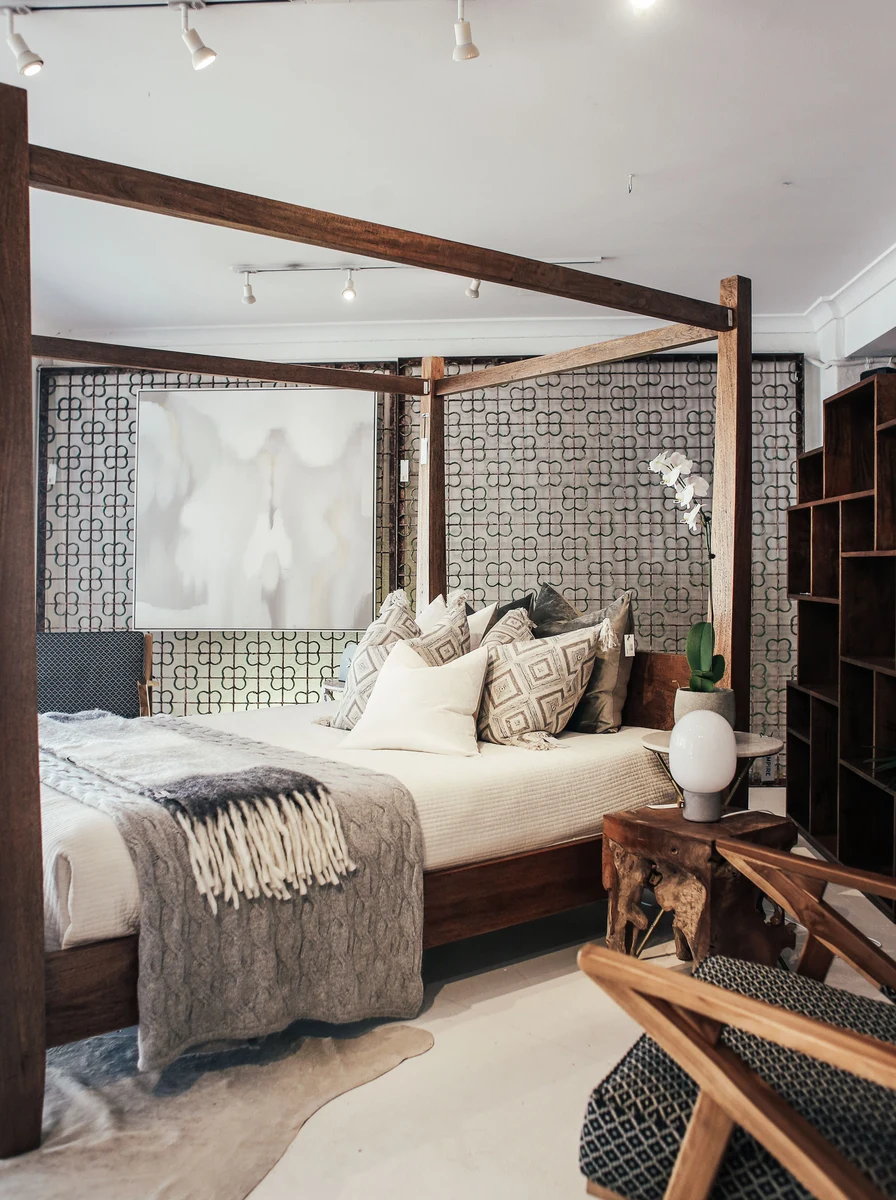
Wood Tone and Bedroom Light
The same walnut bed looks rich and warm in a sunny room and almost black in a dark one, so always judge wood tone in your own light, not the showroom’s. North-facing or shaded rooms do best with warm, lighter woods like honey oak or natural pine, which bounce the available light around and keep the room feeling open. Bright, sun-filled rooms can handle deep walnut or dark stained wood without the space feeling heavy. If the store allows it, bring a wood sample home and look at it in the morning and again in the evening before you decide.
Quick rules for wood tone and light:
● Warm light woods like oak, maple, and ash brighten dim or north-facing rooms.
● Dark woods like walnut and mahogany add coziness to large, bright rooms.
● Match your floor closely or go for clear contrast — an almost-match looks like a mistake.
● If your bedding is colorful, choose a calm, neutral wood tone so the bed does not fight the sheets.

Mattress and Bedding for Real Comfort
The frame is only half the story — the mattress decides whether you actually sleep well night after night. A king gives you room to spread out, so choose a mattress that supports both sleepers without letting you roll toward the middle. Medium-firm suits most couples, and a mattress at least 10 inches thick sits nicely inside a deep wooden frame without looking lost. Finish with breathable cotton or linen bedding in a size made for kings, because too-small sheets pop off the corners every single night.
Comfort details that pay off:
● Test the mattress together for at least 15 minutes, lying in your usual sleep positions.
● Use a mattress protector from day one to guard both the mattress and the frame’s slats.
● Buy king-size sheets and a king or oversized duvet — standard sizes leave the corners exposed.
● Add two sleeping pillows per person plus two euro shams for a full, finished look.

David is the home decor enthusiast behind HomeLushly. He shares practical, budget-friendly ideas for bedrooms, living rooms and seasonal decorating — from colour combinations that actually work to small-space styling tricks that make a room feel bigger. Every guide on HomeLushly is built around real photos and hands-on research, to help you make your home feel warm, personal and beautifully put together.