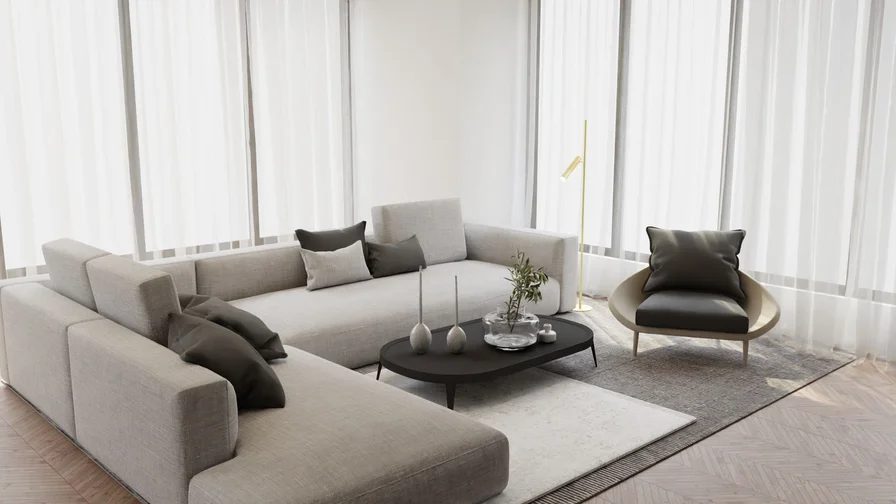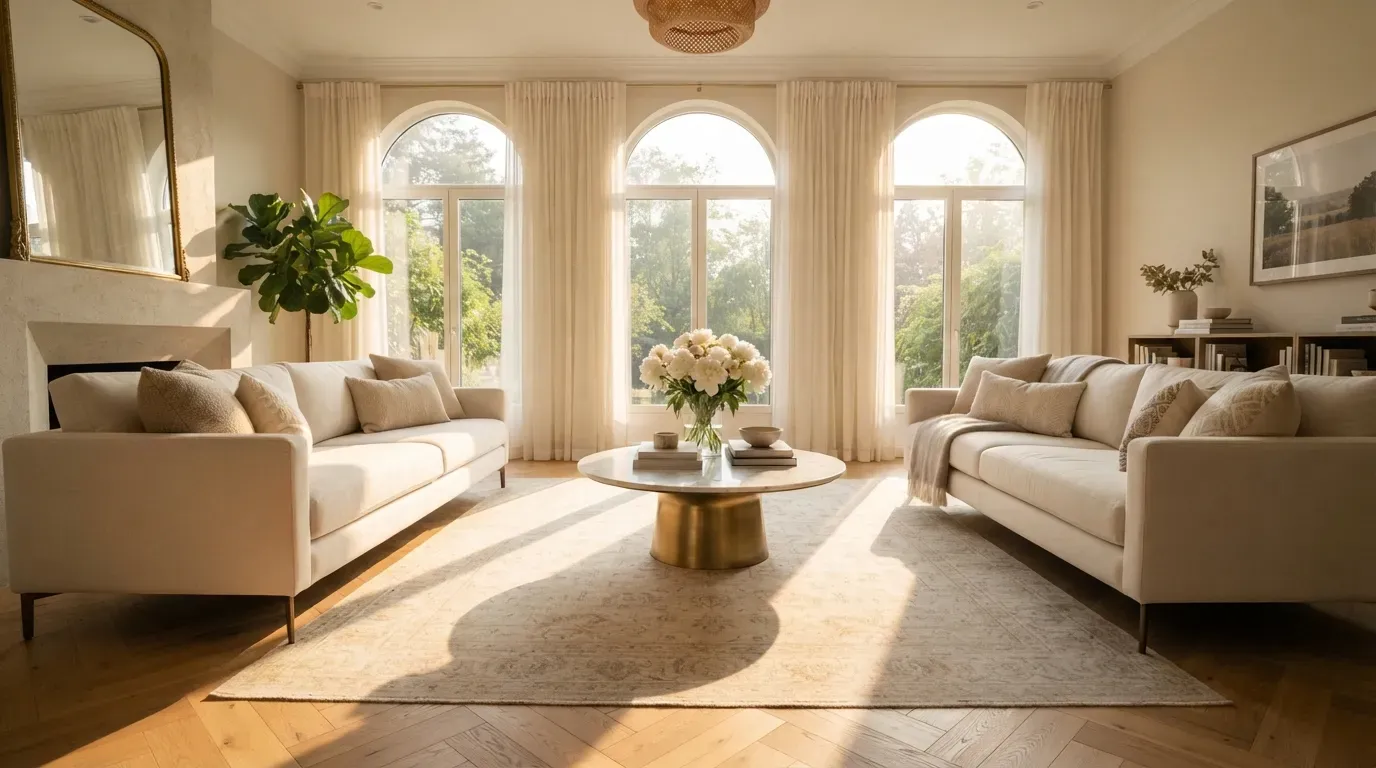
A classy living room does not have to cost a fortune or require a total remodel. It simply takes the right choices — the right colors, the right textures, the right arrangement — to make a space feel polished and put-together. Whether you are starting from scratch or just tired of how your current room looks, small and affordable changes can completely shift the feel of a space. The ideas below are practical, budget-conscious, and genuinely beautiful. Each one is designed to help you take real action, not just scroll and dream. Pick one or five — your living room will thank you.
1. Start With a Neutral Base Palette

The fastest way to make a room look expensive is to go neutral on the walls.
Warm whites, soft greiges, and creamy taupes do the heavy lifting without competing with your furniture or art.
Neutral does not mean boring. It means your room has a calm, collected foundation — and everything you add on top feels intentional.
You do not need to repaint the entire room. Even painting one accent wall in a soft clay or warm linen tone can anchor the whole space.
Budget tip: Sherwin-Williams Accessible Beige and Benjamin Moore White Dove are both affordable and widely loved for exactly this look. A single gallon runs about $50–$65 and can cover a full accent wall.
Pair your neutral walls with furniture in the same tonal family — think ivory throws, oatmeal pillows, sand-colored rugs. The layering of similar neutrals is what creates that quiet, sophisticated look you see in design magazines.
Avoid going too cool or too stark. Bright white can feel clinical. Warm white feels welcoming and refined.
Start neutral. Build from there. You will be surprised how much a wall color alone changes the entire energy of a space.
2. Invest in One Statement Sofa

Your sofa is the anchor of your living room. Everything else builds around it.
A well-chosen statement sofa — even a secondhand one — signals that the room was designed, not just furnished by accident.
You do not need to spend thousands. Thrift stores, Facebook Marketplace, and estate sales often have solid-frame sofas for under $200. A fresh set of cushions or a professional reupholster (sometimes as low as $300–$500) can completely transform it.
Choose a shape that feels intentional. Curved sofas feel romantic and refined. Tuxedo-style sofas (arms and back at the same height) feel architectural and timeless. Lawson sofas feel comfortable but still polished.
Go for a color with character. Deep navy, forest green, dusty blush, warm caramel — these feel far more considered than basic gray or beige.
If you have a neutral base palette on your walls, your sofa becomes the room’s personality.
Don’t rush this purchase. Sit with a few options. The right sofa can stay beautiful for 10–20 years with proper care.
The sofa sets the tone for everything else. Choose it like it matters — because it does.
3. Layer Rugs for Depth and Texture
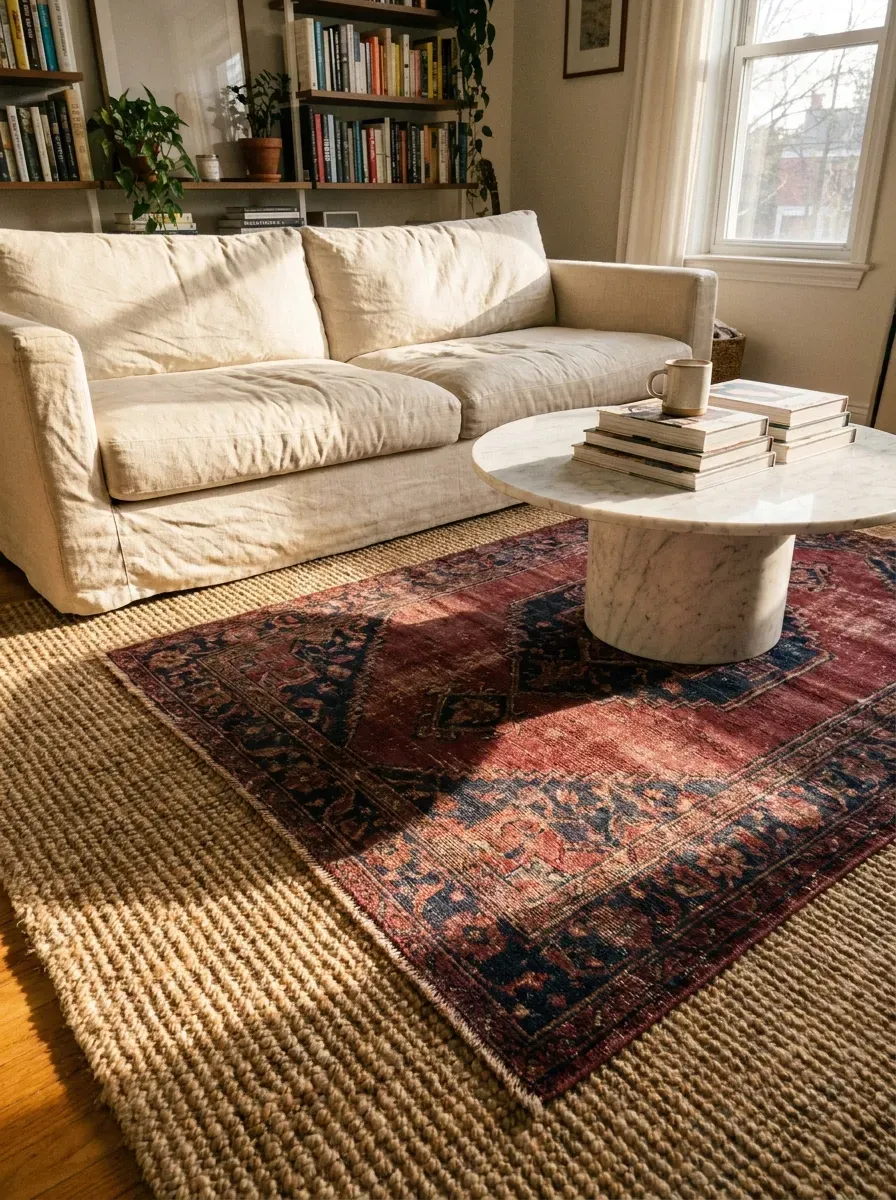
Layering rugs is one of the oldest tricks in interior design — and it works every time.
Start with a large, neutral base rug — jute, sisal, or a low-pile wool are all great options. These ground the room without demanding attention.
Then, layer a smaller, more decorative rug on top. Think vintage Persian, Moroccan beni ourain, or a geometric wool in a muted color.
The contrast of textures and patterns creates depth that makes a room feel curated and lived-in, rather than staged.
Budget tip: Large jute rugs are surprisingly affordable. You can find solid options at IKEA, Amazon, or Wayfair for $80–$150. Layer a vintage kilim or Persian from a thrift store or eBay on top for $30–$100.
For sizing, the base rug should be large enough for all furniture legs to sit on or at least the front legs. The layered rug should be centered and roughly half the size of the base.
Keep colors harmonious. If your base is natural jute, your top rug can be richer — burgundy, navy, rust, or hunter green all look brilliant against it.
Two rugs are always more interesting than one. Layer them with confidence.
4. Use Curtains That Go Floor to Ceiling

Curtains hung just above a window look like an afterthought. Curtains hung at ceiling height look intentional — and expensive.
This one change is free if you already own curtains. All it takes is moving the rod up.
Hang your curtain rod as close to the ceiling or crown molding as possible. Let the curtains fall all the way to the floor — or even pool slightly for a luxurious look.
This tricks the eye into thinking the ceiling is taller and the windows are larger than they actually are.
For fabric, linen and velvet are two of the most classy options. Linen feels airy and soft. Velvet feels rich and dramatic.
Budget tip: IKEA’s DYTÅG and HANNALILL curtains are linen-look options for under $40 per pair. Simply buy the longest version available and adjust the rod height accordingly.
Stay in your room’s color palette. Soft white, ivory, warm greige, dusty blush, or even deep navy all work beautifully depending on your overall look.
Avoid curtains that are too short or too stiff. They immediately make a room feel small and cheap.
Long, flowing curtains add drama and height. They are one of the most affordable upgrades you can make.
5. Add Architectural Interest With Molding
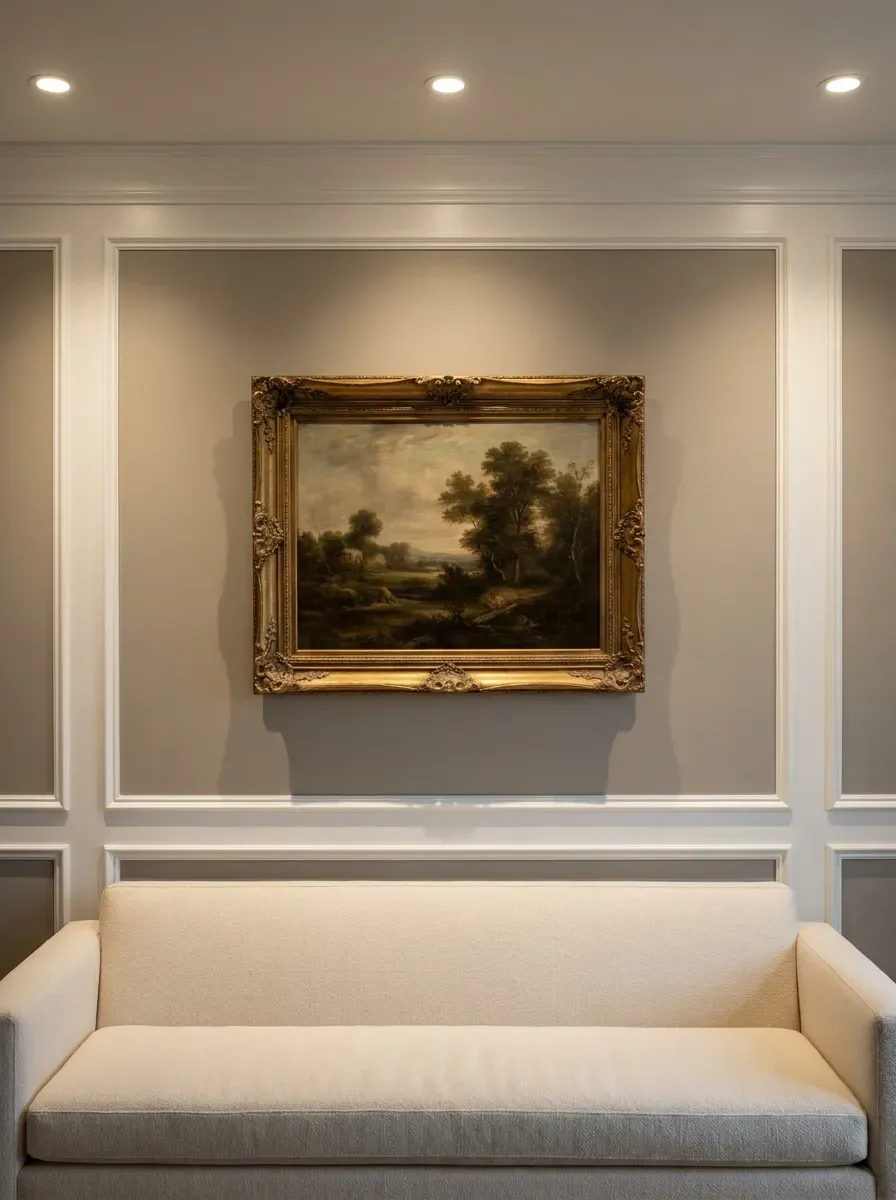
Crown molding, picture rail molding, and wainscoting are hallmarks of classic, high-end homes. But you can achieve the same effect without hiring a contractor.
Peel-and-stick molding strips and foam wall panels from Amazon or Home Depot are remarkably convincing when painted. A can of semi-gloss white paint unifies everything and makes it look architectural — not DIY.
Board and batten paneling is one of the easiest DIY projects for classy living room walls. It involves attaching vertical and horizontal strips of thin wood to the lower half of a wall, then painting everything the same color.
Materials cost roughly $100–$250 for an average-sized wall, depending on your ceiling height.
Paint the paneling in the same color as your walls for a tonal, sophisticated look. Or go slightly darker for contrast and drama.
This works especially well in rental spaces. Many peel-and-stick options leave no wall damage.
Even a single paneled wall behind your sofa turns a plain room into something that looks designed from the ground up.
Molding communicates that a home was built with care. You can create that feeling even on a tight budget.
6. Choose a Coffee Table That Doubles as Art
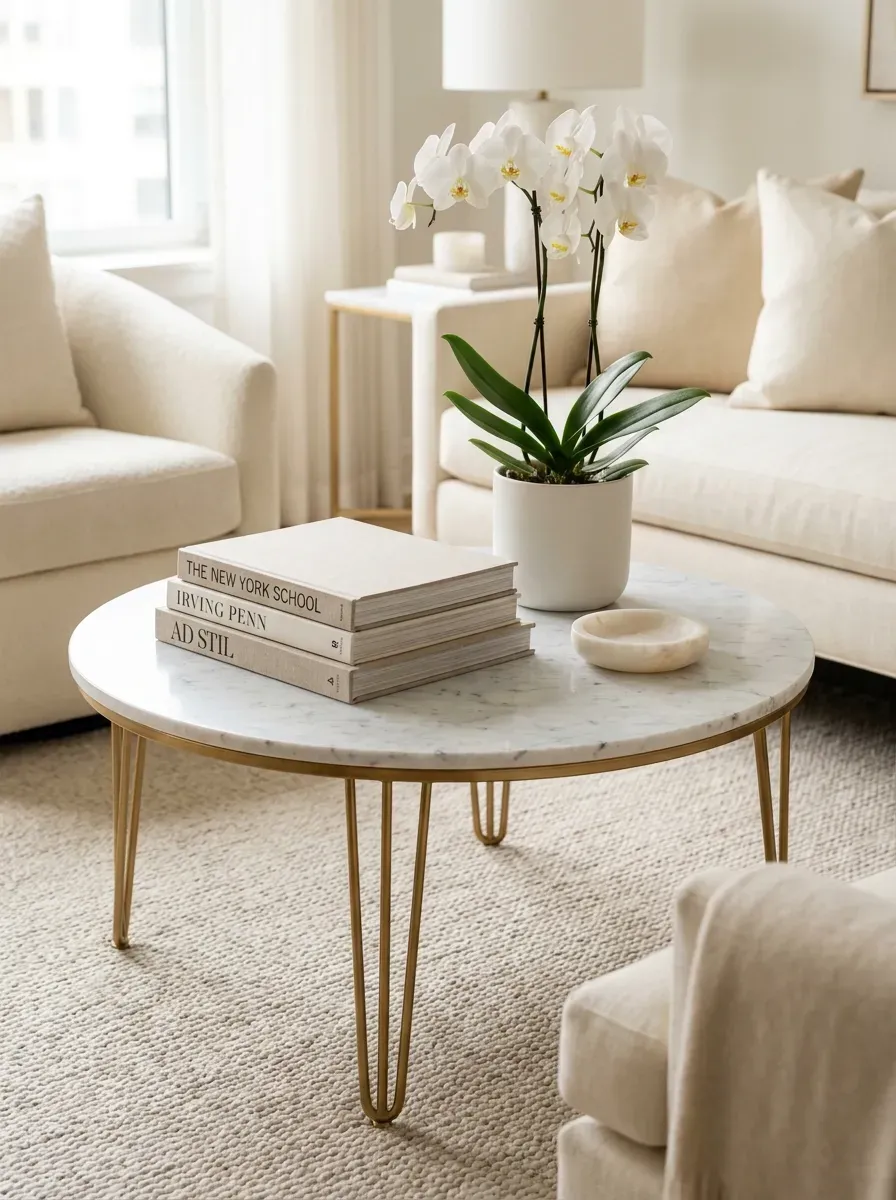
The coffee table is one of the most looked-at pieces in any living room. It deserves more than just functional.
Choose a coffee table that has sculptural quality — something with an interesting silhouette, material, or finish.
Marble tops feel elegant and are surprisingly affordable in smaller sizes. Travertine, rattan, lacquered wood, and smoked glass all read as considered choices.
You do not need to spend a lot. CB2, Article, and World Market all have beautiful options under $300. Secondhand finds from Facebook Marketplace can be even less.
Round coffee tables tend to feel more refined and are better for smaller spaces. Rectangular tables work well in larger rooms with longer sofas.
Style the top simply: a stack of two or three large art books, a small ceramic dish, and a single sculptural object. That is all you need.
Less is more on a coffee table. Clutter kills the effect immediately.
If you already own a coffee table that feels dated, a can of spray paint in matte black or warm gold can completely transform it for under $15.
The coffee table sets the tone for the whole room’s vibe. Choose it carefully.
7. Bring In Warm Metals Throughout
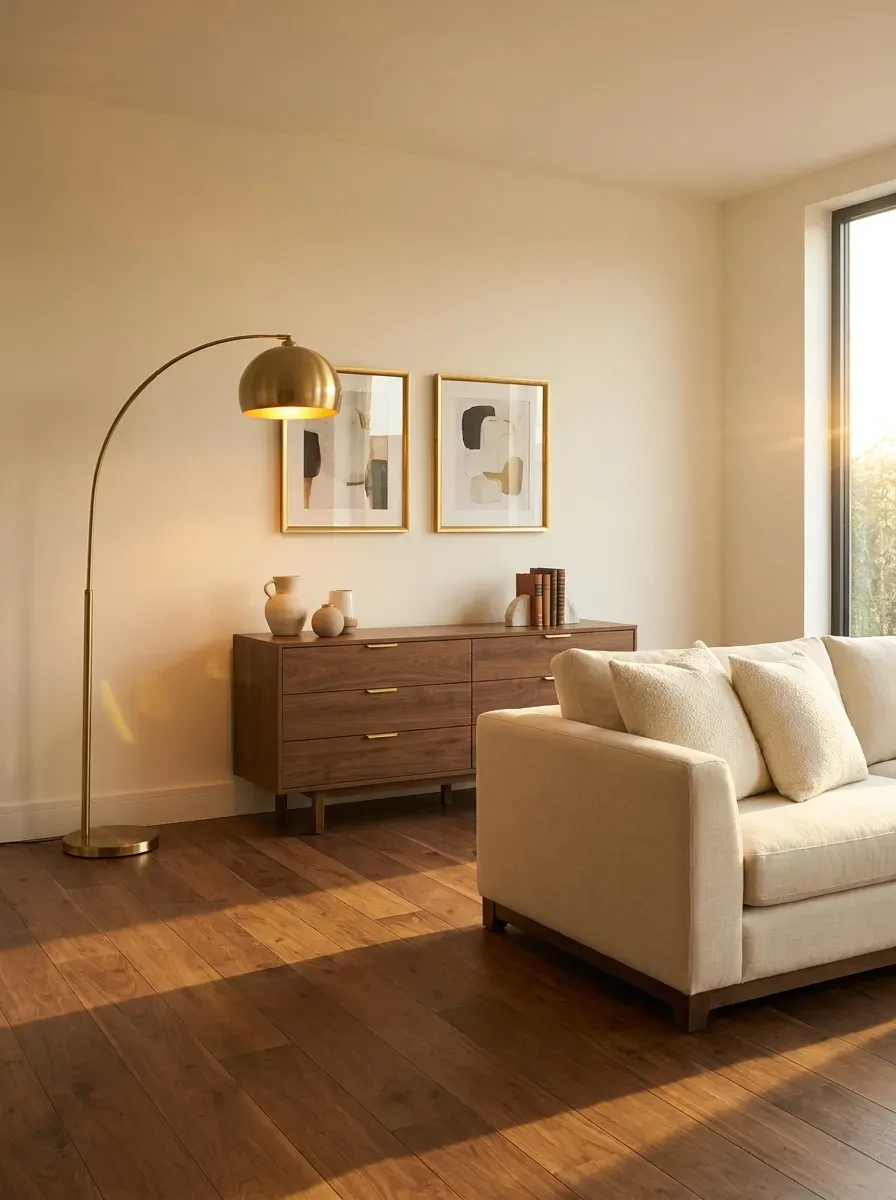
Cold chrome and stark silver can make a living room feel harsh. Warm metals — brass, gold, bronze, and antique copper — feel rich, timeless, and approachable.
You do not need to replace all your hardware. Small additions of warm metal throughout the room create the feeling of cohesion and luxury.
Consider: a brass floor lamp, gold-framed artwork, bronze candle holders, warm gold picture frames, or a metal side table with a bronze finish.
These pieces catch the light in a way that cold metals simply do not. The glow they create adds warmth to the entire room.
Budget tip: Spray paint is your best friend here. A $10 can of Rust-Oleum metallic gold or aged bronze can transform old lamps, frames, and candleholders.
Thrift stores and estate sales are full of solid-brass pieces from the 1970s and ’80s that are currently very desirable again. They often cost just $5–$20.
The key is repetition. Use the same warm metal finish in at least three places throughout the room. That creates harmony, not randomness.
Warm metals are one of the quickest ways to make a living room feel intentionally styled rather than just assembled.
8. Style a Gallery Wall With Intention

A gallery wall done well is one of the most personal and striking features a living room can have. Done poorly, it looks chaotic.
The secret is intentional curation, not just hanging whatever you have.
Start by choosing a cohesive frame style — all thin black frames, all warm gold frames, or all natural wood. Mixing frames only works if there is a clear visual logic behind it.
Lay your arrangement out on the floor before you put a single nail in the wall. Take a photo of the layout and hold it up to visualize the finished look.
Mix types of art: a large anchor piece in the center (a photograph, an abstract painting, or a print), surrounded by smaller pieces — sketches, botanical illustrations, a vintage map, a mirror.
Black-and-white photography always reads as elegant. Simple line drawings feel modern. Antique prints feel collected and thoughtful.
Budget tip: Print your own art. Sites like Unsplash or Printables offer free high-resolution images. Frame them at IKEA or Michael’s for $10–$20 each.
Spacing between frames matters. Keep gaps consistent — around 2–3 inches between each piece feels intentional and tight.
A gallery wall tells the story of who lives in a home. Make it yours.
9. Introduce a Sculptural Floor Lamp

Overhead lighting is flat and unflattering. A sculptural floor lamp adds warmth, height, and personality to a living room corner.
The right floor lamp does two things: it lights the room beautifully and it looks good even when it is off.
Arc lamps are particularly effective in living rooms. They reach over a sofa or chair to create a focused pool of warm light — the kind that makes a room feel cozy and considered.
Look for lamps with interesting silhouettes — a tripod base, a curved arc arm, or a distinctive shade shape. These become part of the room’s visual story.
Bulb temperature matters enormously. Always choose warm white bulbs (2700K–3000K). Cool white light looks institutional. Warm light looks intentional.
Budget tip: TJ Maxx, HomeGoods, and IKEA carry beautiful floor lamps for $60–$150. Secondhand shops often have stunning mid-century lamps for $20–$50 that just need a new bulb or shade.
A linen drum shade or a pleated fabric shade both feel far more refined than a plain white plastic shade. Replacing just the shade can transform an ordinary lamp.
Good lighting is not optional — it is the difference between a room that feels warm and one that feels cold.
10. Use Mirrors to Expand the Space
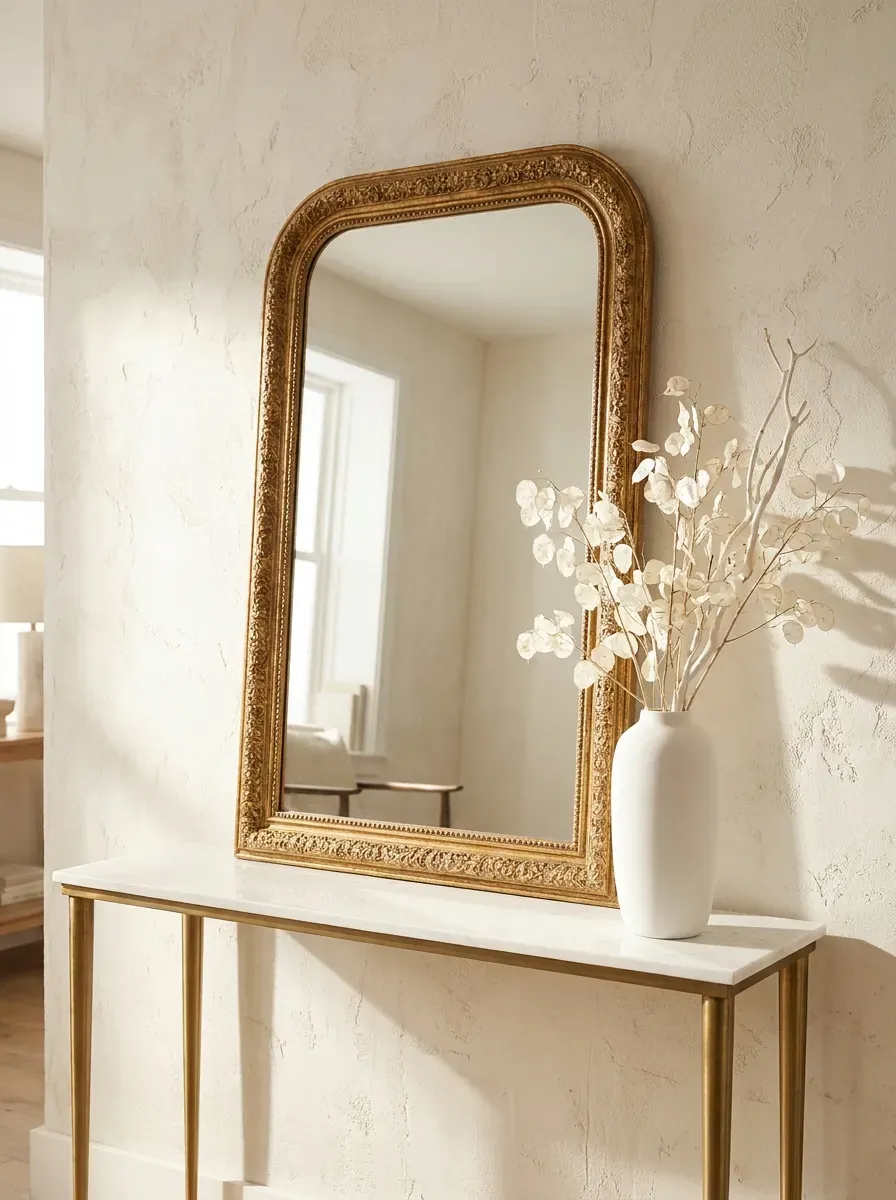
Mirrors are one of the oldest tricks in design — and they are just as effective today.
A large, well-placed mirror bounces natural light around the room, makes the space feel twice as large, and adds a decorative focal point all at once.
Lean a large arched mirror against the wall for a relaxed, editorial look. Or hang an ornate vintage mirror above a console table or fireplace for something more formal.
The shape matters: arched mirrors feel modern and graceful. Sunburst mirrors feel bold and sculptural. Ornate carved frames feel old-world and glamorous.
Place mirrors opposite or adjacent to windows to maximize light reflection. This is especially powerful in darker rooms.
Budget tip: IKEA’s LINDBYN and TOFTBYN mirrors are affordable and look significantly more expensive than their price tags. Thrift stores are also full of ornate vintage mirrors for $20–$60.
For a DIY approach: purchase a plain frameless mirror and build a custom frame around it using trim molding from a hardware store, painted in gold or black.
Mirrors do not just reflect light — they reflect good taste. Use them generously and thoughtfully.
11. Curate a Bookshelf Like a Designer
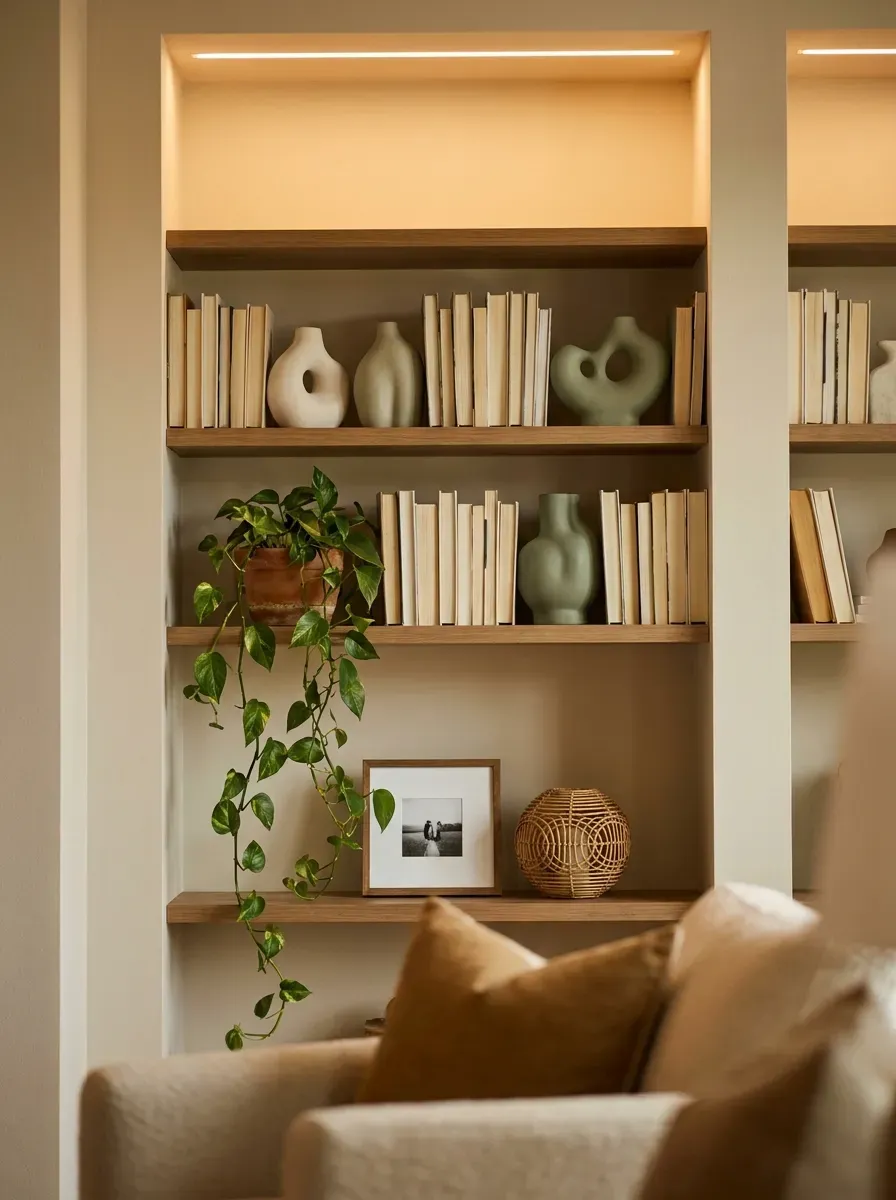
A bookshelf filled with random spines in every color looks chaotic. A bookshelf curated with care looks like a work of art.
The designer trick: group books by color, or turn some with spines facing inward for a clean, neutral look. The blank pages facing out create a calm, uniform backdrop.
Mix books with objects. A small sculpture, a trailing plant, a framed photo, a ceramic bowl — these break up the rhythm and make the shelf feel collected rather than stuffed.
Use the rule of three: odd numbers of objects grouped together always look more interesting than even numbers.
Leave some space. An overfilled shelf looks anxious. A shelf with breathing room looks intentional.
Try varying heights — tall books next to short stacks, a tall vase beside a low object. This creates visual movement without chaos.
Budget tip: Books from thrift stores cost $0.25–$2 each. Buy them purely for their cover or spine color and remove the dust jackets if needed.
Stack some books horizontally to create platforms for smaller objects to rest on.
A well-styled bookshelf can completely anchor a living room wall, especially if you don’t have the budget for large artwork.
12. Anchor the Room With a Statement Rug

A rug is not just something you walk on — it is the foundation of the entire room’s composition.
The right rug ties all the furniture together and makes the space feel designed rather than assembled piece by piece.
Size is the most common mistake people make. The rug is almost always too small. For a living room, your rug should be large enough to fit under at least the front legs of all main seating — ideally all four legs.
8×10 feet is the minimum for most living rooms. 9×12 is often better.
Pattern and texture matter. A vintage Persian rug adds warmth, history, and color. A neutral wool rug adds softness and calm. A geometric pattern adds modern structure.
Budget tip: RugsUSA, Wayfair, and Loloi frequently run sales with up to 70% off. You can also find beautiful vintage rugs on Etsy or eBay for $100–$400.
If your rug feels flat on hardwood floors, add a rug pad underneath. It makes the rug feel more luxurious underfoot and keeps it from sliding.
One well-chosen, correctly sized rug does more for a room than most other single purchases combined.
13. Create a Cozy Reading Corner

Every classy living room should have at least one spot that makes you want to sit down and stay awhile.
A reading corner does exactly that. And it does not require a dedicated room or even a large space.
All you need is one armchair, one good lamp, and a small side table or stool for your book and cup of tea.
Choose a chair with character and comfort — a wingback chair feels classic and structured, a curved egg chair feels modern, a slipcovered linen chair feels relaxed and refined.
Place the chair near a window if you can. Natural light for reading is unbeatable. Add an arc lamp for evenings.
A small bouclé footstool or ottoman makes the corner feel even more intentional and inviting.
Budget tip: Slipcovered chairs can be found secondhand for $50–$150 and cleaned or re-covered easily. A new slipcover from IKEA or Amazon can also refresh an old chair for $30–$80.
Stack two or three books on the side table. Add a small plant or candle. These details signal that this corner is designed for comfort, not just aesthetics.
A reading corner is a gift to yourself. Create one and use it often.
14. Use Organic and Natural Textures
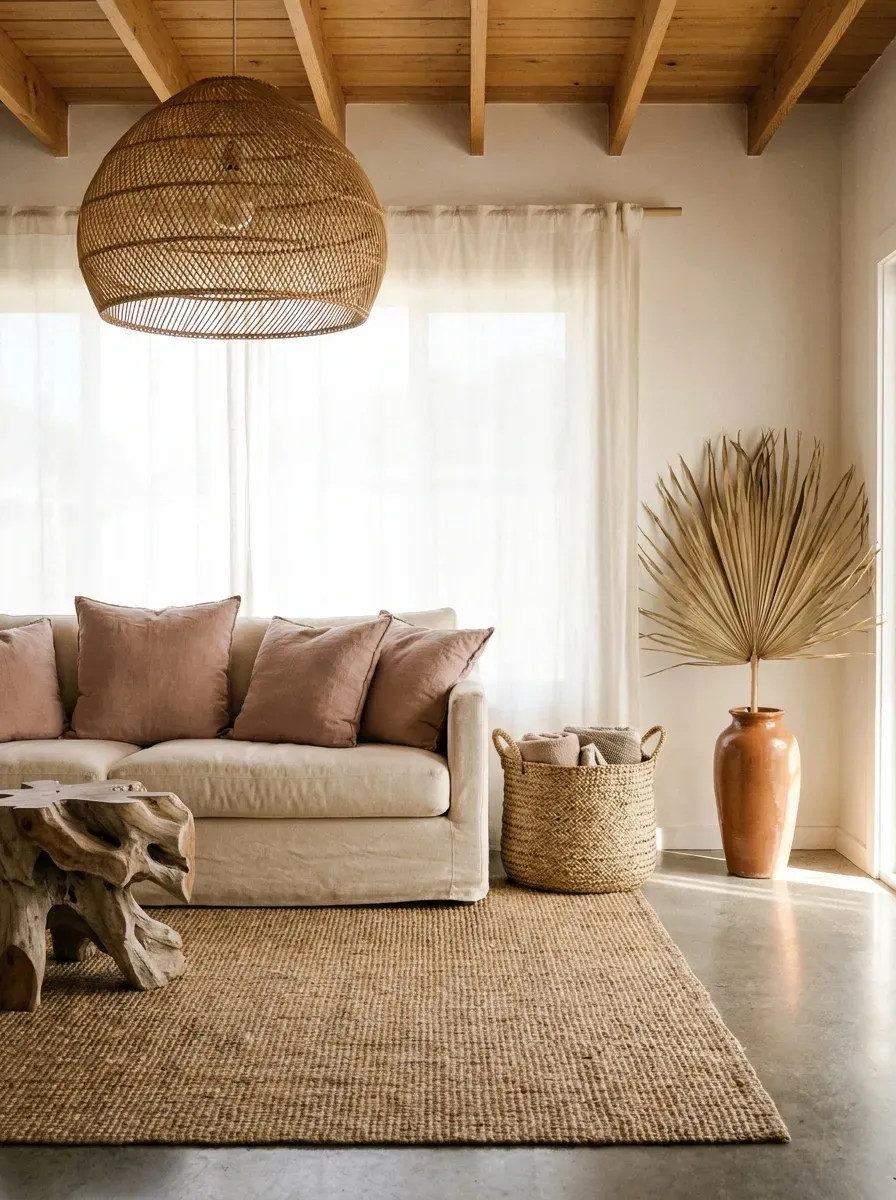
Natural textures bring life and warmth into a room in a way that synthetic materials simply cannot replicate.
Linen, jute, rattan, seagrass, wool, clay, and wood all have an inherent beauty that gets better with age and use.
These materials add tactile richness — meaning the room looks good and feels good. That combination is what creates real warmth and sophistication.
Mix textures confidently: a smooth marble table next to a rough jute rug, a sleek linen sofa beside a rattan side chair, a clay vase on a polished wood shelf.
The contrast between smooth and rough, matte and shiny, woven and solid is what creates visual interest.
Budget tip: Wicker and rattan pieces are inexpensive and everywhere at thrift stores. Baskets, trays, chairs, and planters can all be found for $5–$30.
Clay and ceramic vases from discount stores like TJ Maxx and HomeGoods often look significantly more expensive than they are.
Dried botanicals — pampas grass, cotton stems, dried palm leaves — are free if you forage or affordable at craft stores. They look beautiful in natural texture-heavy rooms.
Natural materials are not a trend. They are a return to something that has always felt right.
15. Choose Art That Speaks to You

Art is the personality of a living room. It communicates taste, curiosity, and who you are better than almost anything else.
You do not need to spend thousands at a gallery. You need to choose pieces that you genuinely respond to — not just ones that match the sofa.
Large-scale art is almost always more impactful than a collection of small pieces on a wall. One big, bold piece makes a statement. Several small pieces can look cluttered.
For the most affordable route, print large photos or digital artwork at a local print shop. A 24×36 inch print costs roughly $15–$30. Add a simple frame from IKEA or a thrift store.
Websites like Society6, Minted, and Saatchi Art offer original prints at various price points. Many independent artists also sell work on Etsy.
When hanging art above a sofa, center it at eye level — generally 57–60 inches from the floor to the center of the piece. For large works, leave about 8–12 inches of space between the top of the sofa and the bottom of the art.
Art should not be an afterthought added after the room is finished. Let it lead. Build the room around a piece you love.
16. Accessorize With Books and Objects
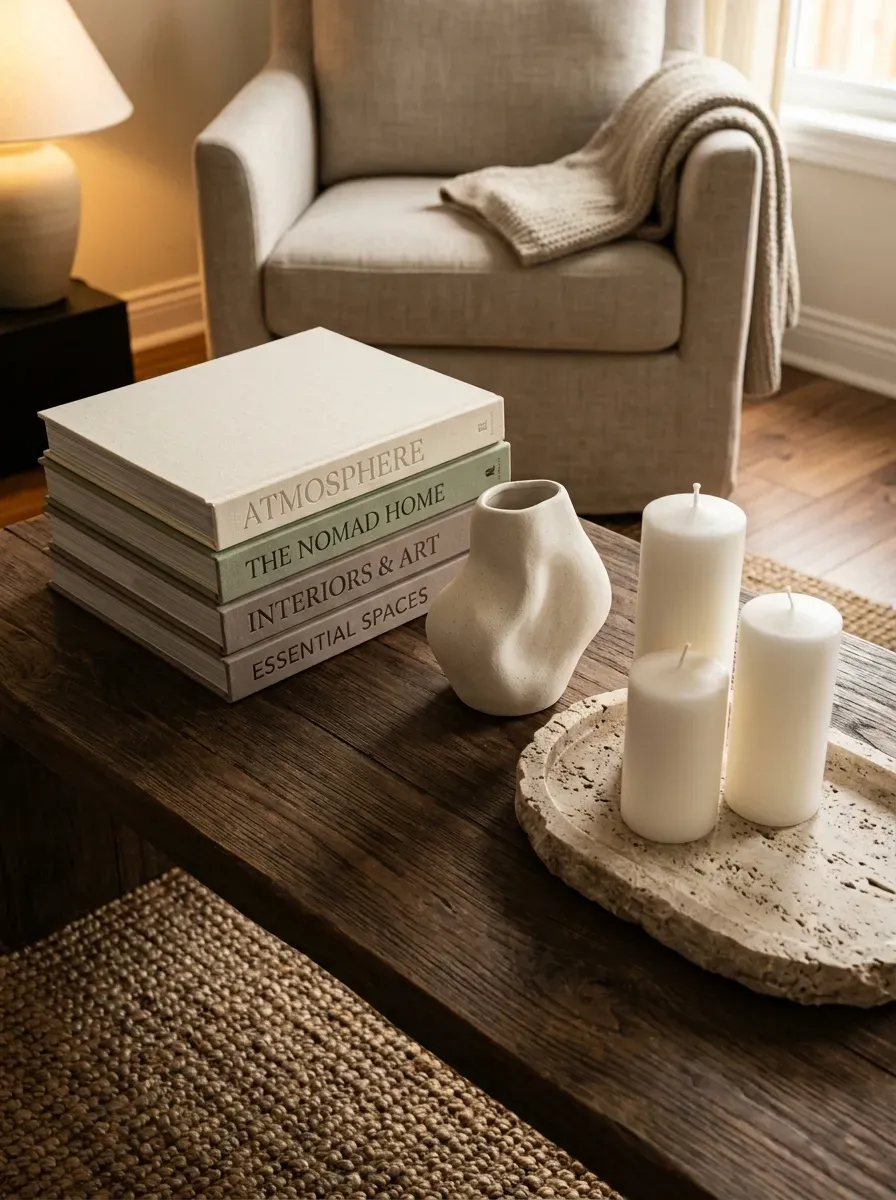
The way you style your surfaces is what separates a room that looks designed from one that looks like a furniture showroom.
Books, candles, trays, and sculptural objects are the finishing layer of any well-appointed living room.
Coffee tables, side tables, consoles, and shelves all benefit from intentional styling.
The tray trick is one of the easiest: place a tray on your coffee table and group all your smaller objects inside it. A tray instantly organizes and defines the vignette.
Stack two or three large coffee table books flat. These signal culture, curiosity, and taste. Choose subjects you actually care about — photography, architecture, travel, art, fashion.
Candles are non-negotiable in a classy living room. A cluster of pillar candles in varying heights, or three votives of the same height, is always elegant. Even unlit candles contribute to the ambiance.
Budget tip: TJ Maxx and HomeGoods are goldmines for sculptural objects and oversized candles at a fraction of boutique prices.
Avoid over-styling. Three well-chosen objects on a coffee table will always look better than ten mediocre ones.
Edit ruthlessly. What you leave off the surface matters as much as what you put on it.
17. Add Plants for Life and Scale

Plants are one of the most powerful — and affordable — tools in a living room.
They add scale, life, color, and freshness in a way that no piece of furniture or artwork can match.
A tall plant in a corner instantly fills dead space and adds a vertical element that draws the eye upward. A trailing plant on a shelf adds movement and softness. A small cluster of plants on a side table adds texture and life.
The most classy-looking living room plants: fiddle-leaf fig, olive tree, monstera deliciosa, pothos, snake plant, and rubber plant. These all have strong, architectural silhouettes that feel considered.
The pot matters as much as the plant. Choose simple, quality materials — matte white ceramic, terracotta, concrete, or woven rattan. Avoid plastic nursery pots. Repot into something beautiful.
Budget tip: Pothos, snake plants, and spider plants are among the most affordable and nearly indestructible houseplants. Many garden centers sell them for $5–$15.
Propagate what you already own. Pothos cuttings root in water in a week. You can fill multiple rooms for free.
A living room with plants feels inhabited and cared for. It feels like a home.
18. Design a Functional and Beautiful Console Table
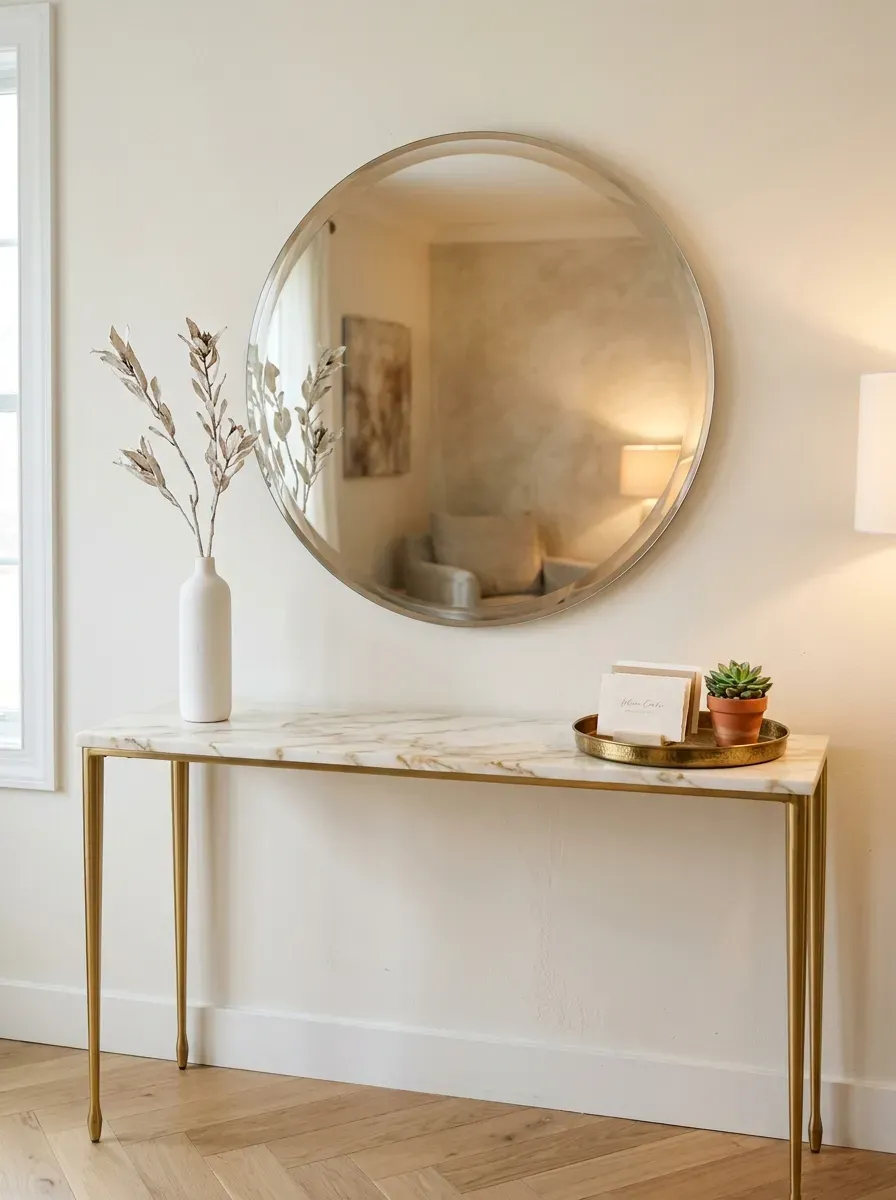
The console table is often overlooked, but it is one of the most versatile pieces in a living room.
Placed against a wall, it fills awkward empty space and creates a secondary vignette that draws the eye.
A slim console does not take up floor space the way a credenza or sideboard would. Yet it holds tremendous design potential.
Style it like a small installation: a large mirror or artwork above, a tall sculptural object or vase on one side, and a small tray or decorative bowl to hold smaller items.
Keep the surface functional-meets-beautiful. A tray for keys, a small dish for candles, a stack of books — these all work.
The console is also a great place for table lamps if you don’t want a floor lamp. A matching pair of lamps on either side of a sofa or console creates symmetry and a hotel-like polish.
Budget tip: IKEA’s BESTÅ BURS console and LISTERBY side table are both clean-lined options under $100. A secondhand console painted in matte black or white can look equally beautiful.
A styled console table shows that no corner of a room was left as an afterthought.
19. Layer Your Lighting With Multiple Sources

Great living rooms are lit from multiple sources, not a single overhead fixture.
Overhead lighting flattens everything. It removes shadows, eliminates depth, and makes a beautifully decorated room look like a hardware store.
The goal is to layer: ambient light from lamps and recessed fixtures, task light from reading lamps, and accent light from candles or picture lights.
Floor lamps, table lamps, wall sconces, and candles all work together to create a room that feels warm and dimensional at any time of day.
If you cannot change your overhead light, simply don’t use it in the evening. Rely entirely on lamps and candles. The transformation will shock you.
Bulb warmth is critical: stick to 2700K–3000K warm white across all your lamps. Mixing warm and cool bulbs looks disjointed.
Budget tip: Smart bulbs like Govee or IKEA TRÅDFRI allow you to dim and warm your lights for $5–$15 per bulb without any rewiring.
Plug-in wall sconces are a great option for renters — no electrician needed. They cost $30–$80 and look installed.
Lighting is not decoration. It is the single most powerful tool for creating atmosphere in any room.
20. Keep It Intentionally Minimalist

Classy is often code for less, but better.
The most sophisticated living rooms in the world tend to have fewer pieces, not more. Each piece is chosen carefully and given room to breathe.
Minimalism is not emptiness. It is editing. Removing the things that do not serve the room so the things that do can truly shine.
Start by taking everything out of the room — even mentally. Then only bring back in what earns its place.
Ask of every piece: Does it function well? Does it look good? Does it add something the room needs?
If the answer to any of those is no, it goes.
Clutter is the enemy of elegance. Even the most beautiful individual pieces look diminished when they are surrounded by too many other things.
Budget tip: Decluttering costs nothing and is the single highest-impact thing you can do for a room’s appearance. Box up everything that feels extraneous and live without it for two weeks. You will almost certainly not miss most of it.
Choose quality over quantity. One beautiful lamp is always better than three mediocre ones.
The best-designed living rooms always leave you wondering what is missing — and the answer is: nothing. That is exactly the point.
21. Bring In a Fireplace or Faux Fireplace Moment
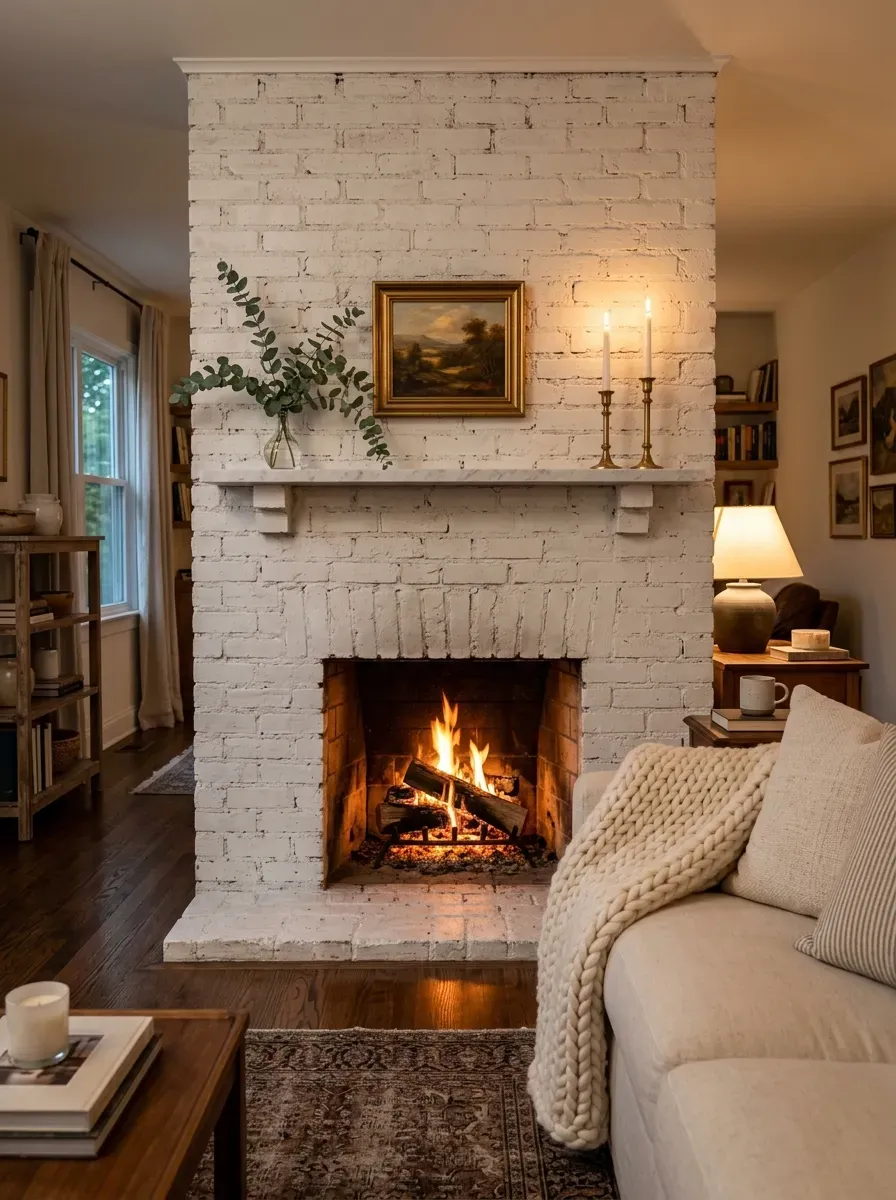
Nothing anchors a living room quite like a fireplace — real or not.
If you have an existing fireplace, treat the mantel as a primary styling opportunity. It is one of the most-looked-at surfaces in any home.
Keep the mantel clean and asymmetrical. A large mirror or artwork centered above it, a pair of candlesticks on one side, and a single sculptural object on the other. Simple. Strong.
If you do not have a fireplace, you can create the visual moment of one. An electric fireplace insert or a freestanding electric fireplace can be placed against any wall and creates an immediate focal point. Many look remarkably convincing and provide real warmth.
Budget tip: Amazon and Wayfair sell electric fireplace TV stands and inserts starting around $150–$300. Even the most affordable ones create atmosphere that is hard to replicate with furniture alone.
For a purely decorative option: style a corner with grouped pillar candles in a cluster on a tray, surrounded by a few logs or stones. It creates the suggestion of a hearth without the appliance.
The fireplace — real or implied — tells people exactly where to gather. That is one of the most important things a living room can communicate.
22. Choose Quality Window Treatments

Window treatments are the frame around one of your room’s most important features: its windows and the natural light they bring in.
The right window treatments soften hard edges, add warmth, and signal that a room has been thoughtfully styled.
Roman shades in linen or cotton feel clean and tailored. Billowing linen curtains feel romantic and airy. Velvet curtains feel dramatic and rich.
Avoid cheap, flimsy, or sloppy window treatments. They undermine everything else in the room.
If you have beautiful views or great natural light, opt for sheer curtains that filter light without blocking it. If privacy or darkness is more important, layer a sheer with a blackout lining.
Always hang curtains high and wide — close to the ceiling and several inches beyond the window frame on each side. This makes windows look larger and rooms feel taller.
Budget tip: IKEA’s AINA curtains are linen-blend and hang beautifully for around $30 per panel. Line them with a blackout liner from Amazon for about $15 to add function.
If custom curtains are out of budget, standard-length curtains can be hemmed or even simply folded under and stitched at home.
Windows deserve the same design consideration as every other part of the room. Do not leave them as an afterthought.
23. Define Zones With Thoughtful Furniture Arrangement

Furniture pushed against the walls is the most common living room mistake — and the easiest to fix.
Pull furniture inward. Create a conversation zone where seating faces each other, centered around a rug and coffee table.
This creates an intimate feeling — a room that invites people to sit and stay, rather than one they pass through.
In larger rooms, consider defining two zones: a main seating area and a secondary reading or working nook. Use rugs to visually separate the two zones.
Every sofa needs a landing spot. That means a coffee table, an ottoman, or at minimum a side table within arm’s reach. Floating sofas with nothing in front of them look lost.
Symmetry creates formality and polish. Matching chairs flanking a fireplace, matching lamps on each side of a sofa — these details signal intentionality.
Asymmetry feels more relaxed and collected. A single statement chair opposite a sofa, a console table on one wall only — this feels editorial rather than matched-set.
Budget tip: Rearranging what you already own costs nothing. Move your sofa. Try the chair in the corner. See how a rug repositioned under all four legs changes the feel.
How furniture is arranged communicates the life that happens in a room. Arrange it for the life you want.
24. Incorporate Scent as a Finishing Layer

Scent is an often overlooked dimension of a well-designed room — but it is one of the most powerful.
Walking into a living room that smells like warm sandalwood, clean linen, or light citrus creates an immediate impression of comfort and care.
Candles are the most flexible and affordable option. Choose soy or beeswax candles with clean-burning wicks. Avoid synthetic fragrances that smell artificial.
Reed diffusers are great for consistent, subtle scent without having to remember to light anything.
Dried botanicals — lavender, rosemary, eucalyptus — smell faintly wonderful and add texture to shelves and coffee tables.
Choose a scent profile that matches the mood of your room. Woody and earthy scents (cedar, vetiver, sandalwood) feel grounded and sophisticated. Floral and green scents (jasmine, fig, green tea) feel fresh and airy. Warm and spiced scents (amber, vanilla, clove) feel cozy and rich.
Budget tip: Homesick and P.F. Candle Co. make beautifully scented candles in the $15–$30 range. IKEA’s SINNLIG candles are under $5 each and smell surprisingly good for the price.
Be consistent. Choose one signature scent for your living room and stick with it. Over time, it becomes part of the room’s identity — and your home’s.
25. Edit, Refine, and Trust Your Eye

The final and most powerful step in creating a classy living room is knowing when to stop — and then editing what remains.
A room is never truly finished in one decision. It grows and refines over time. Each piece you bring in asks you to evaluate everything else around it.
Step back regularly. Take a photo with your phone. A photograph will reveal things your eye has learned to ignore — the cluttered corner, the lamp that is too small, the rug that is slightly off-center.
Remove things before adding new ones. Before buying anything new, ask what you might take away instead.
Trust your instincts about what bothers you. That small nagging feeling that something is wrong almost always means something is wrong. Identify it and fix it.
Classy living rooms are not created by people who buy more — they are created by people who choose better.
You do not need every idea on this list. Pick the ones that speak to your space, your lifestyle, and your budget. Start with one. Do it well. Then move to the next.
The best living room is one that makes you feel at home the moment you walk in. Not impressed. Not overwhelmed. Just at home.
Trust that feeling. Chase it. That is the real goal.
Conclusion
A classy living room is within reach for anyone — regardless of budget, apartment size, or design experience. The ideas in this list are not about perfection. They are about intention. When you make deliberate choices — about color, texture, light, scale, and arrangement — a room begins to feel like it was designed rather than just assembled. You do not need to implement all 25 ideas at once. Start with the ones that feel most urgent or most affordable. Repaint a wall. Rehang your curtains at ceiling height. Pull your furniture away from the walls. Style your coffee table with three intentional objects. Each small change builds on the last, and before long, your living room will look and feel like somewhere you genuinely love to be. That is the goal. Not a showroom. Not a magazine spread. Just a space that reflects who you are and makes every day feel a little more beautiful.