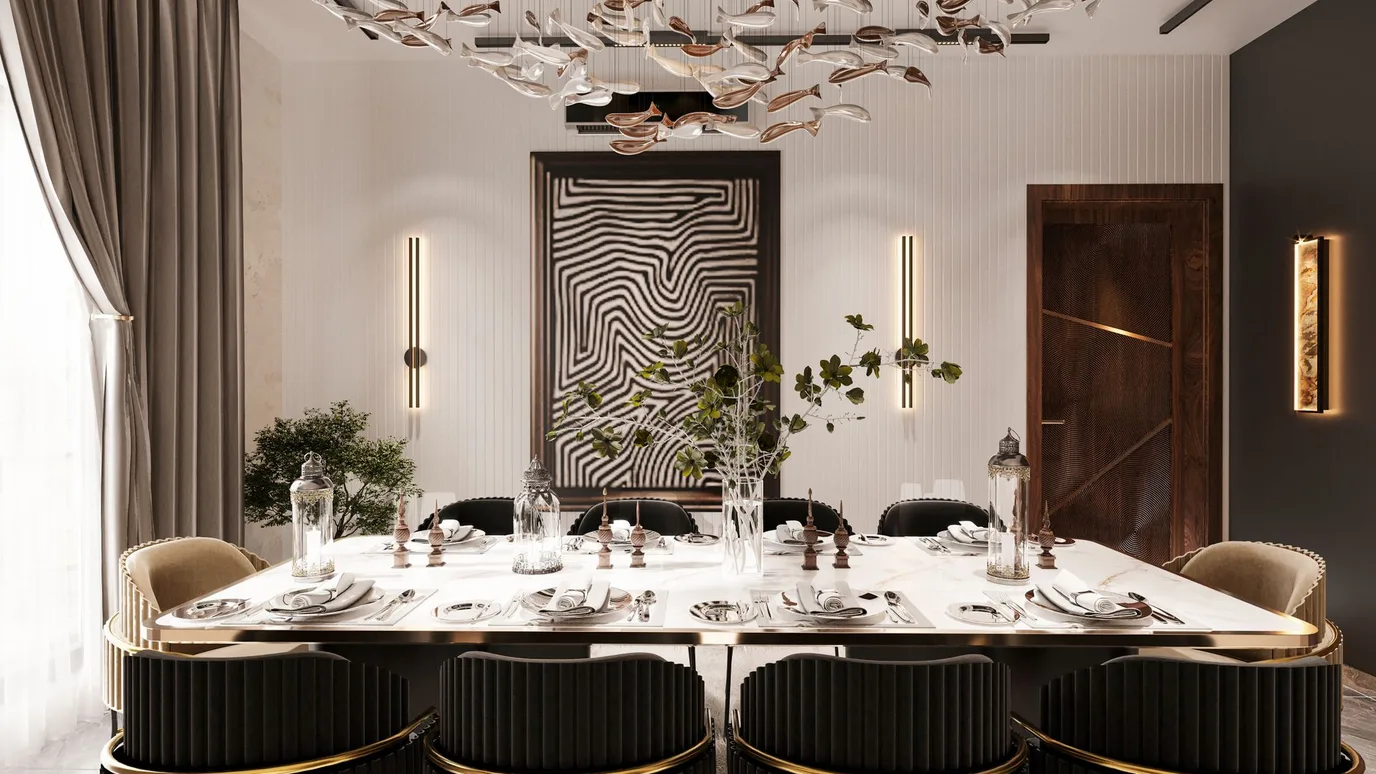
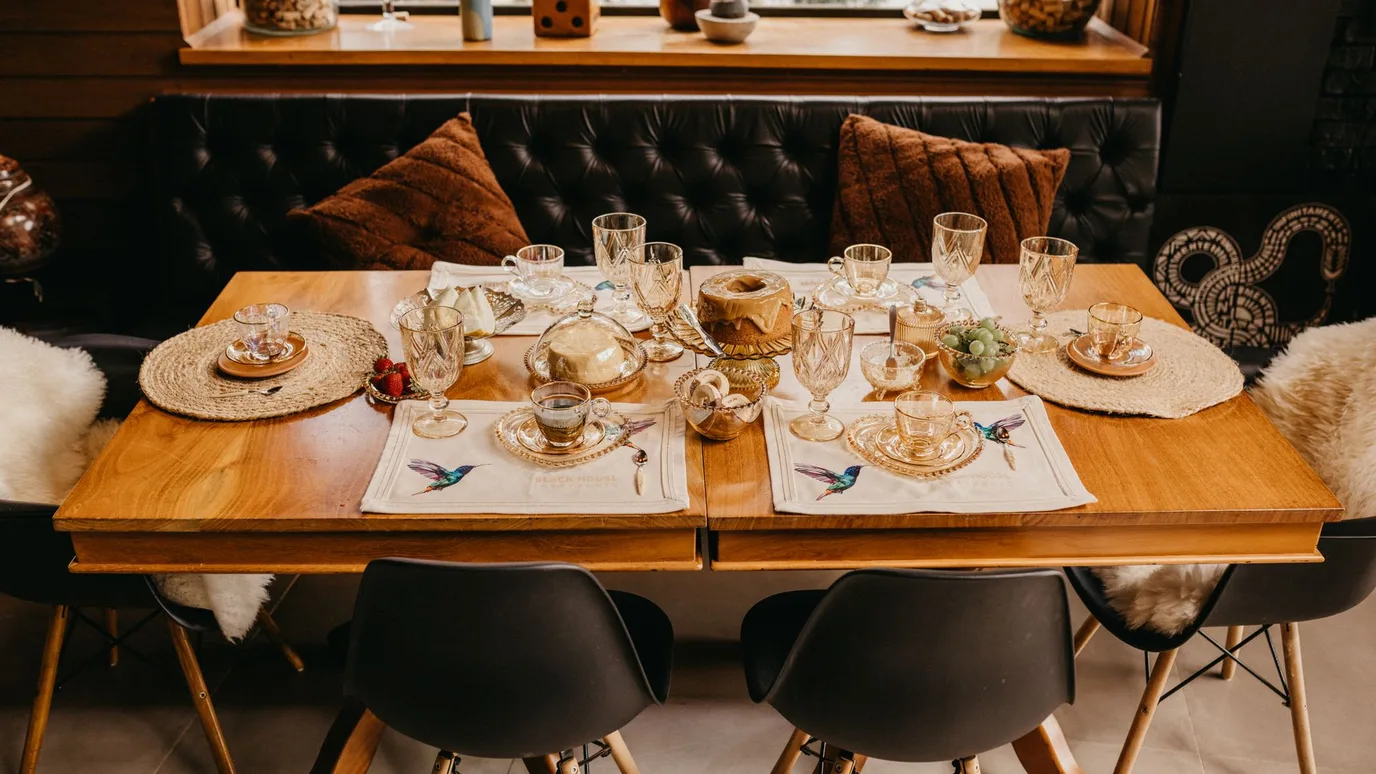
Minimalist table decor is not about having nothing — it is about having exactly enough.
Every object on a minimalist table earns its place, which means each one gets noticed and appreciated. The result feels calm, intentional, and surprisingly luxurious, because restraint reads as confidence. A bare wood table with one perfect vase can be more striking than a table crowded with decor, and it is far easier to live with day to day.
The formula is simpler than it looks.
Limit your palette to two or three quiet tones, repeat one or two materials, and leave generous empty space around everything. Negative space is not wasted space — it is the breathing room that lets your best pieces shine. Think matte ceramics, natural linen, clear glass, and a single living element like a stem or a sprig of greenery.
This guide shares 21 brilliant minimalist table decor tips for a clean, stylish look, each with practical advice you can apply immediately.
From the single-stem vase and monochrome linens to the art of the uncluttered surface, you will learn how to make less feel like so much more.
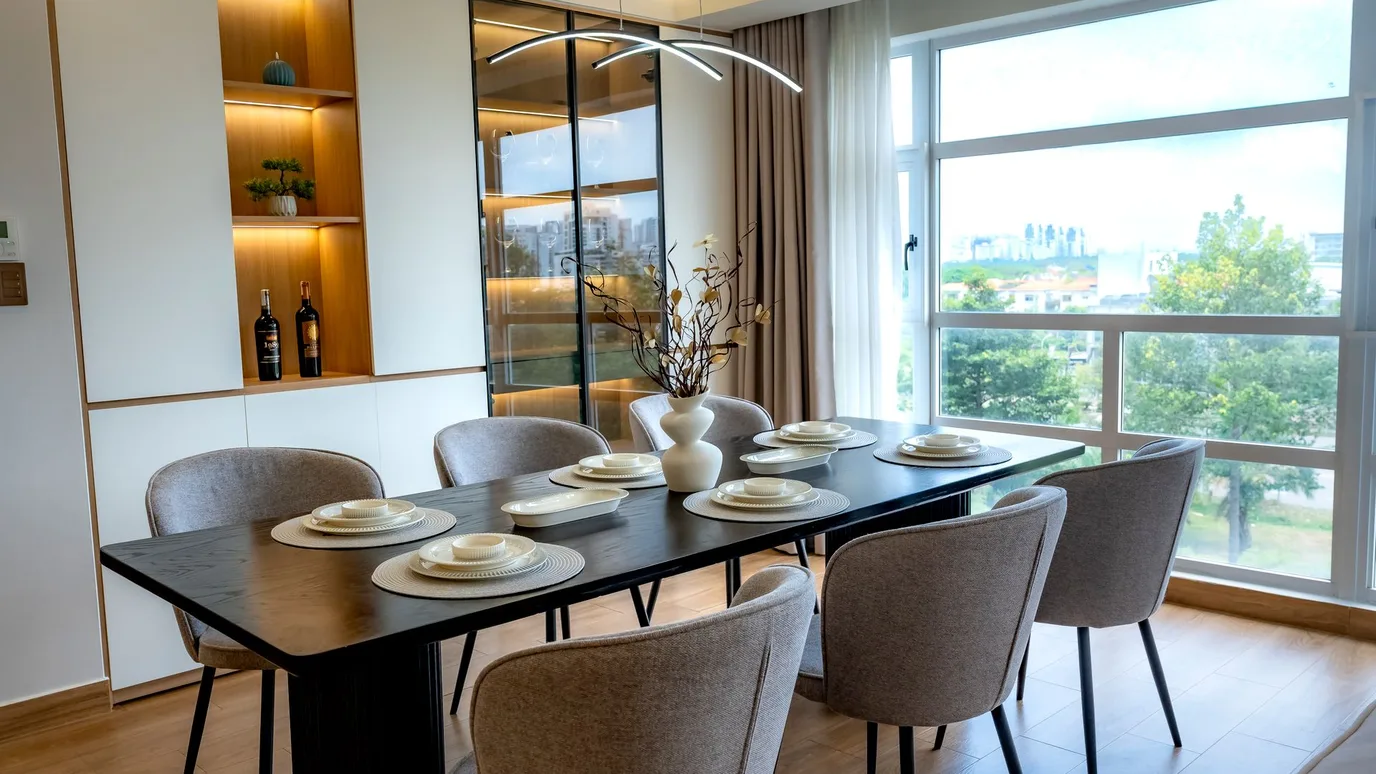
1. Style One Single-Stem Vase
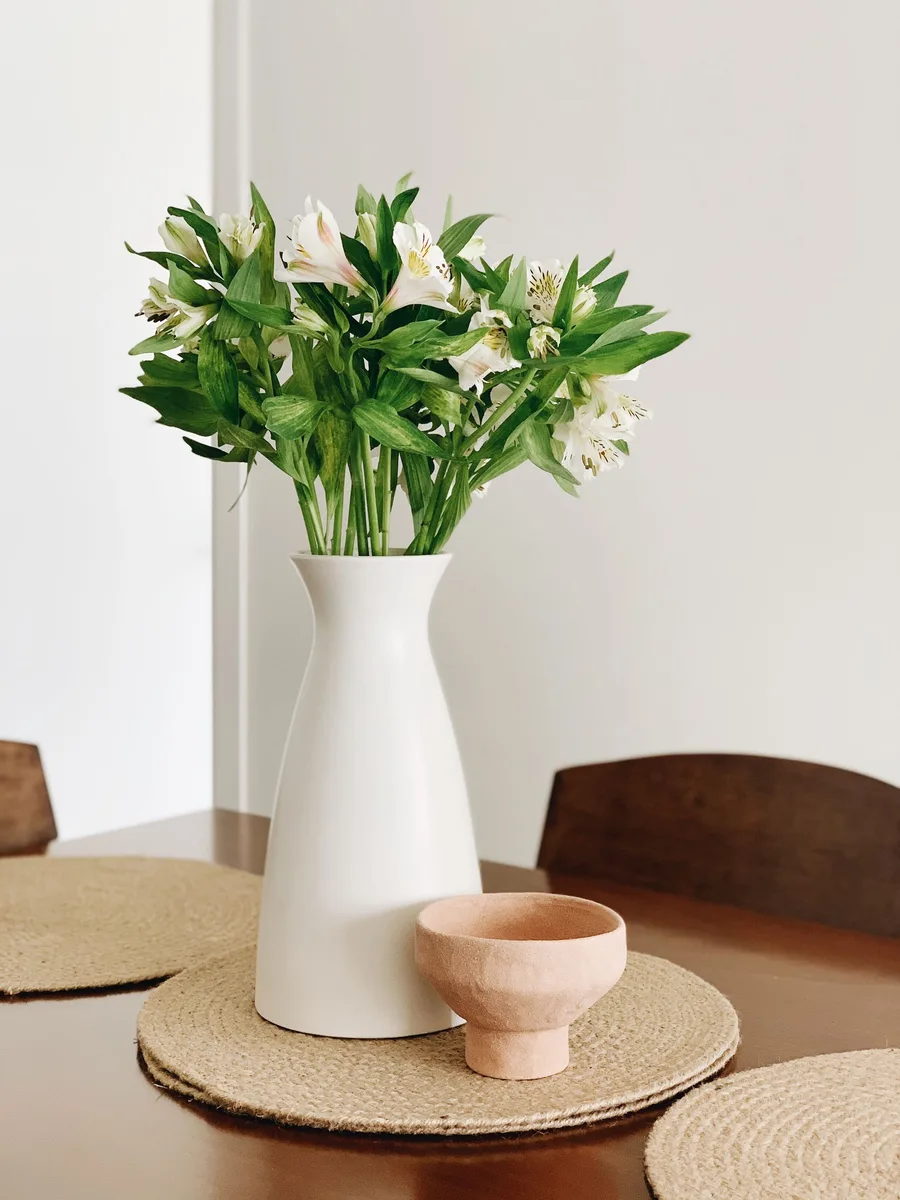
A single stem in a slim vase is the minimalist centerpiece in its purest form. One orchid, one ranunculus, or even one interesting branch carries the whole table because there is nothing competing with it. Choose a vase with a beautiful silhouette — the vessel matters as much as the stem when there is only one of each.
Scale the stem to the table: a tall branch for a long dining table, a short bud for a small round one. Change the stem weekly and the same vase feels new every time. This is also the most budget-friendly centerpiece possible — one flower from the grocery store costs less than a coffee.
2. Treat Negative Space as Decor
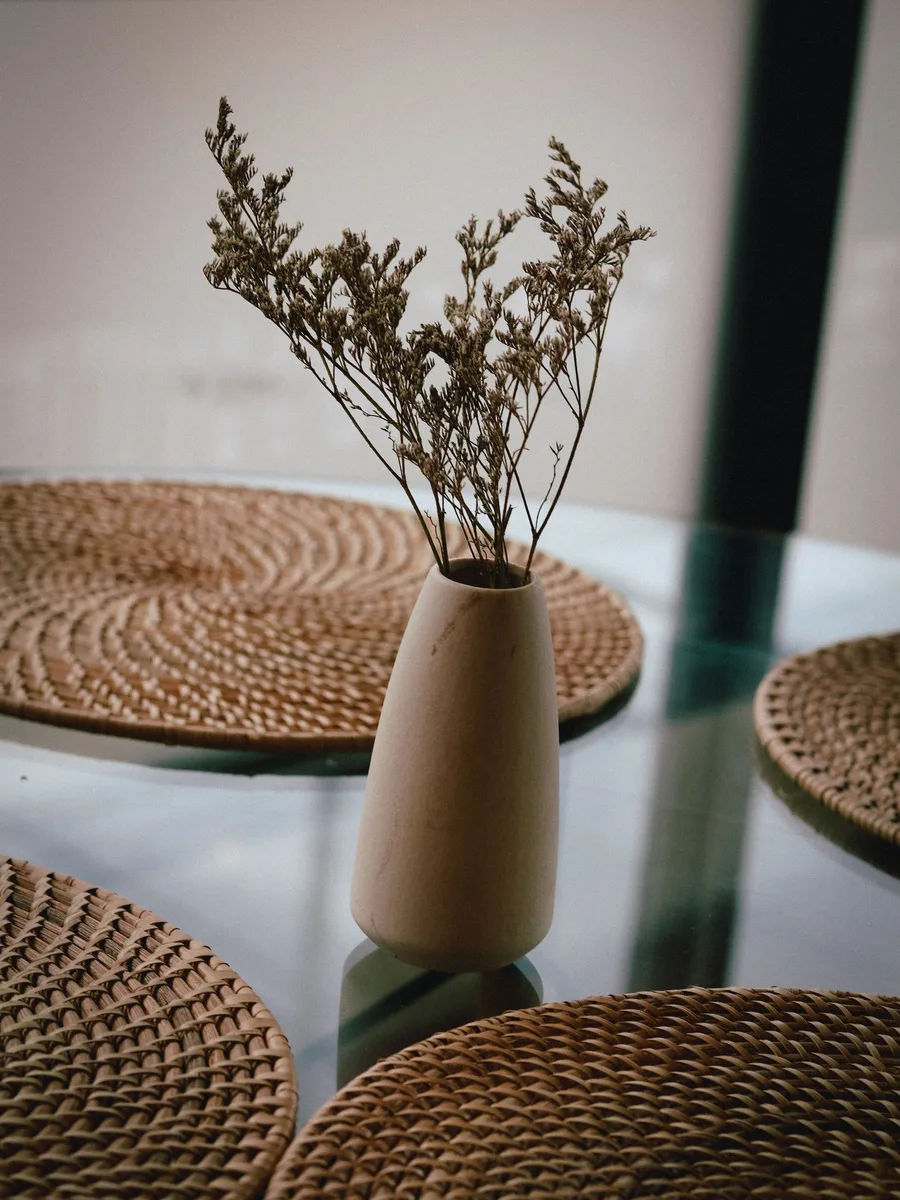
In minimalist styling, the empty areas of the table are doing as much work as the objects. Resist the urge to fill every corner; instead, place your few pieces with wide margins of bare table around them. That emptiness creates calm, makes the table feel larger, and draws the eye exactly where you want it.
A good rule is to keep at least half the table surface clear. If you are unsure, remove one more thing — minimalism rewards the bold edit. This approach also makes daily life easier: fewer objects to dust, move, and work around when you actually sit down to eat.
3. Choose Monochrome Linens
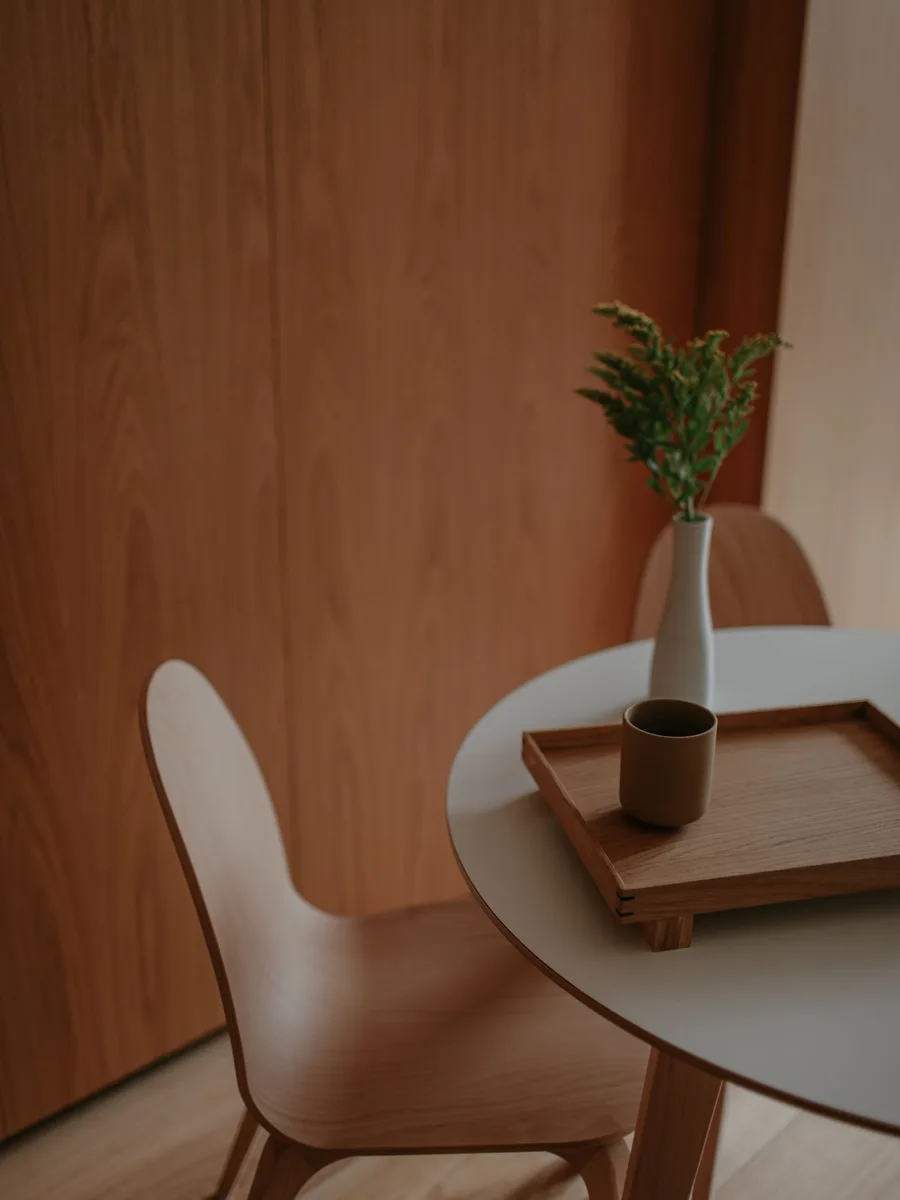
Dressing the table in a single color — all white, all oatmeal, all soft gray — creates instant visual calm. Without color contrasts to process, the eye relaxes and notices texture instead: the weave of the linen, the grain of the wood, the curve of a bowl. Monochrome is the fastest route to a pulled-together minimalist table.
Vary the textures within your one color to keep it interesting: a nubby linen runner, smooth cotton napkins, matte ceramic plates. All-white is classic, but warm neutrals like ecru and stone feel softer and hide wear better. Stick to one tone across cloth, runner, and napkins for the full effect.
4. Invest in Simple Ceramic Place Settings
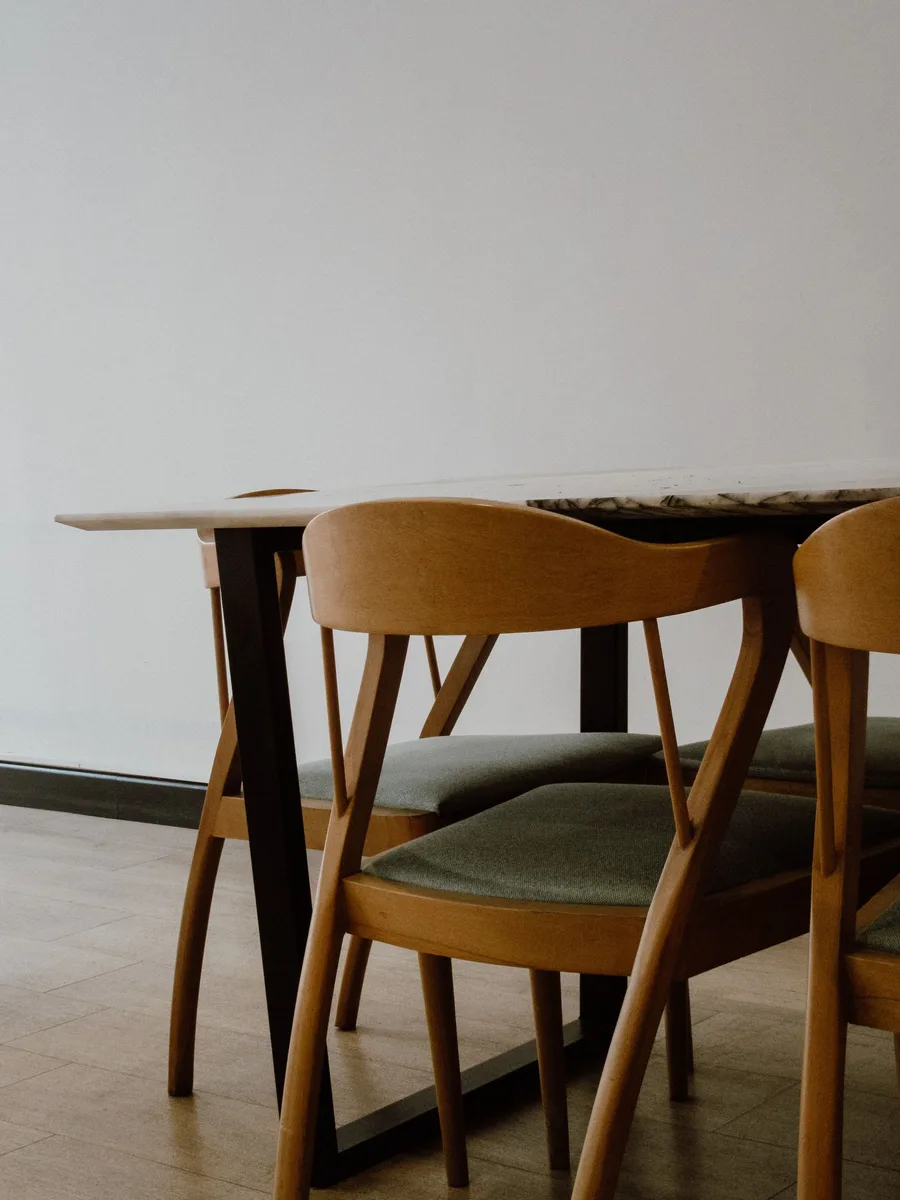
Minimalist tables shine when the dinnerware itself is beautiful, because there is so little else to look at. Choose handmade-look stoneware in a soft neutral — warm white, sand, or pale gray — with simple shapes and no pattern. Slight irregularities in the glaze add character without adding visual noise.
Buy one good set rather than several mediocre ones; quality shows when the styling is sparse. Keep the shapes consistent across plates, bowls, and cups so the table reads as one quiet composition. These pieces work for every occasion, which means less storage and less decision fatigue.
5. Keep Surfaces Ruthlessly Uncluttered
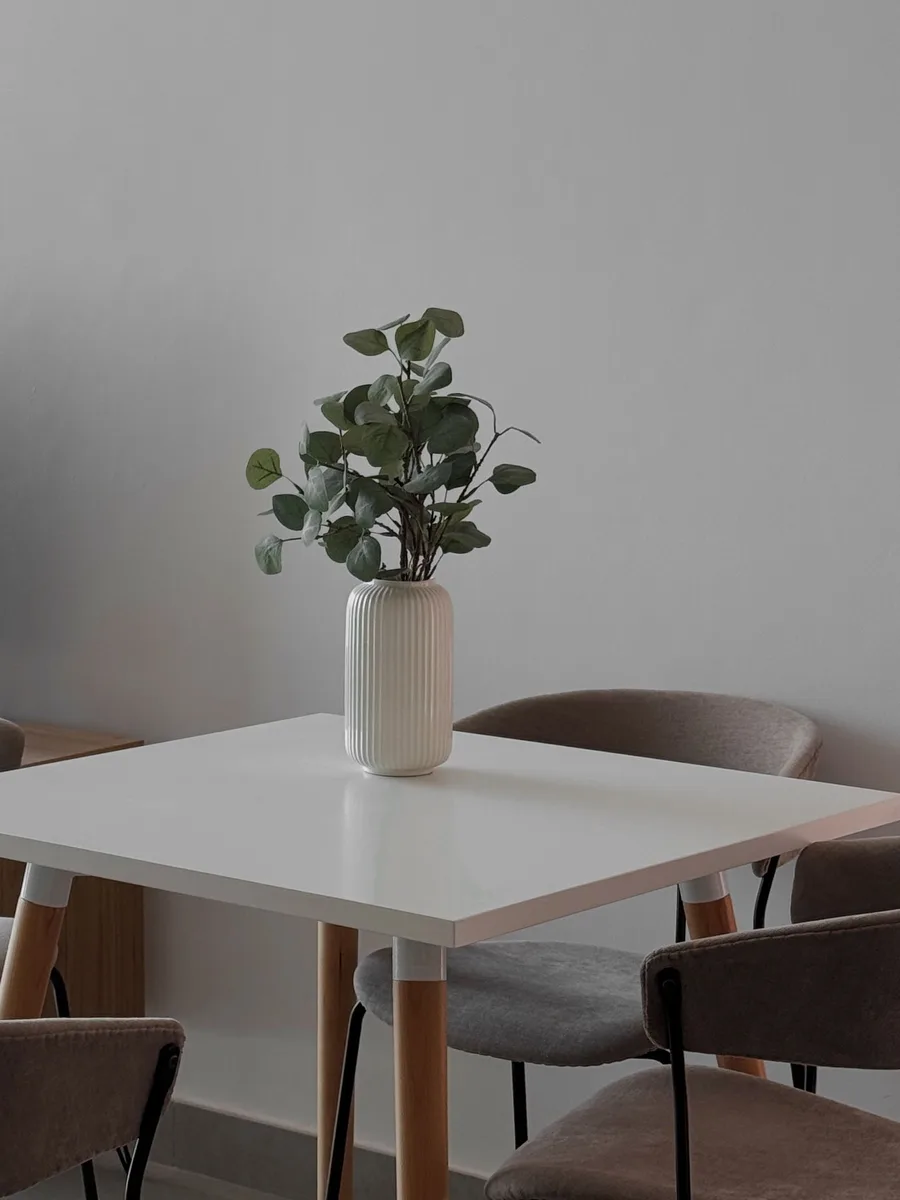
The core minimalist discipline is editing: salt and pepper live in the kitchen, not on the table; the mail gets moved before dinner; decorative objects earn their spot or leave. A clear table between meals is the goal, with only your chosen centerpiece remaining. This daily reset takes two minutes and transforms how the whole room feels.
Give every tabletop item a home elsewhere so clearing becomes automatic. A small tray can corral the few things that must stay — a candle, a small plant — keeping them contained rather than scattered. The payoff is a table that always looks styled, even when you did nothing.
6. Add One Linen Runner for Texture
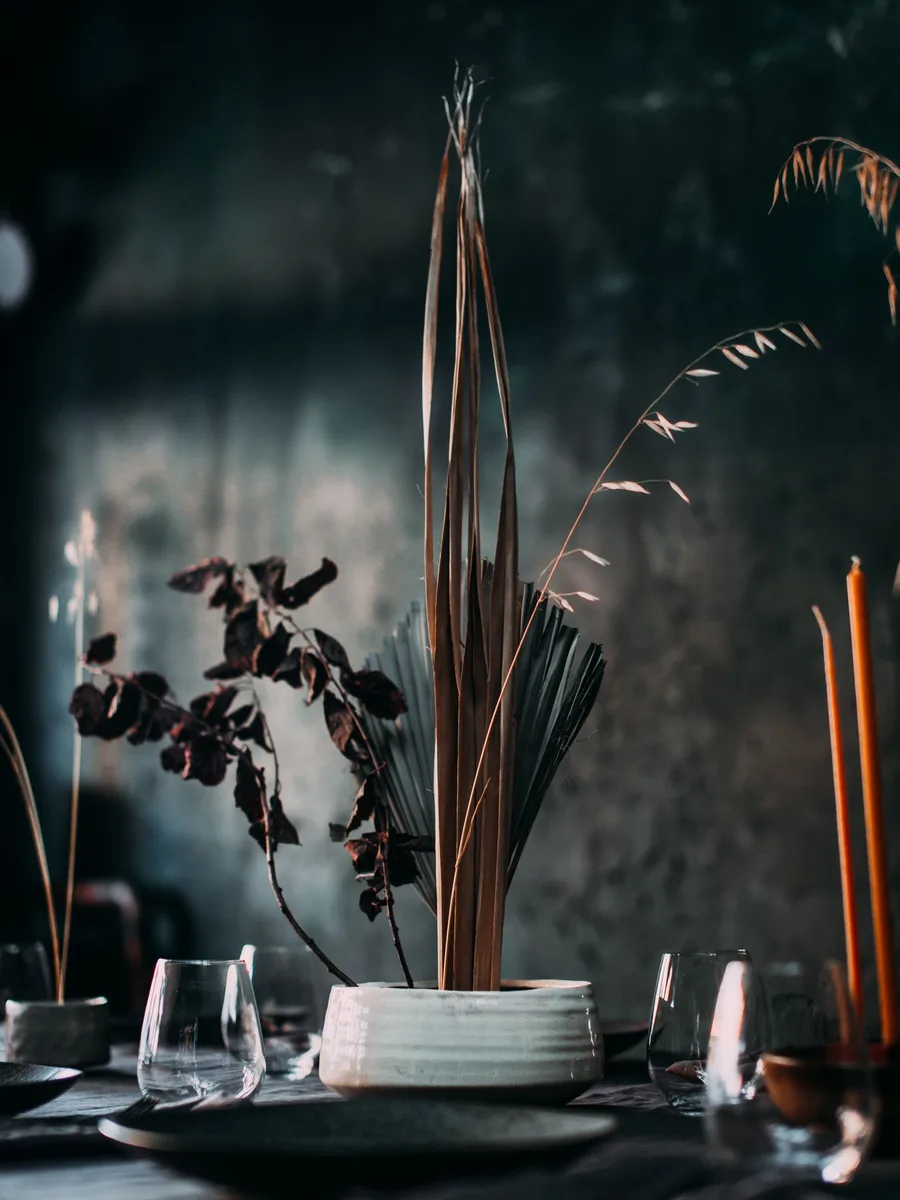
If your minimalist table needs one softening element, make it a single linen runner in a natural tone. It adds warmth and texture without pattern or color, and it protects the wood along the table’s center. Washed linen’s gentle wrinkles are part of its charm — this is texture you do not have to iron.
Choose a runner in undyed flax, oatmeal, or soft white, and let it hang slightly past the table ends. Skip the placemats when the runner is in play; fewer layers keep the look clean. A good linen runner lasts for years and looks better the more it is washed.
7. Light a Single Candle in Glass
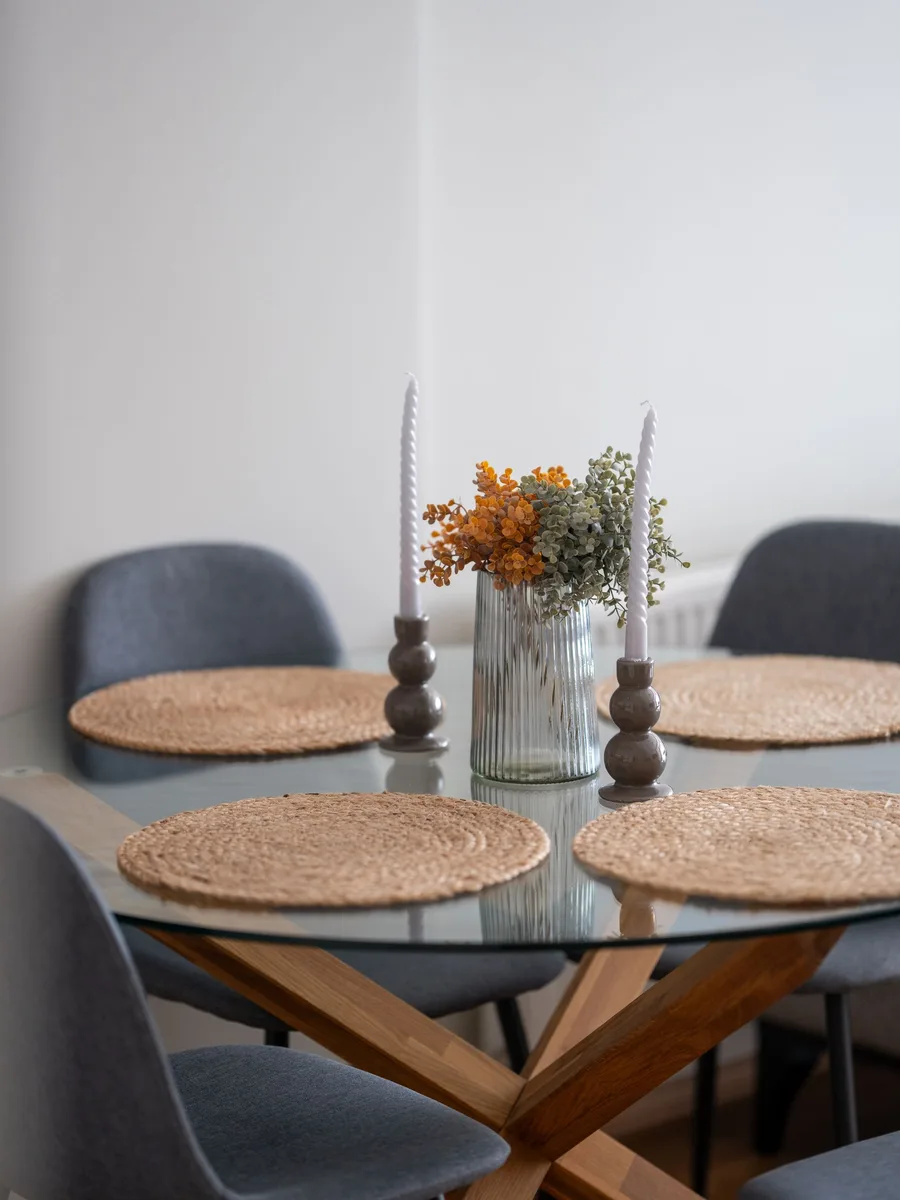
One candle in a simple glass holder brings warmth to a minimalist table without visual clutter. The clear glass disappears, leaving only the flame and its glow — light as decor, nothing more. Place it off-center so it feels styled rather than symmetrical, and choose unscented so it never competes with food.
For everyday use, a good LED candle in glass gives the same glow with zero maintenance. If you prefer real flame, a single beeswax taper in a slim holder is beautifully minimal. Either way, one candle is the rule — a cluster belongs to a different style.
8. Skip Napkin Rings Entirely
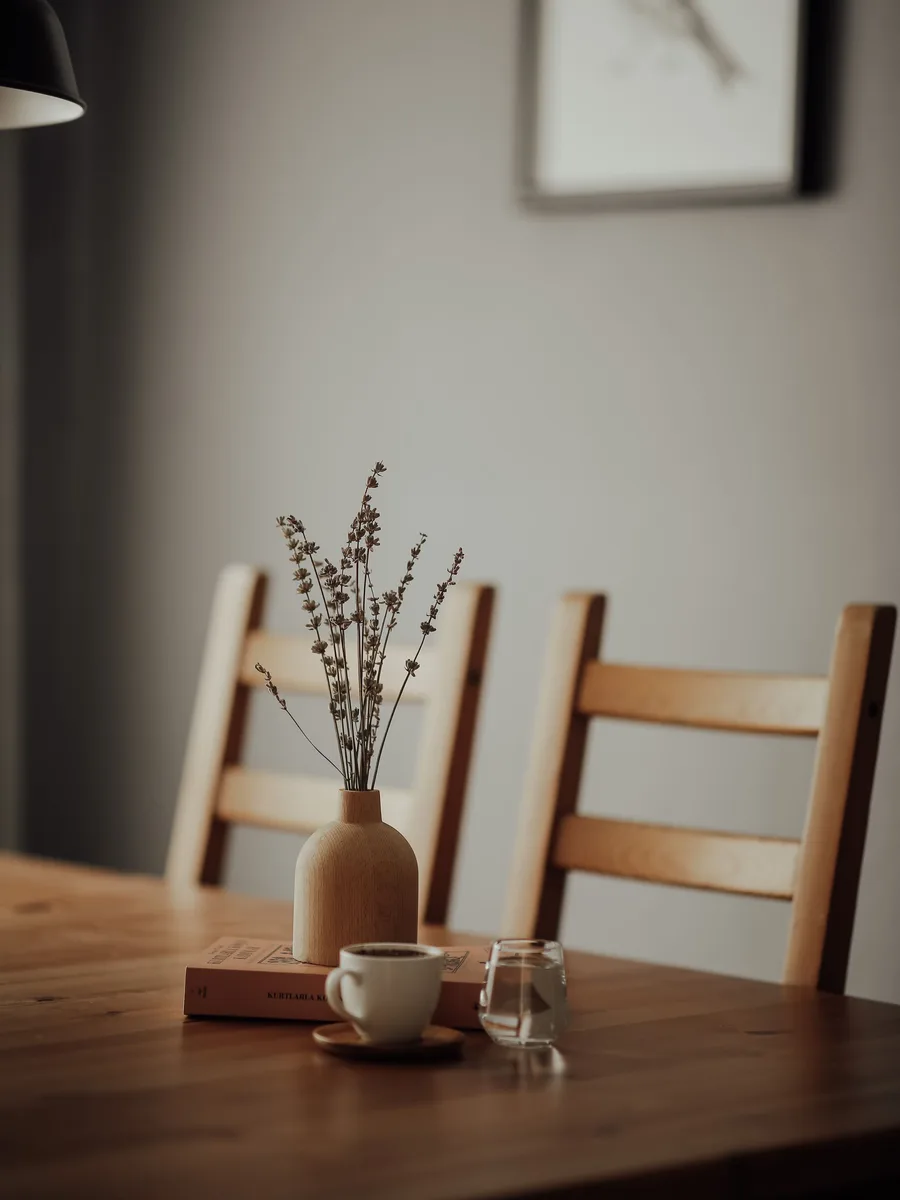
Napkin rings are jewelry, and minimalist tables go without. Instead, fold each napkin into a simple rectangle and lay it flat on the plate or to the left of the fork. The clean lines of a well-folded napkin are decoration enough, and the table gains a calm, tailored look that rings would only interrupt.
Use good-quality linen or cotton napkins in a solid neutral — the fabric’s texture is the detail. A simple fold takes seconds and never looks fussy. If you want one subtle flourish, lay a single herb sprig across each napkin; it is the minimalist exception that proves the rule.
9. Choose a Low, Barely-There Centerpiece
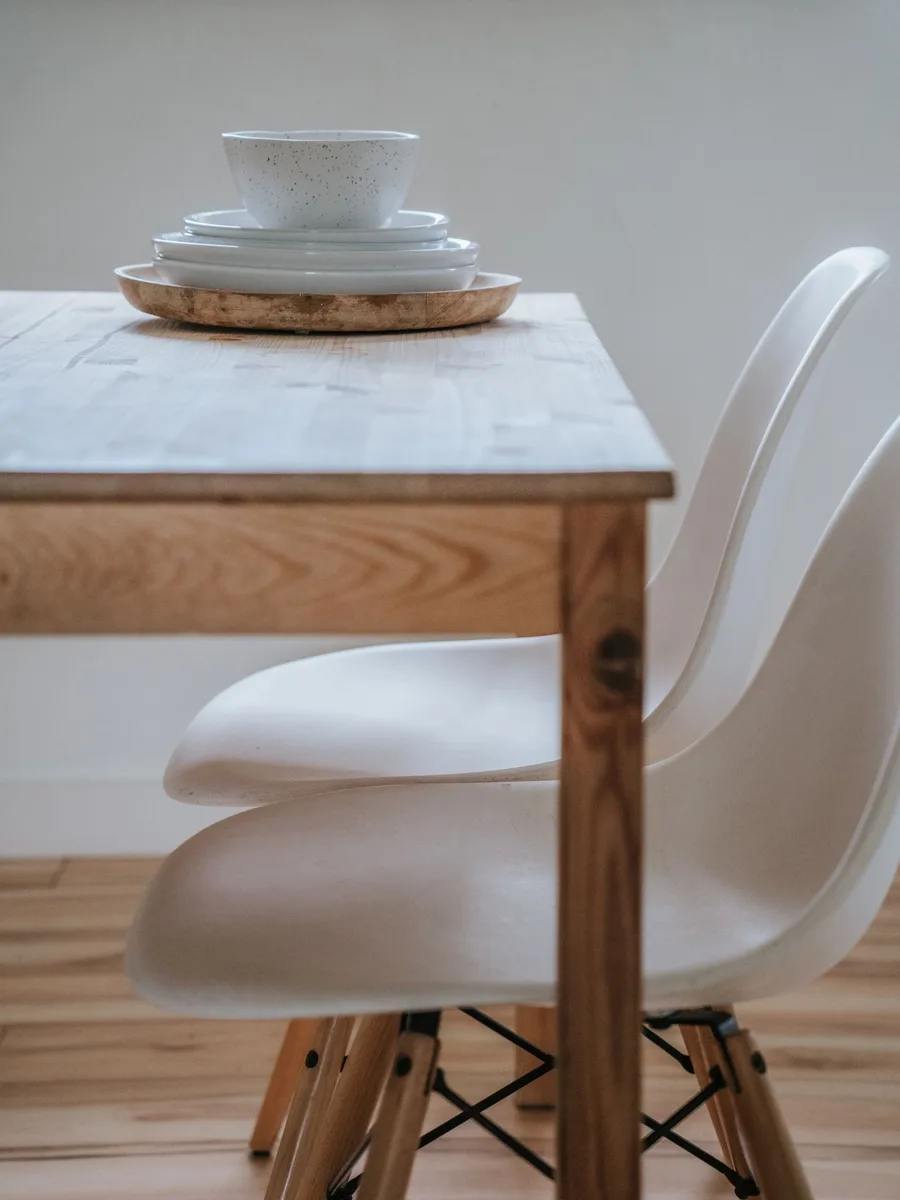
A minimalist centerpiece should sit low and quiet: a shallow stone bowl, a low dish of water with a floating leaf, or three small pebbles in a row. These pieces add presence without height, so conversation and sightlines stay completely open. The table feels styled, but never decorated at you.
Natural materials work best — stone, concrete, unglazed clay — because their matte surfaces absorb light rather than reflecting it. Change the contents with the seasons: a pine sprig in winter, a smooth stone in summer. When in doubt, an empty beautiful bowl is a legitimate centerpiece.
10. Limit the Palette to Three Neutrals
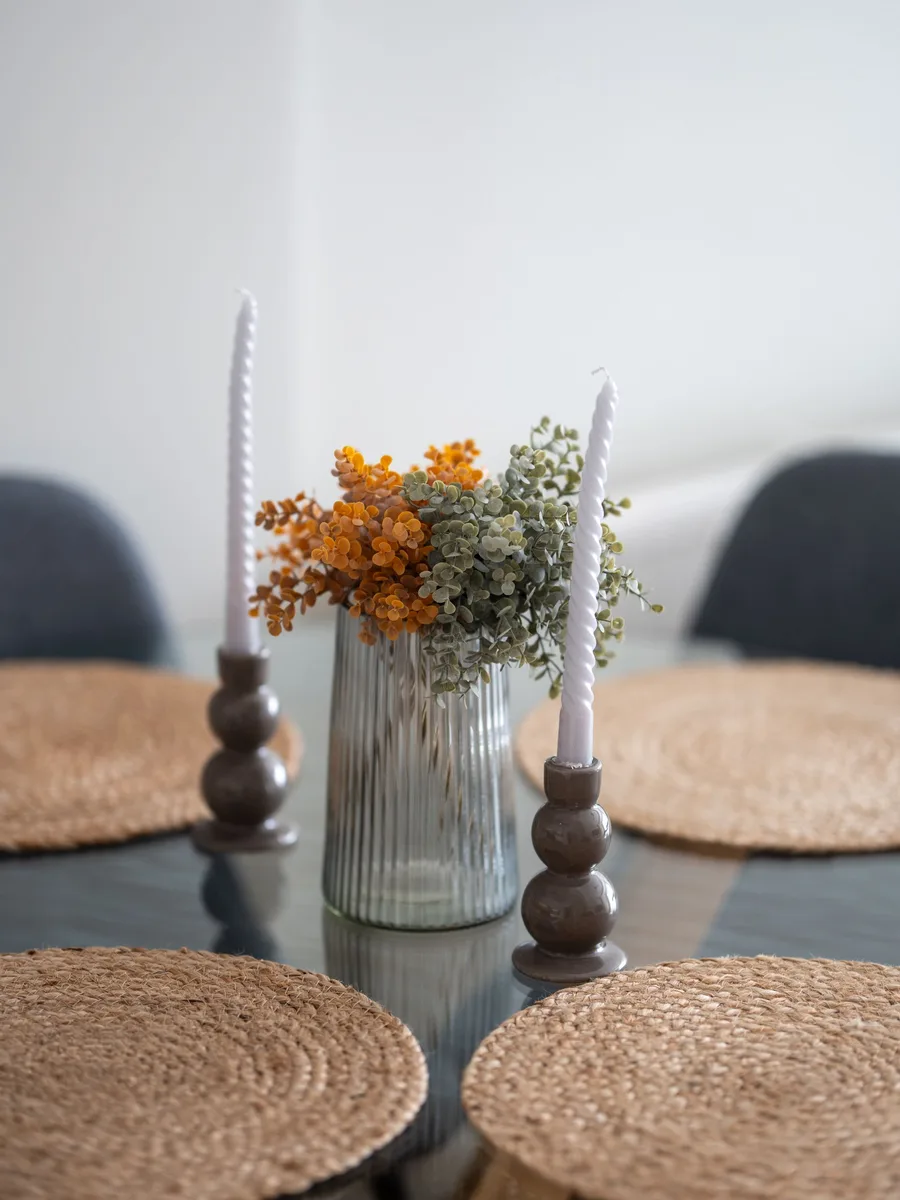
Pick three neutrals — say, warm white, natural wood, and soft gray — and let them carry the entire table. Every plate, napkin, and candle should fall within this trio. The restriction sounds limiting, but it actually makes styling effortless: everything matches because nothing is allowed to clash.
Write your three colors down and consult the list before buying anything new for the table. Warm neutrals (cream, tan, warm gray) feel cozier; cool ones (white, light gray, black accent) feel crisper. Either way, the discipline of three keeps impulse purchases from breaking the calm.
11. Serve on Matte Stoneware Plates
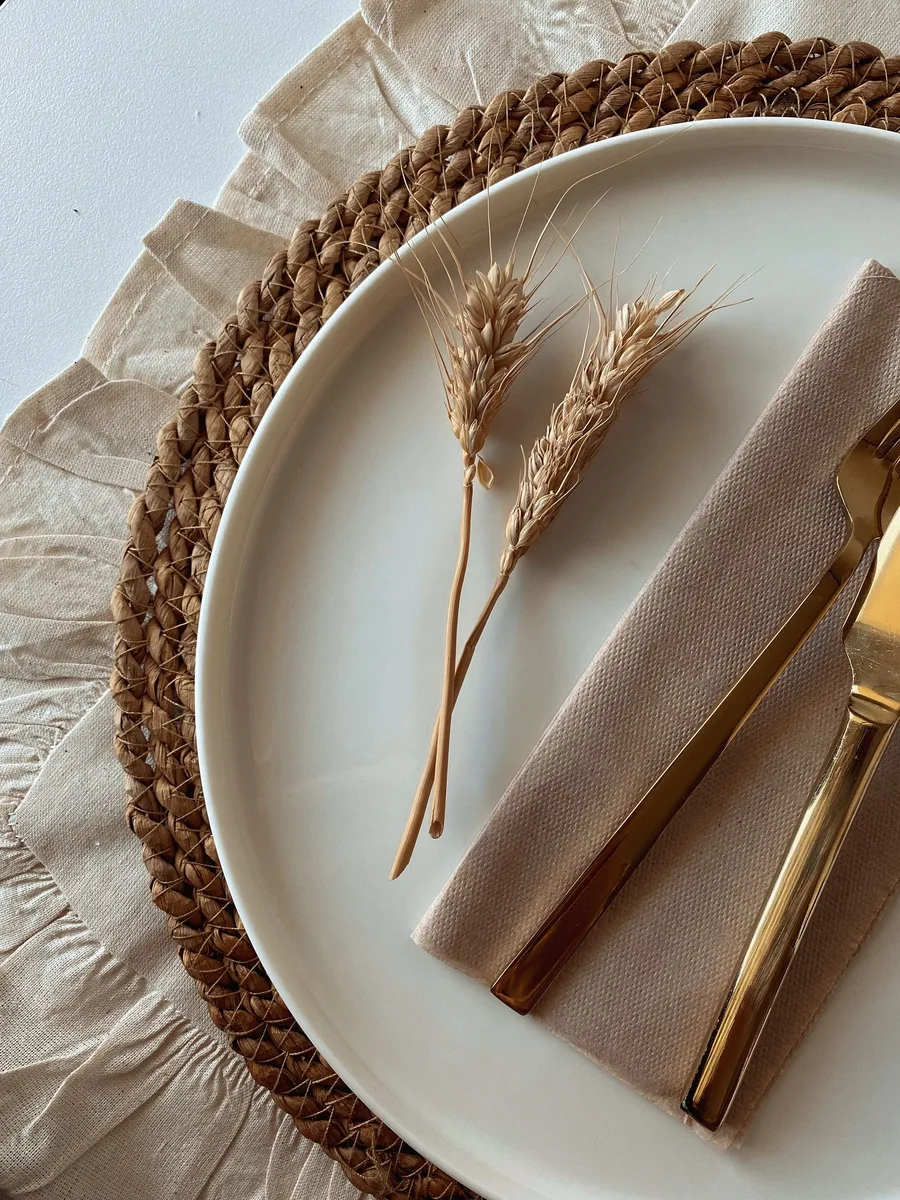
Matte finishes are the minimalist’s best friend because they do not reflect light or demand attention. Matte stoneware plates in soft gray, warm white, or clay tones sit quietly on the table and make food look incredible — colors pop against the muted surface. They feel modern, calm, and effortlessly stylish.
Choose plates with a simple coupe shape (no rim) for the cleanest look. Matte glazes can show marks more easily, so hand-wash your best pieces and save the dishwasher for everyday sets. One set in one color is all you need — minimalism and capsule wardrobes apply to dishes too.
12. Set Out a Clear Glass Carafe
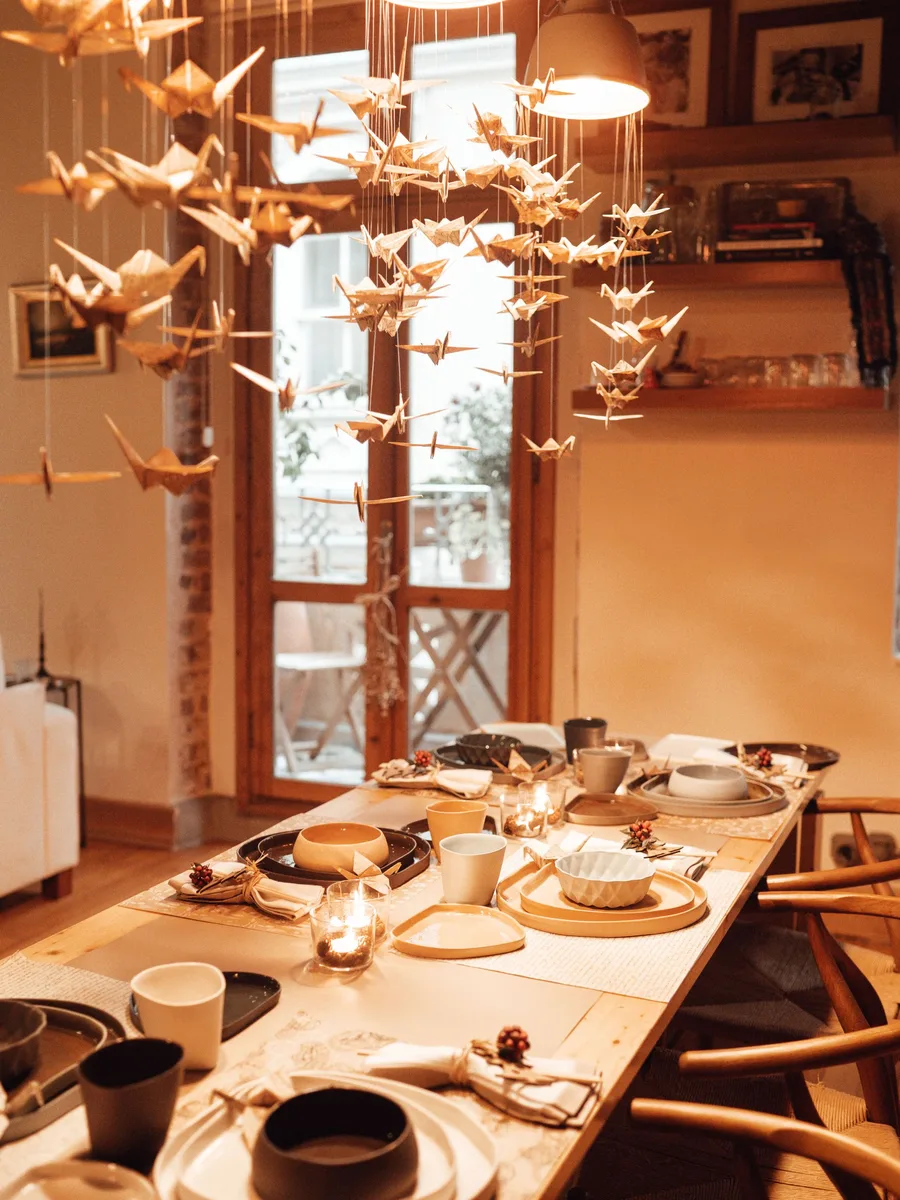
A clear glass carafe of water with simple matching tumblers is both decor and hospitality. The glass catches the light beautifully, the water adds a living shimmer, and guests feel cared for without you lifting a finger during the meal. It is functional minimalism at its finest — beautiful because it is useful.
Choose a carafe with clean lines and no etched pattern; the simpler the better. Add a slice of lemon or cucumber for a subtle touch of color that still reads as minimal. Keep tumblers the same — mixed glassware breaks the calm you have worked to create.
13. Master One Napkin Fold
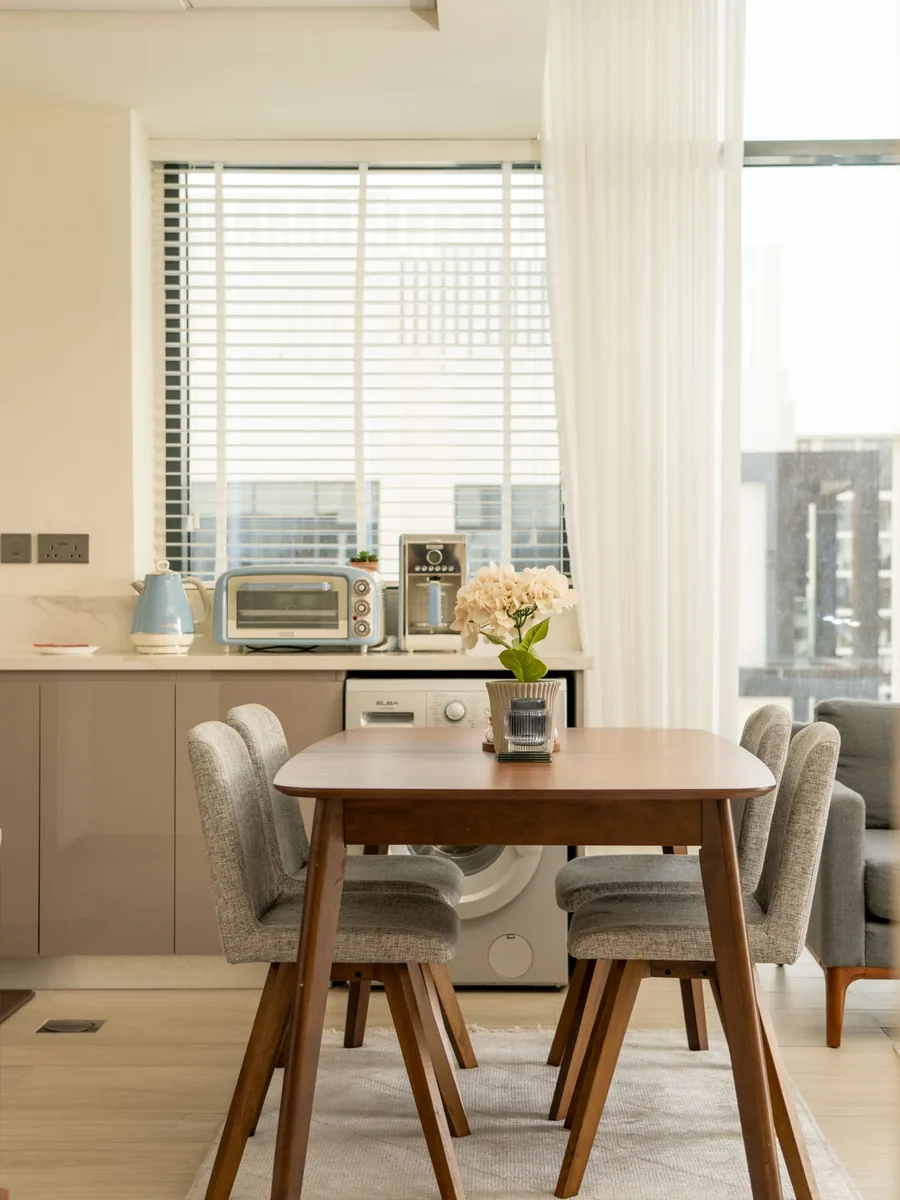
Learn one perfect napkin fold — a crisp rectangle or a simple pocket — and use it every time. Repetition is a minimalist design tool: when every place setting is identical, the table reads as calm and intentional rather than busy. The fold becomes a signature, like a uniform for your table.
Press napkins lightly after washing so the fold holds a sharp edge. A pocket fold can hold the flatware, which removes one more element from the table surface. Consistency matters more than complexity — the simplest fold, done perfectly at every seat, always wins.
14. Keep Decorative Objects at One Height
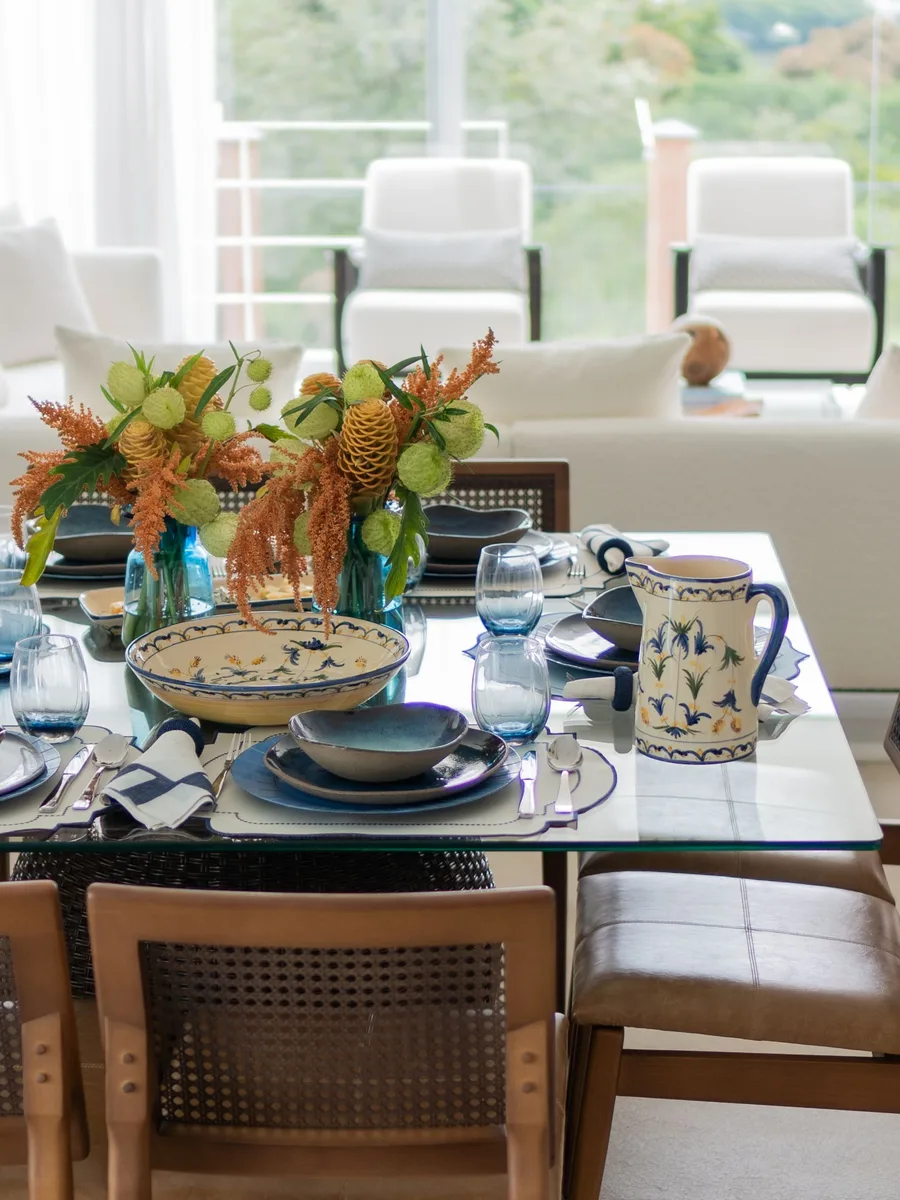
Varying heights create energy and movement — which is exactly what minimalist tables avoid. Keep your decorative objects low and roughly level with each other, and the table’s horizon stays calm and uninterrupted. A low bowl, a short candle, and a flat dish all in the same height band feel serene.
This rule applies to the centerpiece zone only; place settings have their own logic. If you own one tall piece you love, let it stand alone rather than surrounding it with mid-height clutter — a single vertical accent in an otherwise low landscape looks deliberate. When everything else is low, one tall stem becomes sculpture.
15. Let the Wood Table Be the Decor
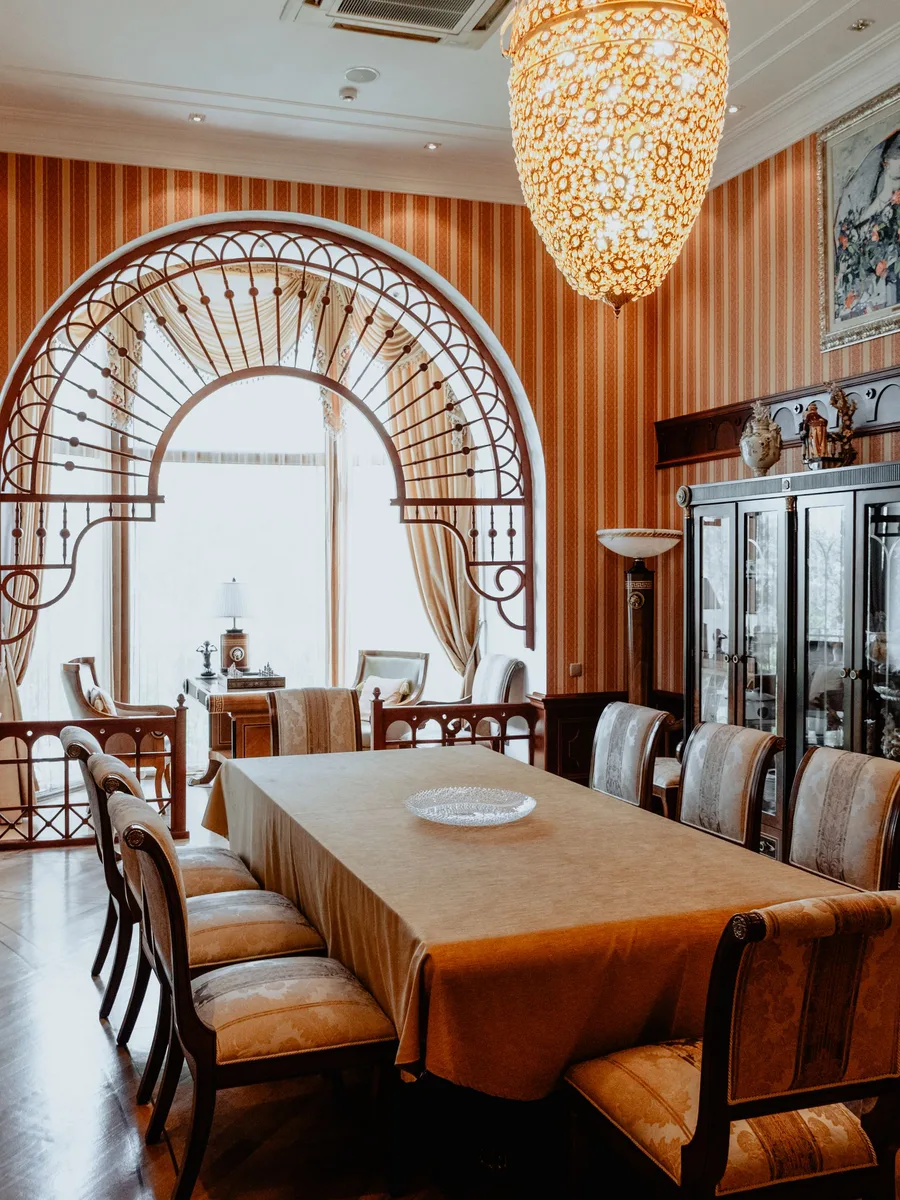
A beautiful wood table needs no tablecloth, no runner, and no apology. If your table has gorgeous grain, let it show — the wood itself is the decor. Place settings go directly on the surface, and a single low centerpiece is all the styling required. This is minimalism at its most honest: the furniture does the talking.
Keep the wood in good condition with regular oiling or waxing so it glows rather than looking neglected. Use felt pads under anything that sits on it permanently. A bare table also makes cleanup blissfully simple — one wipe and you are done.
16. Place One Small Bowl of Green Fruit
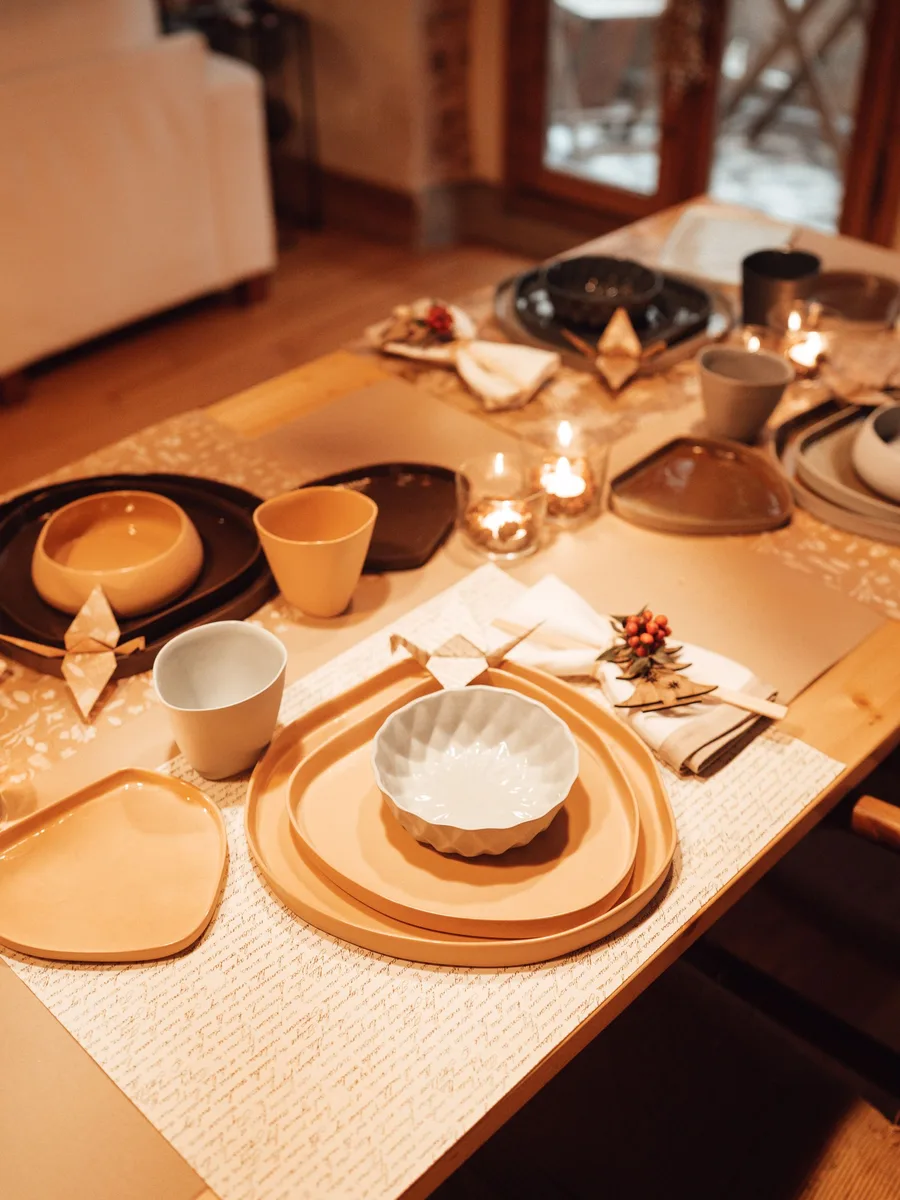
A small bowl holding three green apples or a few limes adds a single note of color and life to a neutral table. One color, one shape, one bowl — the restraint is what makes it work. Green is the ideal choice because it reads as natural rather than decorative, like something that simply belongs there.
Keep the bowl small and the fruit count low; abundance is not the minimalist goal. Choose fruit in one uniform color for maximum calm — mixed fruit salads belong to busier styles. Replace the fruit as you eat it, and the centerpiece maintains itself.
17. Use Taper Candles in Pairs Only

If you love candlelight, limit yourself to one pair of slim tapers in simple holders. Two candles create symmetry and glow without the visual noise of a cluster. Choose unscented tapers in white, cream, or black, and holders so simple they nearly disappear — the flame is the decoration.
Place the pair at the table’s center with generous space around them, or split them to the two ends of a long table. Trim wicks to a quarter inch for a clean, smoke-free flame. When the candles are not lit, the slim holders still read as quiet sculpture.
18. Match All Metal Finishes
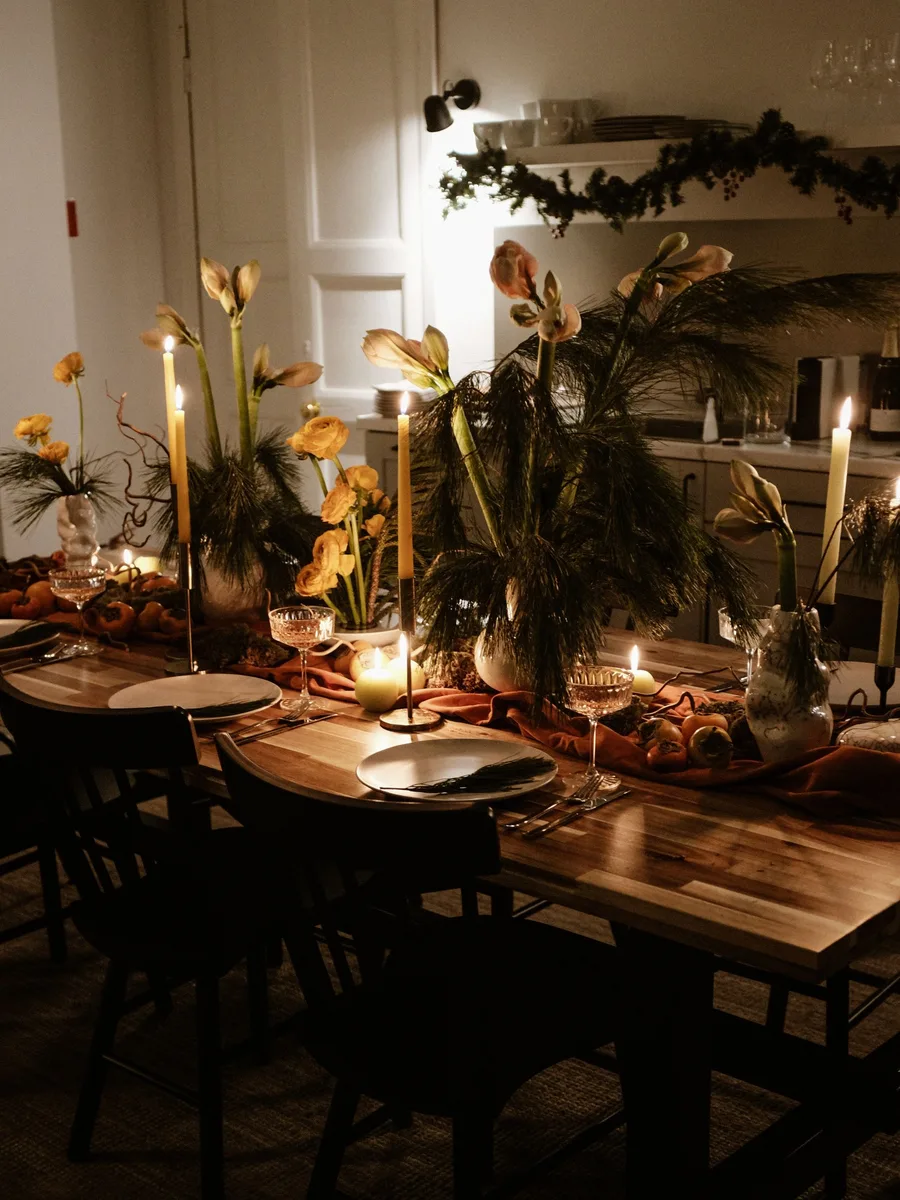
Mixed metals — chrome flatware, brass candlesticks, copper mugs — create visual chatter that minimalist tables cannot afford. Choose one metal finish and commit: all matte black, all brushed stainless, or all warm brass. The consistency makes even ordinary pieces look considered and expensive.
Matte black flatware is a minimalist favorite because it grounds light tables beautifully. If you go with brass or gold, keep it brushed rather than polished to avoid glare. Apply the rule to every metal on the table, including candle holders, serving pieces, and chair details if they show.
19. Choose Bare Table or Cloth — Not Both
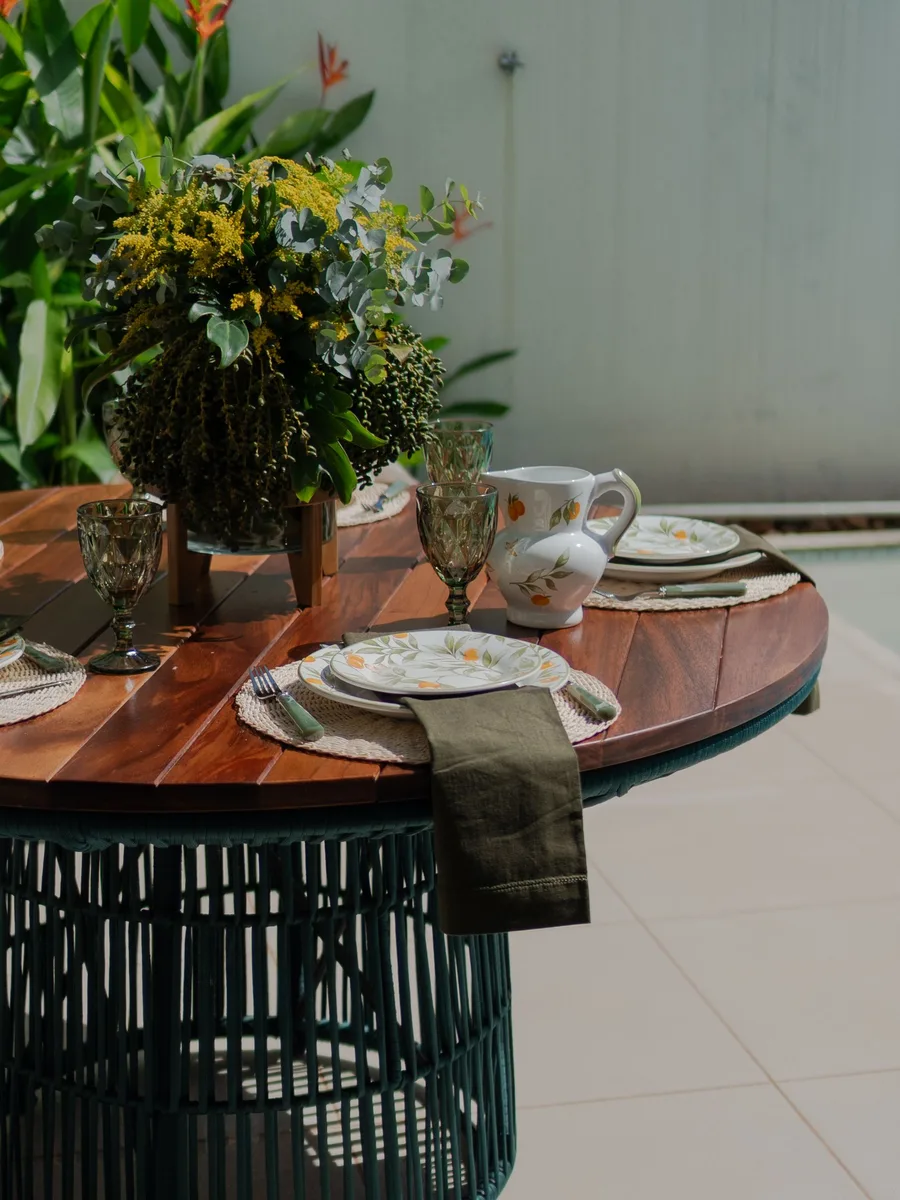
Layering a runner over a tablecloth over placemats is the opposite of minimal. Make one decision: a crisp full tablecloth or a bare table, and commit to it. A single well-pressed cloth in white or natural linen gives formal calm; a bare table gives modern ease. Either is correct — the layering is the problem.
If you choose a cloth, let it fall to the floor or end just below the table edge — no awkward in-between lengths. Skip the runner entirely when a cloth is down. This one decision removes a surprising amount of visual clutter and makes setting the table dramatically faster.
20. Anchor with a Single Tray
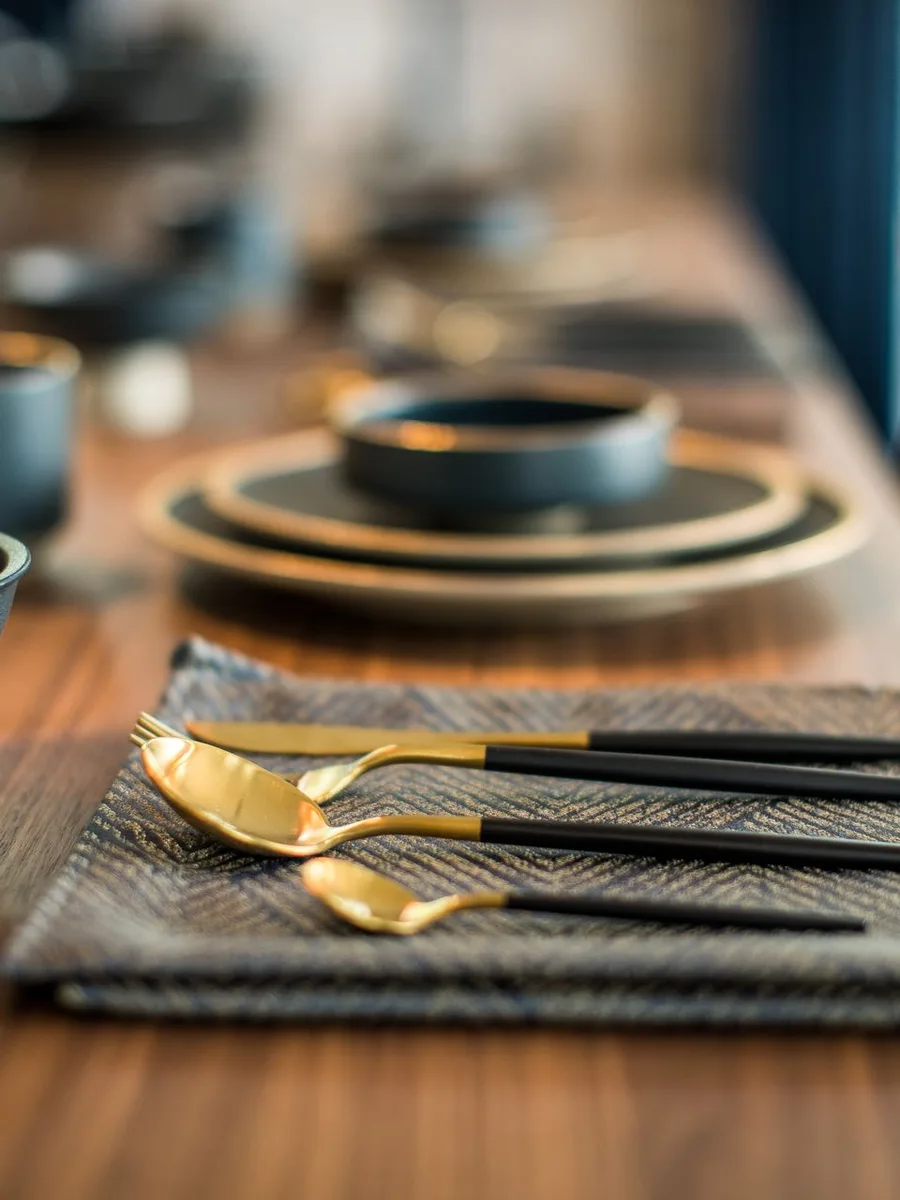
One tray in stone, concrete, or pale wood gives your few decorative objects a defined home. Instead of items scattered across the table, everything sits within the tray’s boundaries — the arrangement reads as intentional, and the rest of the table stays gloriously empty. It is minimalism’s favorite organizing trick.
Limit the tray’s contents to three items maximum: a candle, a small plant, a beautiful object. Choose a tray with a matte finish and simple shape — round or rectangular, no ornate edges. When dinner is served, the whole tray lifts away in one motion.
21. Mirror Every Place Setting Exactly
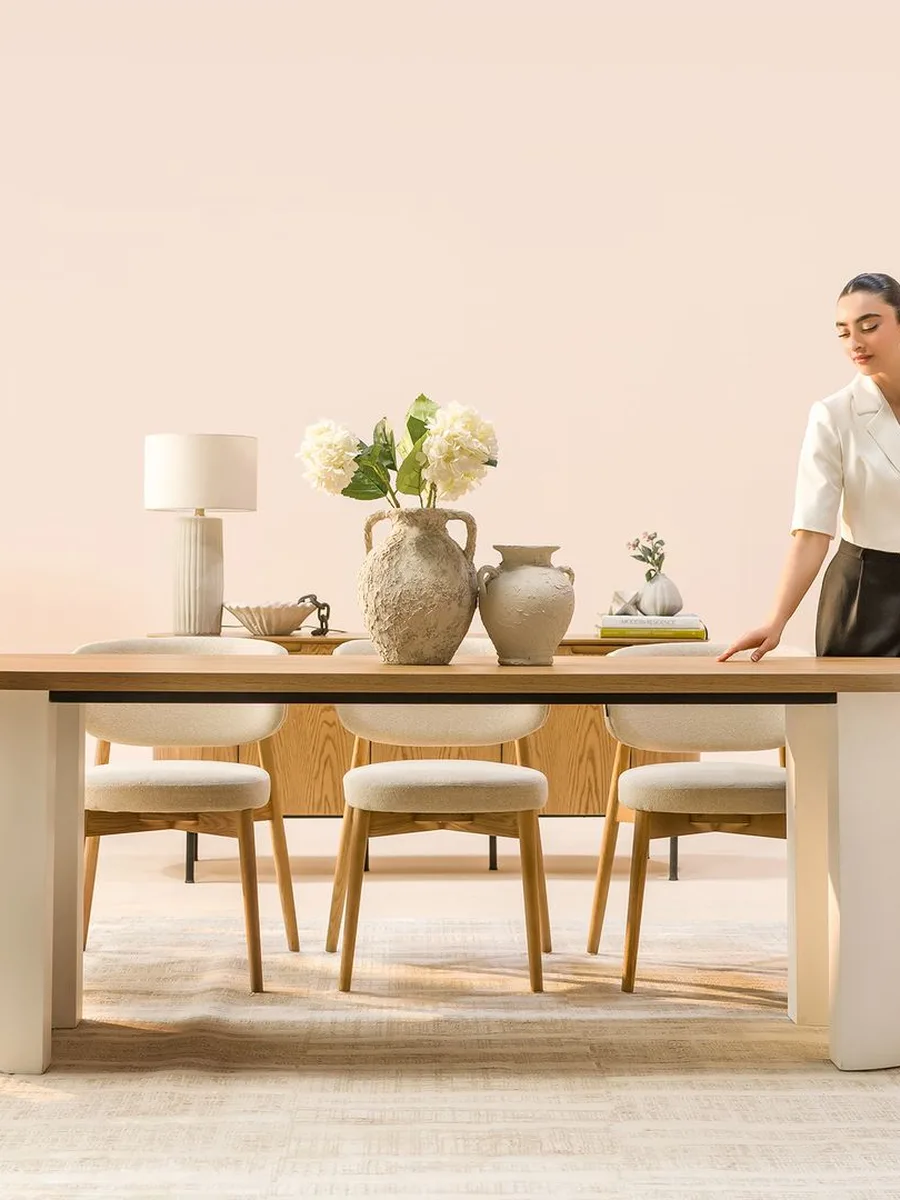
Perfect symmetry is the final minimalist secret: every place setting identical, measured and aligned. Same plate, same fold, same glass position, same spacing — the repetition creates a rhythm that feels deeply calming. Guests notice the precision even if they cannot name it, and the table photographs beautifully.
Use a ruler or your hand span to space settings evenly when setting up. Keep flatware to the essentials — no extra forks creating visual noise. This level of consistency takes a few extra minutes but delivers the serene, gallery-like table that defines minimalist entertaining at its best.

David is the home decor enthusiast behind HomeLushly. He shares practical, budget-friendly ideas for bedrooms, living rooms and seasonal decorating — from colour combinations that actually work to small-space styling tricks that make a room feel bigger. Every guide on HomeLushly is built around real photos and hands-on research, to help you make your home feel warm, personal and beautifully put together.