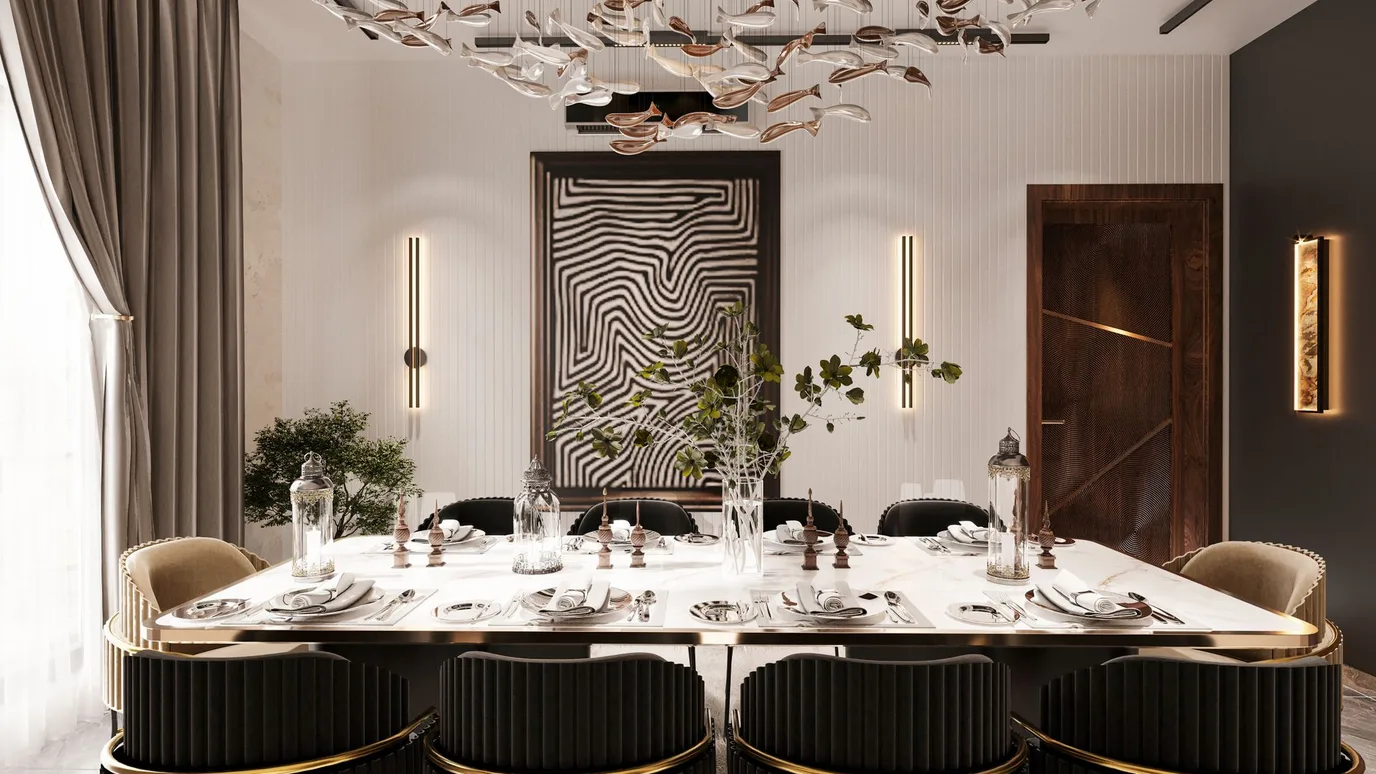
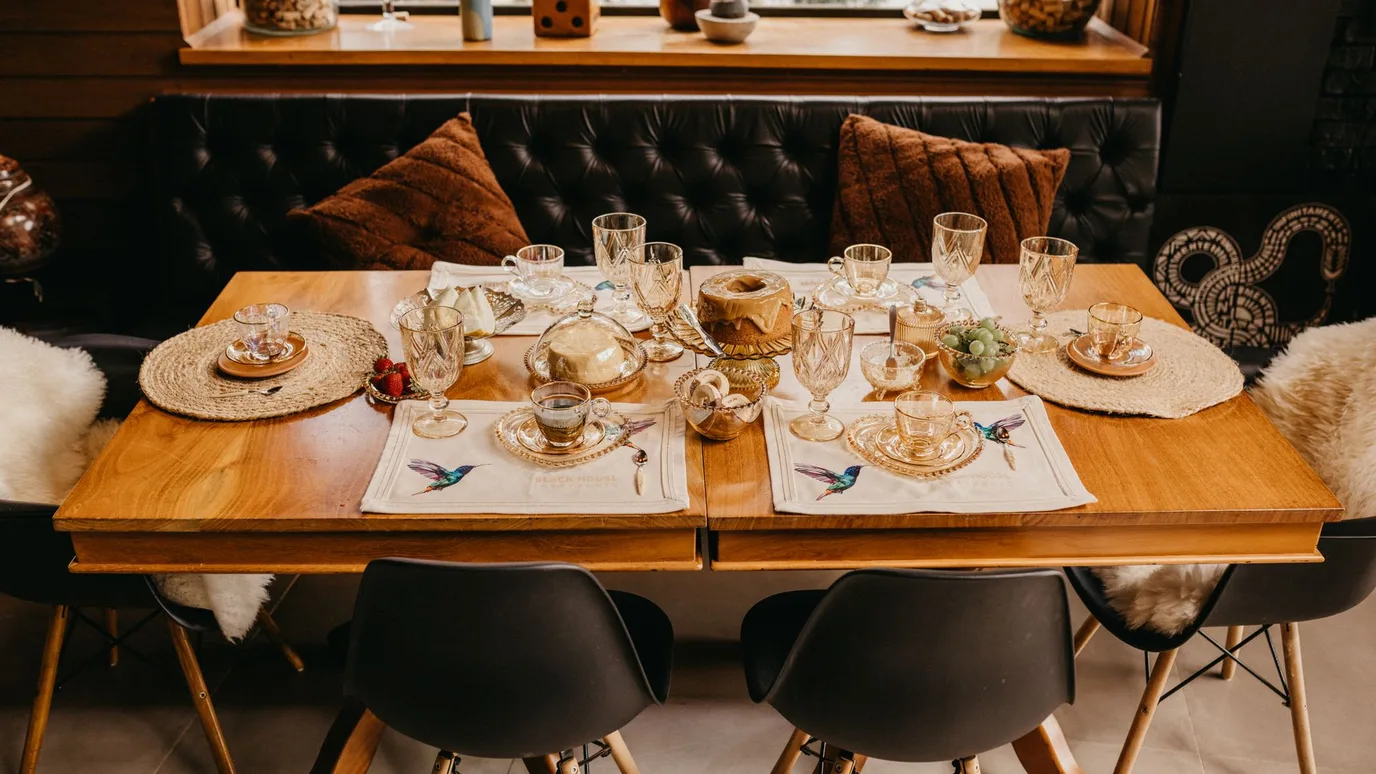
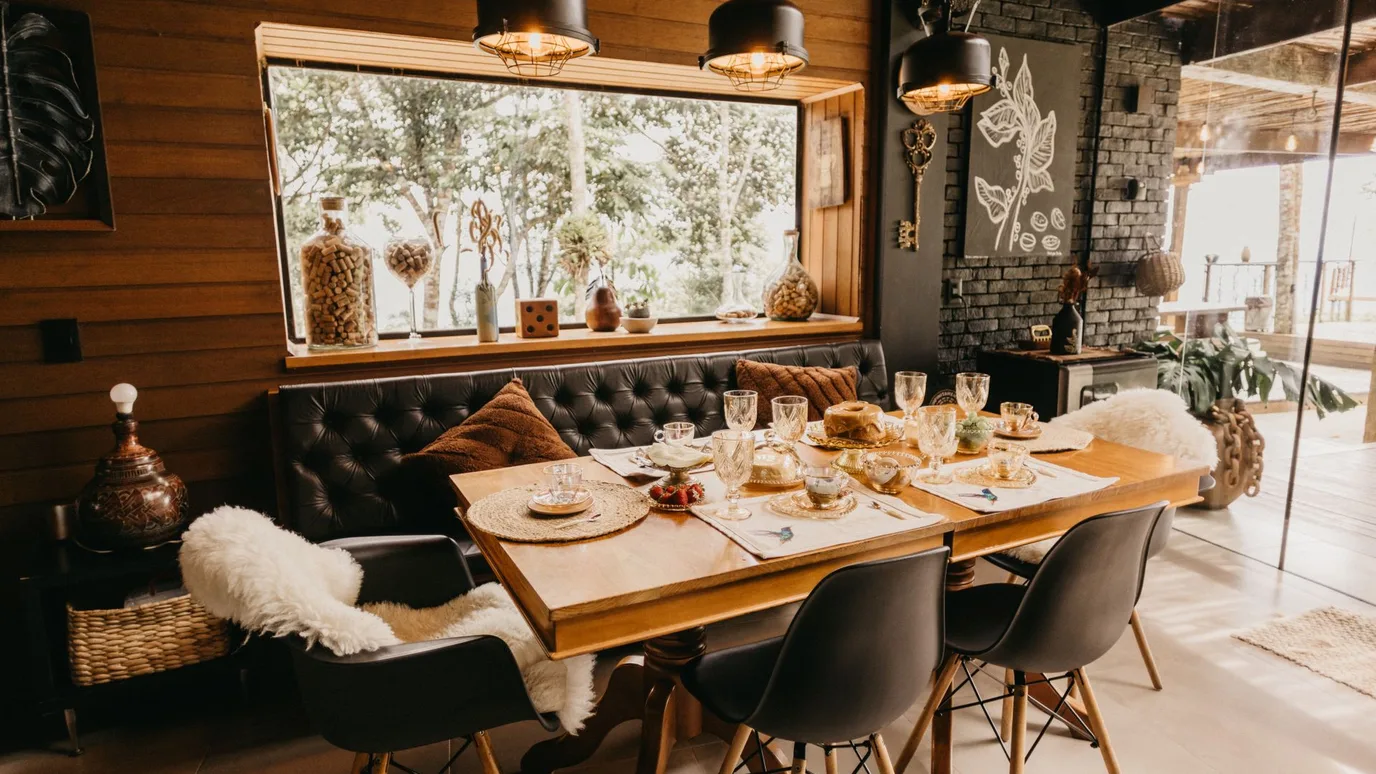
An elegant table is not about how much you spend — it is about how thoughtfully you layer.
A charger under the plate, a linen napkin folded with care, candlelight reflected in crystal: these small decisions signal to every guest that this meal matters. Luxury at the table is really attention made visible, and it costs far less than most people assume. Many of the pieces — a good tablecloth, classic white dinnerware, simple brass candlesticks — can be bought once and used for decades.
The formula is simpler than it looks: build in layers, keep a tight colour palette, and let one or two hero pieces shine.
Start with the base (cloth or bare wood), add chargers or placemats, then dinnerware, glassware, and flatware in a consistent finish. Height comes from candles or a floral centrepiece; personality comes from details like napkin rings and place cards. Two or three colours are enough — ivory, gold, and green will never fail you.
This guide walks through 23 elegant table setting ideas, each with practical tips you can use for a holiday dinner, a wedding table, or simply a Tuesday night you want to feel special.
From crystal and fine china to the perfect napkin fold, these are the details that make guests pause at the doorway and say “wow” before they even sit down.

1. Start with Gilded Chargers
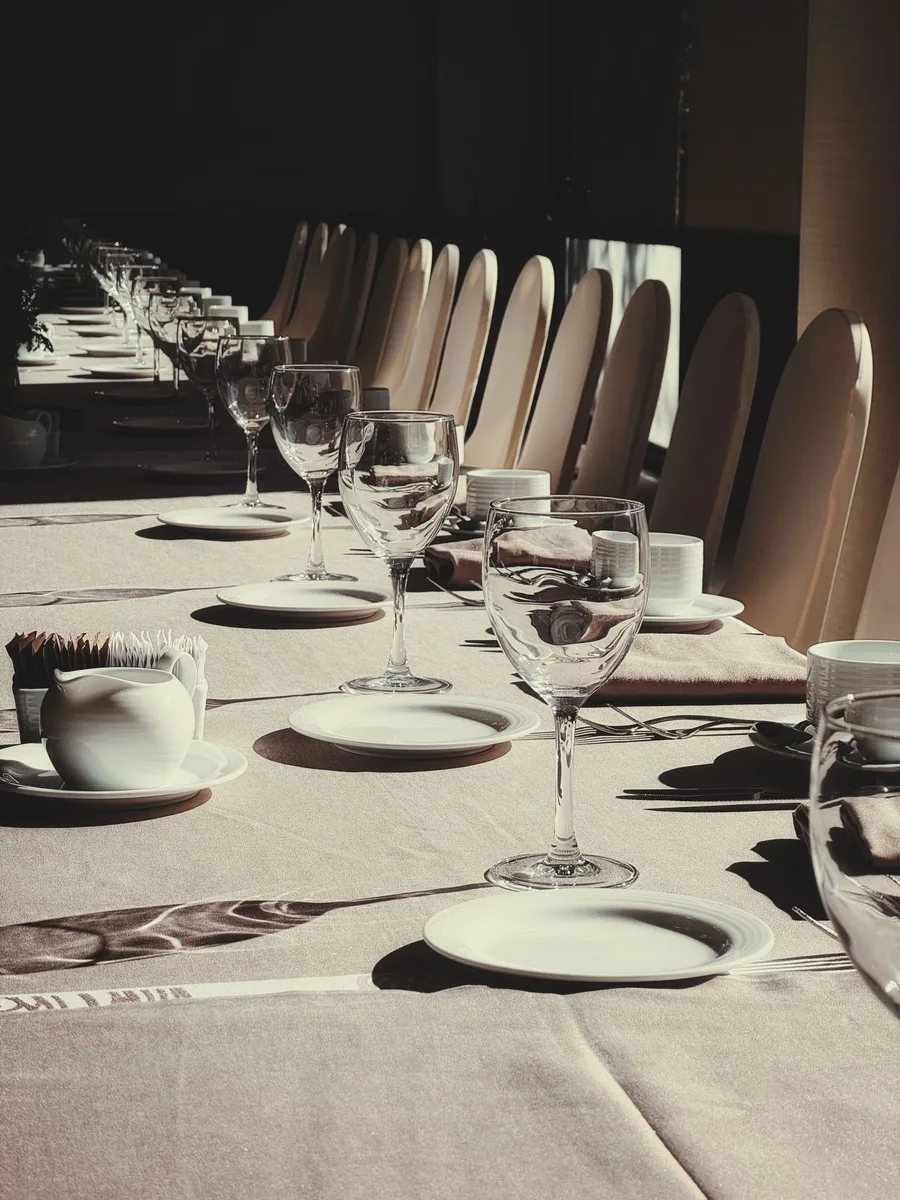
A charger is the single fastest way to make a table look expensive. This large decorative plate sits under the dinner plate for the whole meal, framing each course in a rim of gold, silver, or beaded glass. It instantly adds formality and protects your tablecloth from heat and spills at the same time. Choose a finish that echoes your flatware for a pulled-together look.
Chargers should be about an inch wider than your dinner plates so the rim shows. Gold reads warm and traditional; silver or pewter reads cool and modern. You do not need a full set of fine china to use them — chargers make even plain white plates look like they belong at a gala dinner. Store them stacked with felt separators to keep the finish pristine.
2. Invest in Classic White Fine China
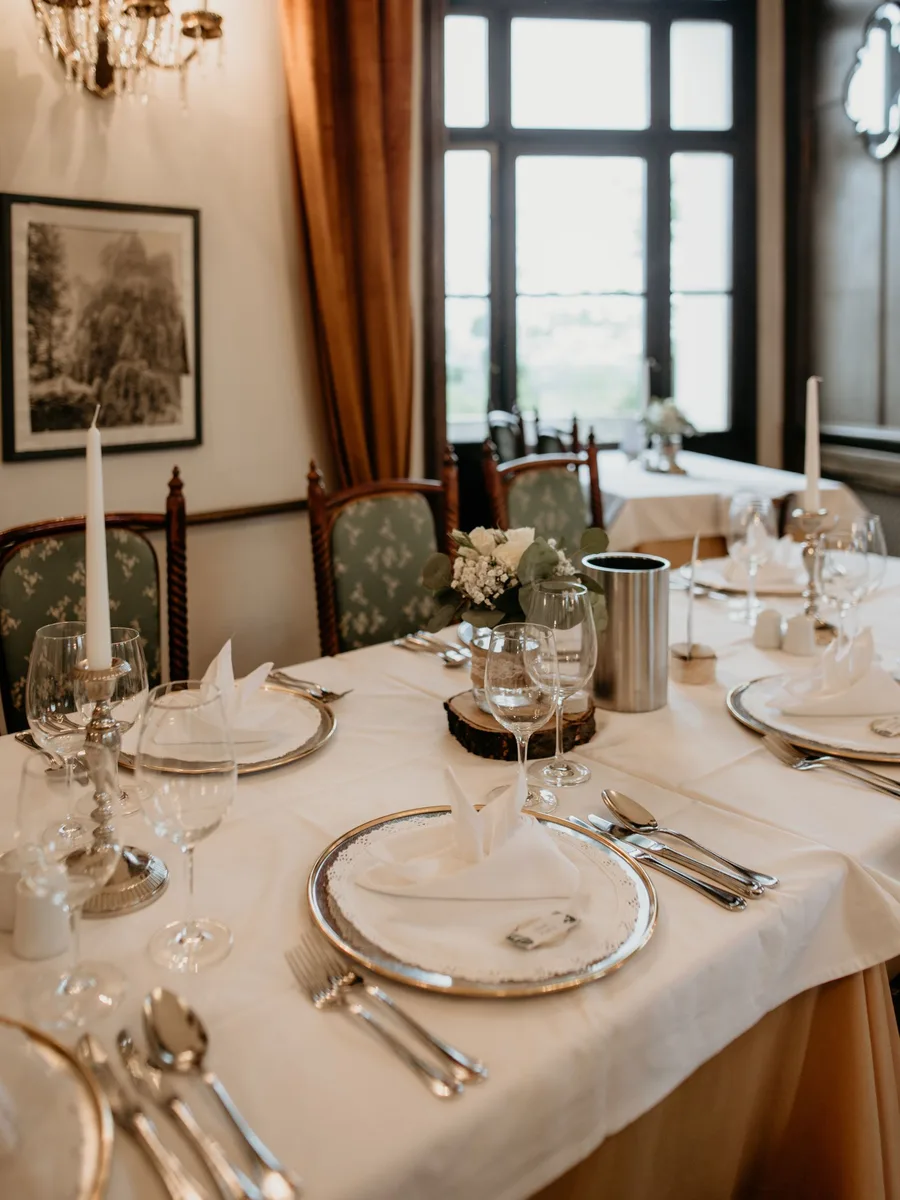
White dinnerware is the little black dress of table settings: it goes with everything and never dates. A classic rimmed white plate with a subtle gold or platinum band looks formal without shouting, and it makes food look better — chefs plate on white for a reason. Build your set gradually: dinner plates first, then salad plates, then soup bowls.
Bone china is lighter and more translucent than standard porcelain, which is part of what makes it feel luxurious in the hand. If a full set is out of reach, buy dinner plates in fine china and use simpler white salad plates — guests notice the plate their main course arrives on. Hand-wash pieces with metallic rims to keep the band from fading.
3. Polish Your Crystal Stemware
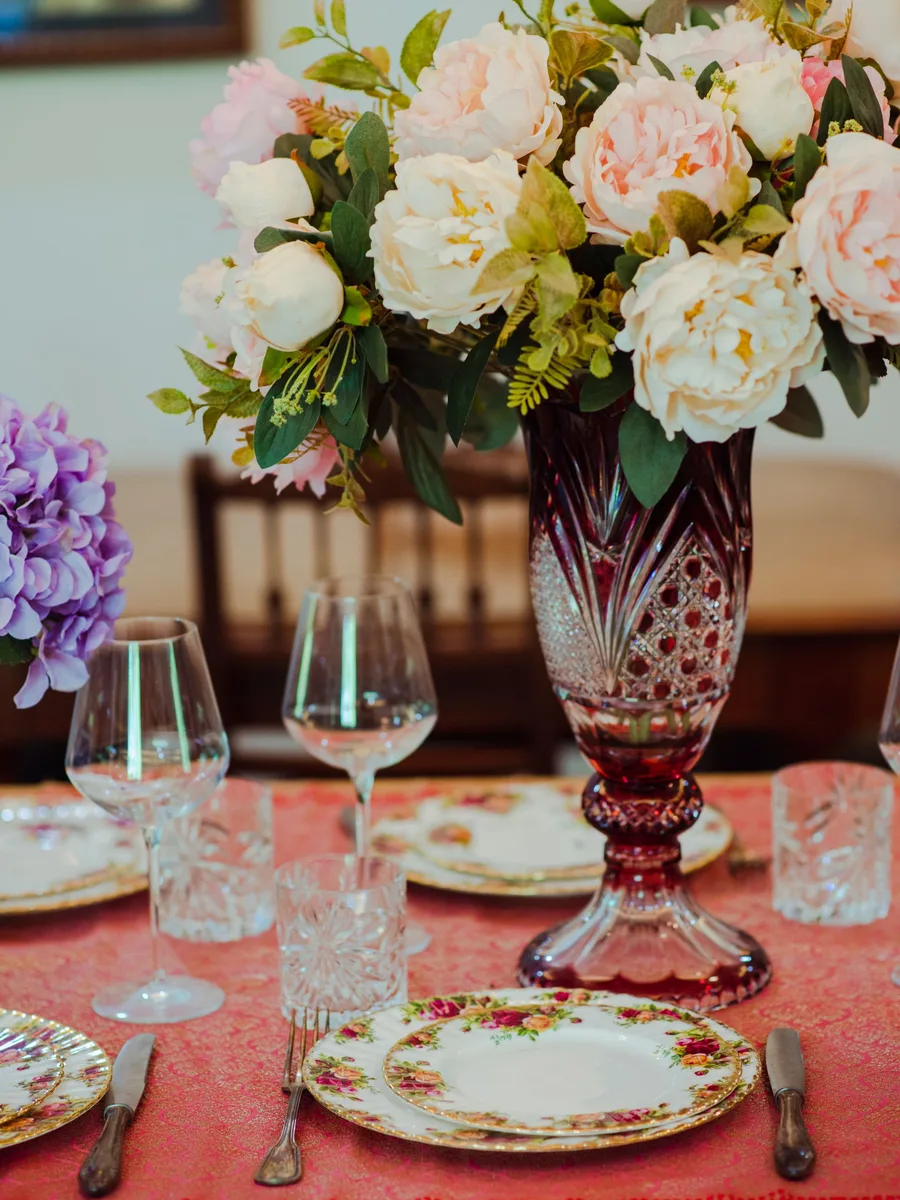
Crystal catches light in a way ordinary glass never does, and a row of gleaming stemware is half of a luxurious table’s sparkle. You do not need a dozen shapes: a red wine glass, a white wine glass, and a champagne flute or coupe cover nearly every occasion. The thin rim of real crystal also genuinely improves how wine tastes.
The secret is the polish. Wash in hot water with a drop of white vinegar, then buff each glass with a lint-free cloth while holding it by the bowl — never the stem, which can snap. Set water goblets and wine glasses to the upper right of each plate, largest closest. Even water served in crystal feels like an event.
4. Fold Real Linen Napkins
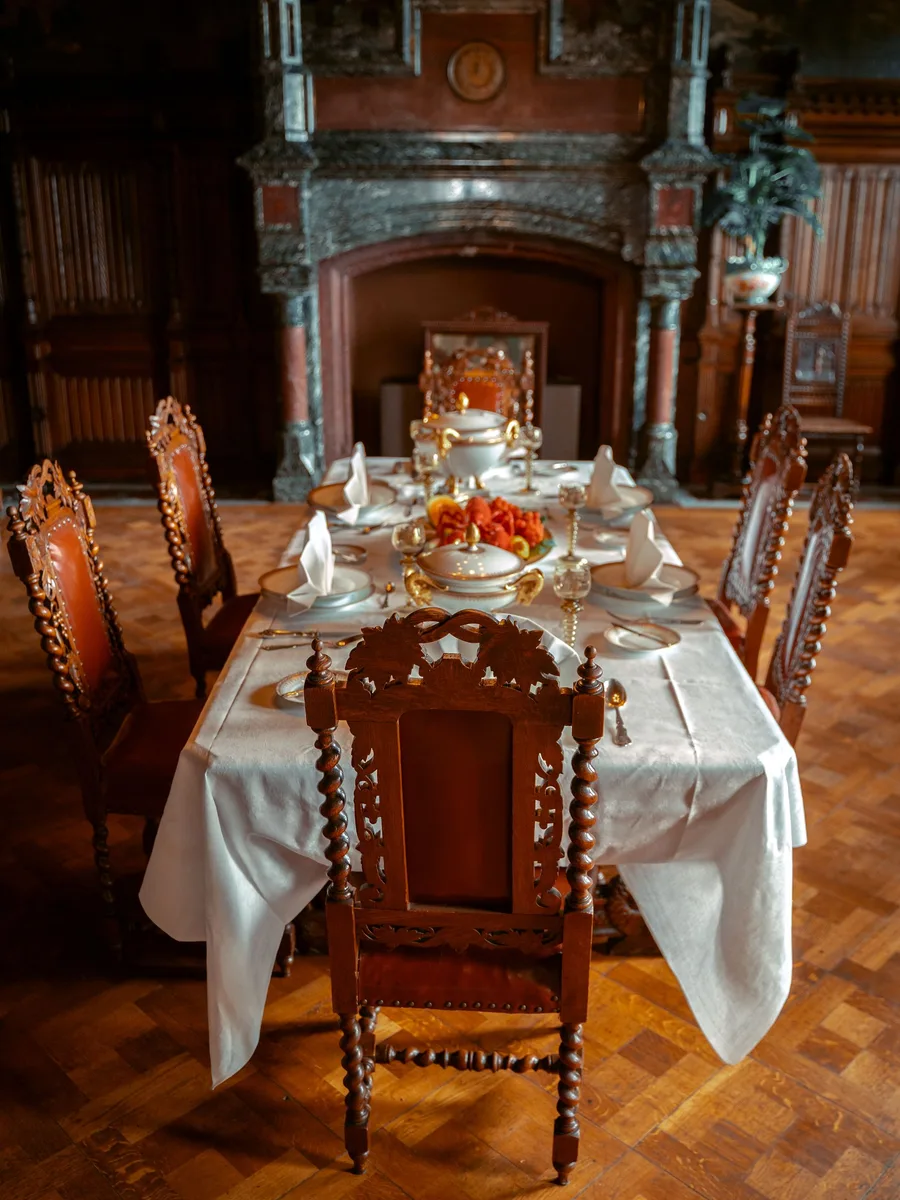
Paper napkins have no place at a luxurious table. Real linen napkins — heavy, soft, and slightly textured — are one of the most affordable upgrades you can make, and they get better with every wash. A simple rectangle fold laid across the plate or a classic pocket fold holding the flatware both look effortlessly refined.
Iron them while slightly damp for crisp edges, and skip fabric softener, which coats the fibres and dulls absorbency. Ivory or white suits every occasion; for drama, try deep emerald or black linen against white china. Buy napkins at least 20 inches square — generous size is what separates restaurant linen from the skimpy kind.
5. Choose Gold Flatware
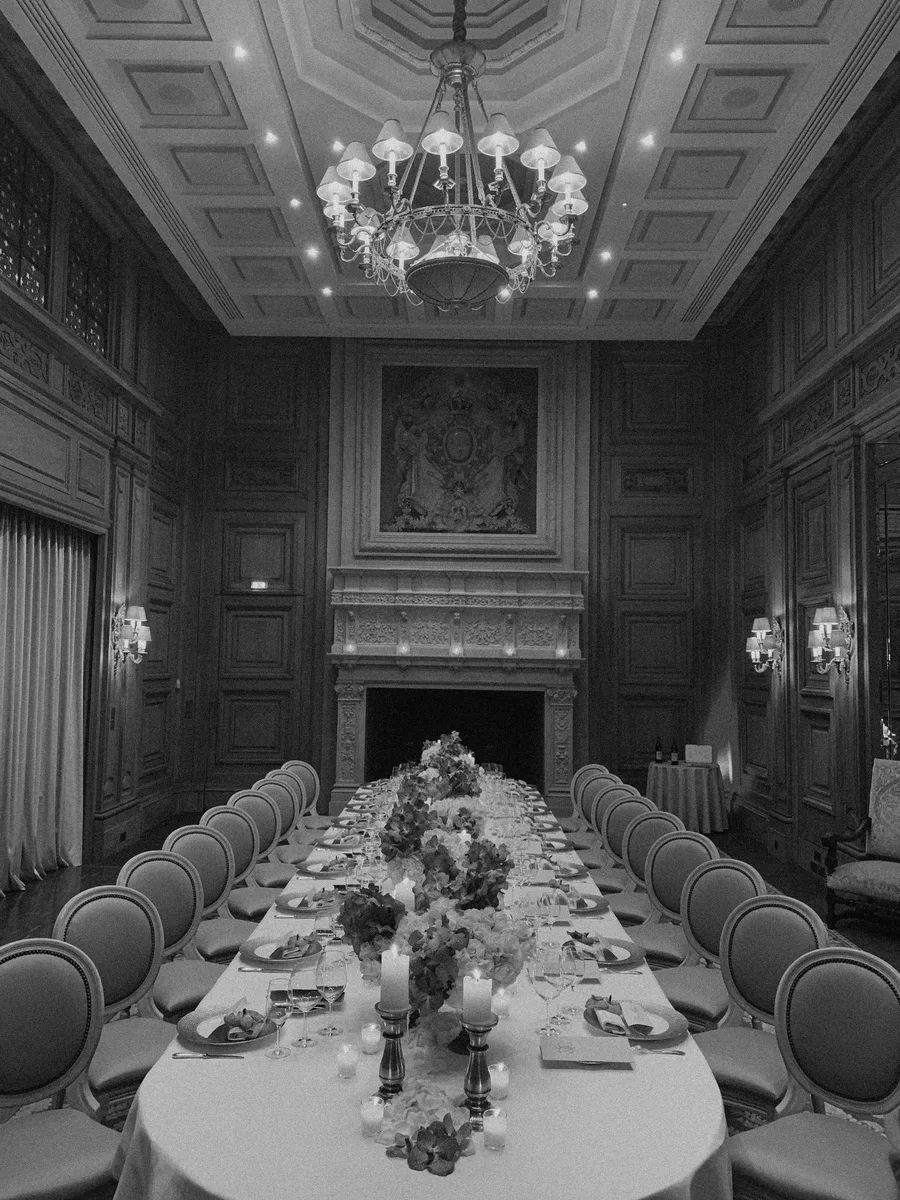
Gold flatware is the jewellery of the table. A matte gold finish reads modern and understated; a polished gold reads full glamour. Either way, it elevates everything around it — white plates look richer, crystal looks warmer, and the whole table glows in candlelight. It is the detail guests photograph.
Place forks to the left of the plate and knives (blades facing the plate) and spoons to the right, working outside-in with the courses. Gold-toned stainless steel gives the look at a fraction of the price of gold plate and is dishwasher-safe. Keep the finish consistent across every piece — mixed metals at one place setting look accidental rather than chic.
6. Write Hand-Lettered Place Cards
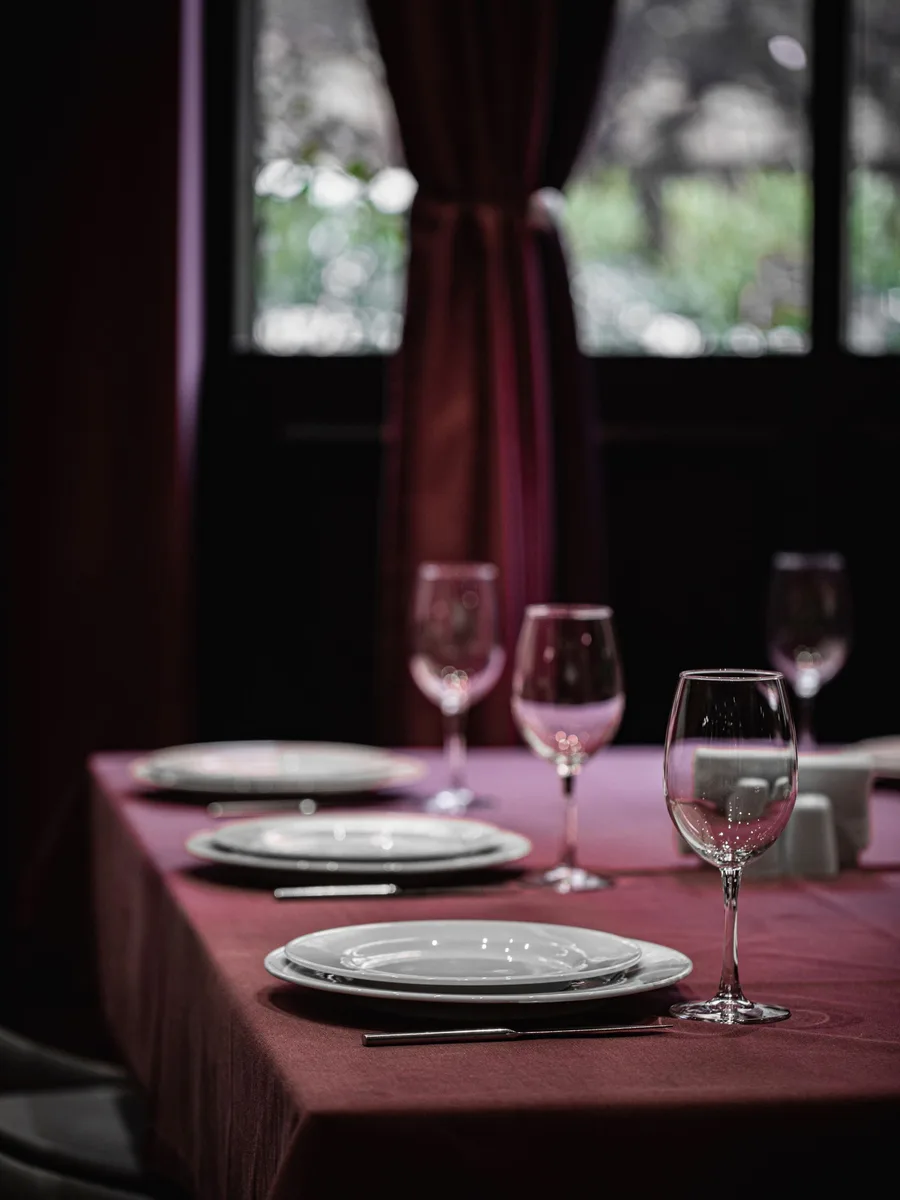
A place card tells each guest they were expected — and that is the essence of hospitality. Hand-lettered names on heavy card stock, tented above the plate or tucked into a napkin fold, add a personal, bespoke layer that printed labels cannot match. You do not need calligraphy skills; neat handwriting in a good pen looks charming.
Match the card to your palette: ivory card with gold ink is timeless, while deckle-edge paper adds artisanal texture. Prop cards in mini brass holders, tie them to a sprig of rosemary, or lean them against a wine glass. Write first and last names for formal dinners, first names only for intimate gatherings.
7. Light Taper Candles in Brass Holders
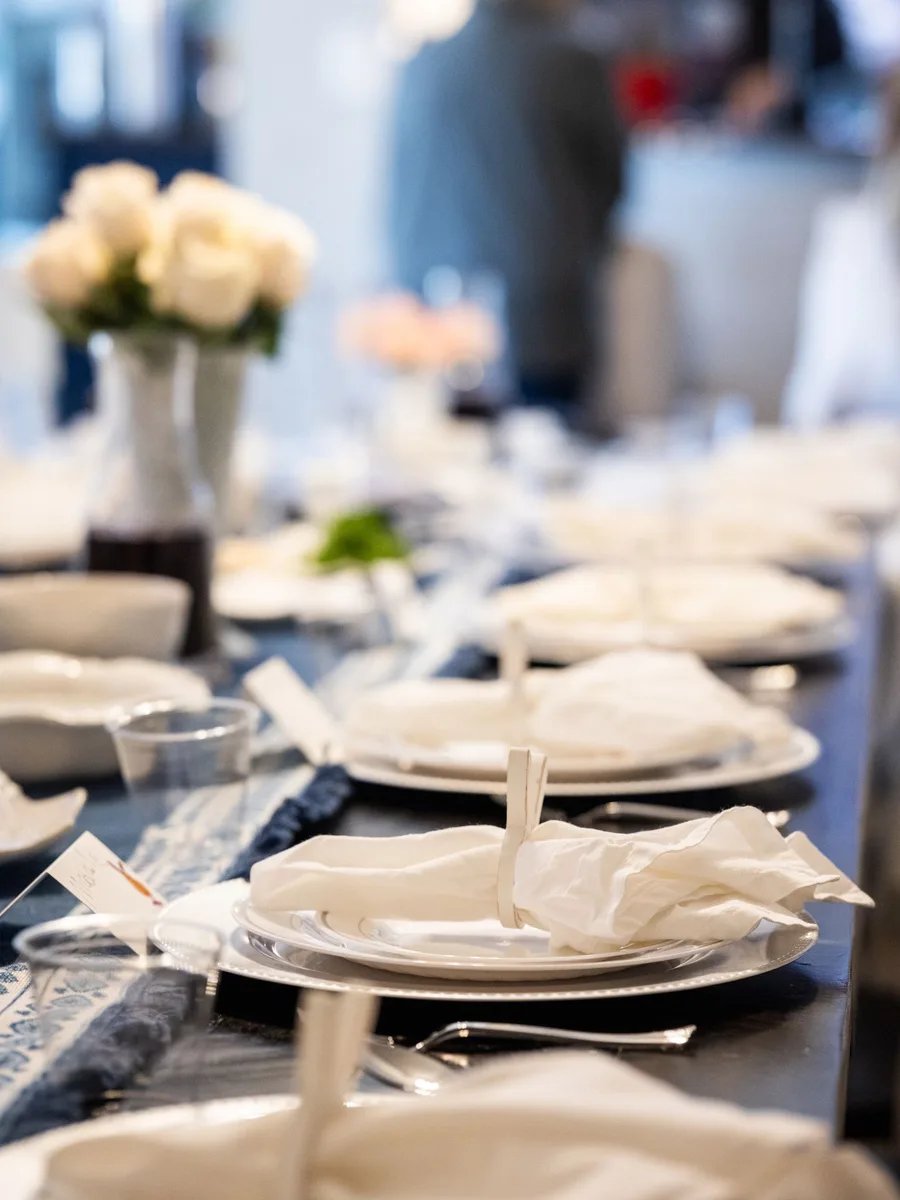
Nothing flatters a table — or the people around it — like candlelight. Tall taper candles in brass or gold holders add height and drama, and their warm flicker makes crystal sparkle and faces glow. Use unscented tapers at the table so the fragrance never competes with the food.
Vary the heights for a collected, organic look, or keep them uniform for formality. Three to five tapers suit a six-person table; space them so guests can see each other over the flames. Trim wicks to a quarter inch before lighting for a clean, smoke-free burn, and always use a drip guard or bobeche to protect the cloth.
8. Build a Low Floral Centrepiece
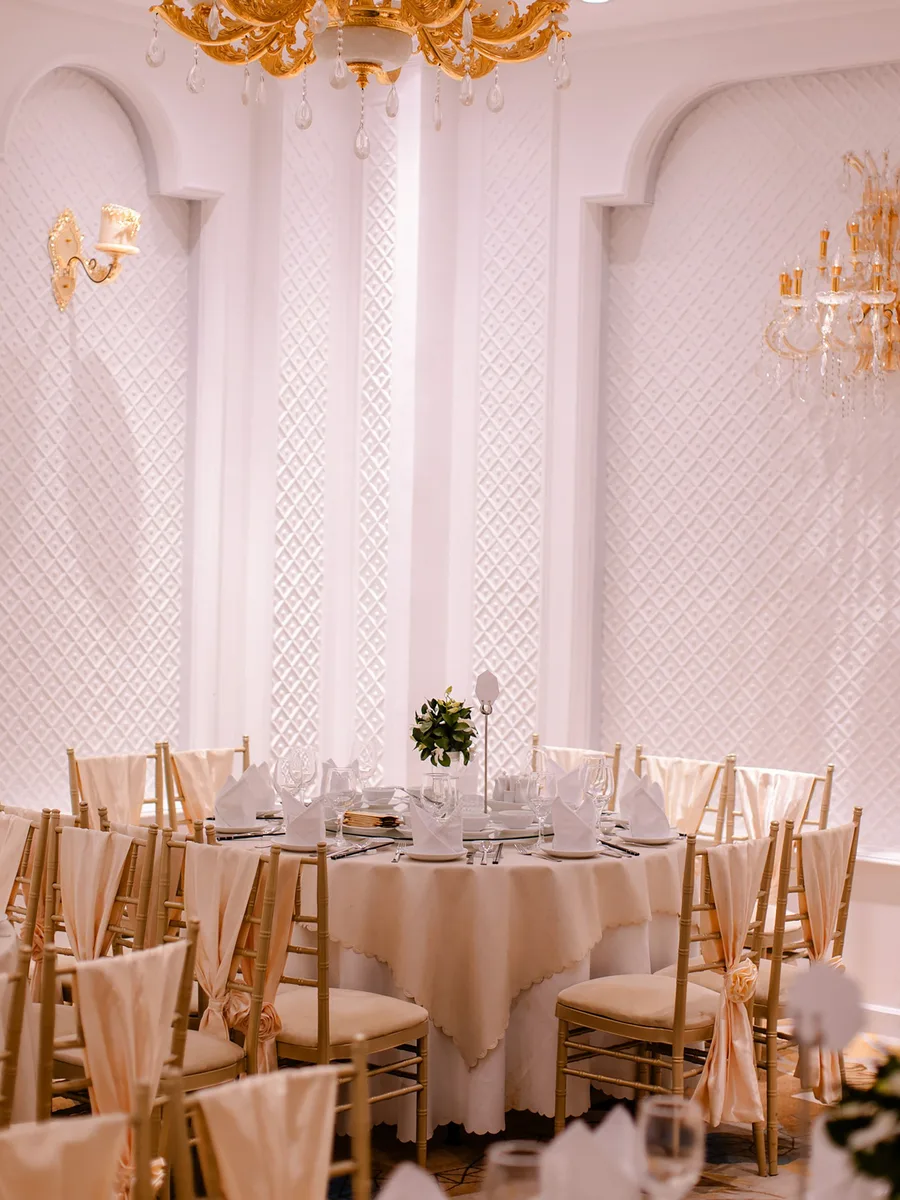
A centrepiece should be admired, not navigated around. Keep arrangements low — under 12 inches — so conversation flows across the table. A loose cluster of white roses, ranunculus, or peonies with trailing greenery in a low bowl feels abundant and romantic without blocking a single sightline.
Stick to one or two flower varieties in a tight colour story for a designer look; mixed garden-style bunches read more casual. Condition stems in water for a few hours before arranging, and hide the mechanics with moss or greenery. For a long table, repeat three small arrangements down the centre instead of one large one.
9. Layer a Crisp Tablecloth
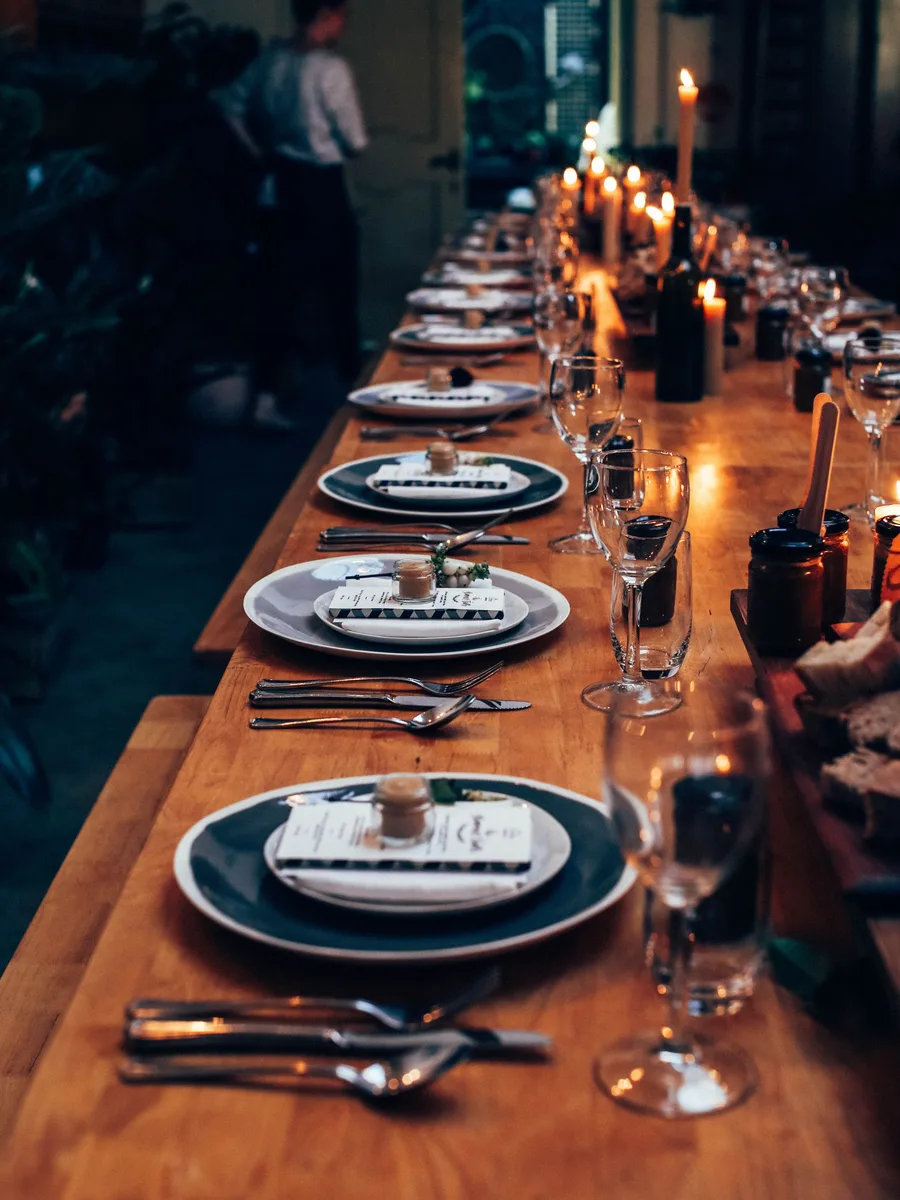
A full-length tablecloth is the foundation of traditional elegance. It softens the table’s edges, muffles clatter, and gives every other element something sumptuous to sit on. Ivory or white linen is the classic choice; it brightens the room and makes colours and metallics pop. Choose a cloth that drops 10 to 15 inches on each side for formal occasions.
Press the cloth just before guests arrive — crisp fabric reads as care. A thin felt pad underneath protects the table and gives the cloth a plush, upholstered feel that instantly signals quality. If you love your wood table’s look, a runner over bare wood can be equally elegant; the key is committing to one approach, not half-covering.
10. Add a Silk or Velvet Table Runner
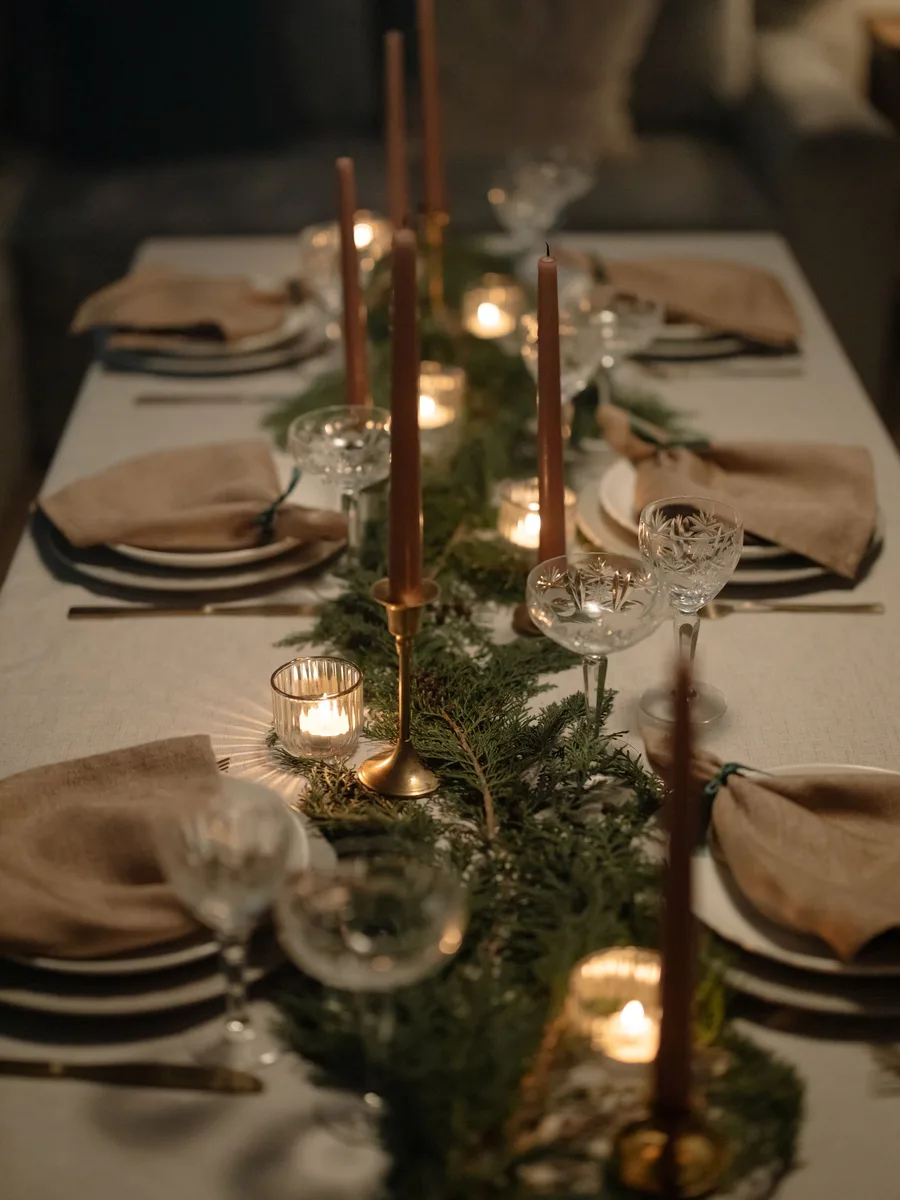
A runner adds a stripe of colour and texture down the table’s centre without the commitment of a full cloth. Velvet in champagne, emerald, or navy brings instant opulence — it catches light beautifully and feels decadent under candle glow. Silk or satin runners offer a similar sheen with a lighter, more fluid drape.
Let the runner overhang the table ends by about 6 inches on each side, or stop it at the edge for a tailored look. Layer candles, greenery, and small dishes directly on top so the runner becomes the stage for your centrepiece. One caution: velvet shows every crumb, so keep a lint roller handy before guests sit down.
11. Use Ornate Napkin Rings
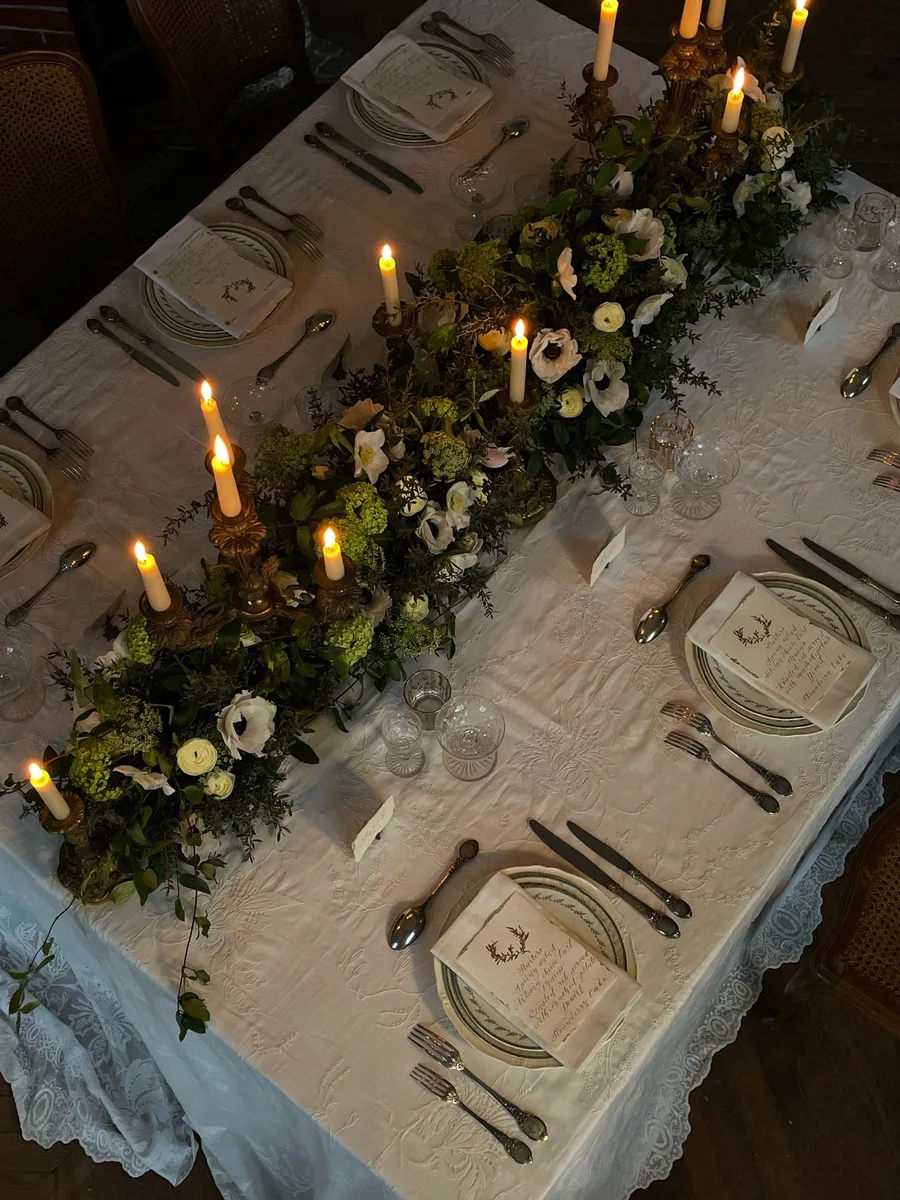
Napkin rings are small, but they finish a place setting the way jewellery finishes an outfit. Gold, crystal, or beaded rings gather a linen napkin into a sculptural shape and add a glint of detail at every seat. They are also wonderfully reusable — one good set works for every holiday and dinner party you host.
Slide the ring onto a loosely rolled or folded napkin and lay it across the plate or to the left of the forks. Match the ring’s metal to your flatware and candle holders for cohesion. For a personal twist, thread a sprig of eucalyptus, a dried flower, or a sprig of rosemary through each ring — it doubles as a fragrant favour.
12. Serve Bread on Individual Plates
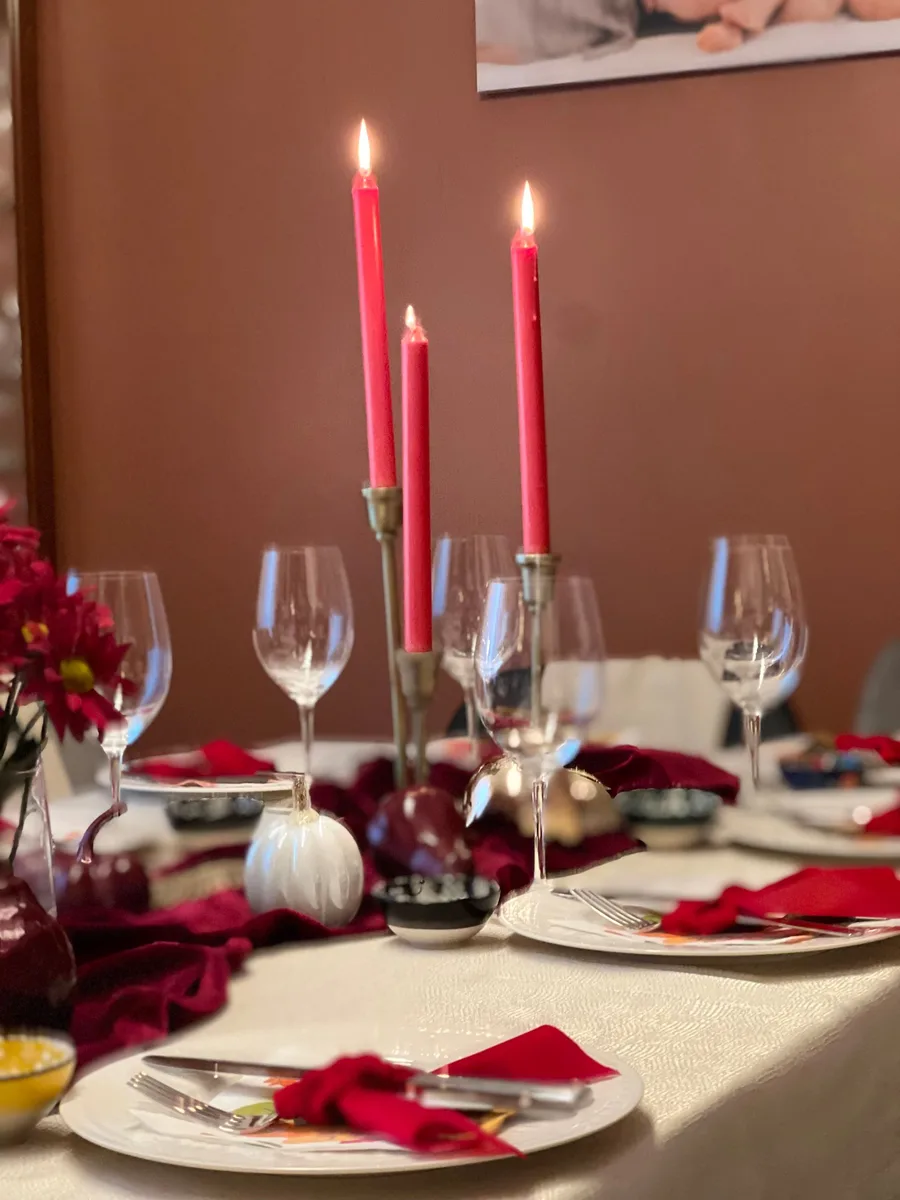
Individual bread plates are a quiet marker of a truly formal table. Set a small plate above and to the left of each dinner plate, with a butter knife laid across it, and guests immediately understand this is a proper multi-course affair. It also keeps crumbs contained — a small mercy for your tablecloth.
Warm the bread just before serving and present butter in a proper butter dish or as individual curls on each plate. A tiny dish of flaky sea salt beside the butter is a chef-level touch that costs almost nothing. If you are short on plates, small salad plates work perfectly as stand-ins.
13. Pour Champagne in Coupes
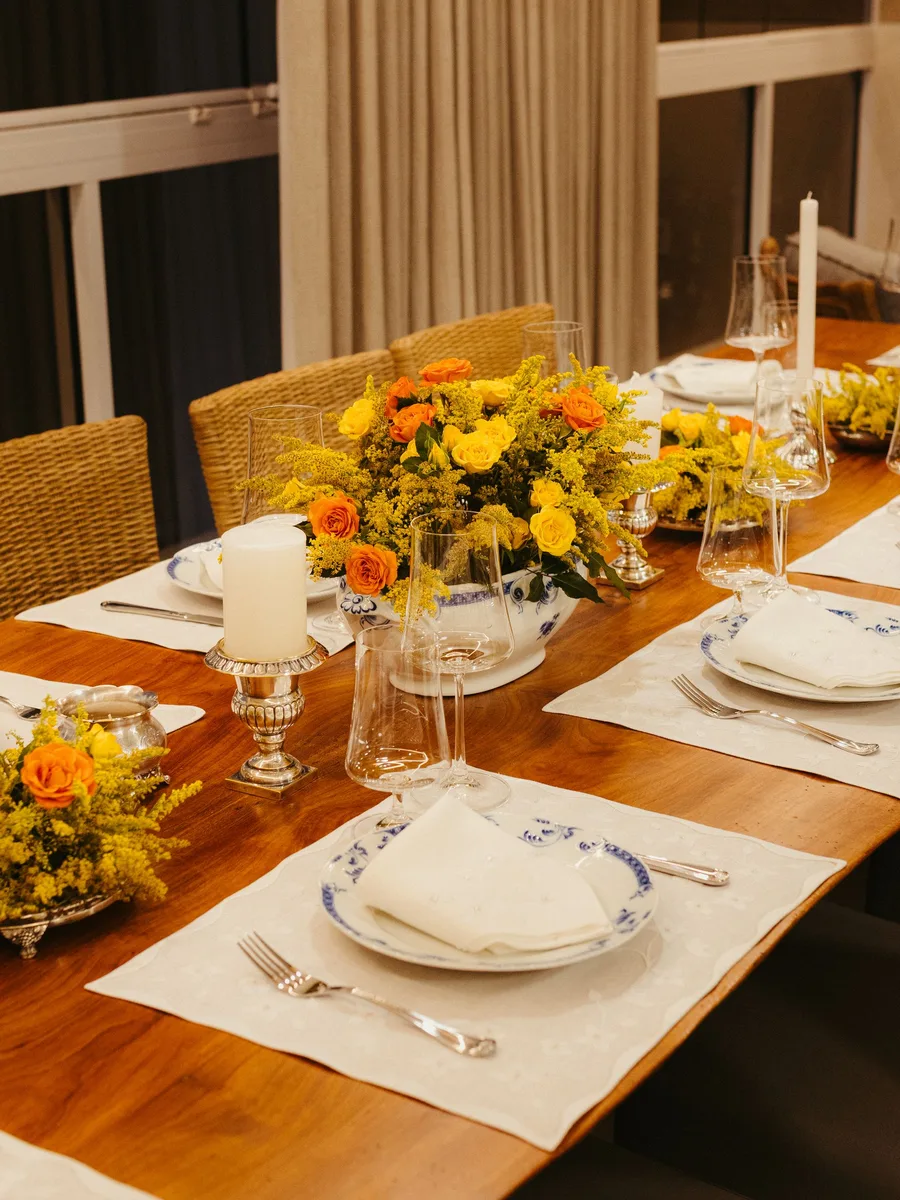
The vintage-style coupe — wide, shallow, and irresistibly glamorous — turns any toast into a celebration. Legend ties its shape to Marie Antoinette, and whether or not that is true, sipping from a coupe feels like stepping into a 1920s film. They are also brilliant for champagne cocktails, with room for garnishes a flute cannot hold.
Chill coupes in the freezer for ten minutes before pouring so the champagne stays crisp. Note that coupes let bubbles dissipate faster than flutes, so they suit lively parties where glasses are refilled often rather than slow sipping. Their wide bowl also makes them beautiful vessels for sorbet between courses.
14. Print a Menu Card for Each Guest
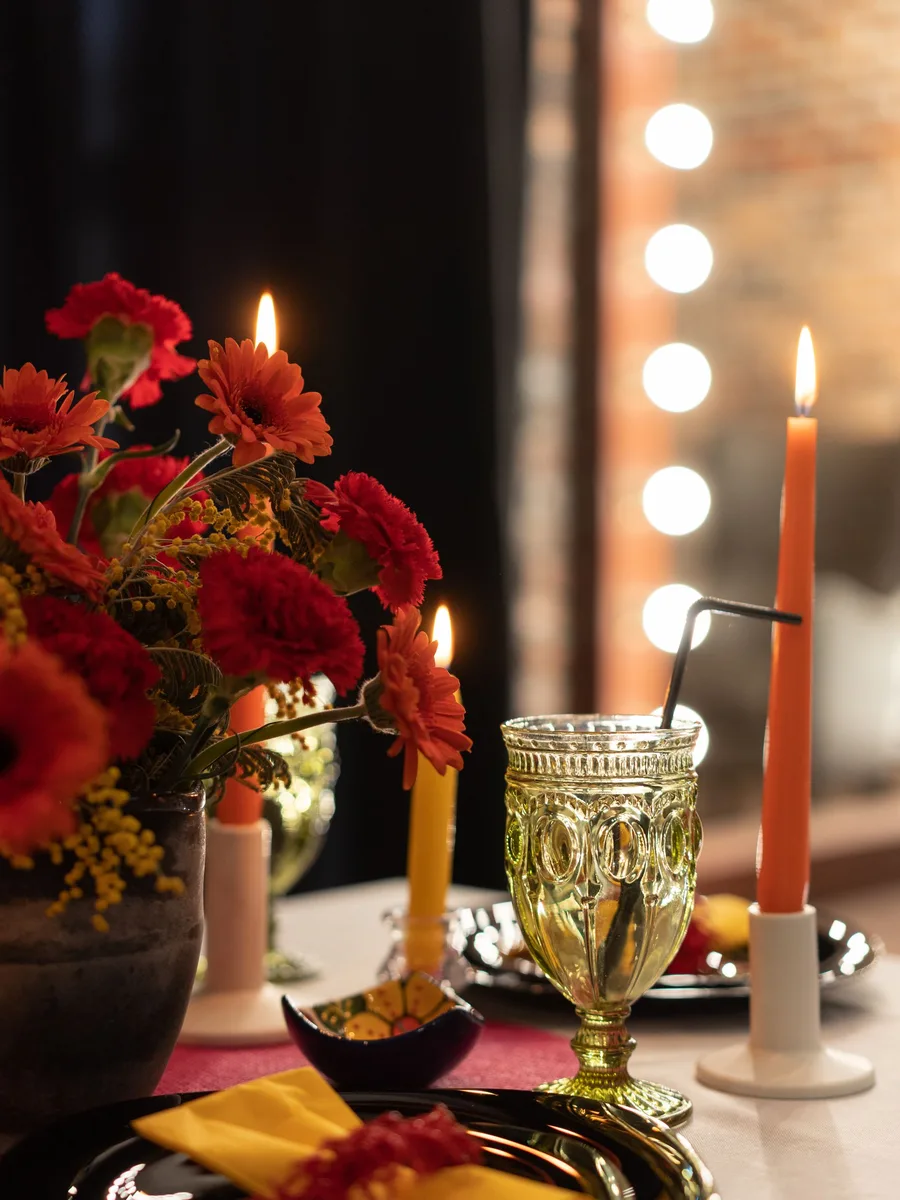
A menu card at each place setting builds anticipation like nothing else. Guests read the courses ahead, dietary needs are quietly addressed, and the table gains a graphic, editorial layer. Design it simply — course names in an elegant serif font on heavy card — and it doubles as a keepsake.
Lean the card against the water glass or lay it flat above the plate. Match its typography and colours to your place cards for a cohesive stationery suite; free design tools make this easy even without a printer at home — most print shops handle small runs cheaply. List wines alongside courses if you are pairing them.
15. Style a Mirrored Serving Tray
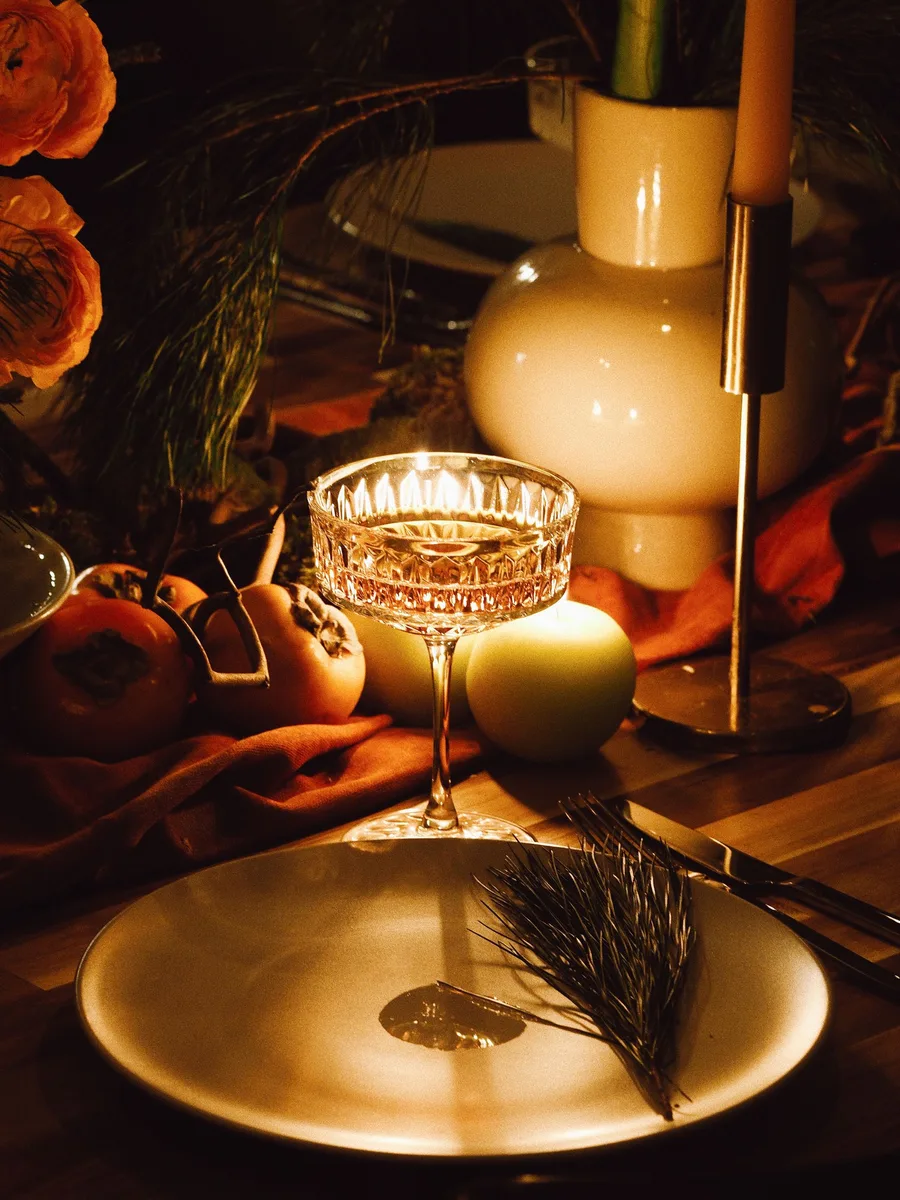
A mirrored tray is a stage for your prettiest objects. Group a crystal decanter, a pair of glasses, and a small vase of flowers on one, and the mirror doubles the sparkle while corralling everything into a deliberate composition. It works as a bar setup on a sideboard or as part of the table centrepiece.
Choose a tray with a raised edge so nothing slides, and polish the mirror before guests arrive — fingerprints show. Beyond the bar, use mirrored trays to gather candles of different heights or to present desserts. The reflective surface bounces candlelight around the room, amplifying the evening’s glow.
16. Master One Signature Napkin Fold
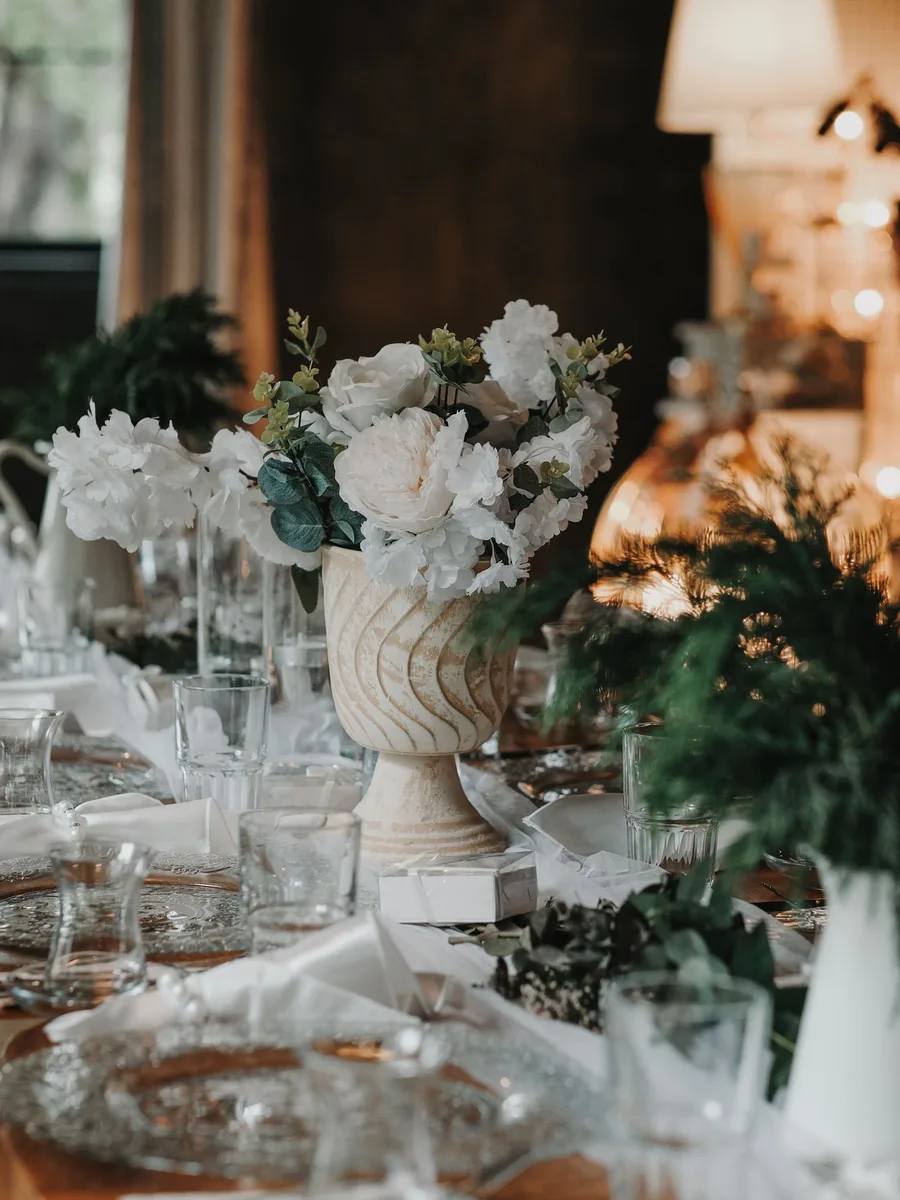
A beautiful napkin fold is pure theatre, and you only need one in your repertoire. The classic bishop’s hat, a simple envelope fold, or a rose fold all look impressive yet take under a minute once practised. Stiff, freshly ironed linen holds sculptural folds far better than soft washed linen, so press before you fold.
Practise the fold a few days before the event, not the afternoon of it. Stand the folded napkin upright on the plate for maximum impact, or lay it flat if your centrepiece is tall. Keep the rest of the setting simple when the napkin is the star — one flourish per place setting is the rule.
17. Add Dessert Forks and Spoons
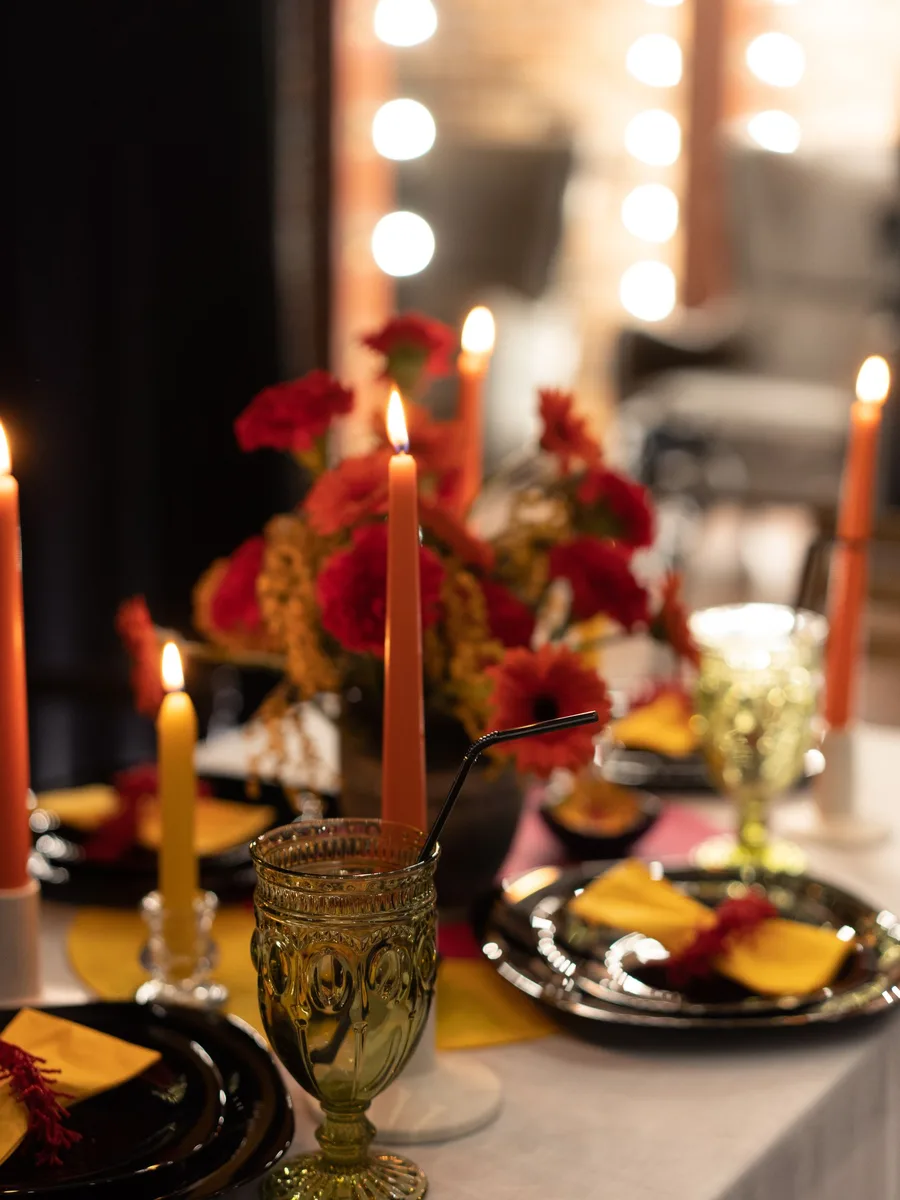
Setting dessert cutlery from the start — laid horizontally above the plate — signals a considered, multi-course meal. It is a small detail with outsized effect: guests notice the completeness of the setting before a single dish arrives. Use a small fork for cake and pastries, a spoon for mousses and ice cream.
Place the fork with its handle to the left and the spoon with its handle to the right, tines and bowl facing the plate. Alternatively, bring dessert cutlery out with the dessert course on a small tray — equally proper and it keeps the table less crowded. Either way, matching the dessert pieces to your main flatware keeps the look seamless.
18. Feature a Single Orchid Stem
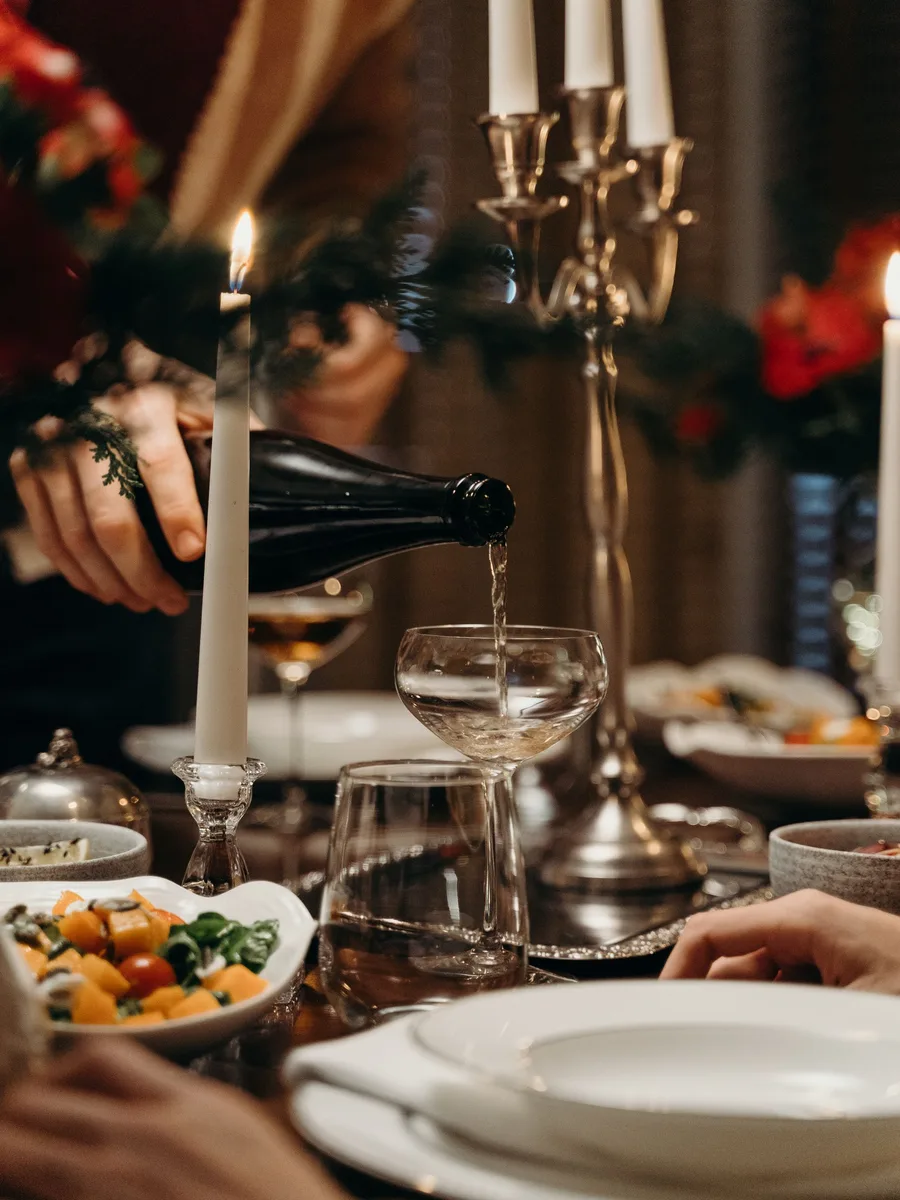
One perfect orchid stem in a slim vase is the definition of restrained luxury. Phalaenopsis orchids bloom for months, so a single plant can grace many dinners, and their architectural shape needs no arranging — just a beautiful vessel. White orchids suit any palette; deep magenta adds drama against neutral china.
Choose a vase that holds the stem upright without fuss — a narrow bud vase or a weighted glass cylinder. Keep the orchid low enough to see over, or place one tall stem at each end of a long table where it frames rather than blocks. After the party, move it to a bright windowsill and it will bloom again.
19. Scatter Tea Lights in Crystal Holders
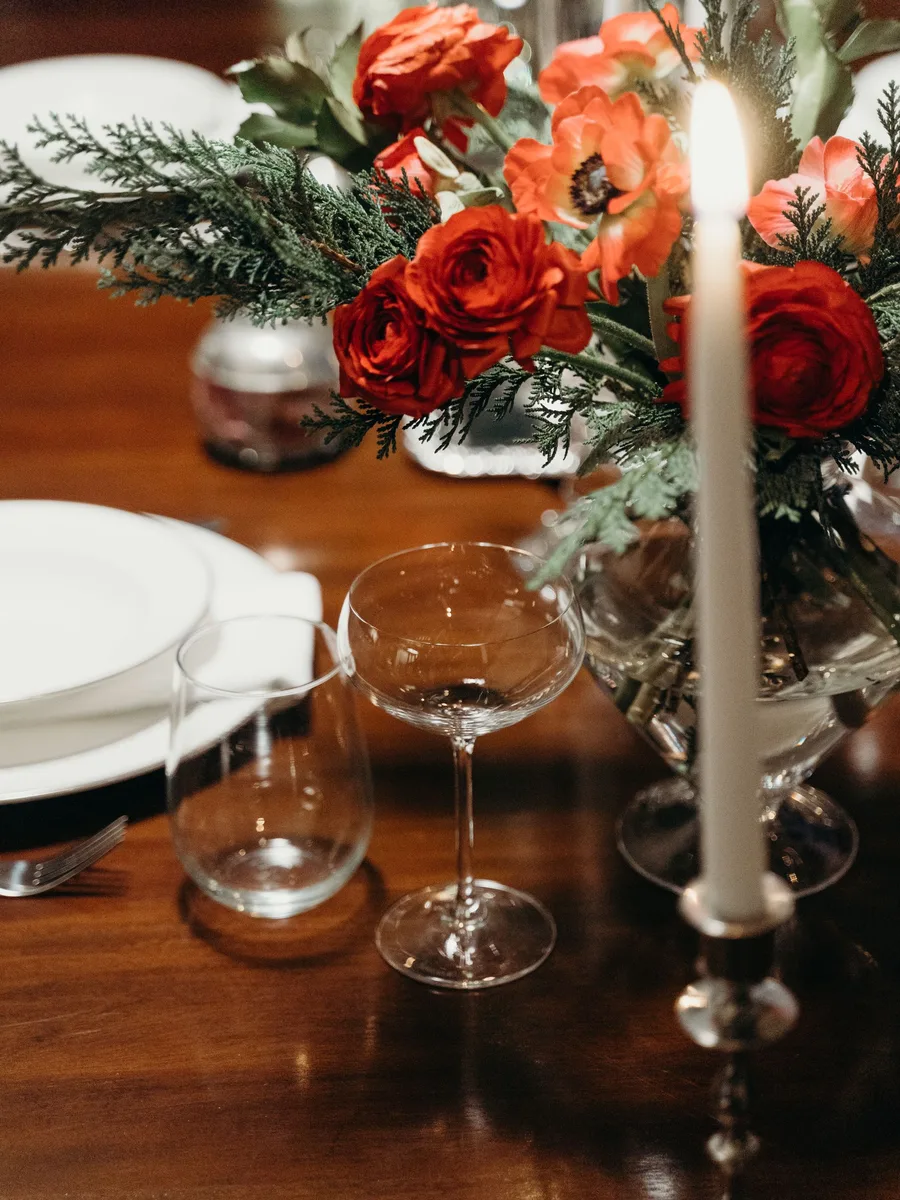
Tea lights in cut-crystal holders scatter tiny prisms of light across the table, filling the gaps between taller candles with warmth. They are inexpensive, endlessly reusable, and safer than open tapers near centrepieces. Cluster them in odd numbers — threes and fives — for a natural, unstudied look.
Use long-burning tea lights (six to eight hours) so they last the whole evening, and real flame rather than LED wherever safety allows — the flicker is the point. Place holders where they will not be knocked by serving dishes, and keep them away from napkins and florals. The cumulative glow is what makes the table feel magical.
20. Serve from Silver-Plated Dishes
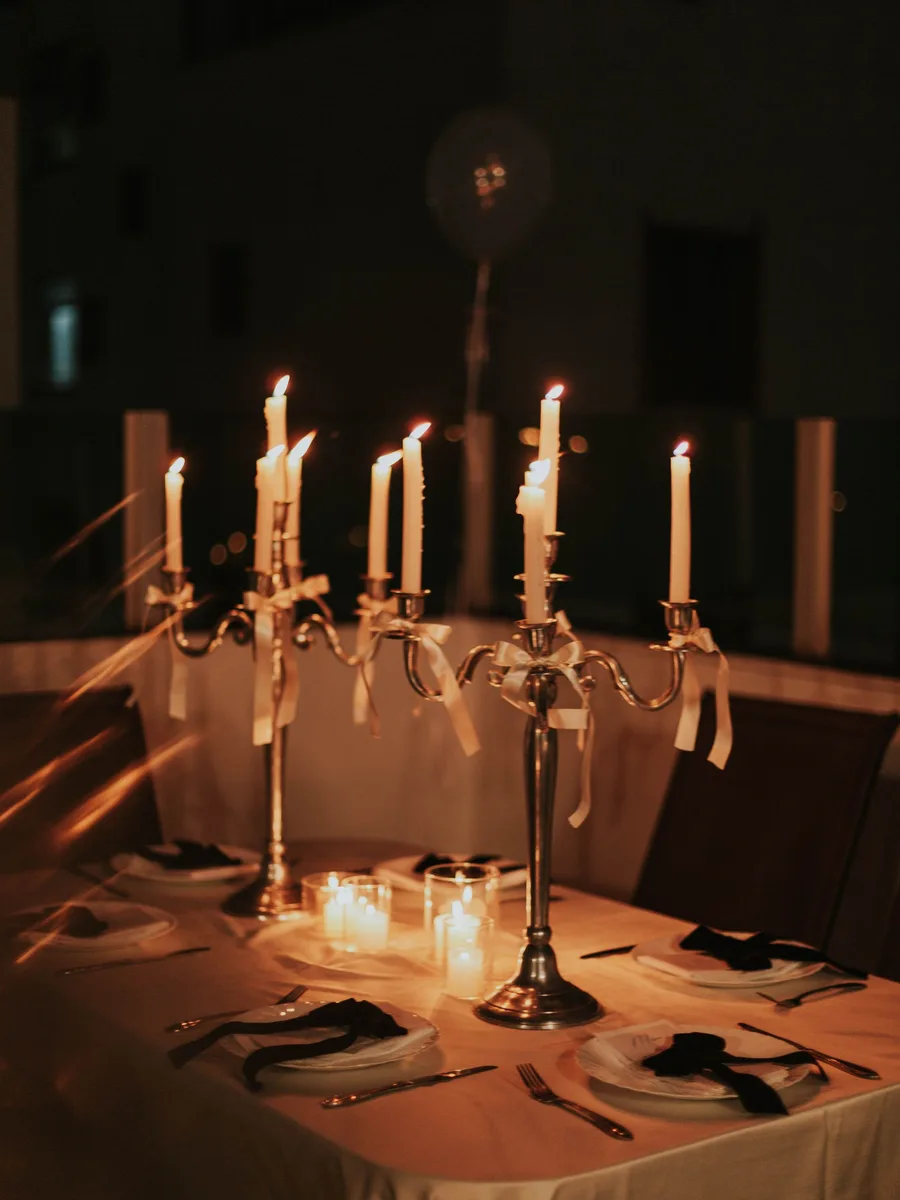
Serving food from silver-plated dishes elevates even a simple roast into an occasion. A gleaming gravy boat, vegetable dishes with lids, and a proper serving platter bring old-world ceremony to the table — and they keep food warmer than ceramic. Estate sales and thrift shops are treasure troves for affordable silver plate.
Polish silver a day or two before the event, not the morning of; it takes longer than you think. Line up serving pieces on a sideboard for buffet-style service, or place them on the table for family-style passing. Always use proper serving utensils — never the table flatware — to keep the presentation pristine.
21. Dim the Overhead Lights
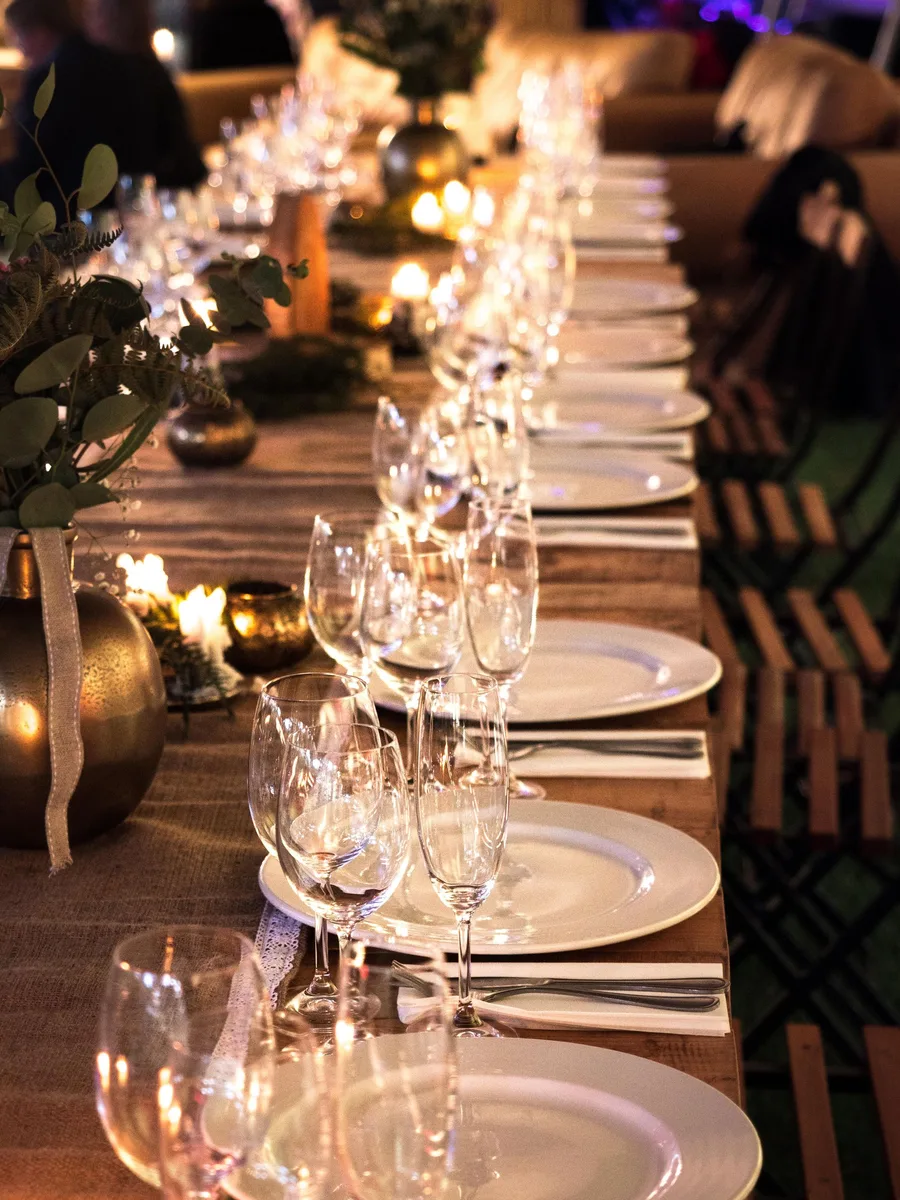
Lighting is the invisible ingredient of every luxurious table. Dim overheads to a warm glow and let candles do the starring — harsh ceiling light flattens crystal, washes out colours, and makes everyone look tired. If your dining room lacks a dimmer, unscrew a few bulbs or swap in lower-wattage warm bulbs (2700K or below).
Aim for layered light: candles on the table, a soft lamp or sconces on the sideboard, and the chandelier barely on. Guests should be able to see their food clearly but feel enveloped in warmth. Test the lighting the night before with the candles lit — what looks fine at noon can feel like an interrogation room at eight.
22. Offer Finger Bowls with Lemon
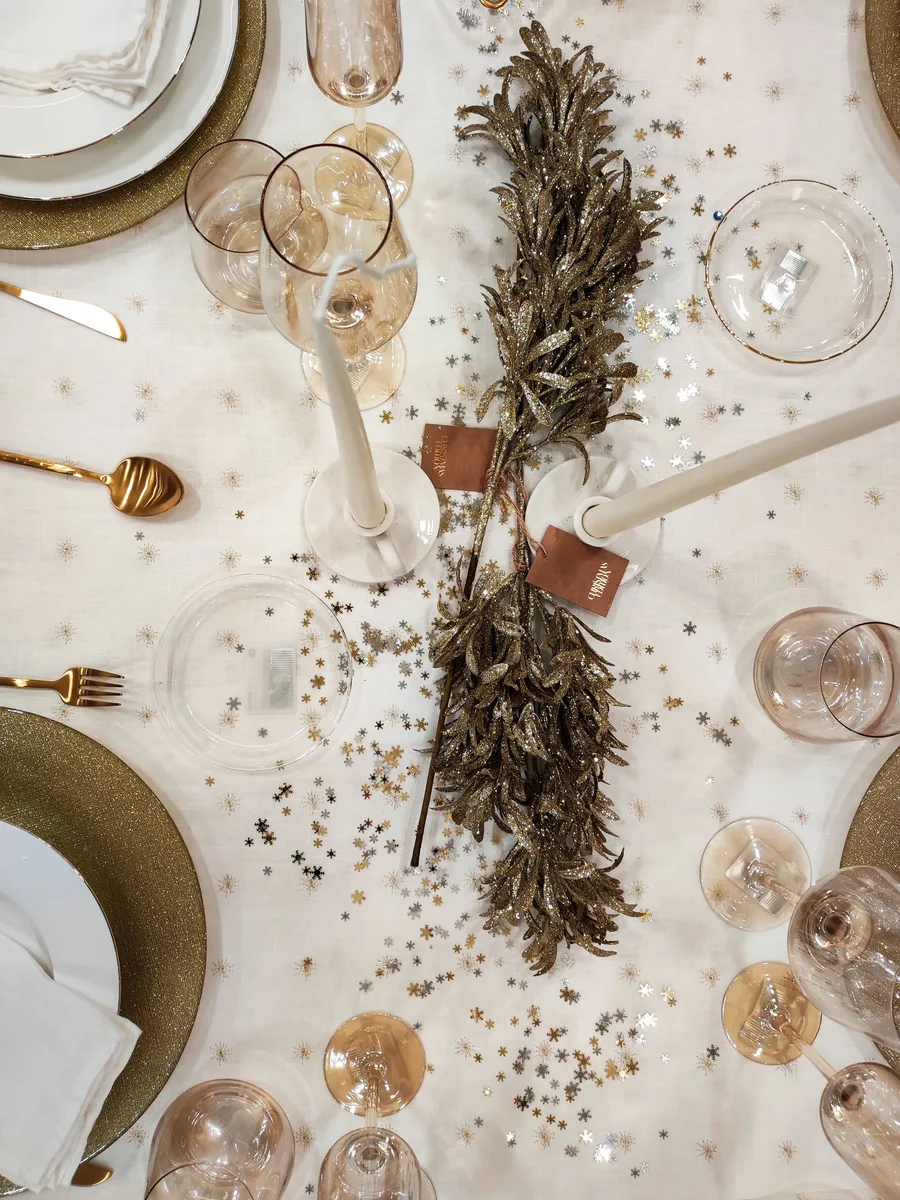
A finger bowl — a small bowl of warm water with a lemon slice or a floating flower petal — is the ultimate old-school flourish. Presented before dessert or after a hands-on course like shellfish, it tells guests you have thought of everything. Use small glass or crystal bowls that match your stemware.
Place the bowl on a small doily or plate to the left of the setting, and remove it after use along with the crumbs. Warm water feels more luxurious than cold, and a single thin lemon slice is classic — skip anything that could stain. Most guests will never have experienced this; that novelty is exactly the point.
23. Finish with a Take-Home Favour
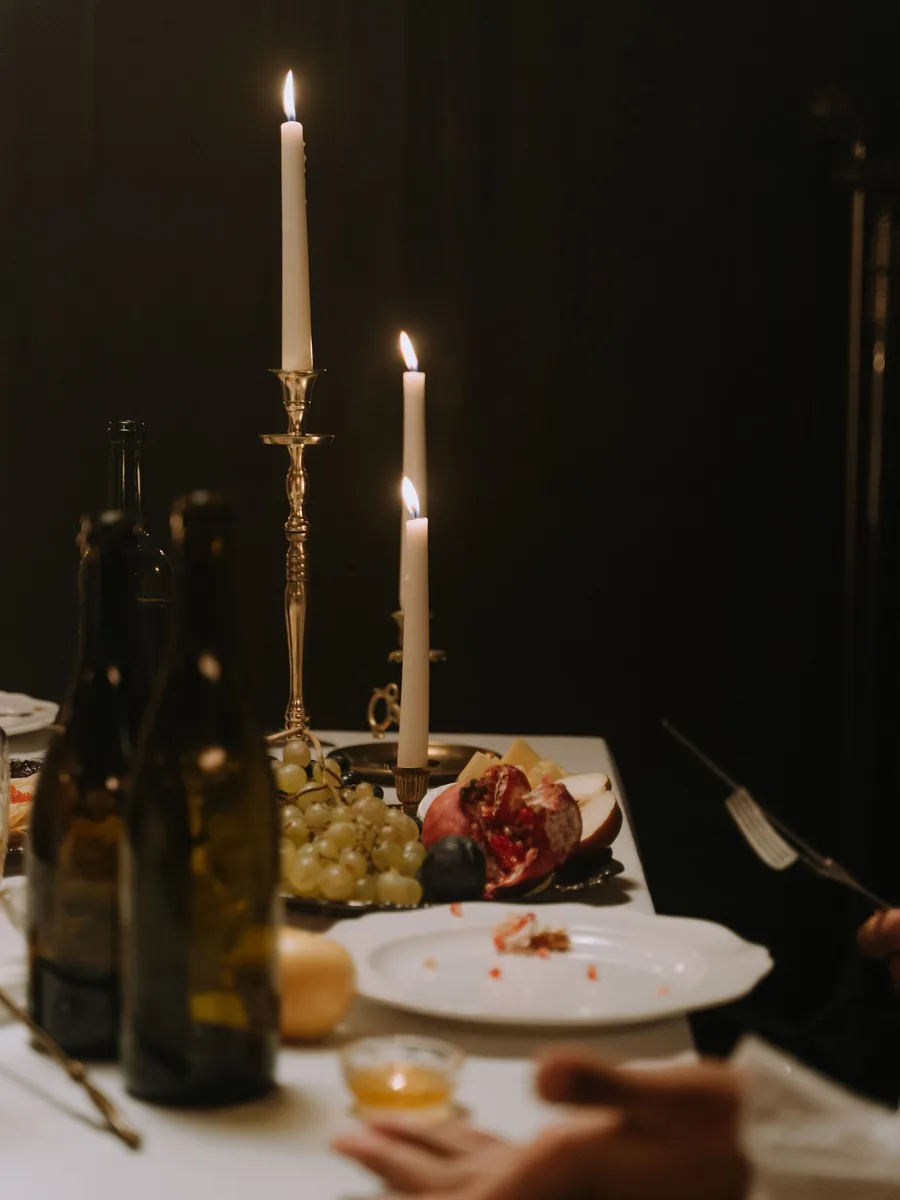
End the evening the way it began — with intention. A small favour at each place setting, whether it is a box of handmade chocolates, a mini jar of honey, or a scented candle, sends guests home with the evening in their hands. Wrap simply in kraft or ivory with a ribbon that matches your palette.
Tuck a handwritten thank-you note under each favour for a personal touch that costs nothing but means everything. Keep favours small enough not to clutter the table during dinner — they should read as decoration until the meal ends. It is the final detail guests remember, and the reason they will talk about your table for weeks.

David is the home decor enthusiast behind HomeLushly. He shares practical, budget-friendly ideas for bedrooms, living rooms and seasonal decorating — from colour combinations that actually work to small-space styling tricks that make a room feel bigger. Every guide on HomeLushly is built around real photos and hands-on research, to help you make your home feel warm, personal and beautifully put together.