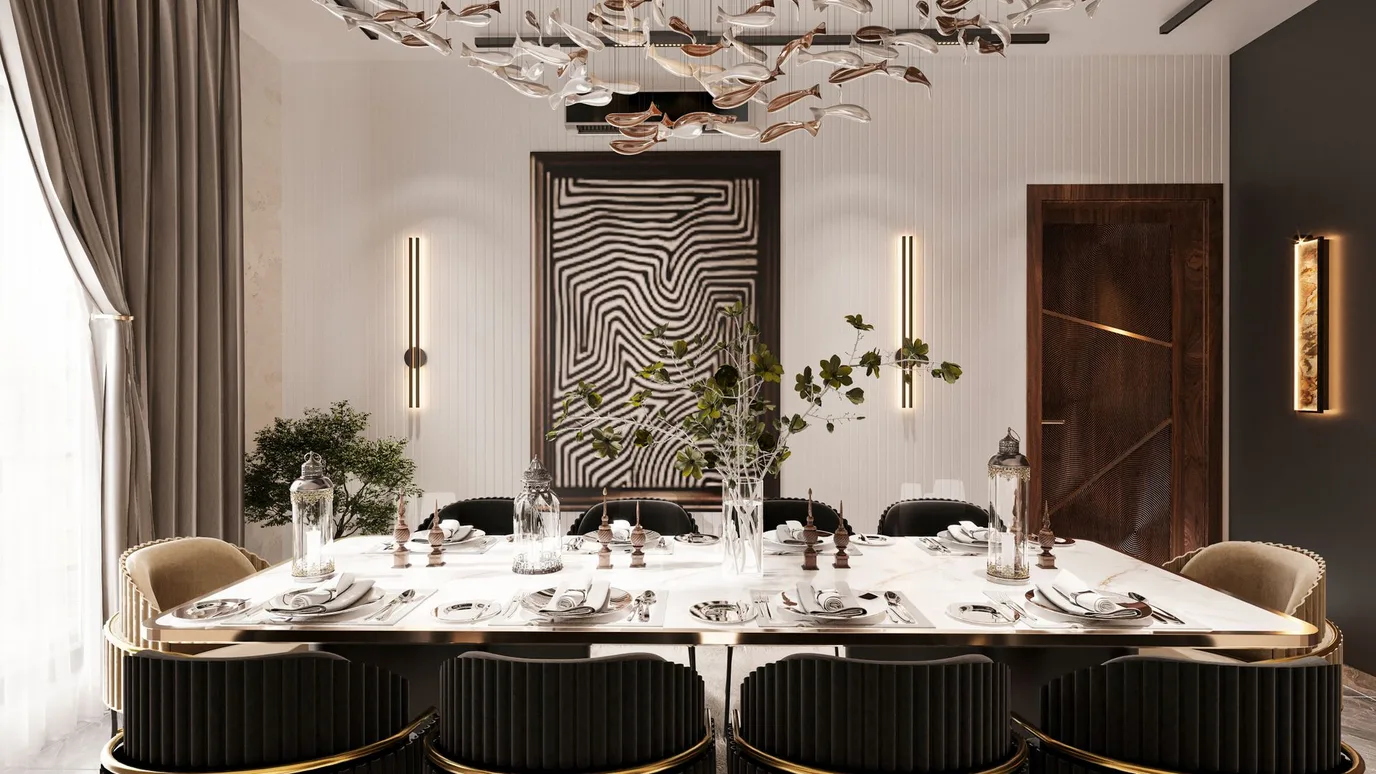
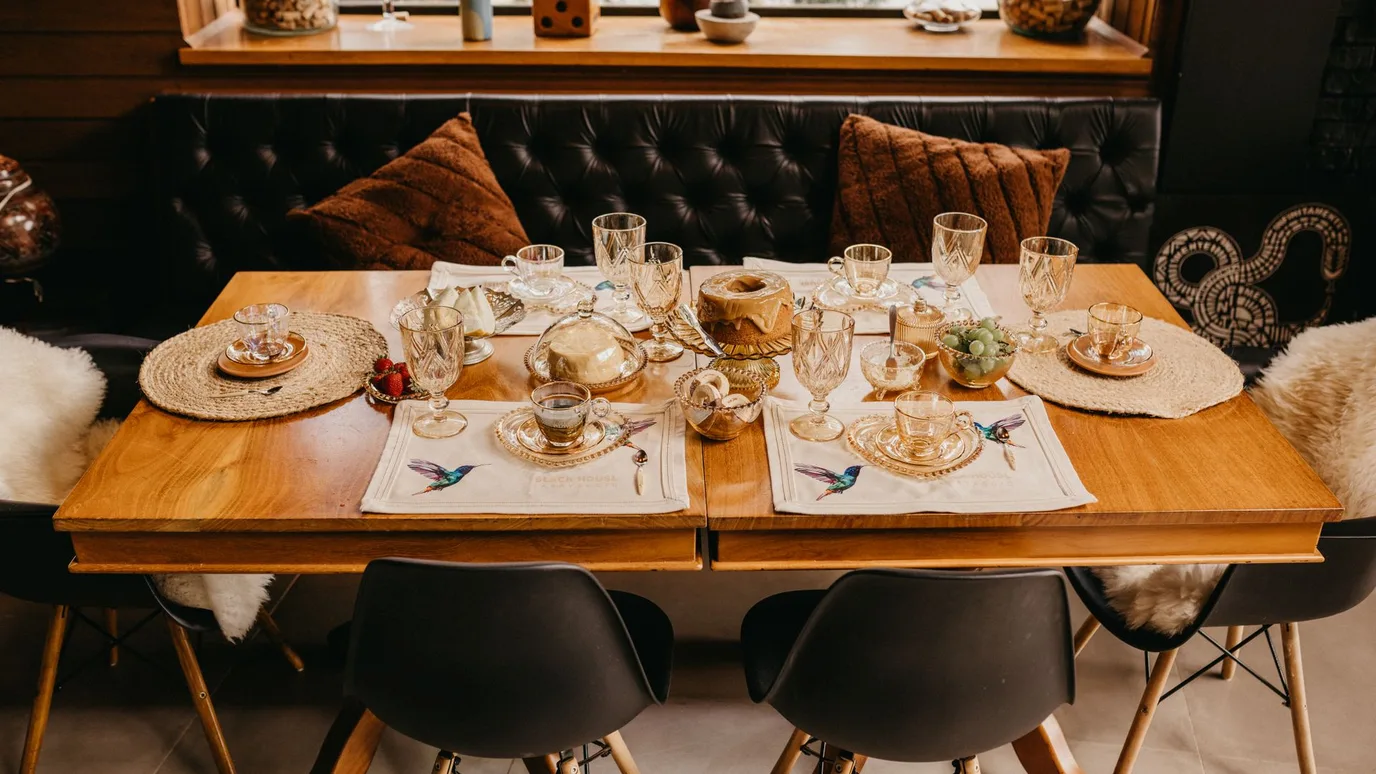
Effortless style is the hardest kind to achieve — it looks simple because every decision was careful. A minimalist dinner table isn’t an empty table; it’s a table where everything present is perfect and everything else was deliberately left out.
The minimalist advantage is clarity. With fewer elements competing, each one shines: the grain of the wood, the curve of a single vase, the precise fold of a napkin. Guests notice details on a minimalist table that they’d miss entirely on a busy one.
In this guide, you’ll learn how to design a minimalist dinner table that looks effortlessly stylish: the art of restraint, perfect proportions and spacing, choosing a few flawless pieces, and keeping the look warm rather than cold.
Master the Art of Restraint
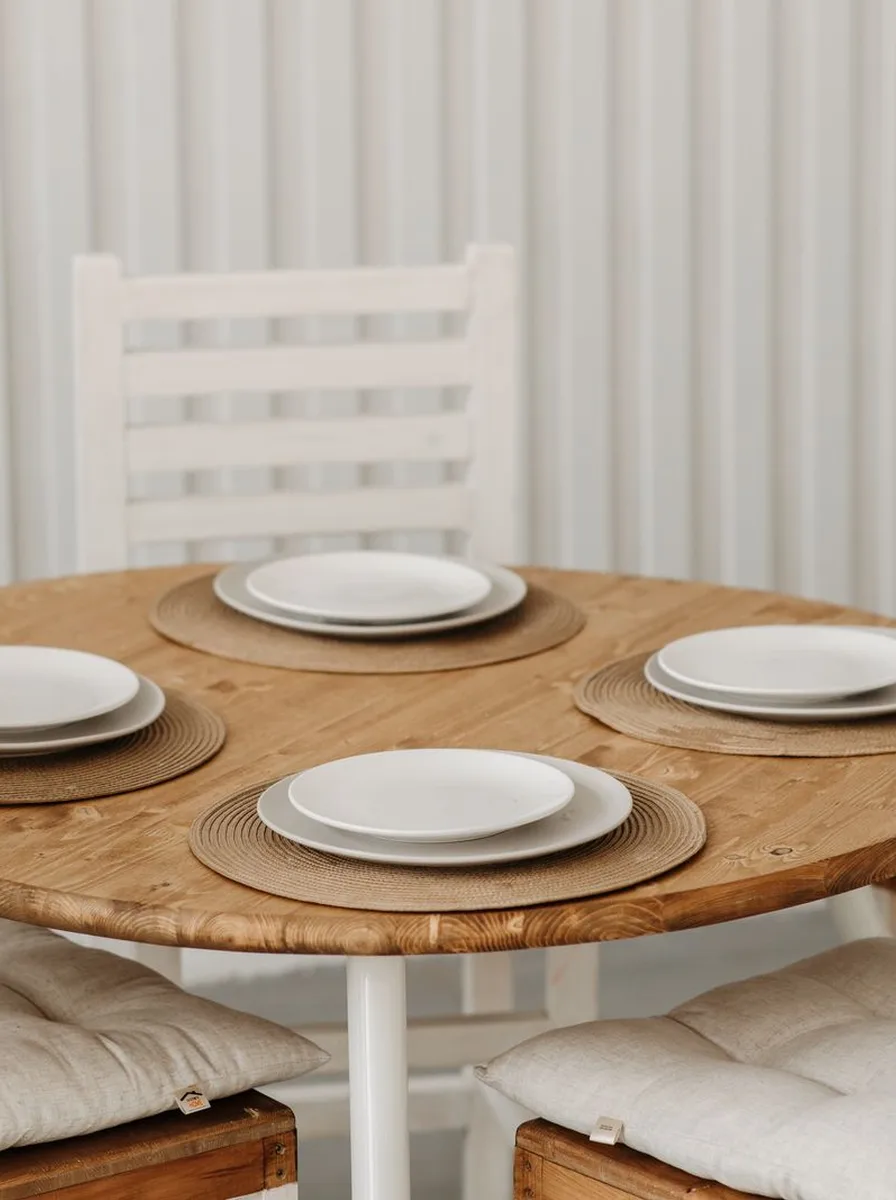
Restraint is a discipline: for every item you consider, ask whether the table would be better without it. A minimalist table typically has just four elements per setting — plate, napkin, cutlery, glass — plus one centerpiece and lighting. That’s it. No chargers, no extra glasses, no scattered decor.
The empty space is doing work. Generous space between settings feels luxurious (think fine-dining restaurants, where tables are never crowded). A nearly bare centre with one object makes that object look important. Resist filling gaps; the gaps are the design.
Restraint principles:
● Four elements per setting maximum: plate, napkin, cutlery, one glass.
● One centerpiece, not three — let it breathe in empty space.
● Generous spacing between settings; never crowd a minimalist table.
● If in doubt, take it away — the table should feel calm, not decorated.
Get Proportions and Spacing Right
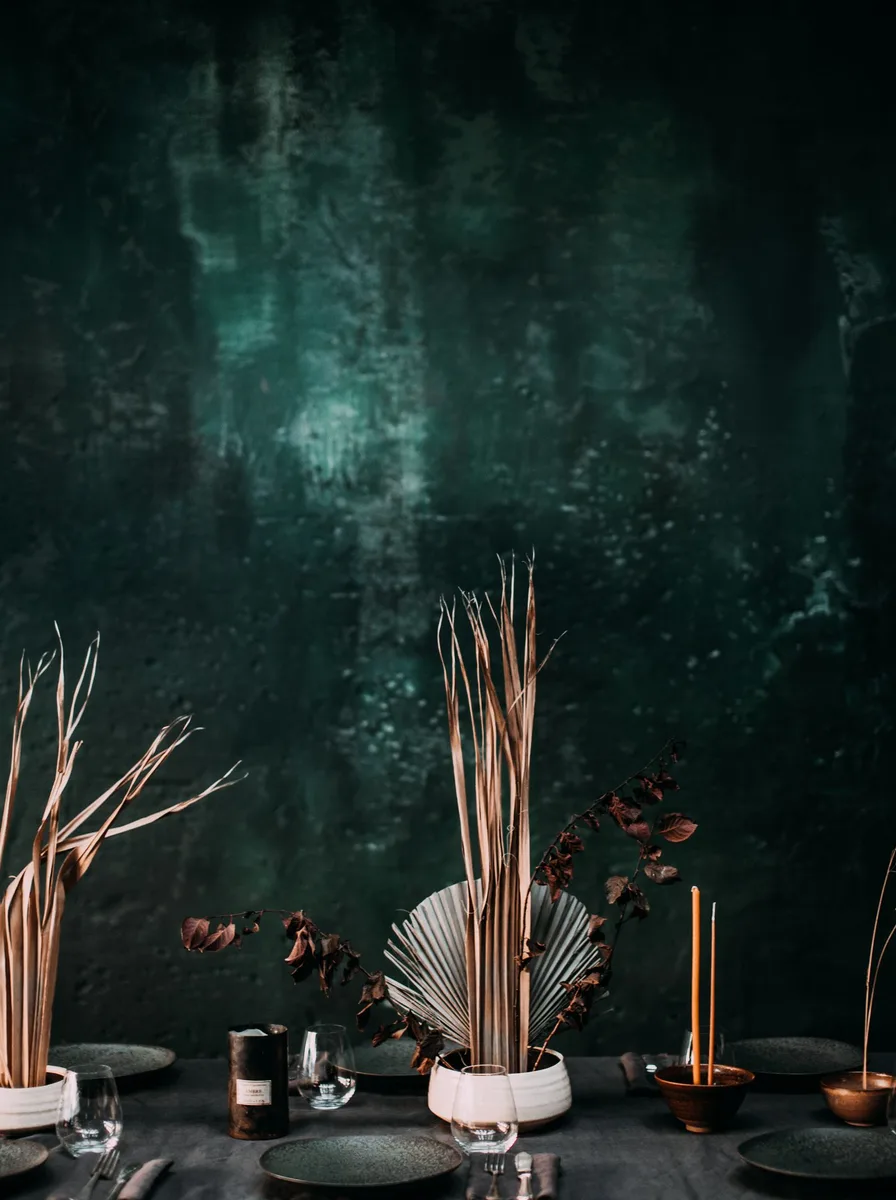
When there are few elements, their placement matters enormously. Align everything: plate edges parallel to the table edge, cutlery at equal distances, glasses in a straight line. Precision is what makes minimalism look intentional rather than unfinished.
Measure with your eye: each setting should have the same footprint, centred on its chair, with equal space between settings. The centerpiece should sit exactly on the table’s centre line. This quiet geometry is invisible when it’s right — and jarring when it’s wrong.
Proportion rules:
● Align every plate edge parallel to the table — precision reads as luxury.
● Equal spacing between all settings; measure by eye, adjust twice.
● Centre the centerpiece exactly; asymmetry needs intent, not accident.
● Match the scale of pieces to the table — oversized items break minimalism.
Choose a Few Flawless Pieces
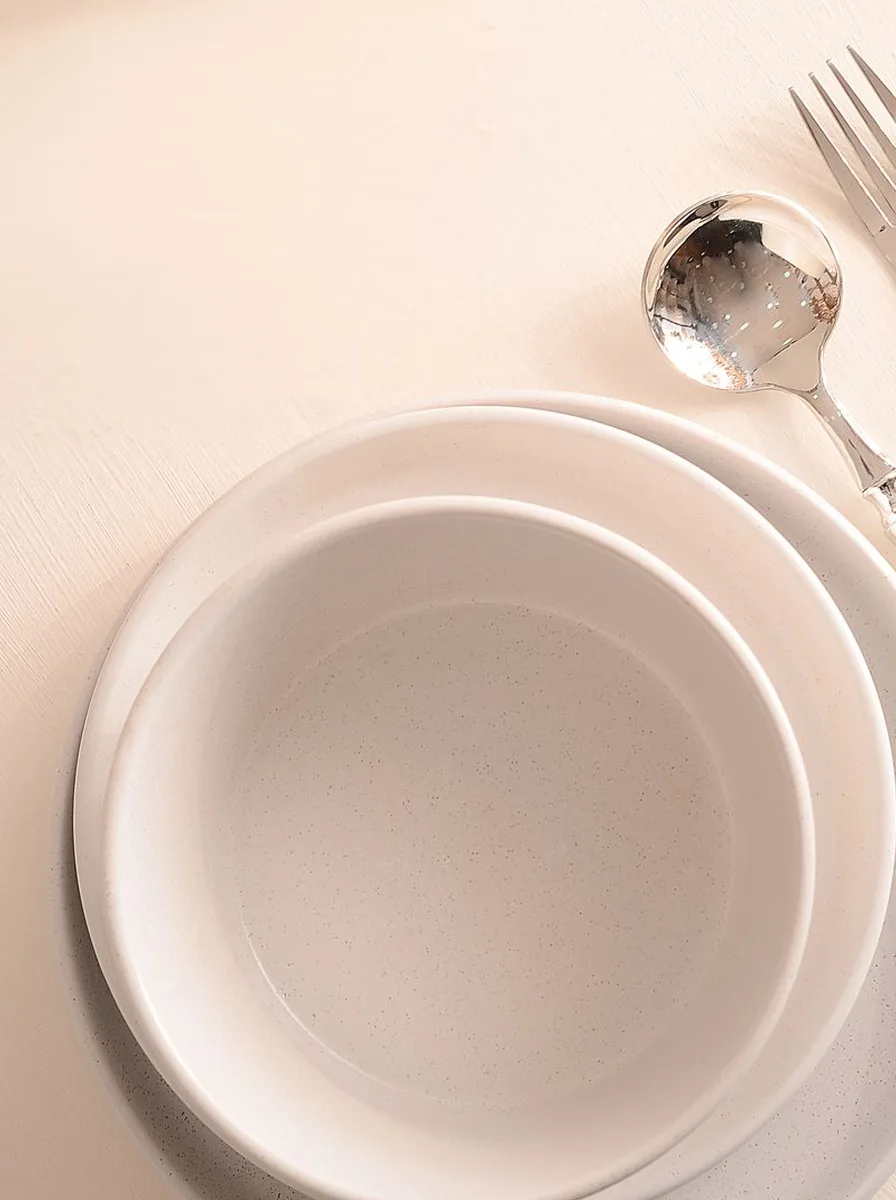
Minimalism demands quality because there’s nowhere to hide. One beautiful plate matters more than a stack of mediocre ones. Choose pieces with perfect forms: a flawlessly glazed white plate, a precisely folded linen napkin, a single stem in a perfectly proportioned vase.
Invest where it shows: the plates (the largest visual element), the napkins (guests touch them), and the centerpiece (the focal point). Everything else can be simple. A minimalist table with three perfect things beats a maximalist table with thirty average ones.
Where to invest:
● Plates: simple, perfect, and well-made — they’re the visual anchor.
● Napkins: real linen, pressed or beautifully rumpled — never paper.
● The centerpiece vessel: one sculptural vase or bowl worth looking at.
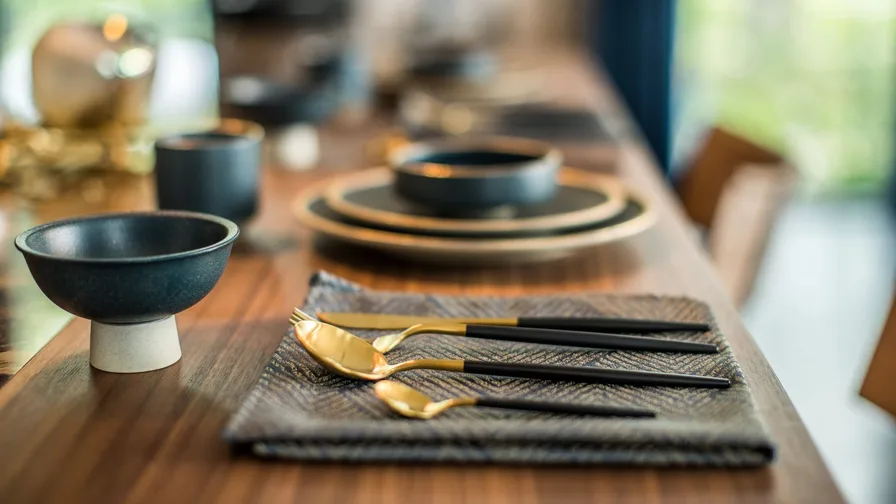
● Cutlery: clean-lined and weighty; it should feel good in the hand.
Keep It Warm, Not Cold
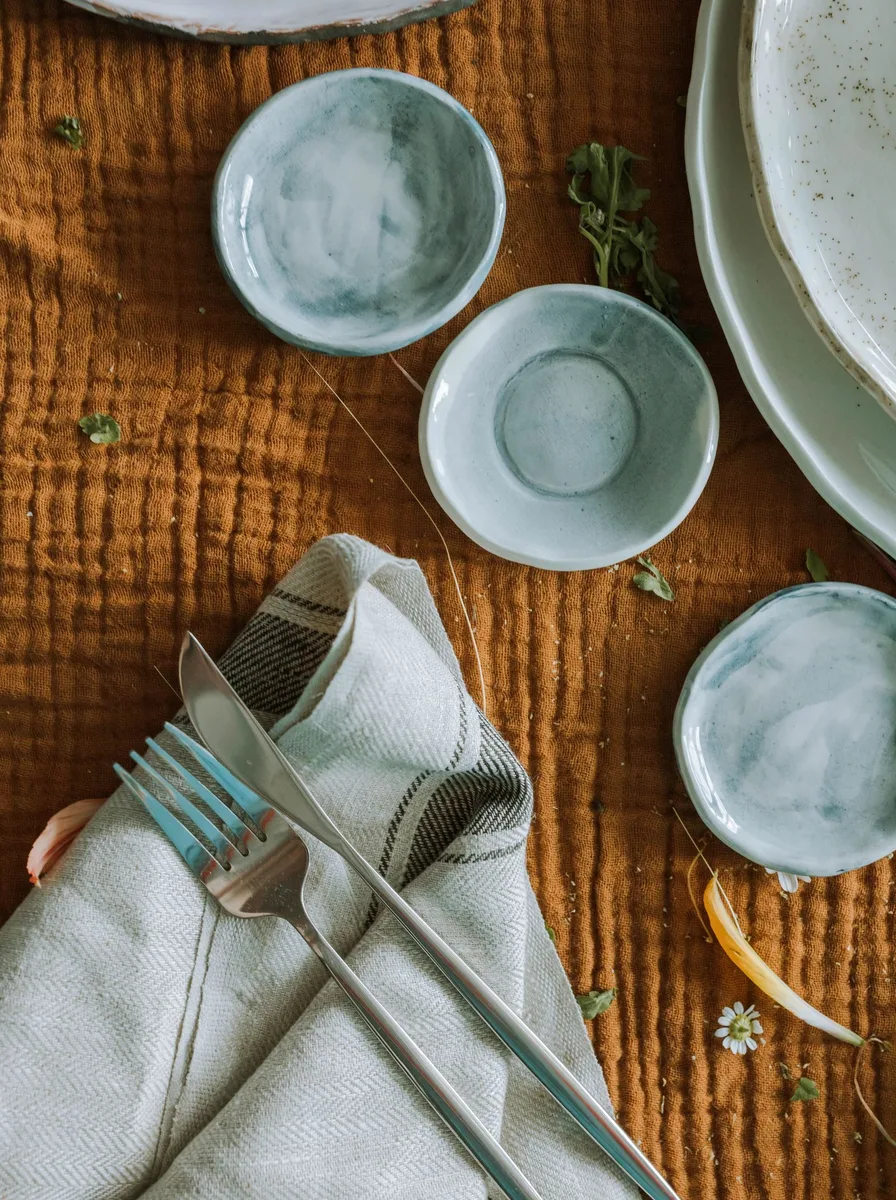
The classic minimalist failure is a table that looks like a laboratory: all white, all hard surfaces, all chill. Warmth comes from material, not quantity. A wood table instead of glass, linen instead of cotton, one warm metallic accent, and candlelight instead of overheads.
Even one organic element transforms a minimalist table: a single branch, a small bowl of figs, a linen runner with visible texture. The contrast between the controlled setting and one living thing is what makes minimalism feel human.
Warmth without clutter:
● Wood, linen, and stone warm a minimalist table; glass and chrome cool it.
● Candlelight is essential — it softens every hard minimalist line.
● One organic element (branch, fruit, herb pot) adds life and contrast.
● Warm white or cream beats stark white for an inviting minimalism.