

If your office chair leaves you sweaty, achy, or constantly shifting by mid-afternoon, the problem might not be you — it might be the chair.
Traditional padded chairs trap heat, flatten with use, and fight your body’s natural movement. Mesh office chairs were designed as the answer: a tensioned, breathable suspension that supports you without smothering you.
The benefits of mesh go far beyond staying cool.
Because the material flexes and conforms, it distributes your weight evenly, follows your spine as you move, and never develops the dreaded seat crater. It cleans in seconds, resists pet hair, makes small rooms feel bigger, and often costs less than an equivalent padded chair.
This guide collects 28 amazing mesh office chair benefits for all-day comfort, each with practical tips for choosing and using.
From adjustable mesh tension and waterfall seat edges to odour resistance and recyclable materials, you’ll see exactly why mesh has become the go-to choice for home offices everywhere.
1. Breathable Mesh Keeps You Cool
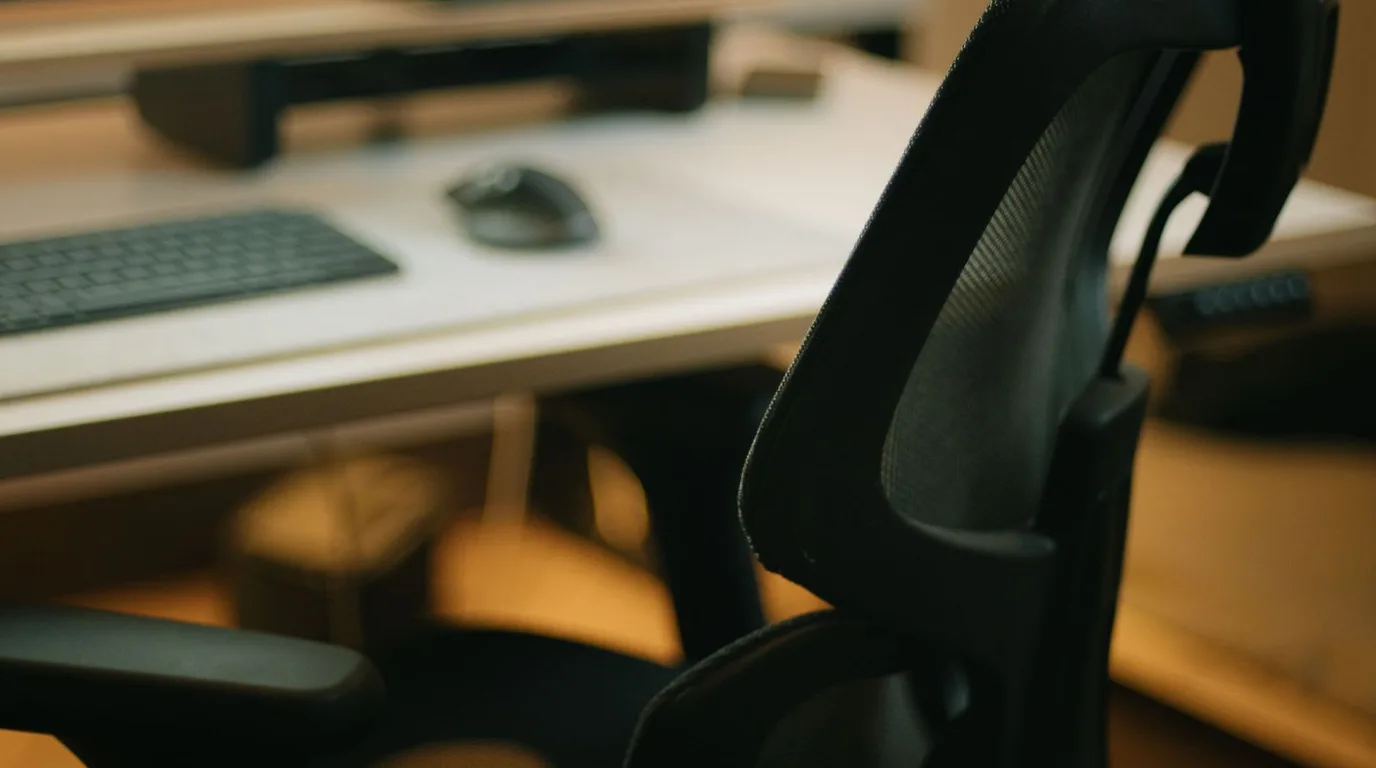
The headline benefit of a mesh chair is breathability: thousands of tiny openings let air circulate across your back instead of trapping body heat against foam and upholstery. On warm days — or in rooms without air conditioning — the difference between mesh and a solid back is the difference between comfort and a sweaty shirt.
The effect is passive and constant; there’s no fan to power or setting to adjust. If you run warm or your workspace catches afternoon sun, prioritise a chair with an open-weave mesh rather than a dense one. Your back will thank you by about 2 p.m.
2. Airflow That Prevents Sticky Sitting
Anyone who’s peeled themselves off a vinyl chair in summer knows the problem mesh solves. Continuous airflow wicks moisture away from your skin and clothing, so you stay dry through long work sessions. It’s the same principle as athletic wear, applied to your chair.
This matters most for people who sit for hours without breaks — programmers, writers, customer-service staff. Pair the mesh back with breathable clothing and the whole system works together. No more standing up with your shirt stuck to the chair.
3. Flexible Lumbar Support That Moves With You
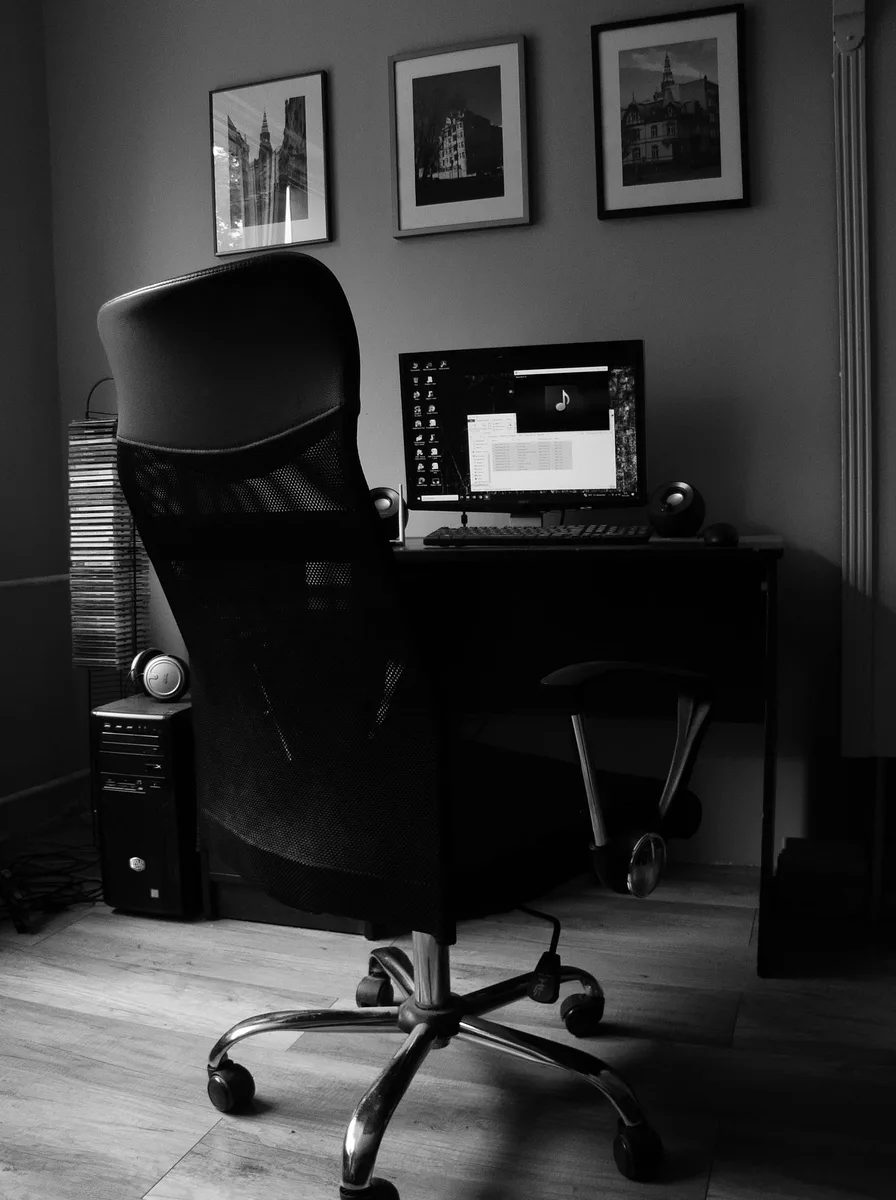
Many mesh chairs build the lumbar support from a tensioned band or an adjustable pad pressing through the mesh. Because the mesh itself flexes, the support follows your spine as you shift, lean, and stretch — cradling your lower back through movement instead of only when you sit perfectly still.
Look for a lumbar pad you can slide up or down to match your spine’s curve. The support should feel like a gentle hand, not a fist. If you fidget — and most of us do — this living, moving support beats a rigid moulded curve.
4. Adjustable Mesh Tension
Higher-end mesh chairs let you adjust the tension of the mesh itself — tighter for firmer support, looser for a softer, hammock-like feel. It’s like tuning a drum: the same chair can feel completely different, which means it can be dialled in for different bodies sharing one chair.
Start in the middle and adjust over a few days of real work, not just a showroom sit. Firmer tension suits heavier users and upright task work; a softer setting suits relaxed leaning. It’s a set-and-forget adjustment you’ll appreciate every day.
5. Waterfall Seat Edge Protects Your Legs

A waterfall seat edge curves gently downward at the front instead of cutting across the backs of your thighs. That curve prevents the edge from compressing blood vessels and nerves behind your knees — the cause of that numb, tingly feeling after long sits. Mesh seats often pair this with a flexible front lip.
Check the fit: with your back against the backrest, you should fit two to three fingers between the seat edge and the back of your knee. Too deep and the edge still presses; too shallow and you lose thigh support. The waterfall curve is small, but your circulation notices it.
6. Even Weight Distribution, Fewer Pressure Points

Mesh conforms to your body like a hammock, spreading your weight across the whole seat and backrest instead of concentrating it on your sit bones. That even distribution means fewer pressure points, less fidgeting, and the ability to sit comfortably for longer stretches without shifting around.
You’ll notice it most on long days: the usual 3 p.m. squirming arrives later or not at all. This is also why mesh suits a wide range of body shapes — the material adapts to you rather than forcing you to adapt to a moulded shell.
7. Lightweight Frame, Easy to Move Around

Mesh chairs are typically much lighter than their leather or fully upholstered cousins — often half the weight. Moving the chair to clean, rearranging the room, or rolling between desk and meeting table becomes a one-hand job instead of a workout.
The light weight also makes mesh chairs ideal for upstairs home offices and for anyone who rearranges often. Don’t confuse light with flimsy, though — check the frame material and weight rating. Good engineering keeps the strength while shedding the kilos.
8. Cleans in Seconds with a Vacuum
Spills, crumbs, dust — mesh shrugs them off. A quick pass with a vacuum’s upholstery attachment lifts out everything the open weave has caught, and most marks wipe away with a damp cloth. There are no deep foam layers for grime to sink into and no leather to condition.
Make it a monthly five-minute habit and the chair looks new for years. For stubborn spots, a little mild soap on a cloth does the job — just let the mesh air-dry fully. Compared to scrubbing stains out of fabric upholstery, mesh maintenance is practically nothing.
9. Resists Pet Hair and Lint

Pet owners, take note: hair doesn’t cling to mesh the way it embeds in fabric upholstery. Most of it falls through or sits loosely on the surface, where a lint roller or vacuum removes it in seconds. The cat may still claim the chair, but at least it won’t wear the evidence permanently.
Dark mesh hides the odd stray hair between cleanings better than light colours. If your pet sheds heavily, a quick daily once-over with a lint roller keeps things presentable. It’s a small, daily-life benefit that fabric-chair owners envy.
10. See-Through Back Makes Small Rooms Feel Bigger

A mesh backrest is visually light — you can partially see through it — so the chair doesn’t create a big solid block in your line of sight. In small home offices and studio flats, that transparency makes the room feel noticeably larger and less cluttered than a bulky leather chair would.
Interior designers call this visual weight, and mesh chairs have very little of it. The effect is strongest against windows and light walls, where the chair almost disappears. If your office doubles as a guest room, the airier look keeps the space feeling calm and open.
11. Mesh Won’t Crack or Peel Like Leather
Bonded and faux leathers have a notorious lifespan: a couple of years of daily use and they start flaking into an embarrassing snow of black specks. Quality mesh simply doesn’t do this. There’s no coating to delaminate, no surface to crack — the material is the same all the way through.
This is a longevity argument as much as a comfort one. A mesh chair that looks respectable at year five beats a pleather chair that looks tragic at year two. When comparing prices, factor in replacement cost — mesh usually wins the long game.
12. No Cushion to Flatten Over Time
Foam cushions have a finite life: compress them eight hours a day and they gradually lose their spring, leaving you sitting on a pancake. A mesh seat is a tensioned suspension system with no foam to fatigue — it supports you the same way in year three as on day one.
The key is mesh quality: look for a tight, even weave with no sagging when new, and check the warranty on the mesh specifically. Cheap mesh can stretch, but good mesh holds tension for years. It’s the difference between a chair that ages and one that just gets old.
13. Elastomer Mesh with a Gentle Bounce

Premium mesh chairs often use elastomer — a rubber-like woven material — instead of simple fabric mesh. It has a subtle springiness, a gentle bounce that absorbs micro-movements as you shift. The feel is closer to a high-end suspension seat than a basic office chair.
That bounce also means the mesh returns to shape instantly when you stand, so the chair always looks taut and fresh. Test it by pressing the backrest firmly and releasing — it should snap back, not sag. It’s a premium touch worth seeking out.
14. Backrest Flex Follows Every Lean

A mesh backrest isn’t a rigid board — it flexes and twists slightly as you move, following your lean when you reach for something or stretch. That dynamic support keeps your back supported through real-world movement instead of only in one ideal posture.
This flexibility is especially kind during long creative sessions full of leaning, turning, and thinking-stretches. The chair moves with you rather than fighting you. Look for a backrest with some torsional give when you twist it gently by hand.
15. Seat-Depth Slider Fits Short and Tall Legs
Many mesh task chairs include a seat-depth adjustment that slides the seat forward or back. It’s one of the most underrated ergonomic features: it lets petite users sit fully back without the edge pressing their calves, and tall users get the thigh support they need.
Set it so there’s a two-to-three-finger gap behind your knees with your back against the backrest. If you share the chair, mark your position — a small piece of tape under the seat works. One chair, multiple leg lengths, everybody comfortable.
16. Flip-Up Armrests for Tight Spaces

Flip-up armrests pivot up and out of the way, letting the chair slide fully under the desk — a blessing in compact home offices. They also free you to sit cross-legged or pull right up to the desk for detailed work without armrests dictating your distance.
Check the flip mechanism feels solid, not wobbly, when locked down. For most desk work you’ll keep them down; the flip is for tucking away and for those cross-legged thinking sessions. It’s versatility that fixed armrests can’t offer.
17. Compact Profile Fits Small Desks

Mesh task chairs tend toward compact, streamlined silhouettes — no bulky padding, no wide wings. That slim profile tucks neatly into small desks, alcoves, and under staircases, making mesh the natural choice for space-challenged home offices.
Measure your space before buying: note the chair’s overall width and the depth with the backrest upright. A compact chair in a tight nook beats a luxurious one you have to squeeze past. Small rooms deserve good ergonomics too.
18. Headrest Options for Tall Sitters

Many mesh chairs offer an optional or adjustable headrest — a boon for taller users whose heads clear the top of a standard backrest. It supports the neck during reclined phone calls and thinking breaks, taking the load off neck muscles.
Adjust it to meet the base of your skull, not push your head forward. If you’re under about 5’6″, you may not need one at all — an unnecessary headrest just gets in the way. Buy the headrest version only if your height calls for it.
19. Budget-Friendly Without Feeling Cheap

Here’s mesh’s quiet superpower: genuinely good ergonomic mesh chairs exist at prices where leather chairs are still cutting corners. The simpler construction — mesh and frame rather than foam, springs, and upholstery — means your money goes into the mechanism and ergonomics, not the covering.
Set a budget and compare mesh chairs within it against upholstered ones at the same price — the mesh chair will usually have the better tilt mechanism and adjustments. Affordable doesn’t have to mean basic; in mesh, it often means smart.
20. Recyclable Materials, a Lighter Footprint
Mesh chairs generally use fewer materials and less foam than upholstered chairs, and many components — aluminium frames, steel bases, certain meshes — are recyclable at end of life. Some manufacturers now run take-back programmes. It’s not a zero-impact product, but it’s a lighter one.
If sustainability matters to you, check for certifications like GREENGUARD and ask about the brand’s recycling programme before buying. A chair that lasts eight years and then gets recycled beats two cheap chairs in landfill. Longevity is the greenest feature of all.
21. Minimalist Look That Suits Modern Decor

The clean lines and technical aesthetic of mesh chairs sit naturally in modern, Scandinavian, and minimalist interiors. Where a tufted leather chair demands a traditional room, a mesh chair disappears into contemporary decor — it looks like it belongs with light woods, white walls, and uncluttered desks.
Black mesh is the safe universal choice; grey and white versions blend even more seamlessly into bright rooms. If your home office is also a visible part of your living space, the mesh chair’s quiet good looks are a genuine decor advantage.
22. Great for Shared and Hot-Desking Offices

Mesh chairs are the default in hot-desking and shared offices for good reasons: they adjust quickly, suit many body types, stay hygienic with a wipe-down between users, and don’t show wear the way shared leather chairs do. One design genuinely serves dozens of different sitters.
The quick-adjust features — seat height, armrest height, lumbar position — should all be reachable while seated. If you’re furnishing a shared space, standardise on one good mesh model: maintenance, spare parts, and familiarity all get simpler.
23. Synchro-Tilt Paired with Mesh Flex

Many quality mesh chairs pair a synchro-tilt mechanism — backrest and seat reclining in harmony — with the natural flex of the mesh. The result is a recline that feels organic: the mechanism handles the geometry while the mesh moulds to your shifting back.
Test the recline slowly and feel for smoothness rather than steps or clicks. The combination should feel like leaning back into a hammock, not tipping in a rigid shell. It’s the mechanism-and-material partnership that defines the best mesh chairs.
24. Promotes Natural Spinal Alignment
Because mesh conforms rather than dictates, it encourages your spine’s natural S-curve instead of forcing you into the chair’s idea of posture. The flexible support meets your back where it is, which over long days means less fighting against the chair and less end-of-day stiffness.
Help it along: sit with your back fully against the backrest and your feet flat, and let the mesh do the supporting. The chair adapts to you — but only if you actually lean back into it. Perchers get none of the benefit.
25. Relieves Tailbone Pressure
The hammock-like give of a mesh seat reduces direct pressure on the tailbone — a common complaint with firm, flat seats. By distributing weight across the sit bones and thighs, mesh spares that sensitive spot during long sits.
If you’ve ever shifted uncomfortably to escape tailbone ache, this benefit alone may sell you. Those with coccydynia or post-injury sensitivity often find mesh dramatically more tolerable than solid seats. It’s gentle support exactly where it counts.
26. Keeps Its Shape Year After Year
Tensioned mesh doesn’t develop the butt-shaped crater that foam seats do. Stand up and the mesh springs back to its original flat, taut profile — every time, for years. Your chair looks as crisp in year four as the day it arrived.
This shape retention also means consistent support: no rotating the cushion, no flipping, no gradual decline. Check user reviews for mentions of sagging after a year or two — with quality mesh, you won’t find many. It’s set-and-forget ergonomics.
27. Odour-Resistant by Design
Foam and fabric absorb sweat and odours over time — anyone who’s inherited an old office chair knows the smell. Mesh’s open structure lets moisture evaporate instead of soaking in, so the chair stays fresher far longer with no special treatment.
In warm climates or shared offices, this is a bigger deal than it sounds. A quick wipe-down is all the freshening mesh ever needs. Your nose, and anyone who borrows your chair, will appreciate the difference.
28. The All-Day Chair That Disappears Beneath You
The ultimate test of any office chair is simple: do you forget you’re sitting in it? A well-chosen mesh chair passes that test — the cooling airflow, the flexing support, the even weight distribution all combine into something you simply stop noticing. No aches demanding attention, no heat building up, no shifting.
That’s the real benefit behind all 27 before it: a chair that gets out of your way so you can get into your work. When the chair disappears, what remains is the task, the flow, the day well spent. Choose well, adjust it properly, and enjoy the forgetting.

David is the home decor enthusiast behind HomeLushly. He shares practical, budget-friendly ideas for bedrooms, living rooms and seasonal decorating — from colour combinations that actually work to small-space styling tricks that make a room feel bigger. Every guide on HomeLushly is built around real photos and hands-on research, to help you make your home feel warm, personal and beautifully put together.