

Blinds are the workhorses of kitchen windows: neat, practical, and endlessly adjustable. The right blind gives you privacy at night, glare control by day, and a crisp tailored finish that fabric can’t quite match. Choose wrong, though, and you get something fiddly, hard to clean, or permanently half-broken.
This guide covers six steps to blind success: picking the right blind type, choosing materials that survive kitchens, deciding inside vs outside mount, measuring accurately, fitting them properly, and keeping them clean. Get these six steps right and your blinds will look crisp and work smoothly for a decade or more. Rush them and you will be replacing a sagging, stained blind within two years — so it is worth doing properly once.
Pick the Right Blind Type
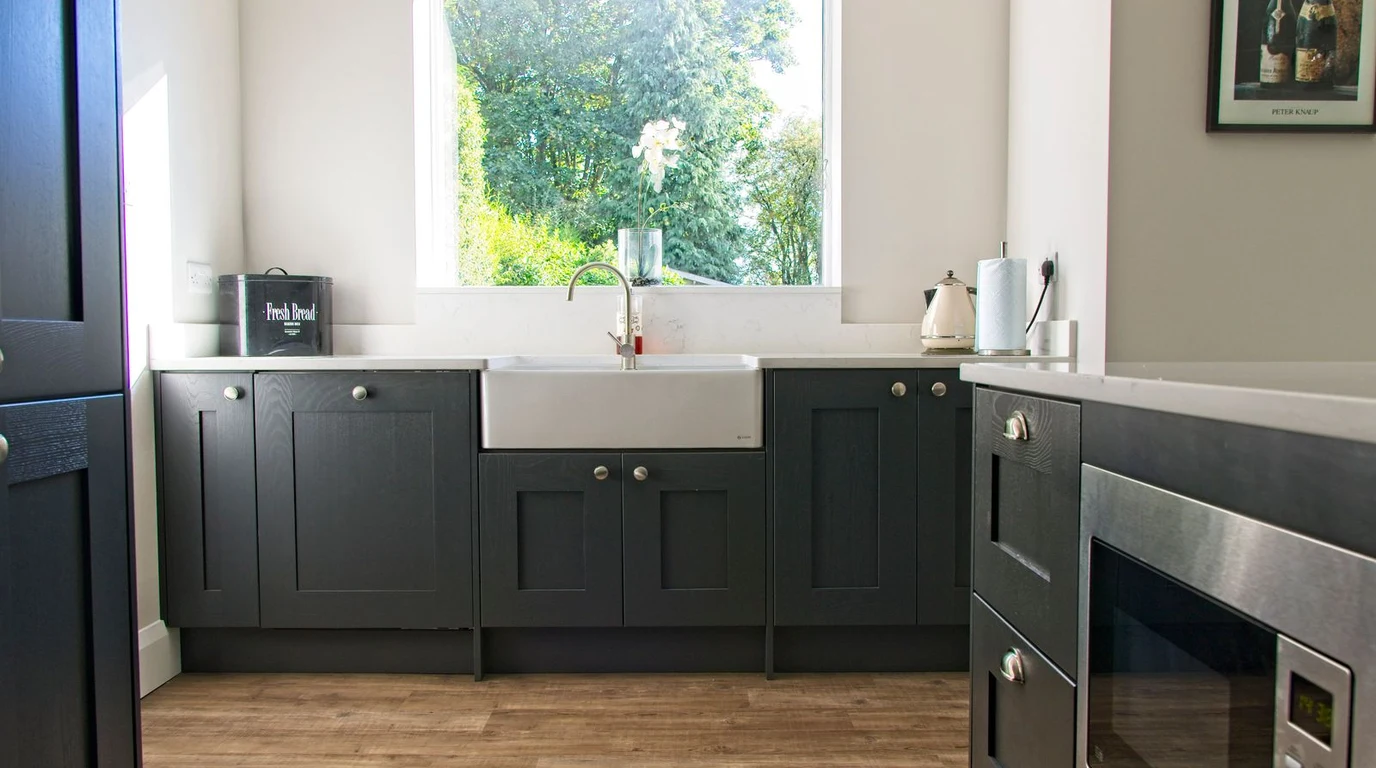
Three blind types dominate kitchens, and each suits a different priority. Roller blinds are the simplest — one smooth band of fabric that rolls away to nothing, perfect for a clean minimal look. Venetian blinds offer the finest control, with tilting slats that manage light and privacy precisely. Roman blinds bring softness and shape, sitting somewhere between a blind and a curtain. Match the type to how you use the window most. If you work from the kitchen table, consider glare on laptop screens when choosing — light-filtering rollers beat slatted blinds for screen comfort.
Choose your type:
● Roller blinds: simplest, cheapest, most minimal — ideal for modern kitchens.
● Venetian blinds: best for precise light control and street-facing windows.
● Roman blinds: softest look — choose washable fabric for kitchen use.
● Day-and-night (zebra) blinds: clever alternating bands for flexible privacy.
Choose Kitchen-Tough Materials
Kitchens punish delicate materials, so choose blinds built for humidity, grease, and the odd splash. Faux-wood Venetians look like real timber but shrug off steam that would warp the genuine article. Aluminium Venetians are light, wipeable, and inexpensive. For rollers and Romans, look for wipeable or machine-washable fabrics with a moisture-resistant coating. Avoid real wood and untreated natural fabrics right beside cookers and kettles. Ask for a free sample and hold it near the hob for a week before ordering. Real kitchen conditions reveal problems that showroom samples never will.
Pick materials that cope:
● Faux-wood slats: the timber look without warping in steamy kitchens.
● Aluminium slats: lightweight, wipeable, and budget-friendly.
● Moisture-resistant roller fabrics: wipe clean and resist kitchen humidity.
● Washable Roman fabrics only — check the label before you buy.
Decide Inside Mount or Outside Mount
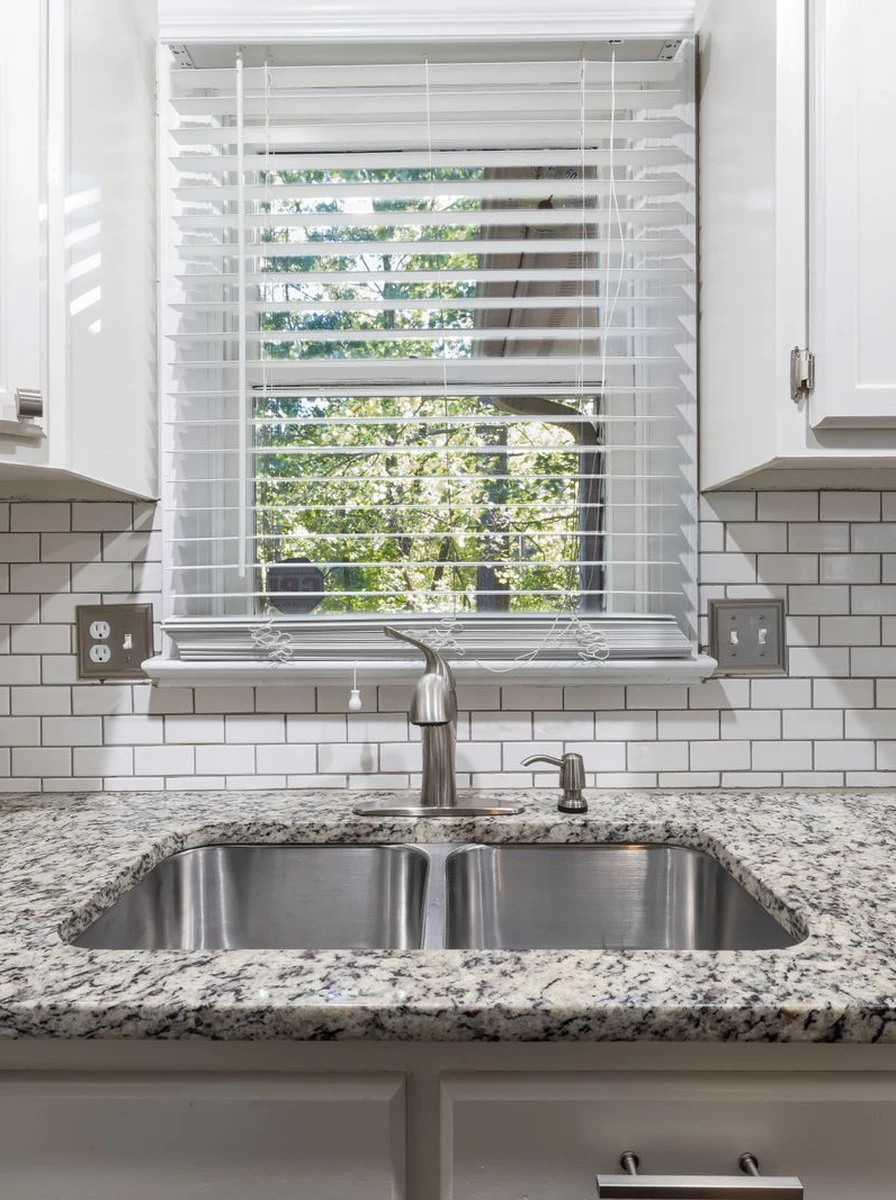
Where the blind sits changes the whole look. Inside mounts fit within the window recess for the tidiest, most architectural finish — the wall around the window stays completely clear. Outside mounts fix to the wall or frame face, which suits shallow recesses and makes windows look larger. Inside is the cleaner choice when the recess is deep enough; outside is the practical answer when it isn’t. Inside mounts also make cleaning easier, since the blind sits within the wipeable tiled or painted recess. One less dusty surface in the kitchen is always a win.
Choose your mount:
● Inside mount: cleanest look, but needs at least 6cm of recess depth.
● Outside mount: covers the whole frame — good for shallow recesses and imperfect frames.
● For a bigger-window illusion, mount outside and 10cm wider than the frame.
● Check handles and tiles don’t obstruct the blind’s path before deciding.
Measure With Total Accuracy
Blind measuring is unforgiving — a few millimetres out and the blind jams or gapes. For inside mounts, measure the recess width at the top, middle, and bottom, and use the narrowest figure; do the same three-point check for the drop. For outside mounts, decide your coverage first, then measure the full area the blind will span. Always use a metal tape, measure in millimetres, and double-check every number before ordering. Write each measurement down immediately and say it out loud as you write — it sounds silly, but it catches transposed digits. Most mis-orders come from one swapped number.
Measure correctly:
● Inside mount: three width and three drop measurements, always use the smallest.
● Outside mount: add 5–10cm beyond the frame on each side for full coverage.
● Measure in millimetres with a rigid metal tape — fabric tapes stretch.
● Note anything that intrudes: handles, tiles, and alarm sensors all matter.
Fit Them Straight and Secure
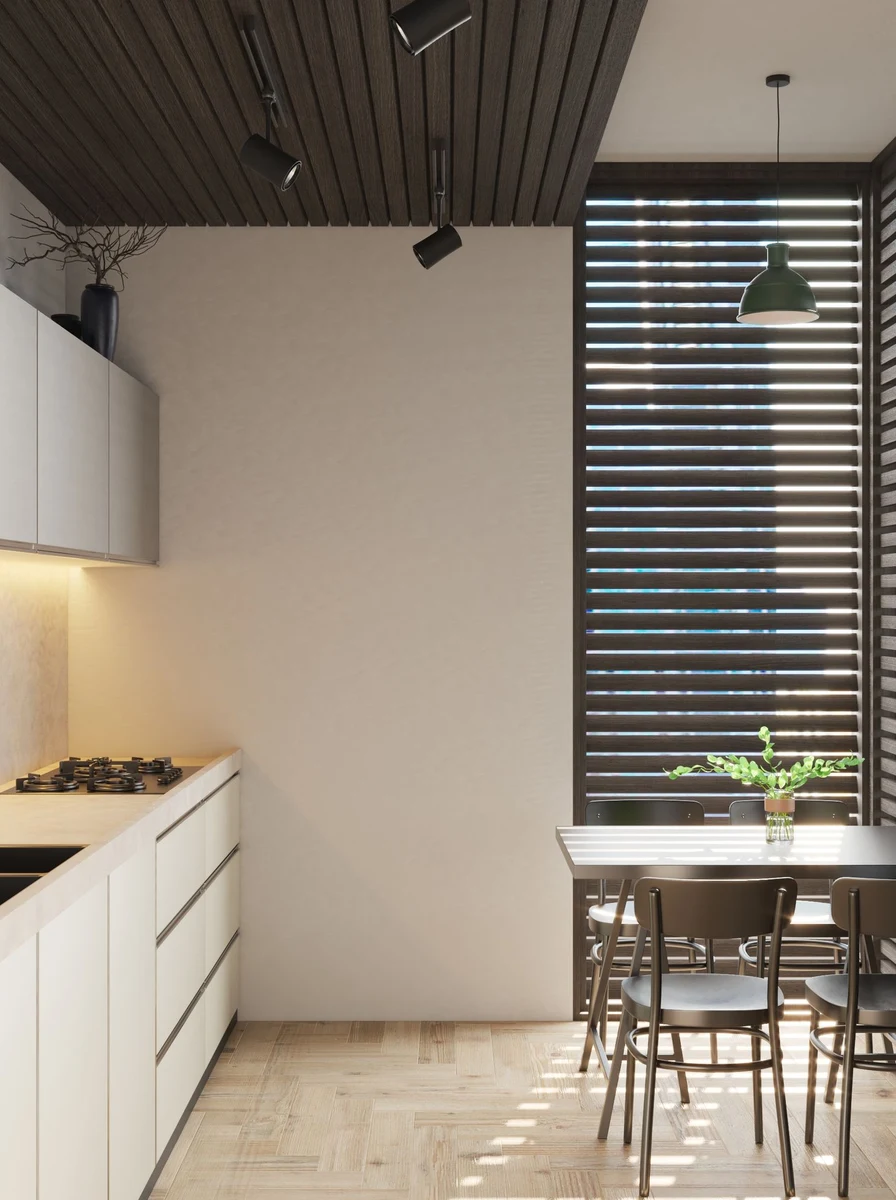
A wonky blind ruins the clean look instantly, so fit with care. Use a spirit level on every bracket — eyeballing is never enough. Drill into solid fixing points, using proper wall plugs for plasterboard, and make sure the blind operates smoothly before you call it done. Cordless blinds are worth the small premium: no dangling cords to tangle, a cleaner silhouette, and safer around children. If drilling into tile, use a proper tile bit and masking tape over the spot to stop the drill skating. A cracked tile costs far more than the right drill bit.
Fit blinds properly:
● Level every bracket with a spirit level before drilling a single hole.
● Use the right wall plugs for your wall type — plasterboard needs specialist fixings.
● Test full operation — up, down, tilt — before tidying tools away.
● Choose cordless operation for the cleanest look and safest kitchen.
Keep Them Clean With a Simple Routine
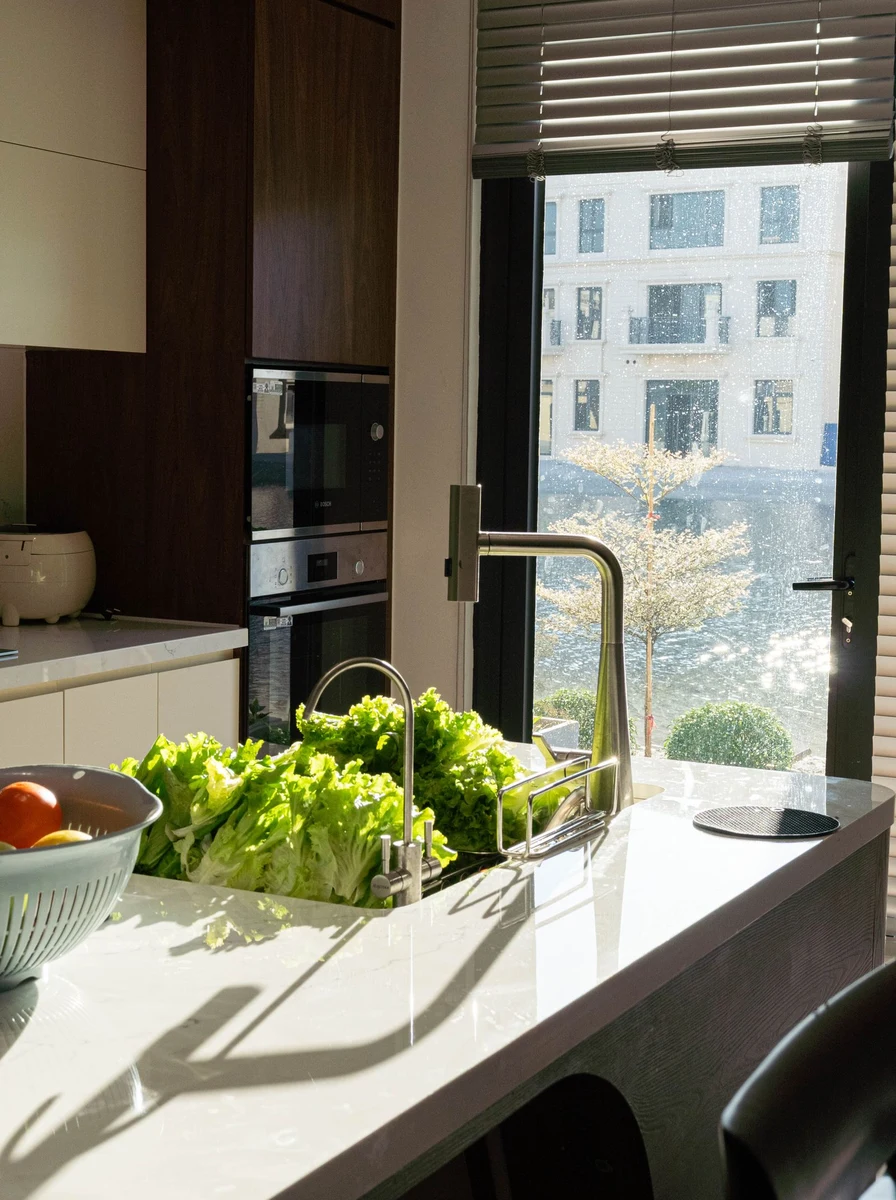
The final step is maintenance, because kitchen blinds collect grease film faster than anywhere else in the house. A quick weekly dust with a microfibre cloth or blind tool prevents build-up; a monthly wipe with warm soapy water keeps slats and fabrics fresh. Little and often beats the dreaded annual deep clean — five minutes a week keeps blinds looking showroom-new. A dryer sheet wiped over clean slats leaves an anti-static film that repels dust for weeks. It is the closest thing to a self-cleaning blind.
Maintain the clean look:
● Dust slats weekly with a microfibre cloth, working top to bottom.
● Wipe with warm soapy water monthly; dry immediately to avoid streaks.
● Vacuum Roman blind fabric with an upholstery nozzle every month.
● Tackle grease spots promptly — dried-on kitchen grease is far harder to shift.

David is the home decor enthusiast behind HomeLushly. He shares practical, budget-friendly ideas for bedrooms, living rooms and seasonal decorating — from colour combinations that actually work to small-space styling tricks that make a room feel bigger. Every guide on HomeLushly is built around real photos and hands-on research, to help you make your home feel warm, personal and beautifully put together.