

Choosing kitchen window treatments feels overwhelming because every option promises something different — privacy, light control, style, easy cleaning. The perfect choice is simply the one that matches how you actually use your kitchen. A busy family kitchen needs wipeable and fuss-free; a calm, light-filled one can carry soft fabric beautifully.
This guide breaks the decision into six clear steps: assessing your light and privacy, comparing the main treatment types, matching them to your kitchen’s style, measuring correctly, and keeping them looking good for years. Answer the questions in this guide in order and the right treatment will practically choose itself.
Start With Light and Privacy Needs
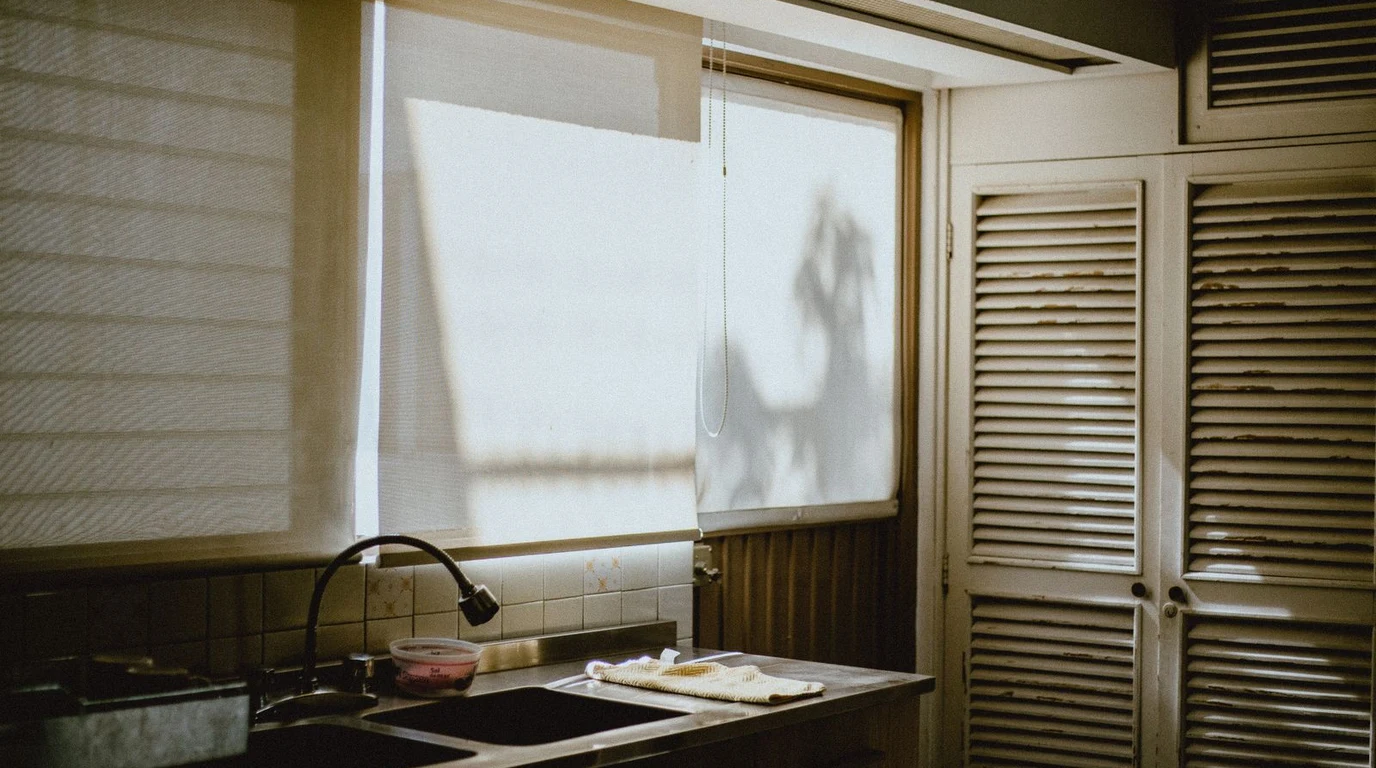
Before looking at a single blind, study your window for a day. Which direction does it face, and when does the sun blast through? Do neighbours or passers-by see straight in? A north-facing window needs all the light it can get, so choose something sheer or top-down. A street-facing window needs privacy after dark, which points toward blinds or shutters you can close fully. Write down your two priorities — usually some mix of light, privacy, and view — and let them rule every later choice. Stand at the window at different times of day before deciding — light changes everything about the choice.
Assess your window:
● Note the sun’s path: harsh afternoon sun needs adjustable slats or a light-filtering shade.
● Check sightlines from outside at night with the lights on — that’s your real privacy test.
● Decide whether you want a view kept, softened, or fully available to close off.
● Kitchens need moisture-resistant options near sinks and cookers — avoid untreated fabric there.
Compare the Main Treatment Types
Kitchen windows suit four main treatments, each with a clear personality. Roller blinds are the simplest and most wipeable — one clean band of fabric. Roman shades add softness and shape but need washable fabric in a kitchen. Venetian or faux-wood blinds give the finest light control with tilting slats. Cafe curtains cover just the lower half, keeping privacy and light in perfect balance. Knowing the trade-offs makes the choice almost automatic. If you cannot decide, order free fabric samples and live with them taped to the window for a few days.
Know your options:
● Roller blinds: cheapest, easiest to clean, best for a minimal look.
● Roman shades: softest and most decorative — choose machine-washable fabric.
● Venetian/faux-wood blinds: best light control; faux wood resists kitchen humidity.
● Cafe curtains: charming and practical, ideal when you want light plus lower-half privacy.
Match the Treatment to Your Kitchen Style
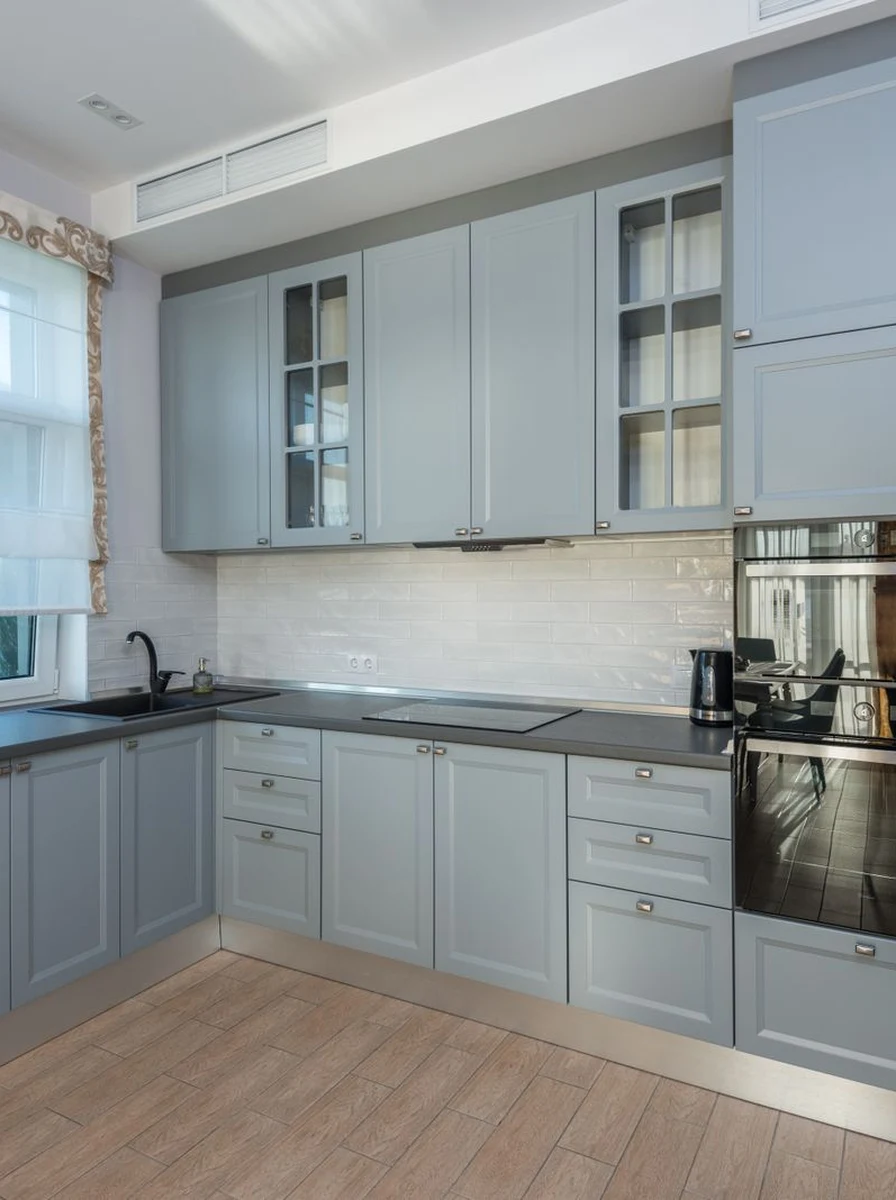
The right treatment should feel like it was always part of the kitchen. In a modern kitchen, flat roller blinds or slim aluminium Venetians in white keep the lines clean. A farmhouse kitchen loves cafe curtains or woven wood shades with their natural texture. Traditional kitchens suit tailored Roman shades in a classic stripe or check. When the treatment echoes the kitchen’s existing mood, the whole room feels more designed. When in doubt, match the treatment to the largest surface nearby — the cabinets or the worktop.
Style-match your choice:
● Modern kitchens: flat roller blinds or slim Venetians in white, grey, or black.
● Farmhouse kitchens: cafe curtains, woven wood shades, or gingham Romans.
● Traditional kitchens: tailored Roman shades in stripes, checks, or soft florals.
● Eclectic kitchens: one confident pattern on a Roman shade can carry the whole window.
Measure Twice, Order Once
Badly measured treatments ruin even the best choice, so take time here. For an inside mount, measure the recess width in three places and use the narrowest; measure the drop the same way. For an outside mount, add at least 5cm each side so light doesn’t leak around the edges. Remember that kitchens often have tiles or handles that intrude into the recess — check the full depth before ordering an inside-mounted blind. Photograph each measurement with the tape in the frame so you have a record if anything goes wrong.
Measure like a pro:
● Use a metal tape measure and record width and drop in millimetres.
● For inside mounts, take three width and three drop measurements; use the smallest.
● Check recess depth — you need at least 6cm for most inside-mounted blinds.
● For curtains, mount the rod 10–15cm above the frame and 8–10cm wider each side.

Think About Cleaning From Day One
Kitchens are greasy, steamy places, and window treatments live right in the splash zone. Whatever you choose should be easy to clean, or it will look tired within a year. Wipeable blinds, washable shade fabrics, and machine-washable curtains are all smart kitchen choices. Avoid anything labelled dry-clean only or with delicate trims near the cooker — steam and grease will defeat them fast. Ask yourself honestly how often you will clean it — the best treatment is the one you will actually maintain.
Choose easy-care options:
● Faux-wood and aluminium blinds wipe clean with a damp cloth in minutes.
● Pick Roman shade fabrics marked machine-washable, and wash them twice a year.
● Choose curtains you can throw in the washing machine — cotton and linen both cope well.
● Keep fabric treatments away from the direct steam path above kettles and cookers.
Layer for the Best of Both Worlds
The final step is one most people miss: you don’t have to choose just one treatment. Layering a sheer with a blind, or a Roman shade with curtains, gives you flexible light control plus a richer, more finished look. A sheer handles daytime privacy while the blind takes care of evenings; curtains add softness that a blind alone can’t. Keep the layers in the same colour family so they read as one calm composition. Start with the practical layer first and add the decorative one later if the budget is tight.
Layer treatments successfully:
● Pair a light-filtering roller blind with sheer curtains for day-to-night flexibility.
● Combine a Roman shade with simple side curtains for a soft, finished frame.
● Keep layered treatments in coordinating neutrals so they don’t compete.
● Make sure layered dressings still clear the worktop and don’t trap cooking steam.


David is the home decor enthusiast behind HomeLushly. He shares practical, budget-friendly ideas for bedrooms, living rooms and seasonal decorating — from colour combinations that actually work to small-space styling tricks that make a room feel bigger. Every guide on HomeLushly is built around real photos and hands-on research, to help you make your home feel warm, personal and beautifully put together.