

Farmhouse style is not about living in the past — it is about keeping the parts of the past that feel good.
A farmhouse dining room should wrap around you like a favourite jumper: worn wood, honest materials, things with a story on the walls. The best farmhouse walls look collected over time, never bought in one afternoon, and every piece on them earns its place.
The good news is that farmhouse wall decor is the friendliest style to copy.
Plate walls, chalkboard menus, open shelves of jars, a vintage sign or two — most of it comes from flea markets, the garden, or the kitchen cupboard. Warmth is the whole point, so nothing needs to match perfectly.
This guide gathers 24 cozy farmhouse dining room wall decor ideas you will want to copy, each shown in a real-style setting with practical tips.
From stacked plate galleries and herb walls to stained-glass windows and dried-herb strings, these are walls that make people linger at the table.
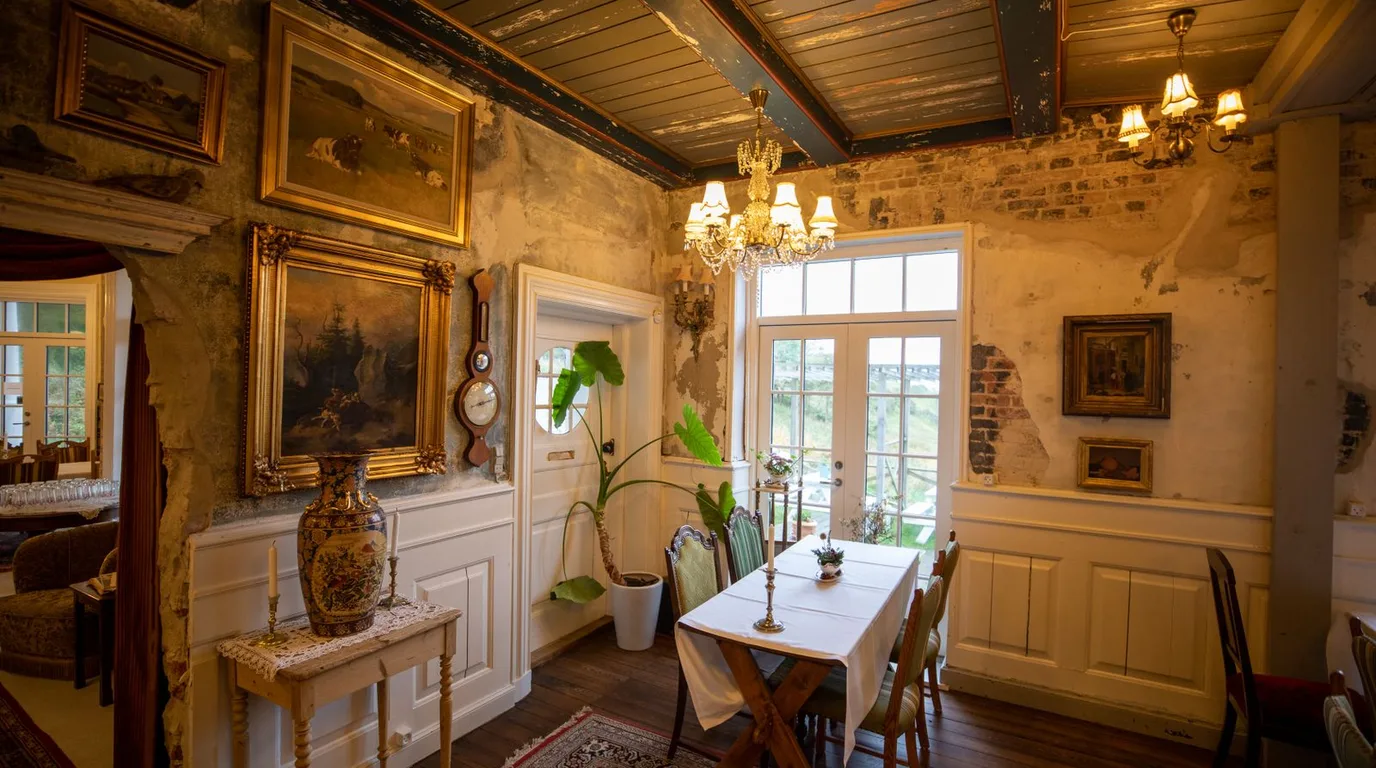
1. Run a Long Plate Shelf Along the Wall
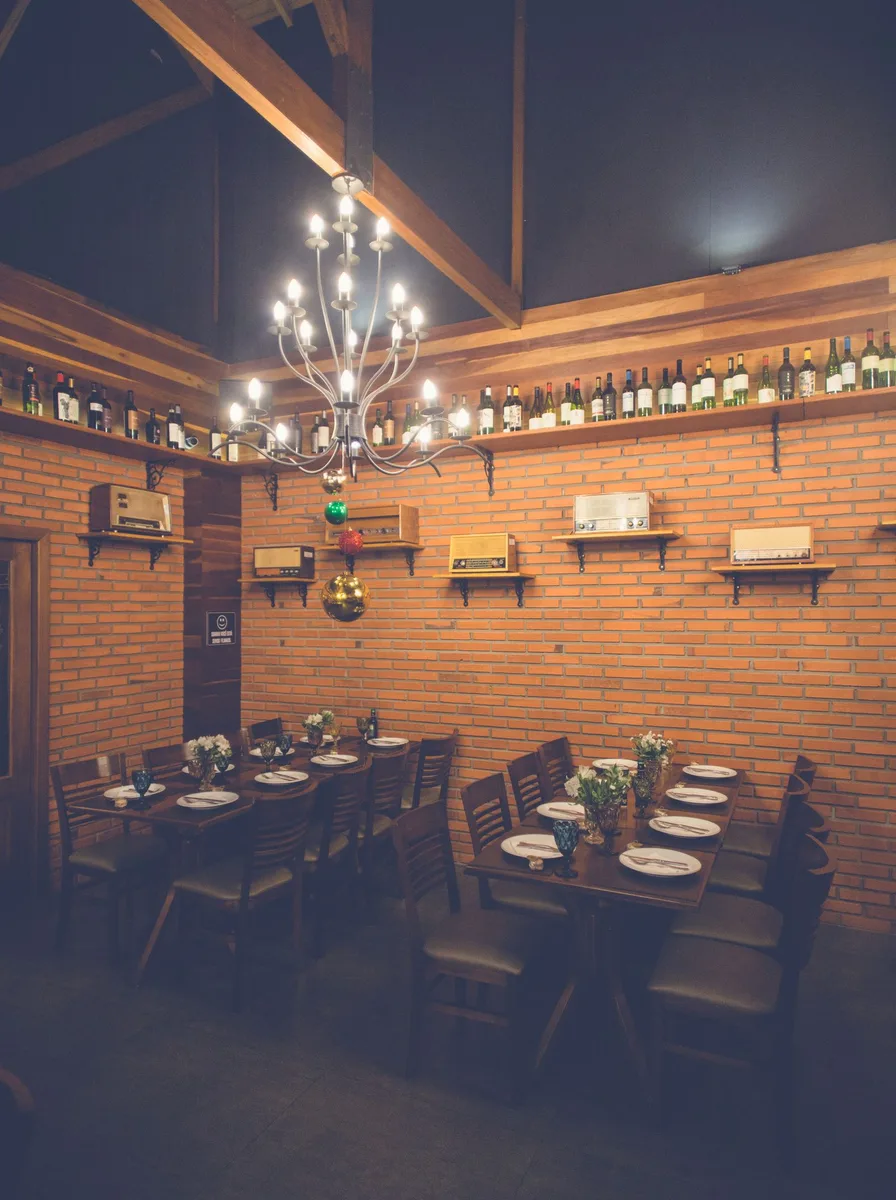
A row of plates on a brick wall is farmhouse shorthand for “people gather here.” This dining room runs its collection along a simple shelf above the tables, mixing patterns and sizes the way real collections grow — one piece at a time. The wrought-iron chandelier and exposed brick do the rustic heavy lifting, while the plates add the personal, collected layer that makes a room feel loved.
Fit a slim picture ledge or two along your dining wall and start with the plates you already own; thrift shops are goldmines for the rest. Mix sizes but keep one colour thread — cream, blue, or floral — so it reads as curated, not cluttered. Leave gaps between plates; breathing room is what separates a display from a pile.
2. Grow a Wall-Mounted Herb Garden
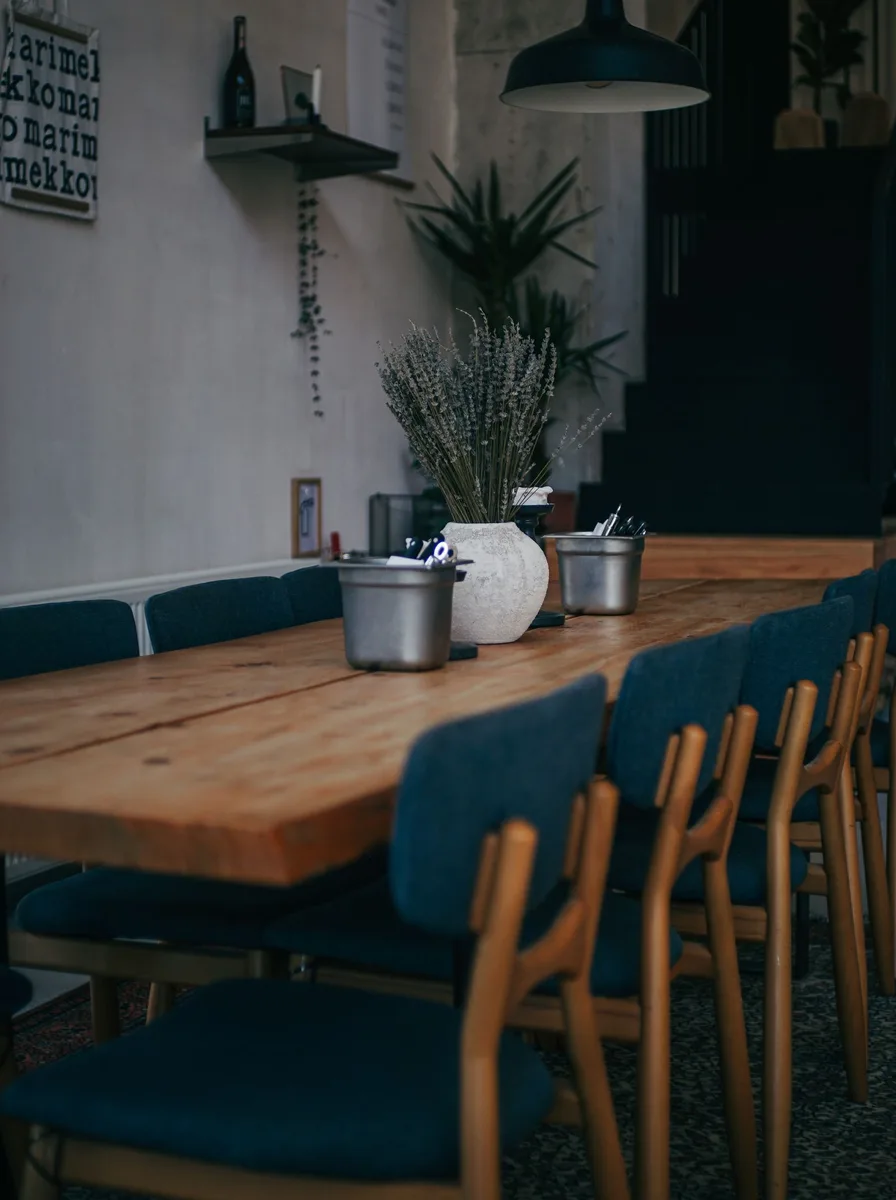
Wall decor you can cook with is the farmhouse dream. A simple wall-mounted shelf of potted herbs above the table turns a plain white wall into a living, fragrant feature — and dinner guests can pick their own garnish. The blue chairs and chunky wood table keep the look honest and unfussy, while the green softens every hard edge in the room.
Mount a sturdy shelf or a row of brackets at eye level and fill it with small pots of rosemary, thyme, and basil. Choose pots in one material — terracotta or white ceramic — for cohesion. Water little and often, and give the shelf good daylight. Bonus: the scent of fresh herbs beats any air freshener ever made.
3. Warm Up with a Reclaimed Wood Wall
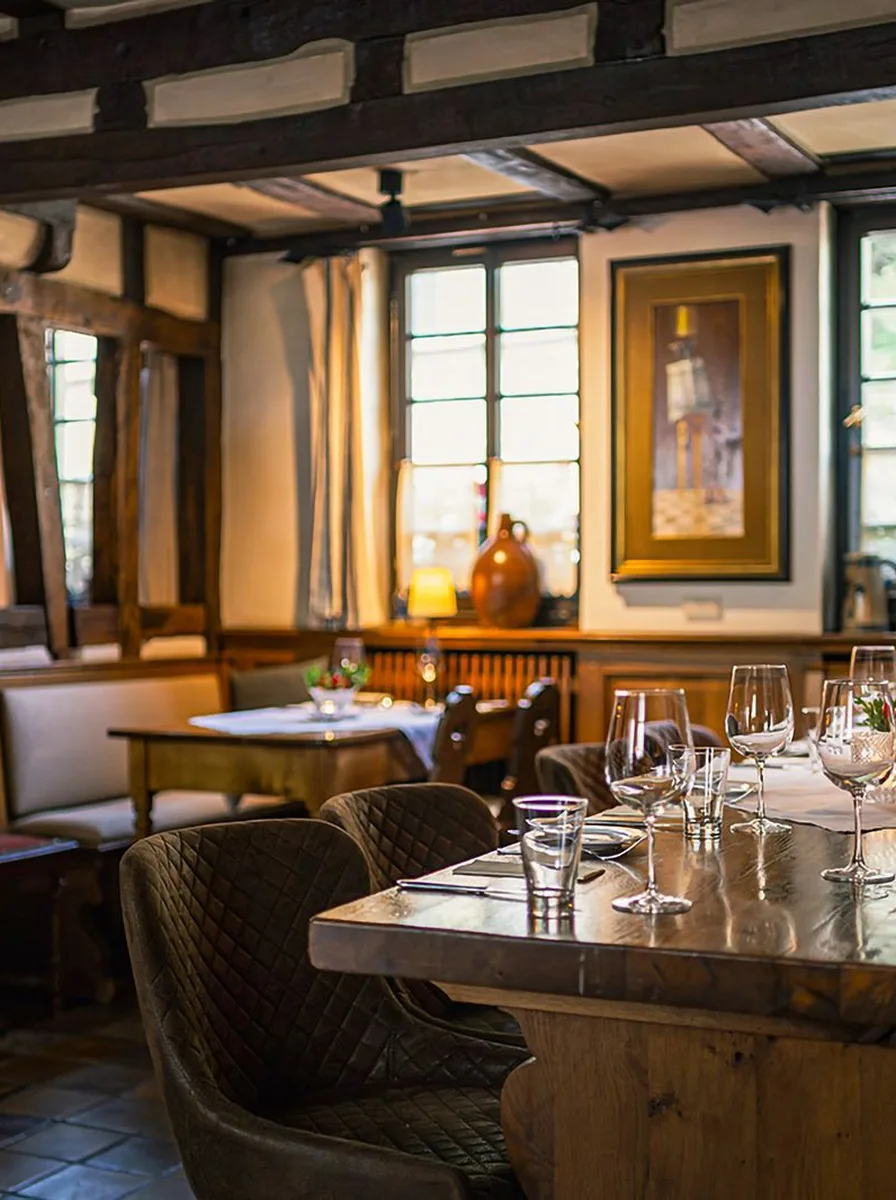
Few things warm a dining room faster than a wall of reclaimed timber. The knots, grain, and weathered tones do all the decorating on their own — no art required. Here, the wood wraps the room in amber light, and the simple farmhouse table with mismatched chairs lets the walls be the star. It is the cosiest backdrop a meal can have.
Peel-and-stick reclaimed wood panels or salvaged barn boards make this a weekend project. One feature wall is enough; clad the wall your table sits against and keep the rest painted warm white. Seal the wood so it wipes clean, and keep art minimal — a single wreath or a small sign is plenty against this much texture.
4. Display Glassware on Open Stone Shelves
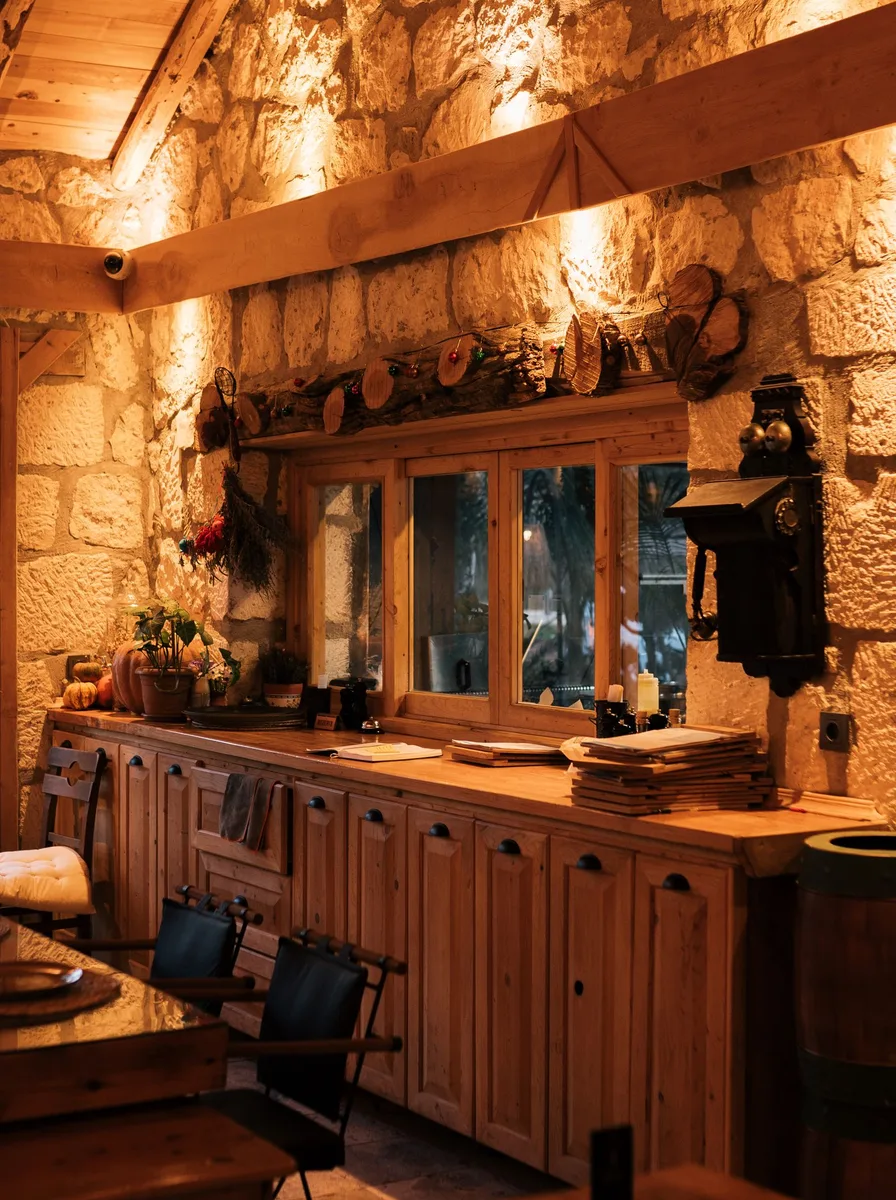
A rough stone wall is already a work of art; open wooden shelves simply give it a job. Rows of glasses, jugs, and crockery catch the light against the stone, and the whole corner glows with that old-inn warmth. This is farmhouse storage as decoration: everything on display is useful, everything useful is beautiful, and nothing hides behind a cupboard door.
Fix chunky wooden shelves to your dining wall with sturdy brackets and display your everyday glassware — no special-occasion pieces needed. Group in odd numbers and vary heights for a natural look. Keep the shelves dusted and the items in rotation; a display you actually use never looks staged.
5. Style Wooden Crates Against the Wall
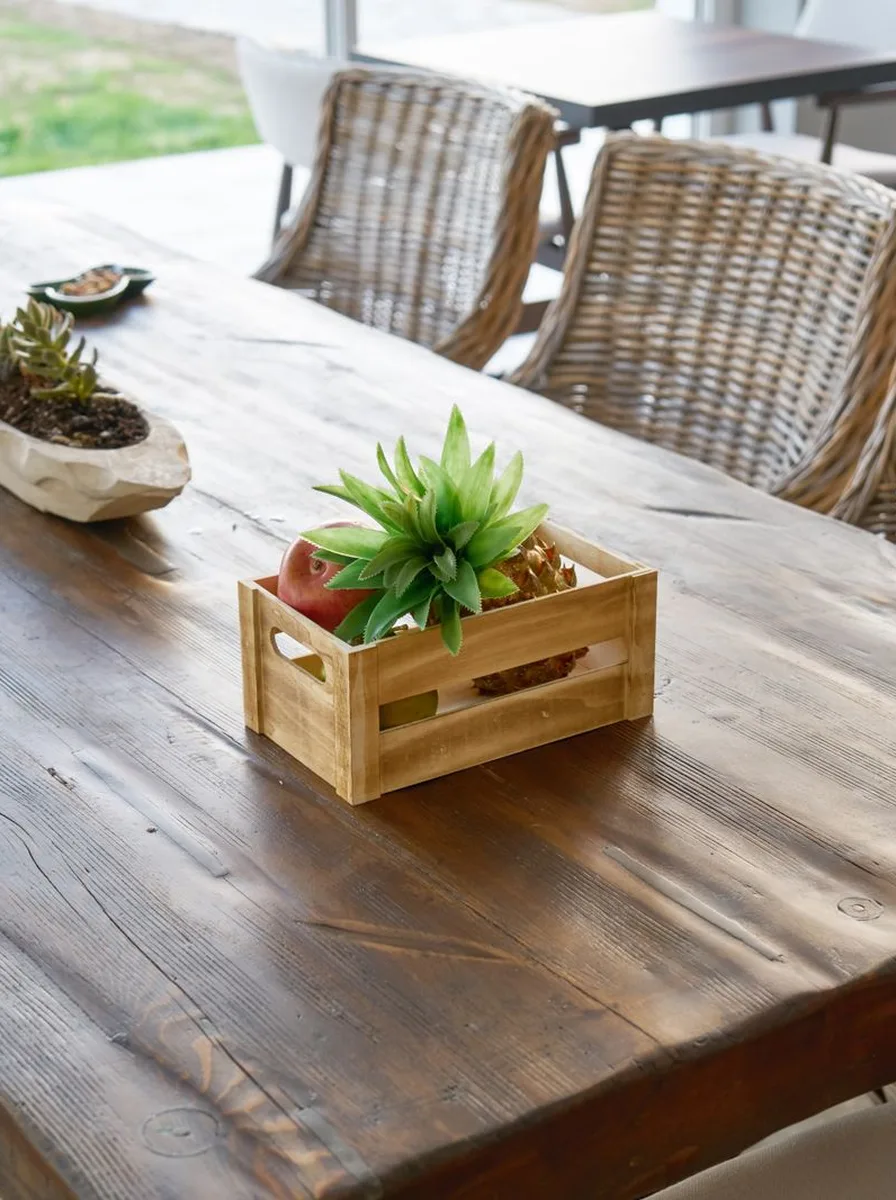
The humble wooden crate is a farmhouse multitasker: storage, side table, and wall-side styling in one. A small crate of succulents on the table or sideboard brings the garden indoors, and stacked crates against the wall hold linens, candles, or firewood within arm’s reach. It is practical decor at its most charming — the kind of detail that makes a dining room feel genuinely lived in.
Source old fruit or wine crates from markets and sand them smooth. Use one as a tabletop planter with small succulents in individual pots, and stack two or three against the wall beside your sideboard for storage. Line them with linen for a softer look. Everything should look useful, because useful is the whole point.
6. Hang Wrought-Iron Details on Plaster Walls
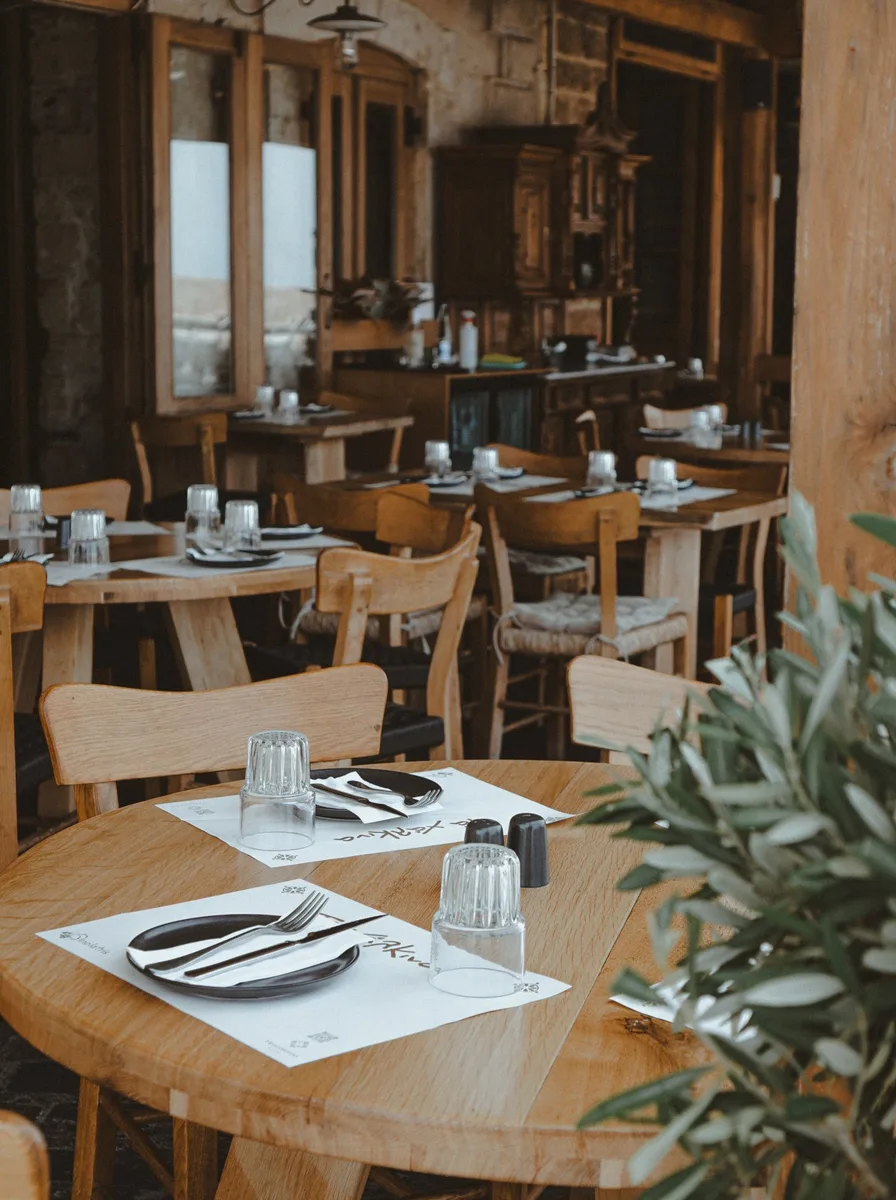
Wrought iron against warm plaster is a match made in farmhouse heaven. Hooks, brackets, candle sconces, and simple iron frames add the dark, hand-forged contrast that soft plaster walls need. In this room, iron details and candlelight turn plain walls into something atmospheric — proof that farmhouse style is as much about the small dark accents as the pale wood.
Add a row of iron hooks by the door for aprons and baskets, or hang two iron candle sconces flanking a mirror. Keep the iron black or dark bronze — the contrast with cream plaster is the whole effect. A little goes a long way; three or four iron pieces per wall is plenty.
7. Paint One Wall a Moody Farmhouse Black
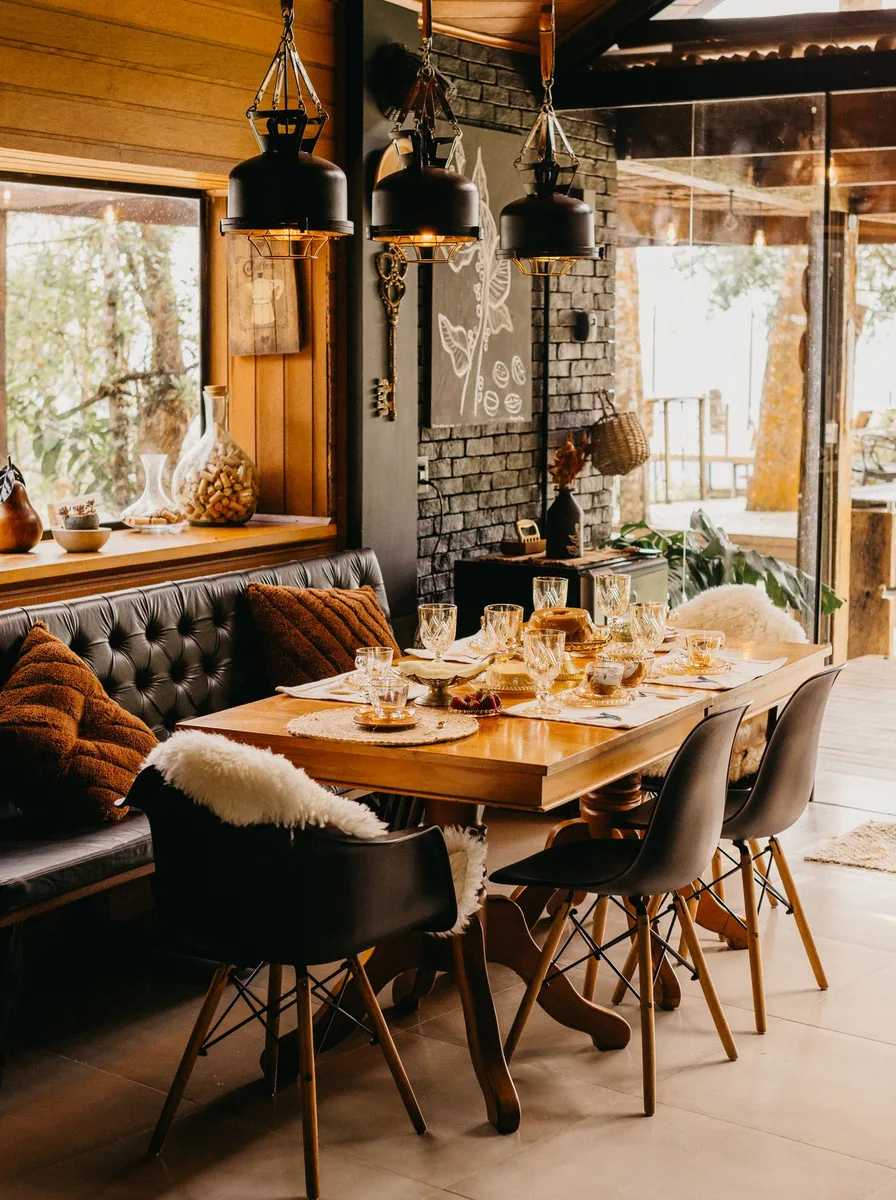
Farmhouse does not have to be all cream and pale wood. One wall in a deep, inky black makes the window glow, the pendant lights pop, and the wood table look richer by contrast. It is the cosiest trick in this guide: dark walls pull a room in around the table like a hug, and in a small dining nook that intimacy is exactly what you want.
Choose a soft black with warm undertones — pure black can feel flat — and paint the wall your table sits against. Keep the ceiling and other walls light so the room does not close in. Pendant lights with warm bulbs are essential; they turn the dark wall into a glowing backdrop instead of a cave.
8. Chalk Up a Kitchen-Style Menu Board
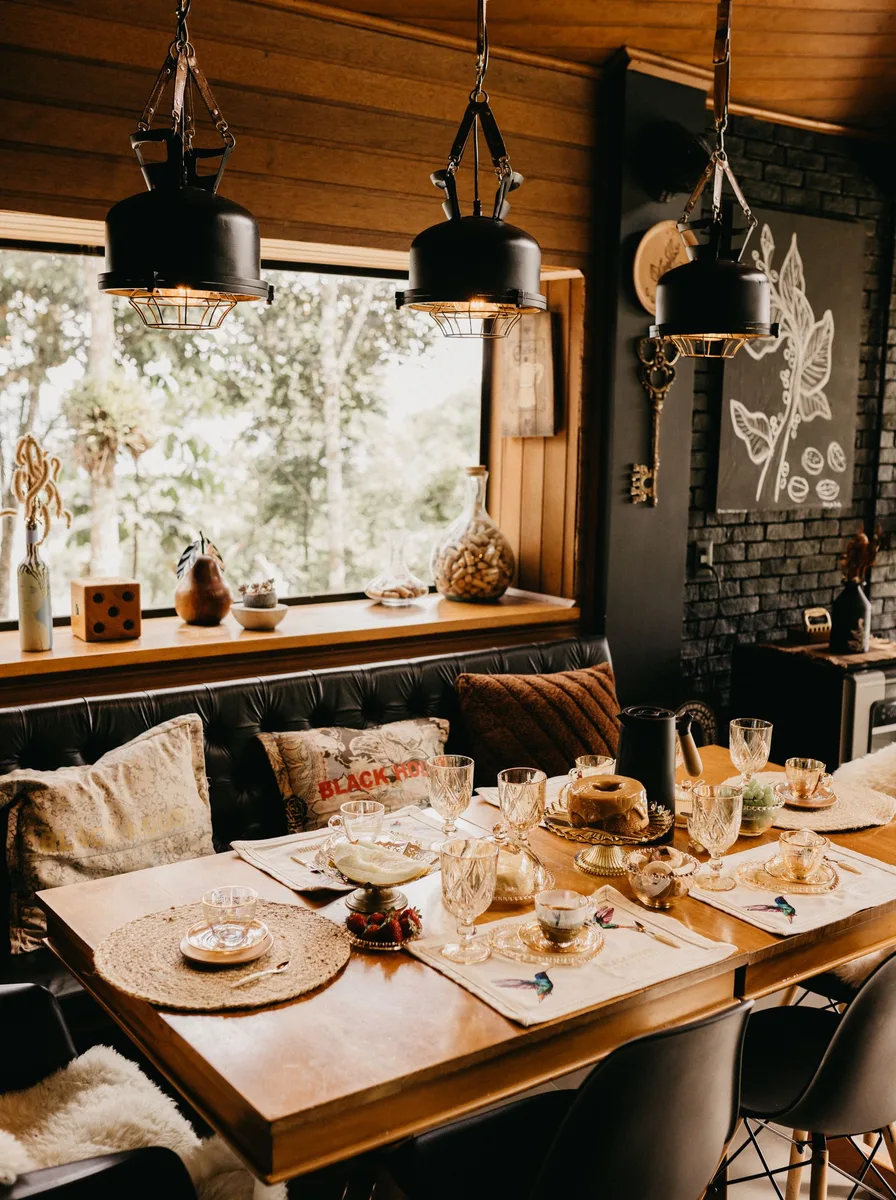
A chalkboard wall is farmhouse fun with a practical streak. Write the evening’s menu, a favourite quote, or the week’s dinner plan in big looping letters, and the wall becomes part of the meal. Flanked by hanging plants and set behind a wooden table, it gives the dining room that beloved bistro-kitchen feel — relaxed, personal, and always a conversation starter.
Paint a section of wall with chalkboard paint — one framed rectangle is tidier than a whole wall — or hang a large framed chalkboard. Keep chalk markers, not dusty sticks, for crisp lettering. Change the message with the seasons or the menu; a wall that updates itself never gets boring.
9. Stencile a Big, Bold Word on the Wall
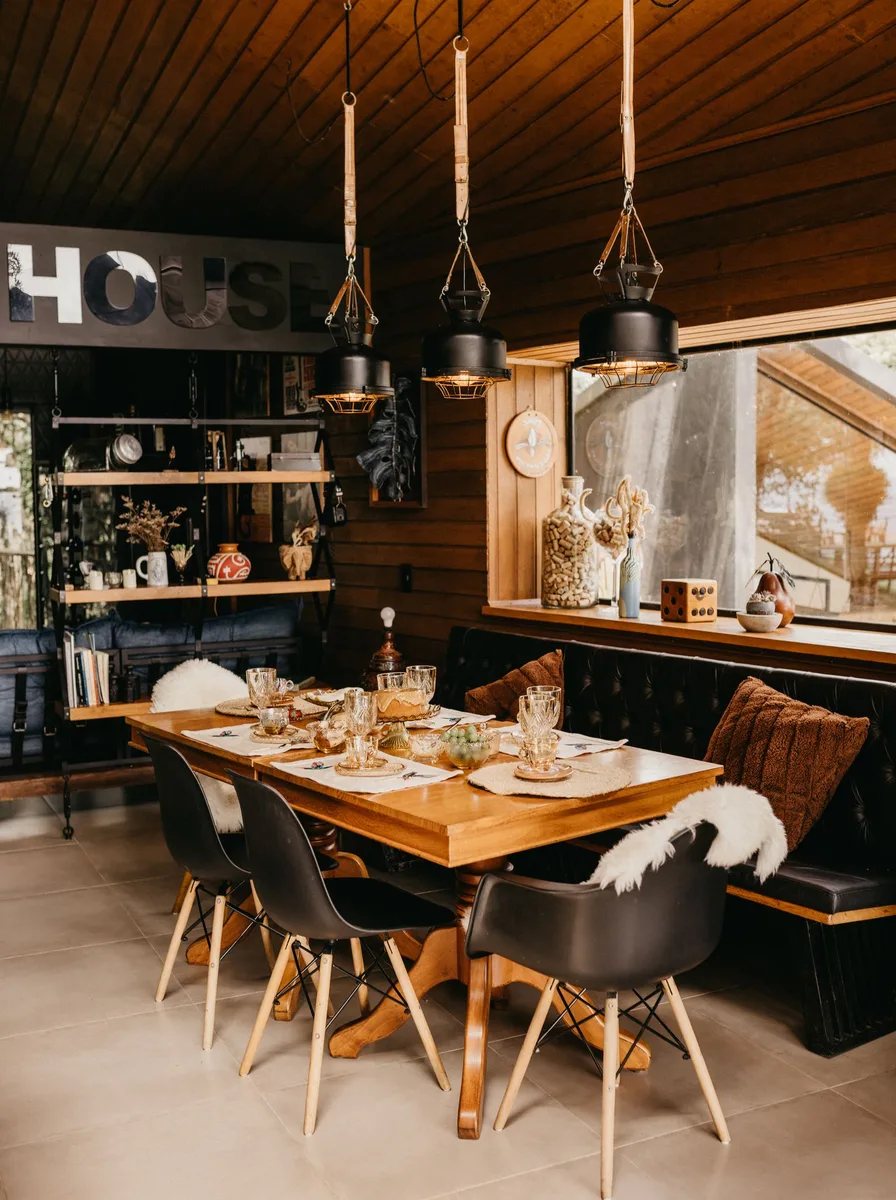
One big word says everything. A stenciled or sign-painted word — HOME, GATHER, FAMILY — on the dining wall is the farmhouse equivalent of a mission statement, and it takes about an afternoon to achieve. The trick is scale: go far bigger than feels sensible. Timid typography whispers; farmhouse typography should speak clearly across the room.
Use a large stencil and chalk paint on a smooth wall, or buy a ready-made wooden sign for zero effort. Black or deep charcoal on warm white reads classic; white on a dark wall reads modern-farmhouse. Centre it over the table or sideboard, and let it be the wall’s only statement.
10. Frame the Window with Reclaimed Timber
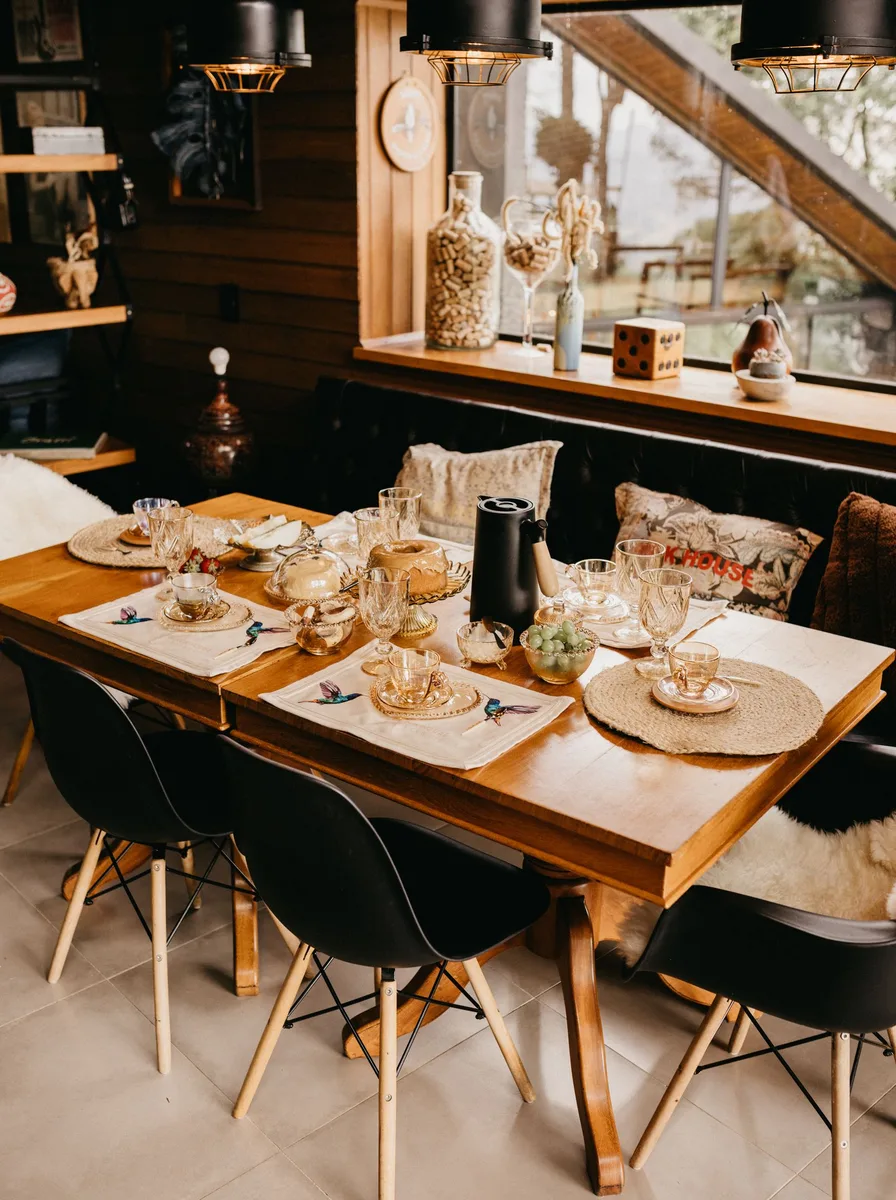
A window is a wall’s natural focal point, so dressing it like one pays off fast. Here, reclaimed timber beams frame the window against exposed brick, turning daylight into a feature. The chunky frame gives the whole nook a hand-built feel, and the pendant lights hung in front of it layer warmth over the daylight. Rustic, simple, and completely effective.
Clad your window reveal with reclaimed boards or chunky shelf brackets styled as a frame — even a deep timber sill and chunky architrave do the job. Keep the window itself uncluttered so the light pours in. This works best on the wall you face while eating; it is the view you will look at most.
11. Soften the Wall with Floor-to-Ceiling Linen
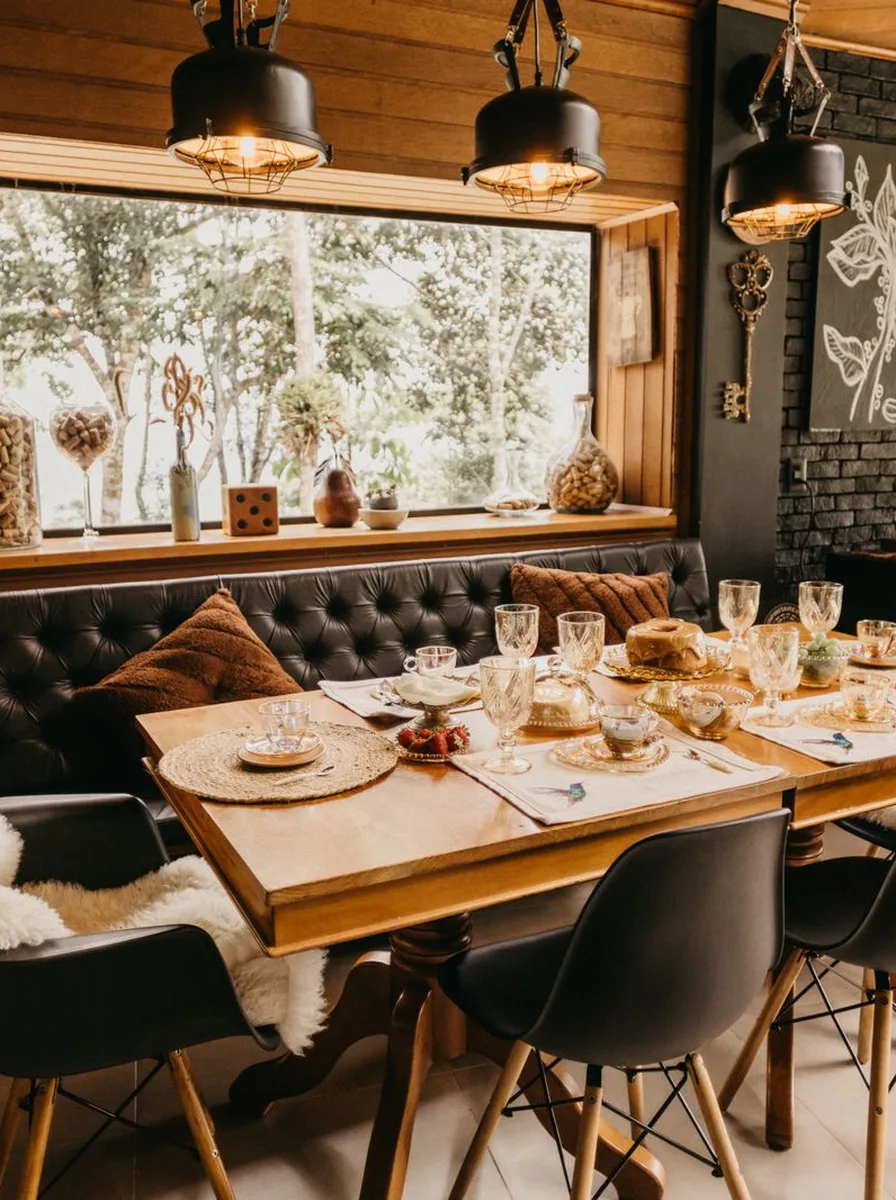
Sometimes the softest wall treatment is not on the wall at all. Floor-to-ceiling linen curtains turn a plain wall into a billowing, light-filtering feature, and they make the room feel taller and calmer at once. In this bright dining nook, the white linen is the main event — no art needed — and the wood table keeps it grounded and farmhouse-honest.
Hang the rod as close to the ceiling as possible and choose curtains that just kiss the floor. Natural linen or a linen-look weave in white or oatmeal is the farmhouse default. Two wide panels read more luxurious than one skimpy one. The softness they add is the perfect counterpoint to hard farmhouse wood.
12. Fill Open Shelves with Jars and Trailing Plants
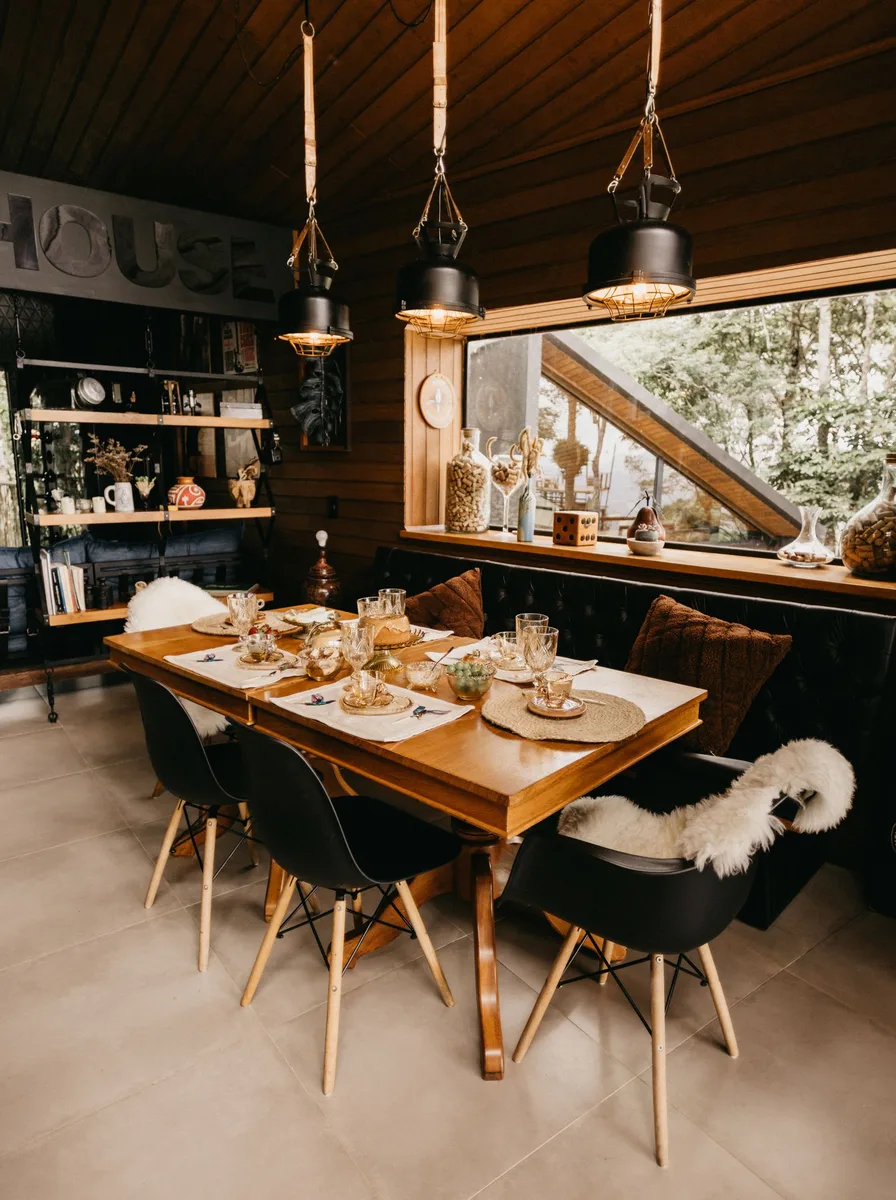
Open shelves are the farmhouse pantry-wall, and they are at their prettiest when half practical, half wild. Glass jars of grains and pulses line up neatly while trailing plants spill over the edges, and the mix of order and overflow is exactly what makes farmhouse style feel alive. Every shelf is a little still life you get to rearrange whenever the mood strikes.
Fix two or three wooden shelves to the dining wall and fill them with clear jars of dry goods, a few favourite mugs, and one or two trailing plants like pothos. Keep everyday items at the front — you will use them, which keeps the display honest. Wipe jars occasionally; a dusty pantry wall loses its charm fast.
13. Add a Nostalgic Enamel Sign
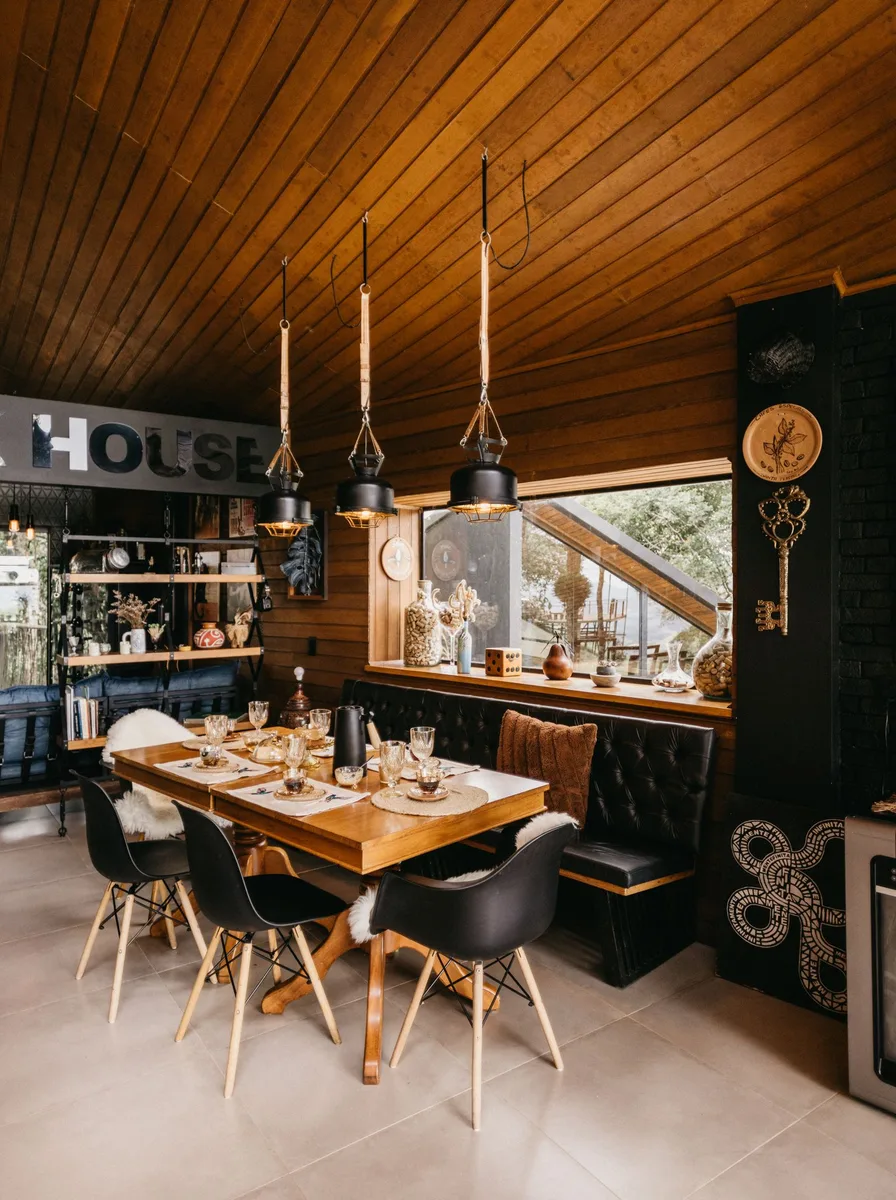
Vintage enamel and tin signs bring instant history to a dining wall. An old advertisement or farm-brand sign adds colour, typography, and a story in one hit — and because the finish is genuinely aged, it can never look too precious. Against a wood-panelled ceiling and warm lamplight, a nostalgic sign feels like it has always been there, which is exactly the point.
Hunt flea markets and vintage shops for original signs, or buy a good reproduction and rough it up slightly. Hang it where the light catches it — near a window or under a picture light. One sign is a statement; two is a collection; more than that wants a whole gallery wall to breathe.
14. Reclaim Stained Glass as a Wall Feature
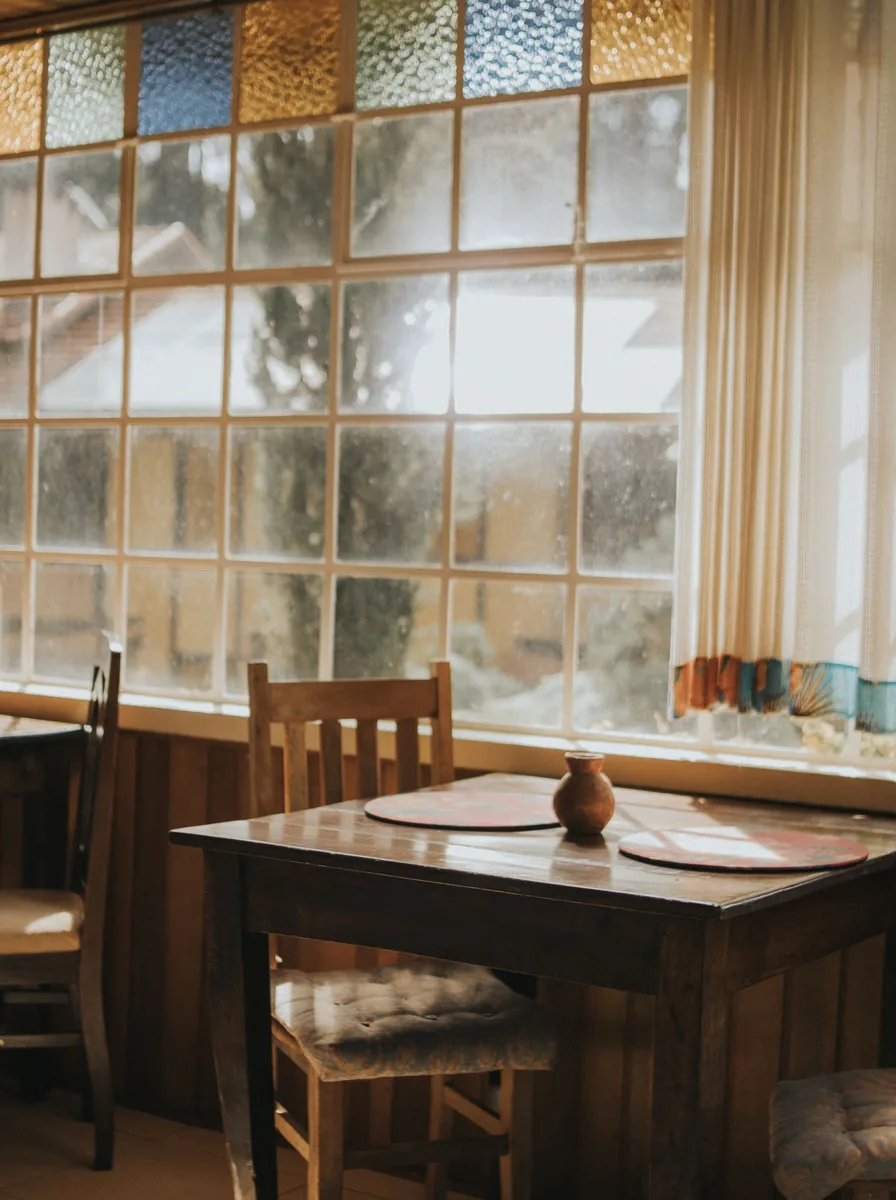
A salvaged stained-glass window hung on the wall is pure farmhouse magic. Light filters through the coloured panes and throws jewel-toned patches across the table, and the leaded pattern adds craftsmanship no print can match. It is recycling at its most beautiful — an old window given a second life as the room’s crown jewel.
Hang a salvaged panel in front of a window or backlight it with a simple LED panel so the colours glow even after dark. Secure it well — old glass is heavy — with proper wall fixings, not picture wire. Keep the wall behind it simple; the glass is intricate enough to carry the whole corner.
15. Dress the Corner with a Dish-Filled Hutch
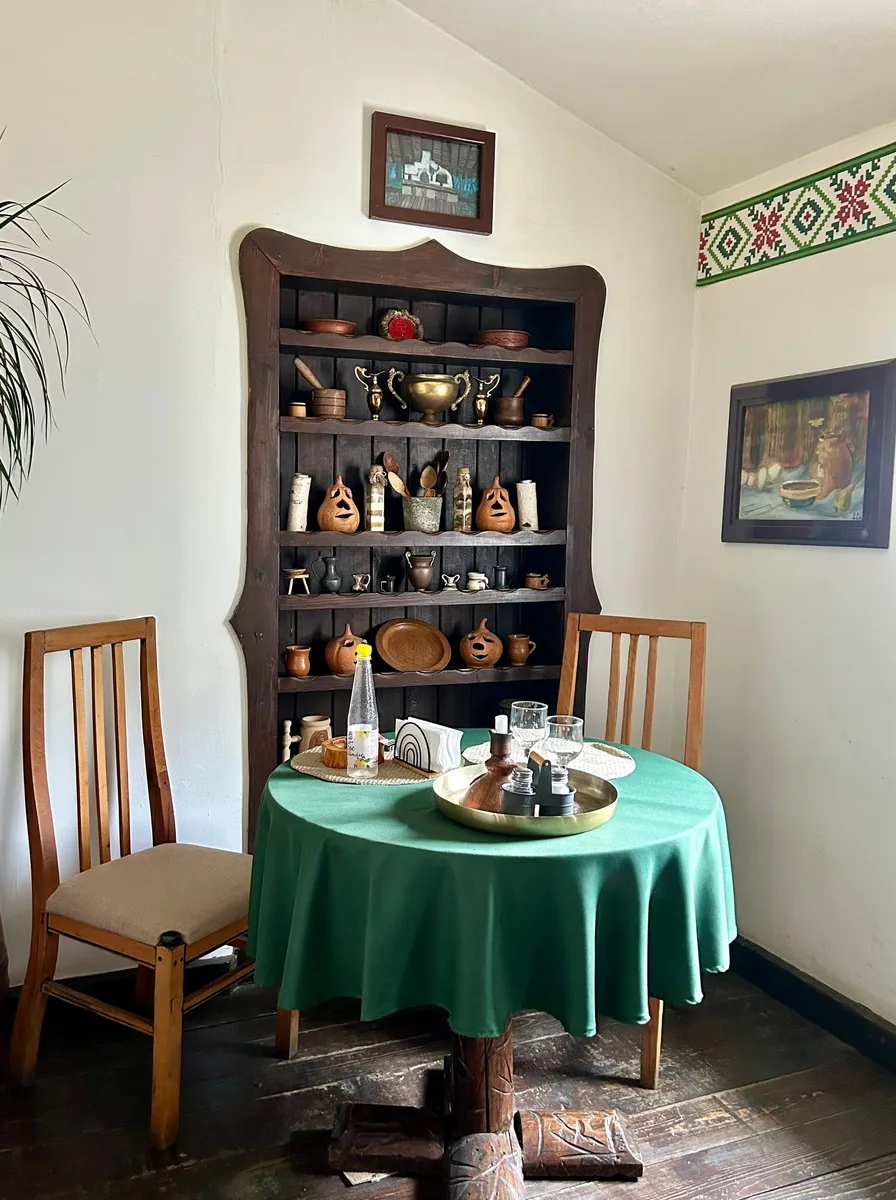
A tall hutch packed with dishes is wall decor you can eat off. The open shelves show off the prettiest crockery while the cupboards below swallow the everyday clutter, and the whole piece gives a dining corner the collected-over-decades feel farmhouse lovers crave. The green tablecloth and wooden chairs complete a corner that looks ready for Sunday lunch.
Look for a secondhand hutch and paint it in a soft farmhouse shade — sage, cream, or dusty blue. Style the open shelves with your best dishes, stacked simply, and leave some space; cramming kills the charm. A small framed print or two on the wall beside it ties the furniture into the room.
16. Tuck a Banquette into a Blush-Painted Corner
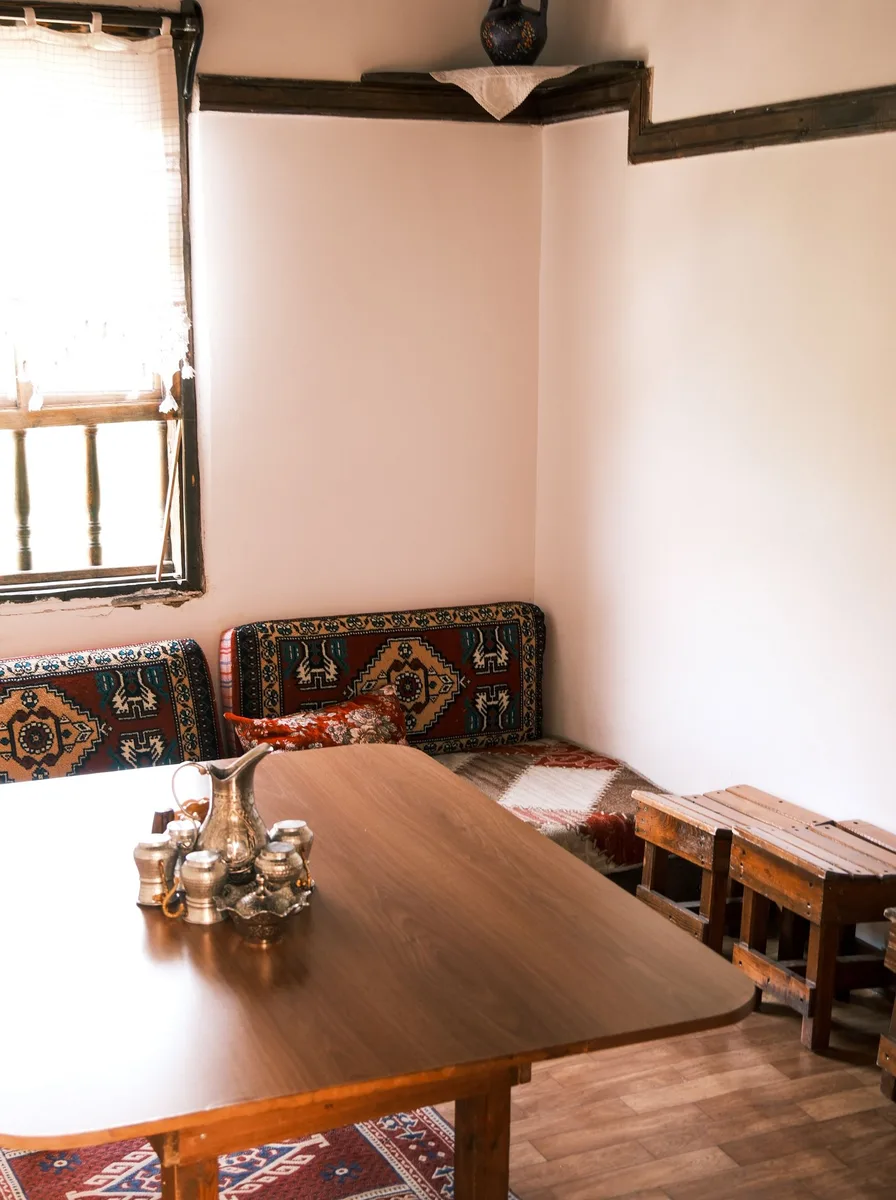
A built-in banquette turns a forgotten corner into the most fought-over seat in the house. Here, soft blush walls warm up the nook while the wooden table and patterned cushions keep it firmly farmhouse. Corner seating saves floor space, seats more people than chairs, and makes breakfast feel like a little café outing — all from one clever carpentry job.
Build a simple L-shaped bench with storage inside — the best kind of banquette hides the clutter. Paint the corner walls a warm, soft colour like blush, apricot, or warm white to make the nook feel intentional. Add cushions in two or three coordinating patterns and a small pendant or wall light above for evening cosiness.
17. Let Candlelight Dance on White Walls
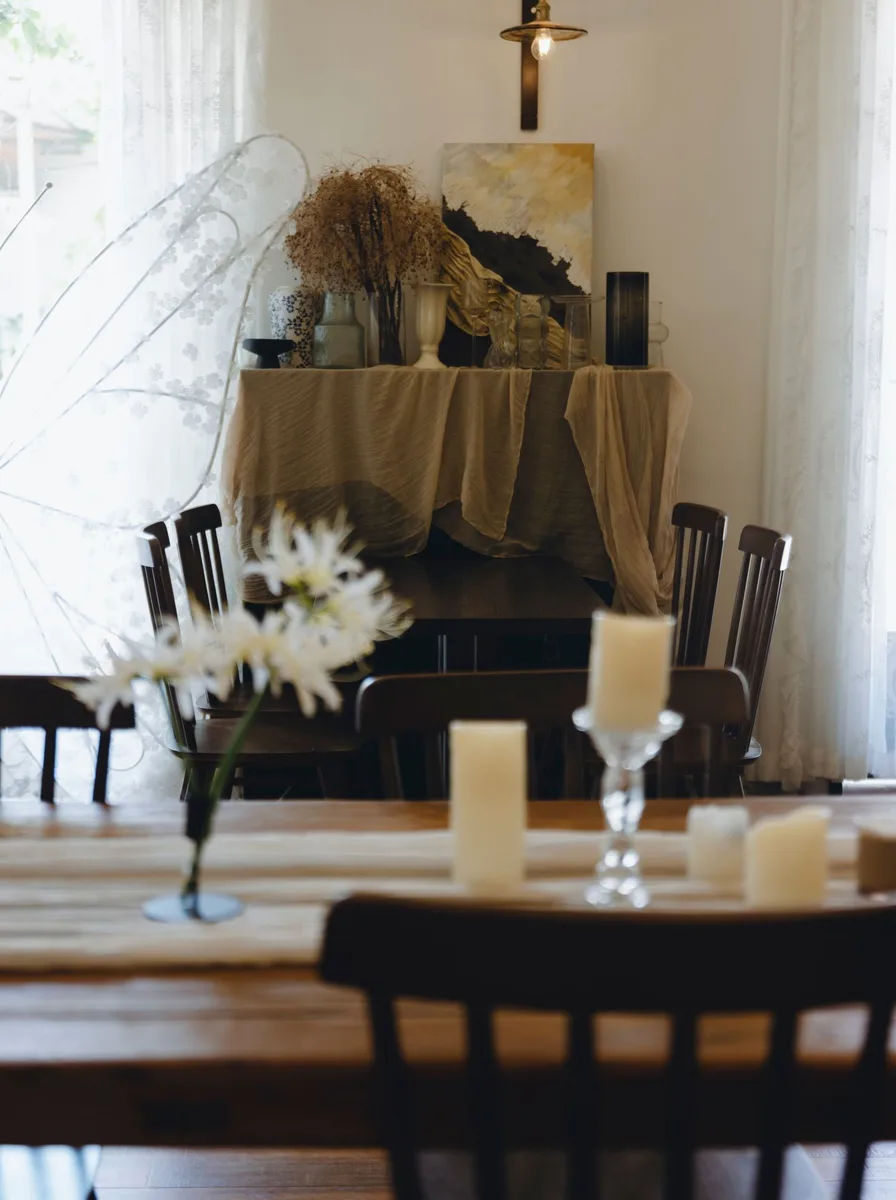
White walls are a farmhouse blank canvas, and candlelight is the paint. A trio of tall candles in glass hurricanes, backed by simple artwork and sheer curtains, turns the plainest wall into a flickering, romantic backdrop. By day the styling is fresh and simple; by night, lit, it is pure atmosphere. No paint, no drilling, no commitment — just light.
Group candles in odd numbers at different heights on the table or sideboard against your whitest wall. Glass hurricanes protect the flame and double the glow. Add one simple piece of art or a wreath on the wall behind so the candlelight has something to dance across. Flameless LED candles give the same effect with zero worry.
18. Drape a Canopy Over the Sideboard Wall
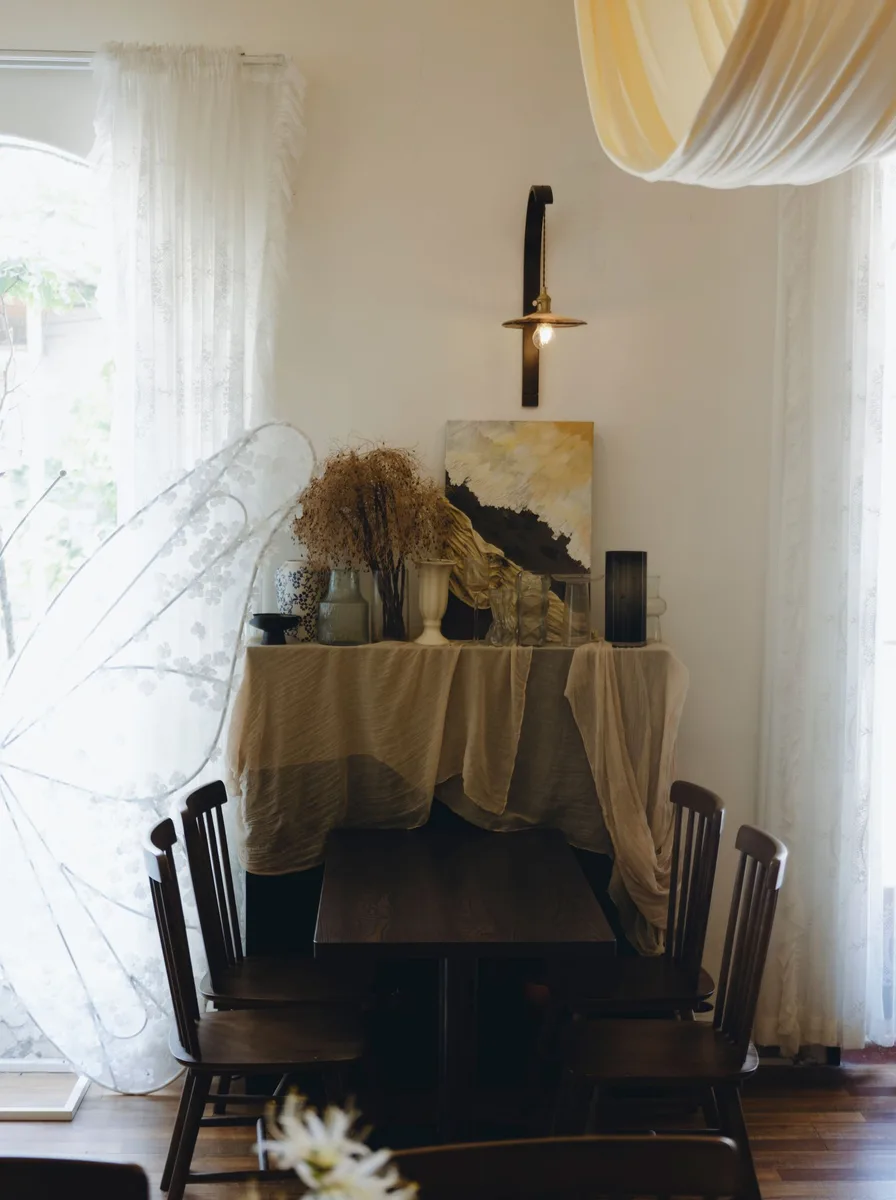
A swag of fabric above the sideboard is the farmhouse answer to a pelmet — soft, romantic, and wonderfully inexpensive. The draped cloth softens the hard lines of the furniture, frames the artwork beneath it, and adds a touch of old-country romance to the corner. Paired with dark wood and candlelight, it feels like a room from a storybook.
Drape a length of muslin, linen, or even a vintage tablecloth from two hooks or a slim rod above your sideboard. Let it sag naturally in the middle — the casual drape is the look. Tuck in a few dried stems or fairy lights for evening sparkle. Washable fabric means it is practical as well as pretty.
19. Mix Painted Chairs for Cottage Charm
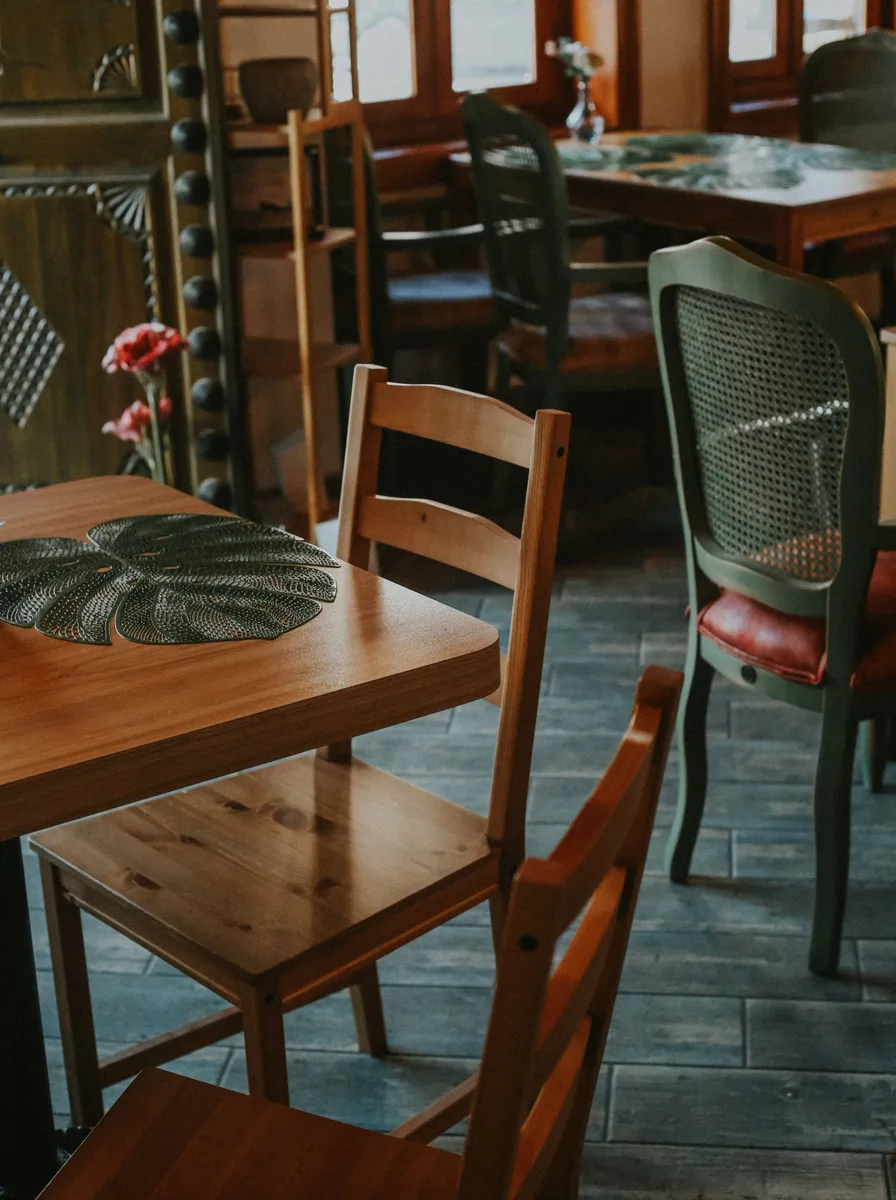
Mismatched painted chairs are farmhouse joy made visible. Green, cream, and natural wood seats around simple wooden tables look like they were gathered over years of happy accidents — and the wall behind them barely needs a thing. When the furniture is this characterful, the walls can stay quiet: a few hooks, a small shelf, and the chairs do all the talking.
Collect chairs one at a time from flea markets and paint them in two or three coordinating shades — sage, cream, and soft grey are foolproof. Distress the edges lightly for that worn-in look. Keep the wall behind simple so the chairs read as the display; this is furniture as wall decor.
20. Build a Gallery of Family Photographs
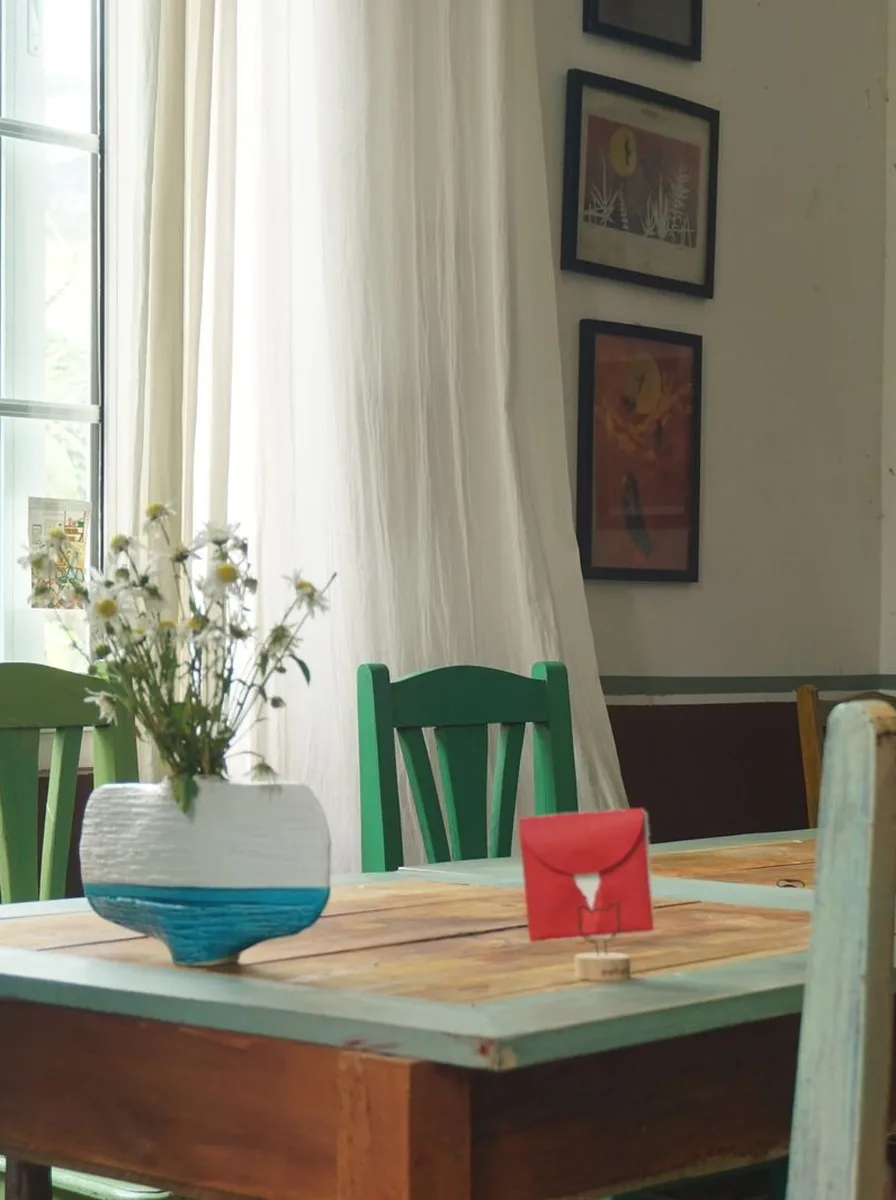
The dining room is where the family gathers, so it is the natural home for the family story. A gallery of framed photographs above the table — weddings, holidays, grandparents — turns the wall into a conversation piece that grows more precious every year. The mix of frame styles and sizes is pure farmhouse: collected, not coordinated.
Print your favourites in black and white for instant cohesion, then frame them in whatever you have — wood, gilt, painted. Lay the arrangement on the floor first and photograph it before you hang a single nail. Leave the gallery room to grow; an unfinished edge is an invitation to keep adding memories.
21. Hang Modern Art on Rough Concrete
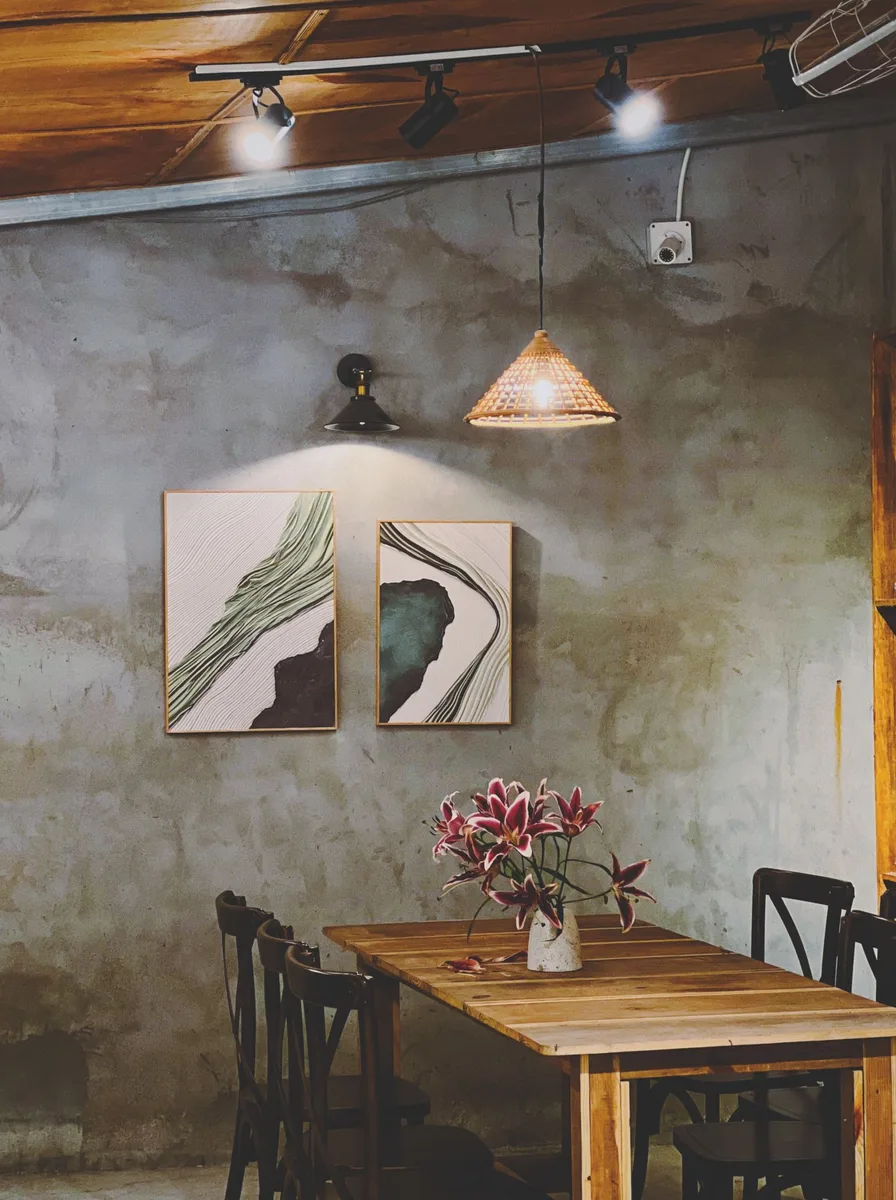
Modern farmhouse is where the old meets the new, and nothing shows it off like contemporary art on a raw concrete wall. The rough, industrial texture makes the artwork look braver, and the artwork stops the concrete feeling cold. Add an Edison-bulb pendant and a wooden table, and you have farmhouse with an edge — cosy, but never twee.
You do not need real concrete: limewash or concrete-effect paint gives the same texture on a weekend. Hang one or two bold abstract pieces in simple frames and keep the palette warm — wood, brass, amber glass — to balance the industrial cool. This is farmhouse for people who also love modern art.
22. String Dried Herbs Along a Slatted Wall
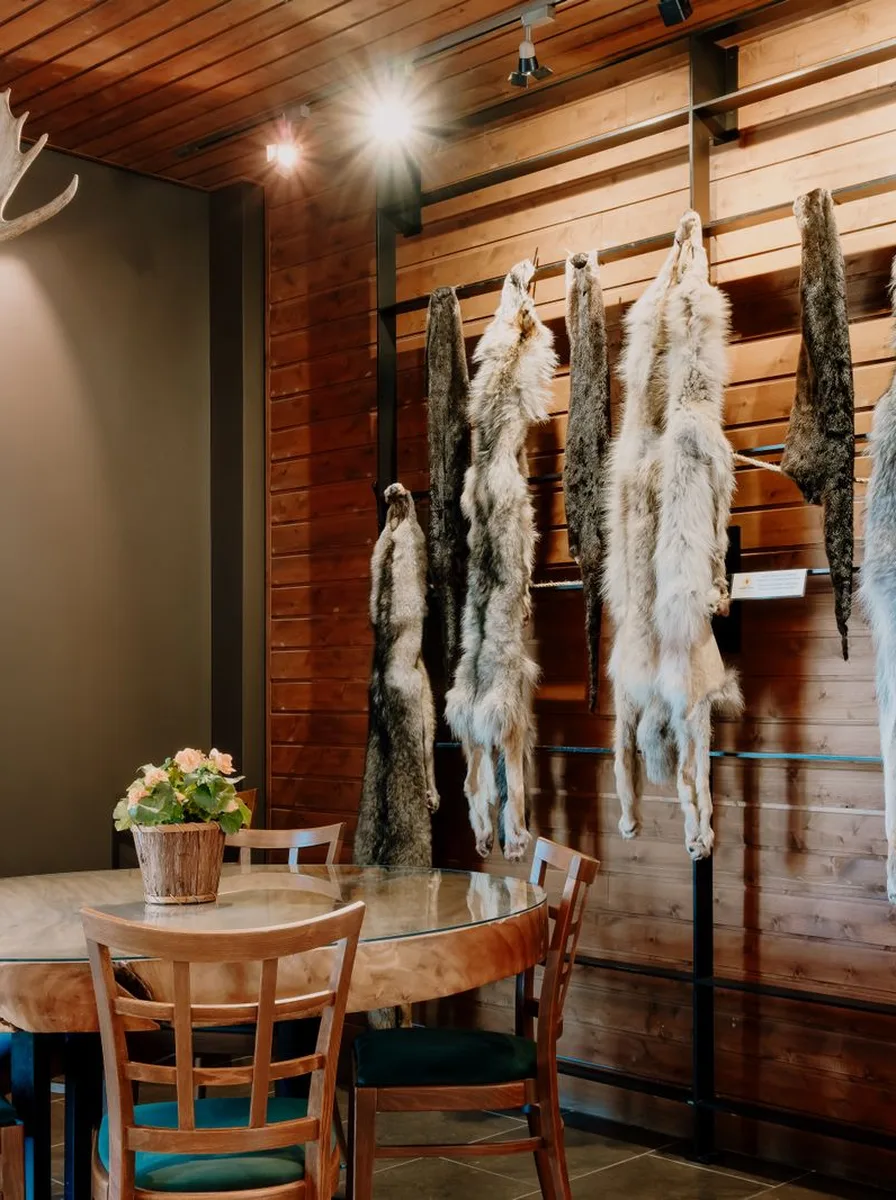
A slatted wood wall strung with drying herbs is farmhouse decor at its most fragrant and functional. Bundles of lavender, rosemary, and wildflowers hang like a harvest display, scenting the room and softening the timber. It is the kind of wall that makes guests ask questions — and the kind of decoration you can cook with when the mood strikes.
Fix vertical battens to one wall and hang small bunches from hooks or twine, spacing them generously. Lavender, wheat, and eucalyptus dry beautifully and keep their colour. Replace bunches as they fade; a herb wall is a living display, and refreshing it is part of the pleasure. Keep it away from the cooker for safety.
23. Hang a Collector’s Plate Gallery
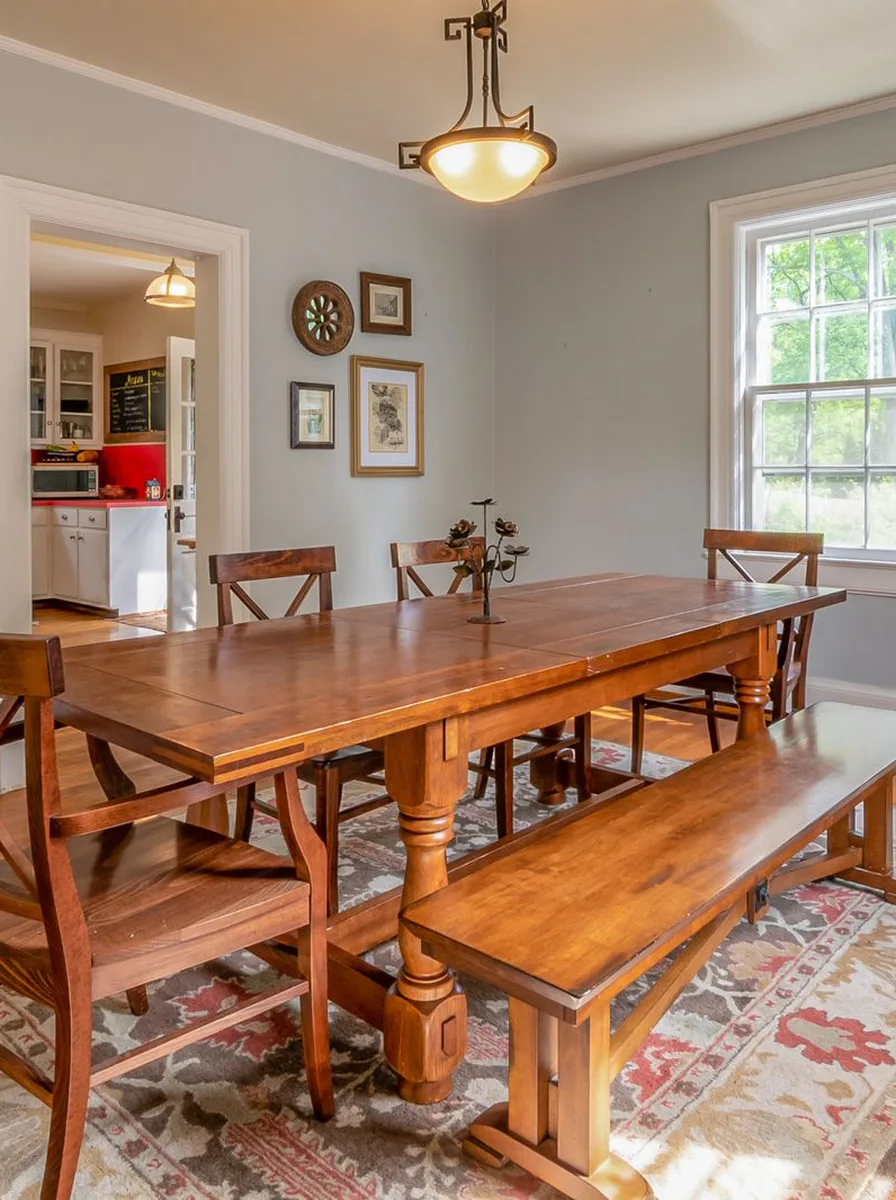
A proper plate gallery — plates hung directly on the wall in a loose, organic cluster — is the farmhouse classic for good reason. Against soft grey walls, a mix of floral and patterned plates becomes a piece of art that costs almost nothing to build. The long farmhouse table and benches below complete a room that feels made for big, noisy family dinners.
Use adhesive plate hangers or wire plate hangers sized to each plate, and arrange the cluster on the floor first. Start with your largest plate slightly off-centre and build outward. Mixing patterns works if you keep one colour running through them all — blue and white is the timeless choice.
24. Anchor the Room with a Statement Clock
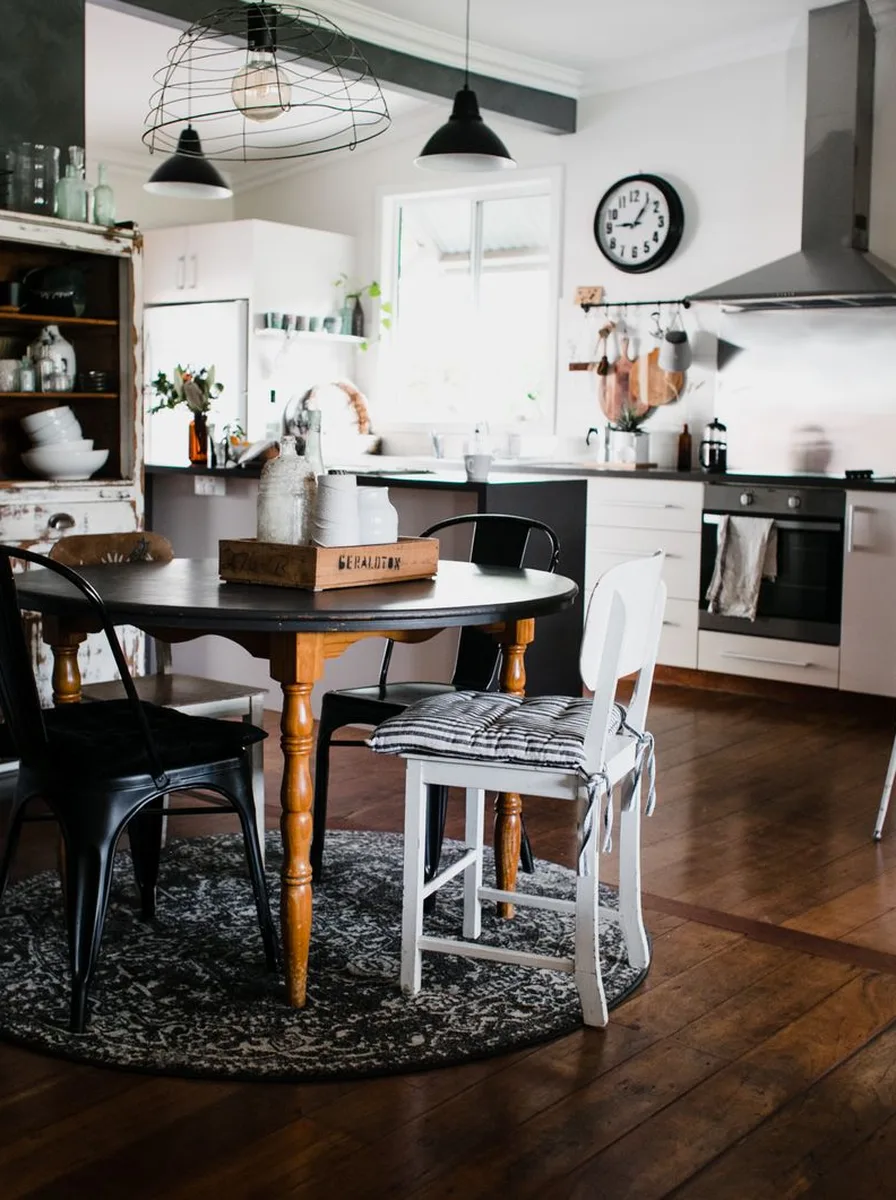
Every farmhouse dining room needs one big, honest clock. A large round face on the wall is practical, decorative, and deeply farmhouse — the kind of piece that ticks away in the background of a thousand family meals. In an open kitchen-dining space it also zones the dining area, giving the table its own visual anchor on the wall.
Go big: a 60-centimetre-plus face reads as decor, not just a timepiece. Roman numerals and a distressed finish are the farmhouse defaults, but a clean modern face works in modern-farmhouse schemes. Hang it where you can see it from the table — ideally the wall you face while eating — and keep the wall around it simple.

David is the home decor enthusiast behind HomeLushly. He shares practical, budget-friendly ideas for bedrooms, living rooms and seasonal decorating — from colour combinations that actually work to small-space styling tricks that make a room feel bigger. Every guide on HomeLushly is built around real photos and hands-on research, to help you make your home feel warm, personal and beautifully put together.