
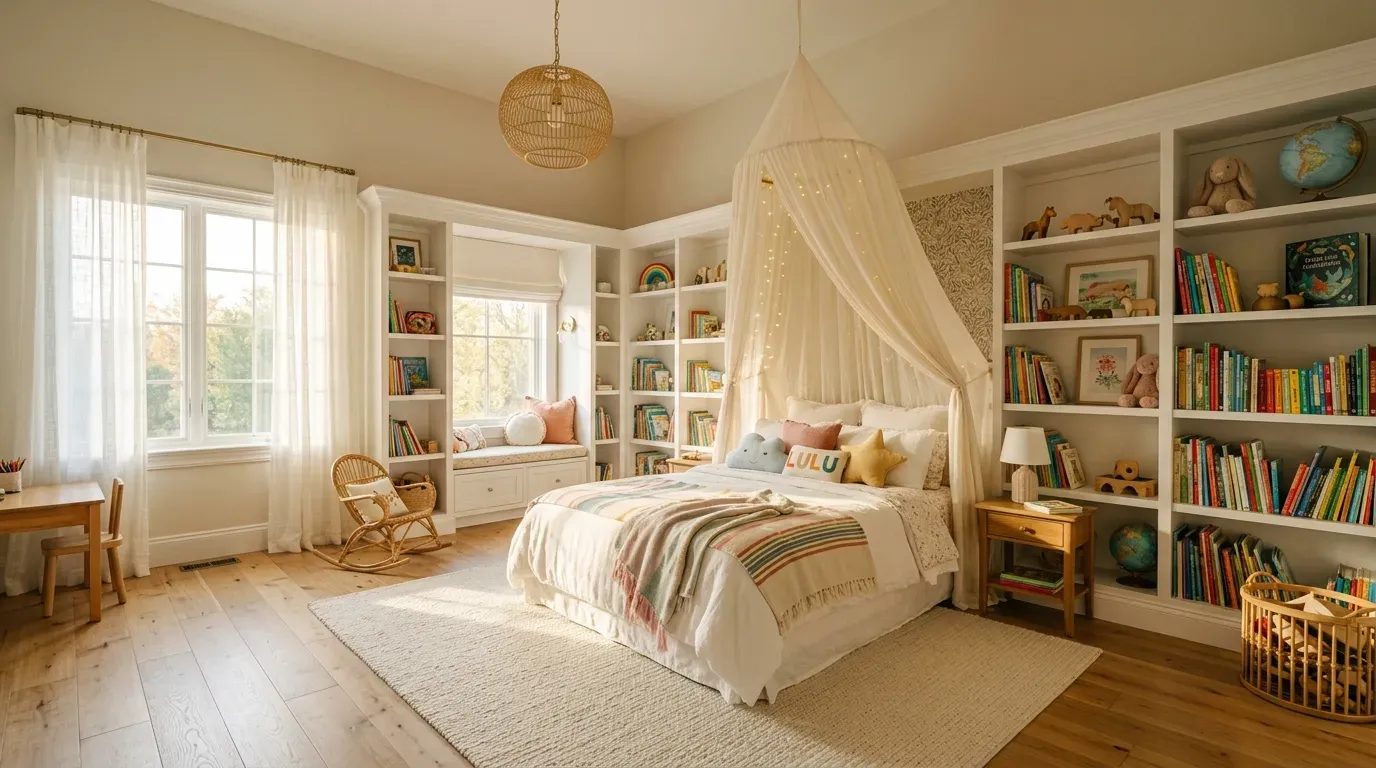
Every parent wants their child to have a bedroom that feels like their own little world. A space that sparks imagination, supports good sleep, and grows with them as they do. The good news? You don’t need an unlimited budget to pull off a stunning kids bedroom. With the right ideas, smart planning, and a few well-chosen pieces, you can create a room that looks like it belongs in a design magazine — without the magazine-sized price tag. Whether you’re starting from scratch or refreshing what you already have, these 25 luxury kids bedroom ideas will give you the inspiration and the practical steps to make it happen.
1. Royal Canopy Bed With Dreamy Drapes

A canopy bed instantly makes any bedroom feel like a fairytale palace.
The good news? You don’t need to spend thousands to pull it off.
Start with a simple four-poster bed frame. You can find affordable versions at IKEA or thrift stores. Then add sheer curtain panels tied to the posts with ribbon or hooks.
White, blush, and ivory fabrics look the most luxurious. They photograph beautifully and feel soft and airy in the room.
For a DIY version, use a ceiling-mounted curtain rod or a wooden dowel suspended with rope or chain from the ceiling above the bed. Hang two to four sheer panels on each side and let them drape gently.
Add string lights behind the fabric for a soft golden glow at night. It’s one of the most effective, budget-friendly upgrades you can make.
Layer the bedding with a duvet, a knit throw, and a few decorative pillows in matching tones. Keep the colors simple and cohesive — don’t go overboard with patterns.
A canopy bed creates a sense of privacy and magic that kids absolutely love. It also photographs well, so bonus points if you’re the type to share on social media.
2. Built-In Bookshelves That Double as a Reading Nook

Built-in bookshelves give a room that high-end, custom look without necessarily costing a fortune.
The trick is to make them look built-in even if they aren’t.
Buy two identical IKEA Billy bookcases and place them on either side of a window or bed. Add crown molding at the top and paint them the same color as the wall. From a distance, they look completely custom.
Between the shelves, tuck in a cushioned bench or a small upholstered seat. Add a few throw pillows and a blanket. That’s your reading nook.
For the shelves themselves, avoid cluttering them with random items. Display books face-out for younger kids — it’s easier for them to choose what they want to read. Add a few small baskets for toys or art supplies.
Use warm LED strip lighting underneath each shelf to create a soft, ambient glow. It makes the whole setup look polished and intentional.
Pro tip: paint the inside back of the shelves in a contrasting color — like deep navy or sage green. It adds depth and makes the display pop.
Reading nooks give kids a sense of ownership over their space. They’ll actually use it, which makes the investment worth every penny.
3. Statement Wall With Wallpaper or a Mural

One bold wall can completely transform a room.
You don’t need to wallpaper the entire room. Picking just one wall — usually the one behind the bed — keeps costs down and visual clutter low.
Peel-and-stick wallpaper is a game-changer for kids rooms. It comes in hundreds of designs, it’s removable, and most rolls cost under $40. Look for nature murals, geometric patterns, or soft botanical prints.
If you want to go the mural route, you can hire a local artist on platforms like Thumbtack or Fiverr at surprisingly affordable rates. Many artists charge between $150–$400 for a children’s room mural depending on size and complexity.
For a completely free option, use chalk paint on one wall and let your child draw on it. It’s interactive, reusable, and kids think it’s the greatest thing ever.
Keep the rest of the room neutral so the statement wall does the talking. Avoid clashing colors on the other three walls.
The statement wall works best when the furniture in front of it is simple and low-profile. A bed frame without a headboard, a floating shelf, or even just a floor-level mattress can all work beautifully.
One wall. Big impact. Low effort.
4. Layered Lighting for Mood and Function
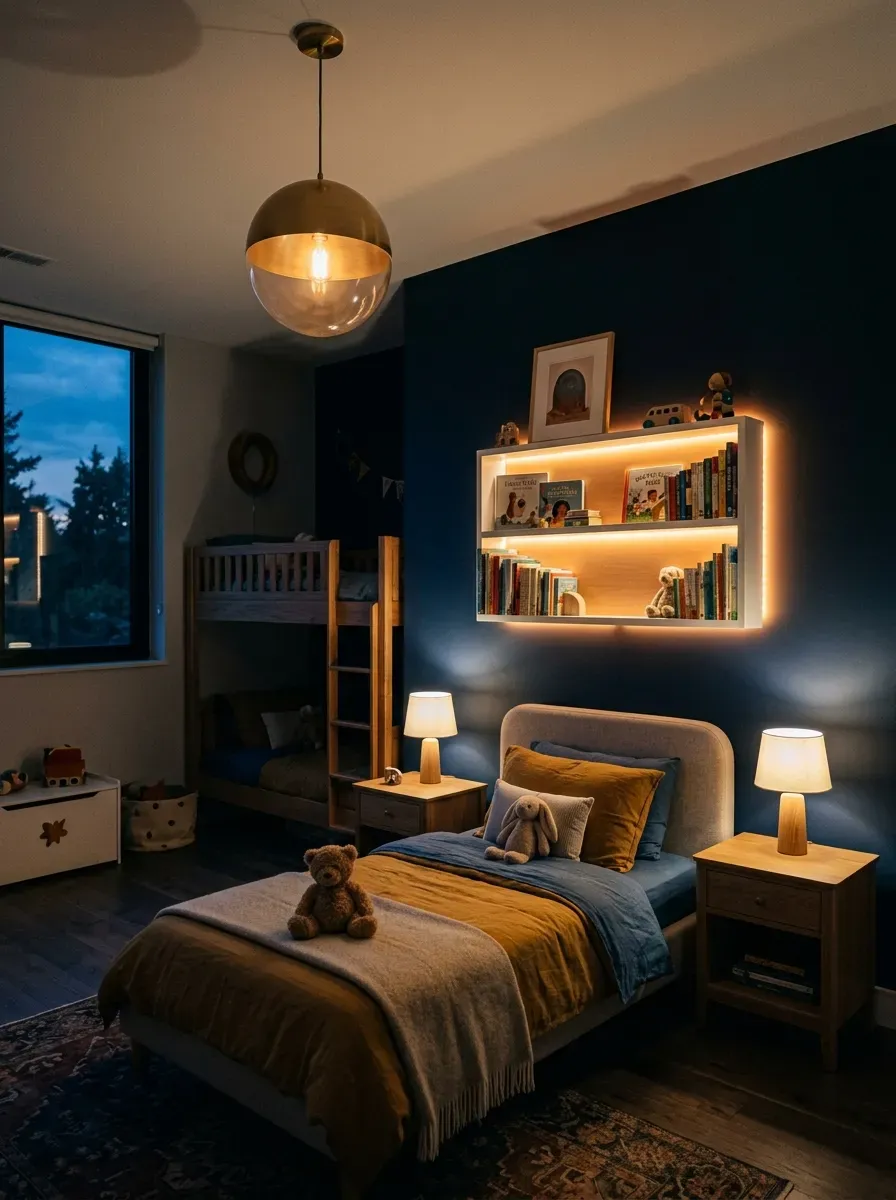
Lighting is one of the most underrated parts of a well-designed room.
Most kids rooms have one harsh overhead light and nothing else. That’s the first thing to fix.
Think in three layers: overhead, task, and ambient.
For overhead, swap out a basic ceiling fixture for a statement pendant light. Rattan shades, globe lights, or fabric drum pendants all look high-end without a high-end price tag. Many great options exist under $60 on Amazon or Target.
For task lighting, place a small table lamp on the nightstand. It makes bedtime reading easier and creates a warm, cozy vibe before sleep.
For ambient lighting, add LED strip lights behind floating shelves, under the bed frame, or along the baseboard. These run about $15–$25 per roll and the effect is stunning.
Add a dimmer switch to the overhead light if possible. It’s a small electrical change that costs about $15 and makes the room feel instantly more luxurious.
Consider a star projector nightlight for younger kids. They’re affordable, create an incredible effect on the ceiling, and double as a comfort light for kids who don’t like the dark.
Layered lighting makes a room feel considered and intentional — like someone put real thought into every hour of the day.
5. Plush Area Rug to Anchor the Space
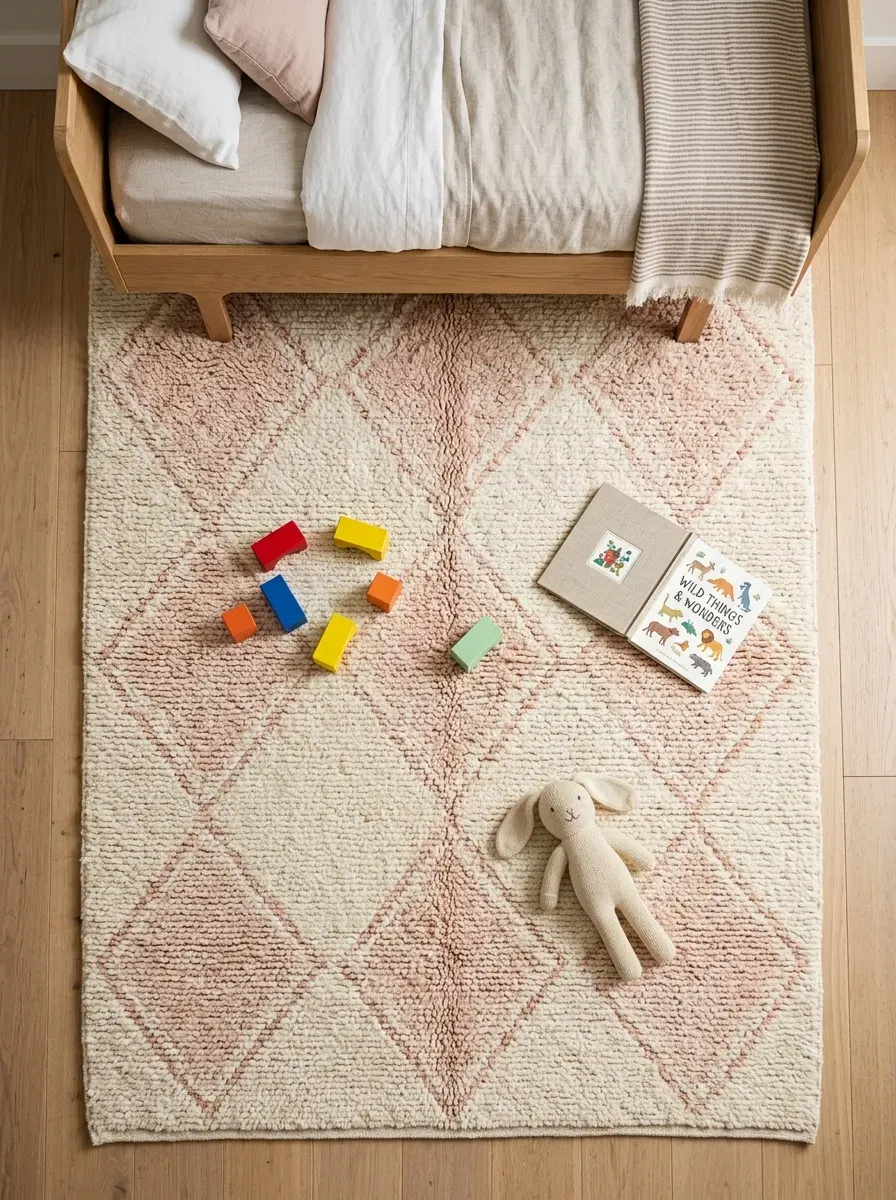
A great rug does two things at once: it makes the room look more expensive and it makes it feel more comfortable underfoot.
For kids rooms specifically, you want a rug that’s soft, washable, and large enough to extend beyond the bed on at least two sides.
Go bigger than you think you need. A rug that’s too small looks awkward and cheap. A 5×8 is typically the minimum for a standard kids room. An 8×10 will look even more luxurious.
Machine-washable rugs are non-negotiable with kids. Brands like Ruggable make high-end looking rugs with removable, washable covers. They start around $99 and look significantly more expensive than they are.
For color and pattern, Moroccan-style diamonds, soft geometric prints, or simple shag rugs in cream or blush all read as upscale without trying too hard.
Pair the rug with a non-slip pad underneath. It keeps the rug from sliding and adds extra cushioning, which kids love for floor play.
If budget is very tight, a plain ivory shag rug from Amazon can still look beautiful. Layer a smaller patterned throw rug on top for added interest — this is a classic designer trick.
The floor is the largest surface in the room. Treating it well is always worth the investment.
6. Custom Closet Organization That Looks Like a Boutique
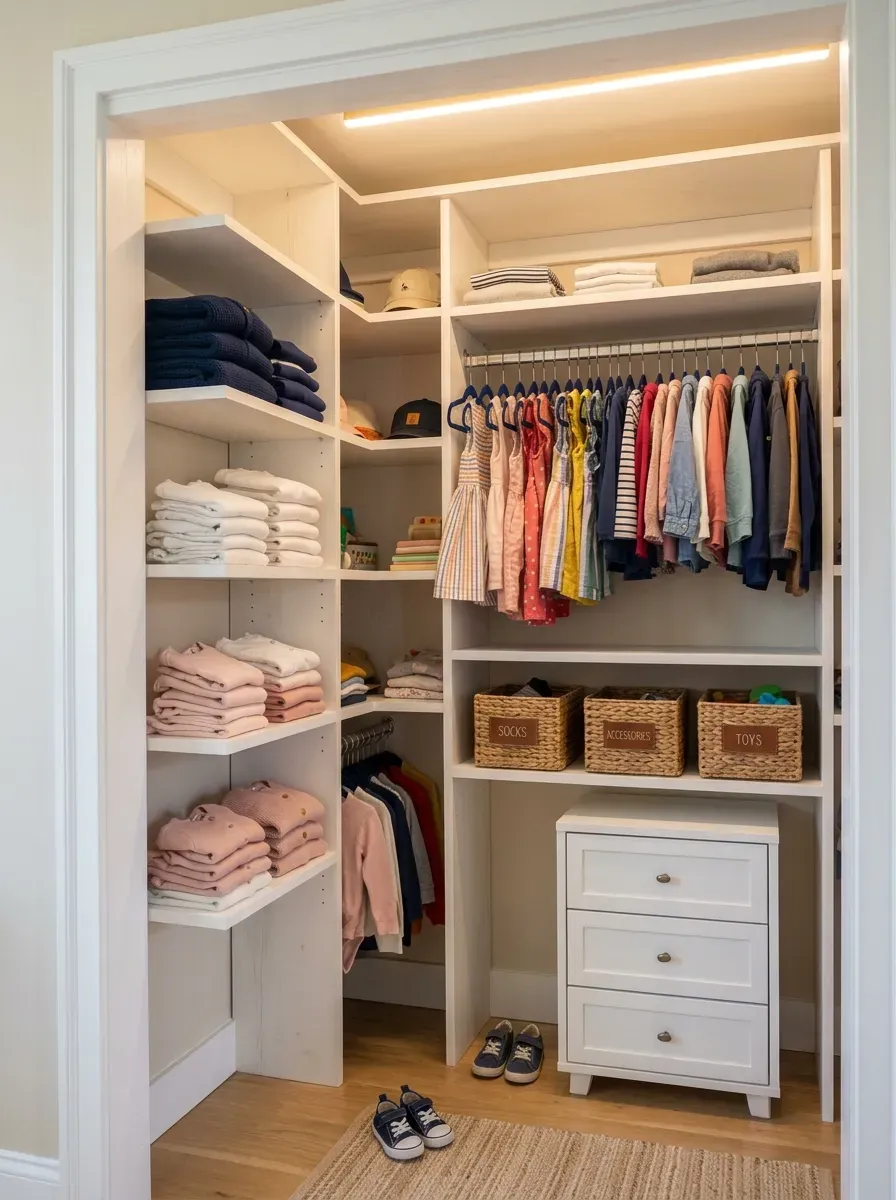
A beautifully organized closet makes the entire room feel cleaner and more polished.
You don’t need a professional closet company to make this happen. IKEA’s PAX system is one of the best-kept design secrets — it looks completely custom when paired with the right doors and hardware.
Start by measuring your closet opening carefully. Then build a configuration that mixes hanging space with shelves and drawers. For young kids, you’ll want lower hanging rods they can reach themselves.
Use matching hangers throughout — velvet slim hangers in a neutral color make any wardrobe look organized and intentional. A pack of 50 costs about $12.
Add small wicker or fabric bins on the shelves for items that don’t hang. Label them simply with handwritten tags or printed labels.
If your child has a lot of shoes, a low shoe shelf or a row of cubbies at floor level keeps things tidy and easy to access.
For an extra touch, add a small LED strip light at the top of the closet interior. It makes it easier to see everything and adds a boutique-quality feel.
An organized closet reduces morning chaos and teaches kids the habit of putting things where they belong — a win on multiple levels.
7. Gallery Wall of Framed Art and Prints
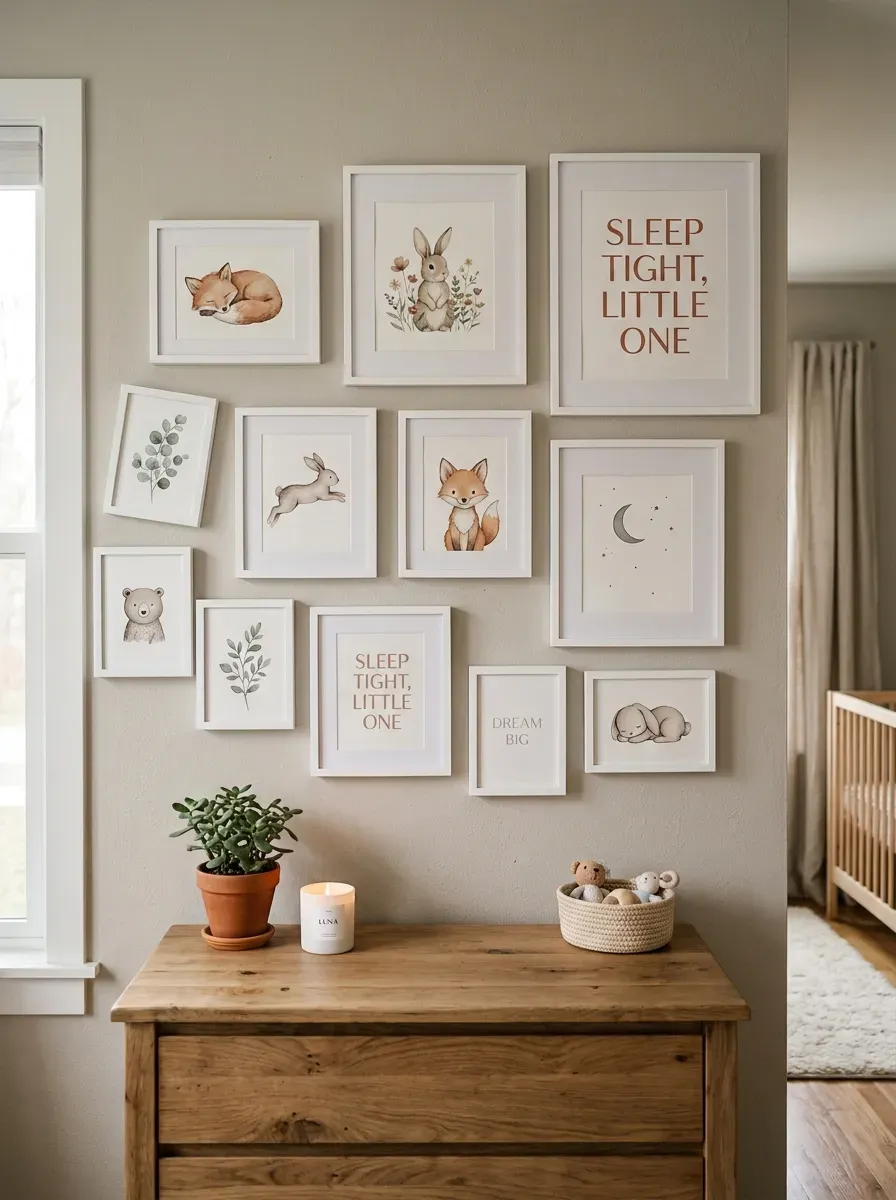
A gallery wall is one of the easiest ways to make a room look thoughtfully designed.
The key is consistency in frames, not necessarily in content.
Choose one frame style and color — white or natural wood both work beautifully in kids rooms. Buy your frames from the same place so they match exactly. IKEA’s Ribba frames are a perennial favorite because they’re affordable and they come in multiple sizes.
For art content, look for printable art on Etsy. You can download, print, and frame beautiful artwork for under $5 per print. Search for “kids room watercolor prints” or “nursery art digital download.”
Mix sizes for visual interest. A large print in the center flanked by smaller prints on either side is a classic, easy layout that always works.
Before putting holes in the wall, lay the arrangement out on the floor first. Photograph it, then use that as your guide for hanging.
Alternatively, lean frames against the wall on top of a dresser or shelf for a no-holes-needed gallery look.
Include one or two pieces of your child’s own artwork in simple frames. It personalizes the wall and kids beam with pride when they see their own work displayed.
Change out the prints seasonally or as your child’s interests shift. That’s the beauty of a printable art approach.
8. Lofted Bed With a Play Zone Underneath
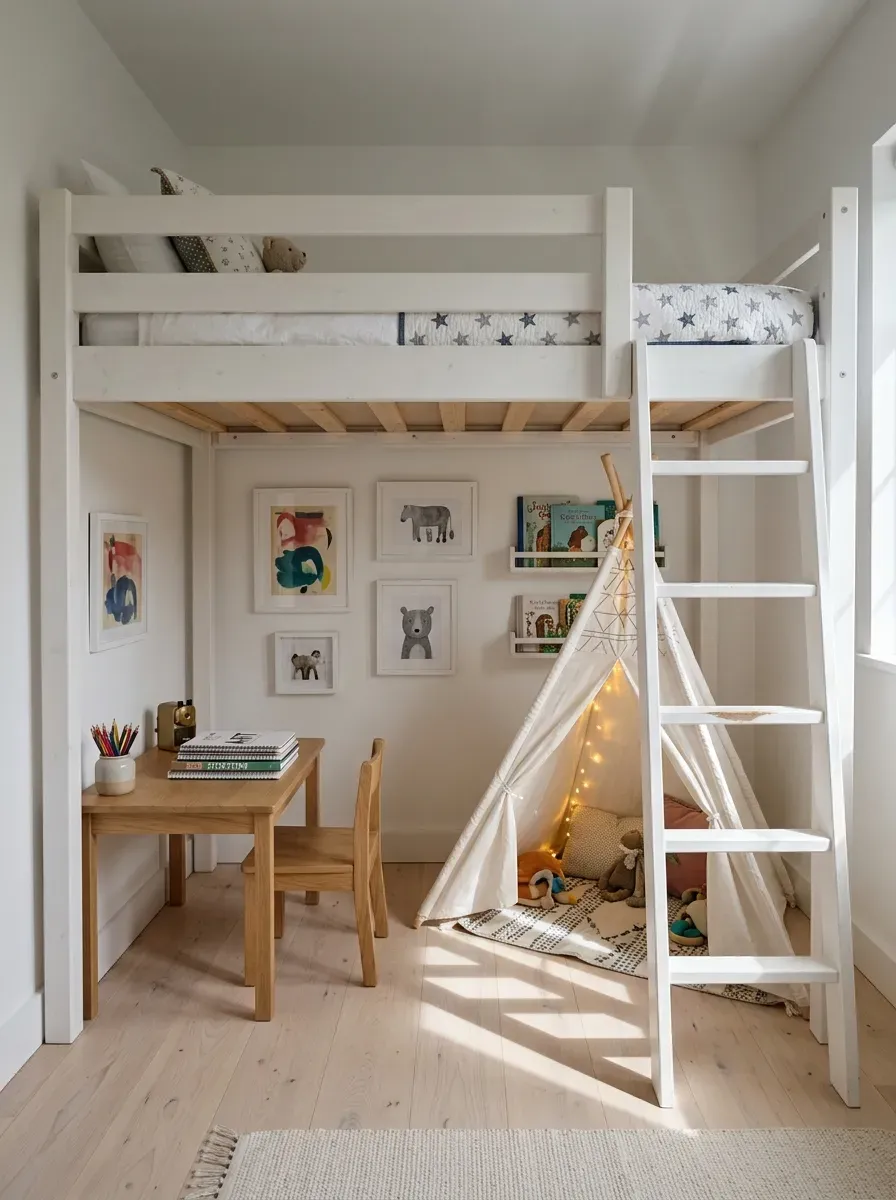
Loft beds are the single best space-saving strategy in a kids room.
By raising the sleeping area, you free up the entire footprint underneath for something else — a desk, a play area, a reading corner, or even a mini lounge.
You can buy a loft bed from IKEA, Wayfair, or Amazon for $200–$600 depending on size and finish. White or natural wood tones are the most versatile and look the most luxurious.
Underneath, the setup depends on your child’s age and interests.
For younger kids, put a teepee or play tent under the loft. Add a small rug, a few pillows, and string lights inside. It becomes their own private hideaway.
For school-age kids, put a desk and bookshelf under the loft. It creates a focused study zone that’s separate from the sleeping space — and it teaches the brain to associate the bed with sleep, not screens.
Keep the loft itself minimal. Great bedding, a small reading light clip, and a few plush animals is all you need up there.
For safety, always follow the manufacturer’s weight and age guidelines. Add a rail along the open sides and make sure the ladder is secure.
Loft beds make small rooms feel bigger, smarter, and way more fun.
9. Soft Color Palette That Grows With the Child
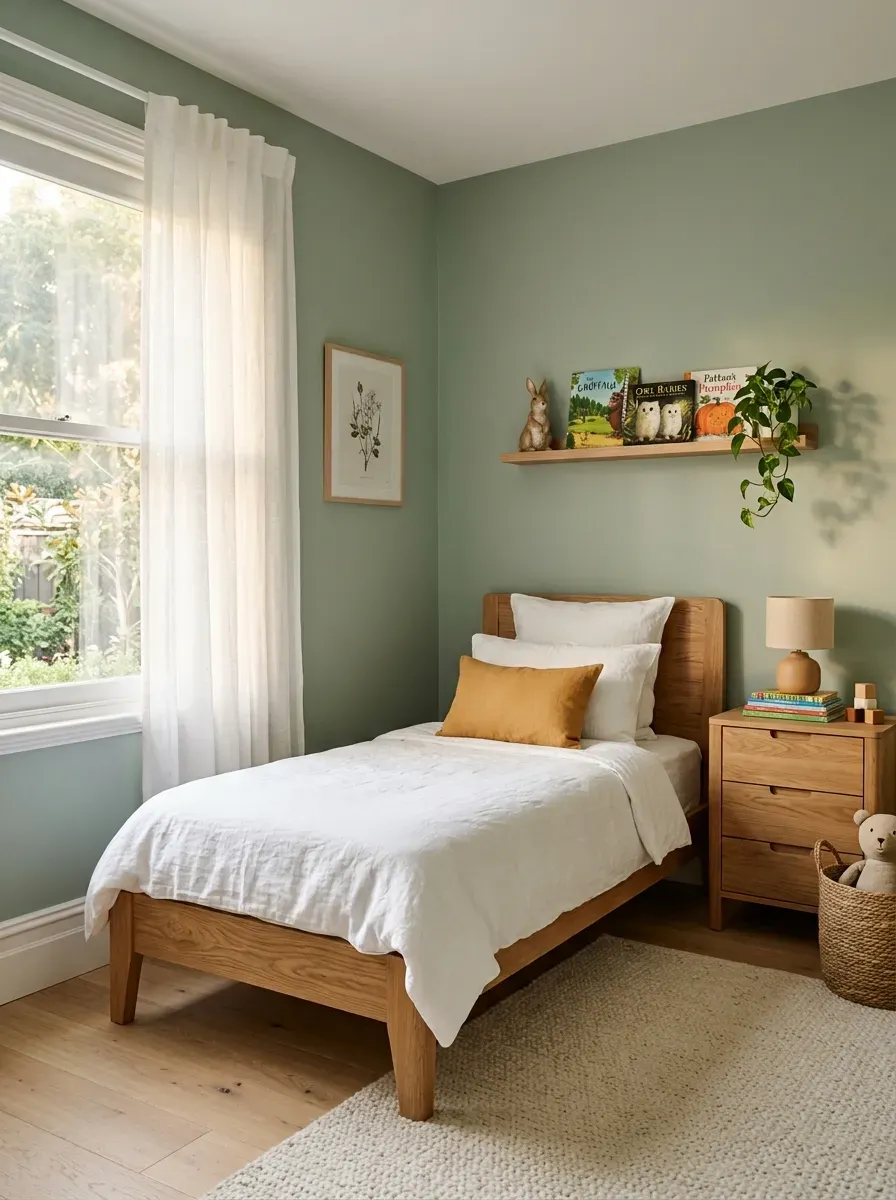
Bright primary colors can feel dated quickly. A soft, sophisticated palette will grow with your child and feel fresh for years.
The most timeless choices for kids rooms include sage green, dusty blue, warm terracotta, soft blush, and creamy white. These colors feel modern without feeling trendy.
They also photograph beautifully and serve as a neutral backdrop that lets the furniture and decor do the talking.
Paint is one of the cheapest and most dramatic changes you can make to a room. A gallon of quality paint runs $35–$65 and can transform the space in a weekend.
If you’re nervous about committing to color on all four walls, paint just one. The accent wall approach works especially well with darker or deeper shades like forest green or navy.
Pair wall color with white or light wood furniture for the cleanest, most classic look. Avoid matching the furniture exactly to the wall — contrast is what gives the room depth.
Bring in color through accessories instead: pillows, rugs, artwork, and curtains. These are all easy and affordable to swap out as your child’s tastes change.
A thoughtful color palette is the foundation that makes everything else in the room look intentional. Get this right first, then build everything else around it.
10. Themed Bed Nook or Alcove

A bed nook takes the concept of a canopy bed and builds it directly into the architecture of the room.
It makes a child’s sleeping space feel like their very own private cabin or secret room within a room.
If you have a recessed wall or an underused alcove, this is the place to build the nook. Frame it out with simple 2x4s, drywall, and trim. Add a curtain rod at the opening so your child can draw a curtain closed for total privacy.
Inside the nook, paint the walls a bold contrasting color — navy, forest green, or even a warm terracotta. Line the inside with LED strip lighting for a soft glow.
Add a small recessed shelf on each side of the mattress for a book, water bottle, and nightlight. Keep the inside of the nook intentionally minimal so it feels cozy, not cramped.
If you’re not doing any structural work, you can achieve a similar effect by placing the bed against the wall and building a three-sided frame around it using tall bookshelves or curtain panels.
The nook concept works for any age — it’s just as magical for a 10-year-old as it is for a 4-year-old.
Budget version: use a tall bookshelf on either side of the bed and hang a curtain rod between them at ceiling height. Total cost: under $150.
11. Teepee or Play Tent as a Design Feature
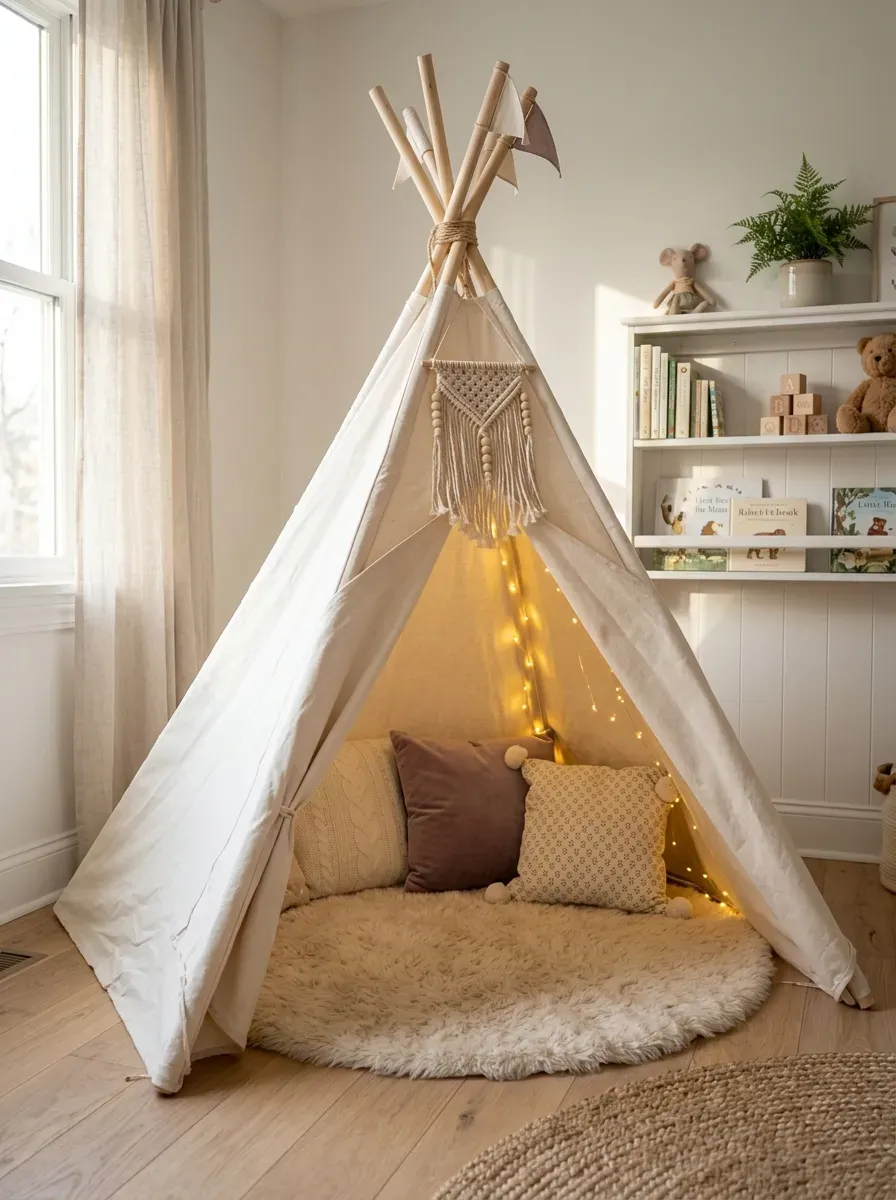
A teepee tent isn’t just a toy — it’s a full design feature when done right.
In the context of a styled kids room, a well-chosen teepee adds texture, warmth, and visual height to a corner that might otherwise go unused.
Look for teepees in white or natural canvas with simple wood poles. Avoid plastic versions — fabric teepees look far more elevated and last much longer. Good options run $40–$120 on Amazon and Etsy.
Style the inside of the teepee to make it feel like a real retreat. Add a small faux fur rug, a few throw pillows, and a string of warm LED fairy lights inside. This is your child’s reading corner, imagination station, and quiet space all in one.
Hang a simple woven macramé piece on the front pole for added texture. This small detail elevates the look considerably.
For the area around the teepee, keep it clear and minimal. The teepee should be the focal point of its corner — don’t crowd it with other furniture or clutter.
A basket next to the teepee with stuffed animals or a few books keeps the zone organized while still looking intentional and styled.
This is one of the easiest, most affordable ways to add a luxury look to a kids room. Kids love it, parents love how it photographs, and it takes about 10 minutes to set up.
12. Custom Name or Initial Wall Sign
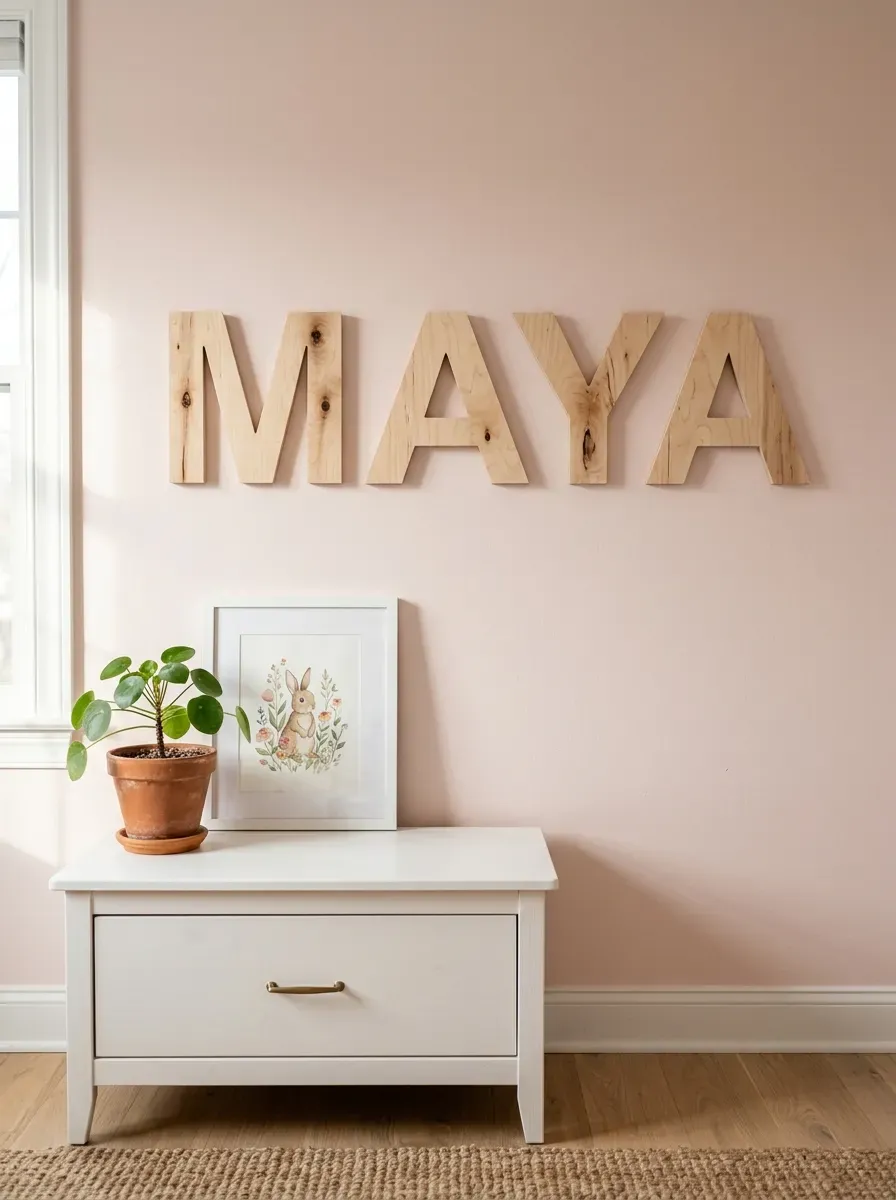
Personalization is one of the hallmarks of a truly thoughtful kids room.
A name sign, initial wall art, or monogram immediately makes a space feel designed specifically for the child who lives there — and kids absolutely love seeing their name on the wall.
You can order custom wooden name signs on Etsy for $25–$80 depending on size and complexity. Most come already stained or painted so they’re ready to hang.
For a DIY version, buy individual wooden letters from a craft store and paint them yourself. You can match them to any color in the room.
Neon name signs are another stunning option — warm white or pastel neon lights with a child’s name look incredible as a wall piece and double as a nightlight. Expect to spend $60–$120 for a good neon sign.
For older kids, a framed monogram print — just their first initial in a beautiful font — is more subtle and sophisticated.
Placement matters. Above the dresser, above the bed headboard, or centered on the accent wall are all great spots.
Pro tip: measure the wall space before ordering. A sign that’s too small looks lost, and one that’s too large can feel overwhelming.
A personalized sign is always a gift-worthy idea too — grandparents and family members love giving these for birthdays or room makeovers.
13. Floating Shelves for Display and Storage
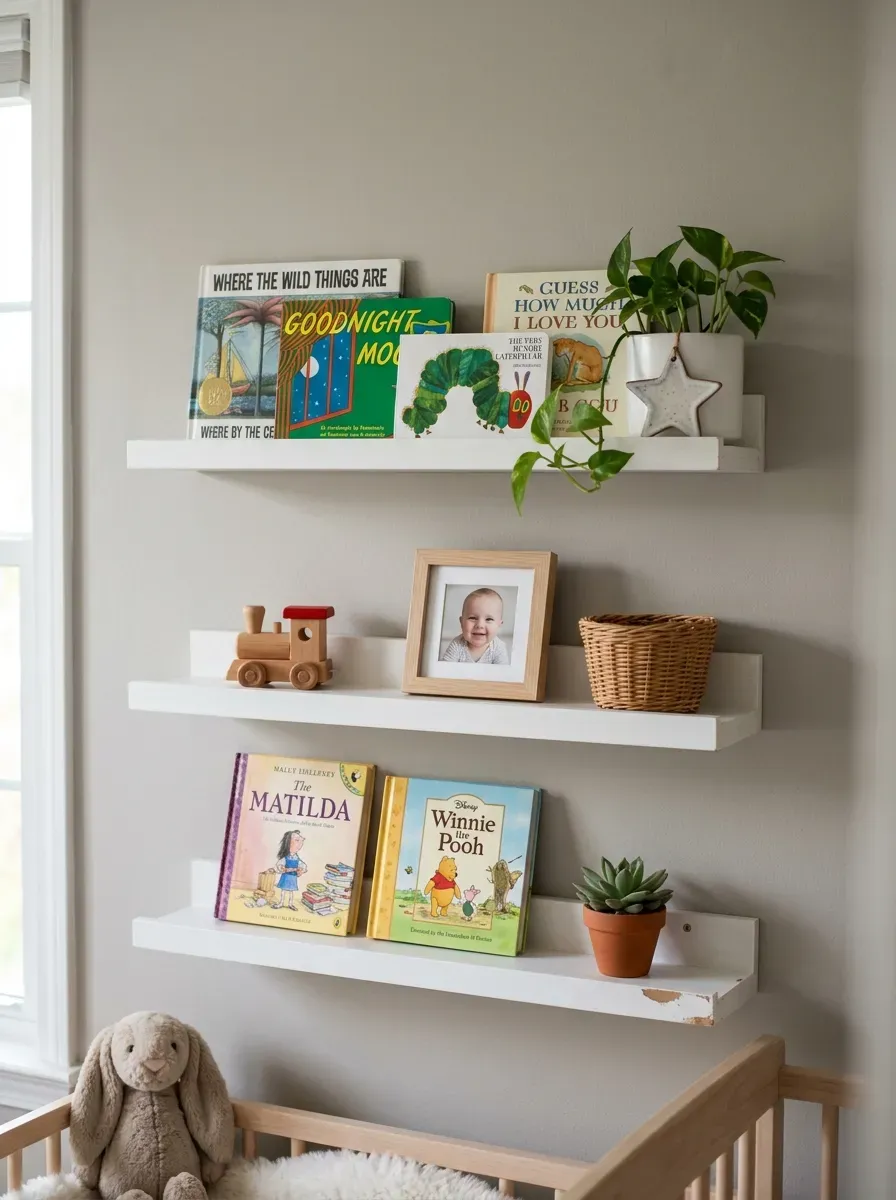
Floating shelves are one of the most functional and visually clean storage solutions for a kids room.
Unlike bulky furniture, floating shelves don’t eat up floor space. They draw the eye upward, making the room feel taller, and they give you a beautiful place to display books, toys, and decor.
IKEA Lack shelves are the go-to budget option — they’re $8–$15 each, come in multiple colors, and look surprisingly high-end when styled well. For a more premium look, try floating shelves in natural oak or walnut tones.
Install them in a cluster above the bed as a headboard alternative. Or place them in a staircase pattern along one wall for an asymmetric, modern look.
Style them intentionally — books face-out, plants in small pots, a few special toys displayed as objects. Avoid cramming them full. Negative space on a shelf is what makes it look styled, not cluttered.
Add small LED puck lights or strip lights under each shelf to highlight the display below. This is a very simple touch that makes the shelves look like they belong in a design store.
Rotate the display every few months to keep things feeling fresh and to reflect your child’s current interests.
Floating shelves are also a great way to display your child’s artwork — frame a few pieces and mix them into the shelf display.
14. Window Seat With Hidden Storage
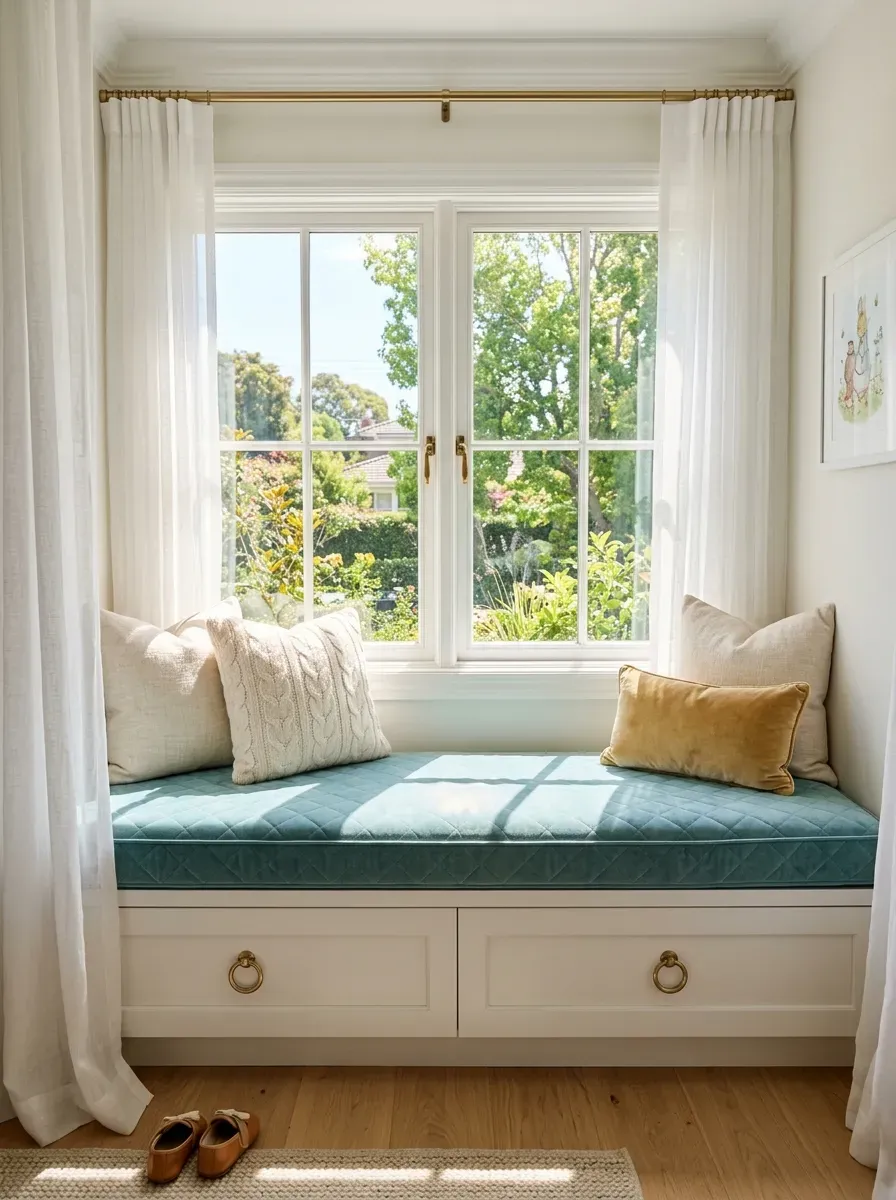
A window seat is one of those details that takes a room from “nice” to “wow.”
It uses a spot that often goes underutilized — the floor space in front of a window — and turns it into a functional, beautiful feature.
Building a basic window seat is more DIY-friendly than most people think. The simplest version is a wooden box built to fit the window width. Use plywood sides, a hinged lid, and a cut foam cushion covered in fabric. The inside of the box becomes storage.
For the cushion, outdoor fabric or performance upholstery fabric both hold up well in a kids room. They’re wipeable, durable, and come in hundreds of colors and patterns.
Add a row of pillows along the back to make it more comfortable for sitting and reading. Mix solid pillows with a patterned one for visual interest.
If a full build feels too ambitious, place a wooden storage bench in front of the window instead. Add a custom cushion on top. The effect is nearly identical and requires zero carpentry.
For curtains, hang them close to the ceiling — not at the window frame. High-hung curtains make the ceiling feel taller and the window feel larger.
A window seat gives kids a defined place to sit, read, and daydream that isn’t the floor. That small distinction makes a big difference in how they use the room.
15. Layered Bedding for a Hotel-Quality Look
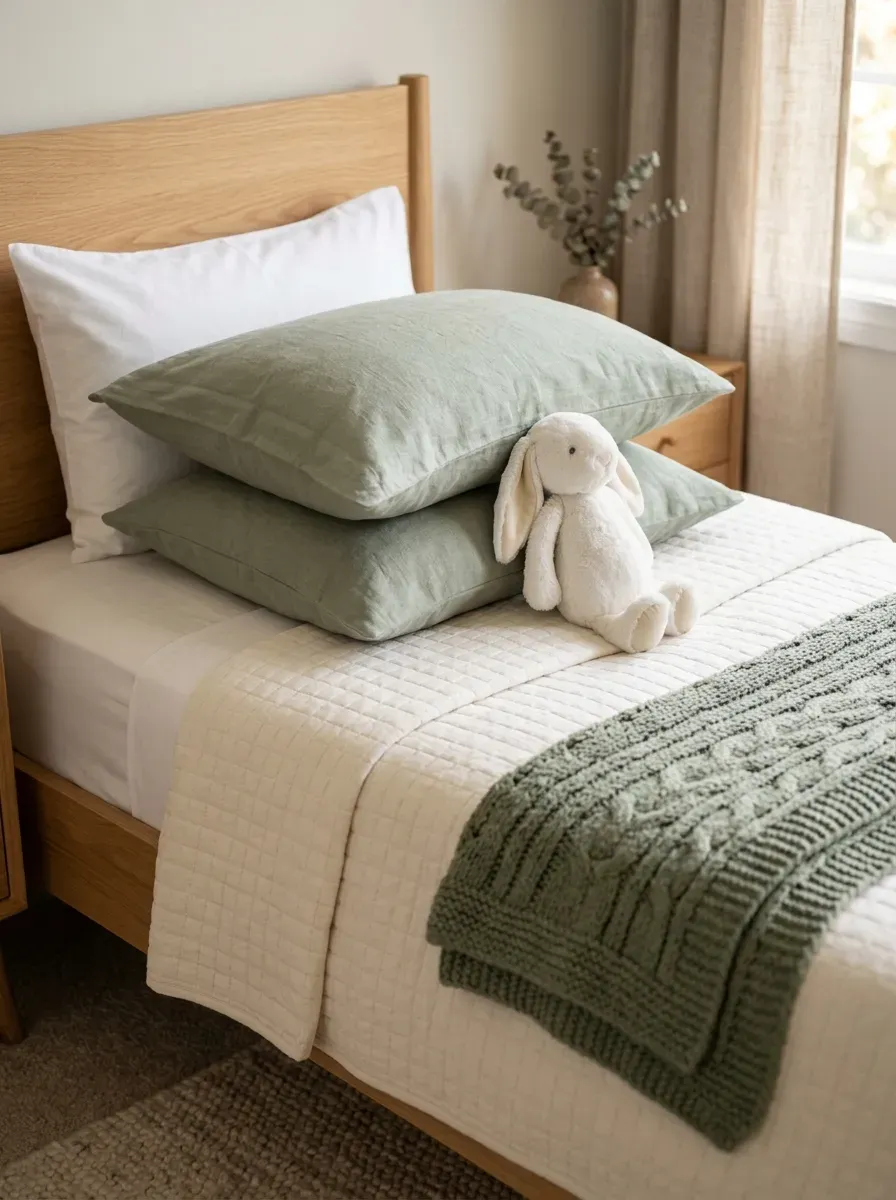
The bed is the largest visual element in a kids room. Getting the bedding right changes everything.
The hotel-quality look is all about layering simple pieces in the same color family.
Start with a fitted sheet in white or light grey. Add a duvet or coverlet in a complementary neutral — ivory, blush, or soft sage. Then layer a knit throw across the foot of the bed.
For pillows, use two standard sleeping pillows in white cases, then add two decorative shams in front. That’s it. Keep it simple.
Avoid character-print bedding if you’re going for a more elevated look — solid colors and subtle textures always look more expensive, and they don’t date as quickly.
Thread count matters less than material. Percale cotton gives a crisp, clean hotel feel. Linen feels more relaxed and textural. Both look beautiful in a styled space.
To make the bed look extra plush, add a mattress topper under your fitted sheet. It changes the silhouette of the whole bed and makes sleeping more comfortable at the same time.
Every morning, teach your child a simple two-step bed-making routine: pull the duvet up and arrange the pillows. A well-made bed keeps the entire room feeling tidy even when the floor isn’t.
Luxury bedding doesn’t have to be expensive — it just has to be cohesive.
16. Botanical and Nature-Inspired Decor

Bringing nature into a kids room makes it feel calm, alive, and grounded.
Plants are one of the best decor investments you can make — they’re inexpensive, they purify the air, and they teach kids responsibility when they help water them.
For a kids room, choose low-maintenance, non-toxic plants. Good options include spider plants, pothos, succulents, and Boston ferns. All are forgiving of irregular watering and safe around children.
Display them on floating shelves, on the windowsill, or in a corner floor planter. Use pots in earthy tones — terracotta, cream, sage green — rather than brightly colored plastic.
Beyond live plants, nature-themed decor includes pressed flower frames, botanical watercolor prints, wooden animal figurines, and rattan or jute accessories. These all add warmth and texture without visual noise.
A large-scale botanical print on the accent wall — either as wallpaper or a single oversized frame — can anchor the whole nature theme without overwhelming the space.
Use natural materials throughout: wooden furniture, wicker baskets, linen curtains, jute rugs. These materials together create a cohesive, organic look that feels both luxurious and calm.
Nature-inspired rooms have a timeless quality that works from toddler years through the tween stage. They’re easy to update with small swaps as your child grows.
17. Dedicated Art and Craft Corner

Every creative kid deserves a space that’s theirs to make a mess in — in a contained, intentional way.
A dedicated art corner doesn’t require a lot of space. Even a small 3×3 foot area can house a low table, two chairs, and open shelving for supplies.
The key is organization. Group supplies by type in labeled containers — pencils, crayons, markers, and scissors each get their own jar or bin. Transparent containers work well because kids can see what’s inside without digging.
A pinboard or corkboard wall above the art table is the perfect place for displaying finished artwork. Let your child rotate their own gallery — new pieces go up, old ones get filed in a portfolio box or photographed and saved.
Use a washable rug under the table to protect the floor. It contains drips and scraps in one zone that’s easy to clean.
For lighting, add a small adjustable desk lamp. Natural light is best for art, so position the table near a window if possible.
Keep the art area stocked but not overfull. Too many supplies creates decision fatigue. A curated selection of the most-used materials is all that’s needed.
An art corner signals to your child that creativity is valued in this home. That message alone makes it worth the effort.
18. Canopy of String Lights for Nighttime Magic
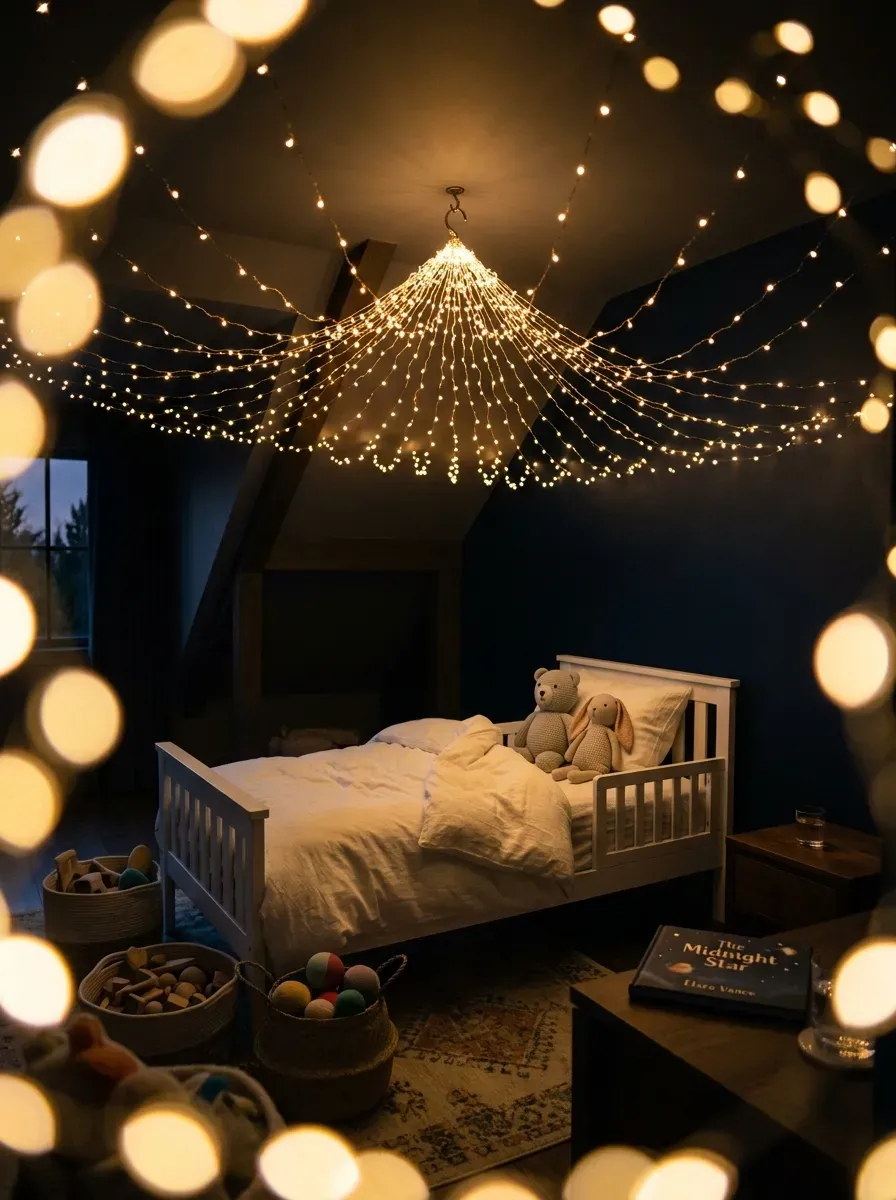
String lights are the single most affordable luxury you can add to a kids room.
For around $15–$25, you can completely transform the atmosphere above the bed.
The classic approach is a ceiling canopy of fairy lights — run lines of warm white LED string lights from a central hook above the bed outward to each corner of the ceiling. The result looks like a canopy of stars.
Use warm white bulbs, not cool white. Warm tones are cozier, more magical, and much easier on the eyes before sleep.
Attach the lights to the ceiling using small adhesive hooks — no drilling required. Plan your layout before sticking anything down.
For a simpler version, frame the bed’s headboard wall with a string of lights along the baseboard or run them along the top edge of the wall where it meets the ceiling.
A plug-in version is the easiest installation, but run the cord neatly along the wall using adhesive cable clips to keep it tidy.
Add a simple timer plug so the lights turn off automatically at bedtime. This also helps establish a routine — when the lights go off, it’s time to sleep.
String lights also make a great reading light when placed directly above the pillow area. Low, warm, and soft — exactly what you want for winding down.
19. Mix of Textures for Depth and Comfort

What separates a good room from a great room is often texture, not color.
A room that mixes soft, rough, smooth, and woven materials feels rich and layered even if the color palette is entirely neutral.
Think about the different surfaces your eye lands on when you walk into a room:
- Floor: a shag or wool rug adds softness
- Bed: linen duvet + knit throw + velvet pillow
- Walls: a woven wall hanging or macramé adds warmth
- Ceiling: a rattan or fabric pendant light
- Storage: wicker baskets, wooden bins
Each material brings something different. Rattan feels organic. Velvet feels luxurious. Knit feels cozy. Wood feels grounded.
The trick is to mix them without overcrowding. You want the eye to move around the room and notice different things — not feel overwhelmed.
Start with the largest surfaces first: flooring, bedding, and curtains. Get those textures right, then add smaller accent pieces that complement them.
Avoid synthetic materials that look shiny or plasticky — they undercut the whole effort. Whenever possible, choose natural materials, even if it means buying fewer pieces.
Texture is free to mix. The combinations are endless and deeply personal. This is where your own sense of style gets to shine.
20. Smart Toy Storage That Doesn’t Look Like a Toy Store
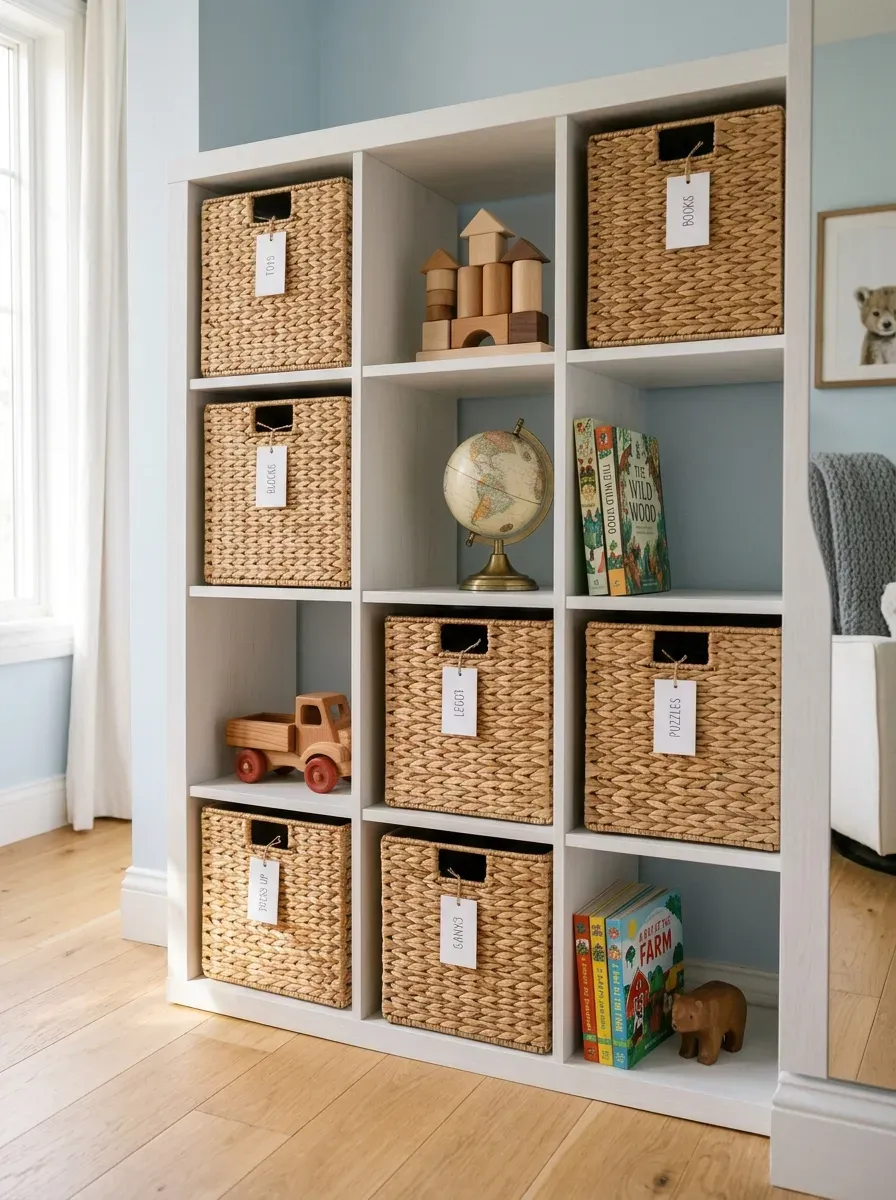
The biggest visual challenge in any kids room is keeping toy storage from looking chaotic.
The solution isn’t fewer toys — it’s better systems.
Cube shelving is the gold standard for toy storage because it’s modular, affordable, and endlessly customizable. IKEA Kallax is the classic choice. It fits standard fabric or wicker bins perfectly and can be configured horizontally or vertically.
Use lidded baskets for anything that looks messy — small pieces, art supplies, random toys. These hide the chaos while still being accessible.
Leave a few open cubbies for intentional display. Choose three to five toys or objects that look good sitting out — a wooden toy, a small globe, a picture book. These become part of the room’s decor, not just storage.
Rotate toys regularly. Keep some in a spare closet or storage box and swap them in every few months. Kids are more excited by toys they haven’t seen in a while — and it keeps the room looking manageable.
Label each basket simply. Even young kids can learn to return things to labeled spots when the system is clear and consistent.
Pro tip: reduce the total number of toys on display at any one time. A room with 10 accessible toys looks tidy. A room with 50 looks like a yard sale.
Smart storage is what makes a luxury kids room functional long-term.
21. Curtains That Hang From Ceiling to Floor
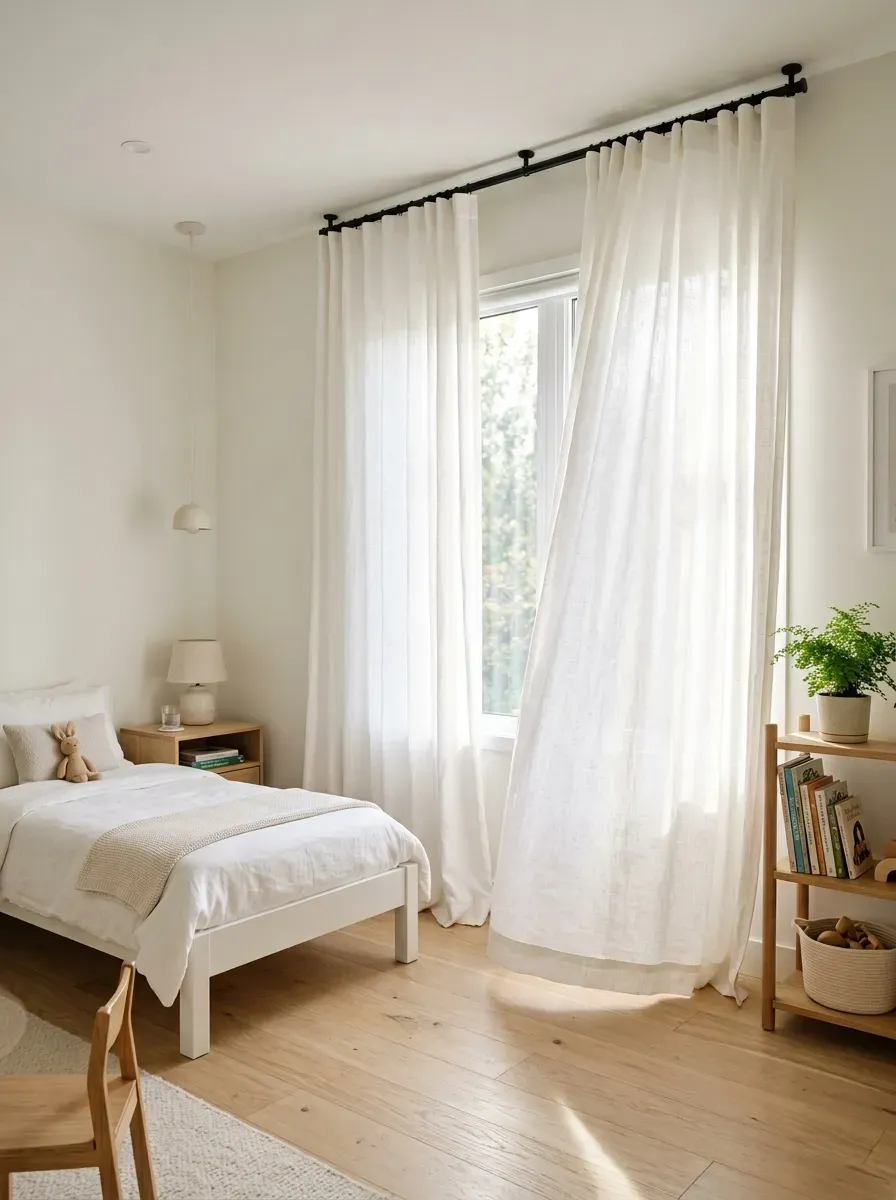
Curtains hung at ceiling height make any room look bigger, taller, and more luxurious.
This is one of the most common designer tricks — and it works.
The standard advice is to hang your curtain rod as close to the ceiling as possible, and let the curtains fall all the way to the floor. Even if the actual window is small, floor-to-ceiling curtains make it look grand.
For a kids room, white or off-white linen curtains are the best starting point. They let light in softly, they look clean, and they work with virtually any color palette.
Blackout curtains are also worth considering — especially for young children who nap during daylight hours or for rooms that get intense morning sun. Many blackout options come in beautiful fabrics and colors, so you don’t have to sacrifice style for function.
Budget tip: IKEA’s Lenda and Aina curtain lines both offer a high-end look at very affordable price points. A pair typically runs $30–$60.
For the curtain rod itself, a simple matte black or brushed brass rod looks far more upscale than a silver chrome one. The hardware matters more than people think.
Add tiebacks — either a simple rope tie or a fabric loop — to hold the curtains open during the day. This creates a soft, elegant look when the curtains are pulled aside.
Floor-to-ceiling curtains are one of the fastest, most affordable upgrades in interior design. Don’t skip them.
22. Vintage or Antique Pieces for Character

Rooms with a mix of old and new always look more interesting than rooms that are entirely modern.
A single vintage or antique piece adds soul to a space in a way that no new item can replicate.
For kids rooms, great vintage finds include: small wooden rocking horses, antique dressers painted in a fresh color, vintage wooden crates repurposed as toy storage, old globe stands, or framed vintage maps of the world.
Flea markets, estate sales, Facebook Marketplace, and thrift stores are your best hunting grounds. Vintage kids furniture pieces can often be found for $20–$80 and refinished for relatively little.
Painting an old piece is the quickest way to make it look intentional rather than secondhand. A fresh coat of chalk paint in white, sage, or dusty blue immediately modernizes the shape while preserving the character.
You don’t need many vintage pieces — just one or two in the right spots is enough. Place them where the eye naturally rests: next to the bed, in a corner, or as part of the gallery wall.
The story behind a vintage piece also becomes part of the room’s personality. “This rocking horse was from a farm sale” is a story your child will remember.
Mixing vintage with modern is one of the defining characteristics of truly sophisticated interior design. It applies just as well to kids rooms as it does anywhere else.
23. Dedicated Study Zone With Inspiring Details
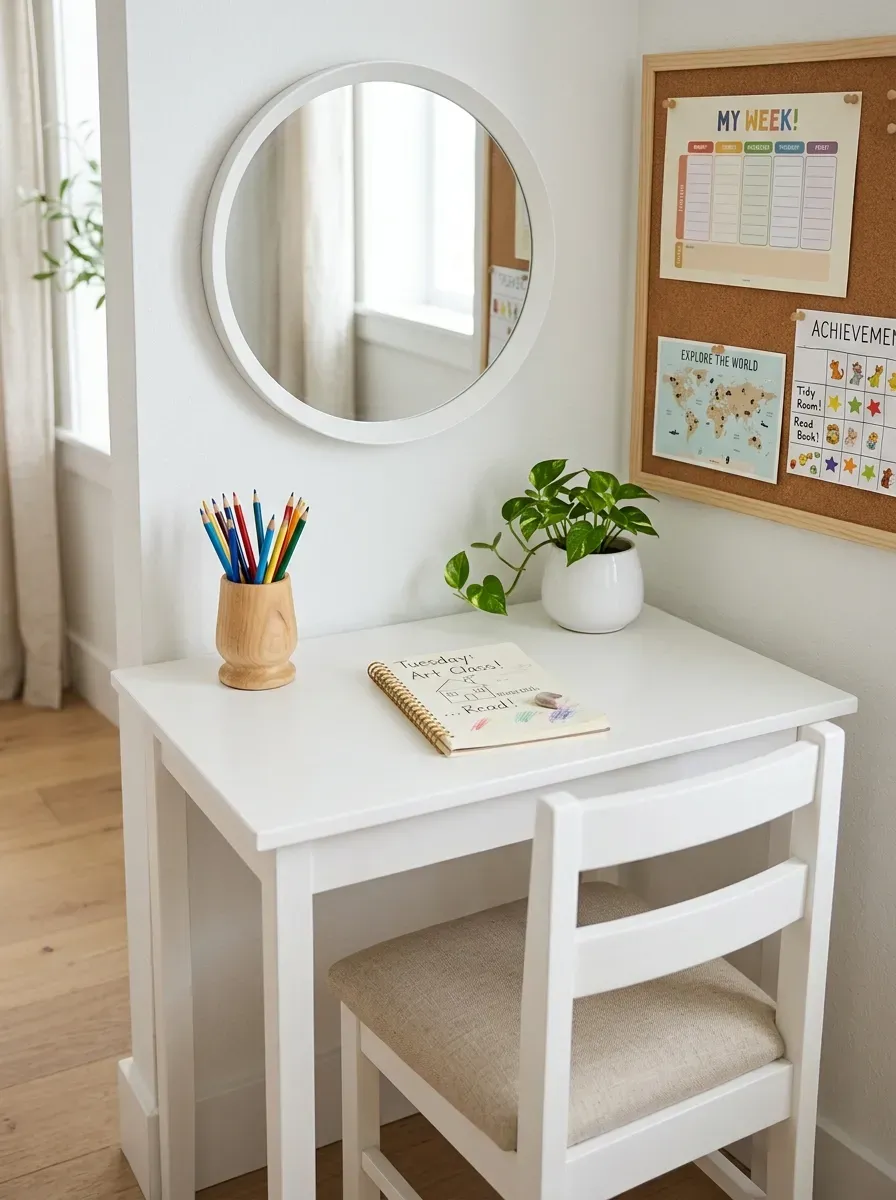
A great study area sets a child up for focus, creativity, and good work habits.
It doesn’t need to be large. Even a small desk tucked into a corner or under a loft bed can function beautifully when it’s set up well.
The desk itself should be the right height for your child — kids often work at desks that are too tall, which leads to poor posture. Look for height-adjustable desks if possible; they grow with the child.
Choose a desk chair with a back for support. Add a small seat cushion for comfort. Avoid bean bags at the study desk — they’re fun but terrible for posture during focused work.
Above the desk, hang a small pinboard or corkboard. This is where your child pins their weekly schedule, current assignments, favorite postcards, and anything that inspires them. It makes the desk area feel personalized and purposeful.
Add a good desk lamp. Natural light is best, so position the desk near a window if possible. Otherwise, a warm LED desk lamp that mimics natural light reduces eye strain during evening study.
Keep the desktop itself minimal — a pencil holder, a small plant, and a notebook. Clutter on the desk creates mental clutter during study.
A clearly defined study zone signals to your child that this is where thinking happens. That small cue matters more than most people realize.
24. Personalized Storage Labels and Organizational Systems
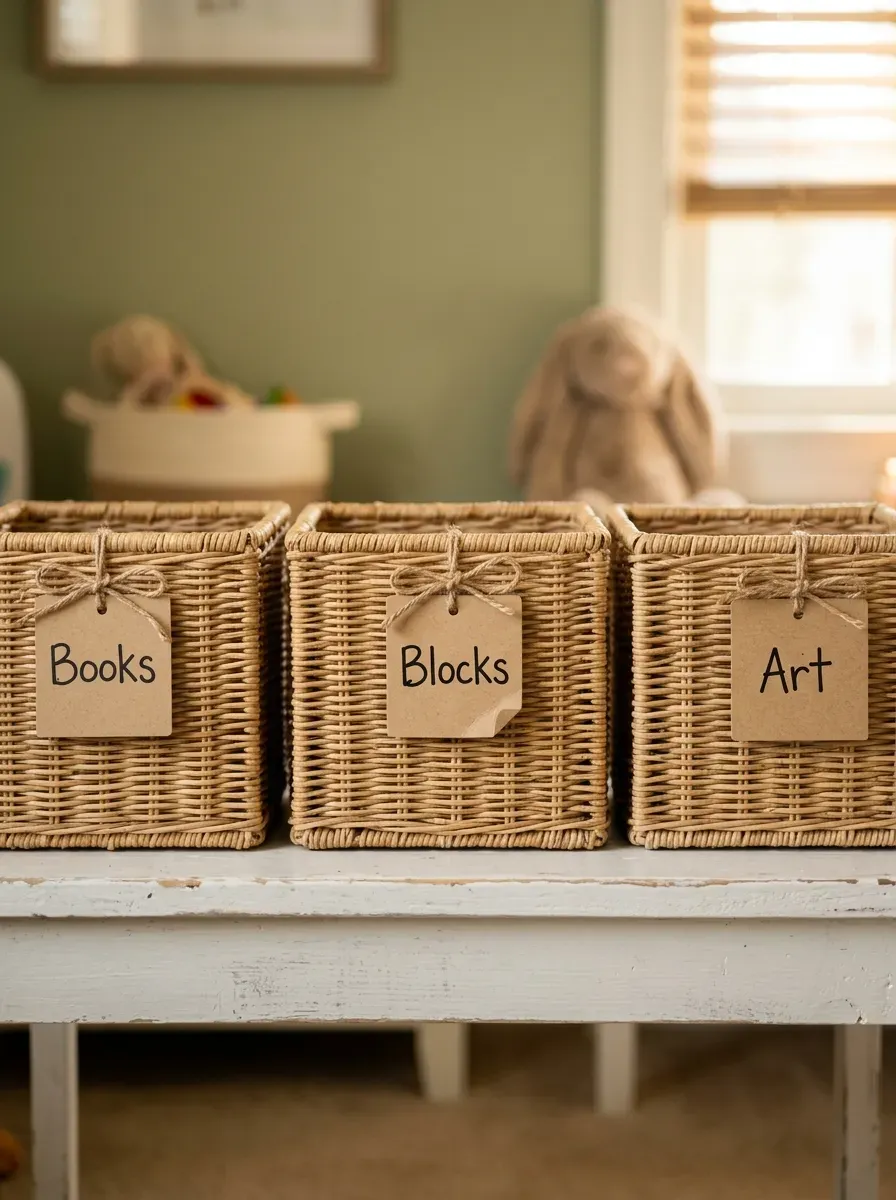
Great organization in a kids room is part functional, part visual design.
When everything has a labeled home, the room stays tidier for longer — and kids are far more capable of maintaining it themselves.
The most effective system is one that’s visual and simple. Young kids can’t read yet, so combine words with pictures or symbols on labels. Older kids can handle text labels alone.
For labels, you can print custom ones from a free Canva template, write them by hand on kraft paper tags tied with twine, or use a label maker for a clean, modern look.
Wicker baskets and fabric bins are the best containers for an organized, beautiful room. Choose a consistent style and size throughout so everything looks cohesive from the outside even when the contents are chaos.
Assign a category to each bin: art supplies, building blocks, stuffed animals, dress-up clothes, books. Then stick to it. When everything has an assigned place, “cleaning up” becomes “putting it in the right bin.”
For small items like Lego, trading cards, or craft supplies, use clear divided containers so kids can see what’s inside. Label the top and side so it’s easy to return things to the right spot.
Review and revise the system every six months. Kids’ interests change, and so does the volume of stuff they have. Updating the system keeps it working.
Organization done well looks just as good as any piece of furniture in the room.
25. A Corner Cozy Reading Chair Just for Them
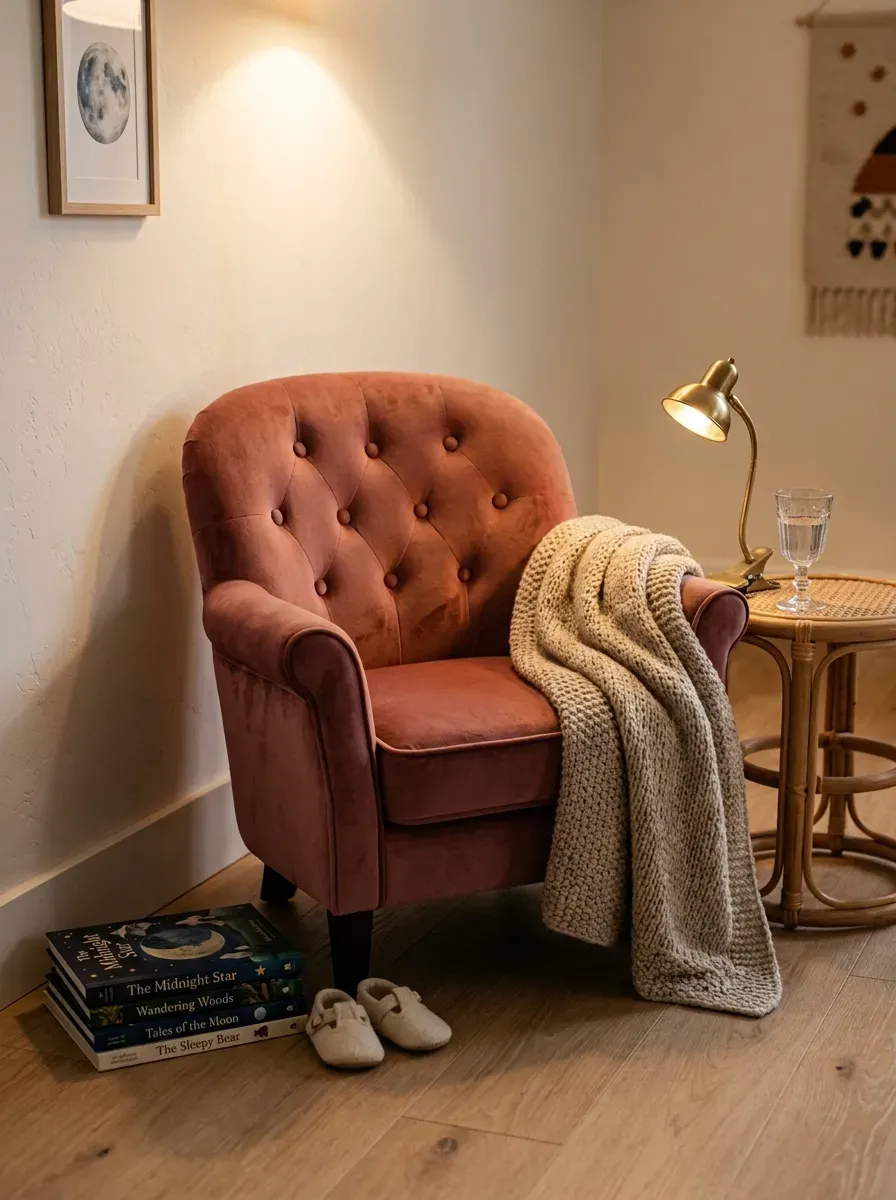
Every child deserves a chair that is entirely, specifically theirs.
Not a chair where parents sit. Not the desk chair. Their chair. The one in the corner with the good light where they curl up and read.
A small, child-sized armchair or accent chair gives a room a sense of completeness that’s hard to explain. It fills the corner beautifully, it serves a genuine function, and it becomes one of the most used pieces of furniture in the room.
For the chair itself, look for plush upholstered options — velvet, boucle, or linen all look luxurious. Dusty rose, forest green, navy, and mustard are colors that work brilliantly in a kids room without looking babyish.
Add a small side table or a floor lamp next to the chair for reading light. A small basket on the floor beside it for current books makes the whole setup feel intentional.
Pairing the chair with a small footstool means your child can put their feet up — and that detail alone will make the chair their favorite spot in the room.
Budget option: reupholster a secondhand accent chair in a fresh fabric. A basic chair from a thrift store plus a few yards of velvet fabric and a beginner-level staple gun can produce a stunning result for $40–$80 total.
This chair is the last piece of the puzzle. It makes the room feel complete, personal, and genuinely luxurious.
Conclusion
Creating a stunning luxury kids bedroom doesn’t come down to how much you spend. It comes down to how thoughtfully you choose and arrange each element.
Start with the foundation — the right paint color, well-hung curtains, and layered lighting. Then build from there with pieces that serve both form and function: a canopy bed, a reading nook, smart storage, and personal touches that reflect your child’s personality.
Every idea in this list is achievable on a real-world budget. Some of the most impactful changes — string lights, a statement wall, floating shelves — cost under $50. Others, like a loft bed or built-in window seat, require more investment but deliver years of value.
The common thread through all of it is intention. A room where every choice was made on purpose — where the colors, the textures, the storage, and the lighting all work together — will always feel more luxurious than a room filled with expensive pieces that don’t relate to one another.
Pick two or three ideas from this list to start. Make them work together. Then add from there. A beautiful kids bedroom is a project, not a single purchase — and the process of creating it is one your child will remember long after they’ve outgrown the space.


